15 Hidden Gems in China - Secret Destinations the Crowds Haven't Found Yet
The Great Wall and the Terracotta Warriors deserve their fame, but they also deserve their crowds. China is enormous (roughly the size of the United States), and most of its visually stunning places receive a fraction of the visitors. These 15 destinations were sourced from Chinese travel communities on Xiaohongshu (小红书), Zhihu (知乎) and Ctrip, where local travelers share the places they would rather keep to themselves.
How we verified this: SinoWander reads Chinese-language sources that English guides cannot, including Xiaohongshu (小红书), Zhihu (知乎), Ctrip, and Pengpai News. We cross-check them before writing. We have not personally visited every location. Each guide is date-stamped when last verified: 2026-08-06. See our methodology.
Quick Reference
| # | Destination | Province | Highlight | Days Needed | Daily Budget |
|---|---|---|---|---|---|
| 1 | Mangshi | Yunnan | Southeast Asia vibes without leaving China | 2–3 | ¥100–150 ($15–22) |
| 2 | Xijiang Qianhu Miao Village | Guizhou | World’s largest Miao settlement | 2 | ¥150–200 ($22–30) |
| 3 | Seda Monastery | Sichuan | Hillside covered in red monk quarters | 2–3 | ¥120–180 ($18–27) |
| 4 | Yuanyang Rice Terraces | Yunnan | 1,300-year-old agricultural marvel | 2–3 | ¥100–150 ($15–22) |
| 5 | Kuerdening Grassland | Xinjiang | Hidden alpine meadow in Tianshan Mountains | 2–3 | ¥150–250 ($22–37) |
| 6 | Qiaxi Forest Park | Xinjiang | Low-cost, crowd-free primal forest | 1–2 | ¥120–200 ($18–30) |
| 7 | Wuhai | Inner Mongolia | Desert meets ocean (the only place in China) | 2 | ¥150–200 ($22–30) |
| 8 | Xiapu | Fujian | China’s most photogenic mudflats | 2–3 | ¥120–180 ($18–27) |
| 9 | Yushan Island | Fujian | Grassland and alpine lakes on a sea island | 2 | ¥100–150 ($15–22) |
| 10 | Malinghe Grand Canyon | Guizhou | ”The most beautiful scar on Earth” | 1–2 | ¥100–150 ($15–22) |
| 11 | Gannan (Xiahe / Zhagana) | Gansu | Tibetan culture without Tibet’s crowds | 4–5 | ¥150–250 ($22–37) |
| 12 | Zhaji Ancient Village | Anhui | 1,400-year-old village of painters | 1–2 | ¥80–120 ($12–18) |
| 13 | Arxan | Inner Mongolia | Fairy-tale northern town with volcanoes and hot springs | 3–4 | ¥200–300 ($30–44) |
| 14 | Enshi Pingshan Canyon | Hubei | ”China’s Semporna” (glass-clear canyon waters) | 2–3 | ¥120–200 ($18–30) |
| 15 | Jingbian Wave Valley | Shaanxi | China’s answer to Arizona’s Wave | 1–2 | ¥100–150 ($15–22) |
1. Mangshi, Yunnan: Southeast Asia Without a Passport
Mangshi (芒市) is the capital of Dehong Dai Autonomous Prefecture in western Yunnan, near the Myanmar border. The town feels more Southeast Asian than Chinese: tropical heat, palm-lined streets, Dai-style pagodas and Burmese-influenced food.
Highlights: The Menghuan Grand Silver Pagoda (勐焕大银塔) transforms at dusk when golden light hits its mirrored surfaces. The Tree-Wrapped Pagoda (树包塔), a Buddhist stupa being slowly consumed by a banyan tree, is one of Yunnan’s most photographed oddities.
Food: Baishite Food City for Gan Ying’s pickled chicken feet (甘英泡鸡脚) and Dai-style hand-grabbed rice (傣味手抓饭). Daily food costs run ¥30–60 ($4.40–8.85) for excellent meals.
Budget: ¥100–150 ($15–22) per day, one of the cheapest destinations on this list.
Local Tip: Fly directly to Dehong Mangshi Airport from Kunming (1 hour, ¥300–600 / $44–88). There is no high-speed rail connection. The isolation is part of why it remains uncrowded.
2. Xijiang Qianhu Miao Village, Guizhou: A Thousand Households on a Hillside
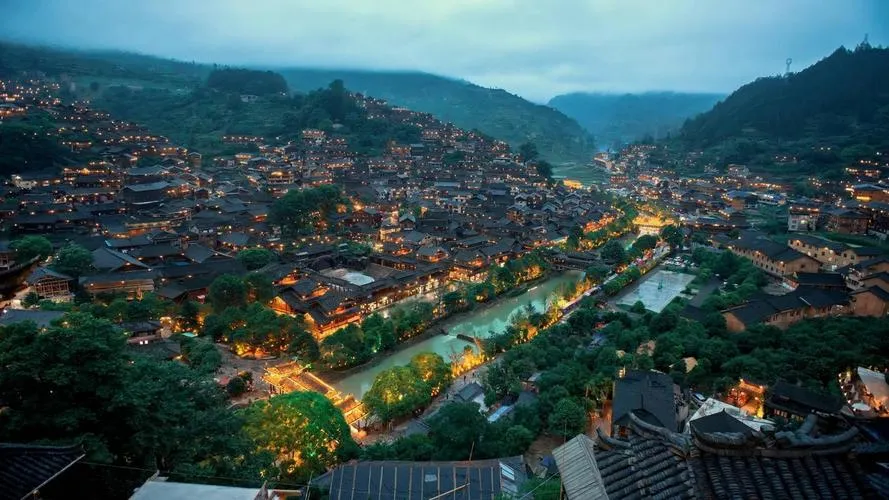 Xijiang’s thousand stilt houses stepping down the valley, with the river through the middle.
This is the largest Miao ethnic village in the world, with over 1,000 wooden stilt houses (吊脚楼) cascading down a steep valley. At night, the illuminated rooftops create a constellation effect.
Experience: Long-table banquets (长桌宴) where you eat traditional sour soup, watch Miao dance performances and observe silversmith craftsmanship. The village is living culture, not a museum recreation.
Best season: Spring and autumn. Avoid National Day (October 1-7), when even this remote spot fills up.
3. Seda Larung Gar Buddhist Institute, Sichuan: A Mountain of Red
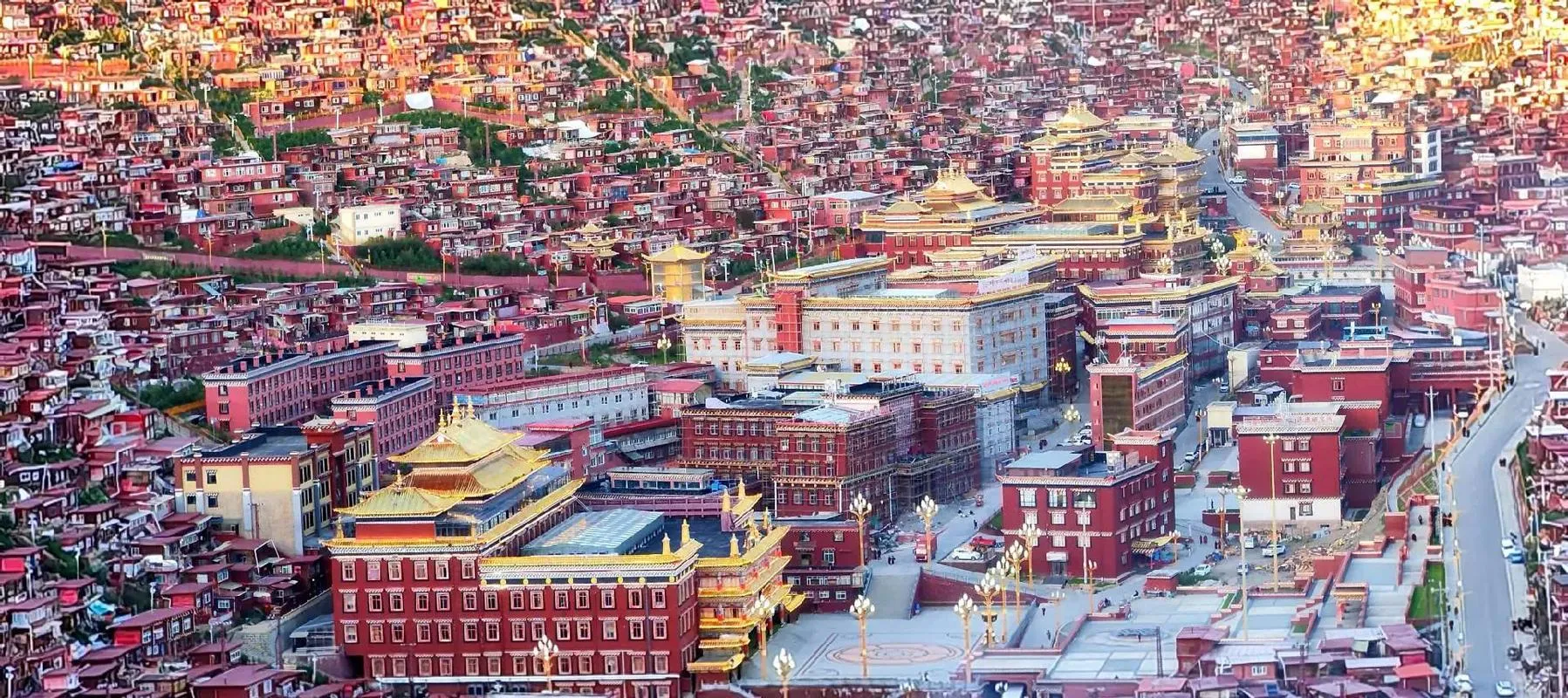 Seda from above: an entire hillside of red monk quarters around the golden hall.
The Larung Gar Buddhist Academy (色达佛学院) is one of the most visually arresting places in Asia. Thousands of small red-painted monk quarters blanket an entire valley, creating a vast red landscape that looks almost extraterrestrial from above. The sound of chanting echoes across the hills at dawn and dusk.
Warning: Elevation is approximately 13,100 ft (4,000 m); altitude sickness is a real risk. Acclimatize for at least one night at a lower elevation. Access policies change frequently; check current regulations before traveling.
Avoid: Taking close-up photos of monks without permission. This is an active religious community, not a tourist attraction. Be respectful and ask before photographing individuals.
4. Yuanyang Rice Terraces, Yunnan: A Thousand Years of Engineering
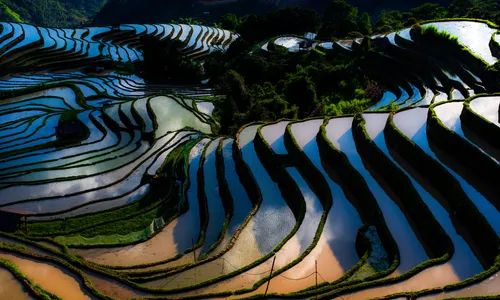
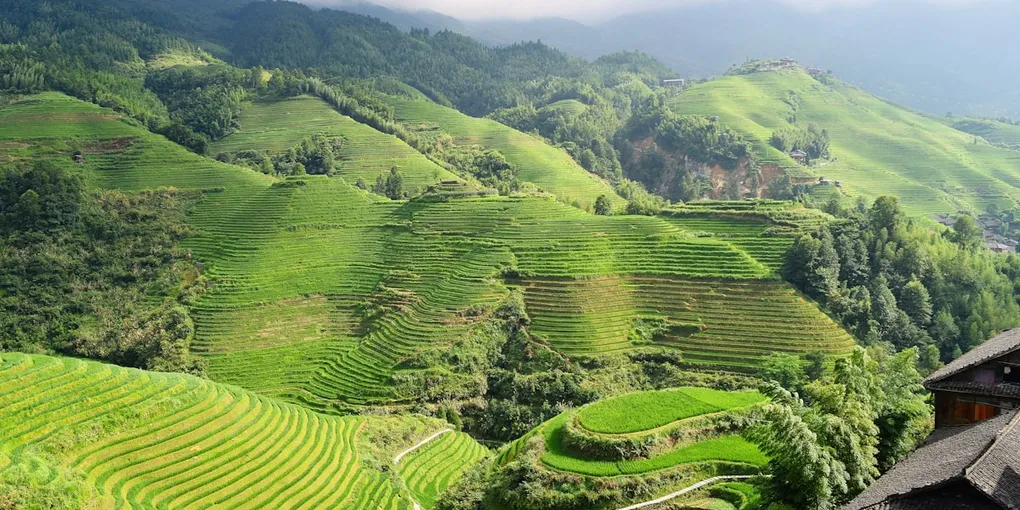
The Hani people have been carving these terraces out of the Ailao Mountains for over 1,300 years. During the irrigation season (November–April), each terrace becomes a mirror reflecting the sky, creating layered fields of silver, gold, blue and pink depending on the light.
Best for: Photographers who want world-class landscape images without the crowds at Longsheng or Bali. Sunrise and sunset from the Bada and Duoyishu viewpoints are the highlights.
Season: November to April (water-filled terraces). The rest of the year the terraces are green with growing rice, still beautiful but less dramatic.
5. Kuerdening Grassland, Xinjiang: The Secret Alpine Meadow
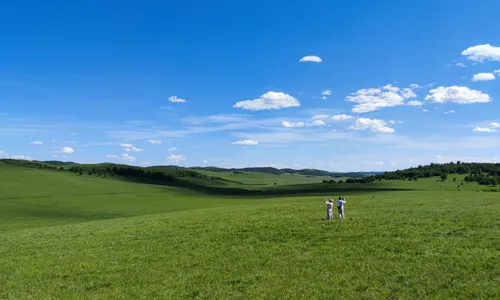
Tucked deep in the Tianshan Mountains, Kuerdening (库尔德宁) is a vast grassland threaded with ancient Tianshan spruce trees. Snow-capped peaks frame the meadow on all sides. Tourist numbers are minimal; this is where Xinjiang residents go when they want to escape other tourists.
Getting there: Drive from Yining (伊宁), about 3–4 hours. A self-drive trip through the Ili River Valley is the best approach.
Budget: ¥150–250 ($22–37) per day including car rental share.
6. Qiaxi Forest Park, Xinjiang: Budget Wilderness
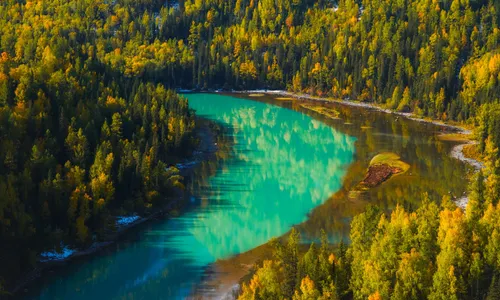
Qiaxi (恰西) offers the kind of pristine alpine scenery that costs ¥200+ at more famous parks, but at a fraction of the entrance fee. From May onward, the rolling grasslands and forest create a landscape that resembles the Swiss Alps, without the crowds.
Best for: Self-drive travelers exploring the Ili River Valley route. Combine with Kuerdening and Nalati Grassland for a 3–5 day road trip.
7. Wuhai, Inner Mongolia: Where Desert Meets Ocean
Wuhai (乌海) is the only place in China where a vast desert and a large body of open water exist side by side. The Wuhai Lake, created by a dam on the Yellow River, sits directly adjacent to the Ulan Buh Desert. The result is a surreal landscape: sand dunes on one shore, blue water on the other. It is one of China’s coldest hidden-gem cities for tourism.
Getting there: Fly to Wuhai Airport from Beijing or Xi’an. The city is small and easy to navigate.
Local Tip: Visit at sunset when the light turns the dunes gold and the water reflects the sky. The contrast is so dramatic it does not look real.
8. Xiapu, Fujian: The Photographer’s Mudflat
Xiapu (霞浦) is China’s most famous mudflat among Chinese photographers and almost unknown outside the country. At sunrise and sunset, the exposed tidal flats create geometric patterns of water, seaweed and mud that change color with the light. Bamboo poles used for seaweed farming add graphic vertical lines to the composition.
Best seasons: April–June (kelp harvesting) and October–December (seaweed harvesting). These are when the mudflats are most visually active.
Experience: Hire a local photography guide (¥200–300 / $29–44 per day) who knows the best viewpoints and tides.
9. Yushan Island, Fujian: Grassland in the Middle of the Sea
Yushan Island (嵛山岛) was named a “Pearl of the Sea” by Chinese National Geography. What makes it extraordinary is the combination: an island surrounded by ocean that contains alpine meadows and freshwater lakes on its hilltops. You can camp on the grasslands under one of the darkest skies on the Chinese coast.
Budget: ¥100–150 ($15–22) per day. Ferry from Sansha Port, Ningde (宁德三沙港).
10. Malinghe Grand Canyon, Guizhou: Earth’s Most Beautiful Scar
Malinghe Canyon (马岭河大峡谷) is a dramatically deep gorge with dense, cascading waterfalls lining its walls. The gorge runs for 44 mi (71 km), and multiple waterfalls plunge from the rim into the river below. It is also a premier whitewater rafting destination in China.
Combine with: Xijiang Miao Village and Guiyang for a 4–5 day Guizhou circuit. Guizhou remains one of China’s most underrated provinces.
11. Gannan (Gannan Tibetan Autonomous Prefecture), Gansu: Mini Tibet Without the Permits
Gannan (甘南) offers the essential Tibetan cultural experience (monasteries, grasslands, nomadic herders, prayer flags) without the altitude, the permit requirements or the crowds of Lhasa. The Labrang Monastery in Xiahe (夏河) has the world’s longest corridor of prayer wheels, stretching over 2 miles (3.2 km). Zhagana (扎尕那) is a fortress-like stone village surrounded by jagged peaks.
Best season: June–September, when grasslands are green and wildflowers bloom.
Budget: ¥150–250 ($22–37) per day. Fly to Lanzhou and take a bus (4–5 hours) to Xiahe.
Local Tip: Walk the full kora (pilgrimage circuit) around Labrang Monastery at dawn. You will be joined by Tibetan pilgrims spinning prayer wheels; it is one of the most authentic cultural experiences available in China without special permits.
12. Zhaji Ancient Village, Anhui: Where Painters Go
Zhaji (查济) is a 1,400-year-old village in southern Anhui province with over 100 surviving Ming and Qing dynasty buildings. It is the most popular destination in China for art students on painting excursions, which means the village has a quiet creative atmosphere that mass-tourism destinations have lost.
Experience: Stone bridges over a clear stream, weathered wooden facades, moss-covered walls. Rent a room in a village home for ¥80–150 ($12–22) per night.
Combine with: Huangshan (Yellow Mountain) and Hongcun for a 3–4 day Anhui heritage circuit.
13. Arxan, Inner Mongolia: Northern Fairy Tale
Arxan (阿尔山) is a small city (population under 50,000) in northeastern Inner Mongolia that packs an improbable range of natural features into a compact area: volcanic crater lakes, hot springs, primeval forest, grassland and a border with Mongolia. In autumn (September–October), the forests turn into a palette of red, gold and deep green. In winter, the snow-covered landscape looks like a Scandinavian postcard.
Budget: ¥200–300 ($30–44) per day. More expensive than other destinations here due to remote location and limited accommodation.
Local Tip: The Arxan National Forest Park entrance fee is steep (¥180 / $26.50), but the volcanic Tianchi (Heavenly Lake) inside is worth it. Visit in the first two weeks of October for peak autumn colors.
14. Enshi Pingshan Canyon, Hubei: China’s Semporna
The canyon waters at Pingshan (屏山峡谷) are so clear that wooden boats appear to float in mid-air in photographs. The images went viral on Chinese social media, earning the nickname “China’s Semporna” (after the diving paradise in Malaysian Borneo). The canyon itself is narrow, deep and dramatically lit.
Experience: Ride a wooden boat through the narrowest sections of the canyon. The water visibility exceeds 15 ft (5 m) on clear days.
Combine with: Enshi Grand Canyon for a 3-day Enshi trip. Enshi Tujia and Miao Autonomous Prefecture remains largely off the foreign tourist radar.
15. Jingbian Wave Valley, Shaanxi: China’s Answer to Arizona
The red sandstone at Jingbian (靖边波浪谷) has been sculpted by wind and water over millions of years into flowing, wave-like patterns that closely resemble the famous Wave in Arizona, but without the permit lottery. The Mars-like landscape covers a large area with multiple viewpoints and minimal tourist infrastructure.
Getting there: Drive from Xi’an (about 5 hours) or Yulin (2 hours). Public transport options are limited; a rental car or hired driver is recommended.
Combine with: A broader northern Shaanxi trip including Yan’an (Chinese Communist revolutionary history site).
Planning Your Hidden Gems Trip
Best approach: Pick 2–3 destinations in the same region and build a circuit rather than trying to visit scattered sites across China’s vast territory. Good regional clusters include:
- Yunnan circuit: Mangshi + Yuanyang Terraces (5–7 days)
- Guizhou circuit: Xijiang Miao Village + Malinghe Canyon + Guiyang (4–5 days)
- Xinjiang Ili Valley: Kuerdening + Qiaxi + Nalati (5–7 days, self-drive)
- Gansu circuit: Gannan (Xiahe + Zhagana) + Lanzhou (5–7 days)
- Fujian coast: Xiapu + Yushan Island + Xiamen (4–5 days)
Transport: Most hidden gems require flights to a regional hub followed by buses, hired cars or self-drive. China’s high-speed rail network is extensive but does not reach these secondary destinations. Budget extra time and money for ground transport.
Accommodation: Expect guesthouses and small hotels rather than international chains. Quality varies but prices are low: ¥80–200 ($12–30) per night is typical for a clean private room.
Destinations compiled from Xiaohongshu, Zhihu, KKday, Ctrip and Pengpai News traveler reports. Access policies, road conditions and opening status can change — verify locally before committing to long detours.
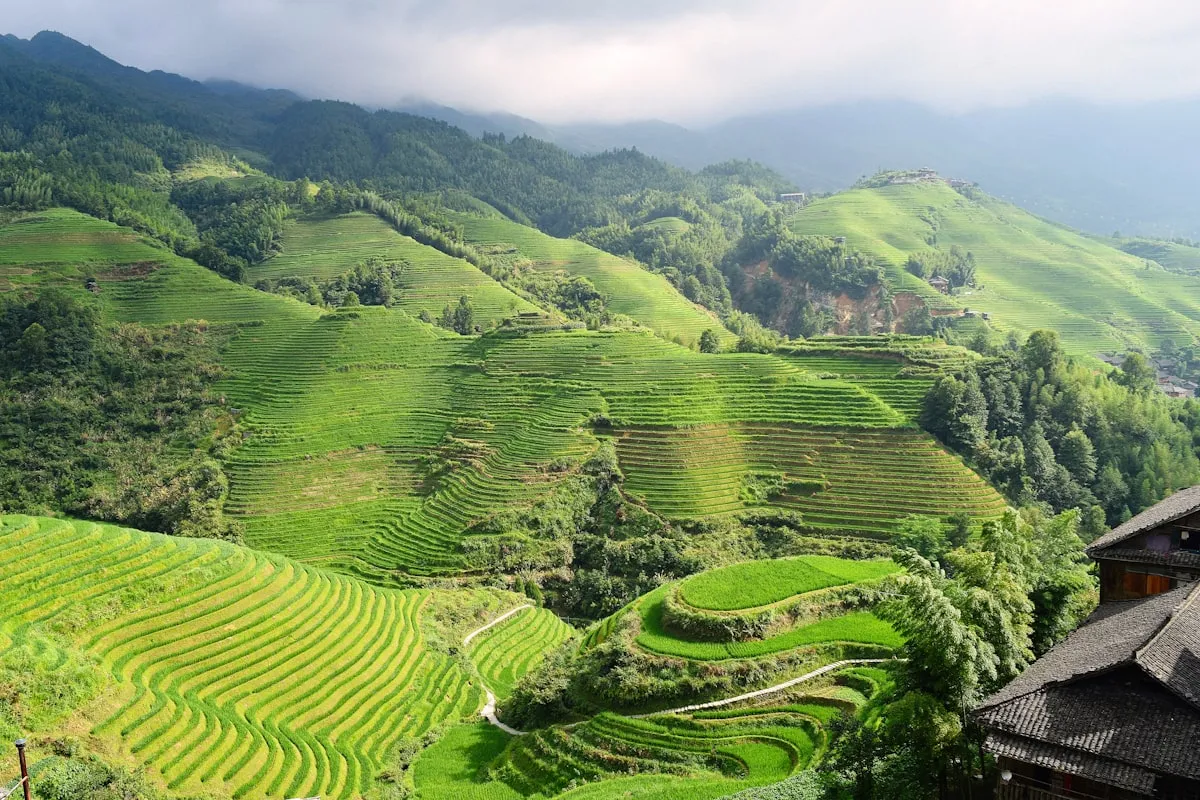 The Yuanyang Rice Terraces at sunrise during the irrigation season, when each terrace becomes a mirror reflecting the sky.
Sources & Verification
This guide was last verified on 2026-08-06. Key Chinese-language sources:
- Xiaohongshu (小红书, xiaohongshu.com): the main travel community cited in the lede, where Chinese travelers share the off-the-beaten-path destinations that make up this list.
- Zhihu (知乎, zhihu.com): Chinese Q&A community named in the lede as a sourcing source for these 15 destinations.
- Ctrip (携程, ctrip.com): China’s largest travel platform, used for the flight routes, transport notes and daily budget ranges throughout the guide.
- Chinese National Geography (中国国家地理): the publication that gave Yushan Island its “Pearl of the Sea” nickname, cited in entry 9.
See our full verification methodology.
Related Articles
- Best Time to Visit China (2026) — Seasonal recommendations for each region
- China Backpacking Budget Guide — Budget-friendly destinations like Mangshi and Dali
- 2 Weeks in China Itinerary — How to add off-the-beaten-path stops to a classic route