Terracotta Warriors Complete Guide - Tickets, Best Routes, Crowd Avoidance Tips
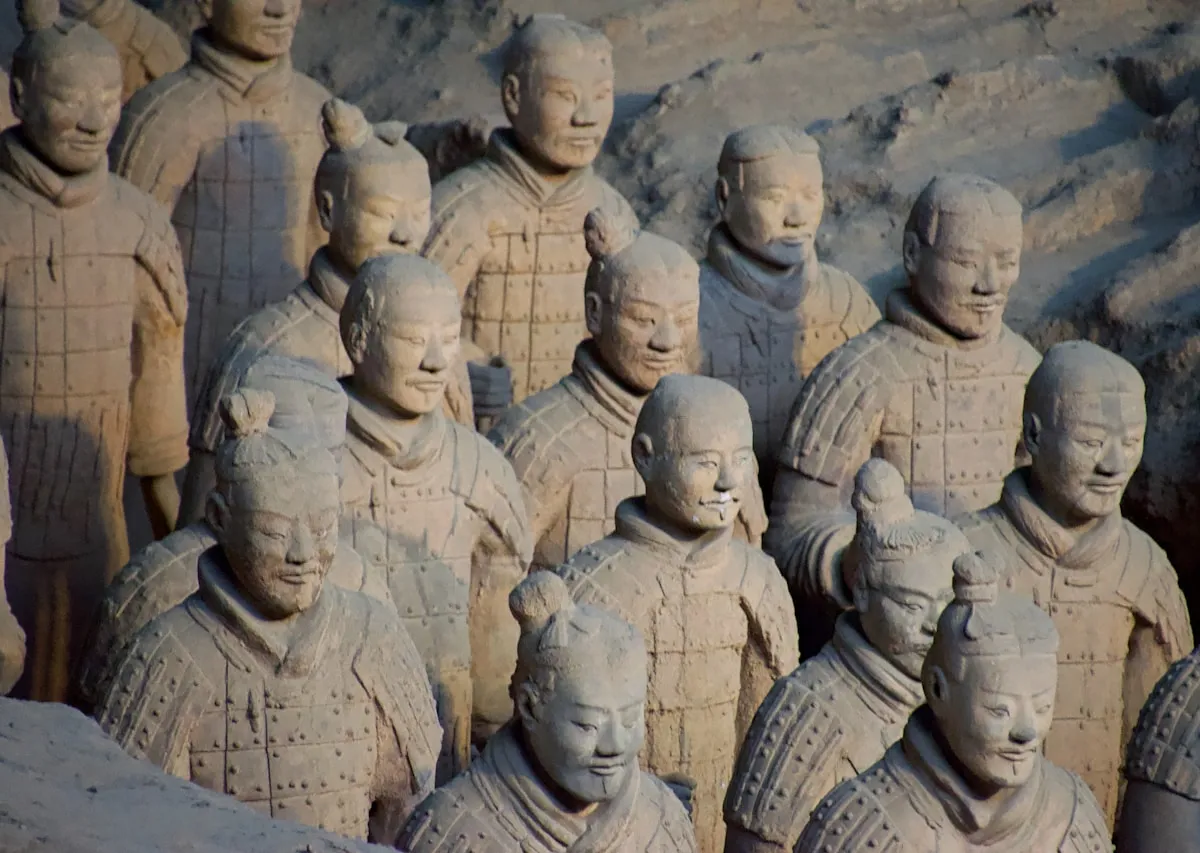
The Terracotta Army is not just an attraction; it is a confrontation with 2,200 years of history. More than 8,000 life-sized clay soldiers stand in formation inside three excavated pits near Xi’an, each one individually sculpted with unique facial features, hairstyles and expressions. Discovered in 1974 by farmers digging a well, the army was built to protect Qin Shi Huang (the first emperor of a unified China) in the afterlife. The site is now a UNESCO World Heritage Site and one of the most significant archaeological discoveries of the 20th century. But the scale of the site and the volume of visitors demand a plan. This guide gives you one.
How we verified this: SinoWander reads Chinese-language sources that English guides cannot, including the Emperor Qinshihuang’s Mausoleum Site Museum official site and WeChat account, Ctrip, Meituan, and traveler reports. We cross-check them before writing. We have not personally visited every location. Each guide is date-stamped when last verified: 2026-08-06. See our methodology.
The Historical Context (Why This Place Matters)
Before diving into logistics, it helps to understand what you are looking at. Emperor Qin Shi Huang ascended the throne in 246 BC at the age of 13 and immediately began construction on his mausoleum: a project that took 38 years and involved an estimated 700,000 workers. The terracotta army is just one component of a vast necropolis complex covering approximately 38 sq mi (98 km²). The emperor’s actual tomb mound, about 0.6 mi (1 km) from the excavated pits, remains unopened. Historical records describe a palace with mercury rivers simulating the empire’s waterways: soil tests have detected elevated mercury levels, suggesting the accounts may be true.
The three excavated pits represent only a fraction of the known underground structures. Pit 1 alone contains an estimated 6,000 figures, of which roughly 2,000 have been reassembled from fragments. Each figure originally held real bronze weapons, many of which were looted shortly after burial. The warriors were also originally painted in vivid colors (red, blue, green and purple) but the paint oxidizes and peels within minutes of exposure to air, which is why excavation proceeds extremely slowly.
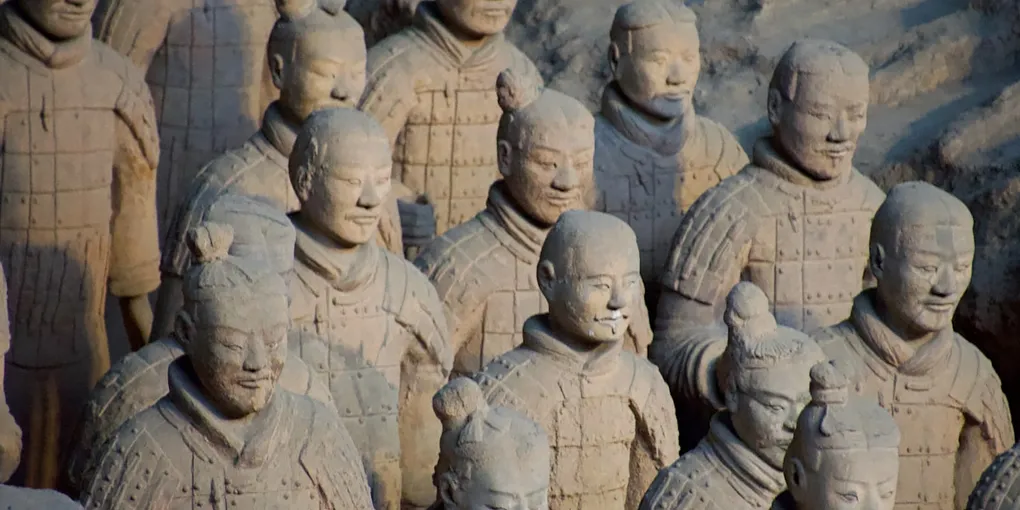
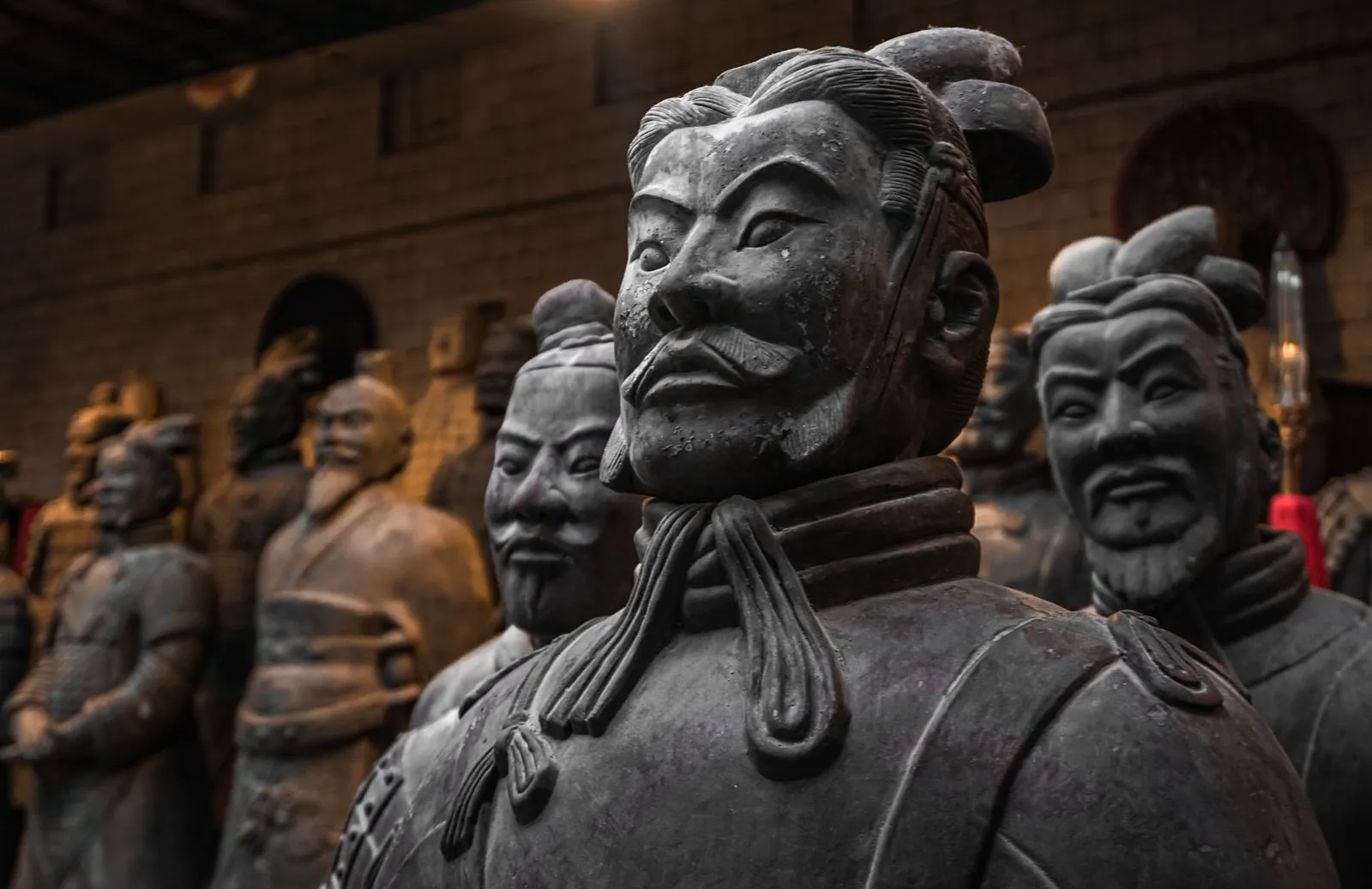 A terracotta warrior’s face in detail. Each of the 8,000 figures has unique facial features, hairstyles, and expressions.
Tickets and Pricing
🎫 Guided tour: Book a Terracotta Warriors tour with an English-speaking guide.
| Type | Price | Notes |
|---|---|---|
| Adult ticket | ¥120 ($17.70) peak season (Mar 16 – Nov 15) / ¥100 ($14.80) off-season (Nov 16 – Mar 15) | All-inclusive: Pit 1, Pit 2, Pit 3, Bronze Chariot Hall, Lishan Garden and shuttle bus between sites |
| Student ticket | ¥60 ($8.85) | Valid student ID required: international student cards (ISIC) are accepted |
| Electric cart (museum entrance) | ~¥10 ($1.50) | Optional: the walk from gate to entrance is about 10 minutes |
Free / discounted entry is available for seniors over 65, military personnel and disabled visitors: check the official website for current policies.
Local Tip: The all-inclusive ticket covers Lishan Garden (Emperor Qin’s mausoleum site), located about 1.2 mi (2 km) from the main pits. A free shuttle connects the two. Most tourists skip Lishan Garden, which means you may have it almost entirely to yourself. The peaceful walk through the landscaped grounds, with its manicured gardens and views of the unopened tomb mound, is worth the extra 90 minutes.
Opening Hours
| Season | Ticket / Entry Window | Closing Time |
|---|---|---|
| Peak (March 16 – November 15) | 8:30 AM – 5:00 PM | 6:30 PM |
| Off-peak (November 16 – March 15) | 8:00 AM – 4:00 PM | 5:00 PM |
During major holidays (Spring Festival, National Day), the site often extends hours: entry may open as early as 7:30 AM and close as late as 7:30 PM.
How to Buy Tickets
| Method | Details |
|---|---|
| Official WeChat account (recommended) | Search “秦始皇帝陵博物院” or “兵马俑” on WeChat |
| Official website | bmy.com.cn |
| Third-party platforms | Ctrip, Meituan, Qunar |
| On-site | Available, but risky during peak periods |
Booking advice:
- Real-name registration required: one ticket per ID document per day
- Peak periods (May Day, National Day, summer holidays): book 15+ days ahead
- Normal periods: book 7–15 days ahead
- Same-day booking cutoff: 4:00 PM
- Foreign visitors can use passport numbers for booking
Avoid: Arriving mid-morning during Chinese public holidays without a pre-booked ticket. You may find the entire day sold out and be turned away at the gate.
How to Beat the Crowds
The Terracotta Army receives over 10 million visitors per year. During peak season, daily attendance can exceed 60,000. Timing your visit correctly transforms the experience.
| Time | Strategy |
|---|---|
| 8:30–10:00 AM | Best window: fewest visitors, best natural light for photography. The morning light entering through Pit 1’s arched ceiling creates dramatic shadows across the ranks. |
| After 3:00 PM | Afternoon lull: tour groups depart for dinner, crowds thin. Good for unhurried exploration and photography. |
| 10:00 AM–3:00 PM | Peak congestion. Tour groups from Xi’an arrive in waves. Viewing rails at Pit 1 can be 3–4 people deep. Avoid if possible. |
| Holidays | Arrive before 8:00 AM or accept the crowds. Bring patience. |
| Best season for low crowds | Winter (November–March): fewer tourists, cheaper flights and hotels. The pits are covered and climate-controlled, so winter weather does not affect the experience. |
The Optimal Route Through the Pits
The museum recommends a specific order that avoids backtracking and tells a logical story:
North Gate 2 → Pit 1 → Pit 3 → Pit 2 → Bronze Chariot Exhibition Hall
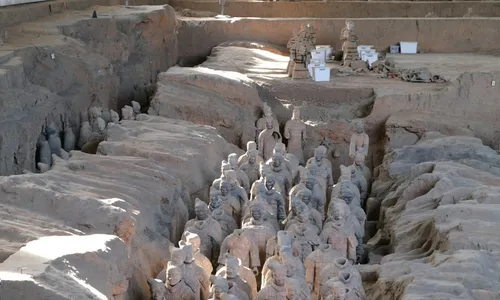
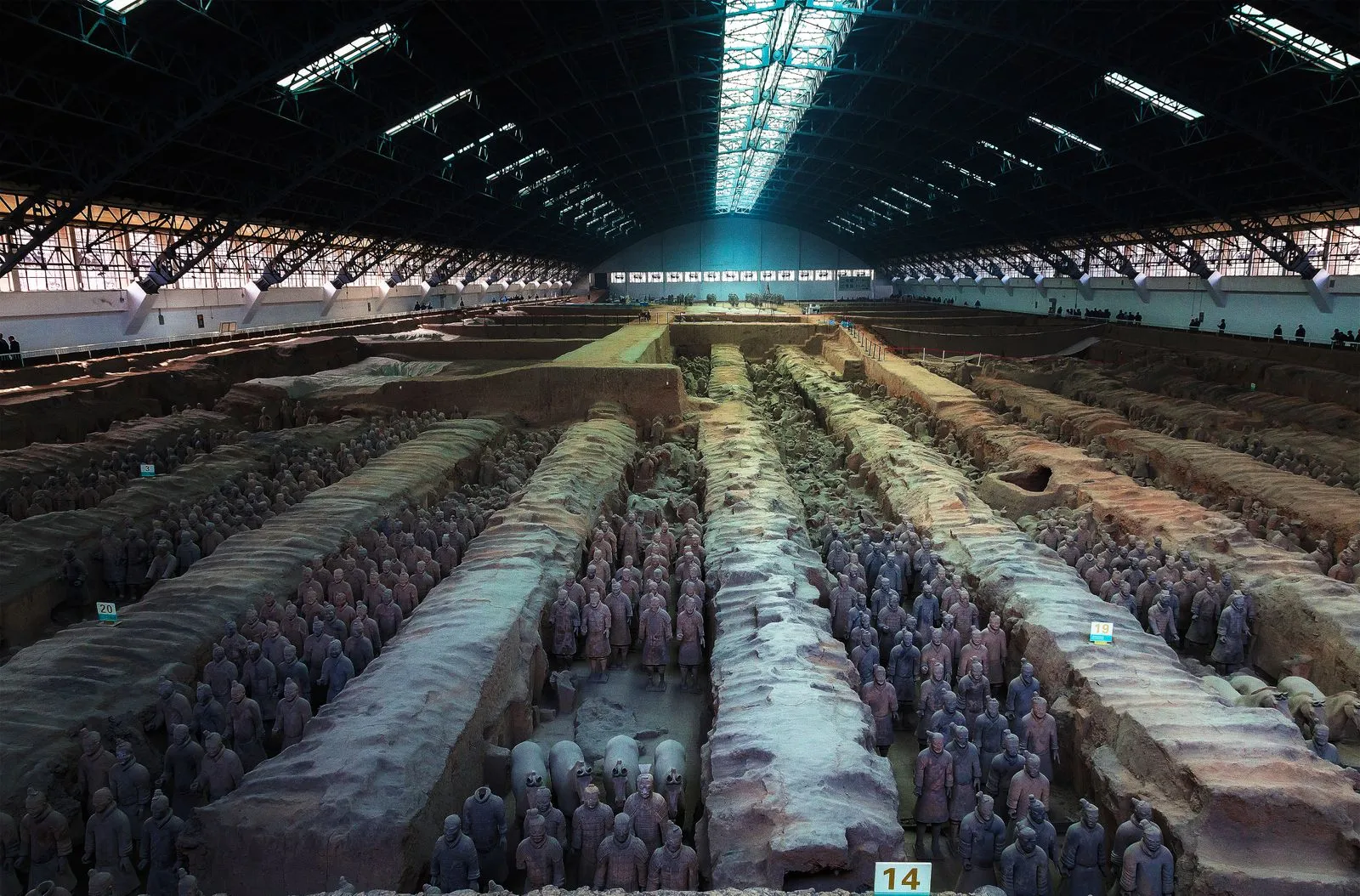 The Terracotta Army ranks in Pit 1, viewed under the museum’s arched steel roof. Pit 1 is the largest and most photographed of the three excavated pits.
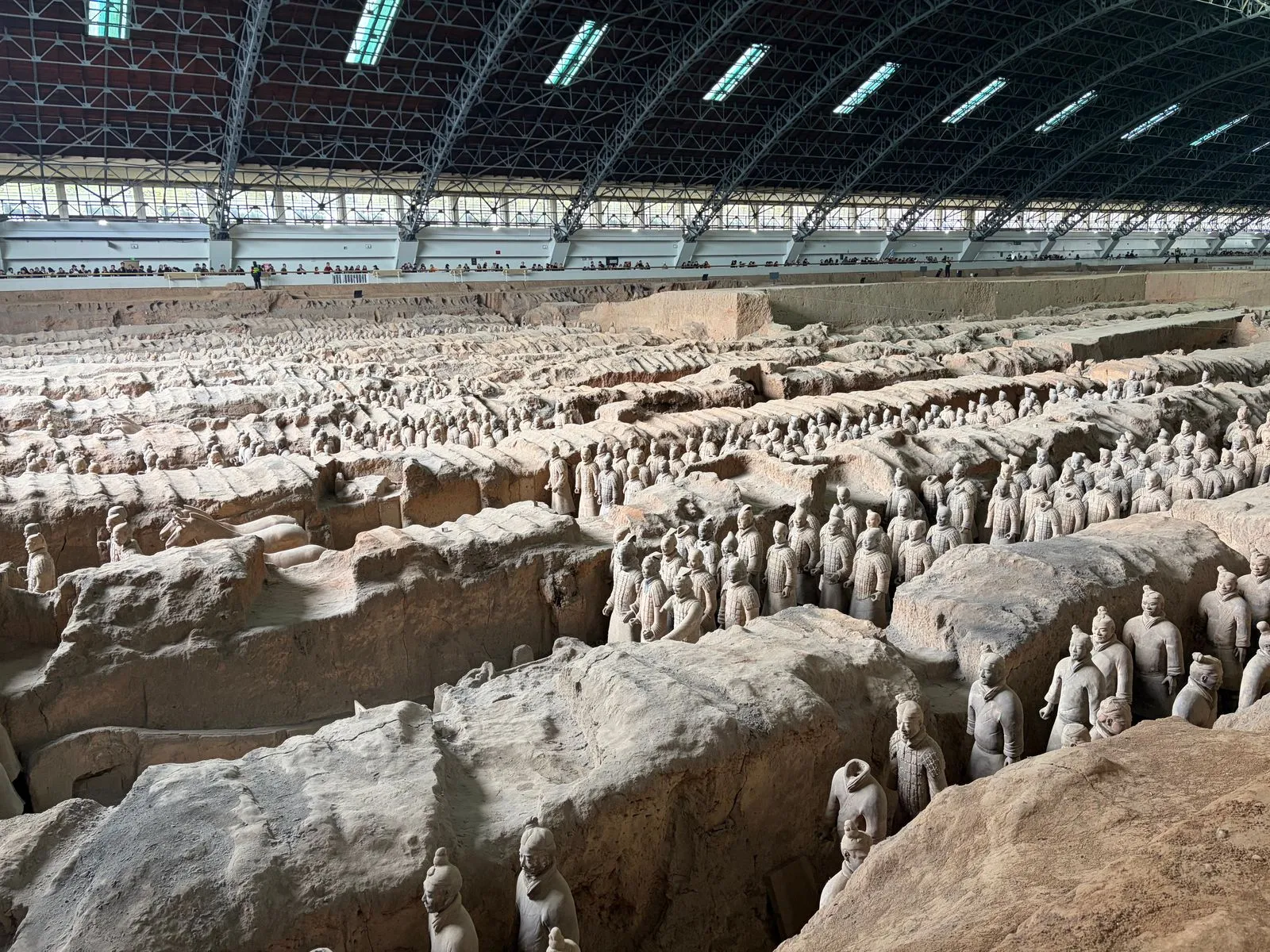 Ranks of terracotta warriors at the excavation site, with walkways above for viewing.
Pit 1: The Main Force
This is the one you have seen in photographs. The largest excavation at 153,000 sq ft (14,260 m²), Pit 1 contains the main army formation: infantry and chariots arranged in battle-ready columns across 11 parallel trenches. The sheer scale is staggering when you walk through the hangar-like structure and see the rows stretching into the distance, each figure slightly different from its neighbor. Look for details: different boot styles indicating rank, individualized mustaches and beards, and the remnants of colored paint on some figures near the rear of the pit where excavation continues.
At the far end of Pit 1, you can see the restoration workshop where technicians piece together broken warriors from scattered fragments: a jigsaw puzzle of staggering complexity that has been ongoing for 50 years.
Pit 2: The Mixed Forces
At roughly 65,000 sq ft (6,000 m²), Pit 2 reveals a combined force of cavalry, chariots and infantry arranged in a more tactical formation. It is the most diverse pit in terms of troop types and contains some of the best-preserved individual figures. Look for the kneeling archer in a firing position: the details on his crossbow mechanism and the tread pattern on his shoe sole are visible. Also notable is a standing archer and a cavalryman with his horse, all displayed in glass cases along the viewing corridors.
Pit 3: The Command Post
The smallest pit, believed to be the military headquarters or command center. The layout is distinctive: a compact arrangement with high-ranking officer figures and what appears to be a war chariot, rather than a mass infantry formation. The figures here were found deliberately smashed and scattered, suggesting the pit was looted and vandalized shortly after the emperor’s death.
Bronze Chariot Exhibition Hall
Two half-scale bronze chariots with horses, discovered in 1980 about 65 ft (20 m) from the emperor’s tomb mound. They are considered among the finest bronze artifacts ever unearthed in China, earning the nickname “Crown of Bronze.” The craftsmanship is astonishing: the umbrella mechanism on the first chariot can tilt and lock at multiple angles, the horses have individualized expressions, and traces of the original paint remain visible. Do not skip this hall.
Total visit duration: 3–4 hours for the main site, add 60–90 minutes for Lishan Garden.
Local Tip: The museum does not have extensive English signage. Without context, the pits can feel repetitive after the first overwhelming impression. Hire an English-speaking guide at the entrance (approximately ¥200–300 / $29–44 for a 2–3 hour tour) or rent an audio guide (¥40 / $5.90). Some visitors pre-download explanation videos and watch them on headphones while walking through; this is the budget option and works surprisingly well.
Getting There from Xi’an
The Terracotta Army is located about 22 mi (35 km) northeast of downtown Xi’an in Lintong District.
| Method | Details |
|---|---|
| Tourist bus (Bus 5 / Line 306) | From Xi’an Railway Station east plaza, direct to the museum. Runs every 10–15 minutes, takes about 1 hour. ¥7 ($1). This is the cheapest and most common option. |
| Taxi / DiDi | ¥80–120 ($12–18) one way, 40–60 minutes depending on traffic. Convenient if you are traveling with others to split the cost. |
| Organized day tour | Available on Ctrip, Klook and GetYourGuide: often includes hotel pickup, an English-speaking guide and sometimes lunch. Prices ¥300–600 ($44–89) per person. |
| Private driver | ¥400–600 ($59–89) for a full day including wait time. Best option if you want to combine the Terracotta Army with Huaqing Palace hot springs in Lintong. |
Avoid: The “free” or “discount” tour guides who approach you in the parking lot or near the entrance. They may steer you toward overpriced souvenir shops and jade factories. Book guides through official channels or reputable platforms only. Also ignore anyone claiming the museum is “closed today” and offering to take you elsewhere; this is a common scam targeting foreign visitors.
Practical Tips
- Wear comfortable shoes. The site is enormous and you will walk 3–5 mi (5–8 km) including the Lishan Garden shuttle area. The floors are concrete and unforgiving.
- Bring water and snacks. Food options inside are limited and overpriced. A bottle of water costs ¥5 ($0.74) outside and ¥10 ($1.50) inside.
- Photography is allowed in all pits, but flash and tripods are prohibited. The natural light in Pit 1 is best in the morning.
- Start with Pit 1 and follow the recommended order: it tells a coherent story that way, moving from the overwhelming scale of the army to the specificity of individual artifacts.
- Visit Lishan Garden in the afternoon when the main pits are crowded. The garden’s shaded paths, open spaces and relative silence are a relief after the packed viewing galleries.
- Allow a full day if you want to see both the Terracotta Army and downtown Xi’an comfortably.
- Bring a power bank: the site is large enough that your phone battery will drain from photos, navigation and translation apps.
- Visit the museum shop for quality souvenirs. The replica warrior figurines sold here are made by the museum’s own craftsmen and are higher quality than the mass-produced versions sold in roadside shops.
Combining with Xi’an City Sights
Most visitors allocate two days to Xi’an:
Day 1: Terracotta Army: Morning at the pits (3–4 hours), afternoon at Lishan Garden or return to the city for an evening at Muslim Quarter.
Day 2: Xi’an City: Cycle the 8.5-mile (13.7 km) circuit on top of the Ming-dynasty city wall (bike rental ~¥45 / $6.60 for 3 hours), visit the Bell and Drum Towers, eat your way through Muslim Quarter (Huimin Jie), and end the day at the Giant Wild Goose Pagoda and the Tang Dynasty Never-Sleeps City pedestrian zone, which lights up spectacularly after dark.
Xi’an Food You Should Not Miss
| Dish | What It Is | Price | Where to Find It |
|---|---|---|---|
| Roujiamo (肉夹馍) | Slow-braised pork inside a crispy flatbread: often called the Chinese hamburger | ¥8–20 ($1.20–2.95) | Muslim Quarter, any street stall with a queue |
| Liangpi (凉皮) | Cold wheat noodles in a spicy, tangy sesame-chili sauce | ¥8–15 ($1.20–2.20) | Ubiquitous in Xi’an |
| Yangrou paomo (羊肉泡馍) | Mutton soup with torn-up flatbread pieces: a Xi’an signature. You tear the bread yourself. | ¥25–50 ($3.70–7.40) | Muslim Quarter restaurants |
| Biangbiang noodles | Wide hand-pulled belt noodles with chili oil and vegetables | ¥15–30 ($2.20–4.40) | Any noodle shop in the city |
| Soup dumplings (灌汤包) | Steamed buns filled with hot soup: bite carefully | ¥15–25 ($2.20–3.70) | Jiasan Soup Dumpling Restaurant in Muslim Quarter |
Quick Reference
| Item | Detail |
|---|---|
| Address | Qinling North Road, Lintong District, Xi’an (西安市临潼区秦陵北路) |
| Distance from Xi’an | ~22 mi (35 km) |
| Ticket price | ¥120 ($17.70) adult peak season (Mar 16 – Nov 15), ¥100 ($14.80) off-season, all-inclusive |
| Time needed | 3–4 hours (main site), 5–6 hours (with Lishan Garden) |
| Best time to arrive | 8:30 AM (opening time) |
| Worst time to arrive | 10:00 AM–3:00 PM during holidays |
| Guide cost | ¥200–300 ($29–44) for English-speaking guide |
| Audio guide | ¥40 ($5.90) rental |
| Emergency number | 110 (police), 120 (ambulance) |
| Official website | bmy.com.cn |
Prices and hours subject to change. Verify through the official website at bmy.com.cn before your visit. Information compiled from Emperor Qinshihuang’s Mausoleum Site Museum official sources, Xi’an tourism platforms and traveler reports.
 Thousands of terracotta warriors stand in formation inside Pit 1, the largest excavation at the museum.
Sources & Verification
This guide was last verified on 2026-08-06. Key Chinese-language sources:
- 秦始皇帝陵博物院 (Emperor Qinshihuang’s Mausoleum Site Museum, bmy.com.cn): official museum source for the ¥120 peak-season / ¥100 off-season all-inclusive ticket, real-name registration policy, peak and off-peak opening hours, and the recommended North Gate 2 route through the pits.
- 携程 (Ctrip): third-party booking platform cross-checked for ticket purchase methods, tourist bus and day-tour options from Xi’an.
- 美团 / 去哪儿 (Meituan / Qunar): additional third-party booking platforms referenced for ticket purchase alternatives and booking lead times.
- Traveler reports: on-the-ground details such as the ¥5 versus ¥10 inside-versus-outside water price gap and the 8:30 to 10:00 AM low-crowd window.
See our full verification methodology.
Related Articles
- Xi’an Travel Guide (2026) — Full 2-day itinerary including the Muslim Quarter and City Wall
- 2 Weeks in China Itinerary — Xi’an as Day 4-5 of the classic route
- China Entry Requirements (2026) — Visa options for visiting Xi’an