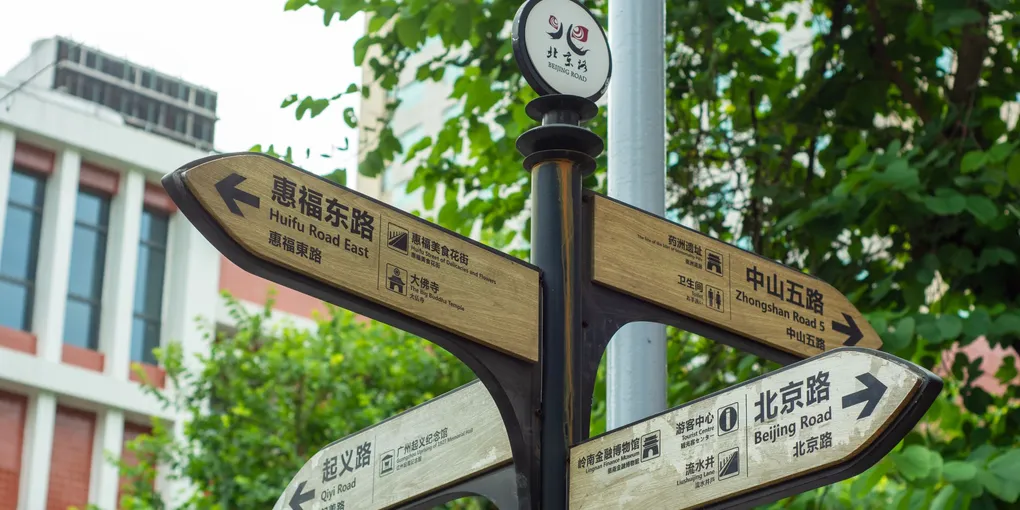
Surviving China Without Chinese (2026): Translation Apps That Actually Work, English Hotlines, and 20 Words That Carry You
The fear that stops more China trips than any visa rule: nobody will understand me. The fear is half right. Outside airports, five-star lobbies and university districts, English disappears, and China ranks in the low band of the EF English Proficiency Index (#86 of 123 countries). But the conclusion most guides draw from that, “hire a guide or suffer”, is wrong, because the tools that close a language gap in China in 2026 are better than the guides admit, and most of them are free.
One idea carries this whole guide: in a country where over 95% of adults can read Chinese, your phone screen is a better interpreter than your mouth. Translate into Chinese, turn the screen around. That single move, plus a handful of apps set up before you land, dissolves most of the situations travelers face.
Quick answer: Don’t count on English (China scores “Low” on the EF index; airports and hotels yes, taxi drivers and noodle shops no). Set up your tools before departure: download Google Translate’s offline Chinese pack (text and camera translation then work with no VPN; voice conversation mode does not), or use the iPhone’s built-in Translate, which downloads language packs inside China. WeChat’s scan-to-translate renders Chinese menus into English when your WeChat interface is English. In trouble, Beijing’s 12345 hotline answers in 8 foreign languages around the clock, Shanghai’s in 18 (press 7 for English). And learn the number gestures: 6 through 10 are signed nothing like the West.
How we verified this: SinoWander reads the Chinese-language sources English guides cannot: Ministry of Education language-survey data, the Shanghai and Beijing government English portals on hotline services, WeChat and Apple official support documents, DeepL’s China App Store listing, and hospital price lists published verbatim by Jiahui and Beijing United Family. Claims were cross-checked against foreign travelers’ first-hand reports from 2024 to 2026. Each guide is date-stamped when last verified: 2026-08-20. See our methodology.
What English Actually Gets You
The EF English Proficiency Index puts China at 464 points, band “Low”, ranked 86th of 123, with listening as the weakest skill. The number hides the real pattern, which is not regional but occupational. The same city contains airport staff who handle your lost-luggage form in English and the taxi driver outside who cannot read the hotel name you show him. Youth helps; street food stalls, taxi ranks and neighborhood restaurants are where English dies.
A rough expectation to travel on: front-line staff at airports, high-end hotels, major attractions and banks will manage basic English in the biggest cities. Everywhere else, plan to communicate through your screen.
The Translation App Matrix: What Works, What Pretends, What Fails
This is the section most English guides get wrong, because the facts changed twice and most articles still describe 2019.
Google Translate: blocked online, alive offline. Google shut down its mainland China translation service in October 2022, citing “low usage”, and the app and website have been blocked since. Here is the part guides miss: if you download the offline Chinese pack before you fly, typed text and camera translation keep working with no connection at all. Point your camera at a menu or a station sign, and the translation paints over the original. Two honest limits: downloading the pack itself requires reaching Google’s servers (so do it at home, or over roaming data, which exits through your home carrier), and the two-way voice conversation mode silently fails offline because it needs those servers. If voice conversation is your plan, that is what a VPN is for; our internet guide covers that setup separately.
iPhone users already own the quiet winner. Apple’s built-in Translate app is on the Chinese App Store, its Mandarin language pack downloads inside China without a VPN, and on-device mode translates text, voice and even conversations offline. Several travelers on r/travelchina report the iOS 26 live-translation features working on foreign phones in China with foreign Apple accounts. One boundary: the newest AI-powered features are switched off for phones located in China with a Chinese-region Apple account, a rule that does not apply to the phone you flew in with.
WeChat: the menu scanner you already have. WeChat’s built-in scanner (the plus button, Scan, then Translate) photographs Chinese text and overlays the translation. The translation direction follows your interface language: with WeChat set to English, you photograph Chinese and get English. The claim you will see on older English blogs, that WeChat “only translates into Chinese”, was true of Chinese-interface setups and is wrong for yours. It struggles with artistic fonts and handwriting, and oddly, it can misbehave while a VPN is running. If you have not set up WeChat for payments yet, start with our apps guide.
DeepL: not blocked, officially on the App Store, occasionally moody. The web translator loads without a VPN most of the time (we verified a direct connection from a mainland network while Google timed out), and the DeepL app is listed on the China App Store with a 4.8 rating. Chinese user reviews note it can be slow or flaky without a VPN. Reliable enough to keep, wrong enough to be your only tool.
The Chinese apps: built for this exact country. Baidu Translate, Youdao and Tencent Translator all run natively, no VPN, no workarounds, and the first two include an English interface option in settings (Baidu: Me → Settings → Language). Their killer feature is the two-way conversation mode with speech recognition tuned to Chinese environments, and downloadable offline packs. The English-internet claim that “Baidu apps have no English” is about Baidu Maps, not Baidu Translate.
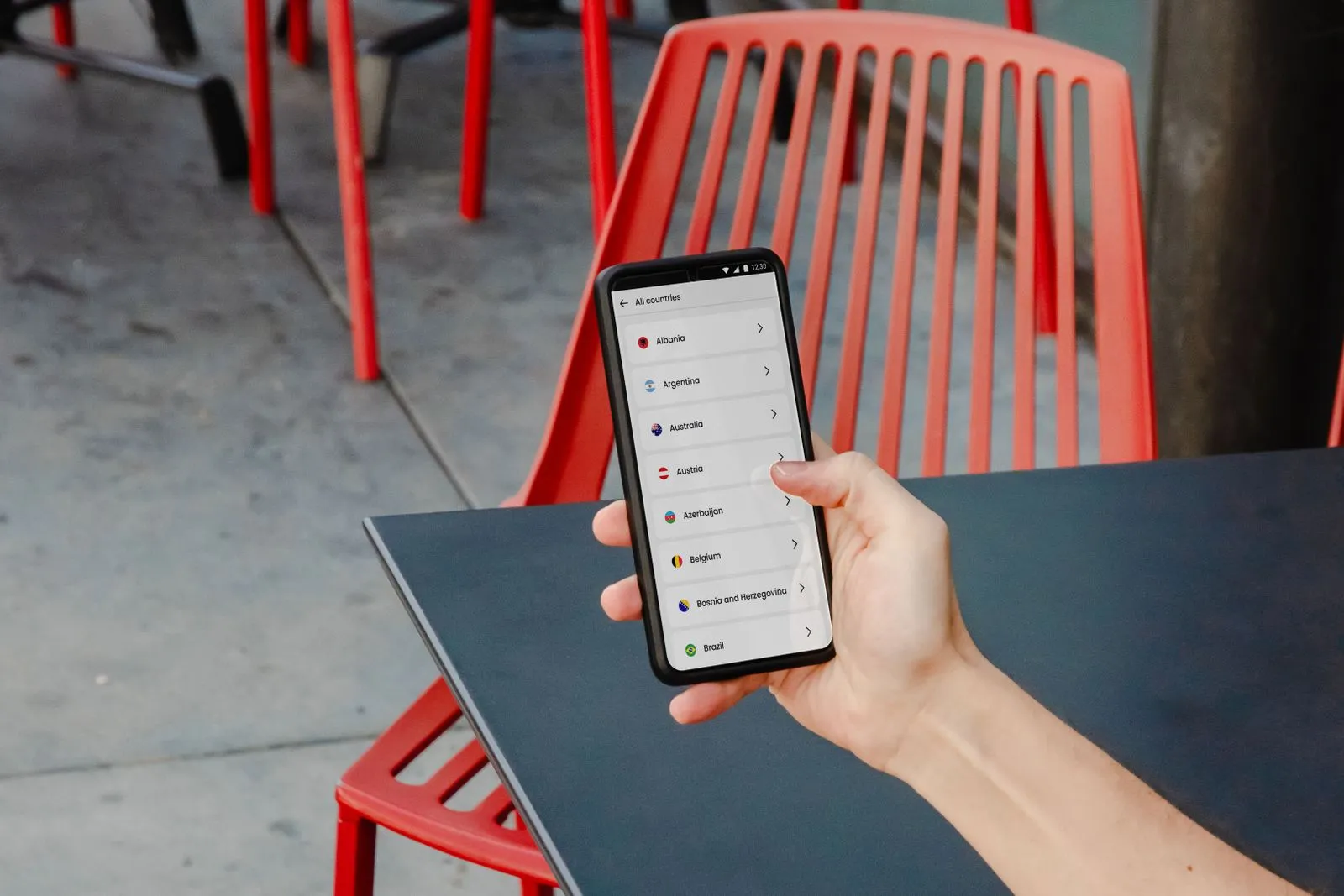 Choosing languages on a translation app. Set the pair to Chinese and English, then download offline packs before you fly.
The Move That Beats Every App: Show, Don’t Speak
With literacy above 95%, written Chinese is the one language everyone around you shares. That flips how you use translation. Typing a sentence and reading it aloud in mangled tones is the weak version. The strong version: type it, turn the screen around, and let the other person read. Waiters read your screen, nod, and point at the right dish. Shopkeepers type prices into their calculator and show you, or hold up fingers. Drivers wave your phone’s map at a passing security guard to confirm an entrance. In markets and taxis, the calculator-and-screen exchange is a national institution, and nobody finds it awkward, including you, after day two.
The same logic makes photos your waypoint language: a screenshot of your hotel’s Chinese name and address, shown to a taxi driver, outperforms any pronunciation. Save it before you need it.
Twenty Words and Ten Fingers
Nobody expects you to learn Mandarin for a two-week trip. But twenty words change how rooms feel, because trying registers. The working core: hello (nǐ hǎo), thank you (xièxie), how much (duōshao qián), too expensive (tài guì), a bit cheaper (piányi yīdiǎn), this one (zhège), that one (nàge), I want (yào), I don’t want (bùyào), no spicy (bùyào là), check please (mǎidān), toilet where (cèsuǒ zài nǎlǐ), water (shuǐ), help me (bāng wǒ), sorry (duìbùqǐ), it’s okay (méi guānxi), where is (zài nǎlǐ), and the numbers one through ten.
The numbers have a visual companion most foreigners have never seen. Chinese speakers count one to ten on one hand, and while one through five match Western habits, six through ten are signed completely differently: six is thumb and pinky extended, seven is fingertips pinched together, eight is thumb and index finger like a pistol, nine is a hooked index finger, ten is a fist or crossed index fingers. The system grew out of market trading precisely so that two people speaking different dialects could still agree on a price without saying a word. Use it at stalls and watch faces light up; read it when a vendor answers your “how much” with a flash of fingers.
 Counting on one hand, the Chinese way. Six through ten are signed nothing like Western numbers.
Eating: the QR-Code Wall and Your Right to a Human
The single most common language shock in China is not a street sign; it is the restaurant table where the menu is a QR code that opens a Chinese-only mini-program with pictures too small to gesture at. It is the default in chain restaurants now, and paper menus are disappearing from some of them.
Three responses, in escalating order. First, your camera translator reads the mini-program screen like any other text. Second, ask for a human: say “fúwùyuán” (waiter) and point at another table’s food, a maneuver with a long and honorable history. Third, and this surprises most visitors, you have a regulator on your side: China’s consumer association has stated that refusing paper menus and forcing QR-only ordering infringes consumers’ rights, and Beijing’s consumer body has formally pushed restaurants to keep a staffed alternative. “Only scan-ordering” is against the rules, not just inconvenient. The wider mechanics of eating as a foreigner, including payment, are covered in our apps guide.
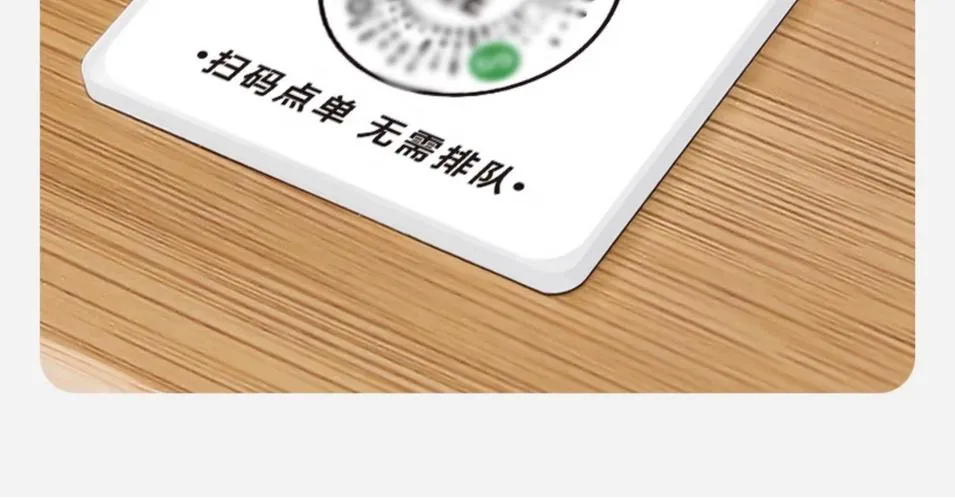 Scan-to-order is the default at chain restaurants. Asking for a human is your right, and the rules back you.
Getting Around Without Speaking
Taxis and ride-hailing. DiDi, the ride-hailing app, has a full English interface (it offers to switch when your phone’s language is English), accepts foreign numbers and international cards, and translates chat messages with drivers in both directions automatically. One gap: phone calls from drivers are not translated, which is why the pickup-spot message matters. Our DiDi guide walks through registration. For street taxis, the address-screenshot trick does the talking.
Trains. The 12306 railway app now ships with an English interface and foreign-passport registration with online identity verification, no station visit needed since late 2023. A quirk worth knowing: 12306’s English website registers only foreign passports; it exists specifically for you, and Chinese ID holders cannot use it, which is the reverse of what most guides imply. Buy tickets there or in the app, or read our train ticket guide and high-speed rail guide. Metro systems: station names are bilingual, turnstile screens switch to English, and apps like Alipay carry transit codes; our subway guide has the detail.
 Asking for directions. A phone with the address in Chinese outperforms pronunciation.
When You Need Help: Hotlines That Speak English
This is where China quietly outperforms its reputation, and where English-language guides are furthest behind.
12345, the everything-hotline. Beijing’s answers in eight foreign languages (English, French, Spanish, Russian, German, Japanese, Korean, Arabic) around the clock: dial, press 1 at the Chinese prompt, and speak your language; the operator routes you to an interpreter seat, with Beijing Foreign Studies University’s multilingual center on three-way call. Shanghai’s 12345 provides 18 foreign languages, English available 24 hours: dial, then press 7. Foreign residents report real success calling about refused hotel bookings and similar disputes. The “10 languages” figure you will find in older English articles is a 2022 number that the city has since doubled; the official Shanghai English portal states the current one. Use 12345 for consumer disputes, taxi complaints, and “who do I call about X”.
110, the police. Foreign-language answering exists but is built city by city, not nationally: Beijing runs 8 languages through a university volunteer center on three-way calls, Shanghai maintains a 9-language volunteer roster with 24-hour availability plus WeChat reporting in 9 languages, and Guangzhou staffs dedicated English desks. In smaller cities, expect Mandarin and bring your translation app. Emergency dispatching being what it is, calling 110 with a clear address and even broken language still sends help; the text-signal 12110 is Chinese-only.
120, ambulance. Dispatch is Mandarin-first. For serious situations, the strong move is calling 120 for the ambulance and 12345 (or your hotel front desk) for the language.
Getting Sick: What English Costs
Medical care sorts into three tiers, and the price ladder is the language ladder. A standard outpatient visit at a public hospital runs ¥20-50 (¥50 at Beijing’s top-tier hospitals, less at community clinics) with essentially no English support; you register, queue and describe symptoms through your phone, which thousands of travelers do without drama. Public hospitals’ international departments cost ¥300-1,200 per consultation and provide English-speaking coordinators and shorter queues; at Peking Union Medical College Hospital the same doctor who sees you for ¥100 on the public side charges ¥900 on the international side, a clean illustration of what you are buying. Foreign-run private hospitals (Beijing United Family, Jiahui, Parkway) run ¥500-2,000+ per visit with fully English environments, and their published price lists are exactly what our numbers come from. International departments concentrate in Beijing, Shanghai, Guangzhou and Shenzhen; in smaller cities the public-plus-phone method is the method. Whatever tier you expect to use, travel insurance that directly bills hospitals is worth more than any phrasebook, and our insurance guide explains the fine print.
 A hospital international-department front desk, where English support is built in and the consultation costs more.
Mandarin, Dialects, and How Far the Lifeline Reaches
The official figure: 80.72% of the population can converse in Mandarin (2020 national survey, still the number the Ministry of Education cites). About one in five, roughly 280 million people, concentrated in rural areas, among older generations and in some minority regions, cannot use it fluently. Sixteen provinces exceed 85%; nine sit below 80%. What this means for you: along the standard tourist corridor, city to city by train and tram, Mandarin coverage is effectively universal. It thins in depth: villages in the far west, parts of the countryside in Fujian, Guangdong’s Cantonese-first neighborhoods, and among elderly people everywhere. You will also hear dialects that are mutually unintelligible with Mandarin, Shanghainese, Sichuanese, Cantonese, Min, but dialect speakers switch to Mandarin for outsiders as a matter of course. The number gestures and the screen trick work across every one of these boundaries, which is exactly why they exist.
At sights and museums, English provision is thinner than ticket pages suggest. The Forbidden City rents foreign-language audio guides for ¥40 (35 languages plus 8 Chinese regional ones) with a deposit, but its official app includes a free digital guide worth downloading before you go; most major museums follow the same pattern of paid devices, patchy English labels, and increasingly a free app or mini-program. Setting expectations correctly: the audio infrastructure is for direction, not depth.
The Verdict
Go, and go equipped rather than fluent. Before departure: Google Translate offline pack or iPhone language packs, WeChat installed, DiDi registered, your hotels’ Chinese addresses screenshotted. On the ground: show screens instead of speaking, use the calculator-and-fingers marketplace language, press 7 when Shanghai asks. The travelers who struggle in China are not the ones without tones; they are the ones who arrived assuming translation works like it does at home, online and out loud. The ones who thrive arrived with the offline pack.
Sources & Verification
This guide was last verified on 2026-08-20. Key Chinese-language sources:
- Ministry of Education (教育部): the 2020 national language survey figure of 80.72% of the population able to converse in Mandarin, still the number cited in its 2025 releases, and the profile of the roughly 280 million people outside that coverage.
- Beijing Municipal Government (北京市人民政府): the English portal’s confirmation that the 12345 hotline answers in eight foreign languages around the clock, with Beijing Foreign Studies University’s multilingual center joining by three-way call.
- Shanghai Municipal Government (上海市人民政府): the English portal’s current figure of 18 foreign languages for Shanghai’s 12345 (press 7 for English), replacing the outdated 10-language number from 2022.
- The Palace Museum (故宫博物院): the foreign-language audio guide rental at ¥40 covering 35 languages, plus the free digital guide inside the official app.
- China State Railway 12306 (中国铁路12306): the English site that registers only foreign passports, and the app’s English interface with online passport verification since late 2023.
- Jiahui Health and Beijing United Family Hospital (嘉会医疗/北京和睦家医院): published outpatient price lists backing the private-hospital tier of ¥500-2,000+ per consultation, against the ¥300-1,200 international-department tier.
- WeChat official help center (微信帮助中心): the scan-to-translate direction following your interface language, which is why an English-interface WeChat photographs Chinese and returns English.