Public Toilets in China (2026): A Foreigner's Guide
Getting fed, getting around and getting online in China all have well-worn English playbooks. Using the toilet does not — and what little advice exists is roughly fifteen years out of date. Three claims appear in nearly every English guide: that China is all squat toilets, that you must always carry your own paper, and that you must never flush it. All three are now wrong or badly incomplete.
This guide is built from Chinese-language material English coverage has never translated: national sanitary standards, railway supervision rules, a 2001 national order banning toilet fees at transport hubs, the Ministry of Transport’s 2026 service-area plan, and replies from municipal sanitation bureaus. It covers what you will actually find, where to look, what the “scan for paper” machines are, why trains lock the toilet, and the bottom rung of the ladder that no English guide mentions at all.
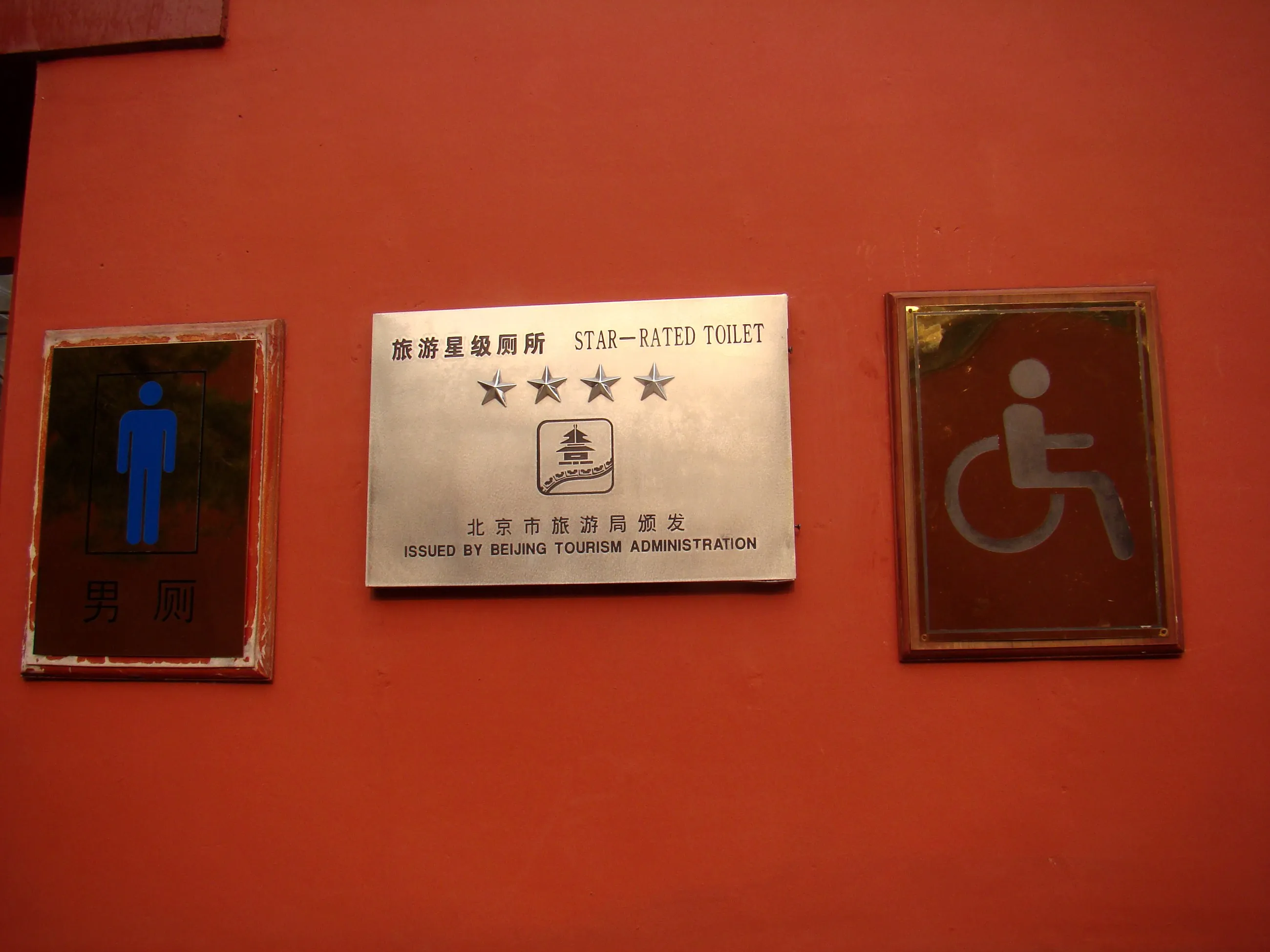
How we verified this: SinoWander reads Chinese sources English guides miss — CJJ 14-2016 (urban public toilet design standard), GB/T 20810-2018 (toilet paper dispersibility), GB 55019-2021 (accessibility code), State Railway Administration supervision rule 国铁运输监〔2018〕27号, the 2001 pricing order 计办价格〔2001〕398号, and the Ministry of Transport’s 2026 expressway service-area plan. We flag what we could not confirm. Last verified: 2026-10-03. See our methodology.
Why toilets deserve their own chapter
Start with scale, because the impression that China has no public toilets is simply false. Since the tourism “toilet revolution” began in 2015, roughly 150,000 tourist toilets have been built or rebuilt nationwide — a figure the Ministry of Culture and Tourism’s party leadership group published in Qiushi in October 2024. By the end of 2019, 107,000 of them had been mapped on Baidu Maps, an 89.2% mapping rate, with detail pages listing cubicle counts and whether a family restroom was available.
National planning standards put urban public toilet density at three to five per square kilometre of developed land, with a denser band of four to seven for municipalities and provincial capitals. In practice that supports a reasonable expectation of a toilet within a five-to-ten-minute walk across most city centres. Luoyang’s urban management bureau reported main-district density above five per km² in December 2025; Chengdu’s built-up area was measured at about 5.1 per km² in 2022.
None of this means every toilet is pleasant. It means the problem for a visitor is not whether one exists — it is knowing which tier to aim for, and what you will find inside.
Squat vs sit: what you’ll actually find
The single most repeated line in English guides is “China is all squat toilets.” The honest answer is more useful: squat is the default by design, and sit is reliably available in specific places.
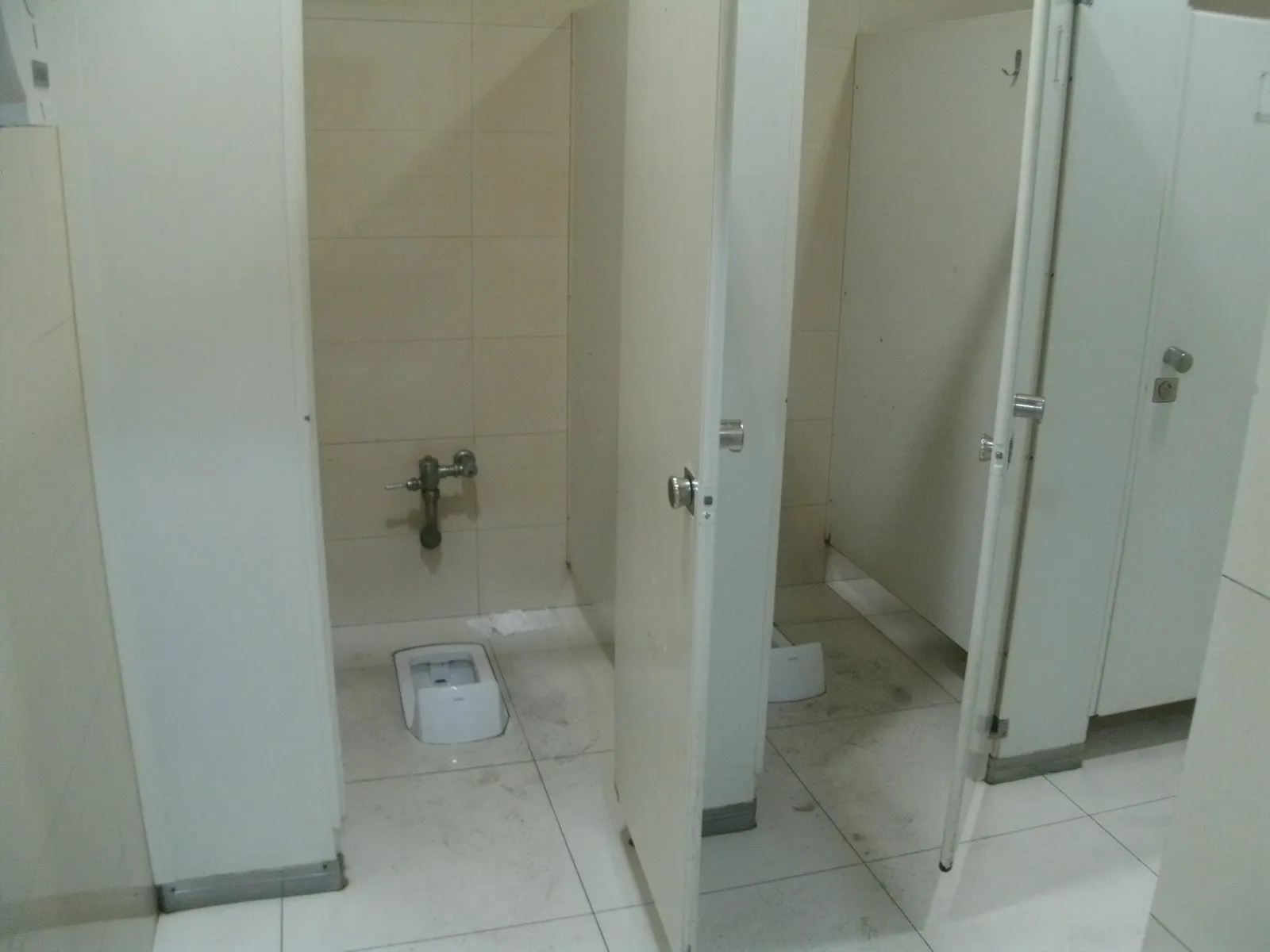
China’s urban public toilet design standard, CJJ 14-2016, states plainly in clause 4.3.6 that “the layout of toilets shall be mainly squat pans” (大便器的布置应以蹲便器为主). Squat-by-default is a national design rule, not just a legacy habit in old neighbourhoods. That is the baseline. On top of it sit several hard guarantees for seated toilets:
- Railway stations and high-speed trains. State Railway Administration rule 国铁运输监〔2018〕27号, Article 14, requires toilet paper and hand soap in high-speed station toilets and in soft-seat-and-above waiting rooms, and specifies that seated toilets must be provided with disposable seat covers (坐便器配一次性坐便垫圈) — on CRH/EMU trains as well as in stations.
- Third restrooms (第三卫生间). CJJ 14-2016 requires these in class-I fixed public toilets, in hospitals at grade 2 and above, and in transport hubs. Their mandatory fit-out includes an adult seated toilet plus a child-height seated toilet, child-height urinal, adult and child-height basins, a baby-changing table, a child safety seat, grab rails and an emergency call button. Minimum usable area is 6.5 m².
- Expressway service areas. The Ministry of Transport’s 2026 upgrade plan sets a target of seated cubicles reaching at least 20% of non-urinal cubicles. Read that number honestly: because 20% is a 2026 push target, the current reality is still mostly squat. Inner Mongolia’s implementing plan adds 700 seated cubicles in a single year to reach the same 20%. A separate 2021 directive already required at least one ordinary seated cubicle on each side, for men and women, beyond the accessible one.
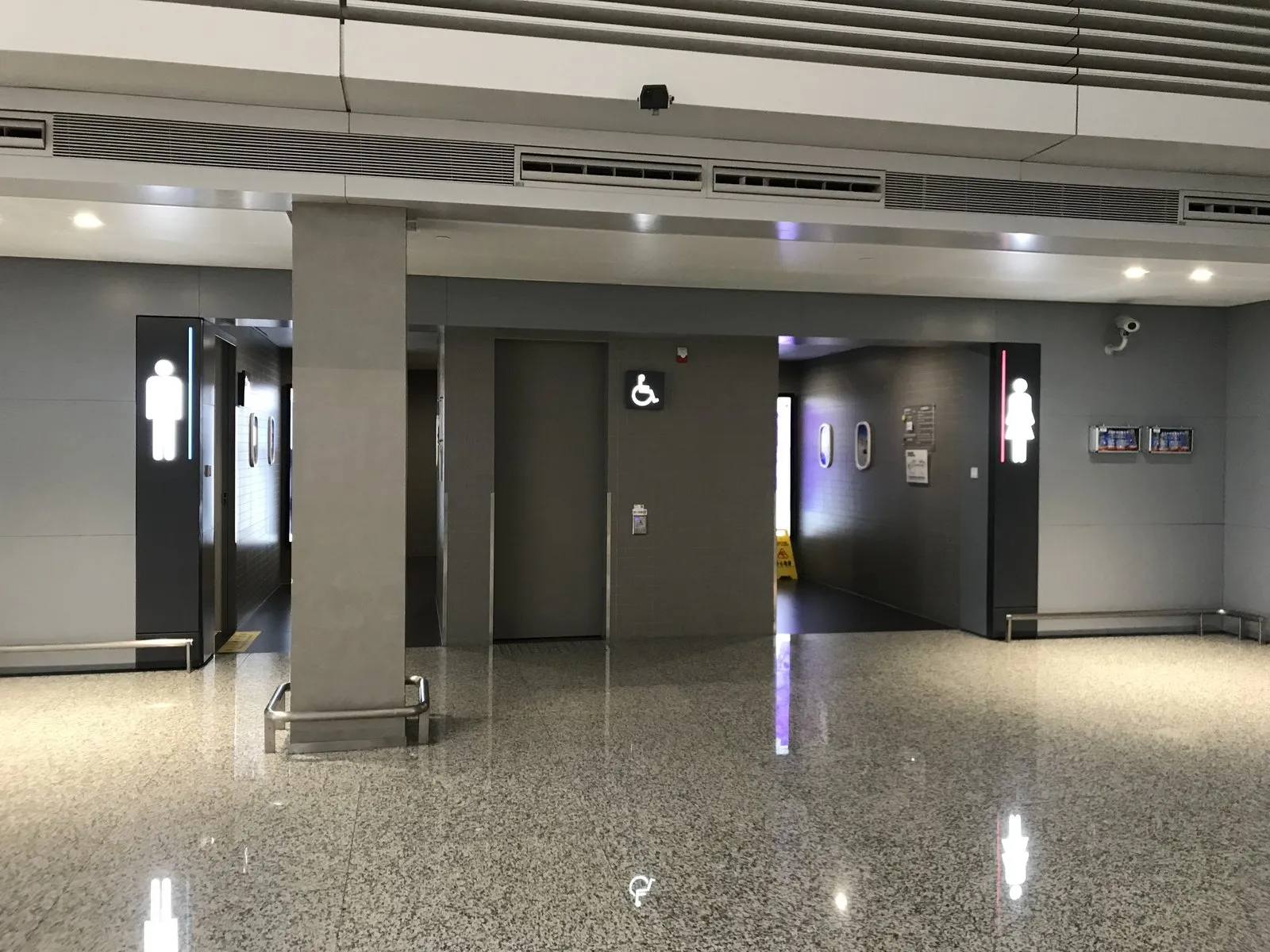
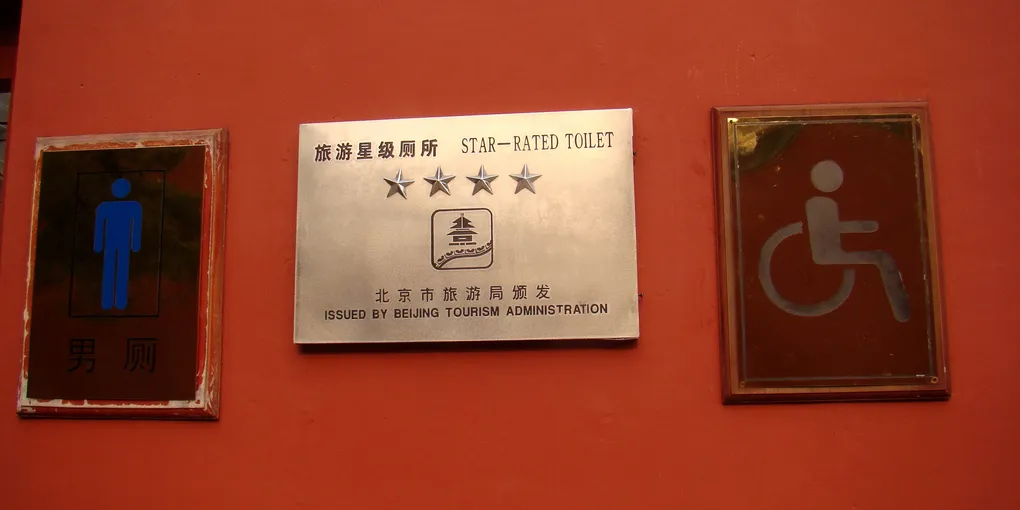
One correction worth making explicitly. Older English guides sometimes cite a “five-star tourist toilets must be at least 50% seated” rule. That came from GB/T 18973-2003, which is abolished. The current GB/T 18973-2022 replaced the old star tiers with two categories (Class I and Class II) and no longer sets any squat-to-seat ratio. Seated-toilet availability today rests on the rules above, not on a tourist-toilet star rating.
How to tell what you are about to enter: CJJ 14-2016 requires doors to carry a squat or seat pictogram. Two figures — one crouching, one sitting — on the door or the cubicle sign is the fastest read you will get.
| Where | What to expect |
|---|---|
| International airports, major high-speed rail stations | Mix of both, seated cubicles plentiful |
| CRH/EMU train carriages | Either type, but disposable seat covers are standard |
| Mid-range and up hotels | Usually seated throughout |
| Large malls, chain fast food | Usually seated |
| Expressway service areas | Still mostly squat; ≥20% seated is a 2026 target |
| Metro stations | Depends on line age; newer stations build toilets inside the paid area |
| Old-town municipal toilets, ordinary scenic areas | Mostly squat |
Toilet paper: the nuance nobody explains
“Always carry your own paper” is half-true, and the half that is wrong is the interesting part.
Free paper is now common in municipal and tourist toilets. Luoyang’s urban management bureau reported in December 2025 that all 183 of its 24-hour public toilets provide free paper, that free-paper coverage exceeded 95% across municipally managed sanitary toilets, and reached 100% at tourist toilets. Wuhan ordered its 1,000-plus municipal toilets fitted with a five-item kit — paper, hand soap, safety rail, shelf and coat hook. The railway rule above requires paper in station and EMU train toilets.
But metro and old-town toilets are the exception. A six-month field survey of Shanghai’s metro by a CPPCC member, reported in January 2024 across several outlets, found 30.4% of toilets provided no paper at all, with the remainder served by paid dispensers; 18% of stations had no accessible toilet. That figure is the reason “carry paper” survives as advice — not because China lacks paper, but because the specific toilet in front of you may not have it.
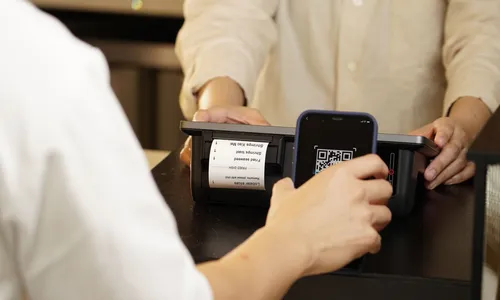
Then there is the thing English coverage has never described: the scan-for-paper machine (扫码取纸机). These wall-mounted dispensers give you a length of paper in exchange for a QR scan. Some are free — a Qinghai county scheme issues 60 cm per use, five free uses per person per day; Wuhan’s 2022 specification requires free machines to dispense at least 60 cm and forbids forcing users to watch an advert. Others are paid, with Wuhan capping automatic tissue vendors at ¥1 per pack.
The catch is the scan. These run on WeChat or Alipay, so most short-stay visitors cannot use them. The practical conclusion is unchanged from every English guide, but for a better reason: carry a small pack of tissues, because the machine you cannot operate and the dispenser that is empty produce the same outcome.
Where to find one: the five-tier ladder
English guides usually stop at tier two. The ladder has five, and the bottom one is a formal programme.
- Malls, large supermarkets, hotel lobbies — best option: usually seated, paper, soap, no purchase needed.
- Transport hubs — airports, rail stations, metro: legally free (see below).
- Municipal and tourist toilets — the 3–5 per km² backbone, mostly free paper.
- Chain fast food and coffee — KFC, McDonald’s, Starbucks. Reliable, but this is where English advice stops.
- Shared toilets (共享厕所 / 厕所开放联盟) — shops, government offices, hotels and restaurants along the street open their internal toilets to the public under a signed agreement, marked with a placard and listed on maps.
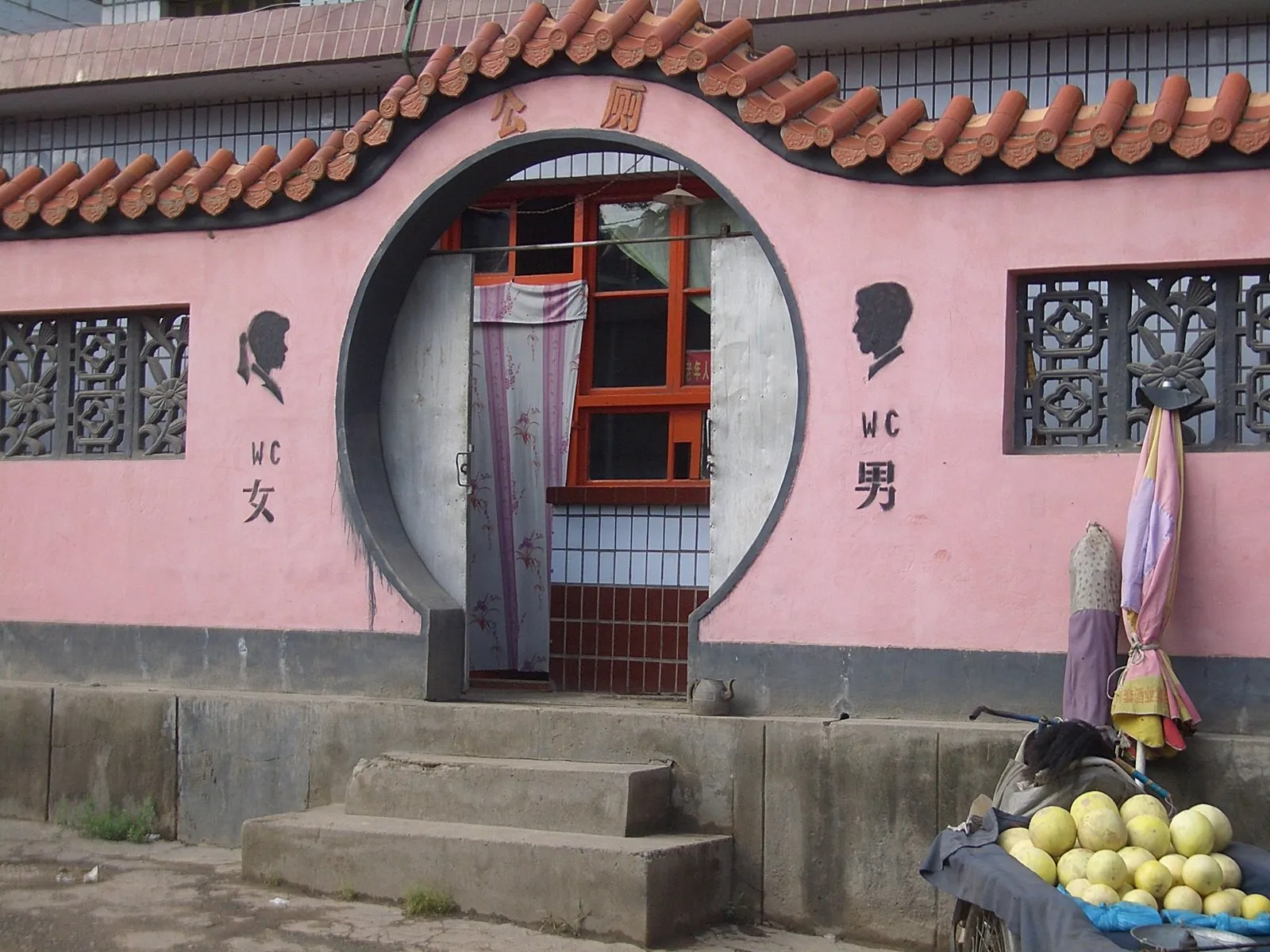
The shared-toilet tier is genuinely large. Chengdu organised roughly 1,000 shared toilets in 2022 with a uniform blue placard and performance-linked subsidies. Guizhou province reported 3,090-plus units opened across shops, institutions and government offices, with some counties using four-language signage. Daqing signed up 600-plus organisations. Hefei mapped 2,200-plus toilets on Amap, and most of those beyond the core municipal stock are shared toilets volunteered by private premises.
To find them, use a Chinese map app. Search 公共厕所 (“public toilet”) in Amap or Baidu Maps, or use the “nearby” tab and pick toilets; results show distance and navigate. Several cities — Beijing, Shenzhen, Fuzhou, Xining, Lanzhou among them — have pushed their municipal toilet data onto these apps. Signage is not nationally uniform, so read the Chinese: 共享厕所, 本单位厕所对外开放.
Toilets by transport mode
Airports, railway stations, long-distance bus stations and ferry terminals are legally free. A 2001 pricing order (计办价格〔2001〕398号) bans charging for toilets inside railway stations, long-distance bus stations, passenger ferry terminals and civil airports, and forbids closing existing toilets after charges stop. The State Railway Administration restated the ban in Article 6 of its 2018 supervision rule. The one carve-out is a long-distance bus station in a urban-rural fringe, where free use is limited to passengers holding a valid same-day ticket.
Why trains lock the toilet — and which ones do. Article 25 of the railway rule is explicit, and the distinction matters:
Trains shall not close toilets without cause during operation. Trains with non-retention (direct-discharge) toilets lock toilets when crossing the sea, and when running through urban areas, long tunnels, large bridges, and at stops of three minutes or more; toilets are locked five minutes before intermediate stops and ten minutes before the terminus, with advance notice to passengers. Retention-type toilets are locked during waste extraction or when unpowered. When a toilet is locked and a passenger urgently needs it, assistance shall be provided.
Older conventional trains are mostly direct-discharge — waste drops to the trackbed, so doors lock approaching stations. CRH and high-speed trains use vacuum retention tanks, and are not routinely locked at stations; they lock only during waste extraction or power loss. Do not apply the green-train rule to a high-speed train. Our high-speed rail guide covers onboard facilities in more detail, and the sleeper train guide covers older rolling stock.
Expressway service areas have their own service standards. Except in force majeure, queues should not exceed one person per cubicle on weekdays, two at weekends, three on major holidays; where cubicles are insufficient, temporary toilets are added. The female-to-male cubicle ratio should be no lower than 1.5:1, rising to 2:1 at high-traffic sites during holidays, with tidal cubicles where demand swings. Third restrooms are required, as a self-contained space with its own entrance. For self-driving trips, see our self-drive and car rental guide.
At scenic areas, national parks and the Great Wall
Tourist toilets are graded under GB/T 18973-2022, which dropped the old A/AA/AAA tiers for two classes — Class I and Class II — with Class I requiring a family restroom. Provincial programmes tie coverage to scenic-area rating: one 2023 plan required Class I toilets at ≥20% of 3A sites, ≥30% of 4A and ≥40% of 5A.
Peak season is the real constraint. Expect queues at marquee sites on public holidays and temporary mobile toilets deployed alongside permanent ones. The harder case is open country: on long hiking sections there may be nothing at all. On the Great Wall, facilities cluster at the developed access points and are absent along unrestored stretches — plan before you set out, as our Great Wall hiking guide notes.
Access, kids and the “third restroom”
The third restroom (第三卫生间) is the single most useful thing to know if you are travelling with children, with someone who needs assistance, or with someone of a different gender who cannot use the room alone. It is a self-contained, lockable room — not a cubicle inside the men’s or women’s — with its own entrance and signage.
Its required fit-out, under CJJ 14-2016: adult seated toilet, child-height seated toilet, child-height urinal, adult and child-height washbasins, baby-changing table, child safety seat, grab rails and an emergency call button, in at least 6.5 m² with a wheelchair turning space of at least 1.5 m × 1.5 m.
The legal backbone is the Law on the Construction of an Accessible Environment, passed June 2023 and in force since 1 September 2023, which extends the beneficiary group from disabled and elderly people to anyone with accessibility needs. GB 55019-2021 sets accessibility toilet parameters including a minimum area of 4 m², a wheelchair turning diameter of at least 1.5 m, a clear door opening width of at least 800 mm and an emergency call device mounted 0.4–0.5 m above the floor. Since 2017, 5A-rated scenic areas have been required to have third restroom coverage; Hunan reported 1,031 third restrooms across its registered tourist toilets in 2025.
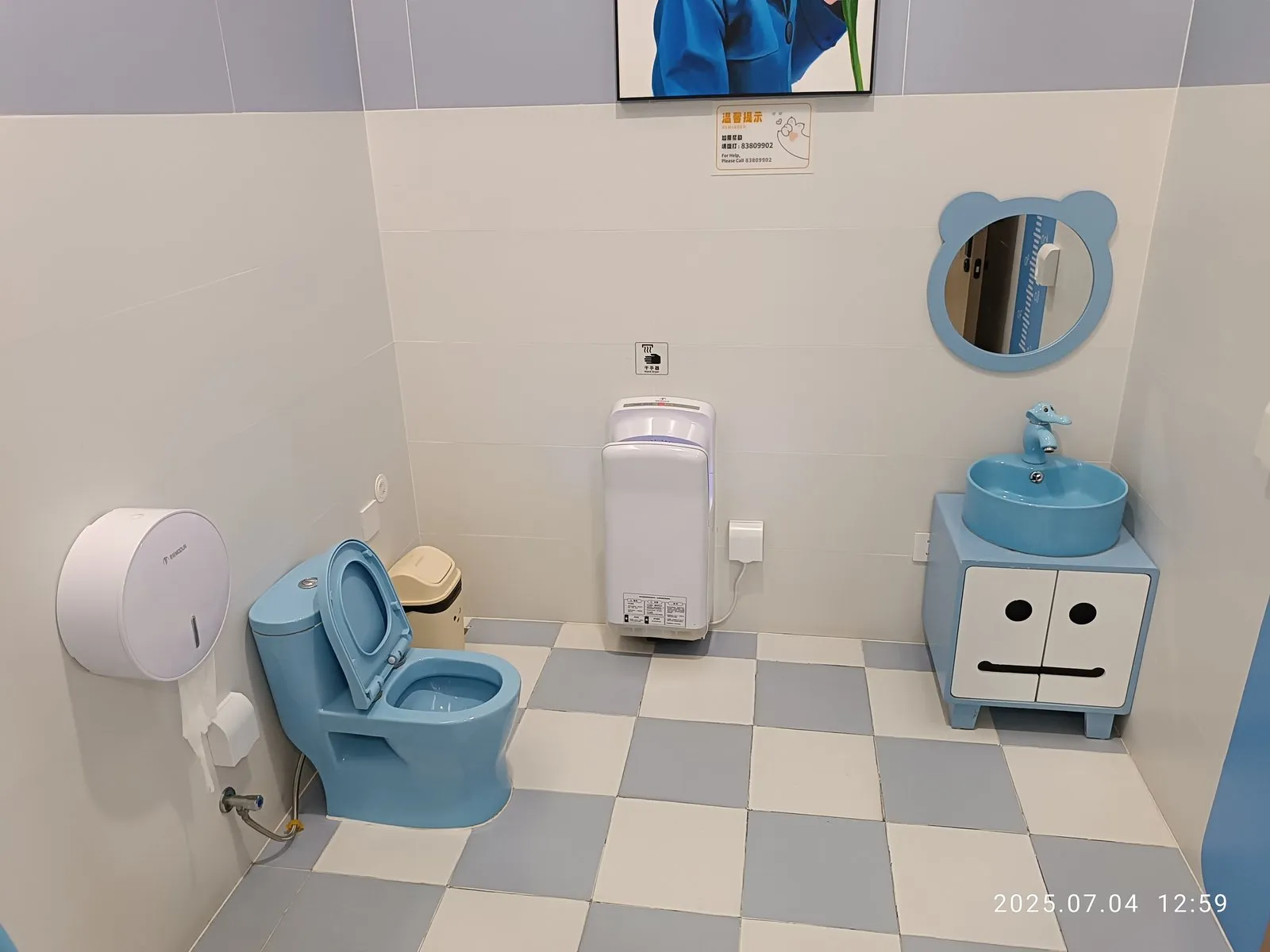
One stereotype worth dismantling: Chinese standards are, if anything, tilted towards women. CJJ 14-2016 requires a female-to-male cubicle ratio of at least 2:1 at high-footfall venues (counting male urinal positions). Shanghai’s detailed rules set ≥2:1 for airports, rail stations, metro stations, scenic areas, plazas and malls, ≥1.5:1 for commercial, dining and hospital settings, and suggest 1:2.5 or all-gender cubicles where demand is strongly time-skewed. If you see a long queue, it is far more likely to be a holiday-crowd problem than a design one. For family logistics, see travelling in China with kids.
Etiquette, flushing and your survival kit
Can you flush the paper? It depends on the paper. National standard GB/T 20810-2018 sets a dispersibility test for toilet paper: a sample placed in 5 litres of water in a specified cylinder must break apart within 40 seconds. Toilet roll is designed to disintegrate in the pan. Facial tissues, pocket tissues, napkins and kitchen towel are different — they contain wet-strength agents, hold together in water, and are the things that actually block pipes. Those go in the bin. Follow the sign in the cubicle: it is usually right.
The bin-and-sign habit has a history. When indoor flush toilets were introduced in the early 1980s, the common paper was coarse straw paper or newspaper, which blocked pipes easily, so bins became standard. Paper quality and plastic pipework (UPVC in most modern buildings) improved; the habit lagged. Old cast-iron stacks and dual-pipe septic systems still present a genuine risk, which is why the sign stays.
No smoking. Toilets on railway property are designated non-smoking areas under Article 12 of the railway rule, and train toilets carry smoke detectors that are sensitive enough to trigger an alarm.
Cleanliness standards exist and are specific. The housing ministry’s 2018 notice sets “four clean, three none, two working, one lit” (四净三无两通一明): floor, walls, cubicles and surroundings clean; no overflow, no flies, no odour; water and electricity working; lighting lit. Reality varies — the same Shanghai metro survey found noticeable odour at 15.9% of toilets — so a fair expectation is: newer and staffed facilities are good, old ones and peak hours are not.
Your kit: tissues or a small toilet roll, hand sanitiser, and a little cash or a working payment method for the occasional paid dispenser. If you are assembling a packing list, our China packing list covers the rest.
The words and signs:
| Chinese | Pinyin | Meaning |
|---|---|---|
| 厕所 | cèsuǒ | toilet (most common) |
| 卫生间 / 洗手间 | wèishēngjiān / xǐshǒujiān | restroom / washroom |
| 男 / 女 | nán / nǚ | men / women |
| 无障碍卫生间 | wú zhàng’ài wèishēngjiān | accessible toilet |
| 第三卫生间 | dì-sān wèishēngjiān | third restroom / family restroom |
| 共享厕所 | gòngxiǎng cèsuǒ | shared toilet (open to the public) |
| 厕所在哪里? | cèsuǒ zài nǎlǐ? | Where is the toilet? |
For more phrases, see our guide to handling language barriers.
FAQ
Are public toilets in China free? At airports, railway stations, long-distance bus stations and ferry terminals, charging is banned by national order. Municipal street toilets have been free in most cities since the 1990s–2000s. A few scenic-area or mobile toilets may charge; if they do, the price should be posted.
Is it all squat toilets? No. Squat is the design default under the national standard, but seated toilets are guaranteed at airports, major high-speed stations, on CRH trains (with disposable seat covers), in third restrooms, and increasingly at expressway service areas.
Do I need to carry toilet paper? Yes — but not because toilets never have it. Municipal and tourist toilets increasingly provide free paper; metro stations are the weak point, with one survey finding 30.4% supplying none.
Can I flush toilet paper? Toilet roll, yes — it is engineered to disintegrate within 40 seconds under the national standard. Facial tissues and hand towels, no. When in doubt, follow the cubicle sign.
Why did the train toilet lock? If it is an older direct-dischage train, toilets lock before station stops of three minutes or more, five minutes before intermediate stops and ten minutes at the terminus. High-speed trains use sealed tanks and are not routinely locked at stations.
What is a “third restroom”? A self-contained accessible family room with its own entrance, fitted with adult and child-height seated toilets, a baby-changing table and an emergency call button. Required at class-I public toilets, major transport hubs and 5A scenic areas.
How do I find one on my phone? Search 公共厕所 in Amap or Baidu Maps, or use the “nearby” filter. Hundreds of thousands of toilets are mapped, including many shared toilets contributed by shops and offices.
Are they accessible for wheelchairs? Newer transport hubs, malls and scenic areas generally are, and the 2023 accessibility law plus GB 55019-2021 set the requirements. Coverage in older neighbourhoods is uneven.
Related articles
- How to set up Alipay in China — most of the scan-based conveniences above depend on it
- China’s metro and subway, explained — where station toilets sit relative to the gates
- High-speed rail in China
- Overnight and sleeper trains
- Domestic flights in China
- Travelling independently in China