How to Pay in China 2026: Cash, ATMs, Credit Cards & Mobile Payments for Foreigners
Ask ten travel forums how to pay in China and you get two confident wrong answers: “China is cashless, don’t bother with money” and “cards don’t work there, bring a money belt.” The picture in 2026 is more specific. Mobile payment handles most of your day, but only if you know the ¥200 rule that decides whether you pay a 3% fee or nothing. Cash is legally guaranteed everywhere, and there are still places that take nothing else. Credit cards work at your hotel and the metro gate, then fail at the noodle shop next door. And two separate fees, a platform fee and a currency conversion fee, can pile on large purchases if you set things up wrong.
This guide covers all five ways to pay as a foreign visitor: mobile payment, cash, ATMs, credit cards, and the newer options (PayPal, digital yuan). Every number below comes from Chinese-language regulations, central bank guidance, and official platform announcements, not from recycled English blog posts.
Quick answer: Bind your Visa or Mastercard to Alipay or WeChat Pay before you arrive — transactions under ¥200 (about $28) carry no platform fee on both (WeChat confirmed the waiver for all of 2026; Alipay matches it). Keep ¥200–500 in cash for temples, night markets, rural buses, and scooter deposits, because refusing cash is illegal in China and yet some situations have no other option. Withdraw cash at any of the big five banks’ ATMs (single withdrawal around ¥3,000). Your credit card works at hotels, malls, and — since 2025 — metro gates in Beijing, Shanghai, Chengdu, Guangzhou and Shenzhen with a Visa, Mastercard, AmEx or JCB tap. Do not plan around Apple Pay: it does not work with foreign cards inside mainland China.
How we verified this: SinoWander reads the original Chinese documents that English guides cannot: PBOC Announcement [2025] No.29 on cash services (effective 1 February 2026), SAFE rules on currency declaration (汇发〔2003〕102号), the State Taxation Administration’s 2025 No.11 tax refund announcement, the six-ministry 2026 No.74 upgrade, Tencent’s official 1 June 2026 fee announcement, and Apple’s own footnote on where Apple Pay works. We ran a separate 21-point fact-check on 15 September 2026 across three independent verification passes. Each guide is date-stamped: last verified 2026-09-15. See our methodology.
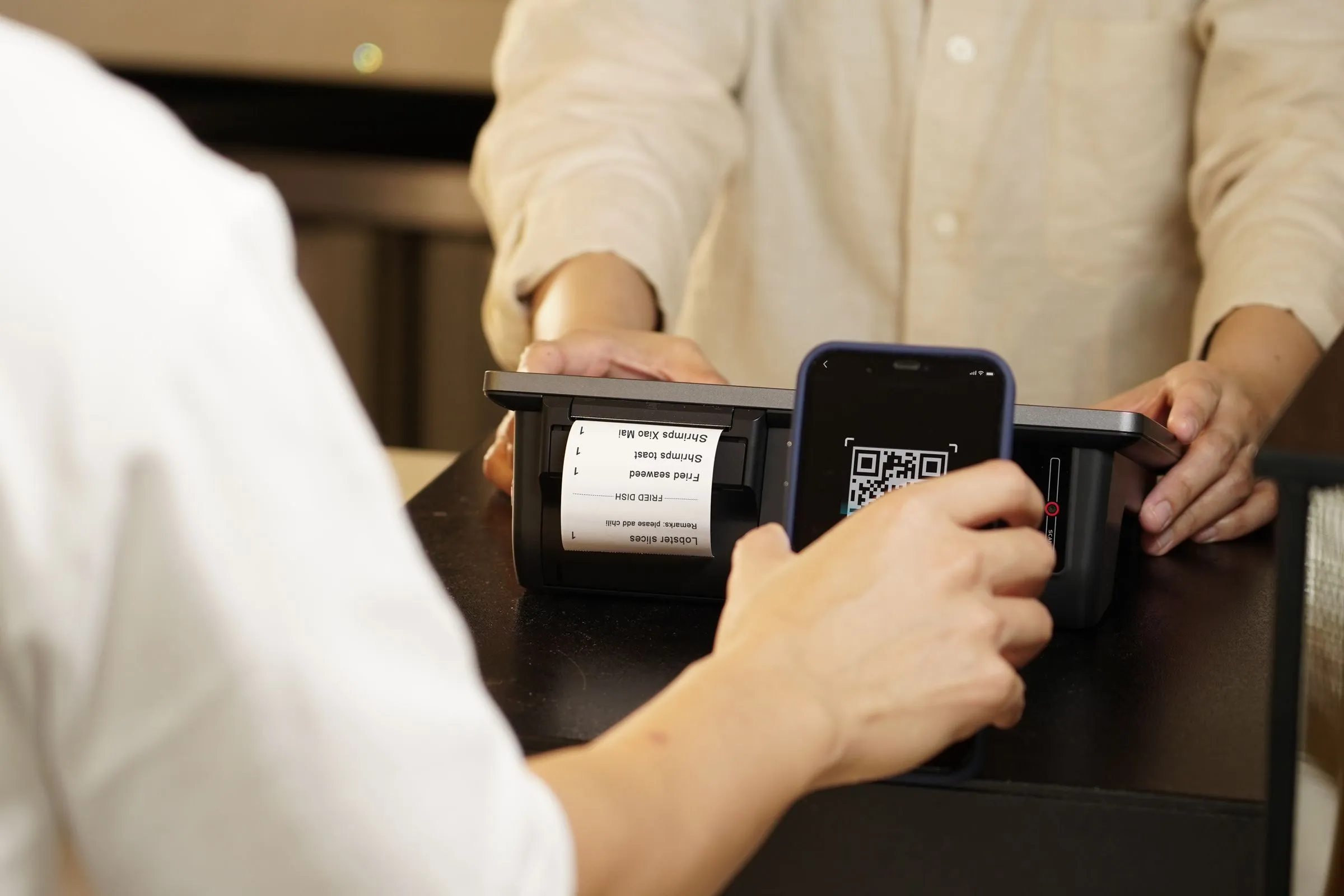 A street vendor showing a QR code. In 2026 even fruit stalls take mobile payment, but the small print (fees, limits, and the cash-only corners) is what this guide is about.
The 30-Second Version: All Five Ways Compared
| Method | Works where | Cost | Best for |
|---|---|---|---|
| Alipay / WeChat Pay + foreign card | Nearly everywhere, from malls to street food | Free under ¥200; ~3% above that, plus your card’s FX fee | Daily spending of any size |
| Cash (yuan) | Legally must be accepted in person; practically the only option at temples, rural stalls, some deposits | None, but you pay the exchange spread | Small purchases, backup |
| ATM withdrawal | Big five banks nationwide (ICBC, ABC, BOC, CCB, BOCOM) | Issuer-side fees vary; single withdrawal ~¥3,000 | Getting cash without a bank counter |
| Foreign credit card (plastic) | Hotels, big malls, high-end restaurants, metro gates in five cities | 0% platform fee, but 1–2% card FX fee | Large purchases, hotel deposits |
| Digital yuan (e-CNY) | Wherever you see the e-CNY logo; ¥2,000 anonymous wallet, no fees | Zero fees, Visa/Mastercard top-up | A fee-free backup wallet |
The combination most travelers land on: mobile payment as default, ¥300 in pocket, and a credit card for the hotel and emergencies. Now the details that decide whether that setup costs you 0% or 5%.
Mobile Payment: Bind a Card, Five Minutes, Done
If you have not set this up yet, start with our step-by-step guides: How to Set Up Alipay and How to Use WeChat Pay. Both accept major international cards — Visa, Mastercard, JCB, Discover, Diners Club, and since September 2026, WeChat Pay officially supports seven international card networks (up from five in 2023). Binding takes about five minutes with your passport and card details.
Two things decide your cost:
The ¥200 rule. WeChat Pay waives its 3% transaction fee on any single payment of ¥200 or less made with an international card. Tencent confirmed in its official June 2026 announcement that the waiver runs through the entirety of 2026, calling it a long-term policy rather than a promotion. Above ¥200, the ~3% fee applies. Alipay matches the ¥200 fee-free threshold; on larger payments it charges a fee that in independent 2026 testing runs around 3%, though the official wording says the rate follows your card network’s rules, so treat the on-screen confirmation as the source of truth.
The new-user bonus. WeChat Pay’s 2026 promotion gives first-time card binders 90 days of fee-free payments up to ¥1,000 per day (extended from 60 days in 2025), counted from your first transaction, running to 31 December 2026.
Regulatory limits. Separately from the platforms’ own caps, the central bank sets the ceiling for foreign-card payments in Chinese apps: $5,000 per transaction and $50,000 per year (raised from $1,000/$10,000 in March 2024, unchanged since). WeChat’s own RMB caps for foreign cards sit at ¥6,000 per transaction and ¥60,000 per year. Alipay’s old ¥3,000 single-transaction limit is obsolete. For most travelers none of this binds until you try to buy jewelry or book tours.
The cheapest route inside the apps: if your bank issues a UnionPay card (many Hong Kong, Singapore, and Southeast Asian banks do), bind that instead of a Visa/Mastercard. UnionPay charges no currency conversion fee and clears in yuan directly. Otherwise accept that your Visa/Mastercard bill carries both the platform fee (on payments over ¥200) and your card’s conversion fee.
What still does not work: you cannot transfer money to friends or send red packets on WeChat Pay with a foreign card — merchant payments only. Taxis need DiDi (the international version accepts foreign cards), and shared bicycles vary. The most recent field test we can find (August 2024, still cited as current by Shanghai’s government portal in mid-2026): Hello Bike works through Alipay with no extra verification; Meituan Bike requires manual review and has no English interface; Qingju asks for passport and selfie photos. Full app-by-app coverage is in our apps guide.
Cash: Backed by Law, and Still Necessary
The claim that “China doesn’t use cash anymore” is false in two ways. It is false in practice: temple donation boxes, rural buses, night-market stalls, public toilets (¥1), and scooter deposits run on cash. It is false in law too: refusing cash breaks the law.
The legal side. Article 16 of the Law of the People’s Bank of China states that no unit or individual may refuse payment in renminbi cash. A dedicated regulation, the Provisions on Renminbi Cash Receipt, Payment and Services (PBOC Announcement [2025] No.29, effective 1 February 2026), turns that into operational rules: businesses that collect payment in person or provide face-to-face services must accept cash, and discrimination against cash users is banned. The central bank has been fining violators quarterly — the January 2026 bulletin penalized two organizations for refusing cash.
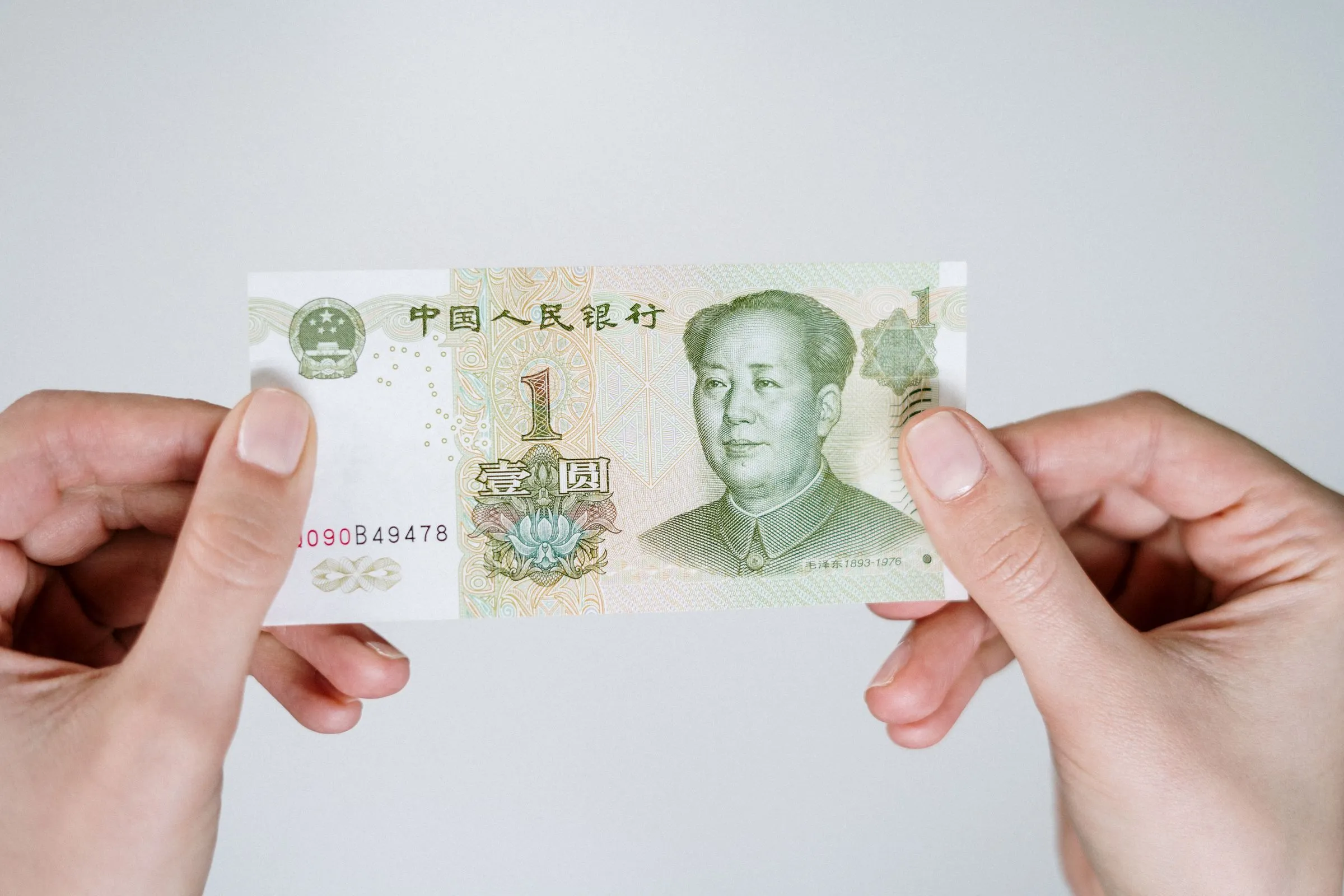 Carry small notes: temples want ¥1 and ¥5 paper bills, buses need exact change, and market vendors cannot break a ¥100.
The practical side. Where mobile payment does not reach:
- Temples and monasteries — donation boxes and incense sellers take coins and small bills only; some do not take coins at all, so bring ¥1 notes
- Rural and township buses — flat-fare coin boxes, no change given
- Night markets and mobile food carts — even in big cities
- Public toilets — ¥1 at standalone facilities
- Scooter, e-bike and equipment deposits — ¥200–500 refundable, cash only in many rental shops; see our self-driving guide
- Dead zones — remote stretches of the Hexi Corridor, deep parts of scenic areas like Yadan, old towns in the Dali region
Field reporting from Dali and Dunhuang in September 2026 puts mobile coverage above 95%, but the Xizhou morning market, village buses, and monastery boxes still run on cash. The working recommendation: ¥100–500 in mixed small notes (mostly ¥10 and ¥20, plus ten ¥1 notes), replenished by ATM when it runs low.
How much cash can you carry across the border? The limits are specific and direction-dependent:
| Direction | Rule |
|---|---|
| Entering China, foreign currency over $5,000 | Declare in writing to customs (no permit needed). Under $5,000: walk through |
| Leaving China, $5,000–$10,000 | Obtain a Permit for Carrying Foreign Currency Out from your bank before departure |
| Leaving China, over $10,000 | Restricted in principle; possible only in special circumstances with a SAFE-issued permit — not a flat ban, but not a right either |
| Renminbi, either direction | ¥20,000 per person per crossing |
The $5,000 entry threshold triggers paperwork, not confiscation. The common traveler error is the opposite: leaving with a fistful of yuan. Convert it before you fly — a standard bank counter wants the original exchange receipt above $500, though airport border-area counters take yuan back up to $1,000 with just a passport.
Exchanging Money: Bank > Licensed Exchange > Hotel Desk
Three channels, ranked by rate:
1. Banks — best rate, most currencies, most paperwork. Bring your passport. Same-day exchanges up to $10,000 equivalent need only the passport; above that the bank adds a customs declaration form to the file, but it remains legal. Bank of China handles the widest range of currencies. You pay the banknote buying rate, which is slightly worse than the wire rate — that spread is the cost of physical cash everywhere, not a China-specific trap.
2. Licensed exchange offices (机场/市区特许兑换点) — convenient, capped. Per-person daily limit $5,000 equivalent, in or out. Note the fine print on annual limits: licensed exchanges draw from the same $50,000 annual personal foreign-exchange quota that banks use — it is one national quota, not an extra one.
3. Hotel exchange desks — worst rate, and one-directional. They convert foreign cash into yuan (up to ¥10,000/day) but generally cannot convert back. Rely on them only as a last resort on arrival.
The receipt that saves your money. When you leave China with unspent yuan, you can convert up to $500 equivalent per day back to foreign currency with just your passport — but above $500 you must show the original exchange receipt, valid for 24 months. One exception: at border-area venues like airport duty-free zones, the daily limit rises to $1,000. The rule trips up travelers who threw their receipts away in Xi’an three weeks earlier. Keep every exchange slip until you are home.
And skip the black market entirely — hotel touts offering “better rates” are a known counterfeit-note channel; our scams guide covers the variants.
ATMs: The Big Five Banks Take Foreign Cards
Every ATM of the big five — ICBC, Agricultural Bank, Bank of China, China Construction Bank, Bank of Communications — accepts foreign cards for yuan withdrawals. Coverage is deep: over 8,000 machines in Shanghai, 11,200 in Beijing, 6,100 in Jilin province. Airport machines dispense ¥10 notes for small change.
Single withdrawal limit: around ¥3,000. This figure comes from central bank regional guidelines and the banks’ own service manuals (Agricultural Bank branches state ¥3,000 per withdrawal with a ¥20,000 daily cap). It is not a national published number; the machine on the wall is the final authority. Ignore any guide citing a ¥1,000 limit; that was a 2010 Expo-era figure.
Fees are on your side of the ocean. The Chinese side may or may not post a surcharge (the screen will say). What you cannot avoid is your own issuing bank’s foreign transaction and ATM fees — check them before you travel, because a $5 fixed fee makes a ¥500 withdrawal absurd. A travel card with fee-free foreign withdrawals beats a premium card with points.
One button to refuse. Some machines ask whether to charge you in your home currency — “dynamic currency conversion” (DCC). Always choose CNY. Accepting your home currency adds 5–8% to the withdrawal. The same trap appears on payment terminals abroad on your way home; it is rare inside China, where terminals default to yuan anyway.
 Any big-five bank ATM takes a foreign card. Around ¥3,000 per withdrawal; the screen shows the exact limit.
Card acceptance at the machine: Visa/Plus, Mastercard/Cirrus/Maestro work across the big five; American Express is patchy (Construction Bank, for example, does not take it at ATMs). PINs of 4–6 digits both work.
Credit Cards: Better Every Year, Still Not Universal
The most-quoted “fact” about cards in China — that they don’t work — dates from a March 2024 report in which a journalist tested a foreign Visa at 25 shops on Beijing’s Wangfujing street and could pay at only 8. That was true then. It is not true now: by January 2025, official reporting put Wangfujing’s foreign-card coverage at 98 percent (cash acceptance 100 percent), and Beijing had extended foreign-card acceptance to 18,000 key merchants citywide by December 2025. Shanghai counts 67,000 merchants and 97,000 POS terminals taking foreign cards — 1.9 million foreign-card transactions (+52% year on year) worth nearly ¥3 billion (+37%) in the first quarter of 2026 alone.
The useful distinction is not “cards work” or “cards don’t work” but where they work:
Reliable: hotels from 3-star up, international chains, large malls, high-end restaurants, airport shops and duty-free, museum ticket counters at major sites, and — the newest addition — metro gates.
Unreliable: street food, small independent restaurants, convenience stalls outside the big chains, taxis, and anything in a smaller city. The reason is mundane: the corner noodle shop never installed a POS terminal because its customers scan QR codes. A card that physically has nothing to be inserted into cannot work.
So: carry the card for the hotel, big purchases, and the tax refund counter. Do not expect it to buy lunch.
 Beijing metro gates now accept a direct tap of Visa, Mastercard, AmEx, or JCB — no transit card, no app.
The Metro Tap: The Biggest Upgrade Nobody Covers
If you land in Beijing with no app and no transit card, you can still take the train. Since June 15, 2025, Beijing’s network accepts direct taps from all five international card networks — UnionPay, Visa, Mastercard, American Express, and JCB — across 29 lines, 523 stations (Visa/Mastercard since September 2024, AmEx/JCB from June 2025). That made Beijing the first metro system in the world with all five. In its first year, foreign riders made 1.13 million tapped trips, from travelers of over 130 countries.
Other cities followed: Shanghai (full network, June 2025, including digital yuan hard wallets), Chengdu (July 2025), Guangzhou, and — as of 10 September 2026 — Shenzhen (all 17 lines, 432 stations). If your city is not on the list, a stored-value transit card with a ¥20 refundable deposit works everywhere on the China Transit Card standard, valid in 336+ cities. Our metro guide has the per-city details.
One caveat: the “Yitongxing international app” that Beijing has promised for tap-through-the-phone payment has been announced repeatedly but has not launched as of September 2026. Do not plan around it.
The Two Fees Nobody Separates (This Is Where You Save)
Most “avoid fees in China” advice fails because it treats one fee as the whole story. There are two, and they stack:
Fee 1: The platform fee (~3%). Charged by Alipay/WeChat Pay on foreign-card payments over ¥200. Waived at ¥200 and below (WeChat confirmed through end of 2026). This is the fee you can design away.
Fee 2: Currency conversion fee (0–2%). Charged by your card network and issuing bank when a yuan charge settles onto a USD/EUR/GBP account. Visa and Mastercard add roughly 1% at the network level; your bank adds 0–2% more. This fee exists on every yuan purchase you make — card, app, or ATM withdrawal — and the only way to avoid it is a card with no foreign transaction fee.
The stacking example, on a ¥700 dinner paid via Alipay with a US Visa card that charges 2% FX:
- Platform fee: 3% = ¥21
- Card FX fee: 2% = ¥14
- Total: ¥35, or 5% of the bill
The same dinner split differently costs less. Three strategies, in order of practicality:
- Split large payments. Nothing stops you from paying a ¥600 hotel spa bill as three ¥200 charges — each under the threshold, each fee-free. Merchants do this routinely for Chinese customers; it is a normal request.
- Use a card with no foreign transaction fee (Wise, most Schwab/AmEx/Fidelity travel cards, most premium European cards). This kills Fee 2 everywhere, permanently.
- Bind a UnionPay card if you have one. UnionPay clears directly in yuan with no conversion fee and no foreign-card platform surcharge — the cheapest single setup if your bank offers one.
And for the underlying rate: the rate you see on your Alipay/WeChat statement is your card network’s rate, not the platform’s — no markup is added in the middle. The only place a worse rate gets offered is a DCC prompt (decline it, choose CNY) or a hotel exchange desk (avoid it).
Apple Pay, Google Pay, and PayPal: What Actually Works
Apple Pay with foreign cards: does not work in mainland POS terminals. Apple’s own Chinese support page lists only mainland-issued bank cards for Apple Pay in China, and its footnote states — verbatim — that paying through the Visa or Mastercard networks with Apple Pay is available only outside mainland China. The January 2026 Apple–Visa announcement that circulated in English media covers Chinese bank cards being used abroad: the opposite direction. If a guide tells you to “just add your card to Apple Wallet,” that guide was not written from inside China.
Google Pay: not operational for mainland in-person payments; it cannot substitute for Alipay/WeChat there.
PayPal × WeChat Pay: real, new, and limited. Announced 27 May 2026 at the Shenzhen financial expo: PayPal-linked wallets can now scan WeChat Pay merchant QR codes, and WeChat Pay users can show payment codes to PayPal merchants — a two-way bridge. In its first phase it serves US PayPal users only, with other markets to follow; by September 2026 it was functioning in daily Shenzhen retail. If you are a US traveler with a PayPal balance, this is a third wallet option. For everyone else, Alipay with a bound card remains the default.
Digital yuan (e-CNY): the fee-free backup worth five minutes. The official e-CNY app accepts foreign phone numbers from 210+ countries, and its anonymous-tier wallet holds up to ¥2,000 with zero fees, topped up with Visa/Mastercard and refundable back to the card. It works anywhere you see the e-CNY mark — including Shanghai metro gates via hard wallets. As a ¥2,000 emergency reserve that never charges a platform fee, it is a sensible second wallet. Central bank guide: support line +86-10-956196.
Tax Refund Connection (Read Before Shopping)
If your trip includes serious shopping — silk, jade, electronics, tea — China’s departure tax refund gives back 11% on standard 13%-VAT goods and 8% on 9%-VAT goods, on purchases of ¥200 or more in one store in one day made within 90 days of departure. Up to ¥20,000 is refundable in cash, the rest to your card. Since September 2026, instant refunds are processed nationwide across cities, and since May 2026 the instant-refund departure window is a uniform 28 days from purchase.
Two payment-specific facts:
- “Alipay payments can’t get tax refunds” is a rumor. The tax bureau’s one-click refund handles purchases made via Alipay, credit card, or cash. Pay however is convenient; the invoice and refund form are what matter.
- Instant refund needs a credit card pre-authorization — the card guarantees you will leave within 28 days. If you want the money at the store counter, bring the plastic.
 Look for the blue “离境退税商店” (Tax Refund Shop) sign. The refund follows your passport and invoice, not your payment method.
The full step-by-step — store signs, customs counter order, the ¥100,000 Hainan duty-free bonus — is in our China tax refund guide.
When Payment Fails: A Troubleshooting Kit
Binding goes smoothly about 90% of the time. When it does not, the cause is almost always one of three:
- Your issuing bank blocked the transaction. Paying “Alipay + Shanghai” looks like fraud to some US and European banks. Call before travel and flag China, or respond to the bank’s app notification. If SMS codes do not arrive (your home number is roaming), use an eSIM data number or email verification where offered.
- You hit a limit. Single-transaction caps (¥6,000 on WeChat for foreign cards) or the annual $50,000 regulatory ceiling. Split the payment or switch method.
- Card-network region restrictions. Rare, but some sanctioned-region or corporate cards fail regardless. Bind a different card.
If a merchant refuses your cash — which is illegal — file a complaint to the central bank’s consumer line 12363. Platform-specific help: Alipay 95188 (English line +86-571-2688-6000), WeChat Pay 95017 (overseas line +86-571-95017). Beijing Capital and Daxing airports both run payment service desks that can unblock app verification issues on the spot.
The zero-cash fallback, in one line: any big bank ATM takes your card, and airport machines even dispense ¥10 notes for the temple donation box you forgot about.
FAQ
Can I use my credit card in China? At hotels, big malls, high-end restaurants, and metro gates in Beijing, Shanghai, Chengdu, Guangzhou, and Shenzhen — yes. At street food, small restaurants, and shops outside the big chains — no. Bind the card to Alipay or WeChat Pay and it works almost everywhere instead.
Do I need cash in China? Yes, a little. ¥200–500 covers temples, night markets, rural buses, public toilets, and scooter deposits. Refusing cash is illegal (PBOC Announcement 2025 No.29, effective February 2026), but at a temple donation box the law is not the point — the box is.
How much cash should I carry? ¥300 in mixed small notes is the working answer for a typical week. Carry ¥10s and ¥20s plus some ¥1 notes; a ¥100 note is hard to break at a market stall.
Can I use Apple Pay in China? Not with foreign cards at mainland POS terminals — Apple’s own footnote says the Visa/Mastercard route works only outside mainland China. Use Alipay or WeChat Pay with your card bound instead.
Which cards work with Alipay and WeChat Pay? Visa, Mastercard, JCB, Discover, and Diners Club on both platforms (WeChat now advertises seven international networks). UnionPay cards from Hong Kong, Singapore, and elsewhere work fee-free and are the cheapest option if your bank offers one.
Is it better to exchange cash or withdraw from ATMs? ATMs at the big five banks for convenience; a bank counter with your passport for large amounts. Keep every exchange receipt — you need it to convert leftover yuan back above $500 on departure.
Can I get a tax refund if I paid with Alipay? Yes — the rumor otherwise is false. The refund follows your passport and invoice, not your payment method. Instant refund at the counter does need a credit card, though. Full details in our tax refund guide.
Related Guides
- How to Set Up Alipay in China — the step-by-step binding walkthrough
- How to Use WeChat Pay — the other wallet, same card rules
- China Tax Refund Shopping Guide — 11%/8% back on souvenirs, the ¥200 threshold, instant refund
- China Metro Guide for Foreigners — transit cards, QR entry, the five tap-card cities
- China Self-Driving and Rental Guide — the cash deposits this guide keeps mentioning
- China Travel Scams — why the hotel tout’s exchange rate is not your friend
- China Backpacking Budget — what all these payments actually cost per day
- Food Delivery, Convenience Stores & Supermarkets (2026) — where your wallet works outside restaurants