Shanghai Travel Guide - Where Old World Meets Neon Future (3 Days)
Shanghai is China’s most cosmopolitan city, a place where 1920s Art Deco buildings stand shoulder-to-shoulder with the world’s second-tallest skyscraper. The contrasts are immediate: steaming baskets of xiaolongbao on street corners, neon-lit skyscrapers reflecting off the Huangpu River, tree-lined French Concession streets hiding indie galleries and craft coffee shops.
For international travelers, Shanghai is also China’s most accessible city. The 240-hour visa-free transit policy, English-friendly apps, and a metro system that accepts foreign credit cards make it an ideal entry point for a China trip.
Quick answer: Shanghai is China’s most cosmopolitan city. 1920s Art Deco stands next to the world’s second-tallest tower. Spend 3 days: Day 1 covers old Shanghai classics (the Bund, Yu Garden), Day 2 explores modern Pudong and the French Concession, Day 3 is Disneyland or culture deep dives. It’s China’s most accessible city: 240h visa-free, English apps, metro takes foreign cards. See our Disneyland guide and food guide.
How we verified this: SinoWander reads Chinese-language sources that English guides cannot, including official scenic-area WeChat mini-programs (such as the Yu Garden “Shanghai Yuyuan” booking platform), Trip.com, the Shanghai Disney Resort official app, and the Shanghai metro “Suishenxing” transit app. We cross-check them before writing. We have not personally visited every location. Each guide is date-stamped when last verified: 2026-08-06. See our methodology.
When to Visit
Spring (March — May) and autumn (September — November) offer the most comfortable weather, with temperatures between 15-25 degrees C (59-77 degrees F). Avoid the summer months (June — August) if you can. Shanghai gets oppressively hot and humid, and the plum rain season in June-July brings daily downpours.
3-Day Itinerary
Day 1: Old Shanghai Classics
| Time | Activity | Duration |
|---|---|---|
| Morning | Yu Garden and City God Temple area | 2-3 hours |
| Midday | Lunch at Yu Garden food street | 1 hour |
| Afternoon | Nanjing Road Pedestrian Street | 1-2 hours |
| Late Afternoon — Night | The Bund at sunset and after dark | 2-3 hours |
| Optional | Huangpu River night cruise | 1-1.5 hours |
Start at Yu Garden (Yu Yuan), a 400-year-old classical Chinese garden tucked behind zigzag bridges and dragon-adorned walls. The garden exemplifies the Jiangnan (southern Chinese) landscaping tradition, with miniature mountains, koi-filled ponds, and pavilions with upturned eaves. Tickets cost 40 yuan (~$6); book 1-2 days in advance through the WeChat mini-program “Shanghai Yuyuan” or via Trip.com.
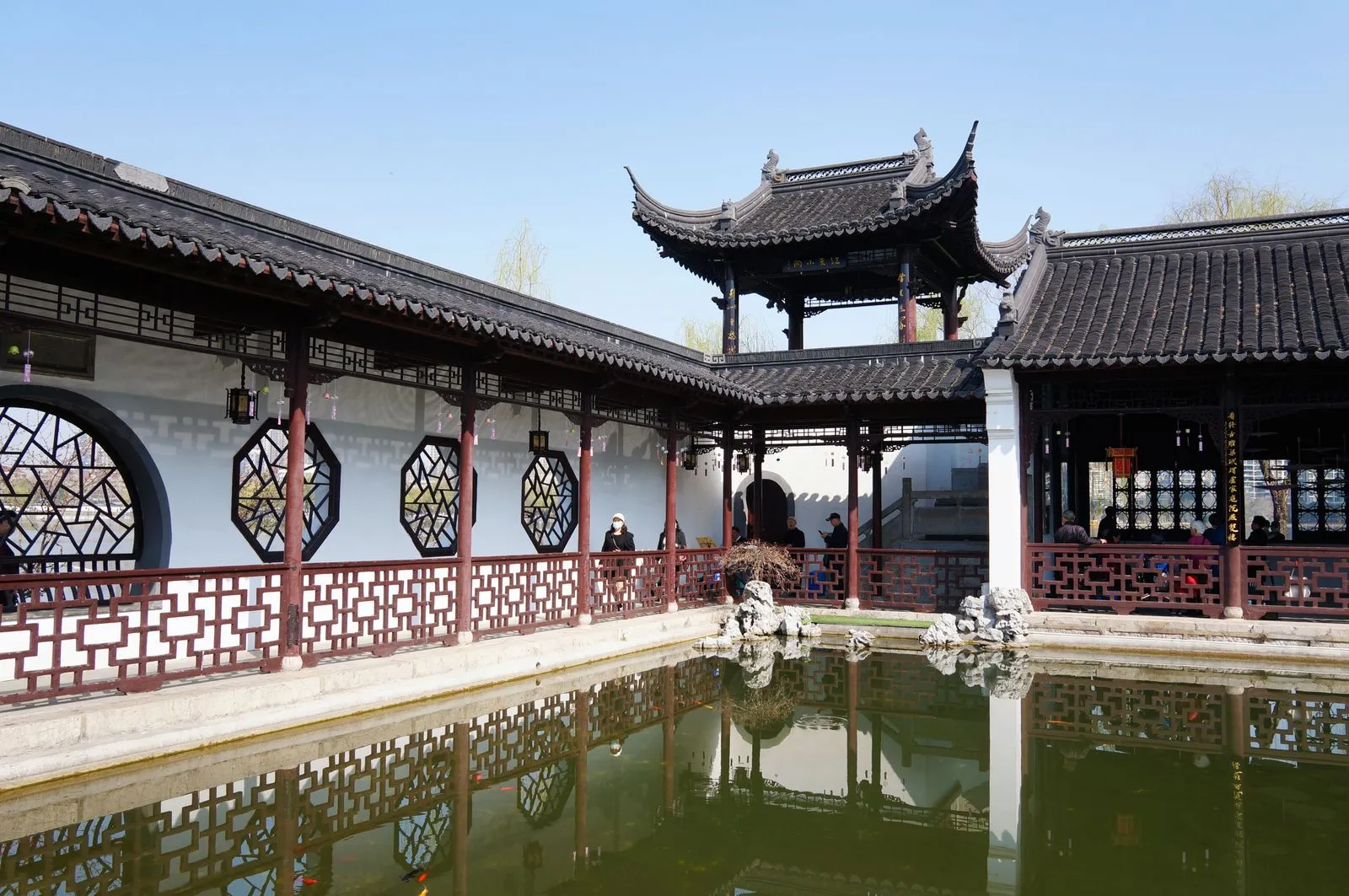 A classical pavilion and koi pond at Yu Garden, a 400-year-old Jiangnan-style garden in the heart of the city.
The surrounding City God Temple (Chenghuangmiao) area is a maze of traditional architecture housing snack stalls and souvenir shops. This is where you will find the famous Nanxiang Xiaolongbao steamed bun shop (dating back to 1900) and Dahuchun Shengjianbao for pan-fried buns, a Michelin-recommended spot where a meal costs just 20-40 yuan ($3-6).
Walk west to Nanjing Road Pedestrian Street, China’s most famous shopping boulevard, which connects directly to the Bund.
The Bund is Shanghai’s defining image, a promenade of 52 colonial-era buildings facing the futuristic Pudong skyline across the Huangpu River. It is free and open 24 hours. Arrive 30 minutes before sunset to watch the sky change colors, then stay as the skyscrapers light up one by one. The lights typically turn off around 22:00.
Local Tip: For the best Bund photograph, stand at the north end near the Garden Bridge. For the reverse view (looking back at the colonial buildings from Pudong), cross the river via the Bund Sightseeing Tunnel or Metro Line 2 to Lujiazui.
An optional Huangpu River night cruise (120-150 yuan / $18-22) offers a memorable perspective of both shorelines illuminated.
Day 2: Modern Shanghai + French Concession
| Time | Activity | Duration |
|---|---|---|
| Morning | Oriental Pearl Tower or Shanghai Tower observation deck | 2-3 hours |
| Midday | Lunch in Lujiazui | 1 hour |
| Afternoon | West Bund Art District | 2-3 hours |
| Late Afternoon | Wukang Road and Wukang Mansion | 1-2 hours |
| Evening | Xintiandi (dinner and nightlife) | 2-3 hours |
Cross the river to Pudong for a bird’s-eye view of Shanghai. The Oriental Pearl Tower (199-399 yuan / $29-59, depending on observation level) is the iconic TV tower with a glass-bottomed skywalk. Alternatively, the Shanghai Tower observation deck on the 118th floor is the highest publicly accessible viewpoint in China.
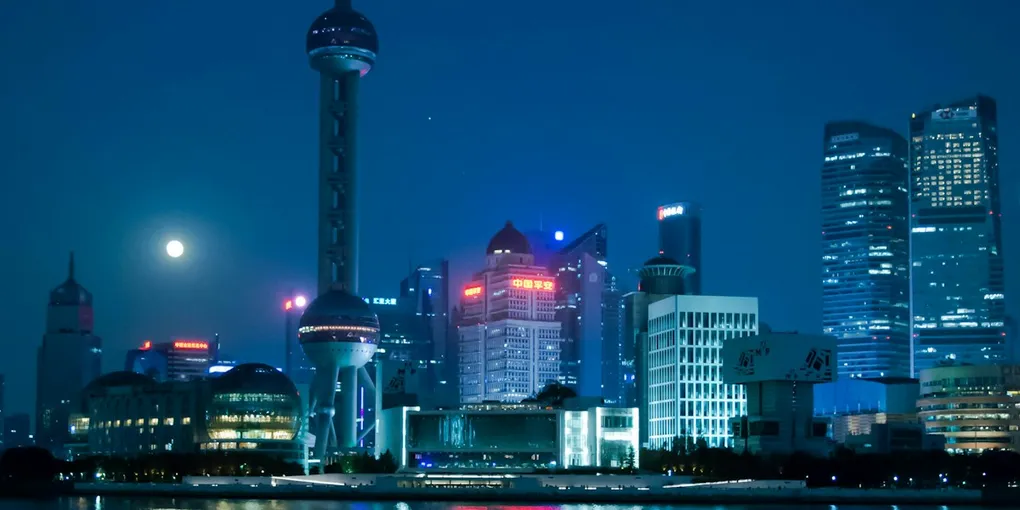
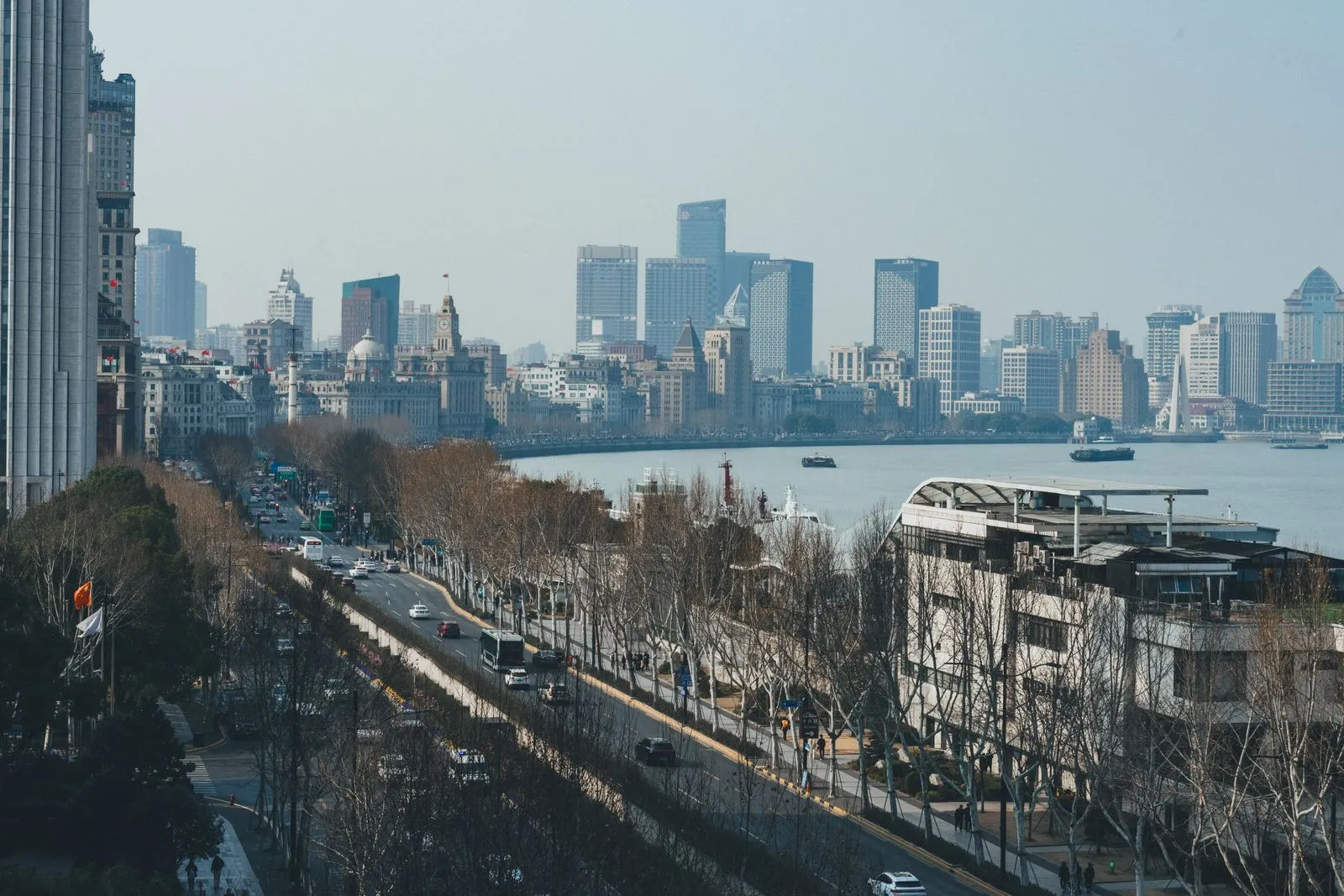 The Pudong skyline at Lujiazui. The Oriental Pearl Tower and Shanghai Tower define the modern riverfront, facing the historic Bund across the Huangpu River.
The West Bund (Xuhui Riverside) has emerged as Shanghai’s premier art corridor. The West Bund Museum, a collaboration with Paris’s Centre Pompidou, hosts rotating exhibitions (free for the permanent collection). The riverside promenade itself is a pleasant walk or bike ride.
Wukang Road is Shanghai’s most photogenic street in the former French Concession. The Wukang Mansion (Wukang Dasha), a 1924 French Renaissance-style building at the intersection with Huaihai Road, is the city’s most Instagrammed building. Stroll the tree-lined blocks browsing boutiques and cafes.
End the evening at Xintiandi, a renovated shikumen (stone-gate) neighborhood now housing upscale restaurants, bars, and shops in beautifully restored traditional architecture.
Day 3: Theme Park or Culture Deep Dive
Option A: Shanghai Disney Resort (Full Day)
Shanghai Disneyland is the newest and most technologically advanced Disney park globally, featuring the tallest and fastest Pirates of the Caribbean ride and the TRON Lightcycle Power Run coaster.
- Tickets: 475-799 yuan ($70-118) depending on the date tier
- Strategy: Visit on a weekday, download the official app, and use the free standby pass system for popular rides. The “Dream Day Package” (priority access) starts at about 499 yuan (~$74).
- Getting there: Metro Line 11 to Disneyland Resort station
Option B: Cultural Deep Dive
- Morning: Jing’an Temple (incense offering 50 yuan / ~$7), a 1,000-year-old Buddhist temple surrounded by modern malls, then walk Nanjing West Road for luxury shopping
- Afternoon: Shanghai Astronomy Museum (30-60 yuan / $4-9), the world’s largest planetarium and a 2026 hotspot, or Panlong Tiandi, a newly opened water-town-style cultural district
- Evening: Tianzifang or Sinan Mansions for old lane-house culture
Cultural Context
Shanghai’s unique character stems from its history as a treaty port (1842-1943), when foreign concessions carved the city into British, American, French, and Japanese zones. This colonial legacy left behind the Bund’s waterfront architecture and the leafy streets of the former French Concession, while also creating the “Shanghainese” identity: cosmopolitan, commercially astute, and culturally hybrid. The local dialect (Shanghainese) sounds distinctly different from Mandarin, and the city’s cuisine reflects a preference for sweetness, soy braising, and delicate techniques that set it apart from the fiery flavors of western China.
Where to Eat
Shanghai’s cuisine (benbangcai) is characterized by sweet and savory flavors, soy-braised meats, and meticulous preparation. The city is also China’s capital of xiaolongbao (soup dumplings) and shengjianbao (pan-fried buns).
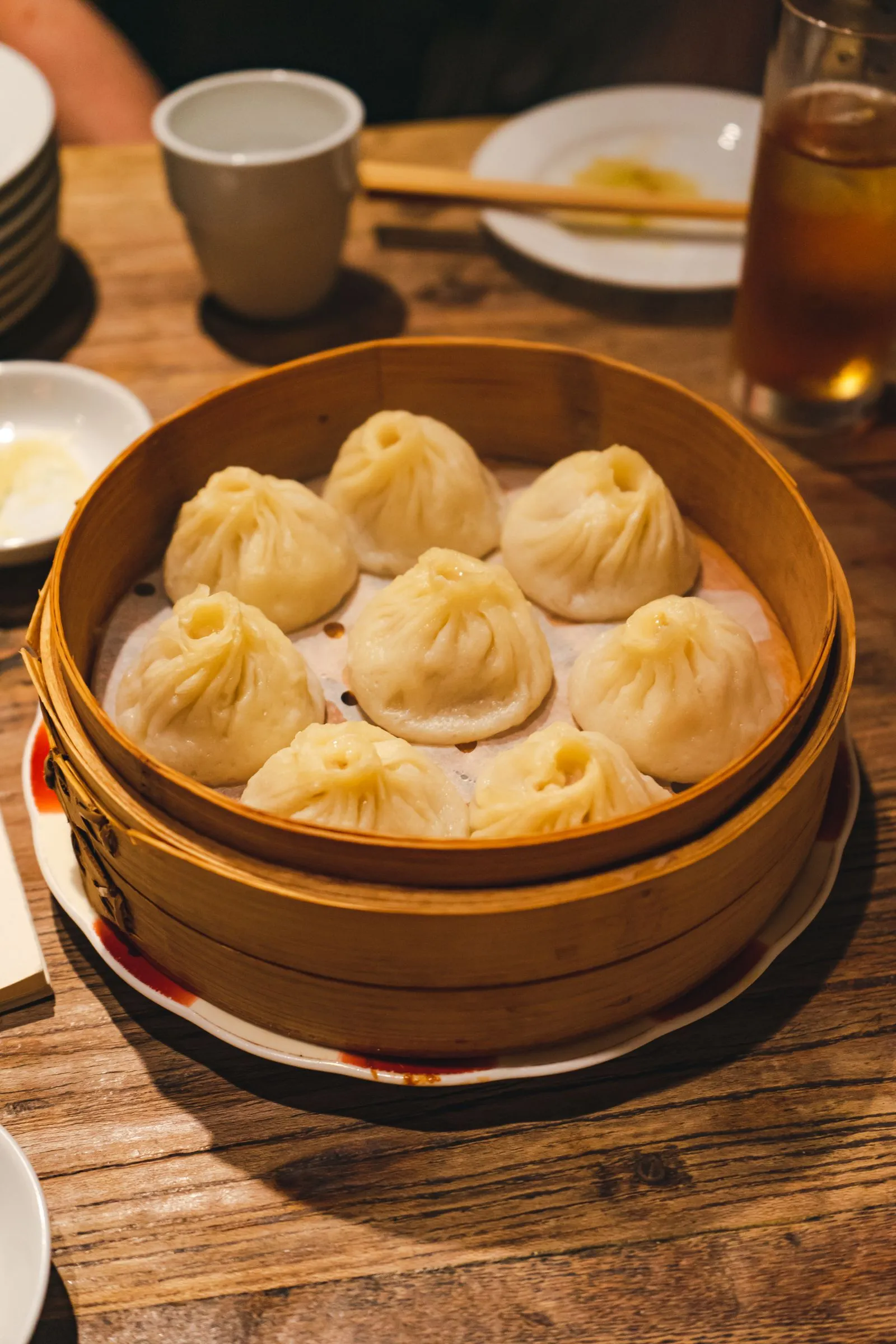 Xiaolongbao (soup dumplings) in a bamboo steamer. Shanghai’s most famous bite, best at the century-old Nanxiang or Dahuchun.
Essential Eats
| Restaurant | Dish | Price | Notes |
|---|---|---|---|
| Dahuchun Shengjianbao | Pan-fried pork buns | 20-40 yuan ($3-6) | Michelin-recommended; multiple locations |
| Nanxiang Mantou Dian | Xiaolongbao (soup dumplings) | 30-60 yuan ($4-9) | Inside Yu Garden; a brand dating to 1900 |
| Xiaoyang Shengjian | Pan-fried buns, thinner skin | 20-40 yuan ($3-6) | Multiple locations; juicier style |
| Weixiangzhai | Sesame noodle soup | 20-40 yuan ($3-6) | Opened 1935; Michelin Bib Gourmand |
| Lanting Restaurant | Old Shanghai home-style cooking | 80-150 yuan ($12-22) | 107 Songshan Road (Songshan Lu) |
| Renheguan | Crab roe rice bowl | 100-200 yuan ($15-30) | Michelin-recommended |
| Longfeng Restaurant | Fine dining on the Bund | 300-500 yuan ($44-74) | 8th floor of the Peace Hotel; 90 years old |
Local Tip: For street-level snacking, do not miss xiekehuang (baked sesame pastry shaped like a crab shell) at the Nanjing West Road location, or the legendary butterfly pastries at the Park Hotel Bakery on Nanjing West Road.
Where to Stay
| Budget | Price (per night) | Recommendations |
|---|---|---|
| Budget | 200-500 yuan ($30-74) | Yishuihaoting Select Apartment (near Bund, rated 9.8/10); Holiday Inn Express Shanghai Bund (5-minute walk to Yu Garden) |
| Mid-range | 500-800 yuan ($74-118) | Atour Hotel (Nanjing East Road, near Bund); Shanghai Mansion (historic building at north end of Bund) |
| Luxury | 1,000+ yuan ($148+) | Waldorf Astoria on the Bund; Peninsula Shanghai (river views); Conrad Shanghai |
Best location for tourists: The area around Nanjing East Road / the Bund / People’s Square, where you can walk to major sights and access Metro Lines 1, 2, 8, and 10.
Getting Around
From the Airport
Pudong International Airport (PVG):
- Maglev train: The world’s fastest commercial train. Reaches 431 km/h (268 mph) and arrives at Longyang Road station in just 8 minutes. Single ticket: 50 yuan ($7.40); with a same-day flight boarding pass: 40 yuan ($6). Transfer to Metro Line 2 for downtown.
- Metro Line 2: Direct to downtown, about 60-90 minutes.
- Taxi: 35-60 minutes, 150-200 yuan ($22-30).
Hongqiao International Airport (SHA):
- Metro Lines 2, 10, or 17 connect directly to downtown. A taxi takes 30-45 minutes.
City Transit
Shanghai’s metro has 20 lines covering all major attractions. Fares range from 3-10 yuan ($0.44-1.50). The “Suishenxing” app has an English interface showing real-time transit information. Foreign credit cards can be tapped at some metro stations.
Key Metro Stations
| Attraction | Metro Line | Station |
|---|---|---|
| The Bund / Nanjing Road | Line 2 / 10 | Nanjing East Road |
| Yu Garden | Line 10 | Yuyuan Garden |
| Oriental Pearl / Lujiazui | Line 2 | Lujiazui |
| Jing’an Temple | Line 2 / 7 | Jing’an Temple |
| Disneyland | Line 11 | Disneyland Resort |
| Xintiandi | Line 10 / 13 | Xintiandi |
Practical Information
Visa-Free Transit
Since December 2024, Shanghai offers a 240-hour (10-day) visa-free transit for citizens of 57 countries, including the US, UK, Canada, Australia, and most EU nations. This is one of the most generous transit policies in China.
Ticket Reservations
| Attraction | Price | Reservation |
|---|---|---|
| The Bund | Free | None |
| Yu Garden | 40 yuan ($6) | Reserve 1-2 days ahead |
| Oriental Pearl Tower | 199-399 yuan ($29-59) | Buy online in advance |
| Shanghai Disneyland | 475-799 yuan ($70-118) | Date-specific ticket |
| Shanghai Astronomy Museum | 30-60 yuan ($4-9) | Advance reservation required |
| Jing’an Temple | 50 yuan ($7) incense offering | None |
Daily Budget Estimate
| Category | Budget | Mid-Range | Comfortable |
|---|---|---|---|
| Accommodation (per night) | 200-500 yuan ($30-74) | 500-800 yuan ($74-118) | 1,000+ yuan ($148+) |
| Food (per day) | 80-150 yuan ($12-22) | 200-400 yuan ($30-59) | 500+ yuan ($74+) |
| Attraction tickets (total) | 100-200 yuan ($15-30) | 400-800 yuan ($59-118) | 400-800 yuan ($59-118) |
| Transport (per day) | 15-30 yuan ($2-4) | 30-60 yuan ($4-9) | 100+ yuan ($15+) |
Local Tip: Shanghai is a very walkable city within neighborhoods, but distances between districts are large. Prioritize the metro over taxis. During rush hour, a 20-minute metro ride can become a 60-minute taxi ordeal.
Avoid: Do not visit the Bund on Chinese national holidays (especially October 1-7). The promenade becomes so densely packed that police set up one-way pedestrian traffic controls.
Essential Preparations
- Visa: The 240-hour visa-free transit policy covers 57 nationalities. Ensure your onward ticket is confirmed.
- Payment: Set up Alipay and WeChat Pay with an international card. Shanghai is nearly cashless.
- Navigation: Download Amap (Gaode Maps) for the best local routing. Apple Maps works but with less detail.
- Communication: Buy a Chinese SIM at Pudong Airport or activate international roaming. Google services are blocked.
- Translation: Download Google Translate with offline Chinese pack, or use Baidu Translate.
- Safety: Shanghai is very safe by international standards. Pickpocketing is rare but watch your belongings in crowded markets.
- Toilets: Public restrooms are widely available in malls, metro stations, and parks. Most are squat-style; carry tissues and hand sanitizer.
Emergency Numbers
| Service | Number |
|---|---|
| Police | 110 |
| Ambulance | 120 |
| Fire | 119 |
| Consular protection | 12308 |
Sources & Verification
This guide was last verified on 2026-08-06. Key Chinese-language sources:
- Shanghai Yuyuan WeChat mini-program (Yu Garden official booking, 上海豫园): Provides current Yu Garden ticket pricing (40 yuan) and the 1-2 day advance reservation window referenced in the Day 1 itinerary and the ticket reservation table.
- Trip.com (携程, trip.com): Cross-checked for Yu Garden advance booking and for international ticketing access usable by foreign visitors.
- Shanghai Disney Resort official app (上海迪士尼度假区): Source for the Disneyland ticket tiers (475-799 yuan), the free standby pass system, and the “Dream Day Package” pricing in the Day 3 section.
- Suishenxing app (Shanghai official transit app, 随申行): English-interface metro and real-time transit information referenced in the City Transit section.
See our full verification methodology.
Related Articles
- 10 Days in China Itinerary — Shanghai as the finale of a 10-day trip
- Hangzhou Travel Guide (2026) — Just 1 hour from Shanghai by bullet train
- 240-Hour Visa-Free Transit Guide — Enter Shanghai visa-free for 10 days