Xiamen Travel Guide for Foreigners (2026): Gulangyu, Visa-Free Entry and a Car-Free Island
Xiamen Travel Guide for Foreigners (2026)
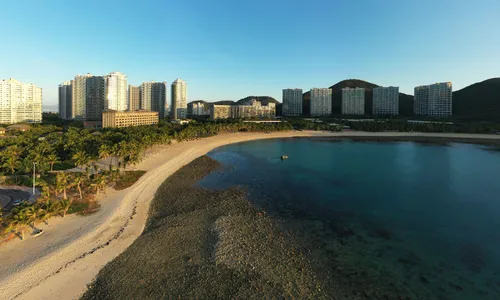
Most China itineraries bounce between Beijing, Xi’an, and Shanghai and skip the coast. That is a mistake, because the southeast corner holds one of the country’s most likeable cities: Xiamen (厦门), a clean, leafy, subtropical port built across an island and the mainland, with a UNESCO World Heritage island sitting a five-minute ferry ride offshore.
That island is Gulangyu (鼓浪屿), and it is the reason to come. It covers 1.88 km² and allows no cars, motorbikes, or bicycles, only pedestrians, threaded with a thousand-odd colonial-era villas, piano museums, and banyan-shaded lanes. Before the 2024 visa changes, reaching it took some effort. Now Xiamen’s Gaoqi International Airport (XMN) is a 240-hour visa-free transit port, so travelers from 57 countries can fly in and stay up to ten days without a visa.
Below: how to use that visa-free entry, how the Gulangyu ferry actually works for foreigners, every sight worth your time with 2026 prices, the two famous spots that now need a reservation, and the food worth crossing the city for.
The short version: Fly into Xiamen visa-free under the 240-hour rule, ferry over to car-free Gulangyu for a day or two, eat satay noodles and peanut soup, and avoid July to September (typhoon season).
How we verified this: SinoWander reads Chinese-language sources that English guides cannot, including official Xiamen Ferry booking notices, the National Immigration Administration’s 240-hour visa-free policy, Trip.com, and WeChat mini-programs for scenic-area reservations. We cross-check them before writing. We have not personally visited every location. Each guide is date-stamped when last verified: 2026-08-06. See our methodology.
Why Xiamen Belongs on Your China Trip
Three things make Xiamen unusually rewarding for a foreign visitor:
- Visa-free access. XMN airport is one of the 240-hour transit-visa-free ports. If your country is on the list of 57 and you hold an onward ticket to a third country, you can enter China through Xiamen and stay up to ten days without applying for a visa. See our 240-hour transit guide and visa-free countries list.
- A car-free UNESCO island. UNESCO inscribed Gulangyu in 2017 as a “historic international settlement.” Walking it, with no engines or horns, feels unlike anywhere else in urban China.
- Subtropical weather. Xiamen sits at a mild latitude; winters rarely dip toward freezing and the sea moderates the summer heat. In October to December, when northern China is freezing and Europe is going dark, Xiamen holds at 15–22 °C. It pairs well with our guide to China’s coolest summer cities and our piece on the worst times to visit China, which flags the typhoon months.
Getting In: Visa-Free Entry via XMN
Xiamen Gaoqi International Airport (XMN) sits on the island itself, about 20 minutes from downtown, a real advantage over cities whose airports sit an hour out. It runs 27 international routes reaching 20 countries and regions.
Since 17 December 2024, XMN has been a port for the 240-hour visa-free transit policy. Travelers from 57 countries (the list reached 55 in June 2025 when authorities added Indonesia) with a confirmed onward ticket to a third country can enter and stay up to 240 hours (10 days). The permitted area covers 24 provinces, including all of Fujian, so you can move freely around Xiamen and well beyond. More than 3,400 foreign travelers used the port for this in the first year alone.
The Gaoqi border checkpoint runs a one-stop counter to apply for the 240-hour temporary entry permit on the spot. If your itinerary is China-only, with no third-country onward leg, you need a regular L tourist visa instead, because the visa-free rule requires the transit structure.
High-speed rail is the other way in. The national high-speed rail network connects Xiamen Station (on the island) and Xiamen North to Shenzhen (about 3.5 hours), Shanghai, and beyond. See our train-ticket guide for booking with a passport.
Gulangyu: The Car-Free UNESCO Island
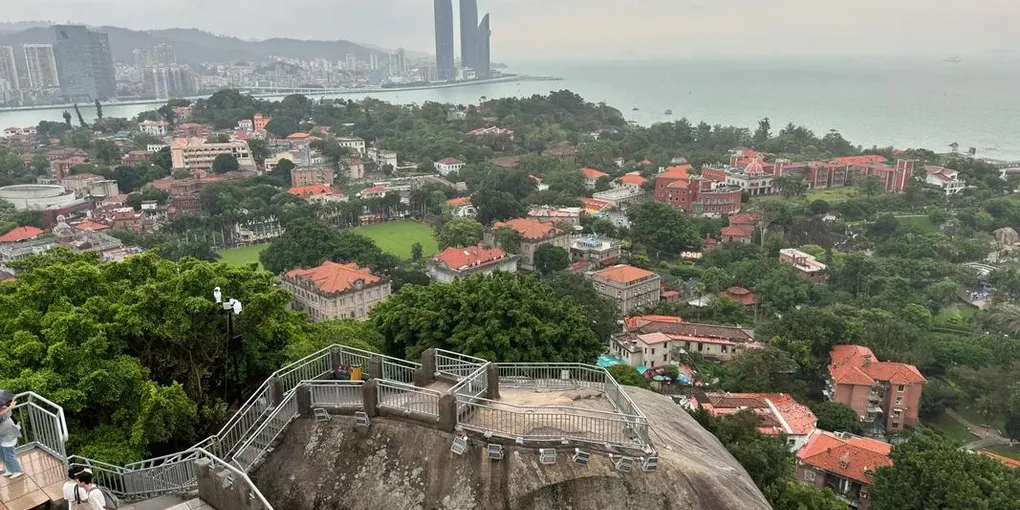
Gulangyu sits off Xiamen’s southwest corner, a short look across the water from the city. Its “Sea Garden” nickname fits: subtropical greenery over rugged hills, sea on all sides.
A quick history (it explains the buildings)
Song-dynasty settlers arrived here and called the island “Five Dragon Island” before the Ming renamed it. After the First Opium War, Britain, the United States, and Spain all opened consulates here in 1842, and over the following decades wealthy Chinese merchants and foreign traders built a thousand-odd villas in a jumble of European and southern Chinese styles. That architecture, the “World Architecture Expo,” is what UNESCO recognized in 2017. Two older layers sit underneath: a 1573 cliff inscription (“Drum Wave Cave Heaven”) on Sunlight Rock, and the 1650 naval base where Zheng Chenggong (Koxinga) drilled his fleet before sailing to expel the Dutch from Taiwan.
Music is the other thread. Gulangyu has one of the highest piano-per-capita ratios anywhere, with a piano museum and, in the landmark octagonal Bagua Building, the Organ Museum, billed as the largest of its kind in the world. People call it the “Piano Island.”
Sights and 2026 prices
| Sight | What it is | Entry |
|---|---|---|
| Sunlight Rock (Riguang Yan) | The island’s highest point (92.7 m); the best panorama, plus Zheng Chenggong’s old naval drill ground and Ming/Qing cliff inscriptions | ~¥50 single; cheaper in the combo ticket |
| Shu Zhuang Garden (菽庄花园) | A 1913 merchant’s seaside villa; the Forty-Four Bridge “borrows” the sea into a classical garden, a layout you do not see elsewhere | ¥30 |
| Hao Yue Garden (皓月园) | A coastal park dedicated to Zheng Chenggong, topped by a 15.7 m, 1,617-ton granite statue of him, among China’s largest historical-figure statues | ¥30 (free after 19:30) |
| Organ Museum (Bagua Building) | The world’s-largest organ collection, inside an octagonal landmark | ¥30 |
| Pipe-Organ Art Center | Home to one of Asia’s largest pipe organs | ¥25 |
| Palace Museum Foreign Artifacts Gallery | A branch of Beijing’s Palace Museum, showing its non-Chinese holdings | ¥25 |
| Yu Garden (毓园) | A memorial to Lin Qiaozhi, a pioneering modern obstetrician; quiet and free | Free |
Best value: the Gulangyu combo ticket (¥90, valid 3 days) covers Sunlight Rock, Shu Zhuang Garden, Hao Yue Garden, and the International Lettering Art Museum, and lets you into the Organ Museum, Pipe-Organ Center, and photography gallery without a separate reservation. If you plan to see more than two sights, buy this.
The ferry: what foreign guides get wrong
This is the part that trips people up, because Xiamen separates residents from tourists.
- Tourist pier (your side): Dongdu Cruise Terminal (东渡客运码头), sometimes still called the “Xiagu” pier. Visitors leave from here, roughly 07:10–17:30, about every 20 minutes. A smaller alternative is the Songyu pier (service to Neicuo’ao only). Locals use the old Lundu and First piers on a cheap ¥8 resident ticket. Do not queue there expecting a tourist fare.
- Tickets: ¥35 or ¥80 round-trip. The ¥35 route (Dongdu to Sanqiutian or Neicuo’ao) is the standard one; the ¥80 route is a dedicated tourist cruise line. Both include the return.
- Book ahead, with your passport. The official channels are the “Yujian Xiamen” (屿见厦门) WeChat mini-program, the “Xiamen Ferry” (厦门轮渡) account, or the official site xmferry.com. Since February 1, 2026, you can book up to 15 days ahead, with day-15 tickets released daily at 9:00; the ticket stays valid for 20 days. Board by scanning the ID you booked with, no paper exchange.
- If the mini-program fights your foreign passport (it happens; some WeChat services dislike overseas phone numbers), fall back to Trip.com, which resells the same tickets, or buy at the pier window with your passport.
- Returning: leave from Piano Pier (钢琴码头) or Neicuo’ao. Piano Pier to Dongdu runs roughly 07:40–17:40; after 18:00, Piano Pier routes back to the old Lundu pier instead.
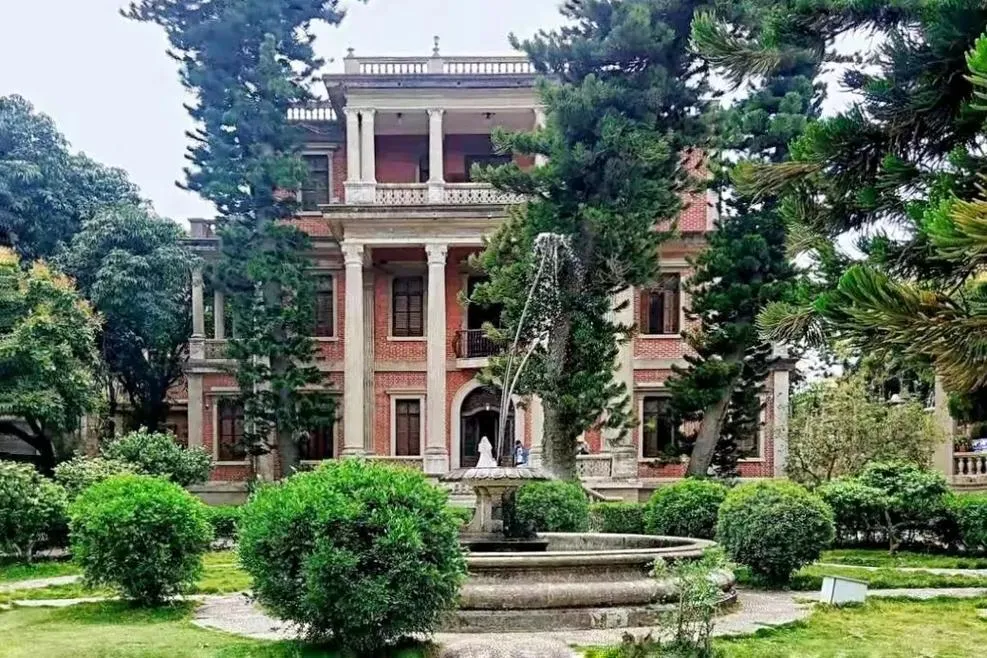 Colonial-era villas line Gulangyu’s lanes, the “historic international settlement” UNESCO inscribed in 2017.
Allow a full day on the island, more if you like slow wandering. There are no cars, so you will walk a lot. Wear comfortable shoes and bring water in summer.
Xiamen Island: The Sights That Need a Reservation
Back on the main island, two of the most famous spots now require advance booking, easy to miss.
| Sight | Why go | Entry | Booking |
|---|---|---|---|
| Nanputuo Temple (南普陀寺) | A centuries-old Buddhist temple below the hills, with a strong vegetarian restaurant | Free | Reservation required |
| Xiamen University (思明校区) | One of China’s most beautiful campuses, with Tan Kah Kee’s red-brick blend of Chinese and Western styles and the painted Furong Tunnel | Free | Reservation required |
| Xiamen Botanical Garden | A 5A garden whose rainforest zone fills with artificial mist in the mornings, a favorite for photographers | ¥30 | — |
| Zhonggu Cableway (钟鼓索道) | A cable car looping over the city and harbor for a wide panorama | ¥80 | — |
| Hulishan Fortress (胡里山炮台) | A coastal fort with a surviving 19th-century Krupp gun, and a view toward Kinmen | ¥25 | — |
| Zengcuo’an (曾厝垵) | A former fishing village turned dense strip of guesthouses, cafés, and street food; touristy but fun | Free | — |
| Jimei School Village (集美学村) | Tan Kah Kee’s earlier campus cluster, Chinese-Western architecture by the sea | Free | — |
For the free, reservation-required sights (Nanputuo and the university), book through WeChat the day before, the same pattern as the Forbidden City and other major Chinese sights. If you cannot get a slot, the Botanical Garden, Hulishan, and the coastal road need no booking.
The coastal road (Huandao Lu) is Xiamen at its best: a seaside promenade and bike path running from Baicheng beach toward Huangcuo, with the sea on one side. Rent a bike or walk a stretch at sunset. Shapowei, an old fishing harbor turned arts district, and Eighth Market (Bashi), the city’s loudest, most local seafood-and-breakfast market, round out a non-Gulangyu day. The old colonial Zhongshan Road shopping street still has its arcaded southern-Chinese shop-houses.
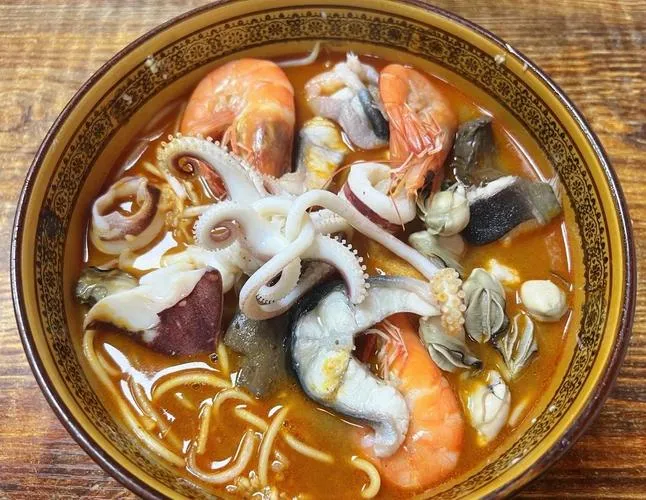 Sha cha noodles: Xiamen’s signature bowl, seafood in a satay-style broth.
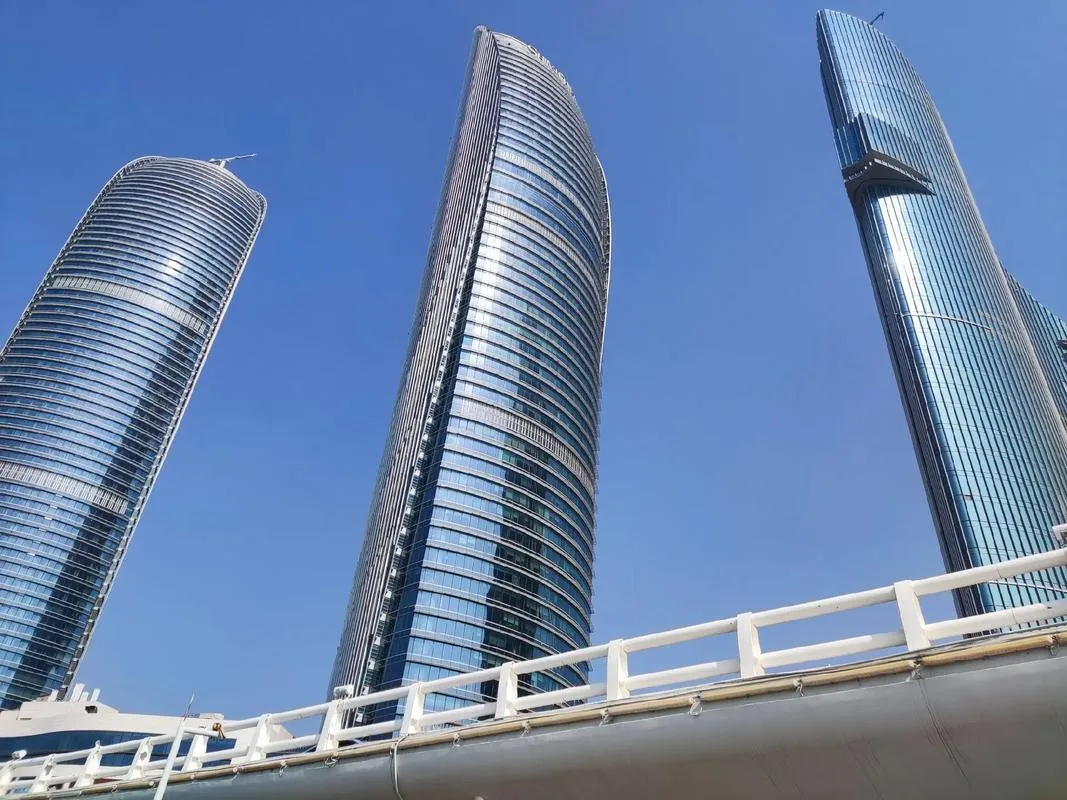
Xiamen’s Twin Towers on the waterfront, the modern face of the island city.
Sha cha noodles: Xiamen’s signature bowl, seafood in a satay-style broth.
Xiamen’s Twin Towers on the waterfront, the modern face of the island city.
What to Eat
Xiamen’s food is southern Fujian (Minnan) cuisine, lighter and sweeter than Sichuan, heavy on seafood and soup.
- Satay noodles (沙茶面), the city’s signature. A fragrant satay-spiced broth poured over noodles and whatever toppings you pick (tofu, offal, seafood). Any old shop with a queue will do; the dish travels well across the city.
- Oyster omelet (海蛎煎, o-a-jian), sweet-potato-starch batter with fresh oysters and egg, crisp at the edges.
- Peanut soup at Huang Ze He (黄则和), a China Time-Honored Brand (recognized 2024), founded in 1945 and established on Zhongshan Road in 1950. The peanuts simmer for hours until silky-sweet; locals have it with youtiao (fried dough sticks), fried five-spice rolls, or fried vinegar pork. They also serve satay noodles. Open roughly 09:00–22:00 across several branches; the Zhongshan Road one is the classic.
- Sea worm jelly (土笋冻, tusun dong), the local dare food: a clear jelly made from a type of sea worm, eaten cold with vinegar and wasabi. It tastes better than it sounds.
- Ginger duck (姜母鸭), a clay-pot herbal duck braise, fragrant with ginger.
- Gulangyu pastries (鼓浪屿馅饼), the classic souvenir: flaky mung-bean pastries with roots back to 1805.
For fresh seafood, buy it live at Eighth Market and have a nearby shop cook it, or pick a loud 大排档 (dàpáidǎng, outdoor food stall).
When to Go
| Season | Verdict |
|---|---|
| March–May | Spring bloom, mild and pleasant. A top pick. |
| June | Warm and fine before peak heat. |
| July–September | Avoid. Typhoon season, with August the worst month. Hot, humid, and ferries can cancel. |
| October–December | Best. Clear, dry, 15–22 °C, and the sea stays warm. The smartest window for a foreign visitor. |
| January–February | Mild by Chinese standards; possible but grey. Watch the Chinese New Year crowds. |
The strongest case for Xiamen is timing it as an October-to-December escape, when northern China and Europe turn cold.
Getting Around
- Metro lines 1, 2, and 3 cover most of the island, including the ferry area.
- BRT (bus rapid transit) runs on dedicated lanes, cheap and fast across the city.
- DiDi for anything the metro does not reach. See our DiDi guide.
- Ferry to Gulangyu (above).
Where to Stay
Stay on the main island near Zhongshan Road or Siming district for walkable access to the Gulangyu ferry, Eighth Market, and Nanputuo. Zengcuo’an is the pick if you want guesthouse charm by the sea. For how foreigners actually book Chinese hotels, and the official policy that says they cannot refuse you, see our hotel booking guide. Budget roughly ¥300–600 for a decent mid-range double.
🏨 Book your stay: Search Xiamen hotels on Trip.com (passport-friendly, foreign-card payment). Aim for Siming district or Zengcuo’an.
The Bottom Line
Xiamen is the rare Chinese city that is easy to enter, easy to like, and different from the north. Fly in visa-free under the 240-hour rule, spend two unhurried days walking car-free Gulangyu and its piano museums, eat satay noodles and peanut soup, and time it for autumn. Pair it with the Guilin river country if you want both coast and karst in one loop.
Sources & Verification
This guide was last verified on 2026-08-06. Key Chinese-language sources:
- Xiamen Ferry (厦门轮渡, xmferry.com) and the Yujian Xiamen (屿见厦门) WeChat mini-program: the official ferry booking channels behind the Dongdu Cruise Terminal departure pier, the ¥35 and ¥80 round-trip fares, the 15-day advance booking window (extended from 10 days on February 1, 2026, day-15 tickets released daily at 9:00), and the passport-scan boarding process.
- National Immigration Administration (国家移民管理局): the 240-hour visa-free transit policy, XMN’s designation as a port on 17 December 2024, the 57-country list (Indonesia added June 2025), the 24-province permitted area, and the 3,400 foreign travelers figure for the first year.
- UNESCO World Heritage Centre: the 2017 inscription of Gulangyu as a “historic international settlement,” which underpins the car-free island and colonial architecture sections.
- Trip.com: the fallback ferry-ticket reseller noted for foreign passports that the WeChat mini-program rejects.
See our full verification methodology.
Related Articles
- 240-Hour Visa-Free Transit in China: the rule that gets you into Xiamen visa-free
- China Visa-Free Countries (2026): the full 55-country list
- How to Buy China Train Tickets: arriving by high-speed rail
- How Foreigners Book Hotels in China: the reservation policy
- Worst Time to Visit China: why to skip Xiamen in typhoon season
- Guilin & Yangshuo Guide: pair the coast with karst rivers