Xi'an Travel Guide - Ancient Capital of the Terracotta Warriors (2 Days)
Xi’an is where Chinese civilization as we know it began. It served as the capital for 13 dynasties over 1,100 years, including the Western Zhou, Qin, Han, and Tang, the dynasties that wrote most of early Chinese history. Today a Ming Dynasty wall still encircles the old city, and inside it the Muslim Quarter alleys, Tang pagodas and neon-lit districts sit layered on top of each other. At its doorstep lies the most astonishing archaeological discovery of the 20th century: the Terracotta Army.
Two days is enough to see the essentials, though history enthusiasts could easily spend a week.
How we verified this: SinoWander reads Chinese-language sources that English guides cannot, including official scenic-area WeChat booking accounts and Ctrip. We cross-check them before writing. We have not personally visited every location. Each guide is date-stamped when last verified: 2026-08-06. See our methodology.
When to Visit
Spring (March — May) and autumn (September — November) are ideal, with comfortable temperatures of 15-25 degrees C (59-77 degrees F). Avoid the national holidays in the first weeks of May and October, when domestic tourism surges and wait times at the Terracotta Army can exceed three hours.
2-Day Itinerary
Day 1: Terracotta Army + Muslim Quarter
| Time | Activity | Duration |
|---|---|---|
| 7:30 AM | Depart downtown for Terracotta Warriors | — |
| 9:00 AM — 12:30 PM | Emperor Qinshihuang’s Mausoleum Site Museum (Terracotta Army) | 3-4 hours |
| 2:00 — 4:00 PM | Huaqing Palace (optional) | 2 hours |
| 6:00 PM onward | Muslim Quarter (Huimin Jie) — dinner and street food | 2-3 hours |
The Terracotta Army: Everything You Need to Know
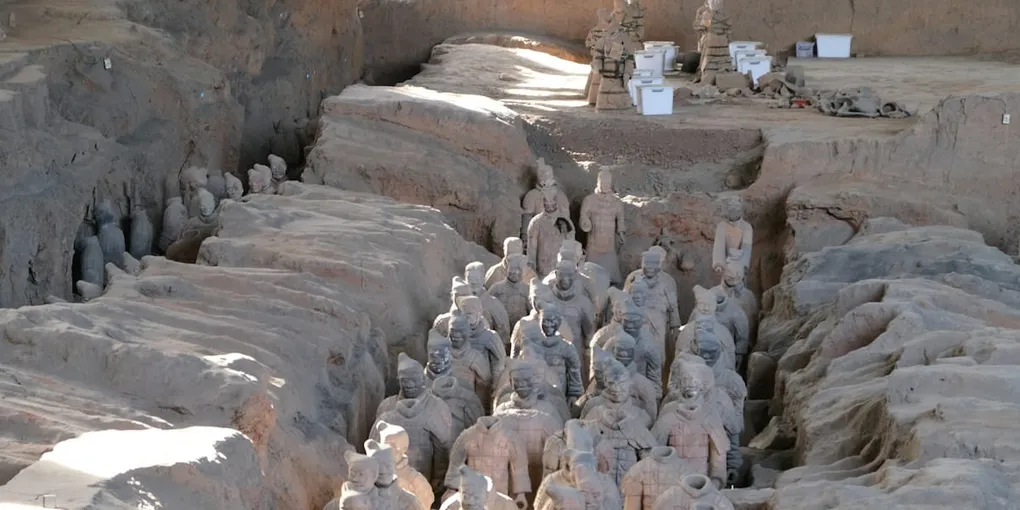
Discovered in 1974 by farmers digging a well, the Terracotta Army is a collection of over 8,000 life-sized clay soldiers, horses, and chariots buried with China’s first emperor, Qin Shi Huang, around 210 BC. Each warrior has unique facial features, hairstyles, and expressions. The scale is almost incomprehensible.
Tickets: 120 yuan (~$18) for peak season (March — November). This includes both the Terracotta Army museum and the Lishan Garden (Emperor’s Mausoleum). Book up to 7 days in advance via the official WeChat account or ctrip.com.
How to get there from downtown Xi’an:
- Metro + bus (recommended): Metro Line 9 to Qinling Xi (Qin Mausoleum West) station, then bus 621 (2 yuan / ~$0.30, about 25 minutes) or a short taxi ride.
- Tourist bus: Bus 306 (You 5) departs from Xi’an Railway Station directly to the site.
- Train: An early morning train from Xi’an to Lintong station (20 minutes), then a 15 yuan (~$2) taxi to Lishan Garden.
Visiting strategy to avoid crowds:
| Time Slot | Crowd Level | Notes |
|---|---|---|
| 8:30 — 9:00 AM (opening) | Low | Best experience; arrive early |
| 11:30 AM — 12:00 PM | Medium | Tour groups break for lunch — a brief window |
| 1:00 — 3:00 PM | Very high | Tour groups flood in; avoid if possible |
| Weekdays | Lower | Far fewer visitors than weekends |
Pro tip: Visit Lishan Garden first (the emperor’s actual mausoleum), then take the free shuttle to the Terracotta Army museum. Most tourists go straight to the warriors, leaving Lishan Garden pleasantly uncrowded.
🎫 Guided tour: Book a Terracotta Army half-day tour with an English-speaking guide (skip-the-line options plus transport from Xi’an).
Avoid: Do not buy tickets from scalpers, accept rides from unlicensed drivers, or follow “helpful” guides who approach you near the entrance. These are common scams. The real Terracotta Army is the only one — ignore signs for “high-tech exhibitions” or “VR experiences” near the parking lots. Also be wary of anyone selling Lantian jade near the site; it is typically overpriced and low quality.
Huaqing Palace
If time permits after the Terracotta Army, visit Huaqing Palace (120 yuan / ~$18), a Tang Dynasty imperial hot spring palace famously associated with the tragic love story of Emperor Xuanzong and his consort Yang Guifei. A free shuttle connects it to the Terracotta Army museum. The outdoor spectacle “The Song of Everlasting Sorrow” (Changhen Ge), performed here nightly (268-888 yuan / $40-131), is a stunning theatrical experience with the mountain as its backdrop.
The Muslim Quarter
Back in the city, the Muslim Quarter (Huimin Jie, free) is Xi’an’s culinary heart. This neighborhood has been home to the Hui Muslim community for over 1,000 years, and the streets come alive at night with charcoal smoke, sizzling lamb, and the sweet aroma of pomegranate juice.
Top 10 foods to try:
| Food | Description | Price |
|---|---|---|
| Yangrou paomo | Pita bread torn into pieces and soaked in rich lamb soup — Xi’an’s signature dish | 30-50 yuan ($4-7) |
| Roujiamo | Chinese “hamburger” — chopped braised meat in a toasted bun | 10-20 yuan ($1.50-3) |
| Liangpi | Cold wheat noodles in sesame-chili sauce | 8-15 yuan ($1-2) |
| Kao rou | Grilled lamb skewers, seasoned with cumin and chili | 3-5 yuan ($0.50-0.75) per skewer |
| Guan tang baozi | Juicy soup dumplings | 15-25 yuan ($2-4) |
| Zeng gao | Sticky rice and jujube cake, steamed | 5-10 yuan ($0.75-1.50) |
| Shui pen yangrou | Clear lamb soup with tender meat | 20-30 yuan ($3-4) |
| Suan cai chao mi | Stir-fried rice with pickled vegetables | 10-15 yuan ($1.50-2) |
| Fengmi liang zong | Honey-glazed cold sticky rice dessert | 5-10 yuan ($0.75-1.50) |
| Biangbiang mian | Wide hand-pulled belt noodles in chili oil | 15-25 yuan ($2-4) |
Local Tip: The main pedestrian street is touristy and overpriced. The best food is in the side alleys — specifically Da Pi Yuan and Xiao Pi Yuan, where local favorites like Sheng Jia Niangpi (sesame cold noodles), Lao Yang Jia Dumpling House, and Ma Zhen Noodle Shop serve more authentic versions at lower prices.
Recommended restaurants: Lao Sun Jia Paomo (century-old lamb soup specialist), Jia San Guan Tang Bao (soup dumpling institution), and Ding Jia Xiao Su Rou (crispy fried beef, a local favorite).
Day 2: City Wall + Pagodas + Night Lights
| Time | Activity | Duration |
|---|---|---|
| Morning | Xi’an Ancient City Wall (cycling) | 2-3 hours |
| Midday | Bell Tower and Drum Tower | 1 hour |
| Afternoon | Shaanxi History Museum + Big Wild Goose Pagoda | 3-4 hours |
| Evening | Datang Everbright City (Datang Buyecheng) | 2-3 hours |
Xi’an City Wall is the most complete ancient city wall in China, a massive 13.7-km (8.5-mile) rectangle built during the Ming Dynasty (1370-1378). You can walk, rent a bicycle (about 45 yuan / $7 for 3 hours), or take an electric cart. Enter at the South Gate (Yongning Gate, Metro Line 2 Yongningmen station) for the most scenic starting point. Ticket: 54 yuan ($8).
Local Tip: Cycle the wall in the late afternoon as the sun sets. The golden light on the old city inside and the modern skyline outside makes for stunning photographs.
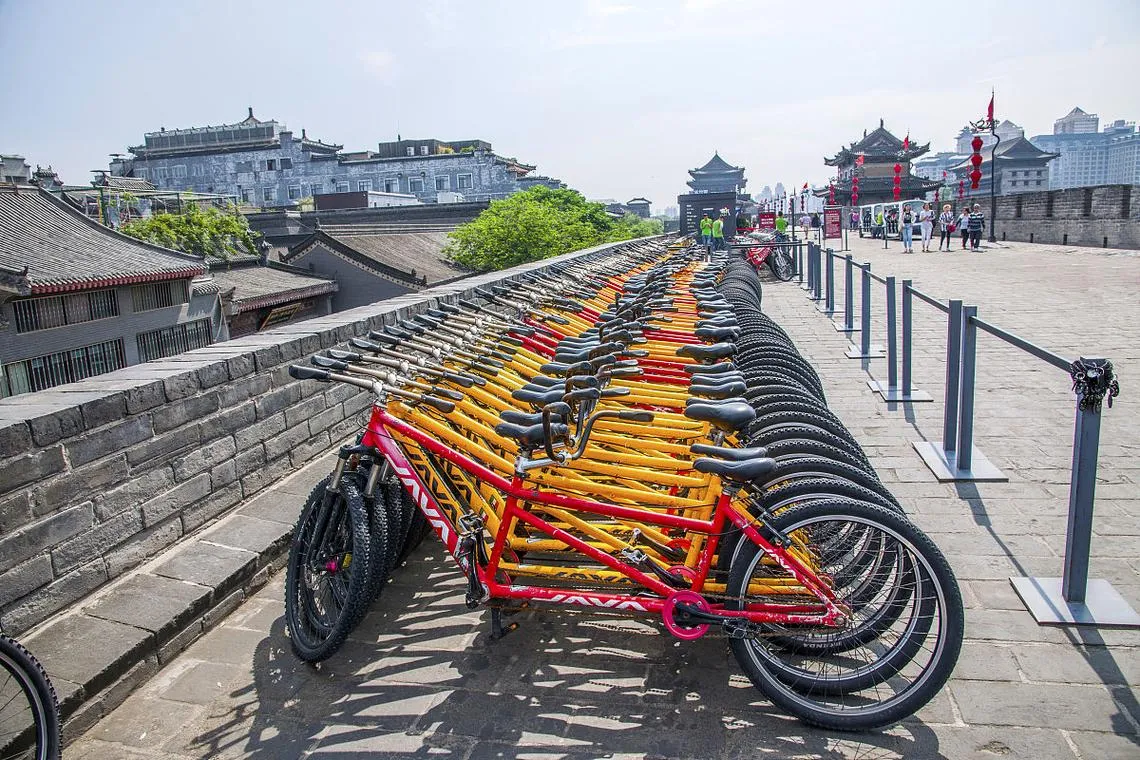 Cycling the Ming-era wall: 13.7 km on top of the old city.
The Bell Tower (30 yuan / ~$4.50) and Drum Tower (30 yuan / $4.50) stand at the city center. A combo ticket costs 50 yuan ($7). Both are especially photogenic at night when illuminated.
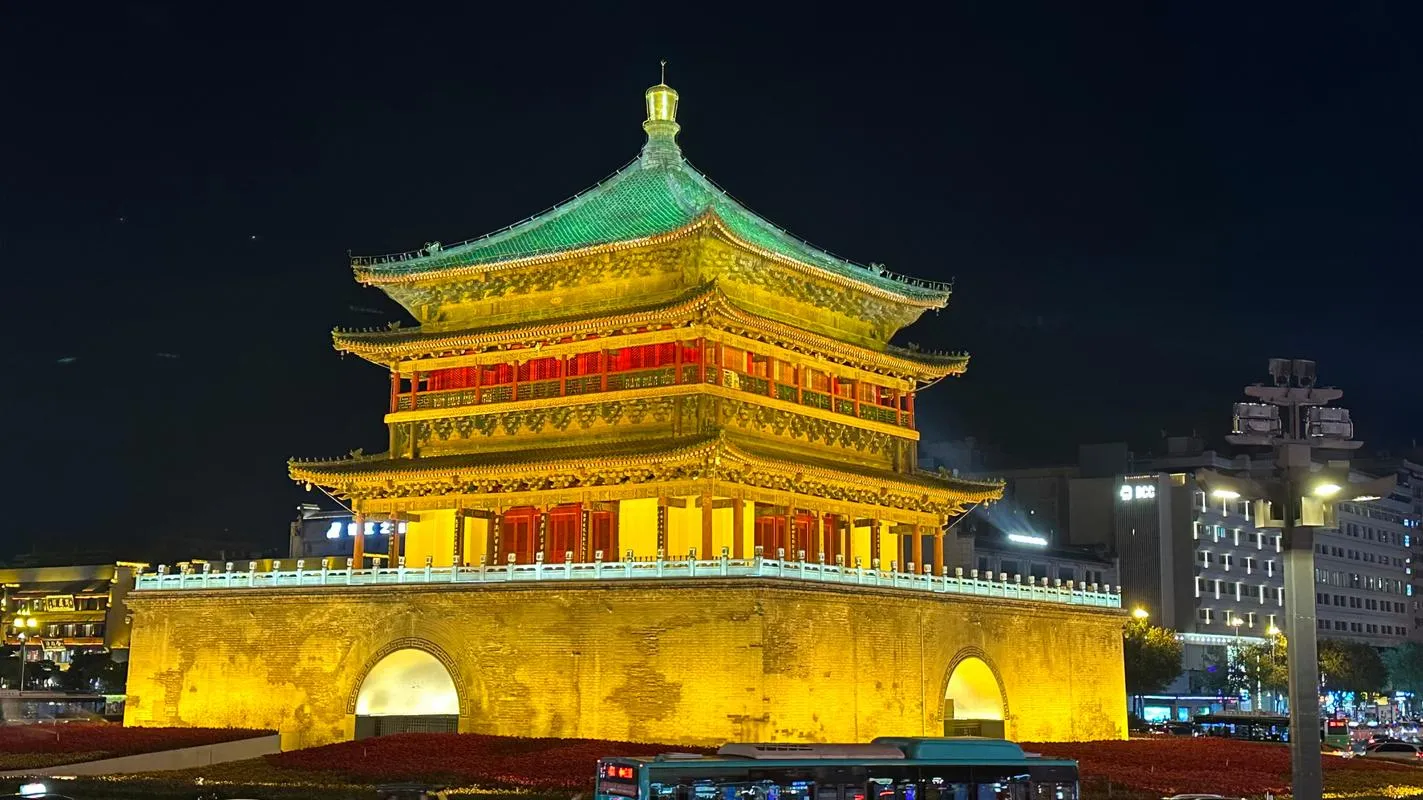 The Bell Tower by long exposure, at the center of the old city.
The Shaanxi History Museum is free but requires a reservation made 5 days in advance through the official WeChat account — and tickets are notoriously difficult to secure. The collection of 370,000 artifacts spans over one million years of history. If you cannot get a reservation, consider the Forest of Stone Steles Museum as an alternative. Closed Mondays.
The Big Wild Goose Pagoda (Da Yan Ta) is a 7th-century Buddhist pagoda built to house scriptures brought from India by the monk Xuanzang (the real-life inspiration for the character in “Journey to the West”). Temple entrance: 10 yuan ($1.50); climbing the pagoda: an additional 25 yuan ($4). The surrounding plaza features a free musical fountain show every evening at 8:00 PM.
Datang Everbright City (Datang Buyecheng, free) is a Tang Dynasty-themed pedestrian mall that transforms into an immersive spectacle of lights, street performers in period costume, and projected animations after dark. Walk south from the Big Wild Goose Pagoda to experience it. Come after dusk for the full effect.
Where to Stay
Best area: The Bell Tower / Drum Tower / Muslim Quarter core, where you can walk to restaurants, the city wall, and two metro lines (Lines 2 and 6 intersect at Zhonglou / Bell Tower station).
| Budget | Price (per night) | Recommendations |
|---|---|---|
| Budget | 96-200 yuan ($14-30) | Jinji Hotel (near Bell Tower and Muslim Quarter); Xi’an Tuyue Hotel |
| Mid-range | 300-600 yuan ($44-89) | Holiday Inn Express Zhonglou; Manxin Hotel (Huazhu brand, stylish design); Qianna Hotel (Chinese-style boutique) |
| Luxury | 600+ yuan ($89+) | Novotel Xi’an Zhonglou (Accor brand, directly facing the Bell Tower metro exit); Hilton Garden Inn Zhonglou; Four Points by Sheraton |
🏨 Book your stay: Search Xi’an hotels on Trip.com (passport-friendly, foreign-card payment). The Bell Tower core puts the Muslim Quarter, the city wall and two metro lines within walking distance.
Getting Around
Arriving in Xi’an
Xi’an Xianyang International Airport (XIY): About 25 miles (40 km) from downtown. Metro Line 14 connects the airport terminals to Xi’an North Railway Station, where you transfer to Line 2 for the Bell Tower. Total journey: about 1 hour. Taxi: 100-150 yuan ($15-22).
Xi’an North Railway Station (high-speed rail): Metro Line 2 goes directly to the Bell Tower in about 25 minutes.
Xi’an Railway Station (conventional rail): Located in the city center, near the City Wall. Bus 306 (You 5) departs from here for the Terracotta Army.
City Transit
Xi’an’s metro has 9 lines. Key lines for tourists:
| Line | Key Stops |
|---|---|
| Line 2 | Bell Tower, Yongningmen (City Wall), Xiaozhai (Shaanxi History Museum) |
| Line 3 | Big Wild Goose Pagoda |
| Line 4 | Big Wild Goose Pagoda, Datang Furong Garden, Xi’an North Station |
| Line 9 | Qinling Xi (transfer to bus for Terracotta Army) |
| Line 14 | Airport line |
Fares start at 2 yuan (~$0.30). Most trips cost 2-5 yuan. Payment via Alipay or WeChat QR codes at turnstiles.
Practical Information
Budget Estimate (2 days, excluding flights)
| Category | Budget | Mid-Range | Comfortable |
|---|---|---|---|
| Accommodation (1 night) | 100-300 yuan ($15-44) | 300-600 yuan ($44-89) | 600+ yuan ($89+) |
| Food (2 days) | 150-250 yuan ($22-37) | 250-500 yuan ($37-74) | 500+ yuan ($74+) |
| Tickets | 250-350 yuan ($37-52) | 300-500 yuan ($44-74) | 300-500 yuan ($44-74) |
| Local transport | 50-100 yuan ($7-15) | 100-200 yuan ($15-30) | 200+ yuan ($30+) |
| Airport transfer | 100-150 yuan ($15-22) | 100-150 yuan ($15-22) | 100-150 yuan ($15-22) |
| Total | ~650-1,150 yuan ($96-170) | ~1,050-1,950 yuan ($155-288) | ~1,700+ yuan ($251+) |
Essential Preparations
- Visa: Xi’an supports the 240-hour visa-free transit policy for eligible nationalities.
- Payment: Download Alipay and WeChat Pay and link your international card before arrival.
- Language: Major attractions offer English audio guides for rent. Download a translation app for interactions outside tourist zones.
- Shoes: You will walk extensively. Athletic shoes are essential.
- Passport: Carry it at all times — it is required for Terracotta Army entry and hotel check-in.
- Power bank: Long days of photography drain batteries quickly.
Food Streets Beyond the Muslim Quarter
- Yongxingfang — Shaanxi intangible cultural heritage food street, cleaner and more organized
- Sajinqiao — The street locals actually recommend; more down-to-earth and authentic
- Da Pi Yuan / Xiao Pi Yuan — Hidden alleys adjacent to the Muslim Quarter with the best traditional food
Local Tip: Xi’an is one of China’s most affordable major cities for food. A hearty bowl of biangbiang noodles costs 15-25 yuan ($2-4), and a full lamb paomo meal is under 50 yuan ($7). A full day of eating here costs less than one coffee in Shanghai.
Avoid: Never accept unsolicited “guide” services near the Terracotta Army or City Wall. These are typically commission-driven shopping tours disguised as guided visits. Use only the official audio guides or hire guides through reputable platforms like Trip.com or GetYourGuide.
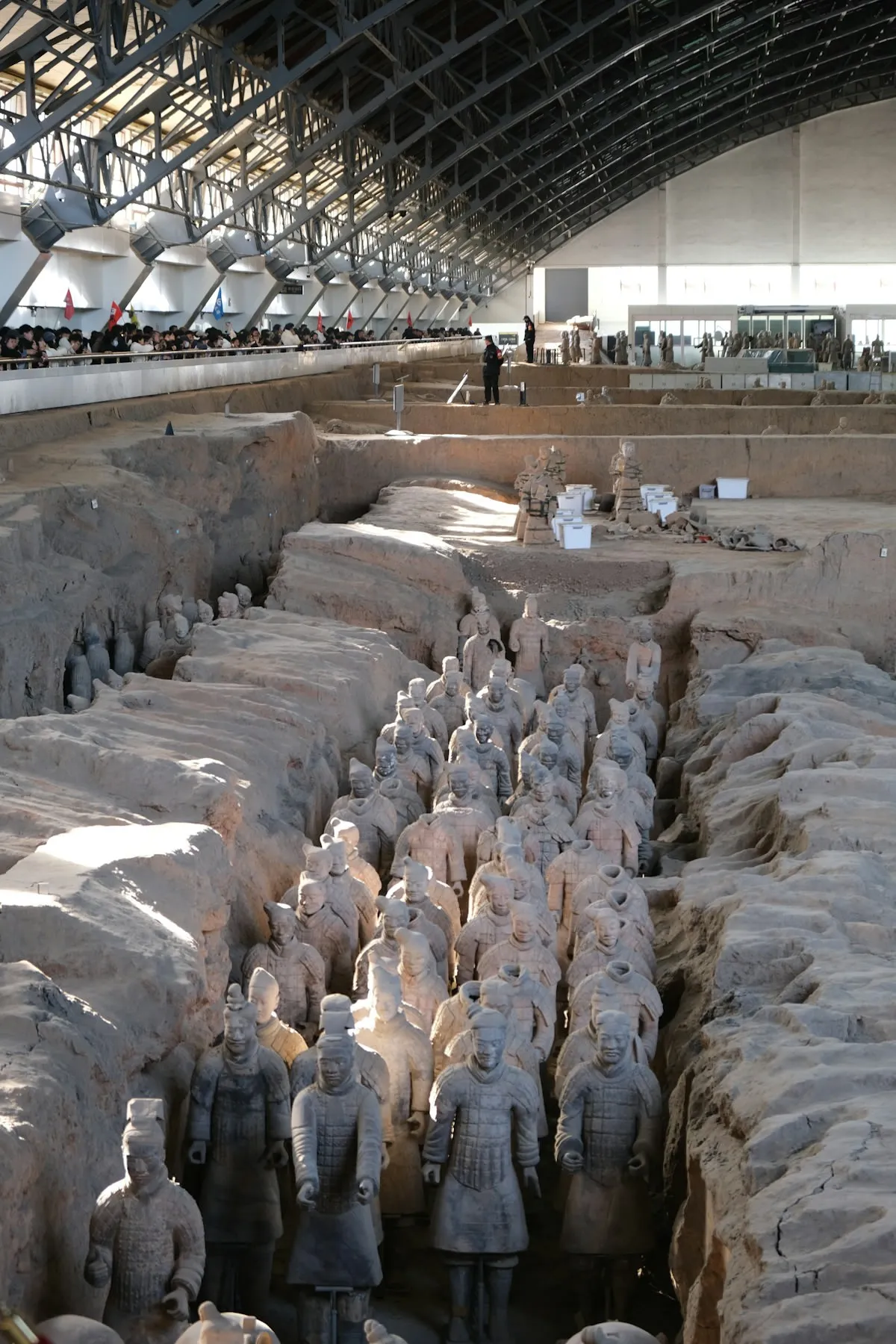 Rows of terracotta warriors in Pit 1, the largest excavation at the Emperor Qinshihuang’s Mausoleum Site Museum.
Sources & Verification
This guide was last verified on 2026-08-06. Key Chinese-language sources:
- Emperor Qinshihuang’s Mausoleum Site Museum (秦始皇陵博物院, official WeChat booking): the official authority for the Terracotta Army, providing the 120-yuan peak-season ticket and the 7-day advance booking window via its WeChat account.
- Shaanxi History Museum (陕西历史博物馆, official WeChat reservation): official museum referenced for the free-entry reservation that opens 5 days in advance and the 370,000-artifact collection.
- Ctrip (携程, ctrip.com): the Chinese-language booking platform named in the article as an advance-booking channel for Terracotta Army tickets.
- Trip.com: the English-facing booking platform cited as a reputable place to hire guides for the Terracotta Army and the City Wall.
See our full verification methodology.
Related Articles
- Terracotta Warriors Complete Guide (2026) — Detailed ticket, route and crowd-avoidance strategies
- Beijing Travel Guide (2026) — The companion imperial capital
- 2 Weeks in China Itinerary — Xi’an as Day 4-5 of the classic route