Hangzhou Travel Guide - West Lake, Dragon Well Tea, and Jiangnan Grace (2 Days)
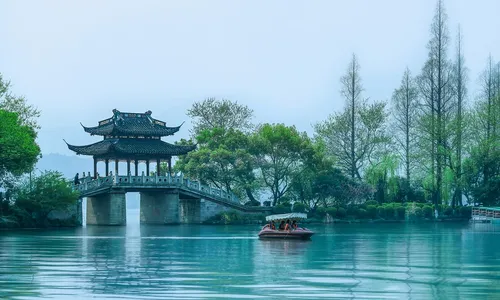
Hangzhou is China’s romantic ideal made real. For over a thousand years, poets, emperors, and philosophers have celebrated this city’s misty lake, temple bells, and hillside tea gardens. Marco Polo called it “the most beautiful and splendid city in the world.” Today, the UNESCO-listed West Lake remains the centerpiece, surrounded by willow-lined causeways, lotus ponds, and pagodas that glow at sunset.
What makes Hangzhou special for international visitors is its approachability — the main scenic area is compact and walkable, the food is delicate and refined (a welcome break from the fiery cuisine of western China), and the city serves as a perfect 2-day escape from Shanghai, just one hour by bullet train.
How we verified this: SinoWander reads Chinese-language sources that English guides cannot, including official scenic-area notices, Dianping, the Michelin Guide Hangzhou, and the UNESCO West Lake listing. We cross-check them before writing. We have not personally visited every location. Each guide is date-stamped when last verified: 2026-08-06. See our methodology.
When to Visit
Spring (March — May) is the most magical time. The Longjing (Dragon Well) tea harvest begins in late March, the Su Causeway is lined with peach blossoms and weeping willows, and temperatures sit comfortably between 12-25 degrees C (54-77 degrees F). Autumn (September — November) brings osmanthus-scented air, clear skies, and the famous “Autumn Moon over Calm Lake” scene. Summer is hot and humid (28-38 degrees C / 82-100 degrees F), though the lotus flowers at Quyuan Garden are spectacular. Winter is quiet and atmospheric — you might even see snow on the Broken Bridge.
2-Day Itinerary
Day 1: West Lake + Lingyin Temple + Hefang Street
| Time | Activity | Duration |
|---|---|---|
| 8:30 AM | Arrive at West Lake (Metro: Longxiangqiao, Exit C) | — |
| 9:00 AM — 12:00 PM | West Lake north shore walking tour | 3 hours |
| 12:00 — 1:30 PM | Lunch at Zhiweiguan or Louwailou (lakeside) | 1.5 hours |
| 1:30 — 4:30 PM | Lingyin Temple and Feilai Peak | 3 hours |
| 5:00 — 6:30 PM | Dinner at Fuyuanju or Baozhongbao | 1.5 hours |
| 7:00 — 9:00 PM | Hefang Street night market | 2 hours |
West Lake: The Heart of Hangzhou
West Lake (Xi Hu) is the reason Hangzhou exists in the global imagination. The lake and its surroundings are a UNESCO World Heritage Site and — remarkably — the main scenic area is free to enter. A 15-km (9.3-mile) circuit around the lake takes you past ten celebrated viewpoints that Chinese artists have painted for centuries.
The Ten Scenes of West Lake:
- Dawn on the Su Causeway in Spring — peach blossoms and willow greenery
- Lingering Snow on the Broken Bridge — the legendary meeting place of the White Snake folktale
- Lotus in the Breeze at Crooked Courtyard — peak bloom in July-August
- Viewing Fish at Flower Harbor — thousands of red carp in a classical garden
- Three Pools Mirroring the Moon — the image printed on China’s 1-yuan banknote
- Autumn Moon over Calm Lake — a pavilion for moon-gazing
- Two Peaks Piercing the Clouds — South and North Peaks
- Orioles Singing in the Willows — lakeside willow grove
- Evening Bell at Nanping Hill — Jingci Temple’s resonant bell
- Leifeng Pagoda in Evening Glow — sunset views from a hilltop pagoda
Recommended route (walk + bike + boat combination):
| Segment | Mode | Route | Time |
|---|---|---|---|
| 1 | Walk | Lakeside -> Broken Bridge -> Bai Causeway -> Solitary Hill | ~1.5 hours |
| 2 | Bicycle | Solitary Hill -> Quyuan Garden -> Su Causeway -> Flower Harbor | ~1 hour |
| 3 | Boat | Flower Harbor pier -> Three Pools Mirroring the Moon -> Lakeside | ~1 hour |
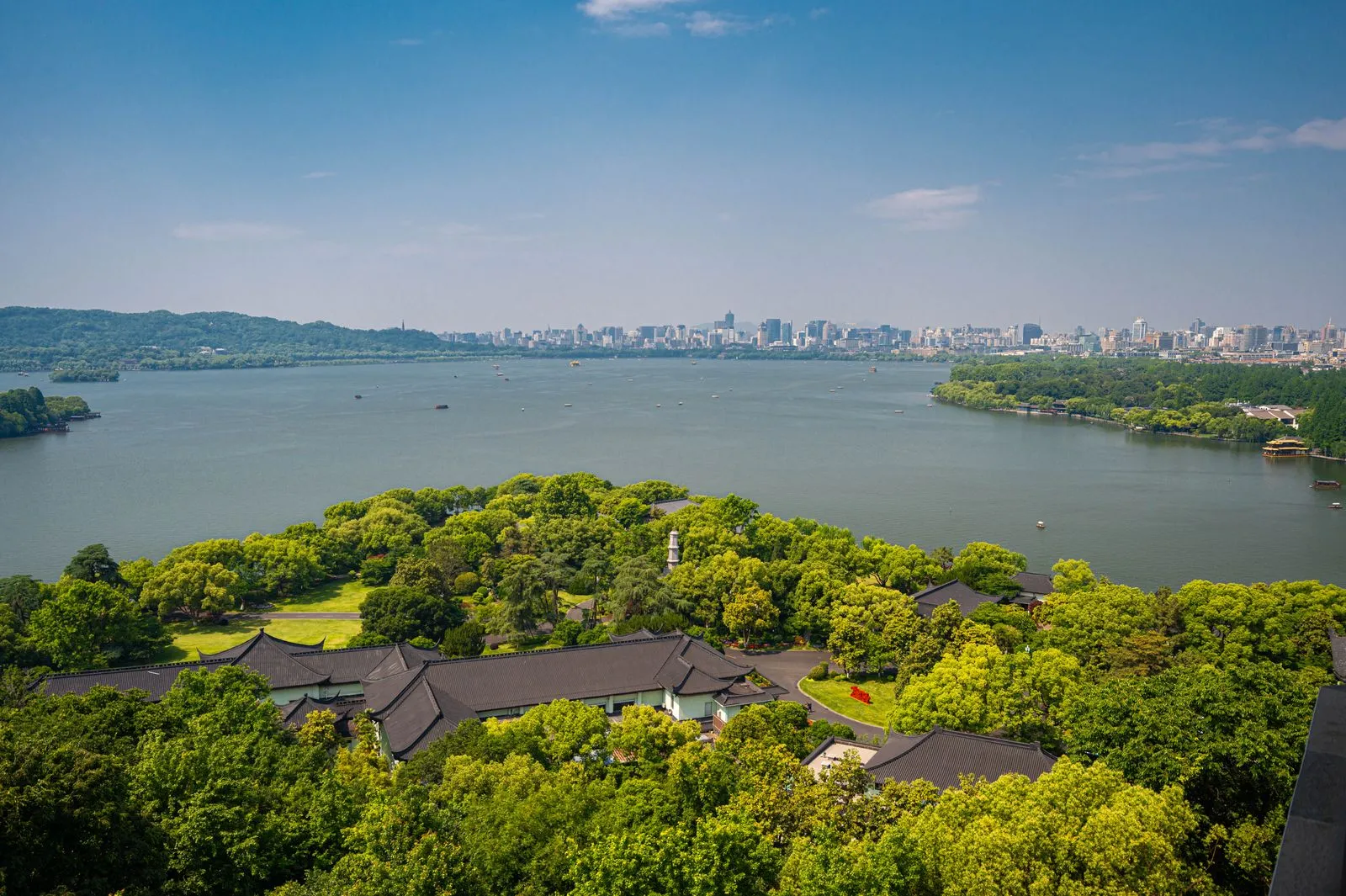 West Lake’s island scenery with the Hangzhou skyline beyond. The full circuit takes about 3.5 hours by walk, bike, and boat.
- Bike rental: Scan a shared bike with Alipay for about 1.5 yuan ($0.22) per 30 minutes
- Boat ticket: 55-70 yuan ($8-10) including landing on the island
- Electric cart: 40 yuan ($6) per person for the full circuit
Local Tip: On national holidays, bicycles are banned from the Bai Causeway and Su Causeway due to crowding. Visit on a weekday if you want to cycle the full loop.
Lingyin Temple
Lingyin Temple (Lingyin Si) is one of China’s most significant Buddhist temples, founded in 326 AD during the Eastern Jin Dynasty — nearly 1,700 years ago. In a landmark policy change, entry has been free since December 1, 2025, including the Feilai Peak stone carvings, Yongfu Temple, and Taoguang Temple. This eliminates what was previously a 75-yuan ticket cost.
Allow 2-3 hours. The recommended route: Entrance -> Hall of Heavenly Kings -> Mahavira Hall -> Bhaisajyaguru Hall -> Feilai Peak carvings -> Yongfu Temple (a hidden gem with fewer visitors) -> Taoguang Temple (hilltop views).
Getting there: Bus 7, 807, or Tour Bus 2 from downtown.
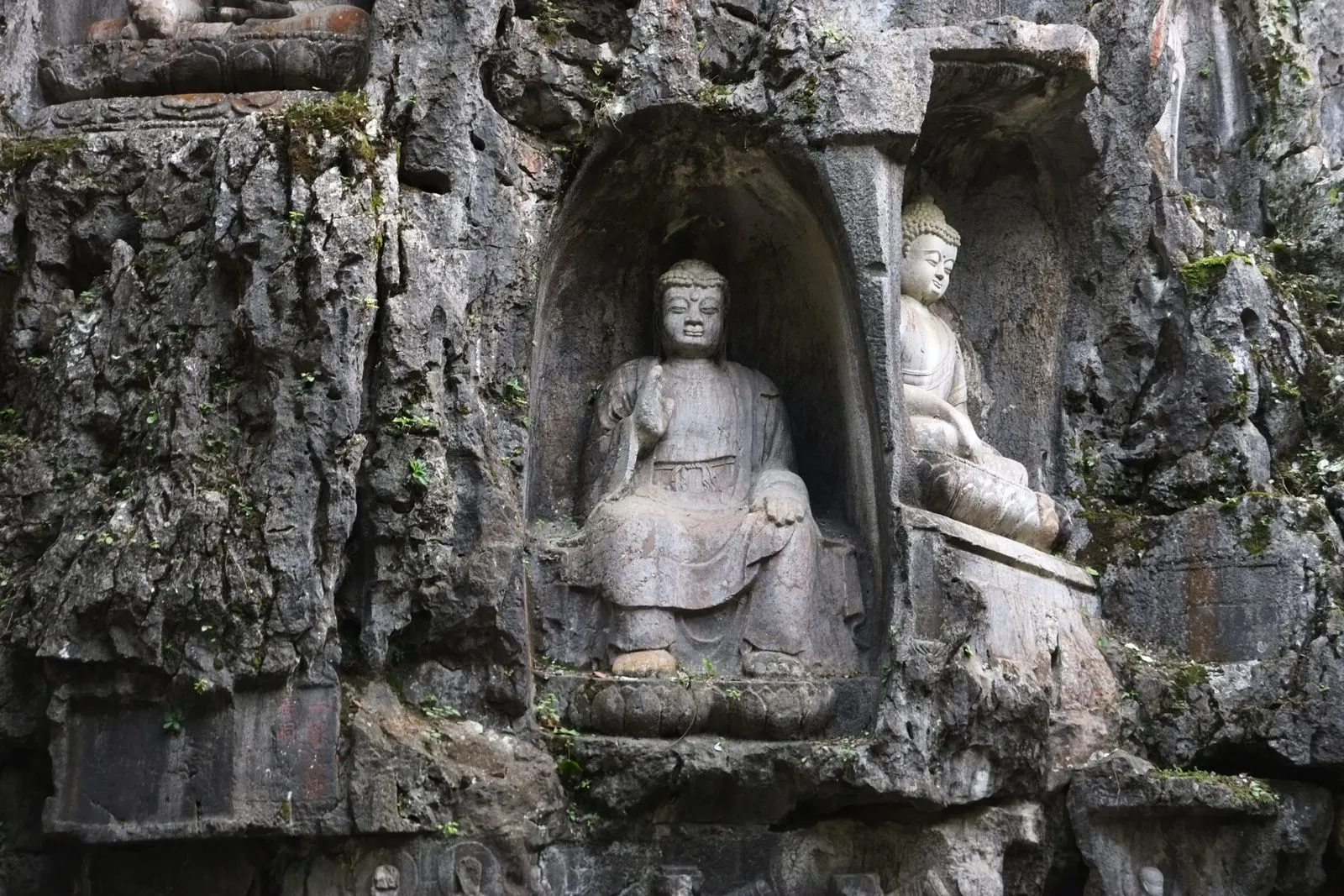 Stone Buddhist carvings at Feilai Peak, included free with Lingyin Temple entry since December 2025.
Hefang Street
Hefang Street (Qinghefang, free) is a pedestrian-only historic street lined with traditional shopfronts, food stalls, and craft vendors. Come in the evening when lanterns are lit. Must-try snacks include dingsheng gao (victory cake), cong bao hui (scallion-wrapped fried dough), Wushan crispy pastry, and West Lake lotus root starch.
Day 2: Longjing Tea + Southern West Lake
| Time | Activity | Duration |
|---|---|---|
| 8:30 AM — 12:00 PM | Longjing Village tea culture experience | 3+ hours |
| 12:00 — 1:30 PM | Lunch at Longjing Village farmhouse | 1.5 hours |
| 1:30 — 3:00 PM | China National Tea Museum | 1.5 hours |
| 3:00 — 4:30 PM | Flower Harbor and Leifeng Pagoda | 1.5 hours |
| 4:30 — 5:30 PM | Boat to Three Pools Mirroring the Moon | 1 hour |
| 6:00 — 8:00 PM | Lakeside dinner and musical fountain | 2 hours |
Longjing Tea Experience
Longjing (Dragon Well) tea is China’s most celebrated green tea, and the hillsides surrounding West Lake are its birthplace. A morning visit to Longjing Village offers a multi-sensory experience:
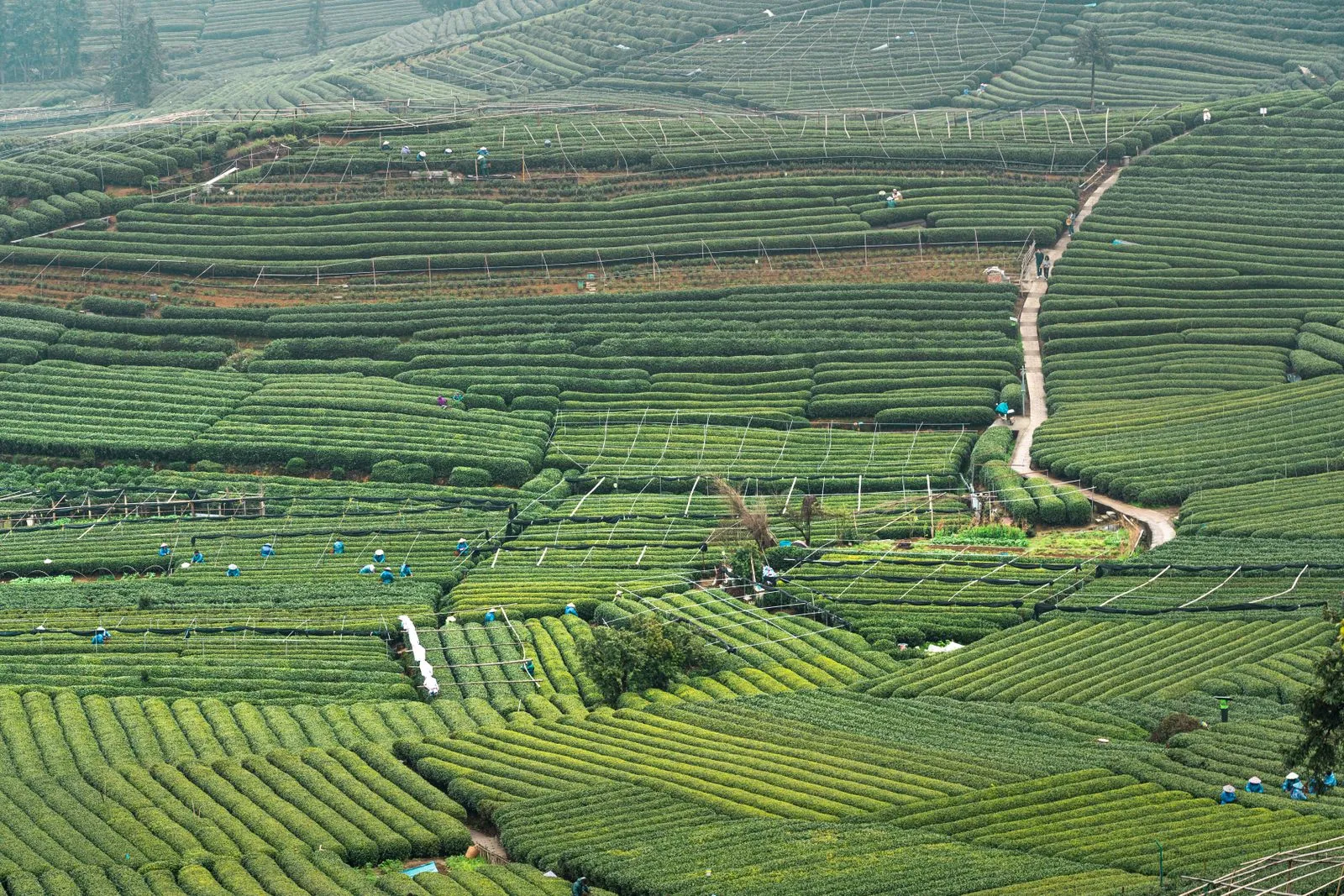 Terraced Longjing tea gardens on the hillsides above West Lake, birthplace of China’s most celebrated green tea.
Typical half-day program (150-300 yuan / $22-44 per person, bookable via Klook or GetYourGuide):
- Walk through terraced tea gardens (10 minutes)
- Try hand-picking tea leaves (20 minutes)
- Watch a master roasting tea leaves by hand in a wok (30 minutes)
- Taste freshly brewed Longjing tea (30 minutes)
Best time for tea experiences: Late March through April, during the spring harvest. “Mingqian” tea (picked before the Qingming Festival in early April) is the most prized — and most expensive.
The four core Longjing production areas:
| Area | Character | Distance from Downtown |
|---|---|---|
| Longjing Village | Historic birthplace; most prestigious | ~30 minutes |
| Meijiawu | Large tea gardens; farmhouse restaurants | ~35 minutes |
| Longwu Tea Town | 14,000 mu (2,300 acres) of organic tea fields | ~45 minutes |
| Shifeng (Lion Peak) | The highest-grade Longjing terroir | ~30 minutes |
China National Tea Museum (88 Longjing Road, free admission) sits amid tea gardens with a Jiangnan-garden aesthetic. Allow 1-1.5 hours. It provides excellent context for understanding China’s tea traditions before or after your village visit.
Local Tip — Tea buying guide:
- Do not buy tea from stalls at scenic area entrances — prices are inflated and quality varies.
- Look for tea from the core production areas (Longjing Village, Meijiawu, Shifeng).
- Authentic spring-picked Longjing costs 800-3,000 yuan ($118-443) per jin (500g). If the price seems too good to be true, it probably is.
- Genuine West Lake Longjing has four hallmarks: jade-green color, chestnut aroma, sweet aftertaste, and flat, smooth leaves.
Leifeng Pagoda and the Southern Shore
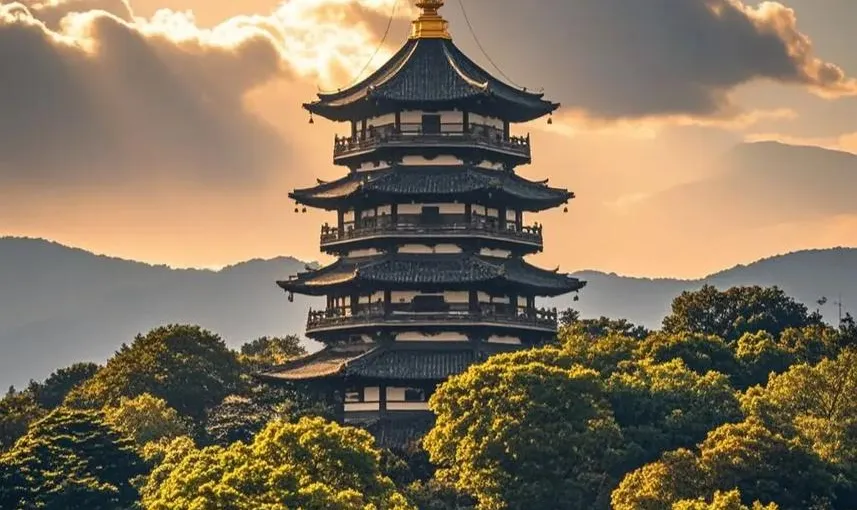
Leifeng Pagoda stands on the south side of West Lake, offering panoramic views of the water and city. It is also the setting for one of China’s most beloved folktales — “Legend of the White Snake,” in which a snake spirit is imprisoned beneath the pagoda for loving a human man. Sunsets here are legendary.
Where to Eat: Hangzhou Cuisine (Hangbangcai)
Hangzhou cuisine is the antithesis of Sichuan’s fire. It emphasizes the natural flavors of premium ingredients — freshwater fish, tender bamboo shoots, lotus root, and Longjing tea — prepared with refined technique. The guiding principle is “70% ingredient quality, 30% chef skill.”
Must-Try Dishes
| Dish | Description |
|---|---|
| Xihu Cu Yu (West Lake Vinegar Fish) | Whole fish in a sweet-and-sour sauce — Hangzhou’s most iconic dish |
| Longjing Xia Ren (Longjing Shrimp) | Shrimp stir-fried with Longjing tea leaves; delicate and aromatic |
| Jiaohua Tong Zi Ji (Beggar’s Chicken) | Chicken wrapped in lotus leaves and clay, baked until tender |
| Dongpo Rou (Dongpo Pork) | Braised pork belly attributed to the Song Dynasty poet Su Dongpo |
| Song Sao Yu Geng (Song Sister’s Fish Soup) | A Southern Song Dynasty recipe; silky and savory |
| Xia Bao Shan Mian (Shrimp and Eel Noodles) | A beloved Hangzhou noodle specialty |
| Pian Er Chuan | Hangzhou’s signature noodle soup with pickled vegetables, bamboo, and pork |
Restaurant Recommendations
| Restaurant | Specialty | Price per Person | Notes |
|---|---|---|---|
| Louwailou | West Lake Vinegar Fish; century-old institution | 150-200 yuan ($22-30) | 30 Gushan Road, right on the lake |
| Zhiweiguan Weizhuang | Lakeside dining, refined Hangzhou cuisine | 100-150 yuan ($15-22) | 10-12 Yanggong Causeway |
| Fuyuanju | Crispy large intestine; local foodie favorite | 80-120 yuan ($12-18) | Shangcheng district |
| Baozhongbao Shifu | Michelin-recommended; excellent execution | 80-120 yuan ($12-18) | Shangcheng district |
| Hao Shitang 1987 | Affordable neighborhood gem; always busy | 50-80 yuan ($7-12) | Wensan Road |
| Hangzhou Cuisine Museum | Eat amid exhibits on Hangzhou food history | 80-150 yuan ($12-22) | Fenghuang Mountain Road |
Where to Stay
Best area: The Lakeside (Hubin) district, where you can walk to West Lake in minutes and find abundant restaurants and shopping. Metro Longxiangqiao station is the gateway.
| Budget | Price (per night) | Recommendations |
|---|---|---|
| Budget | 150-300 yuan ($22-44) | Hangzhou Liuhu Xiaozhu Youth Hostel (backpacker favorite); Jingzhao Hotel (next to West Lake Musical Fountain); chain hotels like JI Hotel or Hanting near Hubin |
| Mid-range | 300-600 yuan ($44-89) | Pagoda Hotel (designed by JW Marriott’s design team, rated 9.4); Time Walk S Hotel; Zhejiang Shimao Junlan Hotel |
| Luxury | 600-1,200+ yuan ($89-177+) | Grand Hyatt Hangzhou (international brand, lake views); Zhejiang Xizi Hotel (rated 9.5, private lake shoreline); Hangzhou Xihu State Guesthouse (exclusive lakefront property) |
Getting Around
Arriving in Hangzhou
| Mode | Details |
|---|---|
| Plane | Hangzhou Xiaoshan International Airport (HGH), 17 miles (27 km) from downtown. Airport bus or Metro Line 1 to city center. Supports 24-hour visa-free transit. |
| High-speed rail | Hangzhou East Station (closest to West Lake) or Hangzhou West Station. Shanghai to Hangzhou: ~1 hour by bullet train. |
| Train | Hangzhou Chengzhan Station (conventional rail, close to West Lake). |
City Transit
| Mode | Cost |
|---|---|
| Metro | 2-7 yuan ($0.30-1) per ride. Longxiangqiao station (Lines 1 and 3) drops you at West Lake’s core. |
| Bus | 1-3 yuan ($0.15-0.44). Tour Bus 2 connects major attractions. |
| Shared bicycle | ~1.5 yuan ($0.22) per 30 minutes via Alipay scan. Available everywhere. |
| Taxi / Didi | Base fare 13 yuan ($2). |
| West Lake electric cart | ~40 yuan ($6) per person for a lake circuit. |
Practical Information
Budget Estimate (2 days, excluding travel to Hangzhou)
| Category | Budget | Comfortable |
|---|---|---|
| Accommodation (1 night) | 150-300 yuan ($22-44) | 600-1,200 yuan ($89-177) |
| Food (2 days) | 200-400 yuan ($30-59) | 500-1,000 yuan ($74-148) |
| Tickets and experiences | 200-400 yuan ($30-59) | 400-800 yuan ($59-118) |
| Local transport | 50-100 yuan ($7-15) | 150-300 yuan ($22-44) |
| Total | ~600-1,200 yuan ($89-177) | ~1,650-3,300 yuan ($244-487) |
Note: Lingyin Temple’s free admission (since December 2025) and West Lake’s free entry have significantly reduced the ticket expenses compared to previous years.
Essential Apps
| App | Use |
|---|---|
| Alipay | Payment, shared bikes, transit QR code, attraction tickets |
| Messaging, payment, mini-programs for reservations | |
| Amap (Gaode) / Baidu Maps | Best Chinese navigation apps |
| Apple Maps | English navigation (less accurate than Amap but usable) |
| Didi | Ride-hailing |
| Translation app | Tencent Translate or Google Translate (download offline pack) |
Visa Information
Hangzhou supports the 240-hour visa-free transit for eligible nationalities transiting through Xiaoshan Airport. Check current eligibility before booking.
Photography Spots
| Location | Best Time | Subject |
|---|---|---|
| Broken Bridge | Sunrise | Bai Causeway stretching across the lake |
| Leifeng Pagoda | Sunset | Pagoda silhouetted against golden sky |
| Three Pools Mirroring the Moon | Morning | The 1-yuan banknote scene |
| Su Causeway | Spring dawn | Peach blossoms and willows |
| Longjing tea terraces | Morning | Layered green tea fields on hillsides |
Local Tip: Hangzhou’s best-kept dining secret is that the restaurants rated highest by locals are not the famous lakeside institutions, but small neighborhood places in the Shangcheng and Xihu districts. Look for the Michelin Guide Hangzhou listings or search Dianping for “local favorite” tags. A meal at a no-name restaurant on a side street can surpass the tourist-oriented lakeside options at a fraction of the price.
Avoid: Do not buy Longjing tea from stalls set up along the roads leading to Lingyin Temple or West Lake viewpoints. These are tourist traps selling low-grade tea at premium prices. If you want to buy tea, go directly to a village like Meijiawu or buy from the National Tea Museum shop.
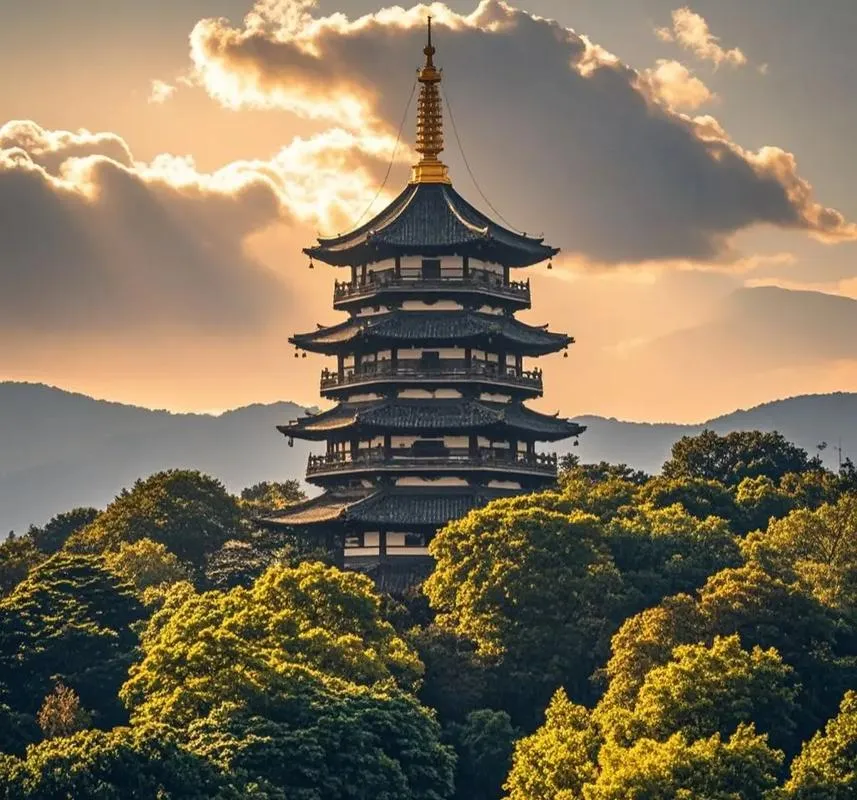 West Lake at sunset, with willow trees lining the shore and Leifeng Pagoda in the distance.
Sources & Verification
This guide was last verified on 2026-08-06. Key Chinese-language sources:
- Dianping (点评, dianping.com): Restaurant ratings and “local favorite” tags for identifying authentic neighborhood eateries in Shangcheng and Xihu districts, away from the lakeside tourist spots.
- Michelin Guide Hangzhou: Restaurant recognition including Baozhongbao Shifu, cited in this guide as Michelin-recommended.
- Lingyin Temple and Feilai Peak official notices: The free entry policy effective December 1, 2025, which removed the previous 75-yuan ticket and now covers Feilai Peak, Yongfu Temple, and Taoguang Temple.
- West Lake UNESCO World Heritage listing: The cultural heritage framework behind the Ten Scenes and the lake’s protected status, based on China’s nomination dossier.
See our full verification methodology.
Related Articles
- Shanghai Travel Guide (2026) — Just 1 hour from Hangzhou by bullet train
- Best Time to Visit China (2026) — Hangzhou is ideal in spring and autumn
- Chinese Food Guide for Foreigners — Hangzhou cuisine highlights