Chinese Food Guide for Foreigners - 10 Must-Try Dishes, Where to Find Them and How to Order
Chinese food outside China bears roughly the same relationship to Chinese food inside China as a fast-food hamburger bears to a Texas barbecue brisket. The depth, variety and regional specificity of the cuisine is staggering; eight major culinary traditions, thousands of local specialties and a street-food culture that rewards every late-night detour. Here is your roadmap.
How we verified this: SinoWander reads Chinese-language sources that English guides cannot, including Dianping (大众点评), Xiaohongshu (小红书), Meituan (美团), and Gaode Maps (高德地图). We cross-check them before writing. We have not personally visited every location. Each guide is date-stamped when last verified: 2026-08-06. See our methodology.
The 10 Dishes You Must Try
1. Peking Duck (北京烤鸭): Beijing
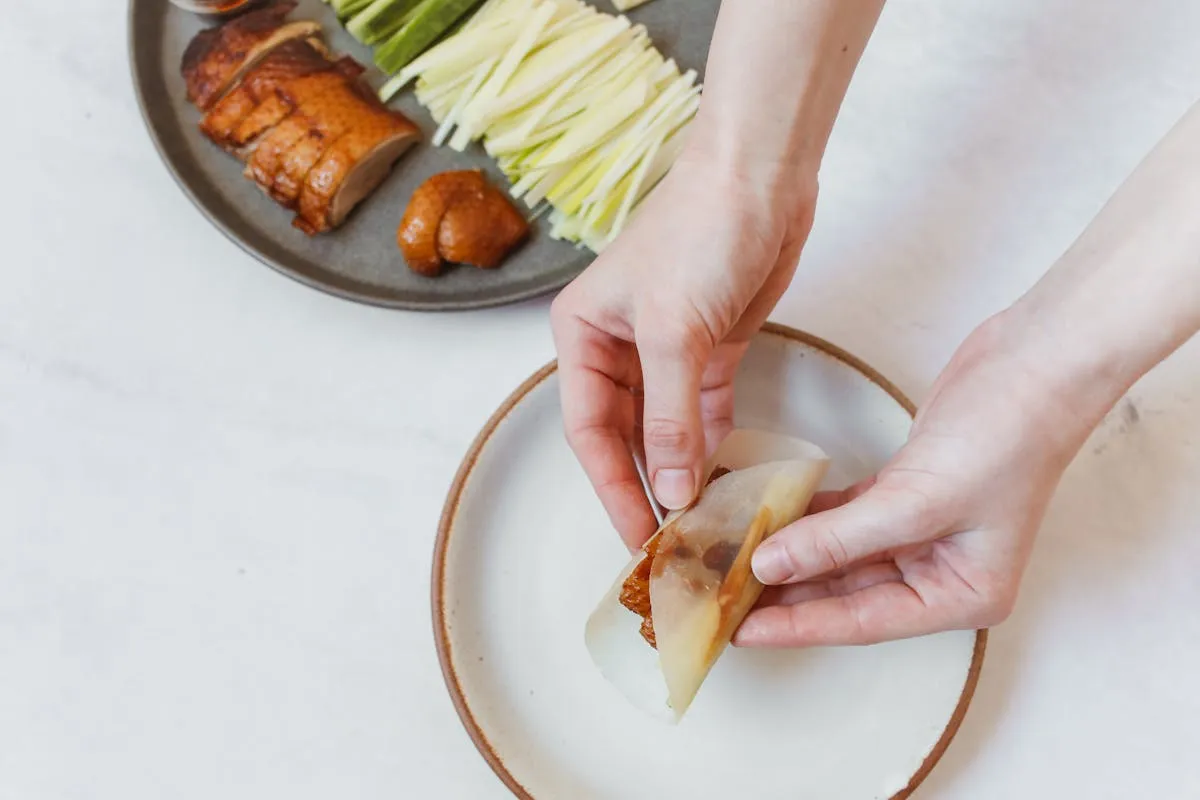 Peking duck sliced tableside and wrapped in thin wheat pancakes — theater as much as food.
Crisp, lacquered skin. Tender meat. Thin wheat pancakes, scallion brushes and sweet bean sauce. You assemble each bite yourself; a slice of duck, a smear of sauce, a few scallion threads, rolled in a pancake. It is theater as much as food.
Price: ¥100–300 ($15–44) for a whole duck, depending on the restaurant. Where: Quanjude (全聚德) for tradition, Da Dong (大董) for refinement, Siji Minfu (四季民福) for value.
2. Xiaolongbao (小笼包): Shanghai
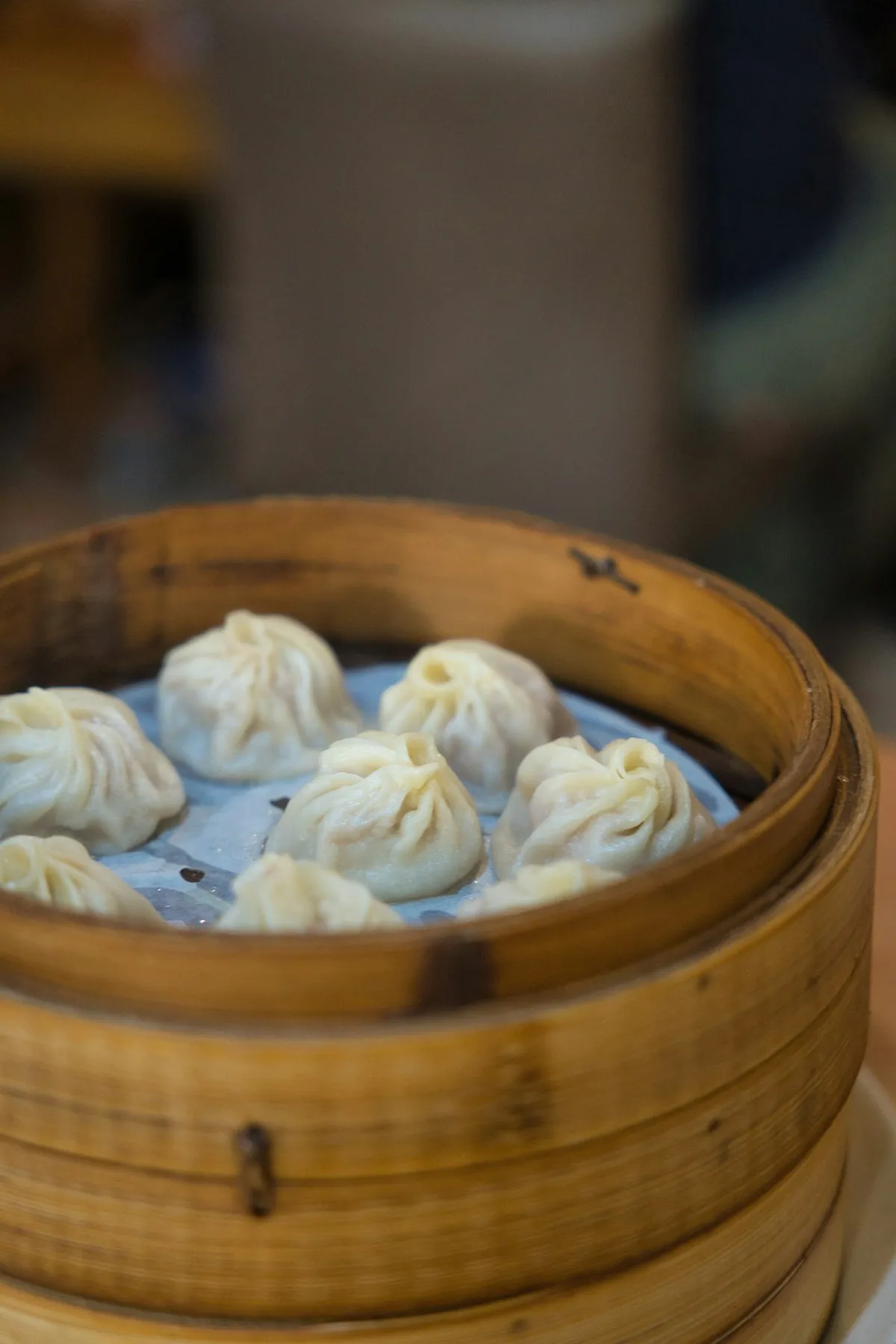 Xiaolongbao — paper-thin wrappers hiding a spoonful of hot, savory broth. Bite carefully.
Steamed soup dumplings with paper-thin wrappers. Bite carefully; the filling contains a spoonful of hot, savory broth that will gush out if you are not ready. Dip in black vinegar with ginger slivers.
Price: ¥15–50 ($2.20–7.40) for a basket of 8–10. Where: Jia Jia Tang Bao (佳家汤包) and Nanxiang Steamed Bun Restaurant (南翔馒头店) in Shanghai.
3. Kung Pao Chicken (宫保鸡丁): Sichuan
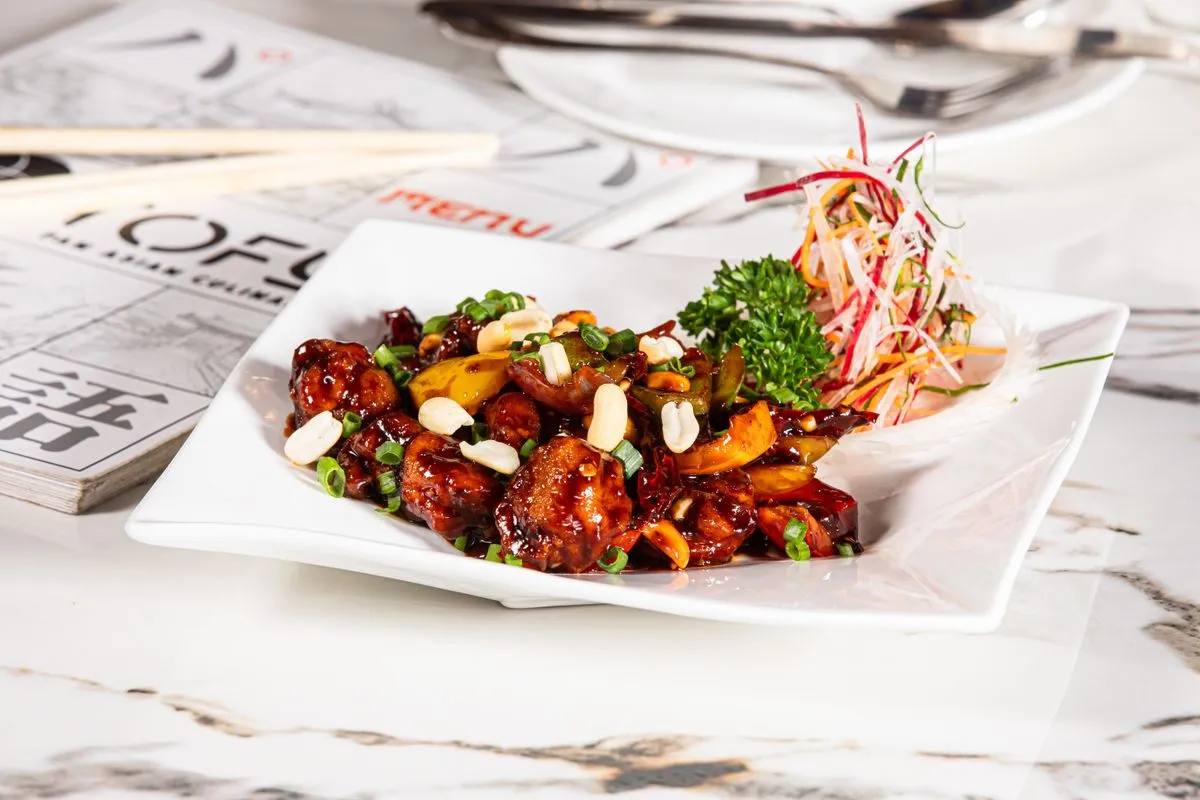 Kung Pao Chicken — diced chicken with roasted peanuts, dried chilies and Sichuan peppercorns.
Diced chicken stir-fried with roasted peanuts, dried chilies and Sichuan peppercorns in a savory-sweet sauce. The numbing-heat combination (麻辣, málà) is the signature of Sichuan cooking. Multiple heads of state have learned to cook this dish during visits to China.
Price: ¥25–60 ($3.70–8.85) per portion. Where: Any Sichuan restaurant nationwide. Better in Chengdu or Chongqing.
4. Mapo Tofu (麻婆豆腐): Sichuan
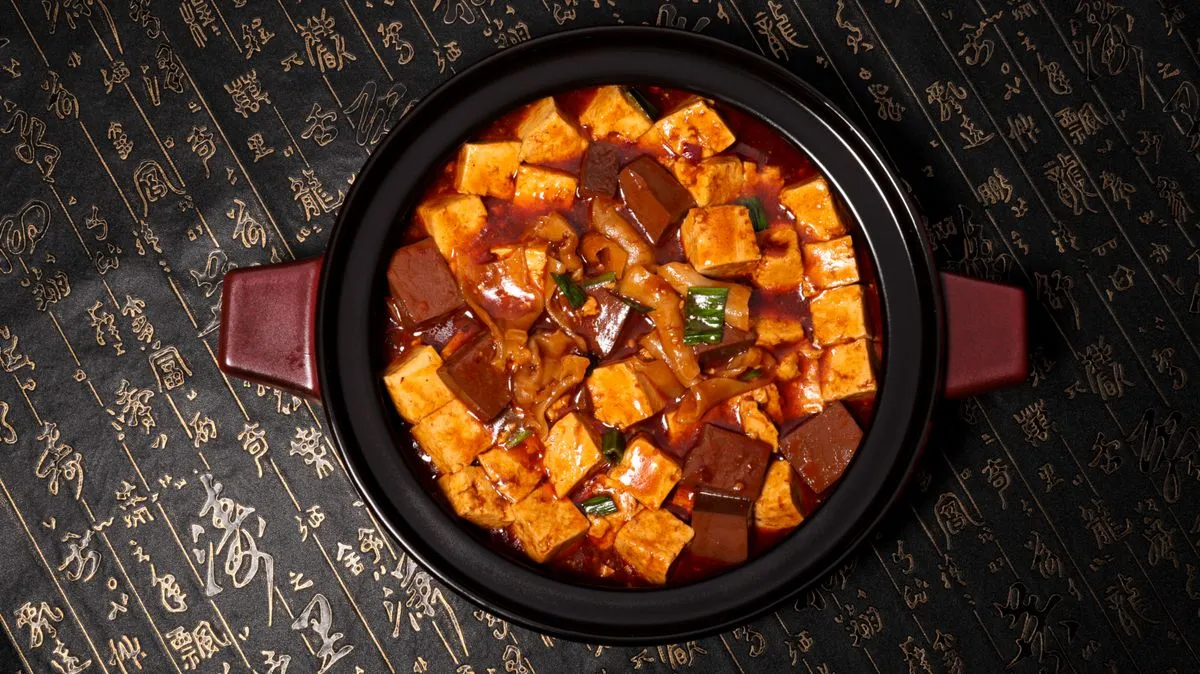 Mapo Tofu — silky tofu cubes in a fiery sauce of ground pork, fermented chili paste and Sichuan peppercorns.
Soft tofu cubes in a fiery, oily sauce of ground pork, fermented chili paste and Sichuan peppercorns. The name means “pockmarked old woman’s tofu”; the dish was invented by a woman with facial scars at her Chengdu restaurant in the 1860s. The heat builds gradually. Have rice ready.
Price: ¥20–45 ($2.95–6.60) per portion. Where: Chen Mapo Tofu (陈麻婆豆腐) in Chengdu is the original location.
5. Lanzhou Hand-Pulled Noodles (兰州拉面): Gansu / Nationwide
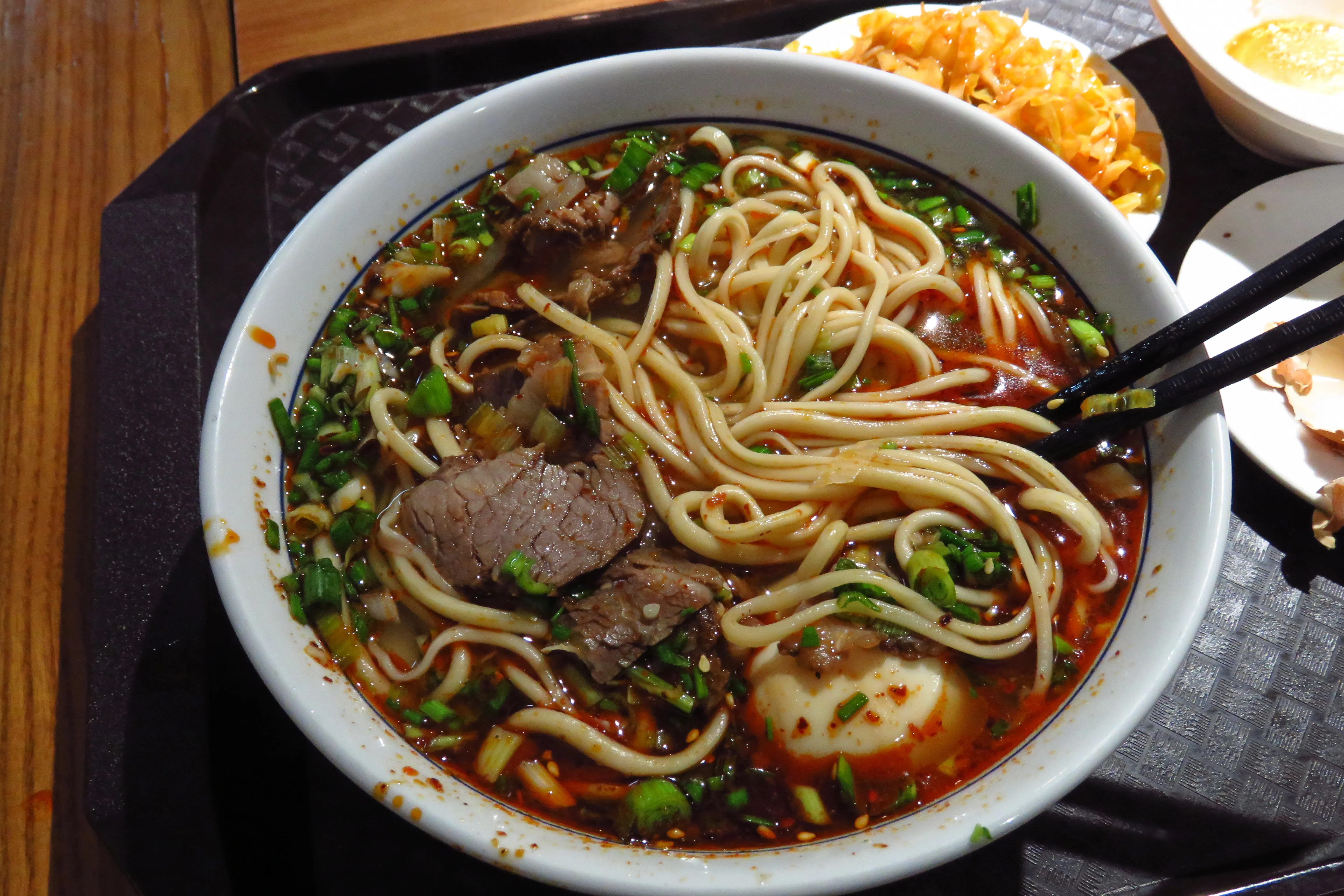 Beef noodle soup — a bowl of clear broth with hand-pulled noodles, sliced beef, radish, chili oil and cilantro.
A bowl of clear beef broth with fresh, springy noodles pulled to order; a skilled chef can stretch a single piece of dough into thousands of strands. Topped with sliced beef, radish, chili oil and cilantro. You choose the noodle thickness: hair-thin to flat and wide.
Price: ¥10–25 ($1.50–3.70) per bowl. Where: Lanzhou beef noodle shops are everywhere in China; look for the green signage and the characters 兰州拉面. They are consistently good and extremely cheap.
6. Jianbing Guozi (煎饼果子): Tianjin / Northern China
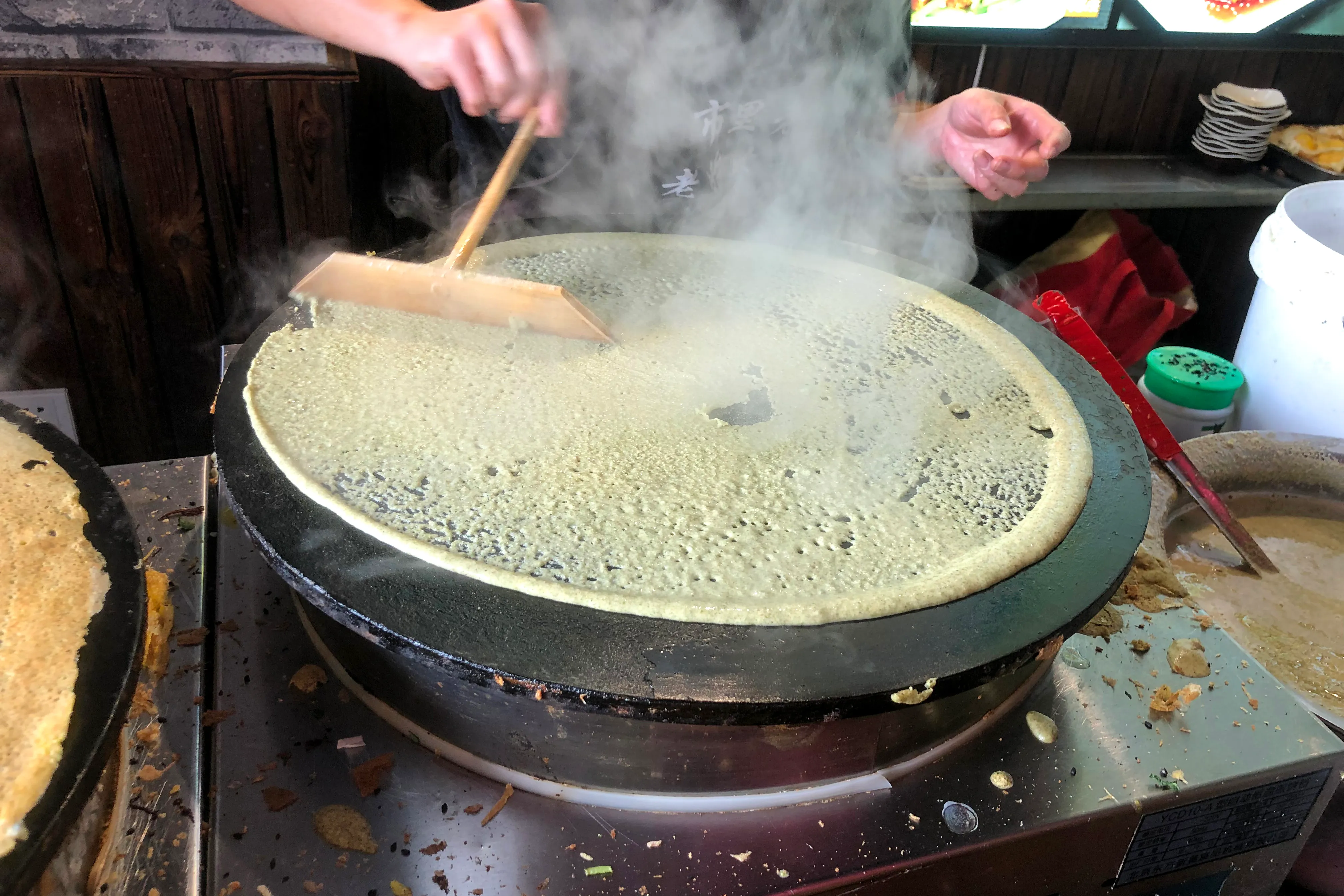 Jianbing being made fresh on a circular griddle at a street stall — the king of Chinese breakfasts.
The king of Chinese street breakfasts. A thin creque cooked on a circular griddle, spread with egg, sprinkled with scallions and cilantro, layered with a crispy fried wafer (guozi), brushed with sweet bean sauce and chili paste, then folded into a portable package. You eat it while walking.
Price: ¥5–15 ($0.74–2.20). Where: Morning street carts in any northern Chinese city. The best ones have queues of office workers.
7. Hotpot (火锅): Sichuan / Chongqing
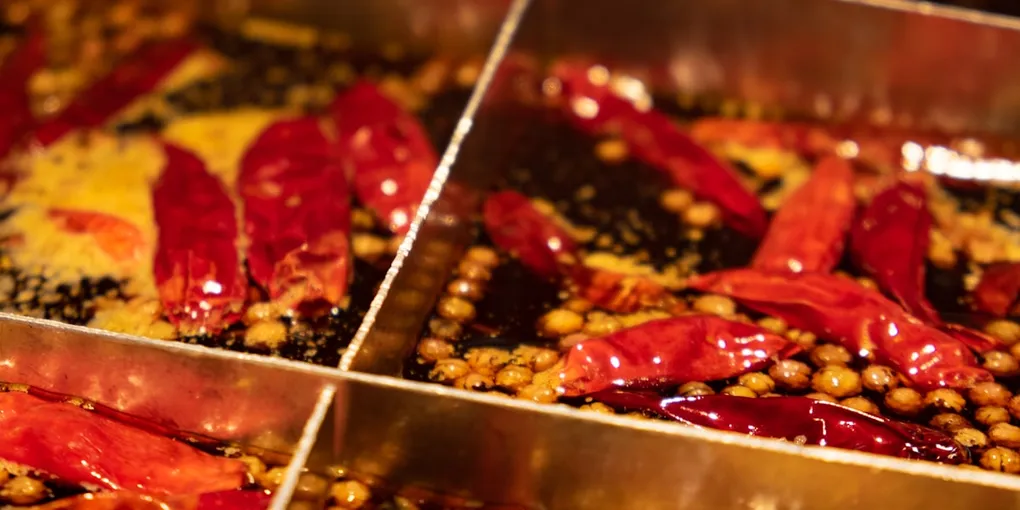
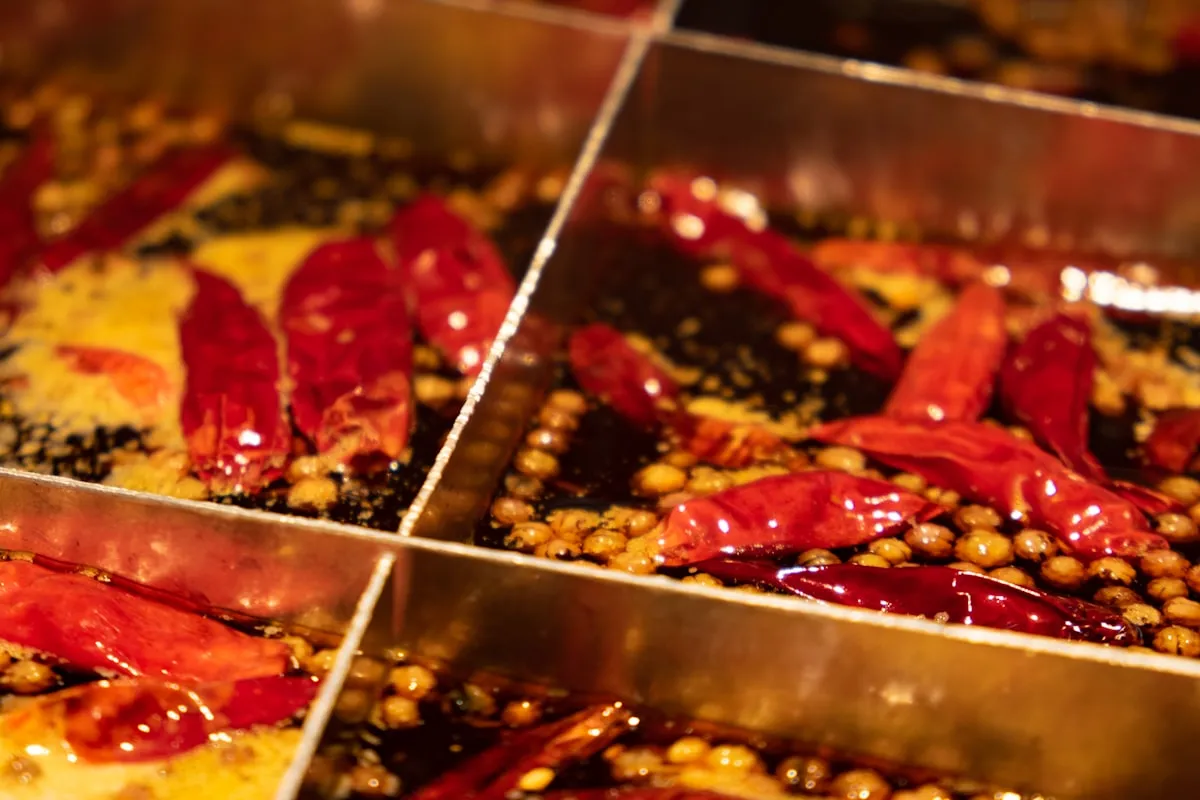 A yuanyang (split) hot pot — half spicy red broth, half mild white broth — the ultimate Chinese social meal.
The social meal. A bubbling pot of spiced broth in the center of the table; you cook raw ingredients yourself by dipping them in. Order a yuanyang pot (鸳鸯锅) (half spicy red broth, half mild white broth), so you can regulate the heat. Dip sliced meat, mushrooms, lotus root, tofu skin and leafy greens. End with noodles.
Price: ¥60–150 ($8.85–22.10) per person. Where: Xiaolongkan (小龙坎), Shudaxia (蜀大侠) in Chengdu; any hotpot restaurant in Chongqing. Avoid: Hotpot restaurants inside shopping malls in tourist zones; they are overpriced and the broth is dumbed down.
8. Roujiamo (肉夹馍): Xi’an
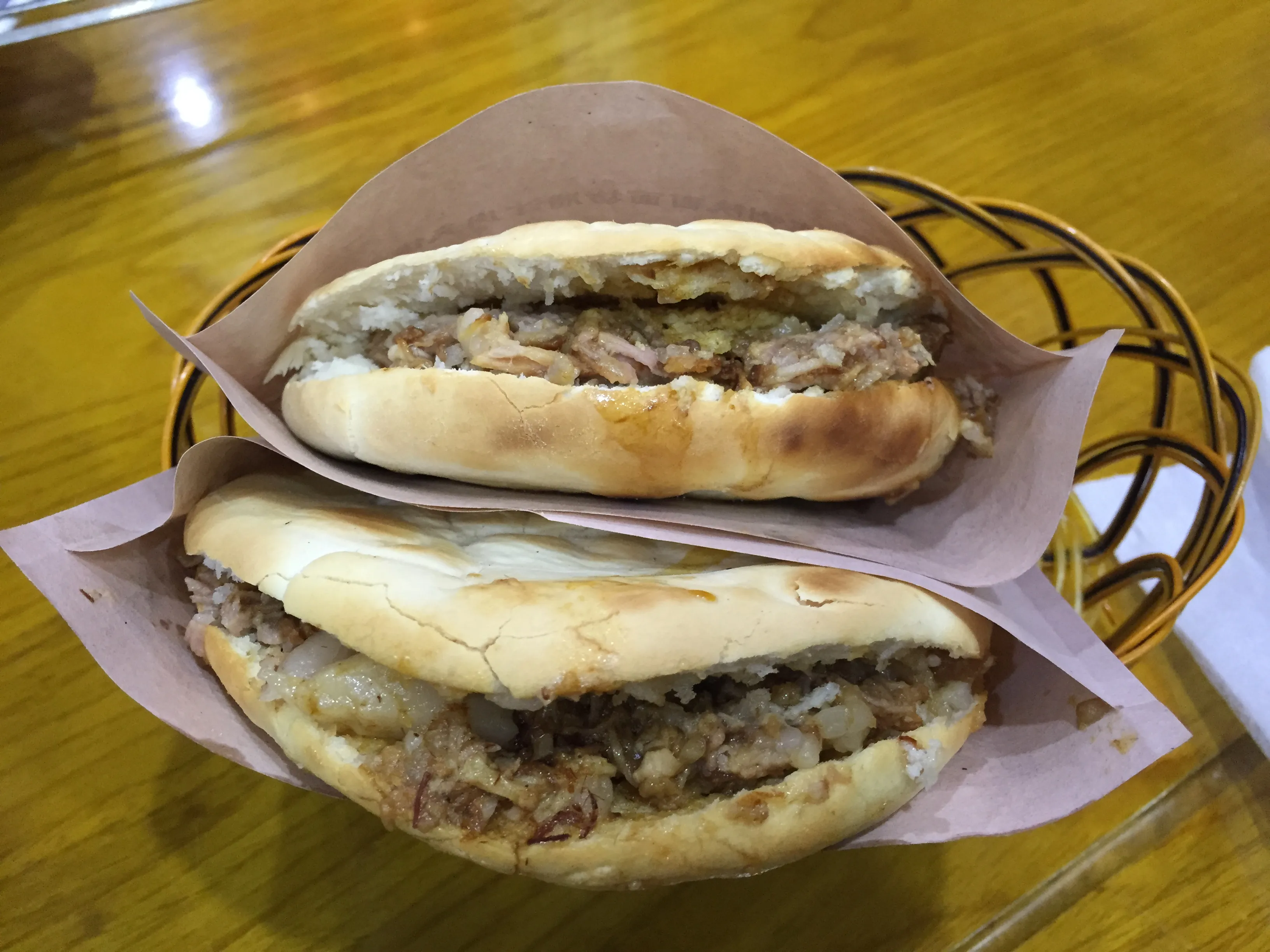 Roujiamo — slow-braised pork belly chopped fine and stuffed inside crispy flatbread. The Chinese hamburger.
Slow-braised pork belly chopped fine and stuffed inside a freshly baked flatbread. The bread is crispy on the outside and soft within, soaked through with the braising juices. Often called the Chinese hamburger, which undersells it badly.
Price: ¥8–20 ($1.20–2.95). Where: Muslim Quarter in Xi’an, or any shop with a queue. The best roujiamo vendors sell out by early afternoon.
9. Jiaozi (饺子): Nationwide
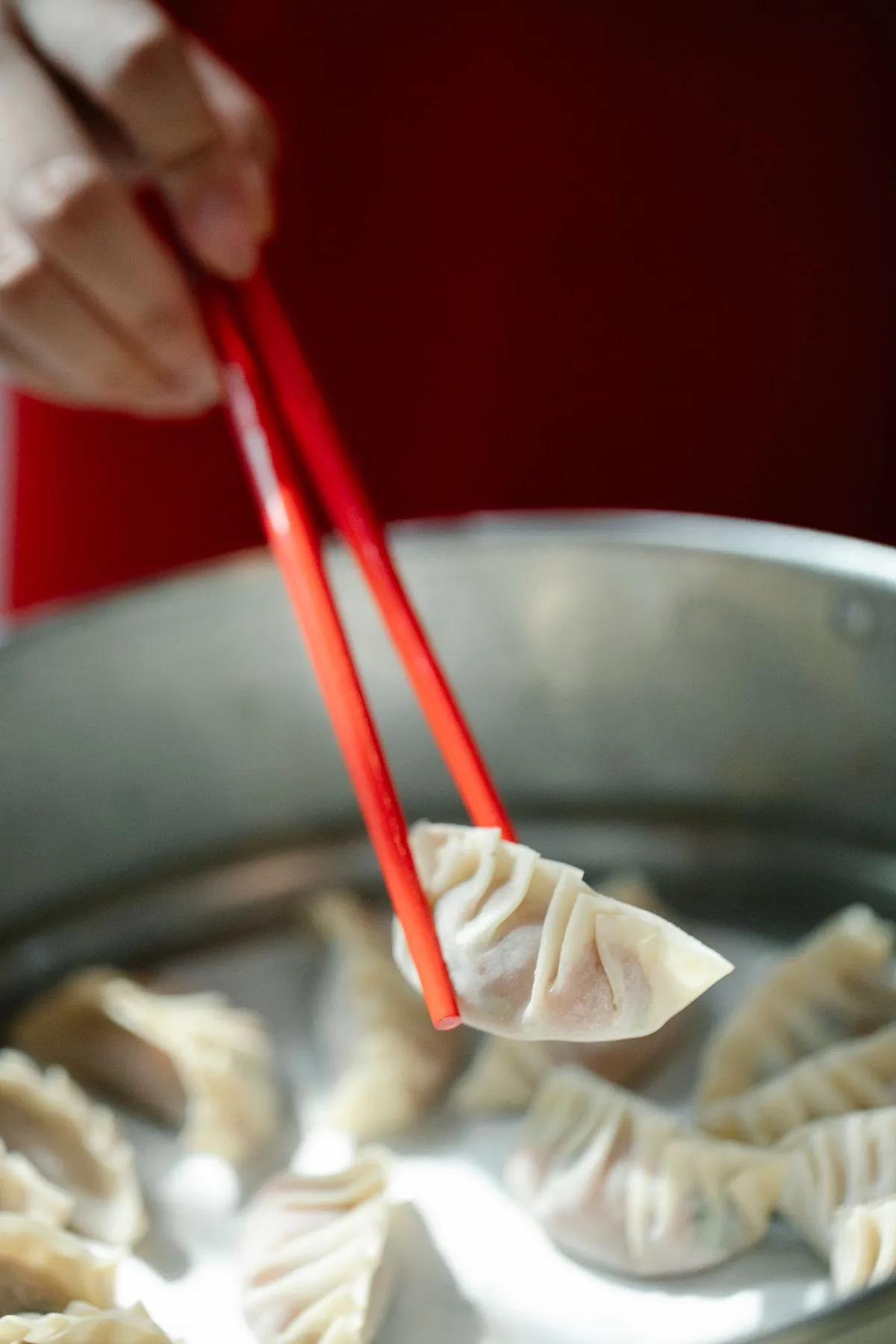 Jiaozi — boiled or pan-fried dumplings, a staple of Chinese home cooking and New Year celebrations.
Boiled or pan-fried dumplings with fillings ranging from pork-and-cabbage to shrimp-and-chive. A staple of Chinese home cooking and the mandatory food for Chinese New Year celebrations. In the north, they are eaten with a dip of black vinegar, soy sauce and minced garlic.
Price: ¥15–40 ($2.20–5.90) for a plate of 10–15. Where: Dumpling restaurants everywhere. In Beijing, try Mr. Shi’s Dumplings (饺子馆) near Nanluoguxiang; popular with foreigners and legitimately good.
10. Dim Sum (点心): Guangdong / Hong Kong
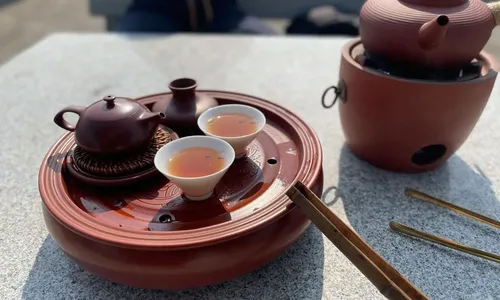
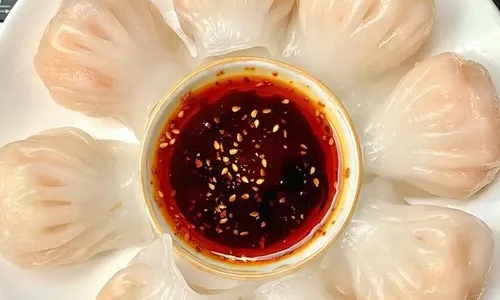
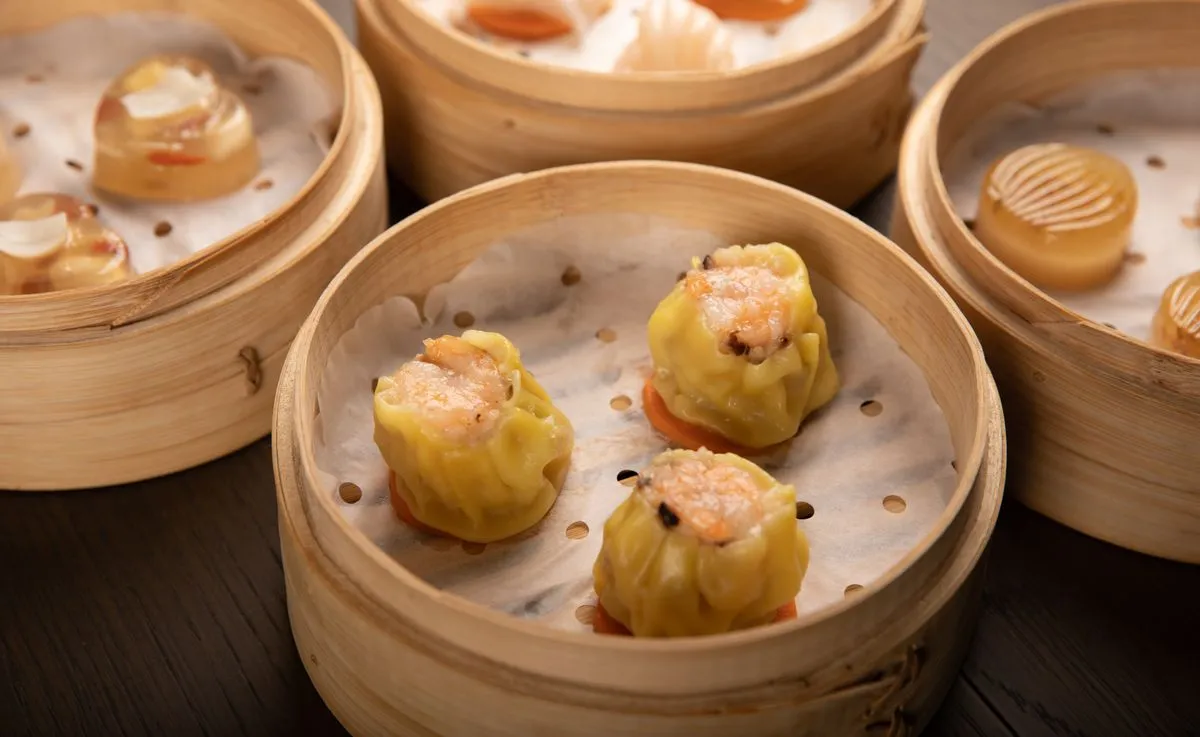 Dim Sum — a broad category of small, delicate dishes served with tea, a Cantonese weekend ritual.
A broad category of small, delicate dishes served with tea: har gow (shrimp dumplings with translucent wrappers), siu mai (open-topped pork and shrimp dumplings), char siu bao (BBQ pork buns), cheong fun (rice noodle rolls). The Cantonese tradition of yum cha (饮茶, drinking tea with dim sum) is a multi-hour weekend ritual.
Price: ¥50–150 ($7.40–22.10) per person. Where: Guangzhou and Shenzhen for the most authentic experience; any Cantonese restaurant in major cities.
Four More Worth Seeking Out
Stinky Tofu (臭豆腐)
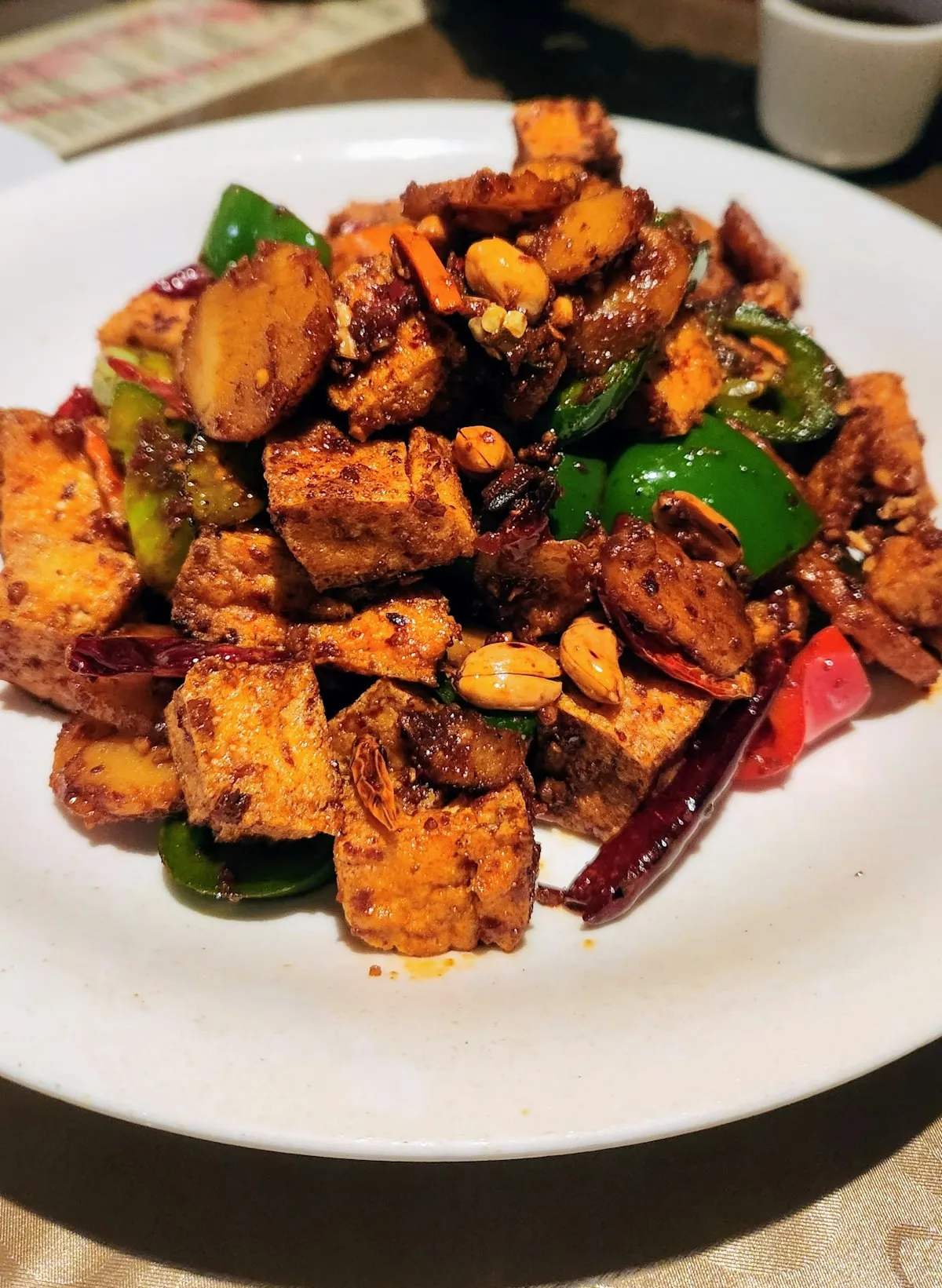 Stinky tofu — smells like garbage, tastes like umami heaven. A night market essential.
Fermented tofu that smells like garbage but tastes like umami heaven. Usually deep-fried until golden and crispy, served with chili sauce and pickled vegetables. An acquired taste that rewards the brave.
Where: Changsha, Shaoxing, any night market.
Duck Blood Noodle Soup (鸭血粉丝汤)
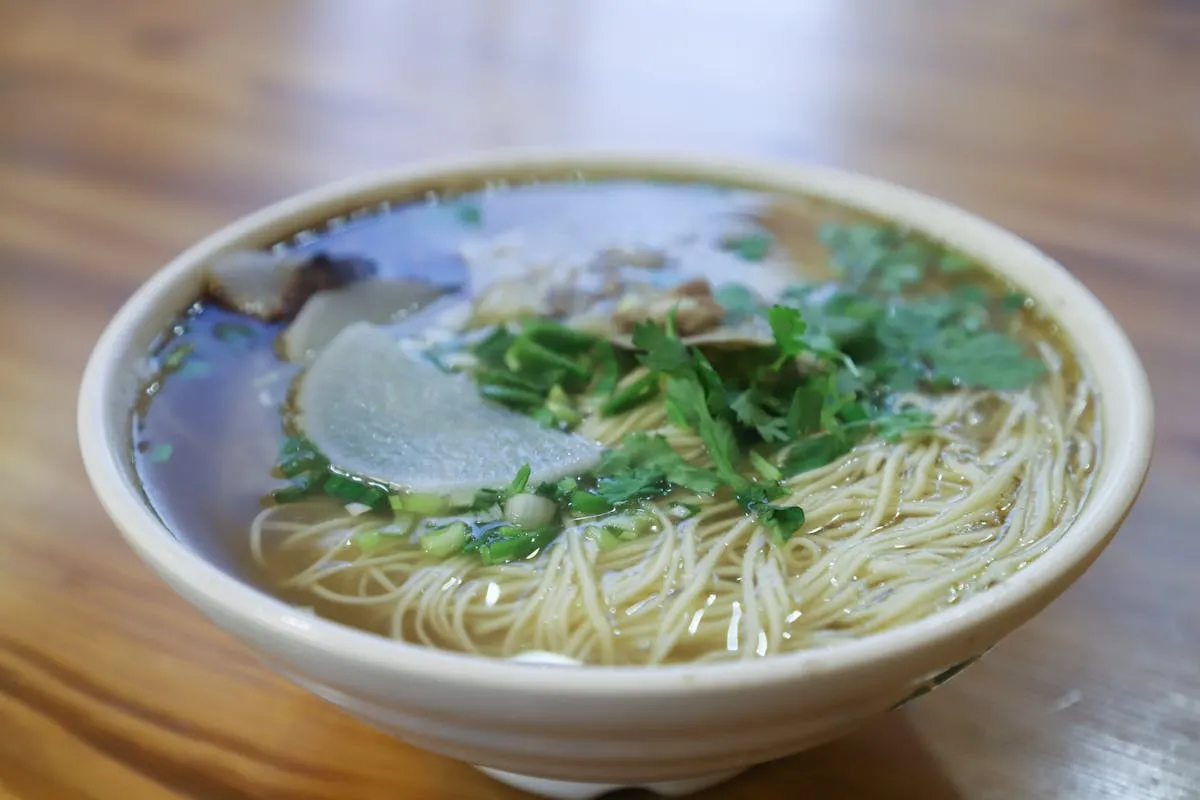 Duck blood and vermicelli soup — a Nanjing specialty that sounds intimidating but tastes deeply comforting.
Vermicelli noodles in a rich duck-bone broth with congealed duck blood cubes, tofu skin and cilantro. Sounds intimidating, tastes like the best comfort soup you have ever had.
Where: Nanjing; this is the city’s signature dish.
Donkey Meat Sandwich (驴肉火烧)
Shredded donkey meat stuffed inside a crispy baked flatbread. Often described as “in heaven there is dragon meat, on earth there is donkey meat” (天上龙肉,地上驴肉). The meat is lean, savory and surprisingly delicious.
Where: Hebei province, especially Baoding (保定) and Hejian (河间).
Grass Jelly (仙草蜜)
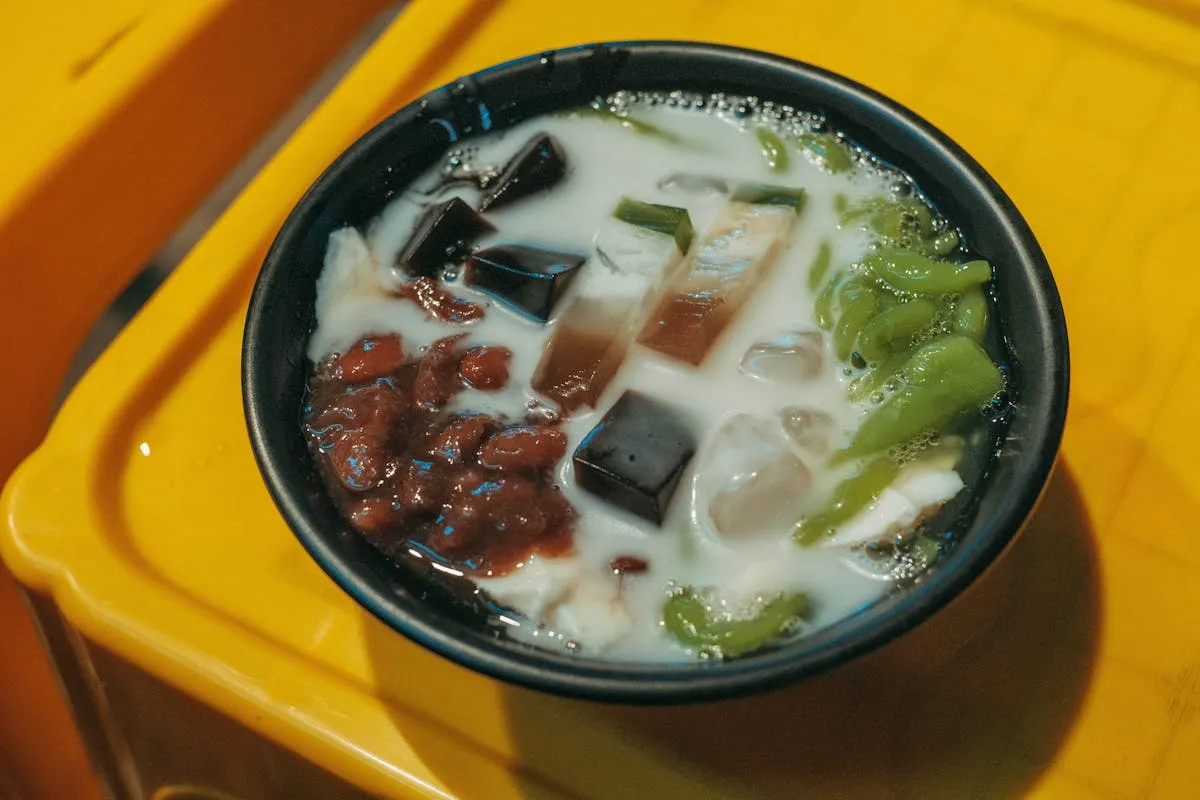 Grass jelly — a sweet, cooling dessert perfect in the sweltering southern Chinese summer.
Sweet, cooling black jelly made from the Chinese mesona plant. Served cold with syrup, peanuts and sometimes condensed milk. The perfect antidote to the sweltering southern Chinese summer.
Where: Southern China, especially Guangdong and Fujian.
How to Find Good Restaurants in China
| Tool | What It Does | How to Use It |
|---|---|---|
| Dianping (大众点评) | China’s Yelp: reviews, ratings, photos, menus | Search by dish name or cuisine type. Filter by distance and rating. |
| Gaode Maps (高德地图) | Navigation plus nearby restaurant discovery | Search “附近美食” (nearby food): shows ratings and price ranges |
| Xiaohongshu (小红书) | Social media food content: real diner photos and honest reviews | Search “[city name] 美食攻略” for curated food guides |
| Meituan (美团) | Food delivery + group dining deals | Order to your hotel room, or use the dining deals for restaurant discounts |
Local Tip: The single most reliable indicator of a good restaurant in China is a queue of local people at peak meal times. If taxi drivers eat there, it is good. If the menu has photos of every dish and an English translation, you are in a tourist trap.
Dining Etiquette and Practical Tips
No tipping. China has no tipping culture. Leaving money on the table will cause confusion; the waiter will chase you down the street to return it.
Share dishes. Chinese meals are communal. Order 3–4 dishes for two people, 5–6 for four. Place dishes in the center and serve yourself. This lets you taste more variety than ordering individual portions.
Control the spice. If you are not accustomed to chili, say “bu la” (不辣, not spicy) or “wei la” (微辣, mildly spicy) when ordering. In Sichuan and Hunan restaurants, the default heat level will make your eyes water.
Rice vs. noodles. Northern China is wheat territory; noodles, dumplings, steamed buns, flatbreads. Southern China is rice country. Ordering fried rice in Beijing is like ordering clam chowder in Kansas; technically available, culturally wrong.
Chopstick basics. Never stick chopsticks upright in a bowl of rice (it resembles funeral incense). Never use chopsticks to point at people. Rest them on the chopstick rest or across the top of your bowl between bites.
Pay at the counter. In most Chinese restaurants, you pay at a counter near the entrance, not at the table. Some places you pay after eating; others you order and pay first, then sit down.
Tap water is not drinkable. Always order bottled water, or drink the tea that restaurants provide. Hot water (开水) is free everywhere; it is a Chinese cultural norm and safe because it has been boiled.
Avoid: Ordering “Chinese food” generically. China’s regional cuisines are as different from each other as Italian is from Swedish. Ask what style a restaurant serves (Chuan cai (Sichuan), Yue cai (Cantonese), Lu cai (Shandong)), and you will get better recommendations.
Useful Chinese Phrases for Ordering
| Chinese | Pinyin | English |
|---|---|---|
| 你好 | Nǐ hǎo | Hello |
| 点菜 | Diǎn cài | I want to order |
| 不辣 | Bù là | Not spicy |
| 微辣 | Wēi là | Mildly spicy |
| 多少钱? | Duō shǎo qián? | How much? |
| 买单 | Mǎi dān | The bill, please |
| 好吃 | Hǎo chī | Delicious |
| 再来一个 | Zài lái yī gè | One more, please |
| 我不吃肉 | Wǒ bù chī ròu | I don’t eat meat |
| 有没有英文菜单? | Yǒu méi yǒu yīng wén cài dān? | Do you have an English menu? |
Eating for Dietary Restrictions
China can be challenging for vegetarians, vegans and those with food allergies, but it is manageable with preparation.
Vegetarians: Say “wo chi su” (我吃素, I eat vegetarian). Buddhist vegetarian restaurants (素菜馆) exist in every city and serve elaborate meat-free versions of classic dishes. Standard restaurants often use meat broth in vegetable dishes and lard for stir-frying; ask specifically. tofu and mushroom dishes are your safest options.
Muslim / Halal: Look for restaurants with “清真” (qingzhen) signage. These are common in cities with significant Muslim populations (Xi’an, Lanzhou, Urumqi, Kunming). The food (lamb, beef, hand-pulled noodles) is excellent.
Allergies: Carry a card in Chinese listing your allergies. Peanut oil is the default cooking fat in many regions. Soy is everywhere. Gluten-free is not a recognized concept in most Chinese restaurants.
Foreigner-friendly restaurants: In Beijing, Shanghai and Chengdu, international restaurants serving Japanese, Korean, Italian and Indian food are easy to find. Use Dianping and filter by cuisine type.
Regional Cuisine Guide
China has eight major culinary traditions. Understanding them helps you order better:
| Cuisine | Region | Characteristics | Signature Dishes |
|---|---|---|---|
| Lu (Shandong) | Northern China | Salty, seafood, braised dishes | Sweet and sour carp, braised abalone |
| Chuan (Sichuan) | Southwest | Numbing-spicy (málà), bold flavors | Mapo tofu, kung pao chicken, hotpot |
| Yue (Cantonese) | South | Mild, fresh, delicate, dim sum | Char siu, steamed fish, har gow |
| Su (Jiangsu) | East coast | Sweet, refined, slow-cooked | Squirrel fish, lion’s head meatballs |
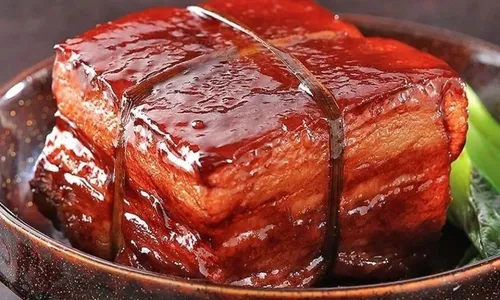
| Zhe (Zhejiang) | East coast | Light, fresh, seafood-focused | West Lake fish, Dongpo pork |
| Min (Fujian) | Southeast coast | Umami, soups, seafood | Buddha jumps over the wall, oyster omelet |
| Xiang (Hunan) | Central China | Hot, sour, smoked | Chairman Mao’s red braised pork, spicy frog |
| Hui (Anhui) | Central-east | Wild herbs, stewed, rustic | Stinky mandarin fish, bamboo shoots |
When a restaurant menu says “Sichuan cuisine” (川菜), expect numbing heat. “Cantonese” (粤菜) means mild and fresh. “Hunan” (湘菜) is pure fire without the numbing effect of Sichuan peppercorns. Knowing which cuisine you are ordering from sets accurate expectations.
Street Food Safety Tips
Street food in China is generally safe and represents some of the country’s best eating. Follow these guidelines:
- Choose stalls with high turnover. If food is cooked fresh and sold quickly, it has not been sitting around.
- Watch it being cooked. High-heat wok cooking kills most bacteria. Avoid pre-cooked items sitting at room temperature.
- Follow the locals. A stall with a line of Chinese office workers at lunchtime is a reliable indicator.
- Night markets are a cultural institution. Cities like Taipei, Xi’an, Chengdu and Changsha have legendary night markets worth planning your evening around.
- Carry antidiarrheal medication as a precaution, even if you have a strong stomach. The combination of unfamiliar oils, spice levels and cooking styles can affect anyone.
Sources: Fenghuang Travel, GetYourGuide China food guide, Serious Eats, Michelin Guide China. Prices are approximate and reflect 2025-2026 averages in major cities.
Sources & Verification
This guide was last verified on 2026-08-06. Key Chinese-language sources:
- Dianping (大众点评, dianping.com): China’s leading review platform, used here for the restaurant-finding table that lists ratings, photos and menus by dish and cuisine type.
- Xiaohongshu (小红书): Social platform of real diner photos and honest reviews, the basis for the “[city name] 美食攻略” (food guide) search tip in the restaurant-finding section.
- Meituan (美团): Food-delivery and group-dining-deals platform, referenced in the table for ordering to your hotel and finding restaurant discounts.
- Gaode Maps (高德地图): Navigation app with the “附近美食” (nearby food) discovery feature cited for locating nearby restaurants with price ranges.
See our full verification methodology.
Related Articles
- Chengdu Travel Guide (2026) — The capital of Sichuan cuisine
- Xi’an Travel Guide (2026) — Muslim Quarter food and street eats
- China Travel Safety Tips (2026) — Food and water safety for foreigners