China High-Speed Rail: The Complete Travel Guide (2026)
Most first-time visitors default to flying between Chinese cities. That instinct is often wrong. China operates the largest and busiest high-speed rail (HSR) network on earth — over 50,000 km of track as of the end of 2025, roughly two-thirds of all the high-speed rail in the world — and for the journeys most tourists actually take, the train beats the plane on total door-to-door time, comfort, scenery, and punctuality. This guide explains why, and how to ride it.
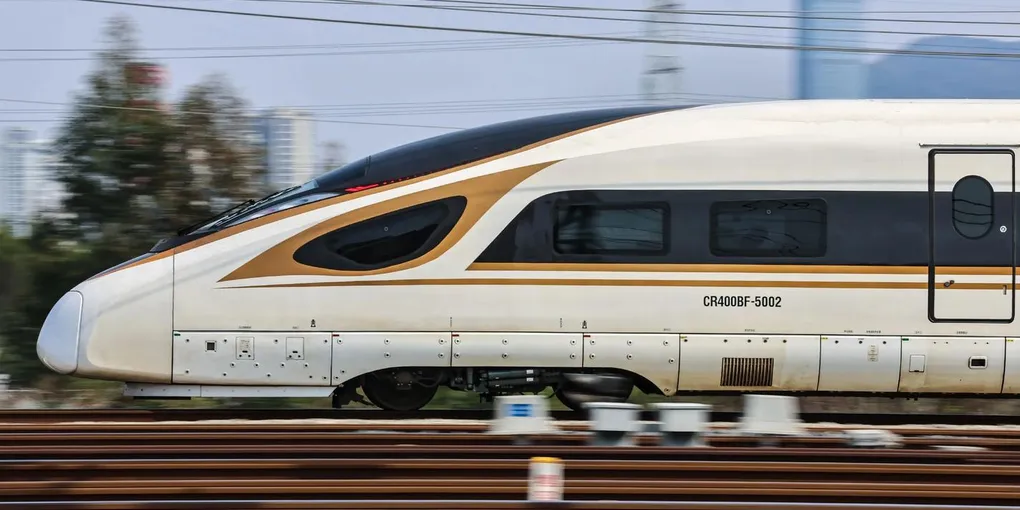
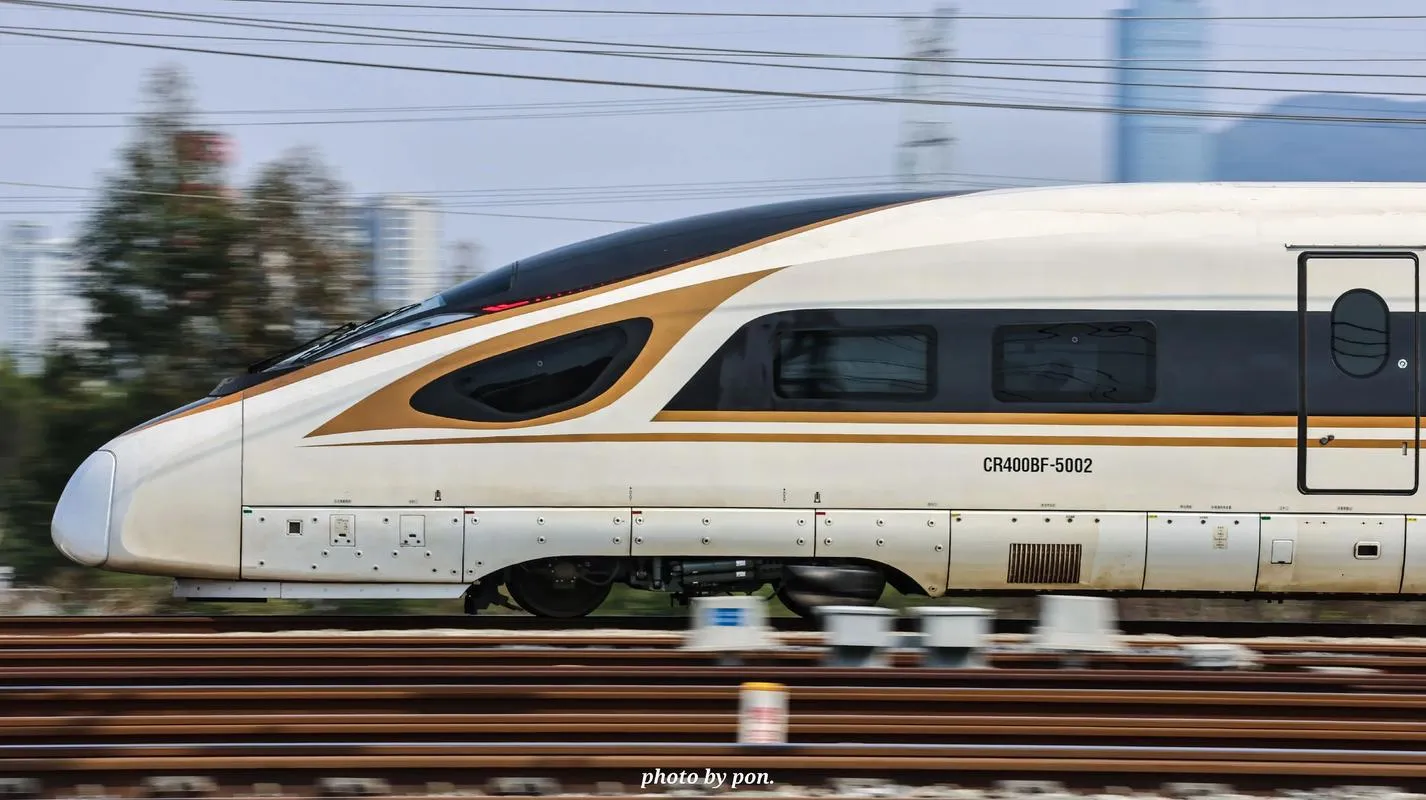 A Fuxing (复兴号) CR400 bullet train. China’s HSR fleet is now domestically designed and runs at 350 km/h on the main lines.
The Network: Largest in the World, and Still Growing
The numbers are staggering. At the end of 2025, China’s high-speed rail network reached 50,400 km (5.04 万公里) of operating track, according to the National Railway Administration’s 2025 Statistical Bulletin — up from 37,900 km just five years earlier, nearly doubling during the 14th Five-Year Plan. Total national rail mileage hit 165,000 km, with HSR accounting for 50,000 of it. By 2030 the target is 60,000 km.
What matters for travelers is coverage. The network, organized as the “eight vertical and eight horizontal” (八纵八横) trunk grid, reaches every provincial capital and the Hong Kong SAR (every provincial-level division except Macau). If a foreign visitor is going there, a high-speed train almost certainly goes there too: Beijing, Shanghai, Xi’an, Chengdu, Guilin, Hangzhou, Guangzhou, Chongqing, Hong Kong — all connected.
In 2024 alone, China’s EMU train sets carried 3.27 billion passengers — the highest ridership of any rail system in the world.
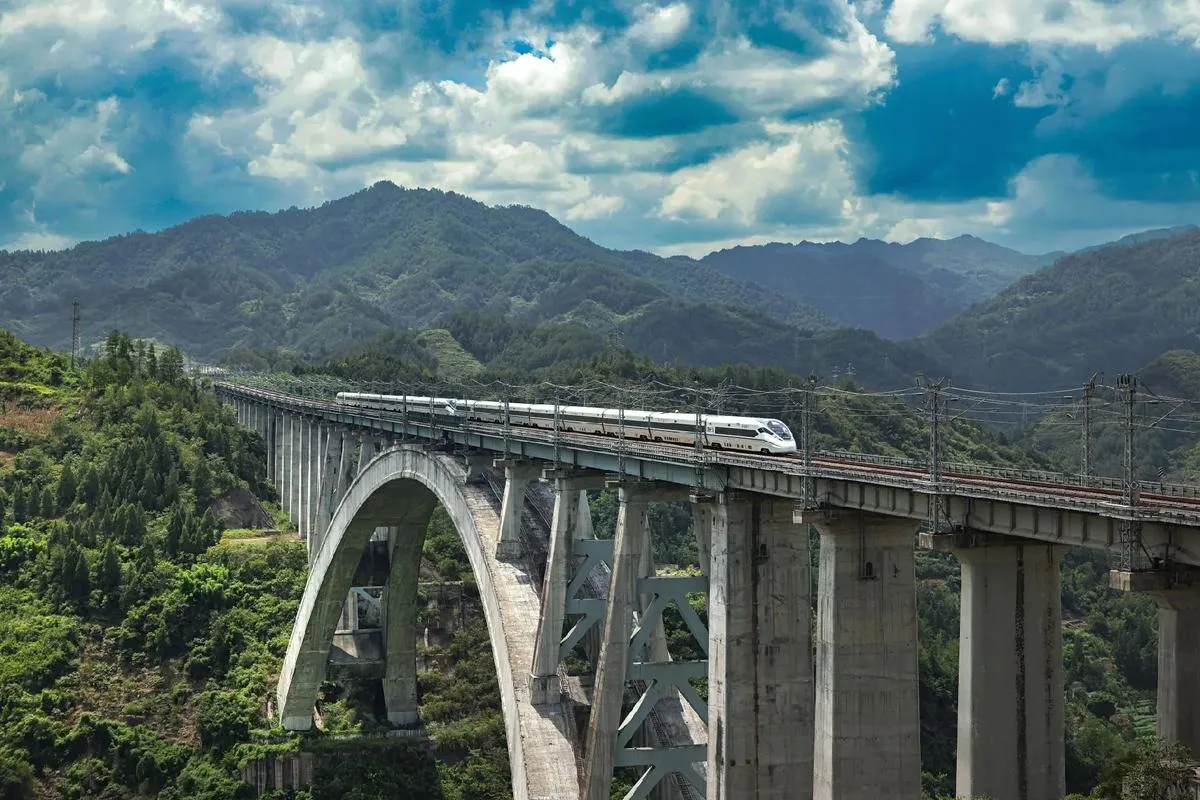 Much of the network runs on elevated viaducts — over 85% on some lines — keeping the track straight and level across China’s varied terrain.
Speed: 350 km/h on the Fuxing
Chinese high-speed services run in three tiers:
| Service | Top speed | Notes |
|---|---|---|
| G-series (高铁) | 350 km/h | The fastest and most common; Fuxing CR400 on main lines |
| D-series (动车) | 200–250 km/h | Often sleepers or secondary routes |
| C-series (城际) | 200–350 km/h | Short intercity hops (e.g. Beijing–Tianjin in 30 min) |
The headline train is the Fuxing (复兴号) CR400 — China’s domestically designed standard, distinct from the earlier Hexie (和谐号) CRH series that was built from transferred foreign technology (Siemens, Kawasaki, Alstom, Bombardier). Fuxing sets feature WiFi, power outlets at every seat, USB ports, and the famous seat-occupancy indicator lights above each seat (red = sold for this leg, green = available, yellow = free on this leg but booked on others) that let you spot open seats at a glance. A next-generation CR450 — with a test speed of 450 km/h and a planned commercial speed around 400 km/h — is expected to enter service around 2025–2026, which could cut Beijing–Shanghai from roughly four hours to about three.
HSR vs. Flying: When the Train Wins
This is the core decision for any intercity trip in China, and most foreign guidebooks get it backwards by defaulting to flights. The comparison:
| Factor | High-Speed Rail | Flying |
|---|---|---|
| Station location | ✅ Usually city center (Beijing South, Shanghai Hongqiao) | ❌ Airports far outside the city (1–2h round trip) |
| Arrival time needed | 30–45 min before departure | 2 hours + security lines |
| Punctuality | ✅ ~95%+ on-time, delays measured in minutes | ❌ Weather- and traffic-dependent, multi-hour delays |
| Short trips (<800 km) | ✅ Usually faster door-to-door | ❌ Airport transit often makes it slower |
| Long trips (>1500 km) | ❌ 5+ hours | ✅ 2–3 hours flying |
| Scenery | ✅ Watch China roll by | ❌ Clouds |
| Price | Mid-range (~¥0.45/km for second class) | Variable (can be cheaper off-peak) |
A 2019 World Bank study and 2025 Cirium data both confirm that 350 km/h HSR is competitive with flights on routes up to 1,200 km, partly because passengers in major Chinese cities save 35–45 minutes reaching and clearing security at an HSR station versus an airport. The effect is visible in the data: flights of 800 km or less have fallen from 26.4% of China’s domestic flights in 2011 to just 15.9% in early 2025 — the airlines have surrendered the short-haul market to the trains.
The rule of thumb: under 1,000 km, take the train; over 1,500 km, fly; in between, compare. The flagship case is Beijing–Shanghai: 1,302 km in 4 hours 24 minutes at an average speed of 291.9 km/h — the fastest average speed of any commercial train service in the world. Door-to-door, that beats flying.
Local Tip: Even on a long route like Beijing–Shanghai, the train delivers you to Shanghai Hongqiao station, which shares a complex with Hongqiao Airport and connects directly to Metro Line 2 and 10. You step off the train and you’re effectively in the city. Pudong Airport, by contrast, is another hour by maglev-plus-Metro or taxi.
The Onboard Experience
Foreign expectations of Chinese trains are often stuck in the 1990s. The reality on a Fuxing in 2026 is closer to a premium airline cabin that happens to be gliding silently across the countryside.
- Second class legroom is comparable to airline economy, but you can stand up and walk the full length of the train at any time. There’s no seatbelt, no turbulence, and no “seatback upright” commands.
- Every seat has a 220V outlet (Chinese standard socket — bring a universal adapter) and many have USB ports.
- Each car has a hot-water dispenser for instant noodles or tea (a deeply Chinese travel ritual; bring a cup and a noodle brick).
- A dining car sells boxed meals (¥25–45) and a snack cart rolls through periodically.
- Mobile signal is reliable across flat terrain and pops in and out through tunnels and mountain sections. Most trains offer WiFi, though it usually requires a Chinese phone number to log in.
- The ride is quiet and smooth enough that the “standing coin” trick (balancing a coin on its edge on the windowsill at 350 km/h) is a meme for a reason.
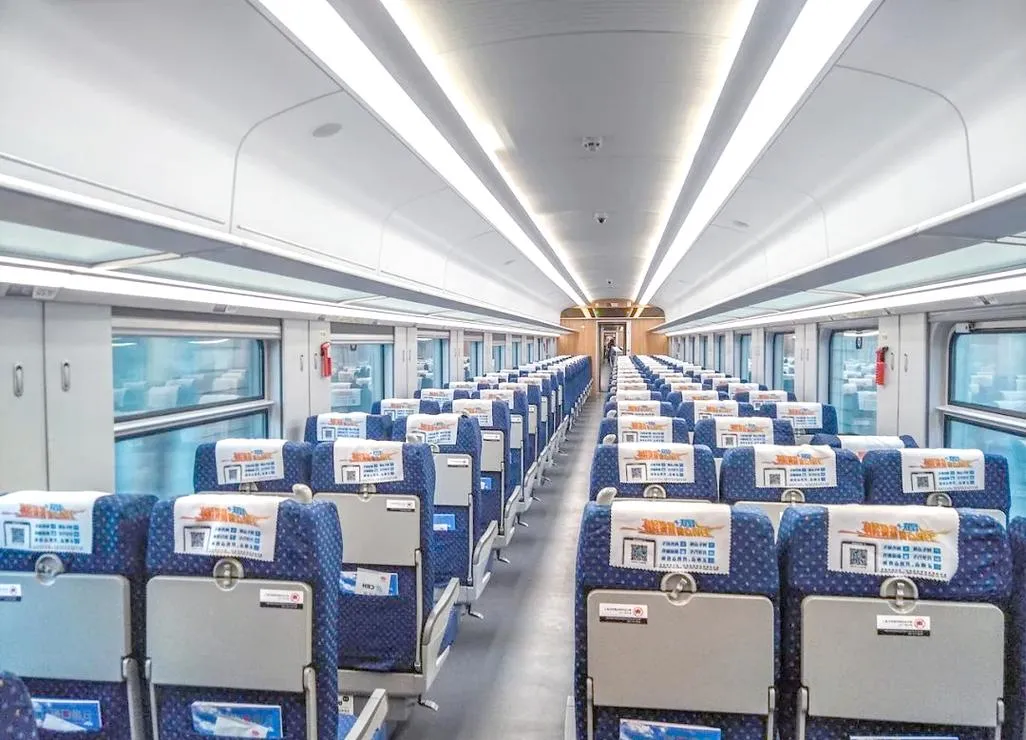 Second-class seating on a Fuxing. Legroom rivals airline economy, with power outlets at every seat and the freedom to walk the train.
Six Classic Tourist Routes
These are the journeys worth planning a trip around.
-
Beijing–Shanghai (Beijing South → Shanghai Hongqiao, 1,302 km, ~4.5h, ~¥550 second class). The golden trunk line, connecting China’s two great gateways. The fastest trains average 291.9 km/h. Intermediate stops include Nanjing and Suzhou, so you can ride it in segments.
-
Shanghai–Kunming (Shanghai → Kunming, 2,252 km, ~11h, can be segmented). The most scenic long line — it threads through Zhejiang’s hills, the karst mountains of Guizhou, and Yunnan’s red earth. Most tourists ride the Shanghai→Guiyang or →Kunming section.
-
Beijing–Guangzhou (Beijing → Guangzhou, 2,298 km, ~8h). The north–south artery, stopping at Wuhan and Changsha (two of China’s best food cities).
-
Chengdu–Chongqing (Chengdu → Chongqing, 308 km, ~1.5h, ~¥150). The classic short-haul hop between the two Sichuan-basin megacities.
-
Xi’an–Chengdu (Xi’an → Chengdu, 658 km, 3–4h). An engineering marvel punching through the Qinling mountain tunnel complex — the ancient hard road into Sichuan is now a morning’s ride.
-
Guiyang–Guangzhou (Guiyang → Guangzhou, 857 km, ~4h). From the karst highlands of Guizhou down to the Pearl River Delta — 83% of the route is bridges and tunnels, slicing the old 20-hour journey to four.
 The Guiyang–Guangzhou and Shanghai–Kunming lines cross the karst landscape of southwest China — 83% of the Guiyang–Guangzhou route is bridges and tunnels.
Practical Tips
- Booking: See our complete China train ticket guide for the full process — 12306 (the official app, English site at 12306.cn/en, accepts foreign passports) or Trip.com (easier, small service fee). Identity verification requires a passport.
- Seat choice: Aim for seat F (window, two-seat side — the best) or A (window, three-seat side). On Fuxing, the indicator lights above seats show live availability.
- Luggage: No strict weight limit. Overhead racks plus a large-baggage area at each car’s ends. Trains fill up during holidays (Chinese New Year, National Day Golden Week in early October).
- Don’t mix up stations: Big cities have multiple stations. Beijing Station ≠ Beijing South; Shanghai Station ≠ Hongqiao. Check the station name on your ticket — they can be an hour apart.
- Food: You can bring your own (including instant noodles and fruit); hot water on board is free. The dining car has hot meals.
- Connectivity for work: Download anything you need on flat terrain first; expect dropouts in tunnels and mountains.
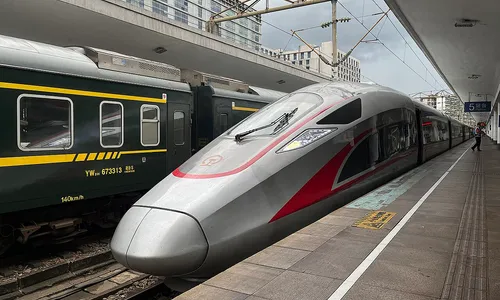
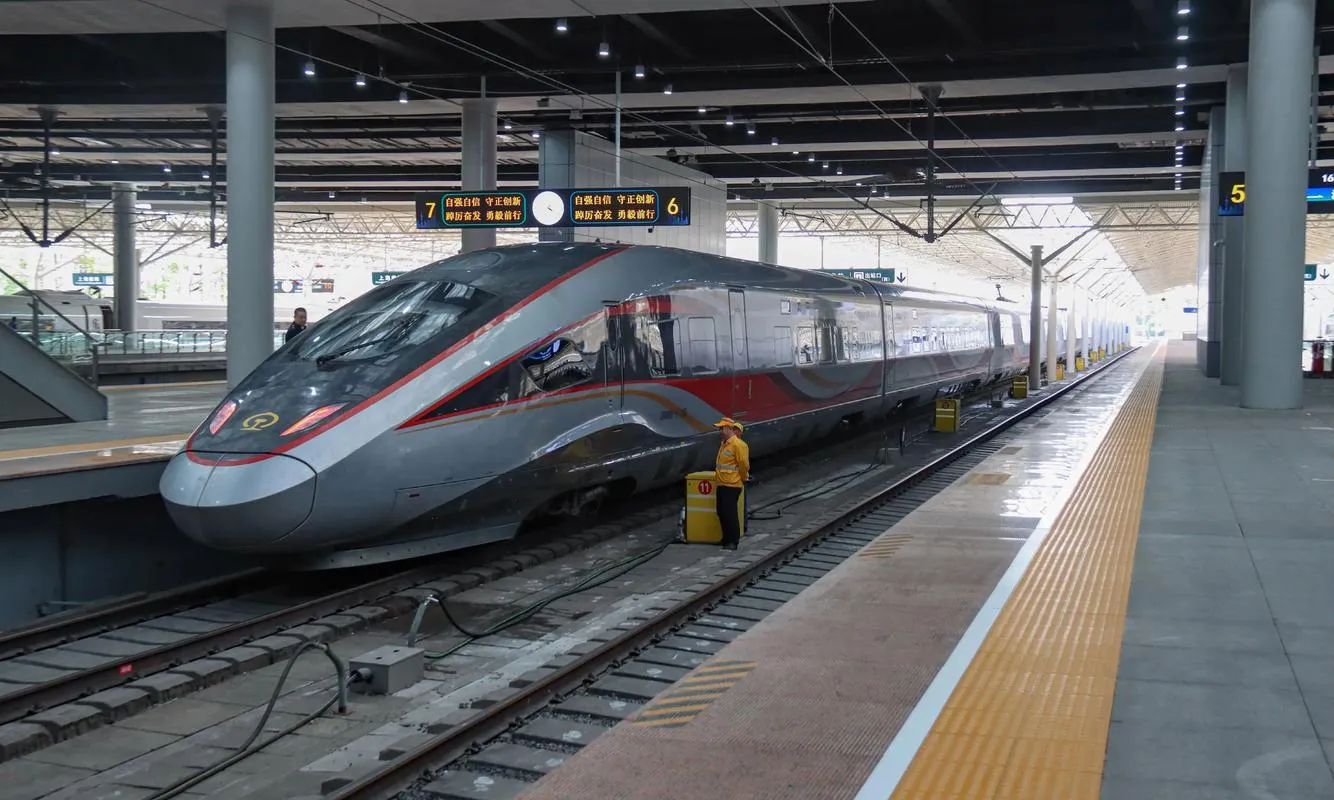 A Fuxing arrives at a high-speed rail platform. Arrive 30–45 minutes early — less than the two hours flights demand.
The Information Gap: Why HSR Is the Smart Default
If you’ve read this far, the summary for foreign travelers:
- “Just fly” is usually wrong for the trips you’ll actually take. Most China itineraries involve city-to-city hops of 300–1,200 km, which is the HSR’s sweet spot.
- City-center stations are the hidden advantage. Skipping the airport round-trip saves two hours and real money.
- Punctuality and safety are genuinely exceptional. The network has had exactly one major accident in its history (the 2011 Wenzhou collision); the World Bank has since called its safety record “exemplary.”
- The scenery is part of the trip. The Shanghai–Kunming and Xi’an–Chengdu lines are sightseeing in their own right, not just transport.
- The Fuxing experience exceeds expectations. Power outlets, WiFi, quiet cabins, and seat-occupancy displays are features many western trains still lack.
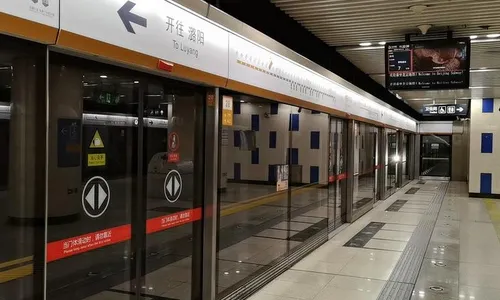
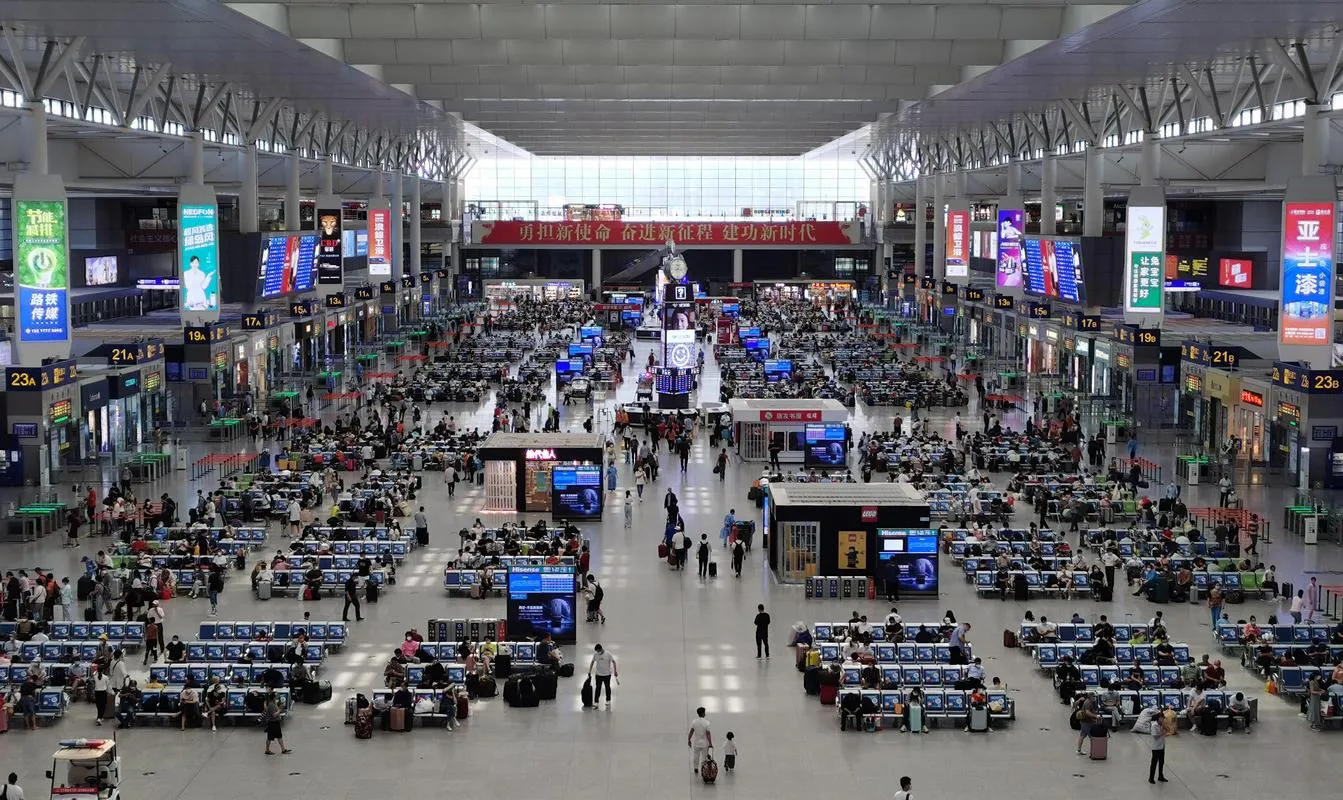 The concourse of a major HSR station. Because most terminals sit in the city center — not an hour outside it — the train’s hidden advantage is the two hours you save on either end.
For the mechanics of buying tickets, see How to Buy China Train Tickets. For whether you need a visa to ride at all, see China’s 240-Hour Visa-Free Transit and China Entry Requirements (2026).
Related Articles
- How to Buy China Train Tickets (2026) — The complete booking walkthrough: 12306, Trip.com, seat selection, refunds
- China’s 240-Hour Visa-Free Transit — Which travelers can transit without a visa
- China Entry Requirements (2026) — Visa, customs, and arrival guide for foreigners
- Beijing Travel Guide — Start your Beijing–Shanghai rail journey here