How to Buy China Train Tickets (2026) — Foreigner's Complete Guide
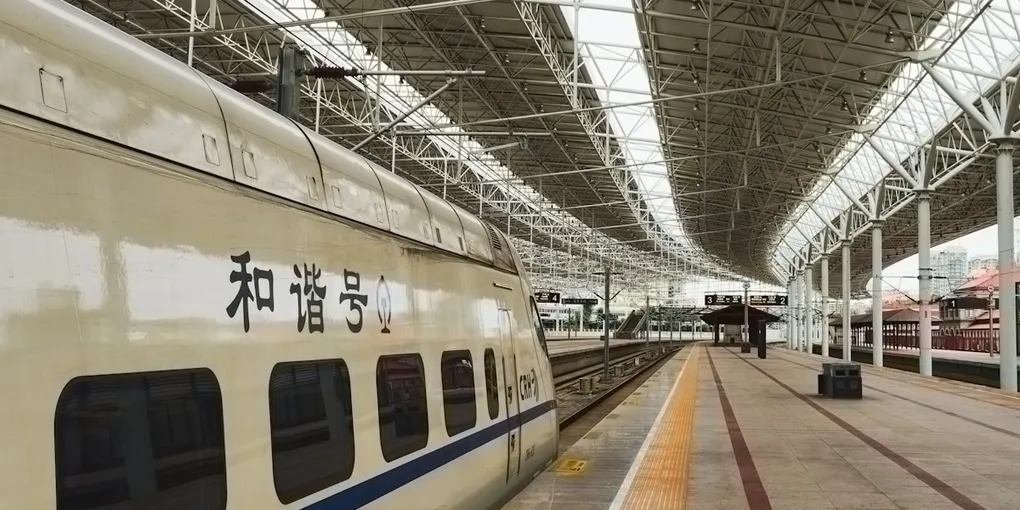
China’s railway network is the most extensive high-speed rail system in the world, with over 28,000 miles of track connecting virtually every major city. For foreign travelers, buying train tickets used to mean waiting in long lines at station windows. Today, you can book online from your phone in minutes. This guide covers the entire process — from choosing the right platform to picking the best seat on a bullet train doing 217 mph.
Understanding China’s Train System
China operates several categories of trains, each identified by a letter prefix. Here is what you need to know:
| Train Type | Prefix | Top Speed | Character |
|---|---|---|---|
| High-Speed Rail | G | 300-350 km/h (186-217 mph) | Fastest, stops at major stations, highest fare |
| Intercity | C | 300-350 km/h | Short-distance city links (e.g. Beijing-Tianjin) |
| Bullet Train | D | 200-250 km/h (124-155 mph) | Fast, more stops than G-trains, moderate price |
| Direct Express | Z | 160 km/h (99 mph) | Fastest conventional train, few stops, sleepers |
| Express | T | 140 km/h (87 mph) | Conventional train, moderate stops |
| Fast | K | 120 km/h (75 mph) | Conventional train, many stops, cheapest |
| Regular | No letter | 100-120 mph | Slowest, cheapest, short routes only |
For most tourists, G-trains (high-speed rail) are the go-to choice. They are clean, punctual, and fast — Beijing to Shanghai in about 4.5 hours. D-trains offer similar comfort at 20-40% lower prices if you do not mind the extra travel time.
Seat Classes on High-Speed Trains
| Class | Layout | What to Expect |
|---|---|---|
| Business Class (商务座) | 2+1 across | Lie-flat seats, meal included, spacious — most expensive |
| First Class (一等座) | 2+2 across | Wider seats, more legroom, comfortable for long rides |
| Second Class (二等座) | 3+2 across | Standard seating, economical, the most popular choice |
On conventional overnight trains, you will find sleeper options ranging from soft sleepers (4-berth private cabins) to hard sleepers (6-berth open compartments) to basic hard seats.
Two Ways to Buy Tickets
Option 1: Trip.com (Recommended for First-Timers)
Trip.com is the international version of Ctrip, China’s largest travel platform. It is the easiest way for foreigners to buy train tickets.
Pros:
- Full English interface with multi-language support
- Accepts international credit cards (Visa, Mastercard, etc.)
- Simplified passport verification process
- Multi-language customer service
Cons:
- Service fee of approximately 20-40 yuan ($3-6) per ticket
- Changes and cancellations require contacting customer support
- Slightly less flexible than booking direct
How to book on Trip.com:
- Open the Trip.com app or website.
- Select the Trains section.
- Enter your departure city, destination, and travel date.
- Choose your train and seat class.
- Enter passenger passport details.
- Upload a clear photo of your passport’s information page.
- Select your seat preference (if available).
- Pay with your international credit card.
- Receive your e-ticket confirmation by email.
Option 2: 12306 (Official Railway App — Best for Savings)
12306 is the official booking platform of China Railway. It now has an English version at www.12306.cn/en, and foreign passengers can register and book tickets directly.
Pros:
- No booking fees — you pay the exact ticket price
- Full control over seat selection
- Easy changes and cancellations online
- Direct access to the official system
Cons:
- Requires identity verification (can be done online since 2023)
- English interface is functional but not always intuitive
- Payment requires Alipay, WeChat Pay, or a Chinese bank card
How to register on 12306:
- Download the 12306 app or visit www.12306.cn/en.
- Tap Register — you can use an email address (no Chinese phone number needed).
- Fill in your name and nationality.
- Complete email verification.
- For identity verification, select “Foreign Passport” as your document type.
- Enter your name exactly as it appears on your passport — surname in the surname field, given name in the given name field.
- Upload a clear photo of your passport information page.
- Wait for automatic verification (usually completes within hours).
Local Tip: Since 2023, foreign passport holders can complete identity verification entirely online — no need to visit a station window in person. Make sure your passport photo is sharp and well-lit, as blurry photos are the number one cause of verification failure.
Seat Selection Guide
Chinese high-speed trains use an airline-style seat numbering system. Understanding it helps you pick the perfect spot:
| Seat Letter | Position | Notes |
|---|---|---|
| A | Window (3-seat side) | May need to let middle passenger in and out |
| B | Middle (3-seat side) | Only in Second Class |
| C | Aisle (3-seat side) | Easy access |
| D | Aisle (2-seat side) | Easy access, fewer people to climb past |
| F | Window (2-seat side) | Best seat — window plus easy access |
| E | Does not exist | Skipped (max 5 seats per row) |
Seat recommendations:
- F seat: The most sought-after. Window view with only one neighbor, on the 2-seat side. Perfect for long journeys.
- A seat: Window view but on the 3-seat side. You may need to stand up to let others pass.
- D seat: Aisle on the 2-seat side. Best for frequent bathroom trips or getting hot water from the dispenser.
- C seat: Aisle on the 3-seat side. Similar convenience but slightly more foot traffic.
On newer Fuxing (复兴号) smart trains, indicator lights above each seat show availability: red = occupied, green = free for this and the next stop, yellow = free now but reserved at the next stop.
Sample Ticket Prices
Prices vary by route, time of day, and demand-based pricing. Below are approximate fares for popular routes:
| Route | Distance | G-Train Second Class | G-Train First Class | D-Train Second Class |
|---|---|---|---|---|
| Beijing - Shanghai | 819 mi | ~555 yuan ($82) | ~933 yuan ($138) | ~350-430 yuan ($52-63) |
| Beijing - Guangzhou | 1,428 mi | ~862 yuan ($127) | ~1,380 yuan ($204) | ~550-650 yuan ($81-96) |
| Shanghai - Hangzhou | 109 mi | ~73 yuan ($11) | ~117 yuan ($17) | ~50-60 yuan ($7-9) |
| Guangzhou - Shenzhen | 63 mi | ~75 yuan ($11) | ~120 yuan ($18) | ~50 yuan ($7) |
| Chengdu - Chongqing | 191 mi | ~154 yuan ($23) | ~246 yuan ($36) | ~100-120 yuan ($15-18) |
Conventional train fares run roughly 30-50% of high-speed second class prices.
Local Tip: The 12306 platform supports seat selection on all G, D, and C trains. When booking, you can specify window or aisle preference. If your preferred seat type is sold out, the system assigns randomly.
Refund and Change Policies
Cancellation Fees
| Time Before Departure | Fee |
|---|---|
| More than 8 days | Free |
| 48 hours to 8 days | 5% of ticket price |
| 24 to 48 hours | 10% of ticket price |
| Less than 24 hours | 20% of ticket price |
| During Spring Festival | Flat 20% |
Minimum cancellation fee: 2 yuan. Each ticket can generally be changed only once.
Platform Differences
| Platform | Cancellation Process |
|---|---|
| 12306 | Direct online — fast and flexible |
| Trip.com | Submit request through the app; may need to contact support |
| Station window | Bring your original passport |
What It Is Like On Board
China’s high-speed trains are clean, quiet, and well-organized. Here is what to expect:
Seating: Second class seats (二等座) are comparable to economy class on an airplane — three seats across on one side, two on the other, with a reasonable amount of legroom. First class (一等座) gives you wider seats in a 2+2 configuration with significantly more space to stretch out. Business class (商务座) offers lie-flat seats, complimentary snacks and meals, and a much more private atmosphere — worth the splurge on a 5+ hour journey.
Luggage: There are no strict weight limits on high-speed trains, unlike airlines. Overhead racks accommodate standard suitcases, and larger bags can be stored in the luggage areas at each end of the car. During peak travel periods (Chinese New Year, National Day holiday in October), space fills up fast — arrive early to claim a spot for oversized luggage.
Food and drink: Every car has a hot water dispenser (热水机) near the doors — this is where Chinese passengers refill their instant noodle cups and thermoses. A dining car on G and D trains serves hot meals, beer, and snacks at prices around 25-45 yuan ($4-7) for a boxed meal. A refreshment cart also rolls through the aisles periodically. You are welcome to bring your own food and drinks.
Charging: Power outlets (Chinese standard, 220V) are available at or near every seat — usually under the armrest or between seat pairs. Bring a universal adapter if your plug does not fit Chinese sockets (Type A and Type I are common).
Connectivity: WiFi is available on most G-trains, though it can be slow and may require a Chinese phone number to log in. Mobile data reception is generally good on flat terrain but drops in tunnels and mountainous sections. If you need to work during the journey, download files before departure.
Restrooms: Western-style sit-down toilets are standard on all high-speed trains, kept reasonably clean by an attendant. Bring your own tissues and hand sanitizer as supplies may run low on long routes.
Cultural Context: The Real-Name System
China’s railway uses a strict real-name ticketing system (实名制) that requires every ticket to be linked to a specific individual’s government ID. For Chinese citizens, that means their national ID card. For foreigners, that means your passport. This system was introduced to combat scalping and improve security, and it is enforced without exception.
The practical impact for travelers: you cannot buy a ticket for someone else unless they have also completed identity verification on the platform you are using. If you are traveling with a group, each person needs to be verified individually. When boarding, the name on the ticket must match the passport you present — no transferring tickets between people.
This system is also why e-tickets work seamlessly. Once your passport is verified in the system, the ticket is linked to your passport number. At the station gate, the inspector scans your passport and the system confirms your reservation. No paper ticket, no QR code, just your physical passport.
Boarding the Train
China uses a real-name ticketing system — the name on your ticket must match your passport.
What to know at the station:
- No paper tickets needed — after identity verification, your passport IS your ticket.
- Arrive 30-60 minutes before departure, especially during peak seasons (May-October, Chinese New Year).
- Foreign passport holders go through the manual inspection channel at the gate — automated turnstiles for Chinese ID cards will not read your passport (though some newer stations are beginning to support it).
- Double-check which station you depart from — major cities often have multiple railway stations. Your ticket specifies the exact station name.
Avoid: Do not mix up Beijing Railway Station (北京站, Beijing Zhan) with Beijing South Railway Station (北京南站, Beijing Nan Zhan). They are about 6 miles apart, and showing up at the wrong one could mean missing your train.
Practical Information
| Item | Details |
|---|---|
| Official booking site (English) | www.12306.cn/en |
| Trip.com | trip.com |
| Identity verification | Online (passport photo upload) |
| E-ticket | Passport acts as your ticket after verification |
| Boarding gate | Manual channel for foreign passports |
| Luggage | No strict weight limits on high-speed trains; overhead racks and end-of-car space |
| Food on board | Dining car available on G/D trains; instant noodles and snacks sold on board; hot water dispensers in every car |
Quick Decision Guide
| Your Situation | Recommended Platform |
|---|---|
| First time in China, no Chinese language skills | Trip.com |
| No Chinese bank card or Alipay | Trip.com |
| Frequent traveler in China, have Alipay | 12306 |
| Need to change or cancel tickets often | 12306 |
| Want to save the 20-40 yuan service fee | 12306 |
| Planning a fixed itinerary, unlikely to change | Trip.com |
Information compiled in June 2026. Policies and prices may change — verify through official channels before booking.
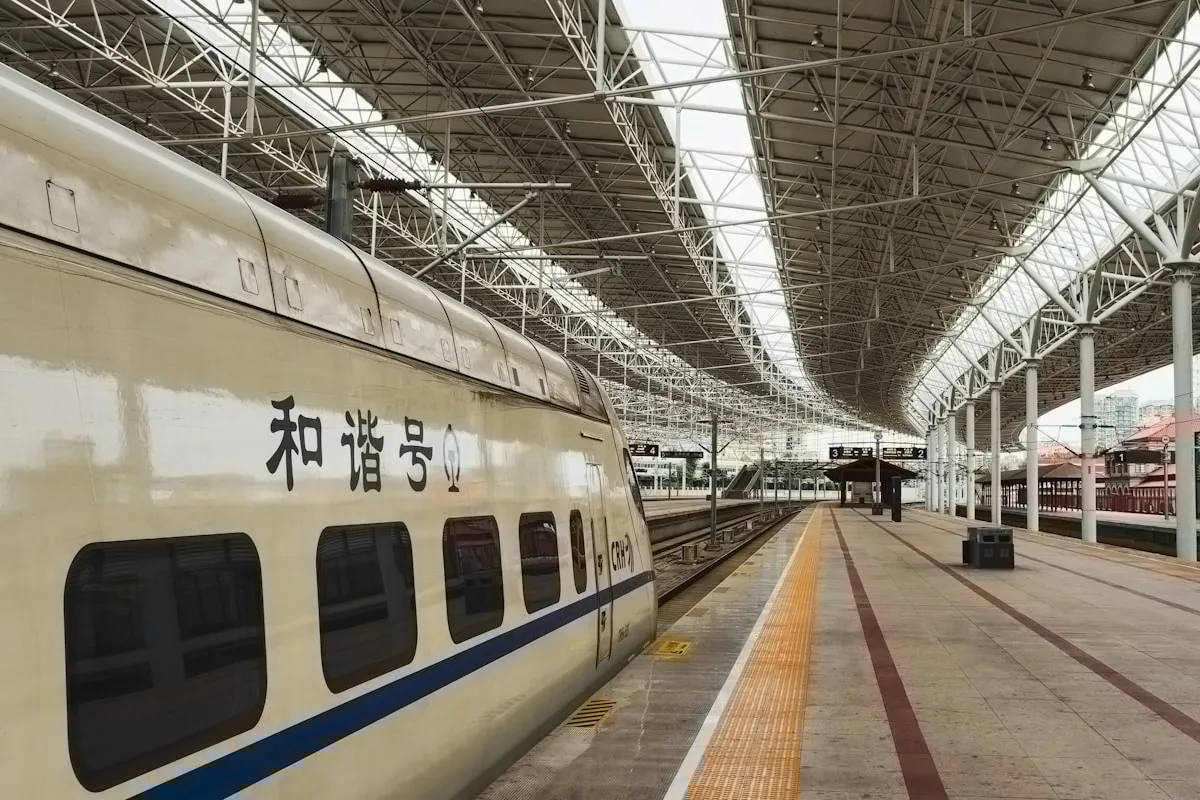 A Fuxing high-speed train at Shanghai Hongqiao Railway Station.
Related Articles
- China Entry Requirements (2026) — Visa, customs and arrival guide
- Beijing Travel Guide (2026) — 3-4 day itinerary for the capital
- 2 Weeks in China Itinerary — The classic 14-day route