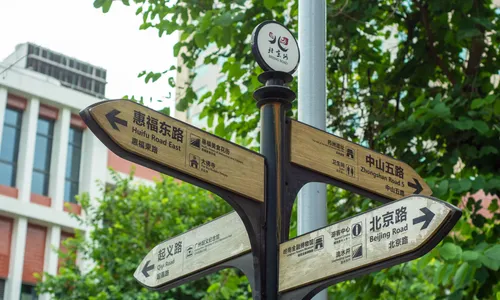
China Tax Refund for Foreigners 2026 - How to Get 9% Back on Your Shopping
You just spent ¥3,000 on silk, tea, and a jade bracelet in Shanghai. Did you know you can get roughly ¥270 of that back at the airport? China’s departure tax refund system, upgraded twice in the past 18 months, is now one of the most generous in Asia. Yet most foreign travelers have no idea it exists, and those who do often get the details wrong. This guide explains what you can claim, how the math actually works, and where the new 2026 rules trip people up.
Quick answer: Foreign travelers can claim a tax refund on purchases of ¥200 or more (same store, same day) from 12,000+ designated tax refund stores. The headline rate is 11% but after the 2% agency fee you actually receive about 9% of the purchase price back. From July 2026, purchases under ¥10,000 face only random spot-checks at customs (instead of universal inspection), the entire process is paperless, and the instant-refund window extended from 17 to 28 days. Hainan adds a separate ¥100,000/year duty-free quota for foreigners departing from the island. See our customs guide and visa-free entry guide.
How we verified this: SinoWander reads the original Chinese policy documents that English guides cannot, including MOFCOM Notice 2025 No.84, MOFCOM Notice 2026 No.74 (the “Refund 2.0” upgrade), STA Announcement 2025 No.11, and the Hainan 2025 duty-free policy. We cross-check them before writing. Each guide is date-stamped when last verified: 2026-08-16. See our methodology.
What the Refund Actually Pays You
This is where most English guides get it wrong. They say “11% refund.” The real math is a two-step calculation.
Step 1: The headline rate depends on the VAT rate of the item.
| Item VAT rate | Headline refund rate | Example goods |
|---|---|---|
| 13% | 11% | Most goods: electronics, silk, tea sets, jade, clothing |
| 9% | 8% | Some groceries, books, utility items |
Step 2: Subtract the 2% agency fee.
The refund agency (operating on behalf of the tax bureau) charges a 2% commission. So on a ¥1,000 silk jacket taxed at 13% VAT, you see an 11% headline refund of ¥110, minus the 2% fee (¥20), for a net ¥90 back, or 9% of the purchase price.
For a ¥10,000 shopping trip, that is roughly ¥900 in your pocket. A Russian traveler interviewed by Chinese state media bought ¥60,000 of goods and received ¥5,200 back. The money is real.
The ¥200 Threshold (Lowered from ¥500)
In April 2025, six government departments (MOFCOM, MOF, Culture and Tourism, Customs, STA, and CAAC) jointly lowered the minimum purchase threshold from ¥500 to ¥200 per store per day. This matters more than it sounds: a single ¥250 tea purchase now qualifies, where before you had to batch purchases to hit ¥500.
Note the “same store, same day” rule. You cannot combine receipts from different stores or different days to reach ¥200. If you are shopping across multiple boutiques, each individual receipt must independently clear the threshold.
The ¥20,000 Cash Cap
Also raised in April 2025: the cash refund limit went from ¥10,000 to ¥20,000 per person per departure. Above that amount, refunds are paid to your credit card (Visa, Mastercard, Amex, JCB, UnionPay) or, at some locations, to Alipay or WeChat Pay if you have them set up. Card refunds take 5 to 10 business days to process after customs confirms your departure.
The 90-Day Purchase Window
Goods must be purchased within 90 days before your departure from China. This is a common error in older English guides, which sometimes cite a 6-month or 183-day window. The 90-day clock runs from the date on the tax refund application form (not the invoice date), so the practical deadline is the date the store stamps your form.
What “Refund 2.0” Changed in July 2026
The biggest upgrade to the system, officially named 商消费发〔2026〕74号 but called “Refund 2.0” by state media, took effect on July 1, 2026. Three changes matter to travelers:
1. Random Spot-Checks Replace Universal Inspection (Under ¥10,000)
Previously, every refund claim required a customs officer to physically inspect your goods at the departure port. Now, claims under ¥10,000 per refund application are subject only to random spot-checks at a set ratio. If your number is not drawn, you walk through without opening your bags.
Claims of ¥10,000 or more still get item-by-item physical verification. Keep your purchases accessible in your luggage.
 An airport departure hall. Customs verifies your tax refund application here before you check in. Claims under ¥10,000 now face only random spot-checks.
2. Fully Paperless Processing
The entire refund flow is now digital. Customs and refund agencies confirm your e-forms and e-invoices online via a QR code linked to your passport. No more paper chops, no more physical forms to carry between counters. You scan, they verify, you get paid.
3. Instant Refund Extended to 28 Days with Cross-City Recognition
Instant refund (“ji mai ji tui”, or buy-now-refund-now) lets you receive your refund at the store counter the moment you pay, instead of waiting until the airport. The window between purchase and departure was previously 17 days in some regions. It is now uniformly 28 days nationwide.
Cross-city mutual recognition was also introduced, regionally. You can now buy in one city and depart from another within the same recognized bloc: Beijing-Tianjin-Hebei, Hunan-Fujian-Guangdong-Guangxi-Hainan, and Sichuan-Chongqing-Yunnan. Recognition is not yet universal across all Chinese cities, so if you are buying in Shanghai and departing from Chengdu, verify with the store that the cities are in a recognized pair.
How Instant Refund Works
At participating stores (8,000+ nationwide), you pay for your goods and the refund is credited on the spot to your credit card. The store effectively fronts the money, then claims it back from the tax bureau. There is a cumulative instant-refund limit of ¥220,000 per person, and you must depart from China within the 28-day window.
The catch: you need a credit card for instant refund. The card acts as a guarantee. If you fail to depart within the window, the refund is charged back to your card. Cash and Alipay-based instant refunds are not currently available for foreign travelers at most stores.
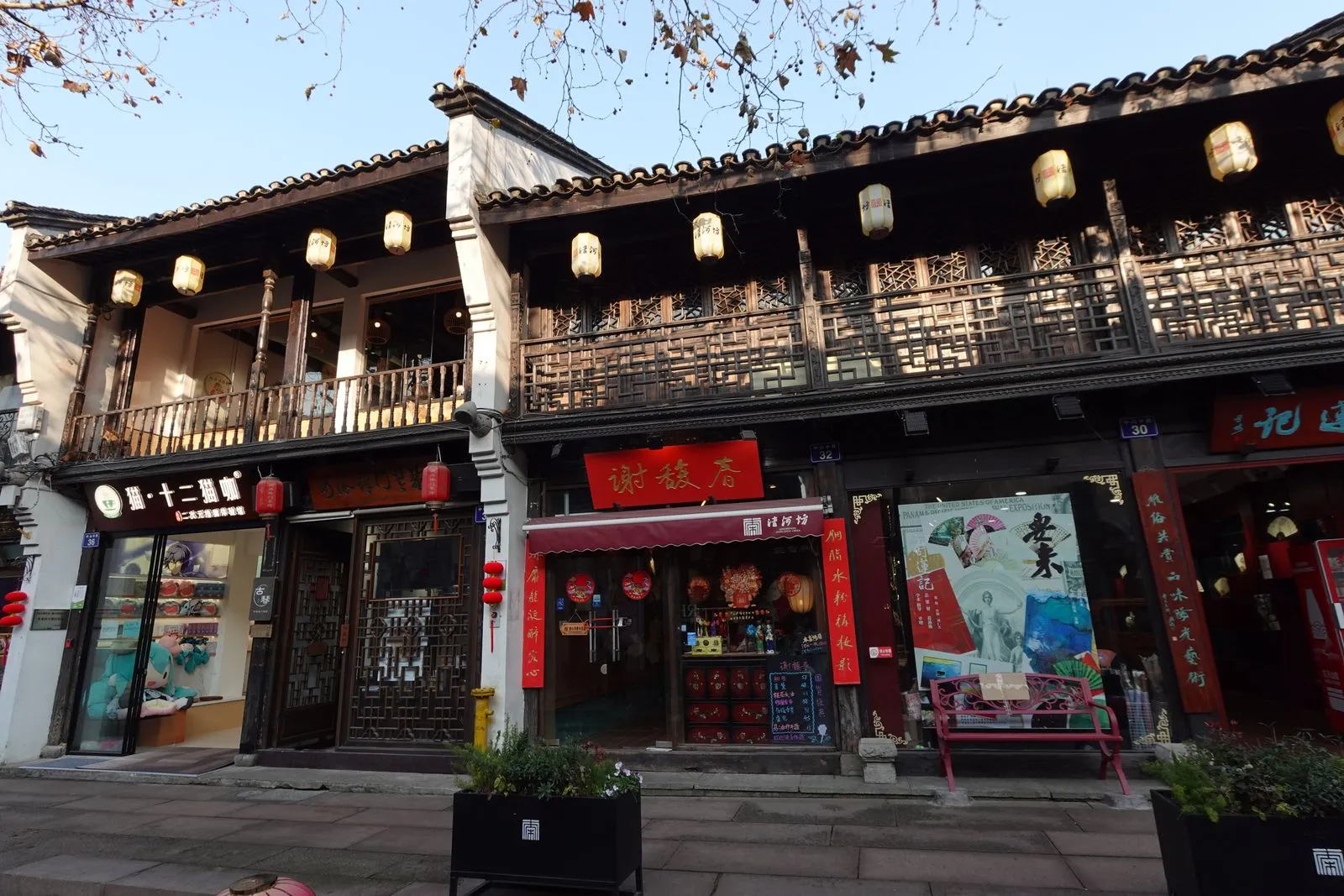 A traditional Chinese shopping street. Look for the “Tax Refund Shop” (离境退税商店) sign posted at the entrance of participating stores.
Finding a Tax Refund Store
China now has over 12,000 designated tax refund stores across 28 provinces, with nearly 9,200 added in 2025 alone. Beijing has about 1,500 stores and 5 centralized refund points. Shanghai is targeting 3,000 stores by 2027. Look for the blue “离境退税商店” (Tax Refund Shop) sign at the store entrance, or ask the cashier before you pay.
Major department stores, silk shops, tea shops, electronics retailers, and pharmacies in tourist districts are the most likely participants. Smaller independent boutiques usually are not.
What You Cannot Refund
This is another area where English guides often overstate the restrictions. The current national rules (STA Announcement 2025 No.11) do not name specific product categories like “food” or “tobacco” as excluded. The actual exclusions are:
- Items on the customs prohibited/restricted exit list. This captures gold and silver products, precious TCM materials, cultural relics, and currency. Note: tobacco and alcohol are restricted for entry into many countries, not excluded from China’s tax refund by name.
- VAT-exempt goods sold at tax refund stores. If no VAT was charged (certain fresh food, agricultural products), there is nothing to refund. Duty-free shop purchases also cannot be refunded (they are not tax refund store purchases with VAT invoices).
- Items jointly designated by MOF, Customs, and STA. As of August 2026, no such designation naming food, tobacco, alcohol, jewelry, or medical supplies has been issued.
The commonly cited “food, tobacco, alcohol excluded” list is a legacy of the 2011 Hainan pilot program, not the current national rules.
The Hainan ¥100,000 Bonus
If your trip includes Hainan, you have a second channel that is even more generous. The island duty-free policy gives each foreign traveler ¥100,000 per year of duty-free shopping at Hainan’s 12 duty-free malls, with no VAT or consumption tax charged at the point of sale. Since November 2025, this explicitly includes foreigners departing China from Hainan airports.
Per-category caps still apply (cosmetics 30 pieces, mobile phones 4 units, alcohol 1.5 liters per trip). The ¥100,000 annual quota is separate from and in addition to the departure tax refund you can claim for purchases made on the mainland.
See our customs and shipping guide for the full Hainan duty-free breakdown.
 A duty-free cosmetics counter. Hainan gives foreign travelers a separate ¥100,000 annual duty-free quota on top of the mainland tax refund.
The Process, Step by Step
| Step | Where | What happens |
|---|---|---|
| 1. Shop | Tax refund store | Buy ¥200+ (same store, same day). Ask for the tax refund application form and keep the itemized invoice. |
| 2. (Optional) Instant refund | Store counter | If the store offers instant refund, the money goes to your credit card immediately. Skip to step 5. |
| 3. Customs verification | Departure port, BEFORE check-in | Go to the customs refund counter with your goods, passport, boarding pass, invoices, and refund form. Officer verifies (or spot-checks) and stamps. |
| 4. Refund collection | Refund agency counter | Present the stamped form. Receive cash (up to ¥20,000) or card refund (5-10 business days). |
| 5. Depart | Boarding | You are done. Keep the goods unused until you leave China. |
Honest Traps to Watch For
- Goods must be unused. Customs can refuse the refund if items show signs of use. Do not wear that silk jacket before you fly.
- Customs comes before check-in. Once your luggage is checked, you cannot show the goods. Go to the customs counter first.
- Not every store participates. A ¥200 threshold is meaningless if the store is not a designated refund store. Check the sign or ask before paying.
- The 90-day window is shorter than you think. If you bought gifts in week one of a month-long trip, those purchases expire before you fly home.
- Cross-city recognition is regional. Buying in Shanghai and departing from Beijing works (both in the Jing-Jin-Ji bloc). Shanghai to Chengdu may not.
- Instant refund requires a credit card. No card, no instant refund. You can still do the airport process instead.
Sources & Verification
This guide was last verified on 2026-08-16. Key Chinese-language sources:
- 商务部等6部门 商消费发〔2025〕84号 (2025-04-26): Lowered threshold to ¥200, raised cash cap to ¥20,000, expanded instant refund nationwide.
- 商务部等6部门 商消费发〔2026〕74号 (“Refund 2.0”, 2026-05-12, effective 2026-07-01): Random spot-checks under ¥10,000, paperless processing, instant-refund window unified to 28 days, cross-city regional recognition.
- 国家税务总局公告2025年第11号: Amended the Administrative Measures to reflect the ¥200 threshold; defines eligible travelers (≤183 days continuous stay), 90-day purchase window, and the three exclusion categories.
- 海口海关 (2026-01): Hainan duty-free sales to departing foreigners reached ¥21.06M in the first two months of the November 2025 policy.
- 证券时报 / 新华社: Field reporting on actual refund amounts (¥10,000 purchase → ¥900 net refund; Russian traveler ¥60,000 → ¥5,200).
- 北京市税务局 / 上海市商务委: Store counts (Beijing 1,500, national 12,252 across 28 provinces).
See our full verification methodology.
Related Articles
- China Customs Declaration & Shipping Souvenirs Home — duty-free allowances, Hainan ¥100,000, shipping tea home
- China Visa-Free Entry (2026) — enter without a visa from 50+ countries
- Kunming and Dali Travel Guide — Yunnan shopping for tea, silver, and Bai textiles