China Customs Declaration & Shipping Souvenirs Home (2026 Guide)
Most English guides tell foreigners they get a ¥5,000 duty-free allowance entering China. That number is only for Chinese residents returning home. Foreign visitors get ¥2,000. Add a rewritten customs declaration regime (April 2025), a brand-new four-tier tax system (December 2024), and the end of the US $800 and EU €150 import exemptions, and most of the advice online is already wrong. This guide covers both halves of the question: what you declare and pay on the way in, and how to ship the tea, silk, and trinkets home on the way out.
Quick answer: Foreign (non-resident) travelers get a ¥2,000 duty-free allowance on arrival, not ¥5,000 (that is for Chinese residents). Declare cash over $5,000 / ¥20,000, and antiques pre-1949. The current rules are Customs Notice 2025 No.43 + Order No.276 (effective 2025-04-01). To ship souvenirs home, use SF Express International, China Post EMS, or Taobao’s official Cainiao consolidation (which does cover the US and Europe). Mailing commercial tea to the US requires FDA Prior Notice; carry it in your luggage instead. See our visa-free guide and entry requirements.
How we verified this: SinoWander reads the original Chinese-language customs notices, Tariff Commission bulletins, and courier policies that English guides cannot, including customs.gov.cn, the State Council Tariff Commission, the US CBP and FDA, and SF Express. We cross-check them before writing. We have not personally tested every port and courier route. Each guide is date-stamped when last verified: 2026-08-08. See our methodology.
The Duty-Free Allowance Trap: ¥2,000, Not ¥5,000
This is the single biggest error in English-language China customs advice. Under the current State Council Tariff Commission Notice 2024 No.11, Article 11 (effective 2024-12-01), the allowance is split:
- Resident travelers (Chinese citizens returning): items valued up to ¥5,000 duty-free.
- Non-resident travelers (foreign visitors, including 240-hour visa-free tourists): items you intend to leave in China, valued up to ¥2,000, duty-free.
Anything above your allowance is taxed on the excess only, unless it is a single indivisible item (a camera body, a laptop), in which case the whole item is taxed. The ¥2,000 figure has been stable for years, but almost every English guide and even some official English customs pages repeat the ¥5,000 number without the resident/non-resident split.
Tobacco and alcohol (same for residents and non-residents): 400 cigarettes (or 100 cigars, or 500g tobacco) and 1.5 liters of spirits above 12% ABV.
The 2024 Four-Tier Tax: What Your Stuff Actually Costs
In December 2024, China abolished the old “20 dutiable items” list and replaced it with a clean four-tier comprehensive rate (customs duty + VAT + consumption tax combined) under Tariff Commission Notice 2024 No.11:
| Rate | What falls here |
|---|---|
| 3% | Cancer and rare-disease drugs |
| 13% | Food, books, computers, phones, digital cameras, camcorders (all “information technology products”) |
| 20% | Sports goods, textiles, home appliances and electronics (air conditioners, fridges, washing machines), new-energy batteries |
| 50% | Cosmetics, alcohol, tobacco, high-end watches, golf equipment |
Two practical points. First, cameras and laptops are now 13% (classified as IT products), not the old 20%. Second, any single “travel self-use” item (camera, laptop) priced over ¥5,000 must be declared and taxed regardless of your allowance. You cannot slip a new MacBook past customs by staying under ¥2,000. If you are bringing in a vehicle, the rules are stricter still; see our self-driving guide for the temporary import paperwork.
The New Declaration Rules (April 2025)
The current customs declaration system is Customs Notice 2025 No.43 + Order No.276, effective 2025-04-01. The old 2007 Notice No.72 is abolished. Most travelers walk through the green channel (nothing to declare); you must use the red channel and file a written or electronic declaration if you carry:
- Prohibited or restricted items above their limits
- Any animal or plant products (meat, fruit, seeds, traditional Chinese medicines like cordyceps or bird’s nest)
- Cash above the limits (next section)
- Items above your duty-free allowance, or commercial goods and samples
You can pre-file electronically up to 24 hours before arrival via the “Customs Passenger e-Service” mini-program (search 海关旅客指尖服务 in WeChat/Alipay) or at npc.chinaport.gov.cn. It takes about two minutes and is accepted at every port. The customs hotline is 12360. If you are carrying a drone, note that Beijing ports require a separate mandatory declaration at the customs counter, the only city in China to do so; our drone and photography guide has the full checklist.
Cash, Antiques, and What You Cannot Bring In
Cash. RMB cash is capped at ¥20,000 per person per crossing (declare above; excess is not allowed in). Foreign currency has no entry cap, but anything over $5,000 equivalent must be declared in writing. Taking foreign currency out above $5,000 needs a bank-issued Permit; above $10,000 is generally not allowed.
Antiques. This catches travelers at Panjiayuan or Liulichang. Items from before 1911 are absolutely banned from export; items from 1911–1949 are restricted and need an appraisal stamp from a cultural-relics review office. In 2023 the state added named-calligrapher works that cannot leave at all. Buy a reproduction if you want it on your wall at home.
Banned on entry. Fresh meat, dairy, fresh fruit, eggs, and most animal-derived traditional medicines (bird’s nest unless canned and sterilized, deer antler, cordyceps, sea cucumber). Customs will confiscate and destroy these.
Hainan Duty-Free: The ¥100,000 Opportunity
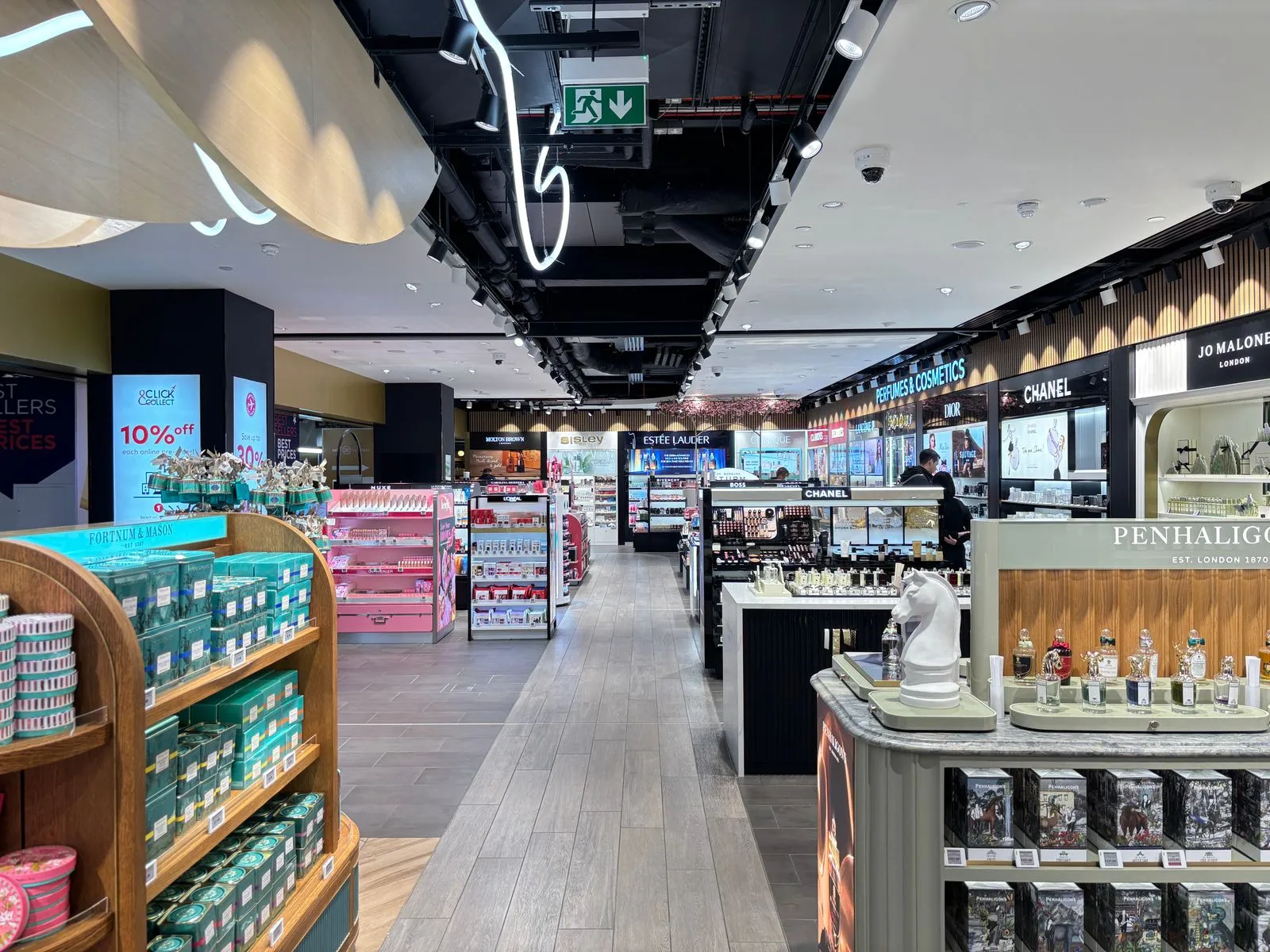 A duty-free cosmetics counter. Hainan gives foreign travelers ¥100,000 a year, with per-category caps on items like cosmetics (30 pieces per trip).
If your trip includes Hainan, the math changes completely. Hainan’s island duty-free policy gives each traveler ¥100,000 per year of duty-free shopping, and foreigners have been eligible since 2020. A November 2025 update added “island-and-border-departing” passengers, meaning foreigners who fly out of China from Hainan now qualify too.
The catch: it is not unlimited. Per-trip category caps still apply (cosmetics 30 pieces, mobile phones 4 units, alcohol 1.5 liters); everything else is uncapped up to the ¥100,000 total. Combined with the 240-hour visa-free transit or 30-day unilateral visa-free entry (see our visa-free guide), a Hainan stop is one of the most generous duty-free setups in Asia. For departure tax refunds at mainland airports, see our tax refund and duty-free shopping guide.
Shipping Souvenirs Home
You bought too much tea, silk, and porcelain. Now what? Independent travelers hauling souvenirs across multiple cities face this most often; our independent travel guide covers the logistics of moving around China on your own.
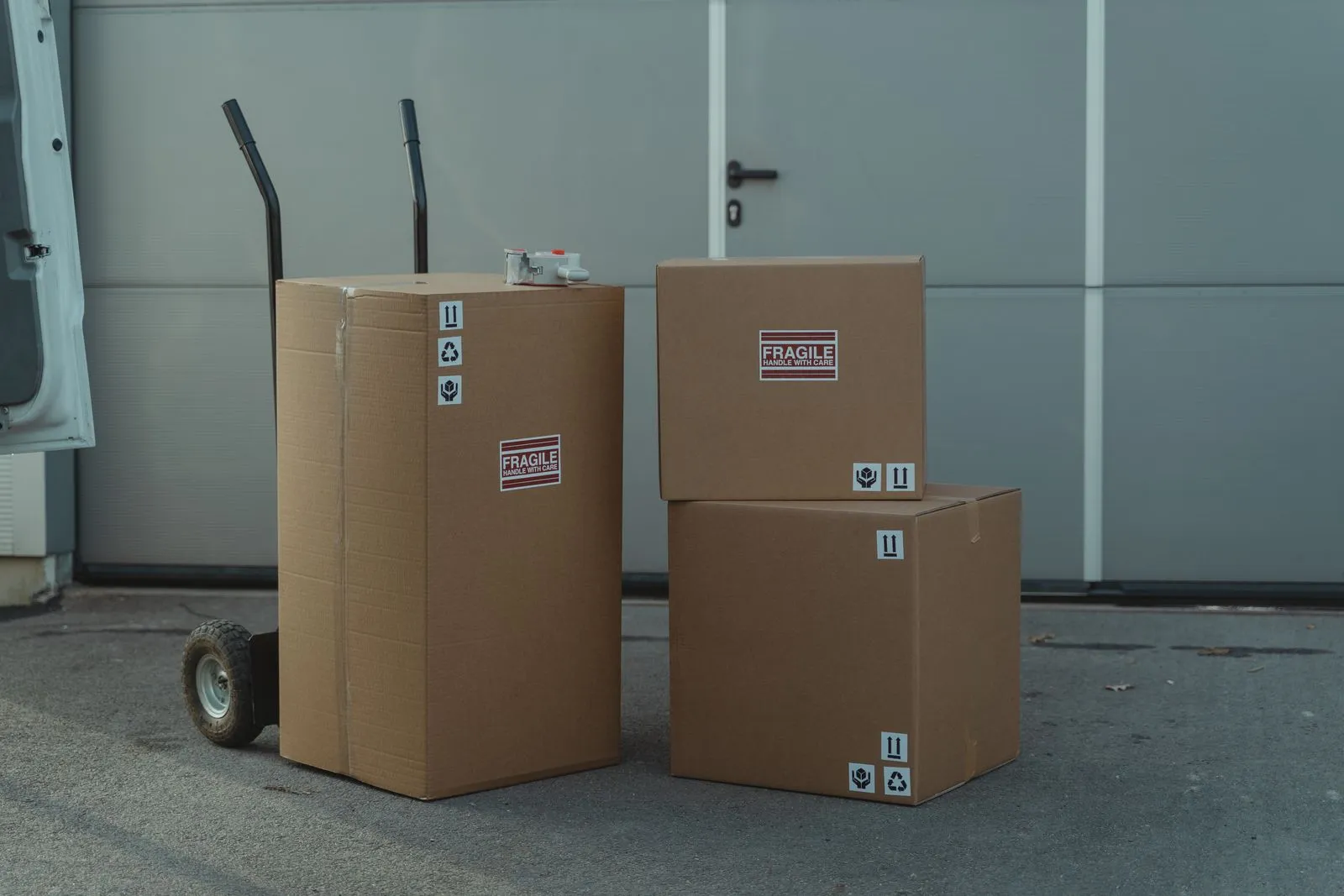 Parcels queued at a courier station for international dispatch. SF Express, China Post EMS, and Taobao’s Cainiao consolidation all serve foreign shoppers.
SF Express International (sf-international.com) is the foreigner-friendly default: English site, app, dedicated US and Canada order pages, real-name verification with your passport (a bit more tedious than a Chinese ID, but it works). It covers 200+ countries with both standard and economy services. Figure the volumetric weight as length × width × height / 5000.
China Post EMS (ems.com.cn) is slower and cheaper, reaching 210+ countries, and is often the only service that will take certain items.
Taobao’s official consolidation (run by Cainiao, Alibaba’s logistics arm) does cover the US and Europe; the old “Taobao won’t ship to the West” advice is outdated. Use the US/Canada page (taobao.com/market/global/transit-usca.php) or the European warehouse countries (UK, France, Germany, Spain, Italy, Poland, Sweden, Netherlands, Belgium). Air freight runs roughly $5–15/kg (7–20 days), sea freight $2–5/kg (30–50 days). You need a Taobao account and Alipay. For everything Cainiao does not cover, 4PX and other third-party consolidators fill the gap.
🏨 Book your hotels: Search China hotels on Trip.com (passport-friendly, foreign-card payment) if your shopping trip spans multiple cities.
The US and EU Duty Change: The $800 and €150 Loopholes Are Gone
If you are shipping souvenirs to the United States or the EU, the rules have shifted hard in 2025–2026.
United States. The $800 de minimis exemption was removed for China-origin goods on 2025-05-02. The rate that actually took effect was 120% ad valorem or $100 per postal item (whichever is greater) (not the 30% that was briefly announced), then reduced to 54% / $100 on 2025-05-14 under the US-China truce. Duty-free de minimis was then suspended globally on 2025-08-29. The upshot: small parcels from China to the US now carry real tariff costs, and the “Big Beautiful Bill” permanently repeals the statutory de minimis basis from 2027-07-01.
European Union. The €150 low-value exemption is abolished from 2026-07-01, replaced by a flat €3 duty per item. Order-by-order, Temu/Shein-style direct shipping is materially more expensive than it was a year ago.
These are your home country’s rules, not China’s. But they decide whether shipping that tea set home is worth it.
Tea, FDA Prior Notice, and Mailing Food
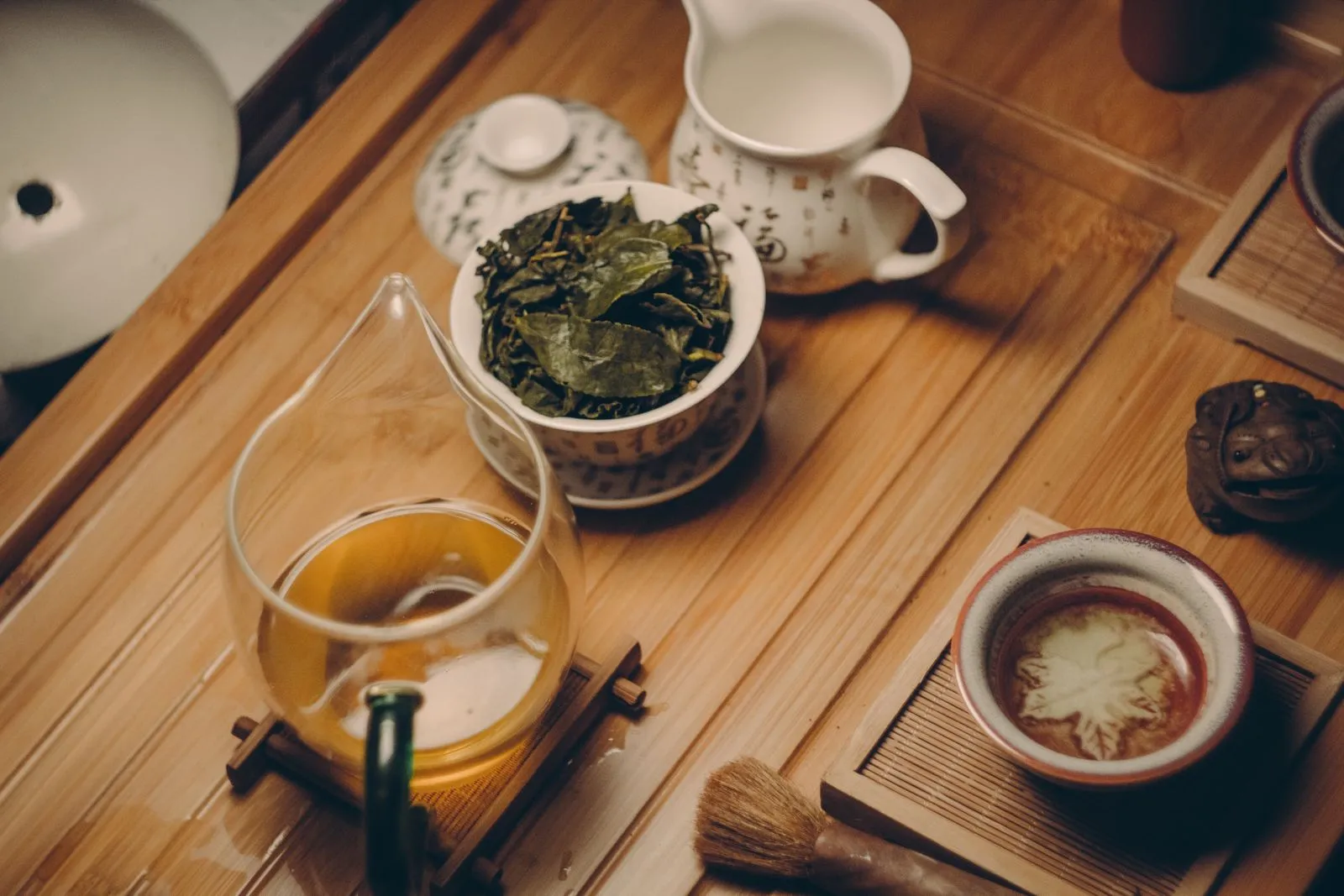 Loose-leaf Chinese tea. Carry it in your luggage rather than mailing it to the US, since commercial tea requires FDA Prior Notice.
Tea is the souvenir most travelers get wrong. Mailing commercially-bought Chinese tea (Longjing, Da Hong Pao, Pu-erh) to the United States requires FDA Prior Notice. The “personal gift exemption” people cite only covers food literally made in someone’s home kitchen as a gift; it does not cover factory- or shop-produced tea. There is no small-quantity threshold; the CBP $800 figure governs duty, not the FDA notification rule.
The one reliable workaround: carry tea in your accompanied luggage (inspected on arrival), which is exempt from Prior Notice. For the EU, tea faces strict pesticide MRL limits and may be refused; for Australia and New Zealand, biosecurity is fierce and you may need a health certificate.
The Honest Checklist
- Your duty-free allowance as a foreigner is ¥2,000, not ¥5,000.
- Cameras and laptops are 13% tax if over the single-item threshold, not 20%.
- Declare cash over $5,000 / ¥20,000; do not try to export pre-1949 antiques.
- Hainan gives you ¥100,000 of duty-free shopping, with per-category caps.
- Taobao consolidation does ship to the US and EU now; SF Express and EMS are the courier alternatives.
- The US $800 and EU €150 import loopholes are gone. Budget for home-country duty.
- Carry tea in your luggage; mailing it to the US triggers FDA Prior Notice.
Sources & Verification
This guide was last verified on 2026-08-08. Key Chinese-language sources:
- 海关总署 (General Administration of Customs, customs.gov.cn): Notice 2025 No.43 and Order No.276 (current declaration regime, effective 2025-04-01); Notice 2024 No.175/176 (four-tier tax classification and abolition of old rules).
- 国务院关税税则委员会 (State Council Tariff Commission) Notice 2024 No.11: Article 11; the ¥5,000 resident / ¥2,000 non-resident duty-free split and the 3%/13%/20%/50% comprehensive tax rates, effective 2024-12-01.
- 国家外汇管理局 (State Administration of Foreign Exchange, safe.gov.cn): Cash carriage rules; $5,000 foreign-currency declaration threshold, ¥20,000 RMB limit.
- 菜鸟 / Cainiao (gpn.cainiao.com) and SF Express (sf-international.com): Taobao official consolidation coverage (US, Canada, Europe, Asia-Pacific) and SF International service details.
- US CBP and FDA (eCFR 21 CFR 1.277): De minimis removal (EO 14266/14298/14324) and FDA Prior Notice rules for mailed food; personal-gift exemption limited to home-made food.
See our full verification methodology.
Related Articles
- China Visa-Free Entry (2026): 50 unilateral + 240-hour transit pathways
- China Entry Requirements (2026): visa, customs, and the full arrival process
- How Foreigners Book Hotels in China: the 2024 policy that ended “foreigner-friendly only” hotels
- Alipay Setup Guide: pay for your Taobao consolidation and SF Express shipments
- Sanya Travel Guide (2026): pair Hainan duty-free with a beach stop
- China Tax Refund & Duty-Free Shopping: departure tax refunds at mainland airports