Shenzhen Travel Guide (2026): The 240-Hour Visa Loophole, Huaqiangbei, and China's Future City
Shenzhen is the city English guides keep misplacing. It has no imperial past, no ancient quarter, no UNESCO anything; it was fishing villages until 1980, when Beijing drew a line around it and called it a Special Economic Zone. What grew there instead is the closest thing travel offers to touring the near future: the skyline that built itself in one generation, the electronics market where the world’s gadgets are born wholesale, the drone capital of the planet, and a brand-new visa route through Hong Kong that most English content gets flatly wrong. This guide covers all of it, with the port rules verified line by line against the National Immigration Administration’s own list as of September 2026.
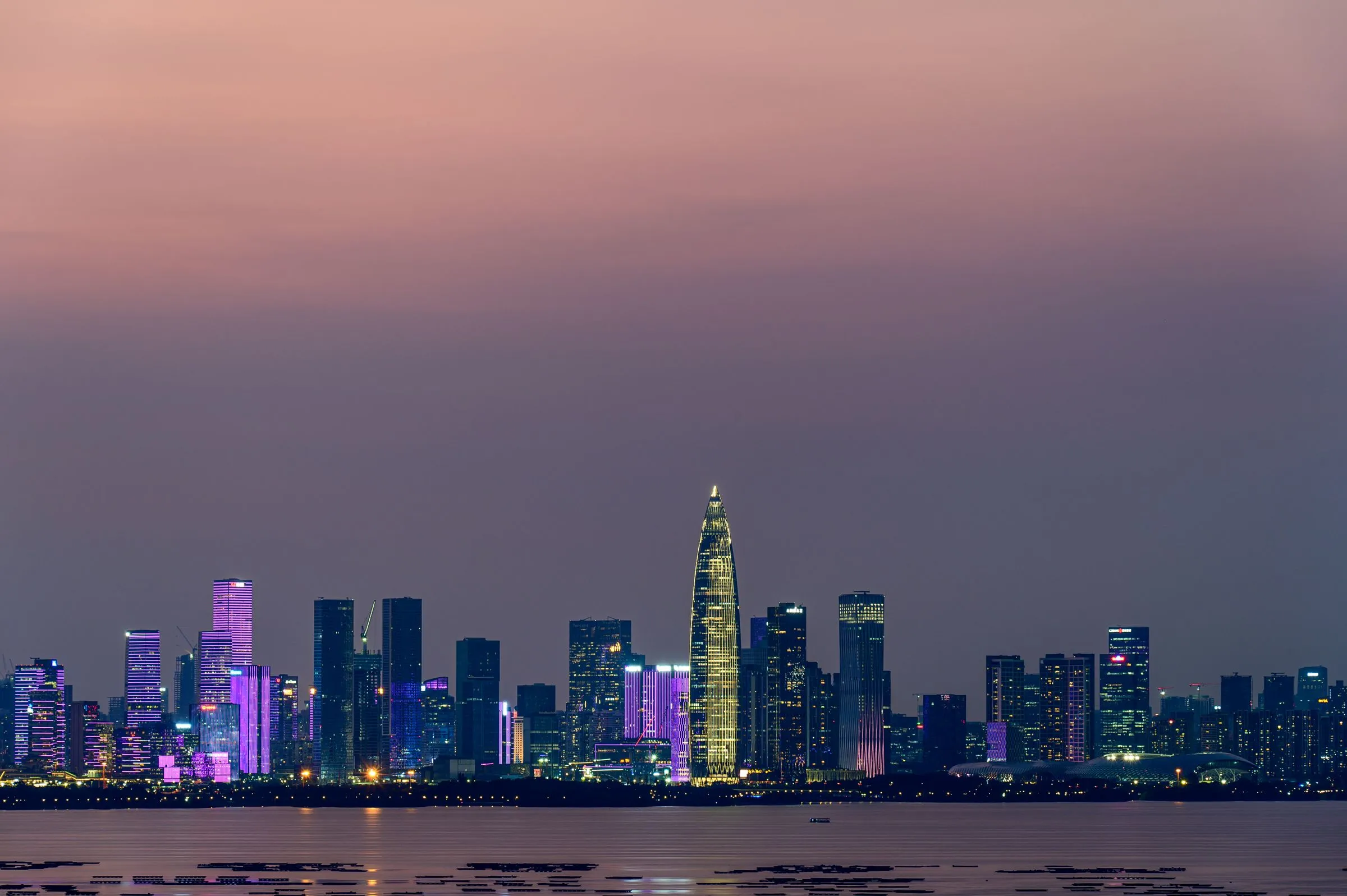 Shenzhen Bay at dusk: a skyline that did not exist two generations ago.
Quick answer: Shenzhen rewards 1-2 days: one for the future (Ping An Finance Centre’s Free Sky observation deck, the Civic Center, OCT’s theme parks) and one for the bazaar (Huaqiangbei electronics, plus coconut chicken, the dish this city invented). Visa reality check: the 240-hour transit waiver enters Shenzhen through only three ports (Bao’an airport, Shekou cruise terminal, and West Kowloon HSR station in Hong Kong); the land borders walkers use, Luohu, Futian and Shenzhen Bay, do NOT accept it. The classic play is third country into Hong Kong, 14-minute high-speed rail to Futian station, out to a third country or Macau. Avoid the “Hong Kong in, Hong Kong out” loop you’ll read on Reddit: official rules require entry and exit points in different countries or regions. See our 240-hour transit guide and visa-free country list.
How we verified this: SinoWander reads the original Chinese documents that English guides cannot: the NIA’s 2025 No.4 announcement and its 65-port annex (checked name by name for the Shenzhen land borders), MTR’s official 240-hour transit policy PDF, the Futian district city-management notice pausing the light show, and interviews with the inventor of coconut chicken in Shenzhen papers. Each guide is date-stamped when last verified: 2026-09-03. See our methodology.
The Port Rule Everyone Gets Wrong
Start here, because it decides whether the trip works at all. The 240-hour transit waiver applies to 57 countries and 65 ports nationwide. For the Shenzhen direction, exactly three of those ports matter:
| Port | Where | Notes |
|---|---|---|
| Shenzhen Bao’an International (SZX) | In Shenzhen | The straightforward flight-in option |
| Shekou cruise terminal | In Shenzhen | Ferry from Hong Kong / Macau |
| West Kowloon HSR station | Hong Kong territory (mainland port area) | The star: 2025-11-05 addition, 14 minutes from Futian |
What trips people up: Luohu, Futian, Shenzhen Bay, Liantang, Huanggang and Wenjindu, the walk-across land borders, are not 240-hour entry ports. They do not appear in the NIA’s 65-port list (verified against the official annex, name by name). English guides that tell you to “walk through Luohu and get the 240-hour stamp” are describing a border that does not offer one; you would need a full visa. One nuance in the other direction: exiting is flexible, you may leave through any open Guangdong port, including walking back to Hong Kong at Futian or Luohu. And do not over-generalize the rule: the Hengqin and Hong Kong-Zhuhai-Macau bridge ports (Zhuhai side) accept 240-hour entry; it is specifically Shenzhen’s land crossings that do not.
The Hong Kong high-speed-rail play deserves the detail. West Kowloon station runs mainland exit-and-entry checks inside the station itself (co-located immigration), and since November 5, 2025 it issues the 240-hour transit permit on the spot; the first traveler through, a British passenger named Robert Johnstone, made the news that morning. Trains reach Futian, Shenzhen’s downtown station, in 14 minutes.
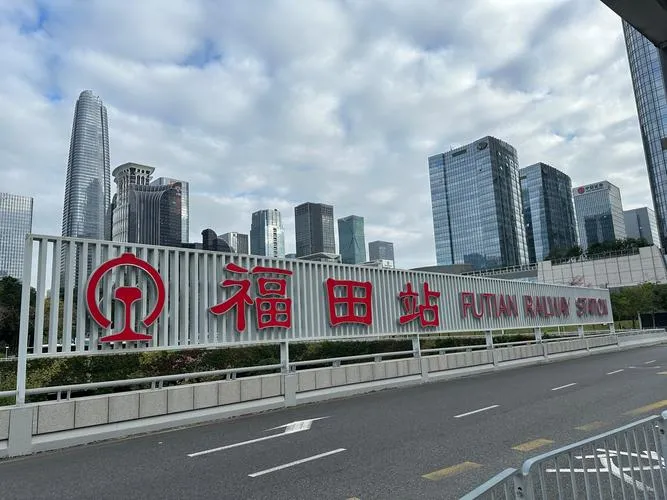 Futian station: downtown Shenzhen’s high-speed rail terminus, 14 minutes from West Kowloon.
The “Hong Kong Loop” Is Not What Reddit Says
The second misconception is subtler. MTR’s official guidance says your onward destination must differ from your departure country or region, and that Hong Kong, Macau and Taiwan all count as valid onward destinations. Read quickly, that footnote spawns a seductive plan: fly into Hong Kong, train to Shenzhen on the 240-hour waiver, then return to Hong Kong and fly home. The official FAQ rejects exactly this: departure and destination must be different, and Hong Kong in, Hong Kong out makes them the same. Traveler reports on the loop are mixed, some border officers have waved it through, others have refused; it is discretion, not a rule, and a guide that promises it is gambling with your itinerary.
The legal shape of the trip is barely harder: fly into Hong Kong from any third country, enjoy the city, rail to Shenzhen for a day or two, then fly out from Shenzhen or Hong Kong to a different third country, or exit via Macau, which counts as a different destination. Canada into Hong Kong, Shenzhen in the middle, Thailand out, is the textbook version. For US and Canadian passport holders who cannot enter mainland China visa-free otherwise, this transit route is the single easiest way to add Shenzhen to a Hong Kong trip.
Huaqiangbei: The Electronics Bazaar
Huaqiangbei is the reason a certain kind of traveler comes to Shenzhen at all: a dozen blocks of electronics markets where components, phones, drones and unidentified-but-fascinating gadgets are sold wholesale, at the density the internet imagines Tokyo’s Akihabara to be (it is not; this is denser). Foreign visitors bargain here happily, and the practical rules are few: compare prices across three stalls before buying anything significant, expect prototypes and gray-market gear alongside official stock, and skip the “iPhone for $80” tier entirely. Two anchor stops stand above the noise. DJI, the drone company born in Shenzhen, runs its first flagship store here (our drone import guide covers what you can legally carry home); and the SEG Plaza tower, whose 71st-72nd floor observation deck older English guides still recommend, has closed and converted to offices, so do not plan around it. The replacement view is covered below.
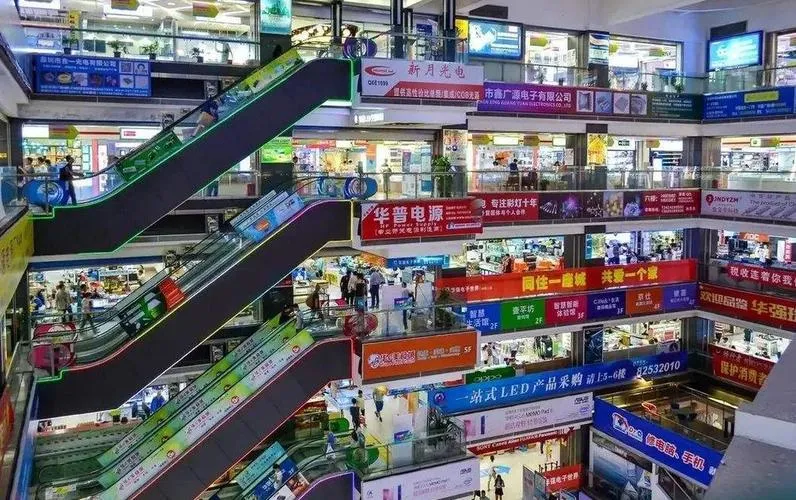 Inside Huaqiangbei’s electronics markets: stall after stall of components, phones and prototypes.
The Tech Landmarks (and Two You Cannot Enter)
Shenzhen’s corporate campuses pull visitors who assume they can tour them. Mostly, you cannot:
- Huawei’s Bantian campus does not admit the public; there is no ticket, no queue, no booking channel, and third parties selling “Huawei HQ tour” access are selling nothing. What you can do: the Huawei flagship store in the Bantian G-zone is open daily 10:00-22:00 and shows the products in a genuinely well-designed space.
- Tencent’s Seafront Towers run on group reservations only (employee invitation, corporate visits, or agency-arranged study groups, with lead times from days to about two weeks). Individual travelers should treat it as a photo from outside.
- Ping An Finance Centre’s Free Sky observation deck is the public vertical experience that works: floor 116 of a 599-meter tower, adult tickets in the ¥180-200 range (online booking runs a bit cheaper; treat lower third-party prices as bait), open into the evening.
- The Futian Civic Center light show is paused: since April 30, 2026 the 43-building display is offline for a systems upgrade, scheduled back around October 1. Until then, the Renmin (Talent) Park show across the bay runs Friday, Saturday and holiday nights at 19:30-21:30, free and walk-in.
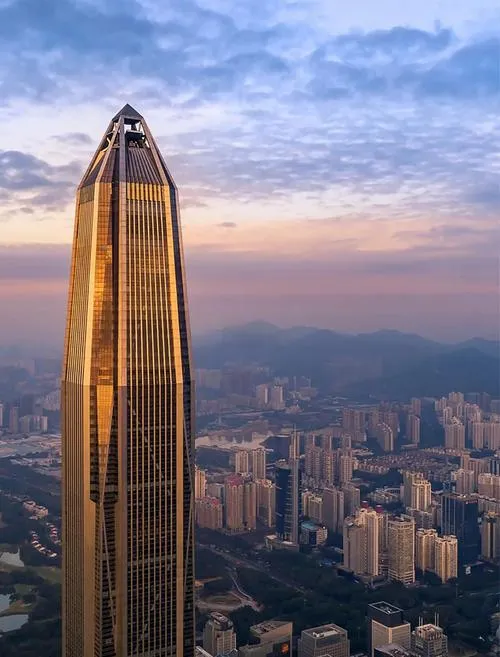 The Ping An Finance Centre from below: the public vertical experience that works (Free Sky, floor 116).
Theme Parks: What They Are Actually For
Shenzhen’s parks predate the fancy skyline and explain the city’s early tourism: Window of the World (1994) packs 1:1 and 1:15 world landmarks, the Eiffel Tower among them, into 480,000 square meters; Splendid China Folk Village does the same for miniature China plus ethnic-ensemble shows; Happy Valley is the roller-coaster option. Tickets run about ¥220 for Window of the World and Happy Valley and around ¥220-260 for Splendid China (2026 snapshot prices; check the day you go). Foreigners can book through Trip.com or at the gate with a passport. The honest framing: these are not Shanghai Disneyland, and our Shanghai Disney guide covers that head-to-head. Shenzhen’s parks are a rainy-day option and a window into how this city vacationed before it was cool, best paired with, not built around.
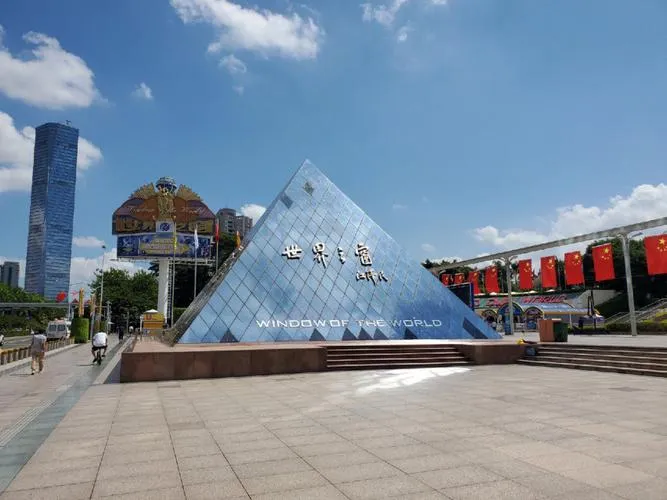 Window of the World’s entrance plaza: the Eiffel Tower copy is behind you.
Coconut Chicken and the Real Food Story
The line “Shenzhen has no local food” is repeated and wrong. The city’s invented dish is coconut chicken hotpot (椰子鸡): fresh coconut water as the boiling broth, Hainanese Wenchang chicken cooked in it, dips of sand ginger and lime. By the origin account (interviews with the founder himself), it was created in the 1990s, around 1996-1998, at a restaurant near the Wenjindu border crossing by Huang Yabin, an Indonesian-born returned overseas Chinese who had grown up around Hainan’s farms and wanted to draw Hong Kong customers; the ingredients are Hainan’s, the hotpot form is Shenzhen’s, and locals have since crowned it the unofficial city dish. The city now runs well over a thousand coconut-chicken restaurants. Beyond it, Shenzhen eats like the immigrant city it is: excellent Chaozhou, Hunan and Sichuan kitchens at prices below Hong Kong’s, which is exactly why Hong Kong commuters cross the border for dinner, closing the loop the dish was invented to start.
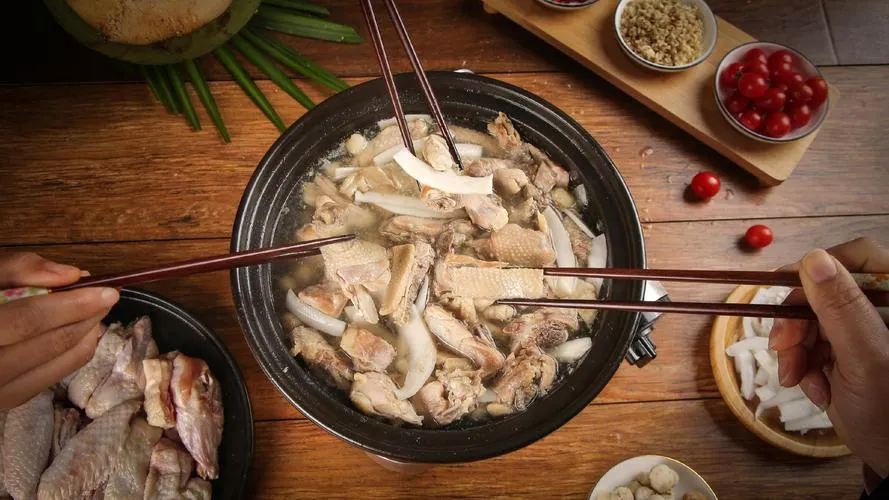 Coconut chicken hotpot: coconut water as the broth, Wenchang chicken cooked in it, invented here.
Getting Around and Where to Sleep
Rail: Shenzhen has three high-speed stations and the choice matters. Futian, downtown and 14 minutes from West Kowloon, is the one you want from Hong Kong; Shenzhen North handles most long-distance G-trains; the airport station serves SZX. Our China rail guide covers booking with a passport. Metro: clean, extensive, and foreign-card friendly, WeChat or Alipay with a linked international card handles the QR gates (see our Alipay setup guide). To/from Hong Kong: apart from West Kowloon HSR, ferries from Shekou and the land borders serve different moods, Huanggang is the only 24-hour land crossing, Futian is the modern rail-linked one; remember the entry-port rule above when the 240-hour waiver is your basis for being in China.
Sleep: Futian for the business-and-skyscraper core and the light-show front row (when it returns), Nanshan around the tech campuses and theme parks, OCT for leafy museum-and-lodge calm, or Dameisha on the coast if the trip is beach-first. Hotel rules for foreign guests are covered in our hotel booking guide. The classic pairing is Hong Kong + Shenzhen over 3-4 days: Hong Kong’s harbor and dim sum, Shenzhen’s skyline and electronics, one high-speed rail hop apart.
A One-Day Plan That Works
For the maximum-efficiency day trip that the 240-hour route makes possible:
| Time | Plan |
|---|---|
| 09:00 | HSR from West Kowloon; immigration at the station, arrive Futian 14 minutes later |
| 09:45 | Metro Line 1/2/3 into the Civic Center axis; walk the Concert Hall-Library-Book City block |
| 10:30 | Ping An Free Sky observation deck (buy online the night before to skip the queue) |
| 12:30 | Lunch: coconut chicken hotpot in Futian (the chains cluster around the metro stations; a solid meal runs ¥70-100 a head) |
| 14:00 | Metro to Huaqiangbei; two hours of electronics browsing, DJI flagship included |
| 16:30 | Pick: OCT theme-park corner for Window of the World’s evening Eiffel Tower lights, or |
| 16:30 | Metro to Talent Park for the 19:30 light show (Friday/Saturday), skyline across the bay |
| 20:00 | HSR back to Hong Kong, or dinner first: the border restaurants stay open for exactly this crowd |
Two days adds the coast (Dameisha, or the Dapeng peninsula villages), the OCT art museums, and unhurried bargaining at Huaqiangbei. Given the speed of the trains, even a half-day lightning run is physically possible, but the electronics market alone deserves its slow afternoon.
Timing and Seasons
Shenzhen sits inside the subtropics, which changes the packing list from the rest of China: summers run May-October at 30-35°C with typhoon-season rain bursts (July-September), and winter, December to February, is the gift, 15-22°C, dry, the city’s best walking weather. October through December catches the tail of the heat with clearer skies. Holiday crowds to know: the same National Day golden week (October 1-7) and Chinese New Year windows that reshape the whole country, covered in our season-by-season guide, hit Shenzhen harder in one specific way: the land borders to Hong Kong queue for hours as cross-border family traffic peaks. If your route depends on Futian or Luohu, avoid holiday eves; the HSR station at West Kowloon moves faster in the same periods.
Quick Reference
| Question | Answer (as of Sep 2026) |
|---|---|
| 240h entry ports for Shenzhen | Bao’an airport, Shekou ferry, West Kowloon HSR only; land borders (Luohu/Futian/Shenzhen Bay) do NOT |
| Hong Kong loop (HK in, HK out) | Not officially permitted; third country or Macau as the different destination |
| Futian to West Kowloon | 14 minutes by HSR, co-located immigration |
| Huawei / Tencent HQ tours | Not open to the public; Huawei Bantian G-zone flagship store instead |
| Futian light show | Paused since Apr 30, 2026; expected back ~Oct 1; Talent Park show meanwhile (free, Fri/Sat) |
| SEG observation deck | Closed (converted to offices); use Ping An Free Sky, ~¥180-200 |
| The dish to eat | Coconut chicken hotpot, invented here in the 1990s |
| Best season | December-February (15-22°C dry); worst = typhoon summer Jul-Sep |
| Time needed | 1-2 days, pairs naturally with Hong Kong |
Come for the visa loophole if you must, but the city earns the day: a skyline with no past to live down, a bazaar with no equal, and a hotpot that exists nowhere else on earth.
Sources & Verification
This guide was last verified on 2026-09-03. Key Chinese-language sources:
- National Immigration Administration (国家移民管理局): the 2025 No. 4 announcement and its 65-port annex checked name by name (Bao’an airport, Shekou cruise terminal, and West Kowloon HSR present; Luohu, Futian, Shenzhen Bay, Liantang, Huanggang, and Wenjindu absent), plus the August 20, 2026 policy page confirming 57 countries.
- MTR Corporation (港铁公司): the official 240-hour transit guidance that the onward destination must differ from the departure country or region, with Hong Kong, Macau and Taiwan counting as valid onward destinations, and the co-located immigration at West Kowloon station.
- Shenzhen government portals (深圳市口岸办公室/深圳政府在线): the Futian district city-management notice pausing the 43-building light show from April 30, 2026 with return expected around October 1, and the official metro guide to foreign-card QR payment.
- People’s Daily Overseas Edition (人民日报海外版): the first 240-hour transit permit issued at West Kowloon on November 5, 2025, to a British traveler.
- Shenzhen Special Zone Daily via Shenzhen News Net (深圳特区报/深圳新闻网): the definitive reporting that Shenzhen has exactly three 240-hour entry ports, and West Kowloon’s foreign passenger volumes.
- Nanfang Plus and Jing Bao interviews (南方+/晶报): the origin account of coconut chicken hotpot, created in the 1990s near the Wenjindu crossing by Huang Yabin, an Indonesian-born returned overseas Chinese cooking for Hong Kong customers.
- Baidu Baike and Shenzhen Local Treasure (百度百科/深圳本地宝): the city’s 1980 SEZ founding and 10.78 million residents, the SEG Plaza observation deck closure, theme park ticket prices, and the Talent Park light show schedule.