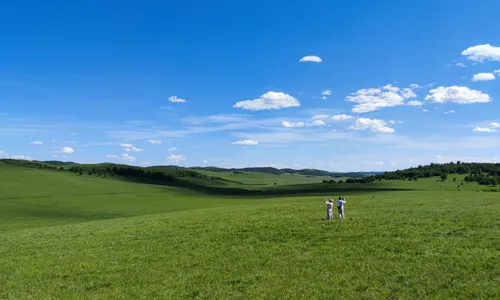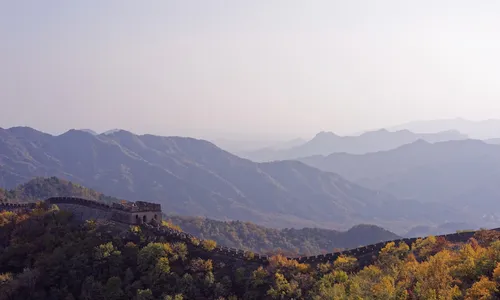
Kanas Travel Guide 2026: Xinjiang's Alpine Lakes and Golden Autumn (Hemu + Baihaba)
Kanas sits at the far north of Xinjiang, where the Siberian taiga presses south into China and the birch forests turn gold once a year. The scenic area actually contains three villages: Kanas and Hemu, which foreign visitors can enter with nothing but a passport and a ticket, and Baihaba, a border village on the Kazakh frontier where a permit question has confused Chinese and English guides alike. In 2026 the Altay culture and tourism bureau published something most guides still lack: an official autumn-foliage window of September 15 to October 5. That is roughly 25 days, and it is the entire season.
This guide covers the permit rules (including the part about foreigners getting the Baihaba permit in person), the visa situation that catches 240-hour transit travelers off guard, the airport and train options, ticket prices, and how to plan the short autumn window.
 The Kanas river bending through gold birch inside the official 2026 foliage window (Sep 15 to Oct 5).
Quick answer: Kanas Lake and Hemu village require no permits for foreign visitors: passport plus entry ticket is enough. Baihaba sits in a border control zone and needs a border area permit, which foreigners can obtain in person, free, same-day (including at the police post inside the Kanas tourist center). The 240-hour visa-free transit policy does not cover Xinjiang; use a 30-day unilateral visa-free entry (50 countries) or an L visa. The official 2026 autumn window is Sep 15 to Oct 5; the quietest good-leaf stretch is Sep 20 to 30, before National Day crowds arrive.
How we verified this: SinoWander reads Chinese-language sources that English guides cannot, including the National Immigration Administration’s permit and visa policy pages, the Altay culture and tourism bureau’s foliage bulletin, the Kanas scenic area management committee’s August 2026 rumor clarification, and the official 12306 and airline records. We cross-check them before writing. We have not personally visited every location. Each guide is date-stamped when last verified: 2026-09-04. See our methodology.
Why Kanas
The lake itself is the headline. At about 1,374 meters (4,508 ft) above sea level and roughly 188 meters (619 ft) at its deepest point, Kanas is China’s deepest moraine-dammed lake, a basin carved by ancient glaciers and dammed by their debris. The water shifts between jade green and milky blue as glacial sediment loads change. The Guanyu Pavilion viewpoint above the lake sits at about 2,030 meters, reached by 1,068 steps from the shuttle stop, and on a clear morning the lake, the forest, and the snow line of the Altai range stack into one frame.
 Moon Bend, the middle of Kanas’s three bays and the river’s signature S-curve.
The region is Tuva country. The Tuva are a small Turkic-speaking community of herders whose villages of log-built houses, pine fences, and livestock pens appear much as they have for generations. Local tradition holds that the lake should not be fished and its shores not grazed, a taboo that feeds the enduring “lake monster” stories Chinese travel media loves. Treat the monster as folklore; treat the taboo as a reason the shoreline looks untouched.
Kanas also carries an official accolade worth citing because it is official: it appears on the “50 places in China most worth visiting for foreigners” list promoted by Chinese tourism authorities. Western rankings tend to skip it, which is precisely why the crowds skew domestic and the English-language logistics information is thin.
The Three Villages and the Permit Question
English guides make two opposite mistakes about Kanas. Some describe the whole scenic area as requiring a special permit. Others never mention a permit at all. The reality splits by village:
| Village | Permit for foreigners | Character |
|---|---|---|
| Kanas (lake area) | None. Passport + ticket. | The lake, three bays (Shenxian, Moon, Wolong), Guanyu Pavilion |
| Hemu | None. Passport + ticket. | Tuva village in a birch valley, morning mist and chimney smoke, the classic photo |
| Baihaba | Border area permit required | ”First village of the northwest,” on the Kazakh border, quieter than both |
For most visitors the right plan is Kanas plus Hemu with Baihaba as an add-on for those with an extra day and the patience to arrange the permit. All three sit inside one shuttle-networked scenic area with entry gates at Jiadengyu (Kanas), Hemu, and Tieleketi (Baihaba).
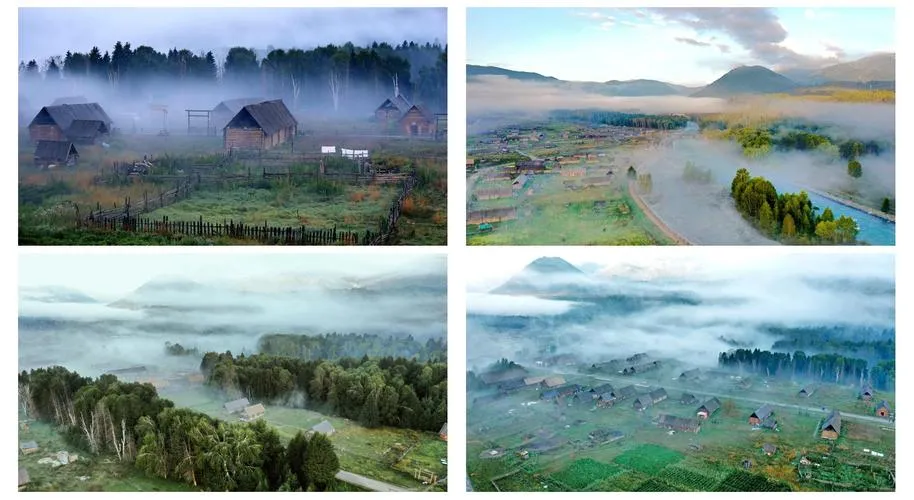 Hemu at dawn: mist and chimney smoke over the Tuva log houses, the village’s classic photograph.
The Baihaba Permit: What Foreigners Can Actually Do
Here is the part almost no English source explains correctly.
Since April 15, 2026, China has replaced paper border permits with a unified electronic border area permit, under a National Immigration Administration announcement (the 2026 No. 2 notice). Two channels exist:
- Online, through the “12367” app or WeChat and Alipay mini-programs: available only to mainland Chinese residents aged 16 and over, using ID-card identity checks.
- In person, at county-level public security exit-entry offices or designated police stations: open to foreigners with a passport, free of charge, typically issued on the spot, valid up to three months.
The document foreigners need for Baihaba is the border area permit (bianfangzheng), not the separate “Alien’s Travel Permit” that many Chinese articles conflate it with. That second document applies to areas closed to foreigners generally; Baihaba is a standard border zone.
In practice, foreign travelers have reported getting the permit at the border tourism police post inside the Kanas tourist service center, the same building where you board the Baihaba shuttle, with a passport and a few minutes of paperwork. A traveler who did exactly this in August 2026 described it as “fairly easy to sort at the Border Tourism Police Station inside the Kanas Tourist Service Centre.” Urumqi’s public security office on Xinhua South Road can also issue same-day permits for most nationalities, and agencies in Burjin will arrange one for a small fee (about 20 to 50 yuan) if you would rather not do it yourself.
One honest caveat: border zone access tightens and loosens without much notice. In mid-2026 one tour operator reported Baihaba closed to foreign visitors entirely, while travelers on the ground in August were getting in. Before you commit a day to Baihaba, call the scenic area hotline (400-111-0906) or the 12367 immigration line to confirm the current stance.
 Baihaba, the “first village of the northwest”: log houses, cooking smoke, and the Kazakh border hills behind.
Visas: The 240-Hour Trap
Xinjiang is not one of the 24 provinces covered by China’s 240-hour visa-free transit policy, so if you were planning to enter on transit-without-visa and ride north from Urumqi, that plan fails at the provincial line. The policy’s province list has been stable since December 2024, and the 2026 updates added countries, not provinces.
Your two realistic channels:
- The 30-day unilateral visa-free entry, open to 50 countries including the UK, most of the EU, Australia, New Zealand, Japan, Korea, and (since February 17, 2026, on trial through December 31) Canada. It is valid nationwide, Xinjiang included, with no regional restrictions. See the full visa-free countries list.
- The L tourist visa, which is what US passport holders need, since the United States is not on the unilateral list.
If you are weighing the 240-hour transit option for a different corner of China and wondering why some provinces work and others do not, our 240-hour transit guide has the province-by-province breakdown. The same trap catches travelers heading to Jiuzhaigou in Sichuan, where the transit zone stops short of Aba prefecture; the Jiuzhaigou guide covers that case.
Getting There
By plane: know what Kanas Airport actually is
Kanas Airport (KJI) confuses people because its own history contradicts the guidebooks. It opened in 2007 as a seasonal airport, running roughly mid-June to early October. Since the 2019/20 winter season it has been officially year-round, and the 2024/25 winter did see flights. In practice, though, schedules published in 2025 and 2026 treat it as a June-to-October airport: the Urumqi service ran daily from July into mid-October and stopped, and the 2025/26 winter timetable carries no Kanas flights at all. Treat KJI as a summer-autumn airport unless a current schedule proves otherwise.
Even in season it is a small operation: three destinations as of September 2026, namely Urumqi (about 1 hour 20 minutes), Bole, and Fuyun. There are no flights beyond Xinjiang and no international services, so nearly everyone connects through Urumqi. The airport is about an hour’s drive from the Jiadengyu gate.
For autumn trips after the Kanas flights stop, or if the timing does not work, fly into Altay Airport (AAT), which runs year-round with more routes, including nonstops to Guangzhou and Beijing. It is 250 to 280 km from the scenic area, a 4.5 to 6 hour drive depending on whether you are heading to Jiadengyu, Hemu, or Baihaba.
By train
The budget route is an overnight hard sleeper from Urumqi to Beitun (about 11 to 12 hours, from around 163 yuan, about $24), then a 2 hour bus or shared van to Jiadengyu. Foreign tickets work through the same 12306 account-and-passport verification covered in our China train guide. Buy sleepers early: autumn is peak season on this line too.
By road
Two paved routes link Urumqi to Burjin: the S21 desert expressway, which is fast and startlingly empty, and the older route via Karamay. Self-driving is legal for foreigners with the temporary Chinese license process explained in our self-driving guide. Note that private cars cannot enter the Kanas or Hemu scenic areas in summer; you park at the gates and use the shuttles. Baihaba is the exception, with a 200-vehicle daily cap and advance booking for self-drivers.
Tickets and the Crowd Rumor
| Item | Price |
|---|---|
| Kanas entry | 160 yuan (~$24) |
| Kanas shuttle, one-day / two-day | 70 / 110 yuan (~$10 / $16) |
| Hemu entry + shuttle | 50 + 52 yuan (~$7.40 + $7.70) |
| Baihaba entry + shuttle | 30 + 45 yuan (~$4.40 + $6.70) |
| Kanas one-entry combo (entry + shuttle) | 230 yuan (~$34) |
| Two-entry combo (two park days) | 270 yuan (~$40) |
The two-entry combo suits anyone sleeping a night inside the scenic area, which is the standard autumn plan.
In late August 2026 a story swept Chinese social media claiming Kanas was admitting 70,000 visitors a day, with wooden cabins at 4,000 yuan a night. The joint rumor-refutation platform, citing the Kanas management committee, called the numbers fabricated: the official daily capacity ceilings are 55,000 total across the area, split 27,000 (Kanas), 20,000 (Hemu), and 8,000 (Baihaba), and while autumn lodging is genuinely expensive, the 4,000-yuan-everywhere claim was invented. The honest version: autumn in Kanas is the busiest and priciest two weeks of the local year, and it is not an overcrowded theme park. Book lodging early, expect premium rates, and go.
Booking runs through the scenic area’s official WeChat account or Trip.com, and passports work for both. The shuttle network runs 8:00 to 20:00 for entry and exit, with village buses running as late as midnight.
The Autumn Window
The Altay culture and tourism bureau’s 2026 bulletin puts the best foliage at Kanas from September 15 to October 5, with a caveat that cold snaps can strip the trees about a week early. The leaf season descends by elevation: the 1,200 to 1,800 meter belt, which covers Kanas and most of Hemu, peaks from late September into early October, while the 800 to 1,200 meter river valleys hold color into mid-October.
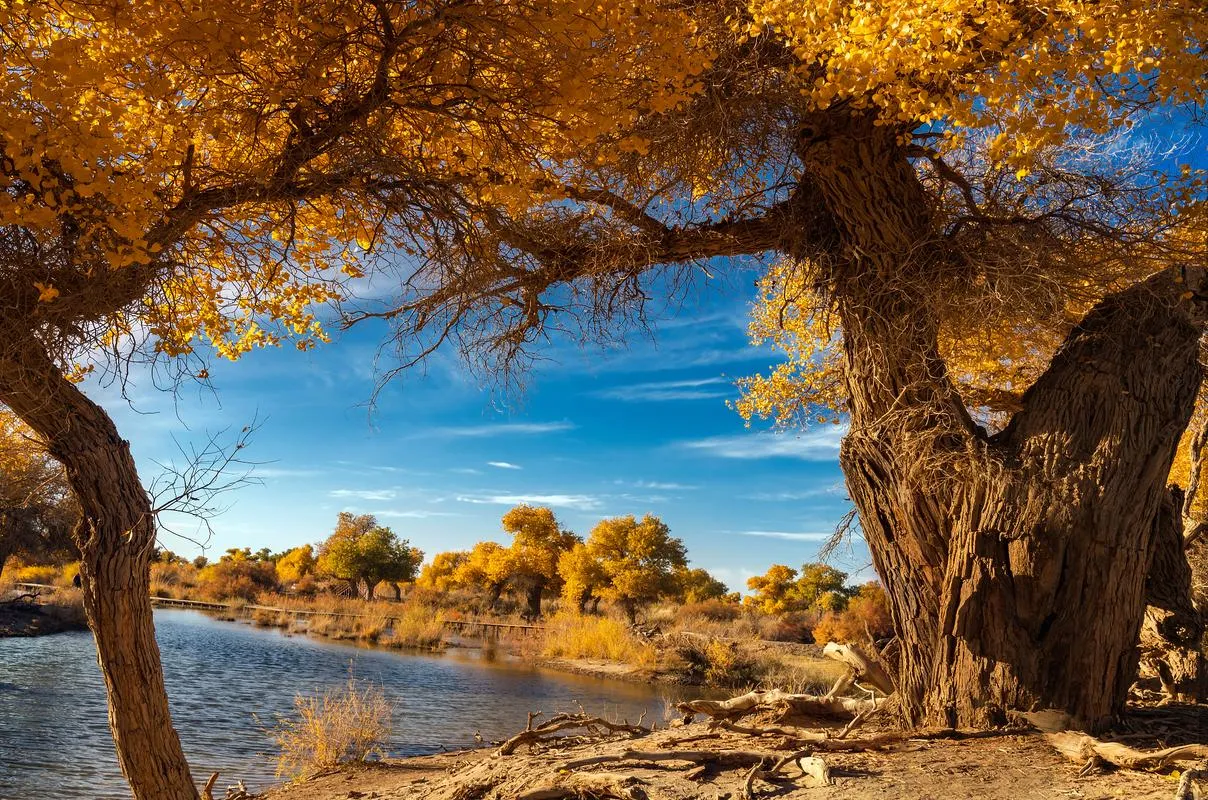 Birch in the 1,200 to 1,800 meter belt, where the 2026 bulletin expects peak gold from late September.
Three timing notes worth building a trip around:
- September 20 to 30 is the sweet spot: full color, prices and crowds below National Day levels. The week from October 1 is the National Day holiday, when domestic tourism peaks and every shuttle line lengthens.
- Early October is a gamble with the calendar and the weather. In early October 2025 a blizzard stranded vehicles on the approach road and closed the Guanyu Pavilion steps; the last gold can coincide with the first snow. If you chase October 1 to 5, pack for below-freezing nights.
- Daytime temperatures run 13 to 23°C in September and 5 to 14°C in October, with near-freezing nights either month. Layers, not a single warm coat.
For how this window fits the broader China calendar, including why northern Xinjiang in early October is a different risk proposition from the south, see our best and worst time to visit China analysis.
A Five-Day Plan
Day 1: Arrive Burjin or Beitun, overnight in Burjin (the practical base town), arrange any Baihaba permit paperwork if doing it in person.
Day 2: Enter at Jiadengyu, shuttle to the Kanas lake area, walk the three bays, climb (or bus to) the Guanyu Pavilion for the late-afternoon light. Overnight in a Kanas village cabin.
Day 3: Dawn at Shenxian Bay, then shuttle toward Hemu with a stop for the Baihaba option if you have the permit and the day: the border village, the Kazakh frontier view, and back. Otherwise go straight to Hemu.
Day 4: Hemu in full: the morning-mist viewpoint above the village, the birch walkways, the old Tuva houses. Hemu rewards a slow day more than any other stop here.
Day 5: Shuttle out to the Hemu gate, transfer to Burjin, and onward. If you are stretching to the full northern Xinjiang loop (Wucaitan, Keketuohai, the ghost city of Urho, Sayram Lake), budget 8 to 10 days total; the Kanas block above stays the same.
Drones
Baihaba is a no-fly zone in its entirety, border management area rules. Kanas and Hemu allow flights with advance registration through the “Yuanxing Wang” mini-program, the same two-gate system (airspace plus scenic-area rules) our drone and camera entry guide explains nationally. Fly unregistered in Baihaba and you are not facing a scolding; border-zone violations carry real penalties.
Where to Stay
The atmospheric option is a Tuva-style wooden cabin inside the villages: Kanas old and new village, Hemu village, or Baihaba. They are simple, heated inconsistently before mid-October, and book out first in the foliage window. Confirm heating when you book late-season. The pragmatic option is Burjin county town, 30 to 90 minutes from the gates depending on destination, with better hotels, better food, and no scenic-area prices.
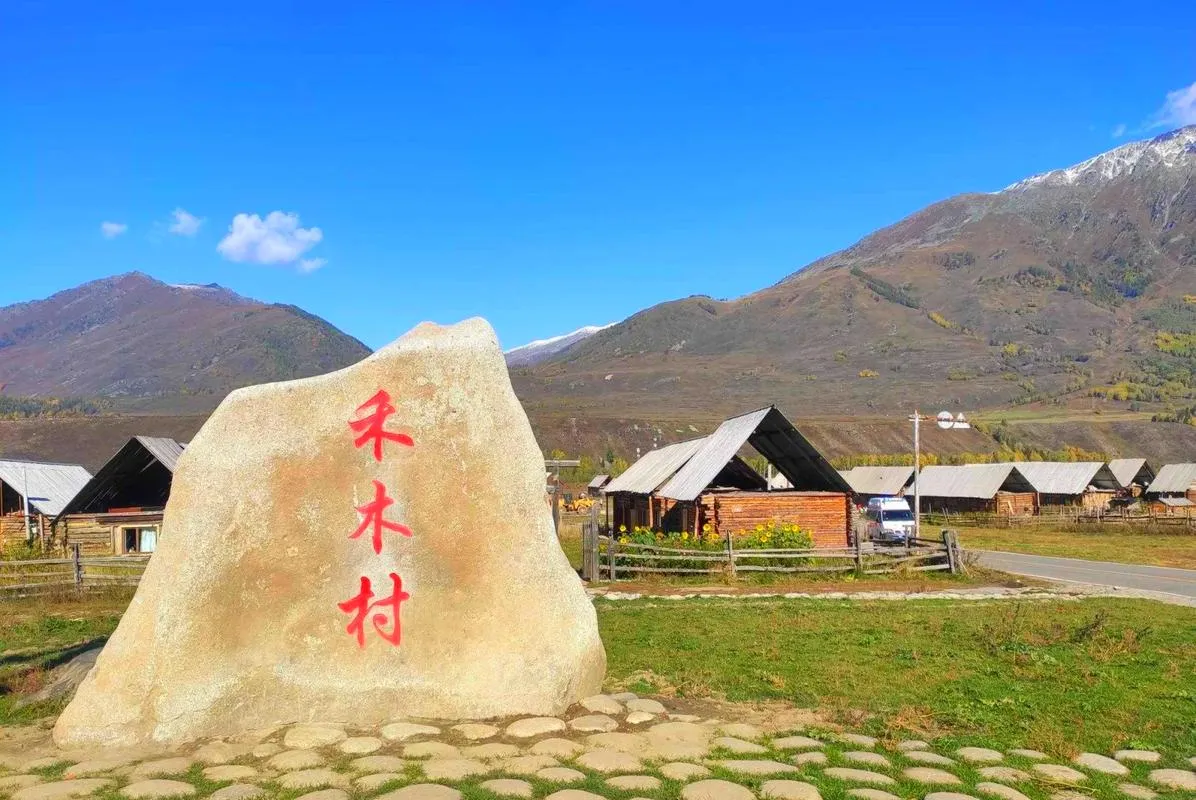 The stone reads “Hemu village”: Tuva log cabins like these are the atmospheric stay inside the scenic area.
Foreign guests should book properties licensed for foreign guests, the requirement our hotel booking guide explains; small village guesthouses in remote Xinjiang sometimes lack the license, and the 2024 national measures encouraging hotels to accept foreigners are enforced unevenly. Trip.com listings flag eligibility clearly.
Practicalities
- Payments: Alipay and WeChat Pay, linked to a foreign card, cover nearly everything here, including shuttles and small restaurants. See the Alipay setup guide and WeChat Pay guide. Carry some cash for village vendors.
- Shopping: if you are combining the trip with a departure from Urumqi or Beijing, the tax refund guide covers instant-refund stores.
- Altitude: the lake sits near 1,374 meters. Almost nobody needs to worry about altitude sickness here, but the Guanyu Pavilion climb plus a cold night is a real combination; pace yourself.
- Other stops in the region: two quieter Xinjiang autumn alternatives, Kuerdening and Qiaxi, appear in our hidden gems roundup.
The Verdict
Kanas is one of the few Chinese headline landscapes where the foreign-crowd math still works in your favor: the scenery is at the level of the famous parks, the domestic crowds concentrate into two or three weeks, and the logistics confusion that scares off most English-language travelers (permits, the airport, the visa line) dissolves with three facts. Kanas and Hemu need no permits. Baihaba’s permit is free and gettable in person with a passport. Xinjiang needs a visa or the 30-day visa-free entry, not the 240-hour transit. Time it inside September 15 to October 5, aim for the back half of September, and this is arguably the best autumn trip in China.
Sources & Verification
This guide was last verified on 2026-09-04. Key Chinese-language sources:
- National Immigration Administration (国家移民管理局): the 2026 No. 2 notice establishing the electronic border area permit from April 15, 2026, its issuance service guide (foreigners apply in person with a passport, free, valid up to three months), and the 240-hour transit policy pages (57 countries, 65 ports, 24 provinces, Xinjiang not included).
- Altay Prefecture Culture, Sports and Tourism Bureau via Xinjiang Daily (2026-08-24): the official 2026 foliage window of September 15 to October 5 for the Kanas scenic area, with elevation-based timing.
- China Internet Rumor-Refutation Platform citing the Kanas Scenic Area Management Committee (2026-08-28): the clarification that the “70,000 daily visitors / 4,000-yuan cabins” claims were fabricated, and the official capacity ceilings of 55,000 daily visitors split across Kanas (27,000), Hemu (20,000), and Baihaba (8,000).
- Kanas Scenic Area Committee notices and Baidu Baike train and airport entries: ticket and shuttle pricing, shuttle operating hours, seasonal flight history for Kanas Airport, and the Z21/direction-of-travel context for reaching Xinjiang by rail.
- First-hand traveler report (August 2026): a foreign visitor obtaining the Baihaba permit in person at the Kanas Tourist Service Centre police post.
See our full verification methodology.
Related Articles
- Jiuzhaigou Travel Guide (2026) - The other great autumn-water park, and the parallel visa-zone trap
- Huangshan (Yellow Mountain) Travel Guide - Sea of clouds and sunrise logistics done right
- 240-Hour Visa-Free Transit China - The province list that decides whether your transit plan works
- China Visa-Free Countries 2026 - The 50-country unilateral list, including Canada’s 2026 addition
- Best and Worst Time to Visit China - Where autumn in the north fits the national calendar