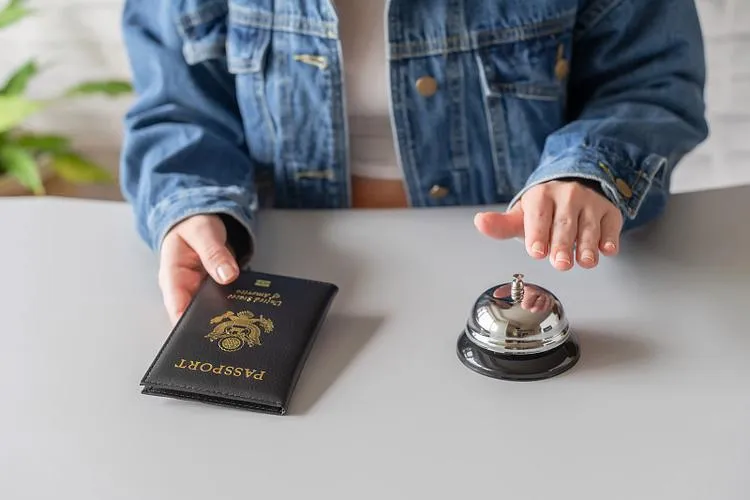
How Foreigners Book Hotels in China (2026)
For years, English guidebooks told travelers to China to book only hotels marked “foreigner-friendly,” usually international chains and four- or five-star properties. That rule is officially over. In May 2024, three government ministries told the hotel industry it may no longer refuse foreigners over a missing “foreign-reception qualification.” Two months later, seven ministries issued a formal notice ordering hotels and booking platforms to stop advertising “no foreigners allowed.”
The catch: many budget hotels still do. In 2024, travelers reported being turned away from Home Inn, Jinjiang, and Hanting locations. The policy changed; many front desks did not.
Quick answer: Yes. Since July 2024, a seven-ministry notice (商服贸函〔2024〕324) bars hotels and booking platforms from refusing foreigners over a missing “foreign-reception qualification.” International chains and mid-to-high-end hotels accept foreigners everywhere; some budget-chain locations (Home Inn, Jinjiang, Hanting) still turn foreigners away despite the rule. Book through Trip.com or Booking.com, and if refused, cite the policy or call 12367 (bilingual Chinese-English). Pay at check-in with Alipay or WeChat Pay.
What “Foreign-Reception Qualification” Meant
China’s “foreign-oriented tourist hotel” (涉外旅游饭店) was a licensing category from the early reform era, when few hotels could host foreign visitors and those that did sat mostly in big cities with high-end positioning. A hotel needed approval from the commerce and public-security authorities to legally check in foreigners, overseas Chinese, and travelers from Hong Kong, Macau, and Taiwan. Over the past two decades most cities phased the license out, but enforcement varied by locality, partly out of caution around national security.
In parallel, the national standard GB/T 14308 had renamed the category from “foreign-oriented tourist hotel” to simply “tourist hotel” back in 2003 (the current 2023 revision keeps that name). The special label was supposed to fade away over time. In many places it did not.
The 2024 Policy Change (Official)
Two official moves in 2024 ended the old rule on paper:
- May 2024 — The Ministry of Public Security, Ministry of Commerce, and National Immigration Administration responded to traveler complaints, stating the hotel industry may not refuse to host foreign visitors on the grounds of lacking a foreign-reception qualification.
- July 1, 2024 — Seven ministries (Commerce, Cyberspace Administration, Public Security, Culture and Tourism, People’s Bank of China, National Immigration Administration, and State Administration of Foreign Exchange) issued 《关于服务高水平对外开放便利境外人员住宿若干措施的通知》(商服贸函〔2024〕324), an eight-measure notice. Key clauses:
| # | Measure | What it means for you |
|---|---|---|
| 1 | Hotels and platforms must not use qualification as a threshold to refuse foreigners, and must not publish “no foreigners” information | A hotel advertising “foreigners not accepted” now contradicts central policy |
| 4 | Platforms should optimize foreign-language apps and the full booking flow | Push for better English on Trip.com, Booking, and the rest |
| 5 | Simplify registration; “inclusive and prudent” enforcement | Hotels have less reason to refuse over paperwork |
| 6 | 12367 and 12345 hotlines offer bilingual Chinese-English policy help and complaints | You have an official channel if you are refused |
| 7 | Improve foreign-card acceptance, cash, and currency exchange | Easier payment at check-in |
The law is on your side: If a hotel refuses you solely for lacking a “foreign-reception qualification” after July 2024, that refusal goes against a seven-ministry central-government notice. Cite 商服贸函〔2024〕324, or call 12367 in English.
The Reality Gap
Policy and practice have not caught up with each other. A Pengpai (澎湃) investigation in August 2024 quoted hotel staff who said they were unaware of the new rules: “Without a clear notice, we still cannot receive foreign tourists for now.” Reported reasons for ongoing refusal include unfamiliarity with the policy, no internal memo, caution around national security, and front-desk systems that struggle with passport registration. Some budget properties simply find the registration work not worth the trouble for the occasional foreign guest. The gap persisted into 2025: ABC News documented a Melbourne traveler turned away from a Nanjing budget hotel in February 2025 and a Malaysian visitor refused at a Guangzhou apartment hotel in January 2025, with staff citing “local police rules.” A tourism researcher, Dr Sam Huang of Edith Cowan University and a former China National Tourism Administration official, described the policy as “more of a guideline than a mandate.”
So while the law says any hotel should accept you, the safer read for 2026 is this: most international chains and mid-to-high-end hotels will; some budget-chain locations still will not. Plan around that.
How to Book a Hotel That Will Accept You
- Lead with international chains and 4–5 star properties. IHG (Holiday Inn), Marriott, Hilton, Accor, and Hyatt almost never refuse foreigners. This is the stress-free default.
 International-chain lobbies almost always accept foreign passports — the safe default.
- Budget chains, verify per property. Some Home Inn (如家), Hanting (汉庭), Jinjiang (锦江), and 7 Days locations now accept foreigners; many still do not. Same brand, different door, different policy. Check recent reviews or call ahead.
 A budget-chain storefront — whether it accepts foreigners varies by individual location.
- Orange Hotel (桔子) and Ji Hotel (桔子水晶), part of Huazhu Group, have locations that explicitly promote accepting foreign guests.
- If refused, you have three options. Cite the July 2024 seven-ministry notice, call 12367 or 12345 (bilingual) to file a complaint, or, the most practical choice, just walk to the next hotel. Do not let one reception desk derail your trip.
- Hostels and guesthouses. The same qualification rule applies, and most small guesthouses still do not accept foreigners. Airbnb closed its China mainland business on July 30, 2022, removing about 150,000 listings (it kept only outbound trips for Chinese users). For domestic stays, locals use Tujia, Xiaozhu, or Meituan, but these have the same foreign-reception restrictions as hotels.
Check-in: Documents and Registration
- Passport (valid six months beyond entry) plus a valid visa, visa-free entry, or the 240-hour transit permit.
- Temporary residence registration. Foreign visitors must register their stay within 24 hours of arrival. Hotels do this for you at check-in, the easiest path. If you stay with a friend, you must register yourself at the local police station.
- The legal basis is the《旅馆业治安管理办法》(Hotel Industry Public Security Measures) and the Exit-Entry Administration Law.
- The July 2024 notice (Clause 5) asks authorities to simplify the data collected and take an inclusive, prudent approach to enforcement.
- Beijing payment convenience (2024): 732 three-star-and-above hotels completed full foreign-card POS coverage, each with at least two foreign-card terminals; four- and five-star hotels added ATMs and currency-exchange machines.
Which Booking Platform to Use
- Trip.com (the international version of Ctrip) is the first choice for foreigners: English interface, passport-based booking, and foreign-card payment. It lists over 1.2 million hotels.
- Critical catch: Ctrip’s domestic site (ctrip.com) defaults to Chinese-ID booking, and passport holders often cannot complete a reservation there. Use trip.com (international), not ctrip.com.
- Booking.com and Agoda cover Chinese hotels and accept passports, but their “accepts foreigners” filtering is weaker than Trip.com’s.
- The seven-ministry notice (Clauses 1 and 4) tells platforms to stop publishing “no foreigners” listings and to improve foreign-language apps. Progress is uneven, so when in doubt, call the hotel front desk and ask whether they 接待外宾 (accept foreign guests).
What You’ll Pay (2025–2026)
 A typical budget-chain room in China.
| Tier | Weekday rate (RMB) | USD | Examples |
|---|---|---|---|
| Budget | ¥120–300 | $18–44 | Home Inn, Hanting, 7 Days, Jinjiang (as low as ¥100 in tier-3/4 cities; must accept foreigners) |
| Midscale | ¥400–900 | $59–133 | All Seasons (全季), Atour (亚朵), Orange (桔子), Vienna |
| High-end | ¥900–2,000+ | $133–296 | International 4–5 star |
Peak-season surge: Rates jump during National Day Golden Week (early October), Chinese New Year, and summer in top-tier cities. A Hanting in central Beijing (Wangfujing) hit ¥911–1,023 per night in 2023; the same room drops back to ¥150–300 off-peak. Book early or stay a metro stop or two from the center.
Why This Matters in 2026
China’s inbound tourism is booming on the back of visa-free expansion. In the first half of 2026, foreign entries hit 22.914 million, up 20.4% year-on-year, with 17.815 million visa-free entries (77.7% of the total, up 30.6%) (National Immigration Administration, July 2026). Beijing, Guilin, and Zhangjiajie saw foreign arrivals climb 245%–547% off the 2024 baseline. More hotels now willingly host foreigners, especially in tier-1 and tier-2 cities. In smaller cities and budget properties, confirming ahead remains the rule, not the exception.
Related Articles
- China 240-Hour Visa-Free Transit Guide — entry rules and the transit permit
- China Entry Requirements (2026) — passports, visas, and the border
- Apps to Download Before Going to China — Trip.com, Alipay, WeChat
- How to Set Up Alipay in China — paying at hotels and everywhere else
- How to Use WeChat Pay as a Foreigner (2026) — the other half of China’s cashless payments
- China Travel Scams and Tourist Traps — fake “no room” pushes and commission shops