Chinese New Year 2027 in China: A Foreigner's Guide to Crowds, Closures and Real Festivities
Most English guides tell you to avoid China during Chinese New Year. They are half right.
February 6, 2027 begins the Year of the Goat. For 40 days either side of that date, close to 90 million people a day move across the country, the largest annual human migration on the planet. Train tickets vanish. Hotel prices in the trendy spots triple. Some smaller businesses shut their doors.
But those guides miss what makes New Year worth the trouble. The big cities empty out because locals go home. Major attractions stay open. And the festival itself, the temple fairs and lantern displays and flower markets, only exists for these two weeks. Come during Chinese New Year and you see a China that does not exist the rest of the year. Come ignorant of how it works and you spend a week fighting crowds for closed restaurants.
What follows is the practical version: the 2027 dates, what really closes, where the fun is, and how to dodge the worst of the crowds.
The 2027 Dates You Need
Chinese New Year’s Day: February 6, 2027 (Saturday), the start of the Year of the Goat (the English “Goat” is the most common translation; Chinese does not distinguish goat from sheep). Lichun, the Start of Spring, falls on February 4, just two days earlier.
New Year’s Eve: February 5. Read this carefully. There is no “30th of the 12th lunar month” in 2027. The last lunar month has only 29 days, so New Year’s Eve is the 29th. This quirk runs five years in a row (2025 through 2029), and most English resources get it wrong.
Lantern Festival: February 20, the 15th day of the new year and the traditional end of the celebrations.
Official public holiday: 8 to 9 days, expected February 5 through 12 or 13. The State Council usually announces the exact dates, including weekend make-up workdays, in November 2026. As of July 2026 it is not yet published, so confirm before you book.
Chunyun, the travel rush: January 22 to March 2, 2027. A 40-day window, not just the holiday week. Fifteen days before the festival, twenty-five days after.
Chunyun: The 40-Day Migration
About 80% of Chunyun travel is by private car, not train. That surprises most foreigners. In 2026 China recorded 94.1 billion cross-region trips during the 40 days, a new record.
So when English guides say “everyone takes the train home,” that is mostly wrong. But it does not help you. As a foreigner without a Chinese driver’s license, you compete for the train and plane tickets that everyone else is not taking, which is why they are still impossibly hard to get.
Peak crush:
- Before the festival: February 3 to 5, everyone leaving cities for hometowns
- After: February 10 to 12, everyone returning
The quiet window: February 7 to 9, the second to fourth days of the new year. Most people are home with family. Beijing and Shanghai feel half-empty. This is the rare moment when the Forbidden City is almost walkable.
Train tickets open 15 days before travel. For New Year’s Day (February 6), that means tickets drop around January 22 at 8 a.m., and they go in minutes. Book through the official 12306 system. Trip.com can sell you the same tickets at a markup, but the inventory is identical, and every ticket in China originates on 12306.
One trend worth knowing. “Reverse Chunyun,” older parents traveling to the cities where their adult children work instead of waiting at home, grew 35% in 2026. It is a small reason the big cities are not quite as empty as they used to be.
What’s Open and What’s Closed
This is the part most guides get wrong, and it is where foreigners get caught out.
The myth: China shuts down for New Year.
The reality: Large chains, shopping malls, convenience stores, and tourist attractions stay open, busier than usual. What closes is the small stuff. Family-run restaurants, noodle stands, barbershops. The owners go home, usually from about a week before the festival through the 15th day, Lantern Festival on February 20.
Mall hours follow a consistent pattern across cities, confirmed across Beijing, Shanghai, Chengdu, Hangzhou, and Wuhan in 2026:
- New Year’s Eve (February 5): 10:00 to 16:00 or 18:00, closing early
- Day 1 (February 6): 11:00 to 20:00, opening late
- Day 2 onward: back to normal, 10:00 to 22:00
Convenience stores (7-Eleven, FamilyMart, Lawson) stay open 24 hours in major cities. International chains like McDonald’s and Starbucks operate normally. Supermarkets like Hema and Walmart open with shorter hours.
The Forbidden City catches people out. In 2026 it closed for the entire day on February 16, which was the 29th of the 12th lunar month, the day before New Year’s Day, not “New Year’s Eve” as many English guides assume. In a year with no 30th, the closure falls on the 29th. It then opened normally from Day 1. Check the Palace Museum’s official announcement each January. The same logic applies to other major museums.
What actually closes or slows:
- Small private restaurants and shops: often shut from a week before through Lantern Festival
- Banks: closed for counter business on Days 1 to 3, ATMs work, back on Day 4
- Delivery (SF Express, JD): runs but adds a surcharge and delays 1 to 2 days during the holiday week
- Government offices: shut for the entire 8 to 9 day break
The “half-silent” hours are New Year’s Eve afternoon into Day 1 morning. Many places shut after lunch for the reunion dinner, and the streets go quiet. By Day 4, commerce is mostly back.
One superstition English guides will not mention. Do not get a haircut in the first lunar month. The old belief says it brings bad luck to your maternal uncle. Barbershops are frantic the week before New Year and quiet for a month after, reopening properly at the “dragon raises its head” festival on March 9, 2027.
Where to Find the Real Festivities
If you come for New Year, come for these. They only exist for two weeks.
Beijing, Ditan Temple Fair. The classic. Running since 1985, it opens on Day 1 (February 6) and runs about a week, with a daily reenactment of the Qing emperor’s sacrifice to the earth at 10 a.m. Old-Beijing snacks, folk performances, craft stalls. The 2025 edition drew over 600,000 visitors. Also worth a visit: Changdian (one of China’s “four great temple fairs”), Longtan, and Baiyun Temple, where people line up to rub the stone monkey for luck.
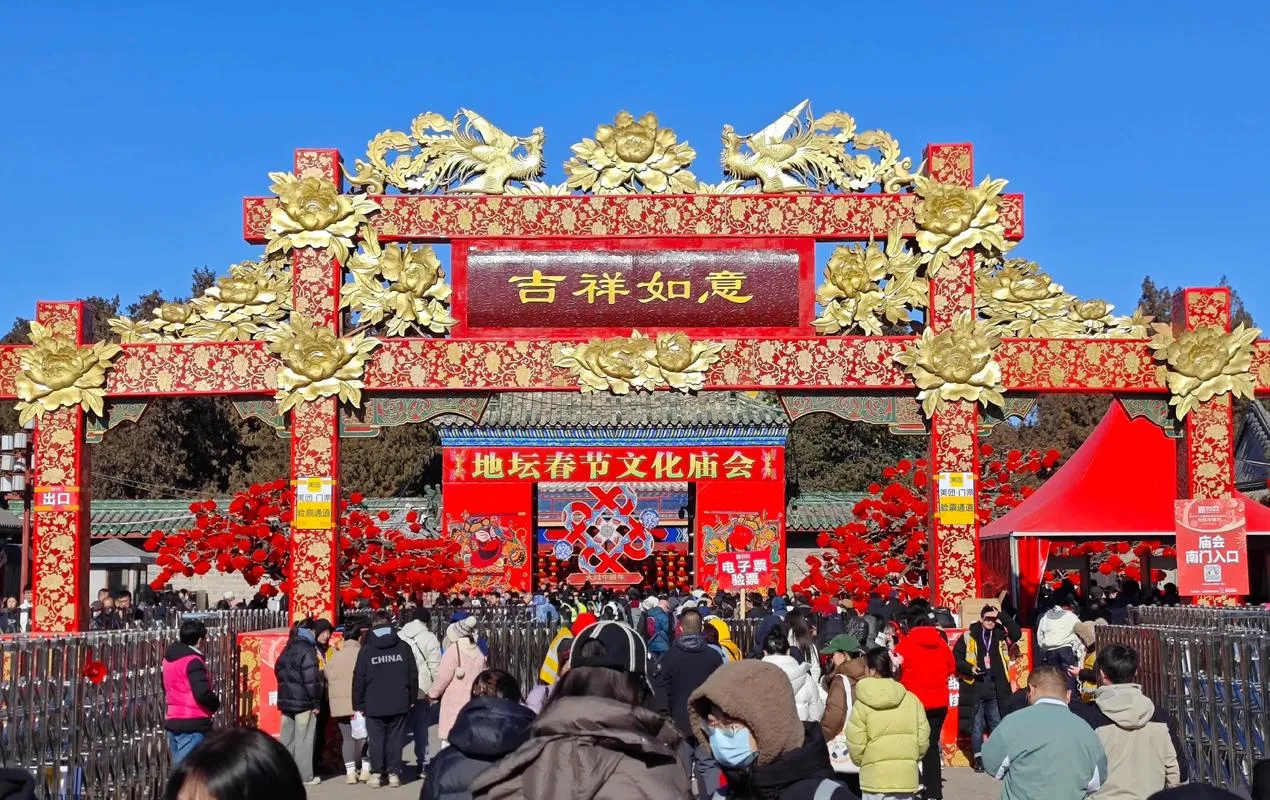 The Ditan Temple Fair, Beijing’s flagship New Year celebration since 1985.
Shanghai, Yuyuan Lantern Festival. The most internationally famous of the New Year displays, running about a month from late January through Lantern Festival. In recent years the lanterns have been built around Shan Hai Jing (Classic of Mountains and Seas) themes, immersive and lit at night. Expect a goat-themed installation for 2027.
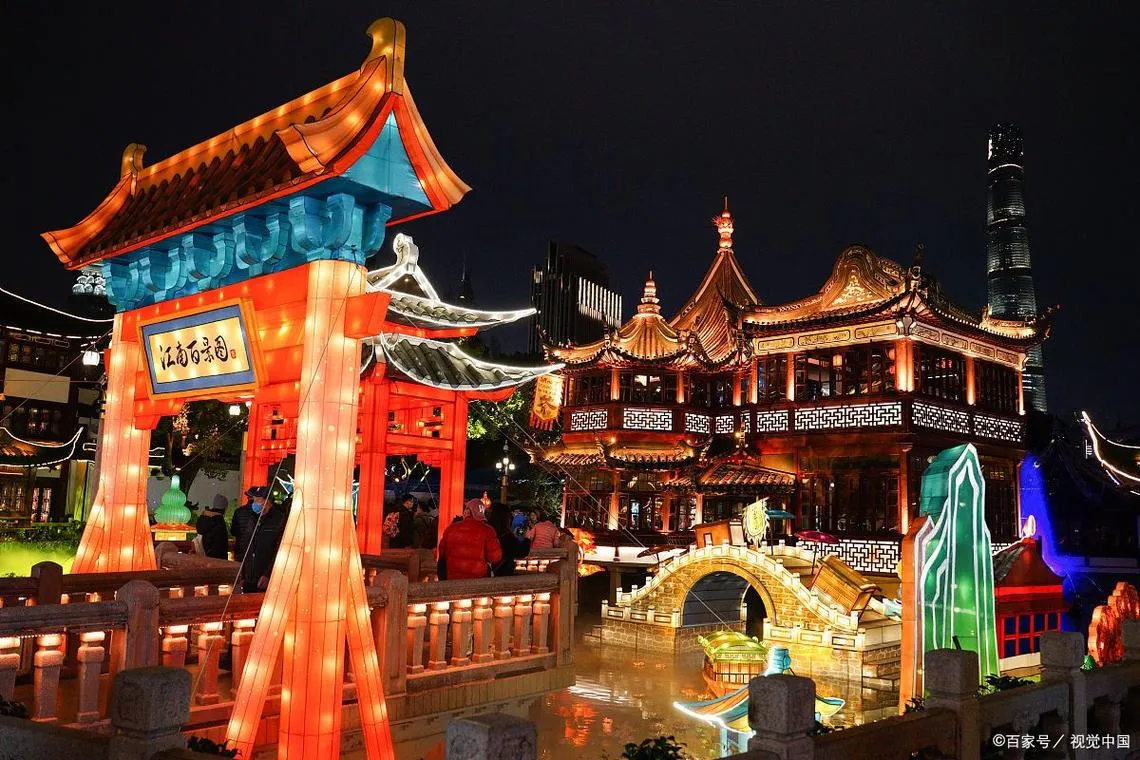 Yuyuan Lantern Festival in Shanghai, lit nightly through Lantern Festival.
Guangzhou, the Spring Festival Flower Markets. “Xing hua jie,” walking the flower market, is the Cantonese New Year ritual. The markets open on the 28th of the 12th lunar month (February 4, 2027) and run to the early hours of Day 1. Kumquat trees (the word for kumquat sounds like the word for luck), peach blossoms, narcissus. The Tianhe market alone draws half a million people a day.
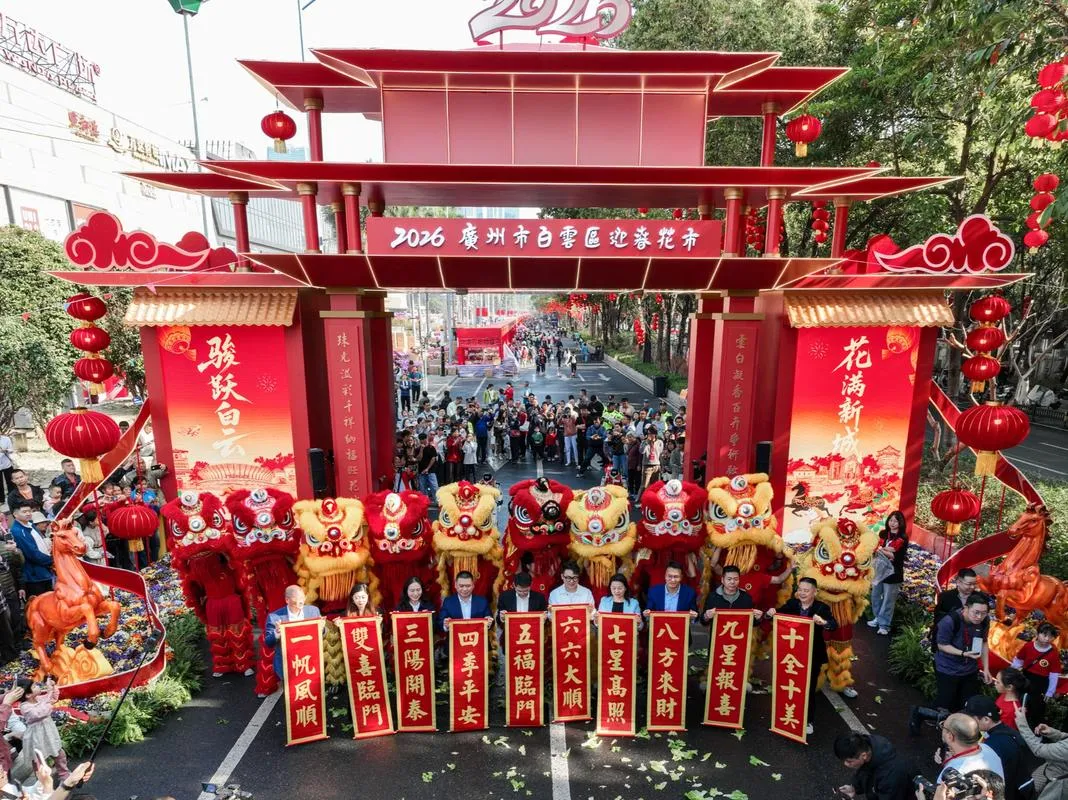 Guangzhou’s Spring Festival flower market — kumquat trees for luck, peach blossoms for prosperity.
Xi’an, Tang Dynasty lights. The Giant Wild Goose Pagoda and the Grand Tang Mall light up for the holiday. Confirm closer to the date, but this has become Xi’an’s signature New Year draw.
Harbin, a word of caution. Many guides tell you to “see the Ice Festival at Chinese New Year.” That is half true. The Harbin International Ice and Snow Festival opens every January 5 and runs about a month, so by Chinese New Year (February 6) the opening ceremonies, fireworks, and parades are over. But the Ice and Snow World park itself, the actual ice sculptures tourists come for, stays open through late February, weather permitting. You catch the tail end of the sculptures, not the opening party. If the opening is what you want, come in early January.
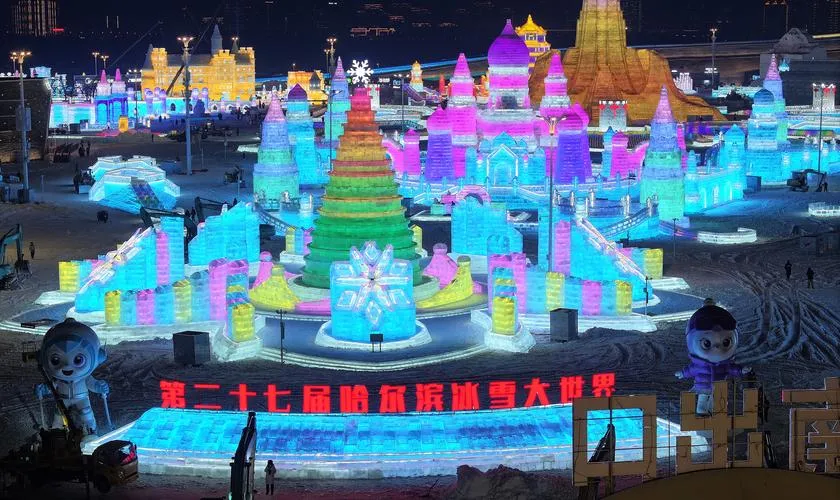 Ice and Snow World in Harbin. The sculptures stay up through late February, after the festival’s January opening.
The Food: Reunion Dinner and Red Envelopes
The reunion dinner on New Year’s Eve is the heart of the holiday, and it is a family affair. You cannot book a seat in a stranger’s home. What you can do:
- High-end hotel packages. Five-star hotels (Beijing Hotel, Peace Hotel Shanghai, White Swan Guangzhou) offer reunion dinner sets for outsiders. Book 1 to 2 months ahead; reservations open around the end of 2026.
- Old-name restaurants. Quanjude for Peking duck, Donglaishun for hot pot, Haidilao, all open through the holiday with special menus.
The food carries meaning. Dumplings, shaped like ancient gold ingots, for wealth. Fish, because the phrase for “fish every year” sounds like “abundance every year,” and you do not finish it; you leave some to carry into the new year. Niangao, the glutinous rice cake, for “higher each year.”
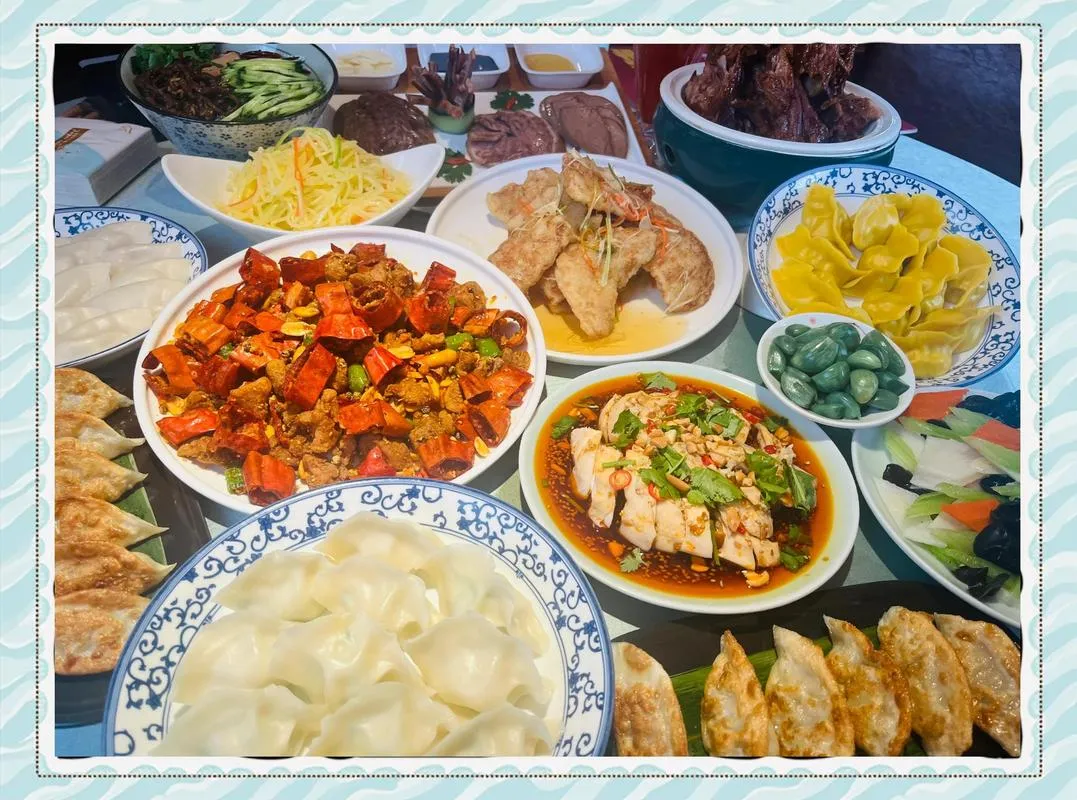 A Chinese New Year’s Eve reunion dinner — dumplings shaped like gold ingots, fish left unfinished for “abundance every year.”
Red envelopes (hongbao). Traditionally elders give them to children after the reunion dinner, past midnight. The custom goes back to the Han dynasty, originally “money to suppress evil.” Today, WeChat red envelopes (since 2014) are how most are sent, and foreigners can join in with the WeChat app.
If you give one, use red, never white. White is for funerals. Avoid amounts with the number 4, which sounds like “death.” Good numbers are 88, 188, 288. And note the regional split. In Cantonese areas the rule is “it is the thought, not the amount,” with 5 to 20 yuan common. In northern China, amounts between elders and children can run 200 to 1,000 yuan and higher.
What It Costs: 2026 Data, 2027 Warning
The 2026 Spring Festival was the biggest ever: 596 million domestic trips, 803.5 billion yuan in spending, both records. Visa-free entries were up 28.5%. Foreigner arrivals tell the same story.
Where prices spiked hardest in 2026, and it was not Sanya.
The biggest surges were in Chaoshan, the Shantou-Jieyang-Chaozhou region of Guangdong, powered by the Yingge dance going viral on social media. Ctrip data showed hotel bookings up 186% in Shantou, 162% in Jieyang, 135% in Chaozhou. Per an industry survey, average hotel rates across the three cities rose 300 to 600%, with one budget hotel in Chaozhou (Hanting, near Guangji Bridge) going from 179 to 1,464 yuan a night, a 717% increase.
Sanya and Jinghong, the warm-weather escapes, were up over 100%. Fuzhou and Quanzhou, 80 to 90%.
Authorities pushed back. Shantou’s market regulator issued a price warning on January 28, and 1,413 Quanzhou hotels signed price-integrity pledges. The message for you: book 2 to 3 months ahead in any of these hot spots, or pivot.
The contrarian move. Beijing and Shanghai hotel rates drop during Chinese New Year, because business travelers leave and locals go home. The big-city sightseeing squeeze is lighter than during the October National Day holiday. If your goal is the Forbidden City and the Bund without peak crowds, and you do not need the southern festivities, this is your window.
The Honest Verdict
Chinese New Year is the most demanding week to travel in China. The payoff is festival experiences that exist for two weeks and nowhere else: temple fairs, lantern festivals, a country visibly celebrating. The cost is crowded transport, scaled-back small businesses, and hotel premiums in the trendy spots.
Come if you want the festivities and you are willing to plan around Chunyun. Skip it if you want a relaxed museum-and-restaurant trip; late March or October serves that better.
The 240-hour visa-free transit policy, available to 54 nationalities through airports including Beijing, Shanghai, and Guangzhou, makes a spontaneous New Year trip more feasible than ever. Fly in, stay ten days, fly out. Just do not try to buy a train ticket on February 3.
Related Articles
- China Visa-Free Entry Guide — 240-hour transit and unilateral waiver, 50+ countries
- Worst Time to Visit China — how Chinese New Year compares to other peak periods
- How to Buy China Train Tickets — surviving Chunyun bookings
- Harbin Ice and Snow World Guide — the ice festival, explained honestly
- Iconic Chinese Dishes and Their Legends — what to eat during the festival