The Worst Time to Visit China in 2026? (Season x Region Matrix)
The Worst Time to Visit China in 2026?
Type “worst time to visit China” into Google and you’ll get a dozen listicles telling you to skip Golden Week and come in spring or autumn. That advice isn’t wrong, but it’s incomplete, and for a continent-sized country, incomplete is misleading.
There is no absolute worst time to visit China. China stretches from Mohe at -40 °C in the north to Sanya at 25 °C in the south, from the Pacific coast to the Tibetan Plateau at 4,000 m. Every supposedly “bad” season has a vast region at its absolute best during those exact months. The real risk is a mismatch, and there are two kinds worth knowing.
How we verified this: SinoWander reads Chinese-language sources that English guides cannot, including official holiday notices from China’s State Council, travel data from the Ministry of Culture & Tourism and the Ministry of Transport, and Trip.com. We cross-check them before writing. We have not personally visited every location. Each guide is date-stamped when last verified: 2026-08-06. See our methodology.
First, understand the domestic travel surges
China’s 1.4 billion people travel in numbers that swamp the famous sights. These are the periods when attractions get crushed:
| Period | Domestic trips | Note |
|---|---|---|
| Summer holiday (Jul-Aug, 62 days) | 11.7 billion (2025) | The single biggest travel window of the year |
| Spring Festival travel rush (40 days) | ~9.4 billion (2026 est.) | The world’s largest annual human migration |
| National Day Golden Week (Oct 1-7) | 888 million (2025, 8-day combined holiday) | The most intense concentrated surge |
| Summer cross-provincial travel | +22.4% YoY (2026) | Trip.com data |
These numbers mean packed attractions, sold-out trains, and 2-3x hotel prices at the famous sights. That crush is the domestic crowd flowing to the same handful of places. Where you go decides how much of it you feel.
The two mismatches to actually avoid
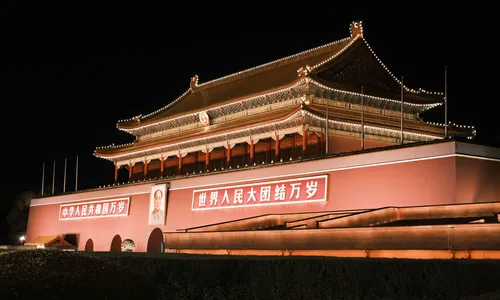
- Stacking a super-surge period onto the most famous attractions. Hitting the Forbidden City, the Bund, the Terracotta Army, or Jiuzhaigou during Oct 1-7 or July-August means peak crowd plus peak price. If your dream trip is the classic highlight reel, dodge Golden Week and the summer peak.
- A season-region mismatch. Going to Turpan in midsummer (45 °C+) or Mohe in deep winter (-40 °C), unless an extreme is what you came for.
Avoid those two, and every month in China has a destination at its peak.
The season x region matrix (the real answer)
This is the table those “best time” listicles should have given you. For every season: what most of the country is like, where is at its best right then, and what to dodge.
| Season | Most of China | Regions at their peak right now | Watch out for |
|---|---|---|---|
| Spring (Mar-May) | Near-perfect everywhere (north 15-22 °C, south 20-25 °C, flowers blooming) | - | Avoid the Apr 4-6 Qingming and May 1-5 May Day holiday windows |
| Summer (Jun-Aug) | East and south swelter in 35-40 °C heat, plus summer crowds | Qinghai - Tibet - Western Sichuan - Yunnan - Guizhou - the Northeast - Inner Mongolia, the 15-22 °C cool belt, with grasslands, wildflowers, and Qinghai Lake’s rapeseed bloom at their peak | 11.7 billion summer trips mean famous sights are packed; south China typhoons Jul-Sept can disrupt flights |
| Autumn (Sep-Nov) | The most comfortable season nationwide (crisp, clear, mild) | - | Avoid Sep 25-27 Mid-Autumn weekend and Oct 1-7 National Day (888 million on the move in 2025, an 8-day combined holiday) |
| Winter (Dec-Feb) | North is bitterly cold (Harbin around -20 °C) | Harbin and Jilin (Jan-Feb ice and snow festival, a peak season that draws visitors from across the world); Hainan - Xishuangbanna - Beihai (a warm escape) | Spring Festival (Feb 15-23, 2026): many smaller shops and restaurants shut, especially the first three days of the new year; long-distance transport tickets are tight |
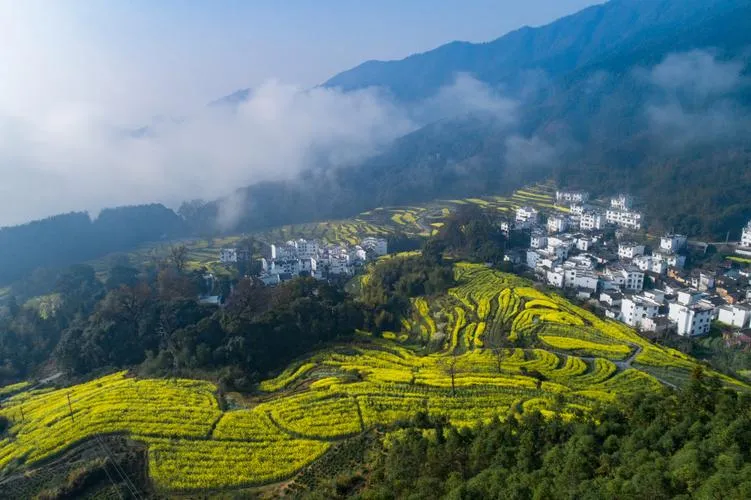 Spring’s answer: Wuyuan’s terraced rapeseed fields with white-walled villages.
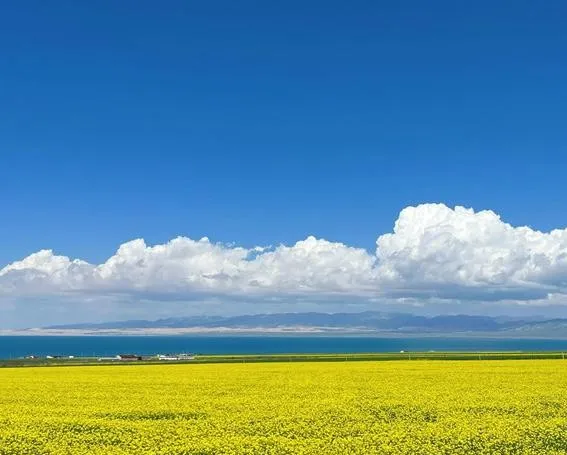
Qinghai Lake in July: when eastern China swelters, the highland cool belt is at its peak.
Spring’s answer: Wuyuan’s terraced rapeseed fields with white-walled villages.
Qinghai Lake in July: when eastern China swelters, the highland cool belt is at its peak.
So does a “worst time” exist?
Only conditionally:
- If your trip is locked to the classic greatest-hits route (Beijing - Xi’an - Shanghai, Jiuzhaigou, Guilin), then Oct 1-7 (Golden Week) and July-August (summer peak) are the worst windows: most crowded, most expensive. Shift by a couple of weeks if you can, or go in prepared with our Golden Week survival guide.
- If you are willing to match the season to the region, there is no bad month. Summer? Head to the Qinghai-Tibet cool belt, or the coast: Qingdao holds at 25 °C in August. Winter? Harbin’s ice festival or tropical Hainan. Spring and autumn? Almost anywhere.
China has no worst month. The only real mistake is an itinerary mismatched to the season.
2026 holiday quick-reference (dodge or embrace)
China’s State Council sets the official holiday calendar. These 2026 dates move the domestic crowd:
| Holiday | 2026 dates | What it means for you |
|---|---|---|
| National Day (Golden Week) | Oct 1-7 (7 days) | The single most crowded stretch. Classic sights 2-3x price, often sold out. Avoid if possible. |
| Spring Festival | Feb 15-23 (9 days) | Shops/restaurants shut (esp. first three days), long-distance transport tight. The trade-off: big-city tourist sights are unusually empty because everyone went home. Great if you want a quiet Forbidden City and can stomach some closures. |
| May Day | May 1-5 (5 days) | A secondary surge. Avoid; mid-to-late May is one of the year’s best windows instead. |
| New Year’s Day | Jan 1-3 | Minor. |
| Qingming | Apr 4-6 | 3 days, mostly a weekend, minor impact. |
| Dragon Boat | Jun 19-21 | 3 days, mostly a weekend, minor impact. |
| Mid-Autumn | Sep 25-27 | 3 days, mostly a weekend, minor impact for travelers. |
 Harbin Ice and Snow World in January: the same deep winter that keeps tourists out of most northern cities is what fills this one.
Tips for foreign visitors
- On a 240-hour transit visa or unilateral visa-free entry? Do not burn your visa days standing in Golden Week queues, unless the crowd itself is the experience you came for.
- Reverse-angle highlights worth chasing: (1) a quiet, “empty-city” Beijing during Spring Festival; (2) Harbin Ice and Snow World in January; (3) Qinghai Lake’s yellow rapeseed seas under a 20 °C sky in July.
- Every “bad” season has a flip side. The heat and cold are real, but so are the cool-belt summer and the warm-south winter that offset them.
- Typhoon season (July-September) and winter ice roads are exactly when travel insurance earns its keep; medical evacuation from remote China can cost $100,000 or more.
Sources & Verification
This guide was last verified on 2026-08-06. Key Chinese-language sources:
- State Council of the PRC (国务院, gov.cn): official holiday calendar, cited for the 2026 dates including National Day (Oct 1-7), Spring Festival (Feb 15-23), May Day (May 1-5), Qingming, Dragon Boat, and Mid-Autumn.
- Ministry of Culture & Tourism (文化和旅游部): domestic travel-volume figures used in the surge table, including the summer holiday (11.7 billion trips, 2025) and National Day Golden Week (888 million, 2025, 8-day combined holiday).
- Ministry of Transport (交通运输部): Spring Festival travel rush volume (~9.4 billion, 2026 estimate) cited as the world’s largest annual human migration.
- Trip.com (携程): cross-provincial summer travel growth figure (+22.4% YoY, 2026).
See our full verification methodology.
Related Articles
- Europe Is Melting - Why China Is 2026’s Smartest Heat Escape - The summer cool-belt destinations in depth
- 240-Hour Visa-Free Transit Guide - Don’t waste visa days on Golden Week queues
- China High-Speed Rail Guide - Train tickets sell out fastest during the surges above
- China Entry Requirements (2026) - Visa-free countries and arrival process
Data: 2026 holiday dates from China’s State Council (General Office Notice No. 7 of 2025); travel-volume figures from China’s Ministry of Transport and Ministry of Culture & Tourism. Crowds and prices vary by exact destination; always check current conditions before booking.