Driving in China 2026: The Foreigner's Guide to Licenses, Rentals, and Road Trips
Can a foreigner drive in China? Yes, but almost everything you have read about how is wrong. Your International Driving Permit is not valid here, China does not accept foreign licenses, and you cannot just walk up to a rental counter. You need a Chinese Temporary Driving Permit, and once you have one, independent self-driving is legal and far easier than the guidebooks claim. The hard part is deciding whether you should drive at all, because for most eastern routes the high-speed rail wins.
Quick Answer: An International Driving Permit (IDP) is NOT valid in China (China is not a party to the Vienna Convention), and a foreign license alone will not work either. You must convert it into a Chinese Temporary Driving Permit (临时机动车驾驶许可). It costs a flat ¥10, is usually issued same-day (10–15 minutes at airport stations), and is valid up to 3 months for short stays, or up to 1 year for longer ones. Bring your passport, your original foreign license, and a certified Chinese translation of it. You can then rent a small car (C1 manual / C2 automatic) and drive independently. The catch most guides miss: you apply at the traffic bureau where the rental company is, not where you land.
How we verified this: SinoWander reads Chinese-language sources that English guides cannot, including Ministry of Public Security orders, Beijing and Shanghai traffic-bureau portals, and traveler reports on Xiaohongshu and Zhihu. We cross-check them before writing. We have not personally driven every route. Each guide is date-stamped when last verified: 2026-08-06. See our methodology.
Why an IDP does not work in China
China never joined the 1949 or 1968 international road traffic conventions, so it does not issue, recognize, or accept the International Driving Permit. Beijing’s traffic bureau states it directly on its English portal: “Applications using an International Driving Permit will NOT be accepted.” A foreign driver’s license on its own is also not enough. This is not a formality you can talk your way around at the counter, and driving without the right permit is treated as driving without a license, which carries fines, detention, and invalid insurance.
What you need instead is a Temporary Motor Vehicle Driving Permit (临时机动车驾驶许可), a laminated card that pairs your foreign license with Chinese road rules. It is a national program under Ministry of Public Security Order No. 90, available to almost any visitor who arrives legally and already holds a valid license from home.
The Temporary Driving Permit: what it takes
The permit is governed by national rules, so the requirements are the same in Beijing, Shanghai, and every other city. Under MPS Order 90 Article 13, you bring:
- Your passport (entry/exit identity document)
- Your original foreign driver’s license, plus a certified Chinese translation of it (from a translation agency, your country’s embassy/consulate in China, a Chinese notary, or the traffic bureau can help arrange one)
- Proof you meet China’s age and health conditions
- Two 1-inch color photos (white background, half-body, no hat)
- Organized-tour or competition documents, only if that is why you came
The fee is a flat ¥10 per certificate, set nationally by the NDRC and Ministry of Finance, and it cannot be reduced. The statutory processing limit is three working days, but in practice it is issued the same day: Shanghai’s committed standard is on-the-spot at the window, and Beijing’s airport stations do it in 10 to 15 minutes. Validity scales with your stay: three months for short visits, or matching your permitted stay up to a cap of one year.
Validity tied to the rental company’s city, not your arrival city. This is the detail that trips people up. If you fly into Beijing but rent from a Chengdu company, you apply at Chengdu’s traffic bureau, not Beijing’s. The rule (MPS Order 90, Articles 11 and 13) keys the application to the city where the rental company is registered.
Where to apply in Beijing and Shanghai
In Beijing, you can apply at the Vehicle Management Office of the Beijing Traffic Management Bureau and its branches, or at the Vehicle Management Station on the 1st floor of Capital International Airport Terminal 3 (and the Daxing airport station). During the 2026 Beijing International Auto Exhibition, more than 200 foreigners obtained permits on the spot at T3.
In Shanghai, applications go to the No. 1 Branch of the Vehicle Administrative Office (车管所一分所), 2999 West Huaxia Road, Pudong (Sanlin), Building 3 Gate, 1st-floor hall, Window 17, Monday to Friday 09:00–17:00. eHi (一嗨) names the Shanghai Interpreters’ Association and SISU Translation Service as authorized translators, or the city’s online portal now offers translation as a newer route.
You can only rent a small car
Foreigners driving a rented Chinese vehicle are restricted to C1 (small manual) or C2 (small automatic) permit classes under MPS Order 90 Article 13. No trucks, no buses, no motorcycles through the rental pathway. (If you bring your own vehicle overland, different rules apply.)
Can you drive independently, without a guide?
Yes, and this is the second myth worth killing. The belief that foreigners must join an organized tour or hire an agency to drive in China is wrong for self-driving rented vehicles. MPS Order 90 Article 2 lists the legal categories, and “driving a rented Chinese vehicle” is its own category, separate from “organized tourism.” The guide requirement attaches only to driving a foreign-registered vehicle into China, which is an overland customs procedure. A 2025 independent self-driving report on Caravanistan confirms what the regulation text says: with the Temporary Permit and a local rental, you can drive on your own.
Renting the car
Major rental chains operating in China include eHi (一嗨), Car Inc. (神州), Ctrip (携程), and Shouqi (首汽). None of them will accept an IDP or a foreign license by itself; they all require the Temporary Driving Permit (or a full Chinese license), plus your passport and a credit card for the deposit pre-authorization.
eHi is the most foreigner-documented, with an English site and a dedicated page for the Temporary Permit process in Shanghai. Car Inc. has the widest network. Ctrip aggregates smaller local operators, which can mean lower prices but more variable foreigner-friendliness. Expect to pay a deposit pre-auth of several thousand yuan on a credit card, and check whether basic insurance is included or an extra. For multi-day loops, book foreigner-friendly hotels ahead of the drive: see our guide to booking hotels in China as a foreigner.
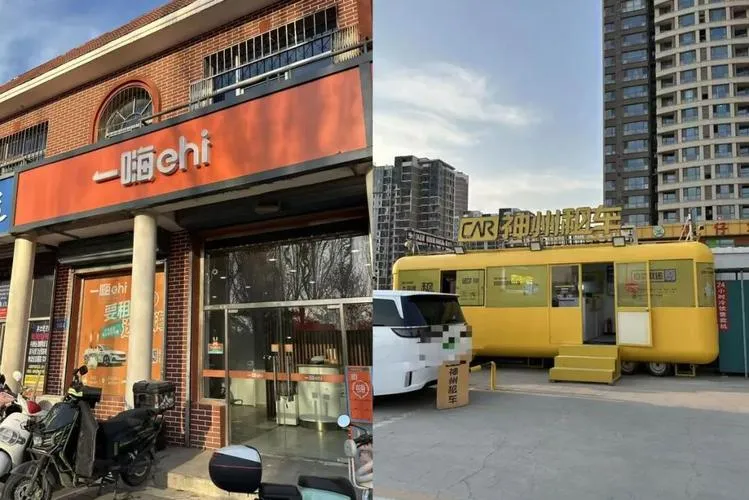 A typical rental counter. Bring your Temporary Permit, passport, and a credit card.
High-speed rail vs. driving: pick the right tool
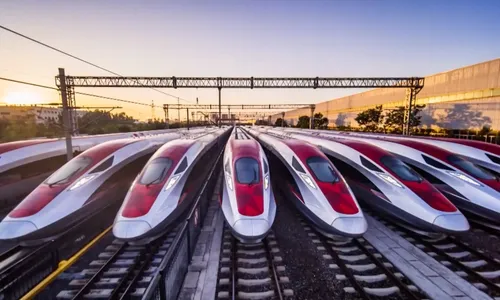
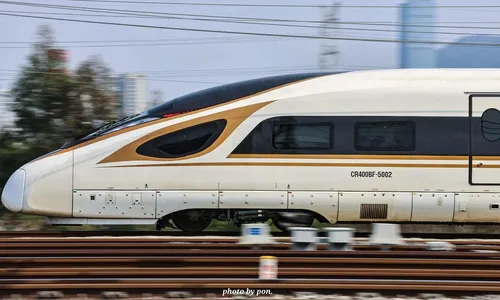
This is the part most driving guides skip. China’s high-speed rail network is the largest in the world at over 50,000 km, fast, cheap, and runs every few minutes between eastern cities. For Beijing–Shanghai, Shanghai–Hangzhou, Xi’an–Chengdu, or anywhere the high-speed rail goes, taking the train is almost always faster, cheaper, and less stressful than driving. Eastern highways are crowded, city centers are hard to park in, and the plate restrictions below will eat your time.
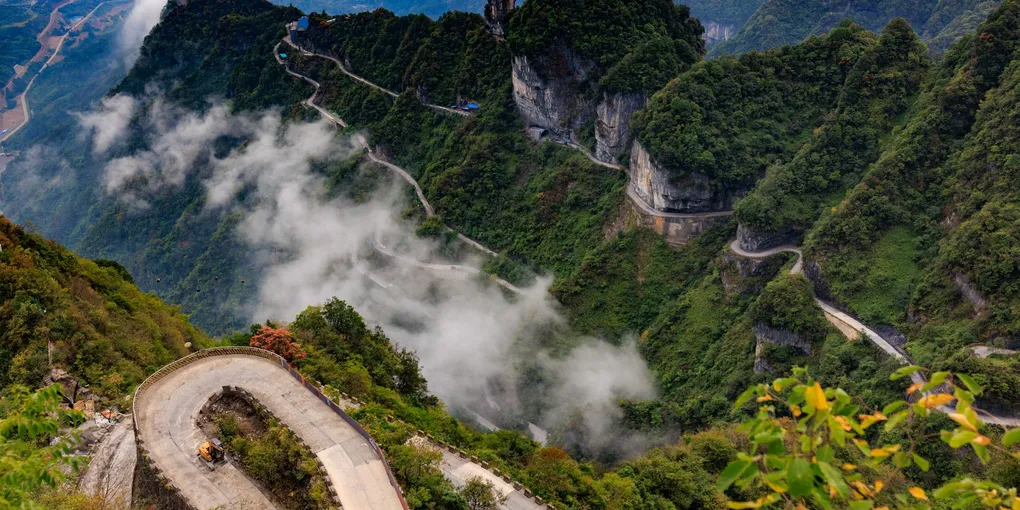
Self-driving earns its keep in the west and the far reaches, where the rail does not go and the scenery is the point. That is where you go for the road trips below.
The best road trips for foreigners
- Xinjiang Duku Highway (独库公路). Widely called China’s most scenic road, crossing the Tianshan Mountains through glaciers, red canyons, and alpine meadows. It opens only seasonally, roughly June to October. Pair it with a larger Xinjiang loop (Horgos–Yining–Sayram Lake–Dushanzi–Kuqa–Kashgar).
- Qinghai Lake loop. Salt lakes, Tibetan monasteries, and grassland, typically in three days from Xining, including Chaka Salt Lake and Ta’er Monastery.
- Yunnan: Kunming–Dali–Lijiang–Shangri-La. The standard 7–10 day route through the best of the southwest.
- Sichuan-Tibet Highway (G318). The most famous self-drive route in China, but check the Tibet entry rules for foreigners before you commit to the Lhasa end.
- Hainan island loop. A relaxed coastal drive, no visa barrier, good for winter.
For Xinjiang, most of the province is open to foreigners on a standard tourist visa, but border areas near Pakistan, Afghanistan, Tajikistan, Kyrgyzstan, and Mongolia need a separate border travel permit (边境通行证), now issued digitally. Verify before you drive into remote border country.
 The Sichuan-Tibet Highway (G318), China’s best-known road trip.
 The Duku Highway in Xinjiang, often called one of China’s most scenic roads.
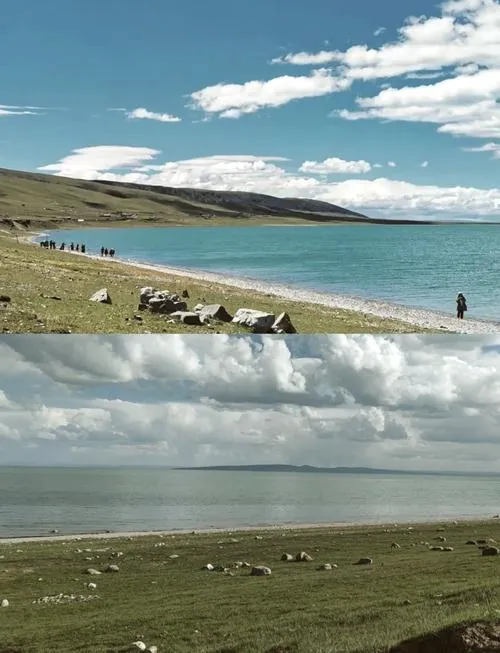 The Qinghai Lake loop, three days of plateau scenery.
Traffic rules and the traps
- Left-hand drive. China drives on the right.
- Beijing plate restrictions. Since March 31, 2025, Beijing runs a last-digit plate lottery (one weekday banned per car), and non-Beijing plates are banned from central roads during peak hours (07:00–09:00 and 17:00–20:00 on workdays), plus you need an entry permit to enter the city proper.
- Shanghai plate restrictions. Non-Shanghai plates are banned from elevated roads and the inner ring during peak hours (07:00–20:00 on workdays).
- Speed cameras. China enforces speed limits aggressively with cameras; fines arrive by text.
- ETC and fuel. Toll booths take ETC (electronic toll collection) or mobile payment; fuel up at Sinopec (中石化) or PetroChina (中石油) stations, which are everywhere on major routes.
- Holiday surges. During Golden Week (October 1-7) and the Spring Festival rush, intercity highways jam for hours and roadside hotels sell out. If you will be driving in those windows, read our National Day Golden Week guide and plan around the peak departure and return days.
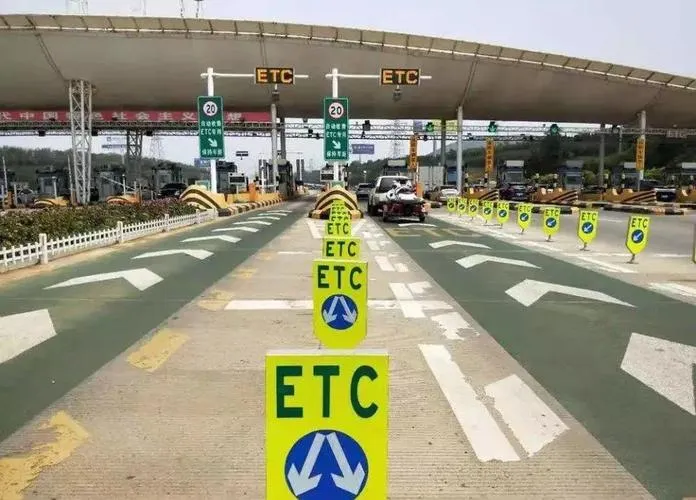 A highway toll station. ETC lanes are marked; cash and mobile pay at the others.
Insurance and accidents
Rental cars come with compulsory traffic insurance (交强险) by law; commercial coverage (商业险) is usually optional and worth buying. If you are in an accident, the national traffic emergency number is 122 (120 for medical). Stay at the scene, wait for the traffic police, and call your rental company. The language barrier is real, so have your translation app and your rental company’s hotline ready. Rental insurance covers the car, not you; for medical costs and evacuation, carry a separate travel insurance plan.
The takeaway
Five things decide a China self-drive: ① your IDP will not work, get the ¥10 Temporary Permit at the traffic bureau; ② apply where the rental company is, not where you land; ③ you can drive independently, no guide required; ④ for most eastern routes, take the high-speed rail instead; ⑤ save the car for the west, Xinjiang, Qinghai, Yunnan, or Sichuan-Tibet, where the driving is the point. Do those and China opens up in a way no train ticket can.
Guide compiled July 2026 from the Ministry of Public Security (Order 90, 162/172), the Beijing and Shanghai traffic bureaus, and the government portals cited above. Verify permit rules and plate restrictions before you drive, because the city-specific rules change.
Sources & Verification
This guide was last verified on 2026-08-06. Key Chinese-language sources:
- 公安部 (Ministry of Public Security) Orders No. 90, 162, 172 (mps.gov.cn): The Temporary Motor Vehicle Driving Permit (临时机动车驾驶许可) program, the ¥10 flat fee, and the legal basis for independent foreign self-driving.
- 北京市公安局交通管理局 (Beijing Traffic Management Bureau): Direct statement that International Driving Permits are not accepted, and the same-day permit application process.
- 上海市人民政府 (Shanghai Municipal Government, shanghai.gov.cn): The rental-company-location rule for which traffic bureau handles your application.
- 小红书 and 知乎 (Xiaohongshu, Zhihu): Traveler reports on real application wait times and the high-speed-rail-vs-driving tradeoff on popular routes.
See our full verification methodology.
Related Articles
- China High-Speed Rail Guide (2026) — When the train beats driving
- How to Buy China Train Tickets (2026) — The alternative to self-driving
- How to Use DiDi in China — When you should not drive at all
- How to Set Up Alipay in China — Pay for fuel, tolls, and the rental
- China Travel Safety Tips — Road safety and emergencies