China's Overnight Sleeper Trains 2026: The Foreigner's Guide to Saving a Hotel Night
China’s railway operates the world’s largest fleet of overnight sleeper trains, and almost everything English-language guides tell you about them is between two and seven years out of date. The Beijing-Hong Kong sleeper is no longer the D909 — it is the G897, a 300 km/h “smart sleeper” that did not exist before October 2024. The famous “capsule berth” train with longitudinal beds that English blogs still call the D311 Beijing-Shanghai route has not run that corridor since January 2019; the same carriages now work the Beijing-Shenzhen overnight. The 12306 ticketing system has let passengers pick their own berth — upper, middle or lower — since June 2023, yet most foreign guides still say berths are auto-assigned. And the paper ticket that travelers used to keep as a souvenir stopped existing in October 2025.
This guide covers the night trains that matter for a visitor in 2026: the high-speed sleepers (D and G series) and the classic slow sleepers (Z, T and K series), with verified schedules pulled on September 12, 2026, the berth-selection rules for foreign passport holders, the charging-socket reality, the Tibet direction trap that determines whether you see the plateau in daylight or darkness, and the luggage-checking privilege that almost no English resource mentions.
Quick answer: The headline route is G897, leaving Beijing West at 21:01 and arriving Hong Kong West Kowloon at 07:19 the next morning — a 10-hour-18-minute overnight run at 300 km/h with one-border-stop customs at West Kowloon. For the classic long-haul experience, Z21 runs Beijing West to Lhasa in about 40 hours with diffuse oxygen supply above Xining. Foreign passport holders can buy tickets and select berths on 12306 after online identity verification (since November 2023), default to the manual checkpoint lane at stations (passport readers exist at some major stations but are unreliable), and may check 50 kg of luggage to travel on the same train. The paper ticket is gone; bring a power bank.
How we verified this: SinoWander works from Chinese-language sources that English guides cannot read, including the 12306 passenger transport regulations (current version), China Railway’s official passport-verification announcement (November 30, 2023), CCTV’s report on the new national rail regulations effective June 1, 2026, the Shanghai municipal government’s release on the G897 upgrade (September 29, 2024), the Liaison Office’s Beijing-Hong Kong sleeper launch release (June 4, 2024), People’s Daily Online’s report on the D901 longitudinal sleeper (September 28, 2025), and Baidu Baike entries cross-checked against official releases. Live schedules were verified against gaotie.com.cn data current to August 2026. We cross-check before writing and date-stamp every guide. We have not personally ridden every train. Last verified: 2026-09-12. See our methodology.
The train types: Z, T, K, D and G
Chinese train numbers begin with a letter that tells you the category. For overnight sleepers, four letters matter:
- Z (zhida, “direct express”) — the fastest of the classic slow trains, running long distances with few stops. The flagship Z21 covers Beijing to Lhasa in about 40 hours.
- T (tekuai, “express”) — the mid-tier classic train, slightly more stops than Z.
- K (kuaisu, “fast”) — the basic classic train, the most stops and the lowest fares.
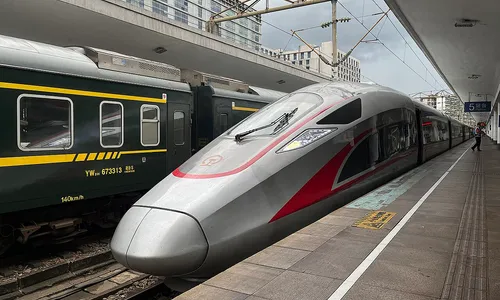
- D and G — electric multiple units, the high-speed fleet. D-series sleepers run at 250 km/h; the upgraded G-series smart sleepers (G897, G899) run at 300 km/h. These are the trains that have rewritten the overnight map since 2024.
All four classic types (Z, T, K, and the D/G sleepers) can carry sleeping cars. The Chinese term “xifachaozhi” — “depart at dusk, arrive at dawn” — describes the ideal: board in the evening, sleep through the journey, step off the next morning having saved a hotel night and a day of travel. The Baidu Baike definition specifies departures between noon and midnight, arrivals between 6:00 and noon the next day, excluding departures or arrivals in the small hours.
The practical split for a visitor: classic Z/T/K sleepers are the right choice for long, immersive routes (Beijing-Lhasa, Guangzhou-Lhasa, Shanghai-Kunming) where the train itself is part of the experience and the fare is low. D and G sleepers are the right choice for city-to-city overnight runs (Beijing-Hong Kong, Beijing-Shenzhen, Shanghai-Hong Kong) where you want to arrive fast and fresh.
The berth hierarchy: hard sleeper, soft sleeper, deluxe soft sleeper
Hard sleeper (yingwo)
A hard sleeper car has 11 semi-open compartments, each with six berths stacked three-high on both sides — upper, middle and lower — with no doors. The car holds 66 passengers. A small table sits between the lower berths; a ladder at the partition connects the levels. The car type code is YW, and the standard car bodies are the 25G, 25K and 25T models.
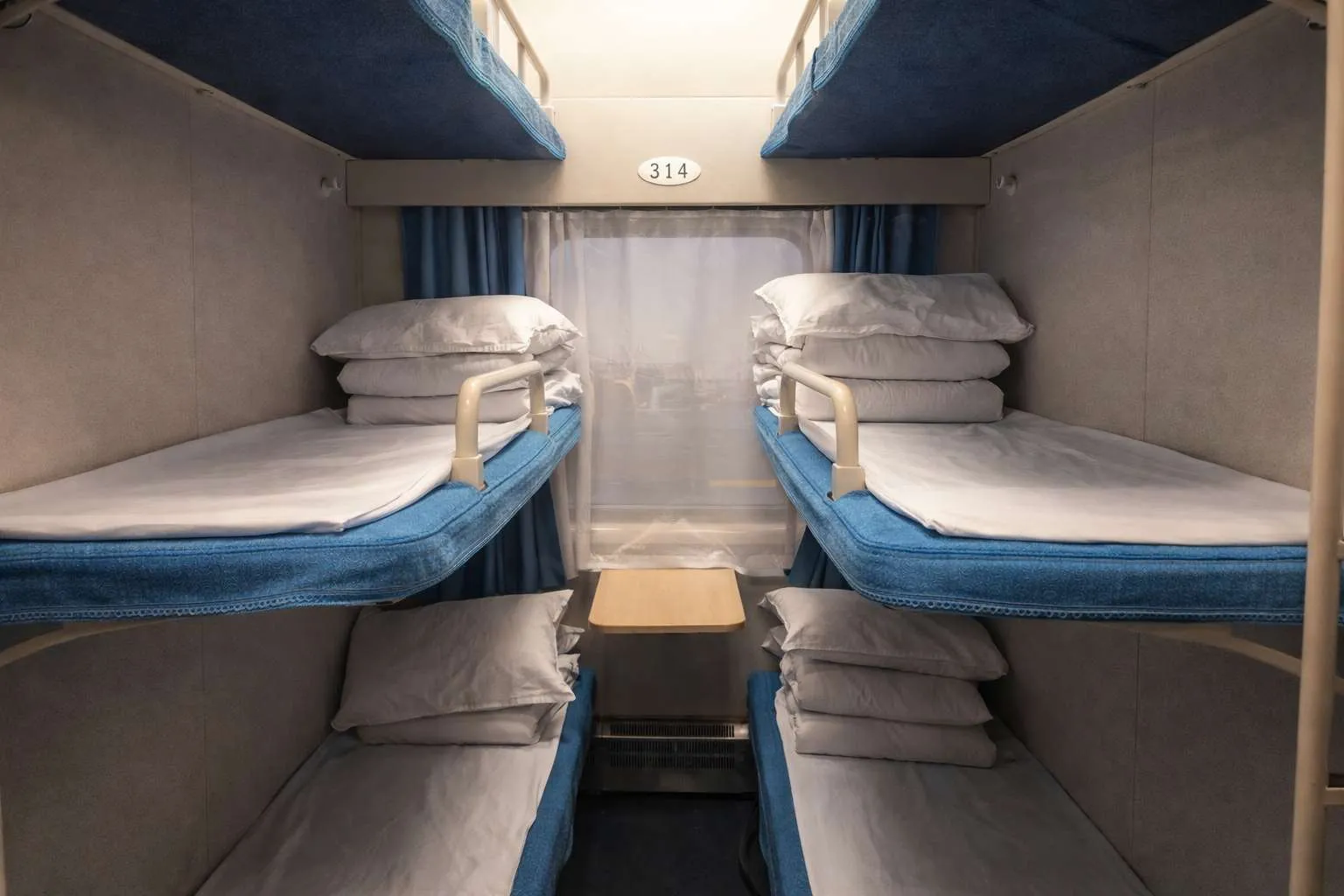
The price difference between berths is small — typically only 10 to 20 yuan separating upper from lower on a long route. The lower berth is the most expensive and the most convenient (you sit up, you look out the window, the table is yours), the upper is the cheapest and the most private, and the middle is in between. For a budget traveler, paying 15 yuan extra for a lower berth is poor value; the upper berth is where you sleep best, because nobody walks through your space.
Soft sleeper (ruanwo)
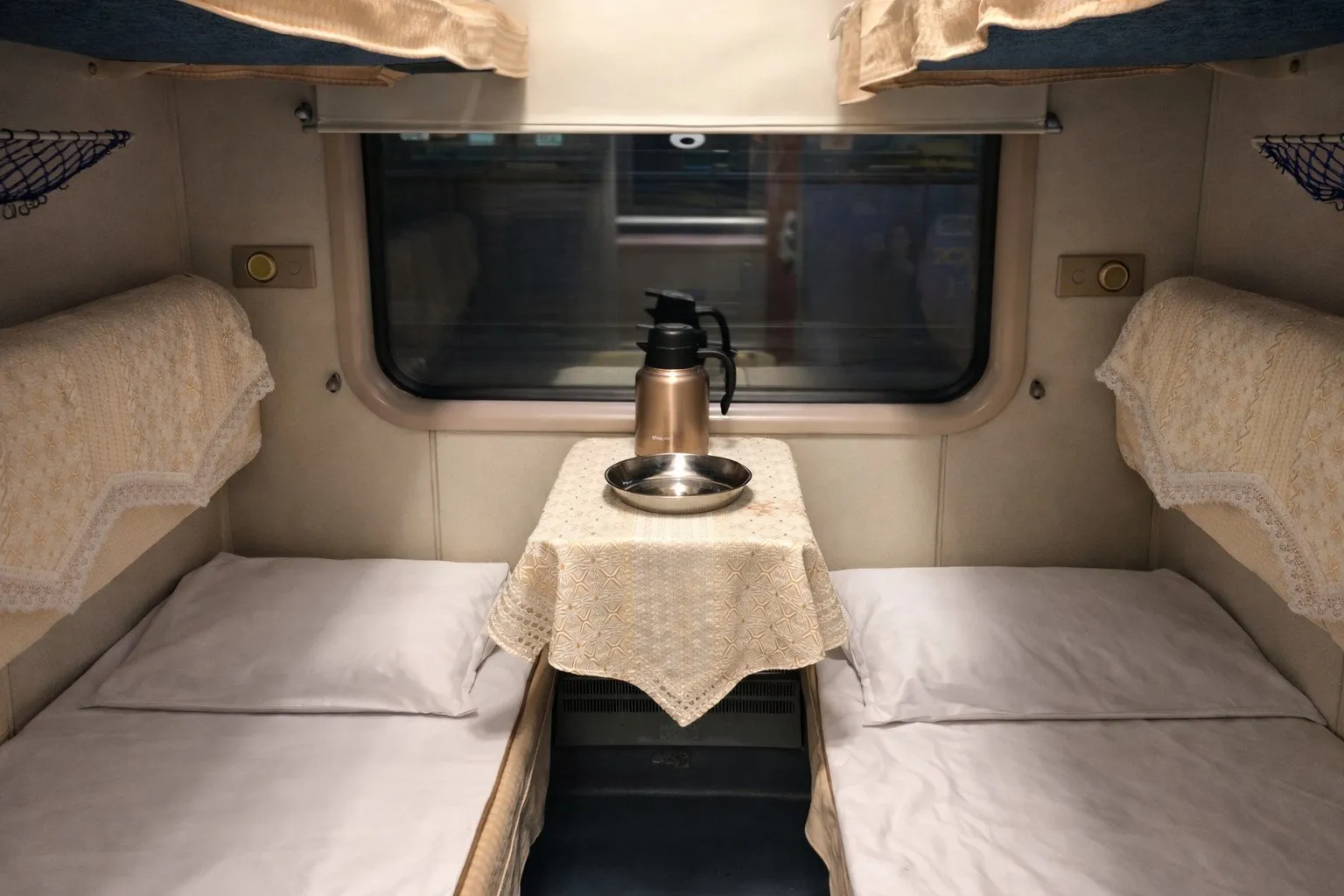
A standard soft sleeper compartment has four berths — two upper, two lower — behind a lockable door. The fare runs about 1.75 to 1.95 times the hard sleeper price for the lower berth, with the upper slightly cheaper. Each compartment has its own charging socket.
Deluxe soft sleeper (gaoji ruanwo)
The top of the pyramid. A deluxe soft sleeper compartment has two berths (or in some configurations, a single-berth or three-berth “one-person soft package”) and comes with an independent bathroom, shower, wardrobe, safe, electric kettle, disposable slippers, sofa, and table and chairs. The fare is roughly three times the hard sleeper price. In February 2026, photos of a deluxe soft sleeper compartment went viral on Chinese social media under headlines like “netizen posts train deluxe soft sleeper with sofa, private toilet, wardrobe and safe — ticket is three times hard sleeper, 12306 responds.” The viral framing — a hotel room on wheels — is exactly the angle that English-language travel media has never picked up.
The berth-selection revolution on 12306
Since June 2023, 12306 has allowed online berth selection for participating sleeper services. Passengers buying hard sleeper tickets can choose upper, middle or lower; soft sleeper buyers choose upper or lower; high-speed sleeper buyers select from the available berth categories. Before this, berths were auto-assigned by the system, and the only way to pick was at a station ticket window.
The interface is simple: eligible trains show a yellow “berth” (铺) label next to the train number. After adding a passenger, the system pops up a berth-selection list. If the remaining berths cannot satisfy your choice, the system assigns randomly, and you can accept or cancel. Passengers aged 60 and above continue to receive priority for lower berths.
The program began as a pilot with 230 train services. Whether it has since expanded to all sleeper trains is not officially confirmed; the safe approach is to look for the “铺” label on 12306 for your specific train. Foreign passport holders who have completed 12306 online identity verification (covered below) can use the berth-selection feature — there is no documented restriction by document type, and the selection interface is tied to the verified account, not to the passport itself.
The lower-berth curtain dispute
Hard sleeper compartments are open: six people share one space with no door. For years, an unwritten rule held that upper-berth and middle-berth passengers would sit on the lower berth during the day, because the lower berth is the only one you can sit up in. In 2024, this convention broke open. Lower-berth passengers began hanging privacy curtains, claiming the berth as personal space. The argument became an annual debate on the Chinese internet.
A China Youth Daily reporter asked 12306 for an official position in April 2024. The response, verbatim: “There is no explicit regulation prohibiting the use of privacy screens. They may be used as long as they do not affect other passengers, but you need to negotiate with the other passengers in your compartment.” For a foreign visitor, the takeaway is cultural: a hard sleeper lower berth is not a private bed, it is the compartment’s living room by day, and a curtain is permitted but depends on negotiation.
The flagship routes
G897: Beijing to Hong Kong overnight (the headline route)
The Beijing-Hong Kong sleeper is the route that has changed the most and that English guides miss most completely. The story in three acts:
Act one (before June 2024): The overnight Beijing-Hong Kong train was the Z97/98, a classic slow train running to Hung Hom station in about 24 hours and 31 minutes. If an English blog describes “the overnight Beijing-Hong Kong sleeper” based on a ride before 2024, it is describing a train that no longer exists.
Act two (June 15, 2024): The Z97/98 was upgraded to the D909/910, a 250 km/h sleeper. The journey time dropped from 24 hours 31 minutes to 12 hours 34 minutes. Customs changed from “two-place, two-check” (border formalities at both ends) to “one-place, one-check” at Hong Kong West Kowloon station only. The train ran Friday, Saturday, Sunday and Monday in both directions.
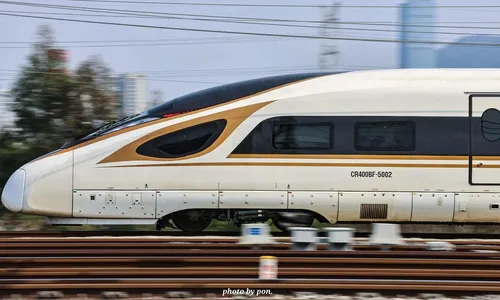
Act three (October 1, 2024): The D909/910 was upgraded again to the G897/898, a “Fuxing smart sleeper” (CR400AF-AE) at 300 km/h. The Shanghai-Hong Kong pairing upgraded from D907/908 to G899/900 the same day. The train carries 652 passengers: 24 in first class, 90 in second class, and 538 in sleeper berths. Every berth has an integrated service unit with a reading light, coat hook, trouser hanger, power socket, storage box and ambient lighting. The train has 42 toilets and 17 electric water boilers. The operator’s own phrase is “a moving star-rated hotel.”
Current schedule (verified September 12, 2026, gaotie.com.cn data current to August 2026):
| Train | Departure | Arrival | Duration | Distance |
|---|---|---|---|---|
| G897 | Beijing West 21:01 | Hong Kong West Kowloon 07:19 (next day) | 10h18m | 2,439 km |
| G898 | Hong Kong West Kowloon 20:25 | Beijing West 06:53 (next day) | 10h28m | 2,439 km |
| G899 | Shanghai Hongqiao 20:15 | Hong Kong West Kowloon 07:20 (next day) | 11h05m | — |
| G900 | Hong Kong West Kowloon 20:05 | Shanghai Hongqiao 07:00 (next day) | 10h55m | — |
G897 stops at Shijiazhuang, Zhengzhou East, Guangzhou South and Shenzhen North. The train runs daily as of September 2026 — the original Friday-through-Monday schedule has been expanded to daily operation, though the railway operates a “one-day, one-diagram” system, so always confirm on 12306.
Two things English guides get wrong: first, the train is a G-number, which normally means a same-day high-speed service, but the G897 is a genuine overnight sleeper — the “G means same-day” mental model fails here. Second, any guide referencing the D909 or the old Z97 Hung Hom era is describing a train that has not run for over two years.
The customs advantage is real: Hong Kong West Kowloon station handles both mainland Chinese and Hong Kong exit-entry formalities in one building (“one-place, one-check”). You board in Beijing, sleep, and wake up across the border. For the reverse direction, pairing this with our Shenzhen guide lets you build a Hong Kong-Shenzhen-Beijing arc on overnight trains.
D901: The longitudinal “capsule” sleeper (Beijing to Shenzhen)
The D901/902 is the train that English blogs call the D311 and place on the Beijing-Shanghai corridor. Both details are wrong.
The longitudinal sleeper — where every berth runs parallel to the corridor instead of perpendicular, giving each passenger what amounts to a private capsule with its own window — first ran on July 1, 2017, as the D311 on the Beijing-Shanghai line, using the CRH2E-NG carriage. That service stopped running on January 5, 2019, when CR200J power-concentrated trains (D5/6, D7/8 and others) took over the Beijing-Shanghai overnight corridor. The D311 train number was reused in July 2019 for an unrelated Shanghai-Lanzhou West high-speed sleeper — so writing “the D311 has been discontinued” without the “Beijing-Shanghai” qualifier is also wrong.
The longitudinal CRH2E carriages did not disappear. Three sets exist (numbered 2463, 2464 and 2465, all built by CRRC Sifang in 2017 and assigned to Beijing Railway Bureau), and since the second half of 2021 they have worked the Beijing-Guangzhou-Shenzhen corridor. The current service is the D901/902, running Beijing West to Shenzhen North overnight.
Current schedule (verified September 12, 2026):
| Train | Departure | Arrival | Duration | Distance |
|---|---|---|---|---|
| D901 | Beijing West 19:42 | Shenzhen North 08:18 (next day) | 12h36m | ~2,400 km |
| D902 | Shenzhen North — | Beijing West — | overnight | ~2,400 km |
The train has 16 cars, 860 longitudinal berths (total capacity 880), a maximum speed of 250 km/h, and double-layer windows so every berth has its own view. Every berth has a three-pin socket, a two-pin socket and a USB port, a reading light you control yourself, and a blackout curtain with magnetic edges that creates what Chinese media calls “one berth, one single room.” Car 9 has a dining bar. The train added extra runs during the 2025 National Day holiday (September 30, October 1, October 2, October 7, October 8) and during the 2026 Spring Festival travel rush.
The English-language proof that this is a live problem: The Man in Seat 61, the standard reference for train travel worldwide, still shows the longitudinal sleeper under the caption “New sleeper train on the D311” in its 2026 edition — a train that has not run the Beijing-Shanghai corridor for seven years.
Z21: Beijing to Lhasa (the 40-hour plateau crossing)
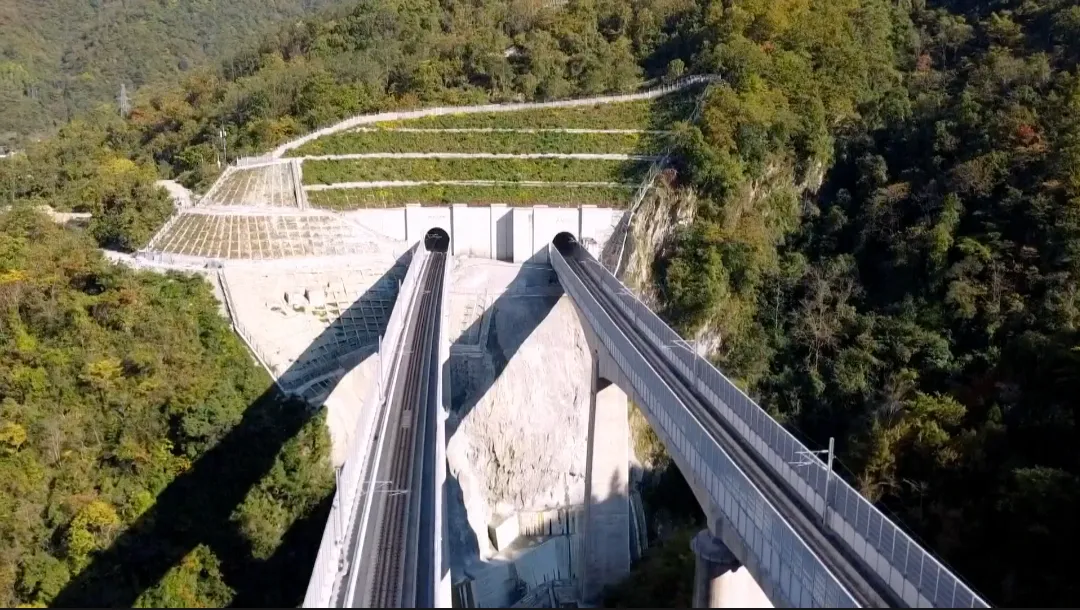
The Z21/22 is the classic Tibet train: 3,756 kilometers, eight provinces and regions, daily departure, about 40 hours end to end. It uses plateau-adapted 25T carriages with a diffuse oxygen supply system and vacuum toilets. The train has run since July 1, 2006 — 20 years of continuous operation as of 2026 — and has carried over 9.9 million passengers.
Current schedule (verified September 12, 2026, gaotie.com.cn data):
| Station | Z21 arrival | Z21 departure |
|---|---|---|
| Beijing West | — | 19:49 |
| Shijiazhuang North | 22:30 | 22:33 |
| Taiyuan | 00:18 | 00:24 |
| Zhongwei | 06:56 | 07:02 |
| Lanzhou | 12:19 | 12:29 |
| Xining | 14:59 | 15:19 |
| Delingha | 19:17 | 19:21 |
| Golmud | 21:42 | 22:07 |
| Nagqu | 08:12 (day 3) | 08:18 |
| Lhasa | 11:47 (day 3) | — |
Fares: hard seat 360 yuan, hard sleeper 720 yuan (upper) to 763 (lower), soft sleeper 1,144 yuan (upper) to 1,186 (lower).
The oxygen system switches on after Xining. The diffuse supply mixes oxygen into the air conditioning to bring each car’s oxygen concentration to 23.5 percent (Xining’s altitude of about 2,300 meters is the baseline). A second system distributes oxygen through tubes under the seats and along the corridor walls, available on demand. Passengers board with a health registration card. The train changes locomotives three times: electric from Beijing West to Xining, then the plateau diesel locomotive from Golmud to Lhasa.
The Tibet direction trap
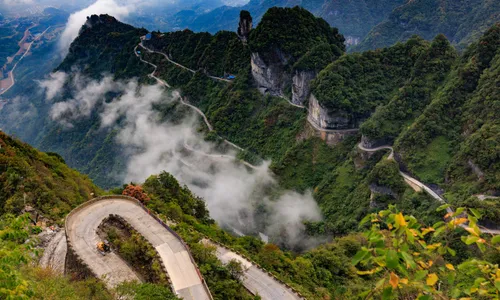
The most important thing to understand about the Z21 is that the Golmud-to-Nagqu segment — the stretch that crosses the Tanggula pass and the Hoh Xil wildlife reserve — runs at night in both directions. The old Baidu Baike timetable showed Z21 passing Golmud at 21:33 and reaching Nagqu at 07:44, which looks like a night crossing; the current schedule shows Golmud at 22:07 and Nagqu at 08:12, which is still a night crossing. The reverse Z22 runs Nagqu at 19:37 and Golmud at 06:08 — also overnight.
This means: no matter which direction you ride the Z21, you cross the high plateau in darkness. The old assumption that “take the eastbound train from Lhasa and you will see the plateau in daylight” is a misreading of the timetable. The 06:34 figure that appears in some guides is the departure time from Golmud the next morning, not the arrival — and the 13:13 is the arrival at Xining, which is the Golmud-to-Xining daytime segment through the Qaidam Basin, not the Golmud-to-Nagqu plateau segment.
The real daylight segments are: on Z21 (westbound), the daytime runs are Lanzhou-Xining-Golmud on day two (loess plateau and Qinghai) and Nagqu-Lhasa on the morning of day three (including the Cuona Lake section). On Z22 (eastbound), the daytime runs are Lhasa-Nagqu on the afternoon of departure and Golmud-Xining on the morning of day two (Qaidam Gobi).
If seeing the Tanggula pass and Hoh Xil in daylight is your priority, the method is not to pick a direction on the Z21 but to check a Xining-Lhasa service instead. Southbound evening trains and northbound morning trains from Lhasa can put the high plateau crossing in daylight, but the railway reshuffles its diagram frequently, so the reliable approach is the method, not a specific train number: on 12306, check where your train is scheduled to be at 07:00, and if the answer is “between Golmud and Nagqu,” you have a daylight crossing.
Foreign travelers heading to Tibet need a Tibet Travel Permit (TTP), and since March 13, 2026, the original paper document is required at check-in for both trains and flights — the old workaround of a color printout at Xining or Chengdu no longer works. Boarding without a permit risks being sent back at the Lhasa exit check. The full permit process is in our Tibet Travel Permit guide. You can get off at Xining or Golmud without a permit — a legal detour to see Qinghai Lake — but you cannot continue to Lhasa.
Z264: Guangzhou to Lhasa (the longest passenger route in China)
The Z264/265 holds the title of the longest passenger train route on sale in China: 4,974 kilometers from Guangzhou Baiyun to Lhasa, 53 hours 27 minutes, 15 stops. Since February 9, 2026, the train departs from Guangzhou Baiyun station (not the older Guangzhou station — the shift happened in early 2026, and some timetables still show the pre-2026 data).
Current schedule (verified September 12, 2026):
| Station | Z264 departure |
|---|---|
| Guangzhou Baiyun | 09:26 |
| Lhasa | 14:53 (day 3) |
Fares: hard seat 447 yuan, hard sleeper 865 yuan (upper) to 919 (lower), soft sleeper 1,468 yuan (upper) to 1,526 (lower). The train runs daily as of September 2026.
The Baidu Baike entry for Z264 still carries a 2023 timetable showing Guangzhou (not Baiyun) at 08:24 — the same entry’s body text describes the 2026 move to Baiyun, so the entry contains both old and new data in the same page. Always use the post-February 2026 schedule and check 12306.
Z164: Shanghai to Lhasa
The Shanghai-Lhasa sleeper runs 45 hours 3 minutes, departing Shanghai at 18:33 and arriving Lhasa at 15:36 on the third day, crossing eight provinces and municipalities with 17 stops. The route opened on July 1, 2006 (initially every other day, daily from July 1, 2010), and was upgraded from T164/165 to Z164/165 on December 10, 2014. The same Tibet Travel Permit rules apply — see our Tibet permit guide.
K739: Shanghai Songjiang to Kunming (the two-night immersion)
The K739/740 runs from Shanghai Songjiang to Kunming in 36 hours 21 minutes — two nights on the train, which puts it outside the strict “depart at dusk, arrive at dawn” definition and into the “two-day, one-night immersion” category. The train was renumbered from 1240/1239 to K739/740 in November 2009 and carries the “Dehong” cultural tourism branding. The Shanghai-side origin station has moved from Shanghai South to Shanghai Songjiang — a detail that catches travelers who show up at the wrong station. The high-speed comparison: Shanghai to Kunming by G train takes as little as 9 hours 35 minutes.
The three specialty routes
The Dunhuang sleeper (Y667/668): The “Dunhuang Hao” is an 18-car all-sleeper train from Lanzhou to Dunhuang, not from Xian as is sometimes assumed. It carries 2 deluxe soft sleeper cars, 6 soft sleeper cars and 7 hard sleeper cars, with full Wi-Fi coverage, a 24-hour bar car and two dining cars. The train launched in June 2014. For the Xian-Dunhuang direct option, K367/K369 runs the 1,809-kilometer route in 22 hours 4 minutes (Xian 12:15 to Dunhuang 10:19 the next day, hard sleeper 343 to 367 yuan, soft sleeper 542 to 566) — but as of September 2026, K367 shows no scheduled runs for the coming two weeks on gaotie.com.cn, suggesting it may have shifted to seasonal operation. Check 12306 before planning around it. The Dunhuang route pairs with our Hexi Corridor guide.
The ice route (Z203/204): Beijing to Harbin overnight, about 10 hours 25 minutes, departing Beijing at 20:36 and arriving Harbin at 07:01. In winter, some services extend to Yabuli South station, the ski resort. The pairing with Harbin’s Ice and Snow World is the obvious winter double-header.
The sea-crossing route (Z114/111): Harbin West to Haikou, crossing 14 provinces and municipalities — the most provinces of any sleeper route — including the Qiongzhou Strait train ferry. The train is split and loaded onto a rail ferry to cross the strait to Hainan island, a experience that almost no English-language guide covers. The route pairs with our Sanya guide.
Buying tickets: the foreign-passenger workflow
12306 registration and identity verification
The full registration process is in our China train ticket guide, but the sleeper-specific points matter here. Since November 2023, foreign passport holders can complete identity verification online on 12306 (website or app, including the English version at 12306.cn/en) without visiting a ticket window. China Railway’s official announcement, verbatim: “Passengers holding foreign passports can complete online identity verification on the 12306 website (including the app). Foreign passengers must pass identity verification before purchasing tickets and boarding.”
Once verification is complete, the berth-selection feature works the same as for Chinese ID holders — there is no documented restriction by document type.
Checkpoint lanes: the passport reality
The six document types that Chinese station gates can read automatically are: mainland resident ID card, Hong Kong resident residence permit, Taiwan resident residence permit, foreign permanent resident ID card, Hong Kong-Macau travel permit, and Taiwan travel permit. A standard foreign passport is not on the list. The default procedure is the manual checkpoint lane, where staff scan your booking confirmation QR code or manually enter your document number.
The layered truth, confirmed by Beijing Railway and Guangzhou Railway official guidance: at stations equipped with passport-reading gate mirrors, a passport that has completed 12306 verification can be placed open on the mirror, face-down, for facial comparison and self-service gate passage. The Hainan loop and the Guangzhou-Shenzhen high-speed line have supported this for some time. But station equipment varies, recognition is unreliable, and inbound-tour operators still advise foreign clients to default to the manual lane and allow extra time. The practical rule for a night-train departure: station gates close 3 to 5 minutes before departure, the manual lane can queue at peak times, and a foreign passenger should allow 15 to 30 minutes more than a domestic traveler.
The e-ticket and the end of the paper souvenir
The blue paper ticket that travelers used to keep as a souvenir is gone. Since October 1, 2025, railway passenger transport has fully adopted electronic invoices. The booking confirmation is not a ticket — it is an information slip. The new national rail regulations effective June 1, 2026 (five chapters, 116 articles, 28 changes) formalize the shift: paper reimbursement vouchers are abolished in the purchase, refund and change process, replaced by electronic railway passenger invoices. After a trip, you can claim an electronic invoice within 180 days.
Three other changes in the 2026 regulations that matter for travelers: first, passengers who ride without a valid ticket and refuse to pay the fare are now subject to a purchase restriction (the fare plus a 50 percent surcharge, lifted automatically once paid). Second, the 24-hour connection time limit for connecting tickets is abolished — if a connecting service is suspended, both legs can be refunded for free. Third, the scope of student tickets has expanded to include sleeper berths on electric multiple units, at a 7.5 percent discount from the execution price since August 15, 2025.
Luggage: the 50-kilogram sleeper privilege
The standard free luggage allowance is 20 kilograms per person (35 for diplomats, 10 for children), with each item’s length, width and height totaling no more than 160 centimeters, or 130 centimeters on electric multiple unit trains. Folding wheelchairs and folding strollers are exempt.
The sleeper-specific privilege: a passenger with a valid ticket and ID can check one piece of luggage to travel on the same train, up to 50 kilograms (75 if the luggage includes a wheelchair), with each item’s external dimensions totaling no more than 200 centimeters. Excess weight is charged at double the luggage rate. For a backpacker carrying a large pack plus souvenirs, or a shopper stocking up before flying home, this is the option that English guides almost never mention — the luggage travels in the baggage car and you collect it at your destination. The customs angle, if you are carrying goods home, is in our China customs declaration guide.
Life on board: charging, food, night and safety
Charging sockets
The official distribution, from a People’s Daily Online report citing China Railway Group (July 2023):
- Soft sleeper (25G classic cars): one socket per compartment, under the small table, plus four charging ports on the corridor wall.
- Hard sleeper (25G classic cars): four charging ports per car, under the small table on the corridor wall.
- High-speed sleeper (first class): two USB ports per berth, beside the night light.
- High-speed sleeper (second class): two USB charging ports per berth, on the reading light.
The critical caveat: older car models (the 25K series) may have no charging ports in the passenger cars at all — the only option is the dining car. The “power bank is the first essential” rule holds regardless.
On the lighting-versus-power question: sleeper cars dim the lights between 22:00 and 07:00 (leaving only floor lights), but the charging sockets are on a separate circuit from the lighting and generally remain live after lights-out. Exceptions exist — a crew member may cut power in a specific case, a non-standard charger may trip the car’s circuit protection, and the overhead contact wire phase gap causes a few seconds of power loss — but the blanket claim that “lights out means power off” is not accurate and should not be relied on either way. Bring a power bank.
The November 2025 “no ladder” controversy: passengers on sleeper EMU trains reported that the traditional corridor ladders had been replaced by small step plates between berths. A 12306 staff member confirmed that the step-plate configuration belongs to the semi-enclosed sleeper design, that there is no current solution, and that passengers who have difficulty climbing can ask the train crew for help. If you have limited mobility, this is worth knowing before booking an upper berth on a high-speed sleeper.
Food and hot water
The Z21 dining car offers full meals and light snacks, accepting both cash and mobile payment. The Dunhuang Hao has two dining cars with self-service ordering plus a 24-hour bar. The G897 smart sleeper offers Cantonese-style meals. The CRH2E and similar models offer a “whisper service” mode at night, with food delivered to berths. Hot water is standard on every car — the Fuxing smart sleeper has 17 electric water boilers across the train, and classic slow trains have a hot water supply at the end of each car. Bring a thermos.
Safety
Hard sleeper cars are semi-closed with crew management — one ticket per berth, no ticketless passengers allowed, which makes them safer than hard seat. Soft sleeper compartments lock from inside. The passenger transport regulations state that passengers are responsible for their own luggage — keep your passport and cash on your person, not on the berth. The Z21’s train police undergo over 60 days of plateau training, including Tibetan language and altitude sickness response.
Night noise
The “depart at dusk, arrive at dawn” entry in Baidu Baike itself notes that the safety risks of overnight travel stem from “insufficient comfort of the train and ship environment, including noise, vibration and limited bedding conditions.” The consensus on Chinese travel forums is that the upper berth is the quietest — higher off the floor, away from foot traffic. The three essentials for a night train: earplugs, eye mask, power bank.
The high-speed sleeper expansion
The story English guides miss is that China is re-investing in night trains, not winding them down. In July 2025, the railway opened the first Beijing-Chengdu “depart at dusk, arrive at dawn” sleeper. Through 2025, CRH1E and CRH2E sleepers were added to the Beijing-Chengdu and Guangdong-Chongqing corridors. On December 31, 2025, the New Year travel surge added extra high-speed sleeper runs on the Beijing West-Shenzhen North and Shanghai Hongqiao-Hong Kong West Kowloon corridors. A new generation of longitudinal-berth sleeper EMUs is expected to enter service around 2026.
The framing for a visitor: the classic slow sleeper is not dying, and the high-speed sleeper is growing. The choice between them is not old-versus-new but fast-versus-immersive — a 10-hour city-to-city overnight on a G897 or a 40-hour cross-continental crossing on a Z21, with the D901’s capsule berths in between.
Choosing your train: a quick framework
| Dimension | Classic Z/T/K sleeper | High-speed D/G sleeper |
|---|---|---|
| Speed | 120-160 km/h | 250-300 km/h |
| Best for | Long immersive routes (Lhasa, Urumqi, Kunming) | City-to-city overnight (Beijing-HK, Beijing-Shenzhen, Beijing-Chengdu) |
| Berths | Hard sleeper 6-person open / soft sleeper 4-person compartment | Soft sleeper compartment / longitudinal capsule, socket and USB per berth |
| Charging | Hard sleeper: 4 ports per car (older 25K cars may have none) | USB and AC per berth |
| Oxygen | Tibet routes: diffuse + distributed | Not needed |
| Price | Hard sleeper roughly 0.3-0.5 yuan/km | About 2-3 times second-class seat fare |
The method: pick your route first, then pick your train. If the route is over 1,500 kilometers and the journey is the point, take the classic sleeper. If the route is 1,200 to 2,500 kilometers and you want to arrive fresh, take the high-speed sleeper. Either way, book on 12306 after passport verification, select your berth if the “铺” label appears, bring a power bank, and check where your train is at 07:00 if you care about the view.