Suzhou Travel Guide - Classical Gardens, Canals, and Water Towns (2-3 Days)
Suzhou has been a city for more than 2,500 years — founded in 514 BC by the statesman Wu Zixu — and it still looks like the place the old paintings describe. Whitewashed walls, grey tiled roofs, willows leaning over canals, low stone bridges arcing over water that still carries boats. It sits in Jiangsu province next to Shanghai, close enough that you can be standing in a Ming-dynasty garden an hour after leaving a Shanghai hotel, and different enough that it feels like another country.
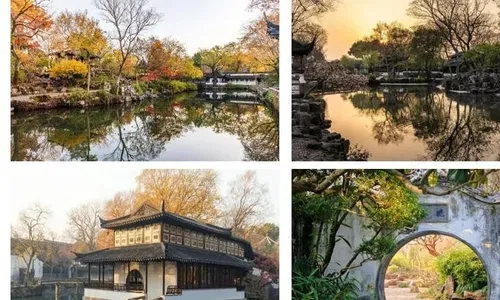
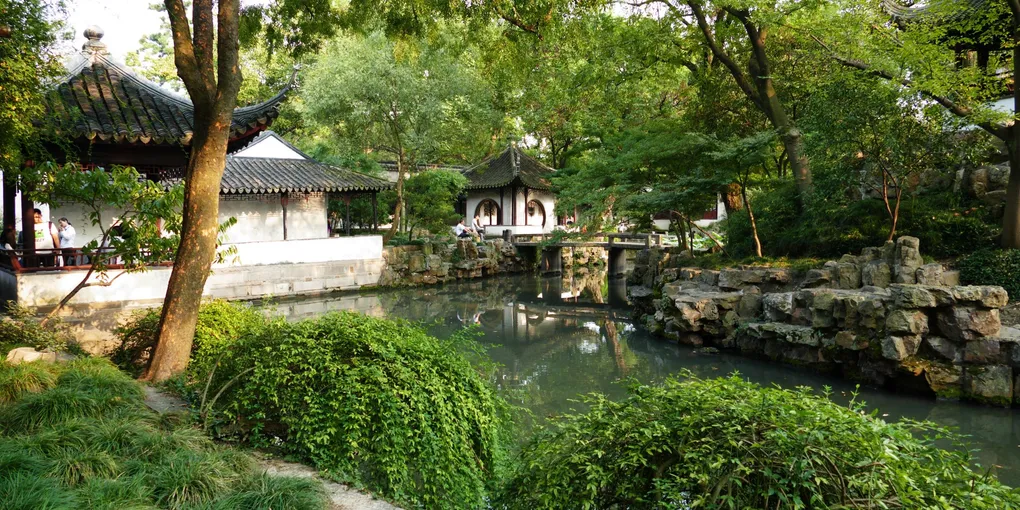
Two things make Suzhou worth more than a day trip. The first is the classical gardens: nine of them are inscribed on the UNESCO World Heritage List — private landscapes of rock, water, pavilion and planted court, built to be walked through rather than looked at. The second is the water towns on the city’s edge, Zhouzhuang and Tongli among them, where the streets are canals and goods still move by boat. Add silk, Kunqu opera and a bowl of noodles at breakfast, and you have the case for two or three days.
Quick answer: Two or three days is the right length. Nine classical gardens are UNESCO World Heritage; start with the Humble Administrator’s Garden (Zhuozheng Yuan) at ¥80 peak / ¥70 off-peak, the Lingering Garden (Liu Yuan) at ¥55 / ¥45, Lion Grove (Shizi Lin) at ¥40 / ¥30 and the Net Master’s Garden (Wangshi Yuan) at ¥40 / ¥30. Peak ticket season runs 1 April — 31 May and 1 July — 31 October. The Suzhou Museum is free but needs a timed booking up to 7 days ahead, and foreign visitors book and enter with a passport. High-speed rail from Shanghai takes about half an hour — check 12306 — and the fastest published run is Shanghai Hongqiao to Suzhou South in 26 minutes. Suzhou has no civil airport; the nearest is Wuxi Sunan Shuofang (WUX). Most visitors arrive under 240-hour visa-free transit. Every price below is as of October 2026 — verify before you travel.
How we verified this: SinoWander reads the Chinese-language primary sources that English guides cannot, including the Suzhou Gardens and Greening Administration price and booking pages, the Suzhou Culture, Radio, Television and Tourism Bureau, the official Suzhou Gardens Tourism ticketing platform, the Suzhou Museum, the Suzhou Meteorological Bureau climate data, the National Immigration Administration (NIA) visa announcements, the People’s Bank of China Suzhou branch on foreign-card coverage, the Suzhou Urban Management Bureau on public toilets, the Suzhou Development and Reform Commission price catalogue, Suzhou Rail Transit, and the State Council list of famous historical and cultural towns. Every claim below was cross-checked before writing. We have not personally visited every location. Each guide is date-stamped when last verified: 2026-10-06. See our methodology.
Cultural Context: A 2,500-Year-Old Garden City
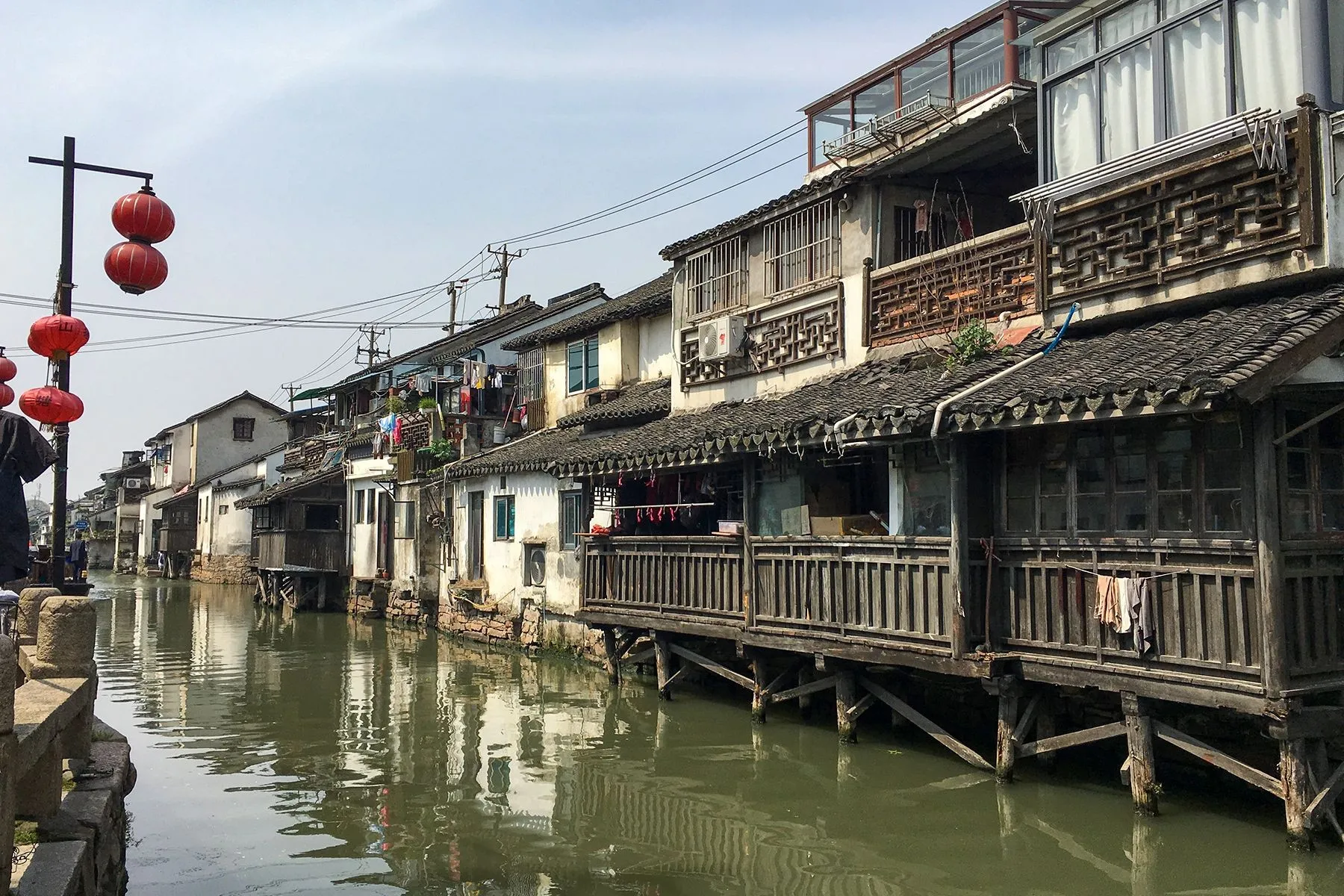
Suzhou was founded in 514 BC, which gives it a continuous urban history of more than 2,500 years, and it was among the first 24 National Historical and Cultural Cities designated in 1982. The historic core covers about 14.2 km² (a Gusu district figure) and, remarkably, the street plan has not been rewritten: the Pingjiang historic district still follows the “roads and canals running parallel, houses facing the water” grid that gave the city its shape. That double grid — water on one side, stone pavement on the other — is the single most distinctive thing about walking old Suzhou.
The gardens are the reason most visitors come. Nine Suzhou gardens are on the UNESCO World Heritage List: the Humble Administrator’s Garden, Lingering Garden, Net Master’s Garden and Mountain Villa with Embracing Beauty inscribed in 1997, with Canglang Pavilion, Lion Grove, the Garden of Cultivation, the Couple’s Garden and the Retreat and Reflection Garden added in the 2000 extension (30 November 2000). They were built as private retreats, designed to be walked in sequence — a doorway frames a rock, a corridor turns and releases you onto a pond.
Beyond the gardens, Suzhou is a centre of silk, the birthplace of Kunqu opera (proclaimed a UNESCO Masterpiece of the Oral and Intangible Heritage of Humanity on 18 May 2001, originating in the Kunshan area) and the home of Suzhou pingtan (sung storytelling with pipa and sanxian), which has more than 400 years of history and was listed in the first batch of national intangible cultural heritage in 2006. The water towns covered below are all on the State Council’s list of China Famous Historical and Cultural Towns.
When to Visit: Seasons, Plum Rains and Typhoons
Suzhou’s climate figures, per the Suzhou Meteorological Bureau: average annual temperature 15.7 degrees C, hottest month July at 28.2 degrees C, coldest month January at 3.0 degrees C, and annual precipitation of 1,094 mm. Those averages hide two things that matter more.
The first is the plum rain (meiyu), the East Asian rainy season: in Suzhou it runs on average from 16 June to 9 July and delivers roughly 204 mm. It is not a storm season but weeks of grey, humid, dripping weather — atmospheric in the gardens, tiring with a camera. The second is typhoons, which affect Suzhou in summer and autumn, disrupting trains and closing outdoor sites for a day or two when they do arrive.
Best windows: April — May and late September — November. April and May give mild temperatures and the gardens at their greenest; October and November give the red maples at Tianping Mountain and comfortable walking. Note that the official peak ticket season follows almost the same calendar — peak prices apply 1 April — 31 May and 1 July — 31 October — so the nicest months are also the priciest. Summer is hot and humid; winter is cold and damp, but the gardens empty out and off-peak pricing applies.
Festivals, 2026 edition — dates change yearly, so confirm before booking:
| Event | 2026 dates | Notes |
|---|---|---|
| Huqiu (Tiger Hill) Temple Fair | 25 September — 31 October | Ticket ¥70 as of October 2026 |
| Ya Shenxian temple fair | 29 — 31 May | National-level intangible heritage |
| Tianping Mountain Red Maple Festival | 1 October — 13 December | Ticket ¥30 as of October 2026 |
| Osmanthus market | From late September | Free |
The Classical Gardens: What to See and How to Book
One authority — the Suzhou Gardens and Greening Administration — runs the gardens as ticketed sites, with a single official price catalogue and a single official ticketing platform. Prices below come from that catalogue and are as of October 2026 — verify before you travel.
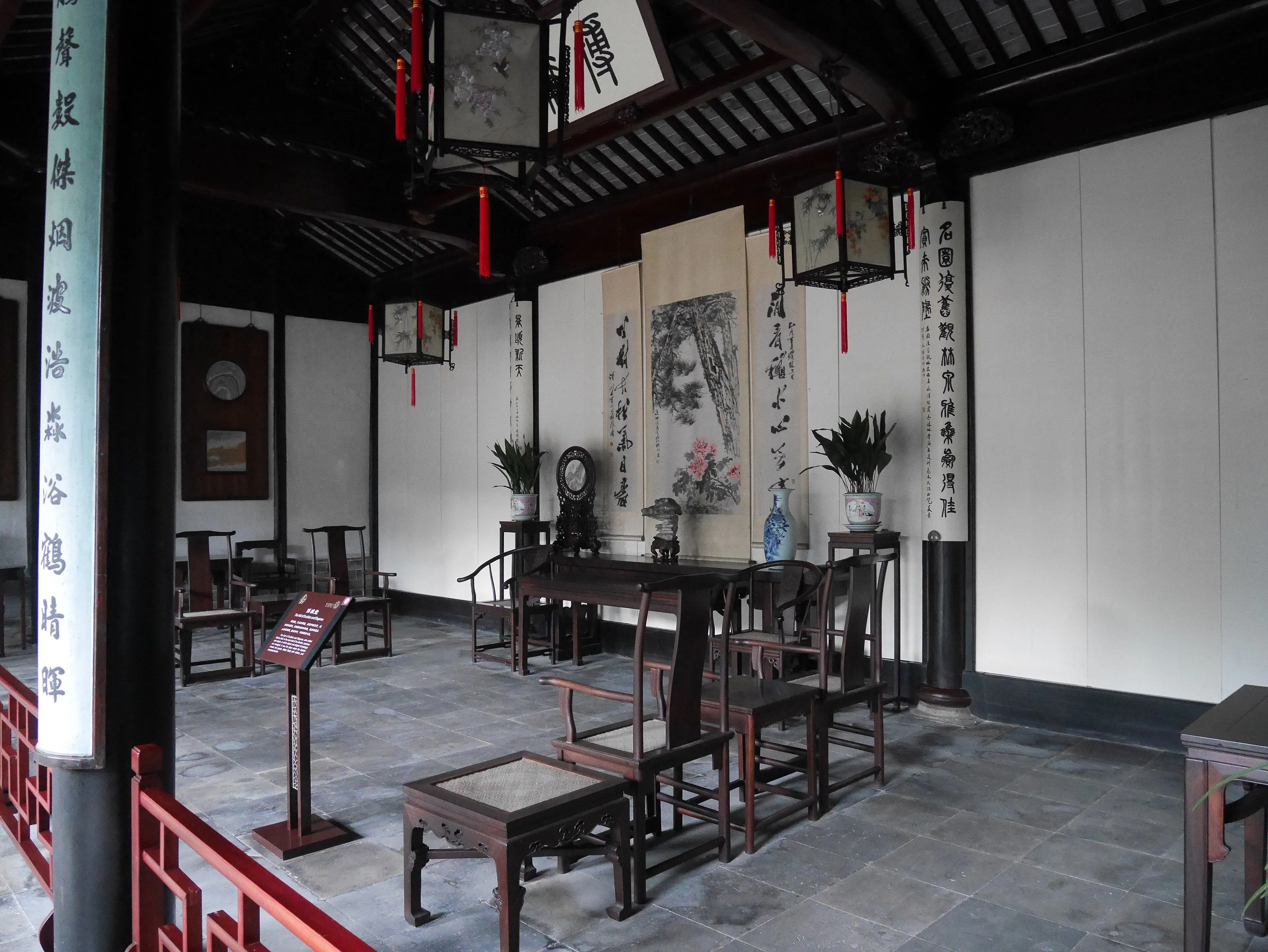
Ticket prices (peak / off-peak)
| Garden | Peak | Off-peak |
|---|---|---|
| Humble Administrator’s Garden (Zhuozheng Yuan) | ¥80 | ¥70 |
| Tiger Hill (Huqiu) | ¥70 | ¥60 |
| Lingering Garden (Liu Yuan) | ¥55 | ¥45 |
| Lion Grove (Shizi Lin) | ¥40 | ¥30 |
| Net Master’s Garden (Wangshi Yuan) | ¥40 | ¥30 |
| Couple’s Garden (Ou Yuan) | ¥25 | ¥20 |
| Canglang Pavilion (Canglang Ting) | ¥20 | ¥15 |
| Mountain Villa with Embracing Beauty (Huanxiu Shanzhuang) | ¥15 | ¥15 |
| Garden of Cultivation (Yi Pu) | ¥10 | ¥10 |
| Garden of Pleasance (Yi Yuan) | ¥15 | ¥15 |
| Tianping Mountain (Tianping Shan) | ¥30 | ¥30 |
The Water Towns have no peak/off-peak price difference — their official published prices are flat year-round.
Concessions, per the Gardens Administration: free for children 6 and under or under 1.4 m, seniors 70 and over, and disabled visitors plus one carer; half price for students at bachelor level and below and for visitors aged 60 — 69 from outside Jiangsu (Jiangsu residents 60 — 69 pay half at World Heritage gardens, free at city parks). Foreign visitors should expect the standard adult price — the concession lists are tied to Chinese documents.
Opening hours
Per the official Suzhou Gardens Tourism ticketing platform: from 1 March to 31 October, ticket checks start at 07:30, entry stops at 17:00 and the gardens clear at 17:30; from 1 November to the end of February, entry stops at 16:30 and they clear at 17:00. On public holidays all times extend by about 30 minutes. The Humble Administrator’s Garden ran adjusted hours of 06:45 — 17:30 from 19 June to 7 October 2026. Confirm current hours on the official platform when you book.
How to book — three different systems, and this matters
English guides say “all Suzhou gardens use the same booking process.” They do not. There are three distinct flows:
- Suzhou Museum (main building): real-name timed booking, up to 7 days ahead, same-day cut-off 15:40. The museum states plainly that entry is by ID card or passport.
- The three real-name gardens — Humble Administrator’s Garden, Lingering Garden, Lion Grove: real-name online reservation up to 7 days ahead, and foreign visitors reserve with a passport. The Gardens Administration’s own wording is that for gardens requiring real-name booking, passports are the supported document. Book through the official Jun Dao Suzhou platform of the Suzhou Culture and Tourism Bureau, or the Suzhou Gardens Tourism WeChat account.
- All other gardens — Net Master’s Garden, Garden of Cultivation, Canglang Pavilion, Couple’s Garden, Mountain Villa with Embracing Beauty and Tiger Hill: tickets are sold by phone number plus QR code, no ID required. A passport is also accepted at the gate.
Separately, Suzhou cancelled real-name booking across most A-grade scenic, cultural and religious sites in June 2024, retaining it for seven sites only: the Humble Administrator’s Garden, Lingering Garden, Tiger Hill, Lion Grove, Zhouzhuang, Tongli and Suzhou Paradise.
The Suzhou Gardens Annual Pass
For long-term residents: the Suzhou Gardens Annual Pass costs ¥120 a year for 100 entries and covers 14 sites (Tiger Hill, Lingering Garden, Humble Administrator’s Garden, Lion Grove, Couple’s Garden, Net Master’s Garden, Canglang Pavilion, Tianping Mountain, Garden of Cultivation, Mountain Villa with Embracing Beauty, Garden of Pleasance, Keyuan, Shangfangshan Forest Park and Shangfangshan zoo). Foreigners can buy it only with a Suzhou residence permit or temporary stay registration, plus passport and citizen card — this is for residents, not visitors.
Crowds and capacity
Official carrying-capacity figures from the Jiangsu provincial culture and tourism department: the Humble Administrator’s Garden has a daily maximum of 50,212 and an instant capacity of 9,031; Tiger Hill 69,000 / 13,800; the Lingering Garden 37,240 / 5,320. In practice, arrive at opening or after 15:00.
The Night Garden at the Net Master’s Garden
The Wangshi Night Garden is Suzhou’s best-known after-hours experience: ¥120 per person, time-slot booking, capped at 45 people per session. Sunday — Thursday 18:25 — 21:40 (last entry 20:55); Friday — Saturday 18:25 — 22:20 (last entry 21:35). It runs mid-March to mid-November, sold only through the “Suzhou Gardens Tourism” WeChat account. The cap means it sells out — book early.
Tiger Hill and Hanshan Temple
Tiger Hill (Huqiu), ¥70 / ¥60, is the site most visitors pair with the gardens — a wooded hill of temples and rock formations rather than a walled courtyard garden, and the largest of the garden-administration sites by daily capacity. The Fengqiao scenic area is free. Hanshan Temple, the monastery beside it, has an official guide-price cap of ¥20 — not free, and the price on the day may be lower, so verify on site. Panmen costs ¥40 by day and ¥88 at night (day 08:30 — 17:00, night 17:00 — 21:00).
Water Towns Around Suzhou: Zhouzhuang, Tongli, Luzhi, Jinxi, Mudu
All five towns below are on the State Council’s list of China Famous Historical and Cultural Towns. Four of them — Zhouzhuang, Tongli, Luzhi and Jinxi — appear on China’s tentative list for World Heritage under the “Classical Gardens of Jiangnan Water Towns” heading (first submitted 1996, updated 2012). A tentative listing is not World Heritage status. The one genuine World Heritage site among them is the Retreat and Reflection Garden (Tuisi Yuan) in Tongli, inscribed in 2000. Prices are as of October 2026 and are flat year-round — there is no peak/off-peak difference.
| Town | Entry | Combo ticket | Hours (paid sites) | Getting there |
|---|---|---|---|---|
| Zhouzhuang | Paid town | ¥80 (discount price; list price ¥100), half price ¥50 | 08:00 — 21:00 | Zhouzhuang Culture Line 1 bus from Suzhou Metro Line 11 at Baimajing Lu, weekends and holidays, ¥1 — 7 |
| Tongli | Paid town | ¥100 combo, 8 sites including the Retreat and Reflection Garden | 08:00 — 17:15 | Metro Line 4 to Tongli station |
| Luzhi | Open town, lanes free | about ¥37 — 52, verify on site | 08:30 — 17:00 | Bus 528 to Luzhi bus hub |
| Jinxi | Open town, lanes free | ¥65 inner combo | 08:00 — 16:30 | Zhouzhuang Line 1, Jinxi stop |
| Mudu | Open town, lanes free | ¥78 inner combo (Yan Family Garden, Hongyin Mountain Villa, Ancient Pine Garden); Bangyan Mansion free | 08:30 — 17:00 (April — October) | In Wuzhong district, reachable by metro and bus |
Zhouzhuang is the most famous and the busiest. Its ¥80 ticket (against a ¥100 list price) is valid for three consecutive days after registration — unusual and useful, since you can go in the evening and return early the next morning before the tour buses arrive.
Tongli is the pick if you want one World Heritage garden with your canal scenery. The useful detail: the street lanes are free before 08:00 and after 17:15, when the paid sites are shut. That is also when the town looks best.
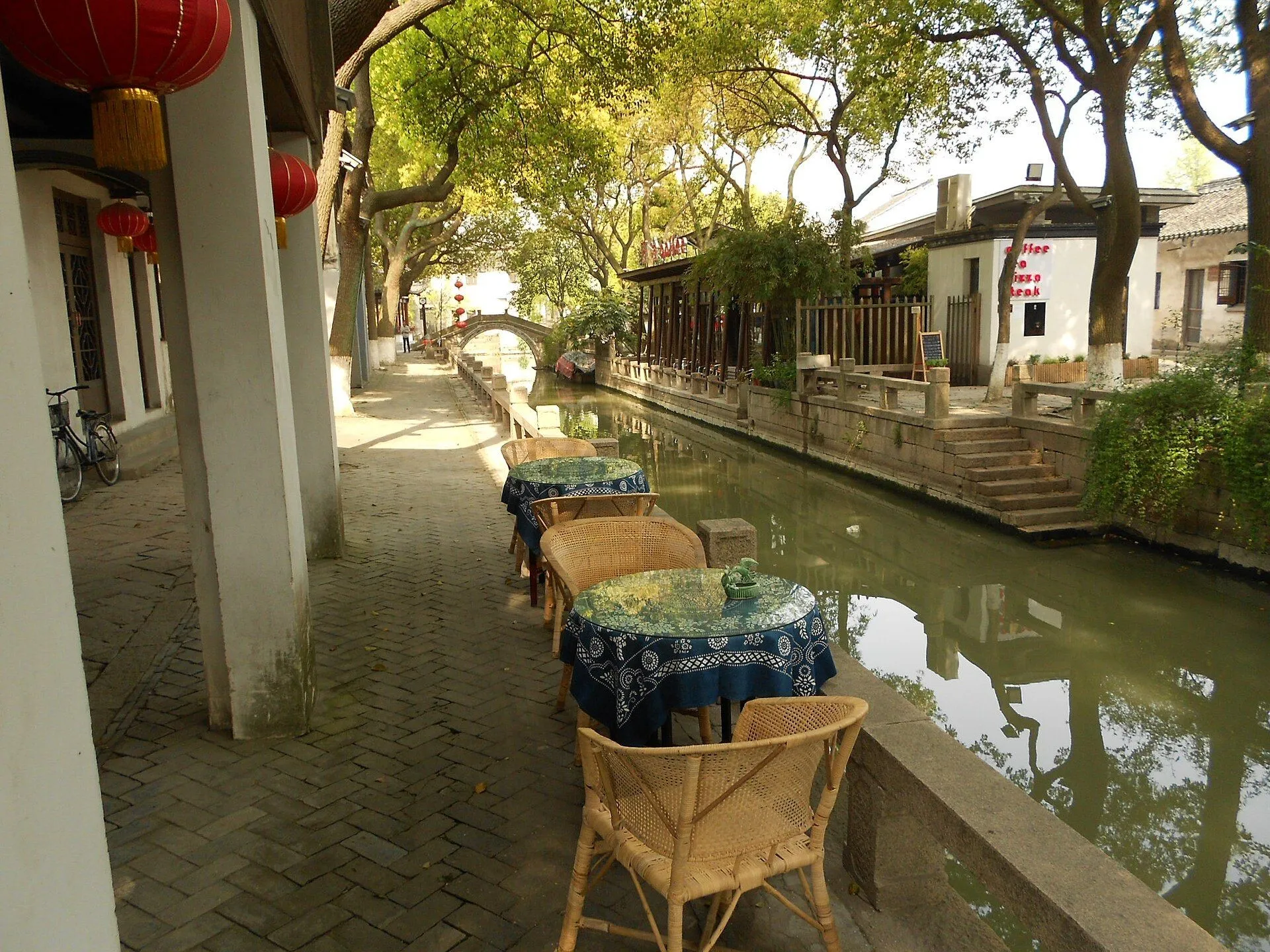
Luzhi, Jinxi and Mudu are open towns — walking their lanes is free; you only pay to enter specific courtyards and halls. We deliberately do not give a single fixed price for the Luzhi combo ticket: three official sources publish three figures (¥37, ¥45 and ¥52, for different site combinations), so treat ¥37 — 52 as the range and confirm at the ticket office. Mudu’s published hours cover April — October only — verify winter hours and transport before travelling.
Most travellers pick one: Zhouzhuang for the name, Tongli for the World Heritage garden and Metro Line 4 access, Luzhi or Jinxi for a quieter wander.
Jinji Lake and Modern Suzhou
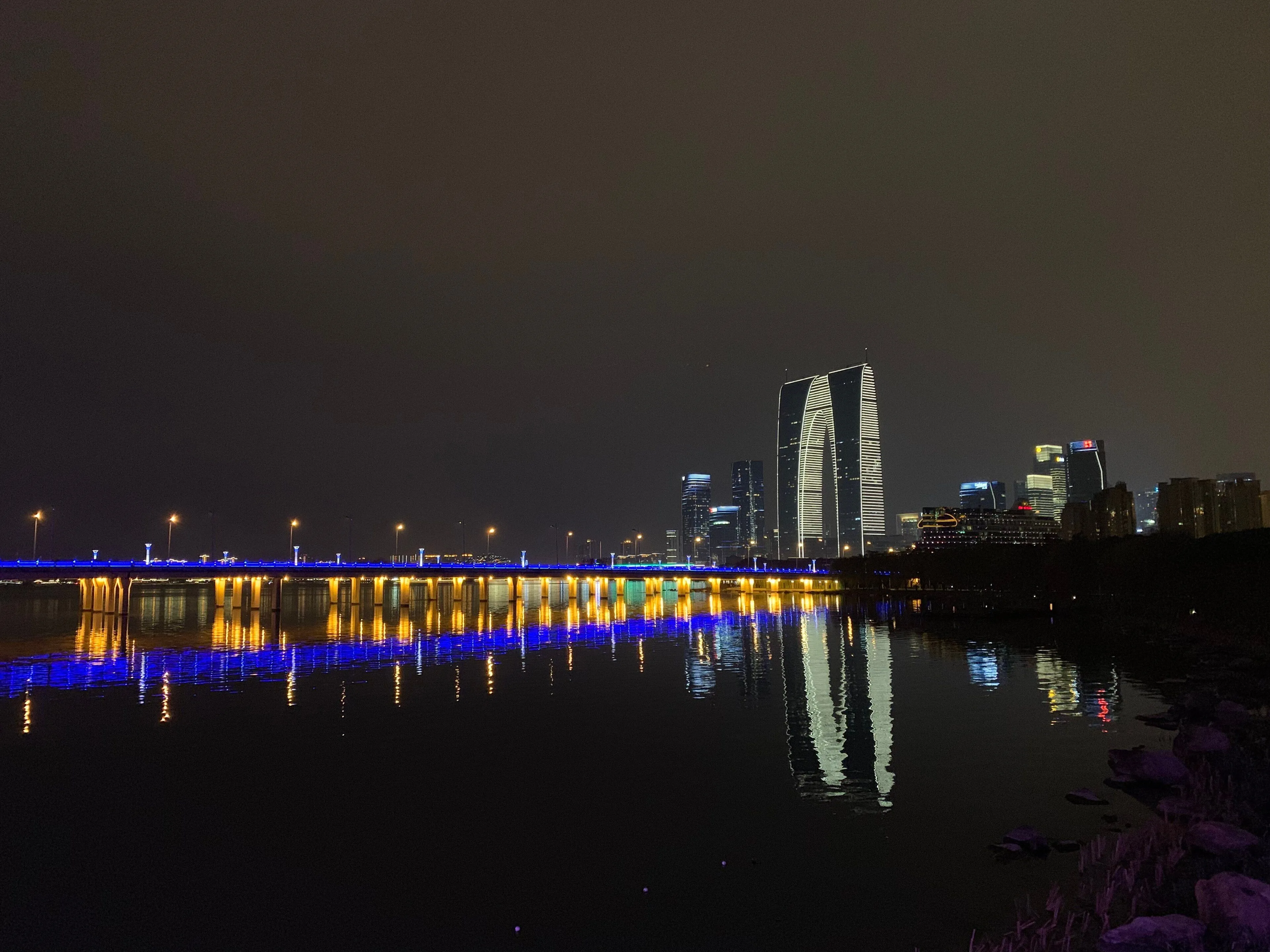
Cross the old city east and Suzhou becomes a different city: the Suzhou Industrial Park, wide boulevards, and Jinji Lake, a free, open 5A-rated scenic area (rated in 2012 by the Ministry of Culture and Tourism). It is where locals go in the evening, and it costs nothing.
The music fountain runs Friday and Saturday, 19:30 — 20:00, free, no booking. The Gate to the East (Dongfang Zhi Men) on the lakeshore rises 301.8 m and is described as the world’s largest gate-shaped building; its light show, with the lakefront lighting, runs from dusk to 24:00. There is no public observation level to visit — we do not claim one.
Also worth knowing: Panmen (¥40 day / ¥88 night), and further out in Wuzhong on Lake Tai, the Dongshan Carved Tower (¥60, 08:30 — 17:00) and Linwu Cave (¥50, 08:00 — 16:30). The Lake Tai figures may lag — verify before travelling.
Museums, Kunqu and Old Streets: Suzhou Museum, Pingjiang & Shantang
Suzhou Museum
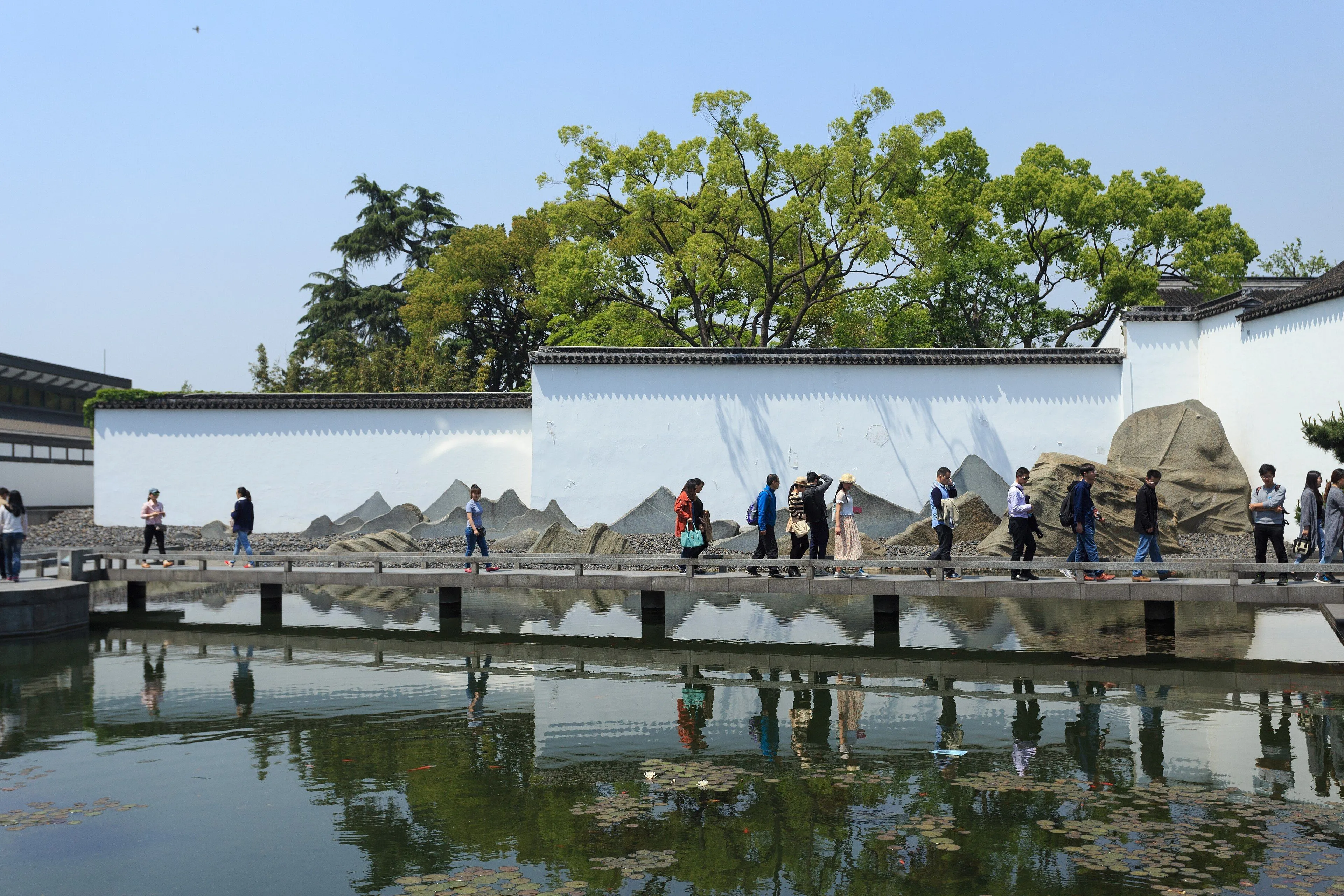
The Suzhou Museum main building, designed by I. M. Pei, is free, open Tuesday — Sunday 09:00 — 17:00 (last entry 16:00) and closed Mondays. Entry is by real-name timed booking up to 7 days ahead, with same-day cut-off at 15:40. Foreign visitors enter with a passport — the museum accepts either a Chinese ID card or a passport.
The piece to look for is the Zhenzhu Sheli Baozhuang, a Northern Song Buddhist reliquary casket 122.6 cm high, found in 1978 inside the Ruiguang Pagoda and encrusted with roughly 40,000 pearls.
The Suzhou Museum West, opened 25 September 2021 and designed by GMP, is free and needs no booking, with the same hours. If the main building is booked out, go there.
Silk, Kunqu and pingtan
The Suzhou Silk Museum has a free history hall, Tuesday — Sunday 09:00 — 17:00 (last entry 16:00), closed Mondays. The China Kunqu Museum is free, 09:00 — 17:00 (last entry 16:30), Tuesday — Sunday. The China Suzhou Pingtan Museum is free, 09:00 — 17:00, and its “Wu Yuan Shen Chu” teahouse puts on shows for ¥10 or ¥20.
Kunqu was proclaimed a UNESCO Masterpiece of the Oral and Intangible Heritage of Humanity on 18 May 2001 and originated in the Kunshan area; it is often called the ancestor of Chinese opera forms. Suzhou pingtan — sung storytelling with pipa and sanxian — has more than 400 years of history and was listed in the first batch of national intangible cultural heritage in 2006. Both are easiest to catch as short teahouse sets.
The old streets: Pingjiang and Shantang
Pingjiang Historic District is free and open at all hours, covers about 116.5 hectares and has been inhabited for more than 2,500 years. It is the best-preserved part of the old town and the clearest surviving example of the “roads and canals parallel, streets beside the water” layout. No ticket, no closing time — the natural place to end a day.
Shantang Street — the “seven-li Shantang” — is free and open all day. Built in 825 AD by the poet-official Bai Juyi, it runs roughly 3,600 m (the local gazetteer gives 3,829.6 m) from Changmen gate to Tiger Hill. It is livelier and more commercial than Pingjiang; go at dusk, and take the Shantang hand-rowed boats while you are there.
Suzhou Cuisine and Time-Honored Brands
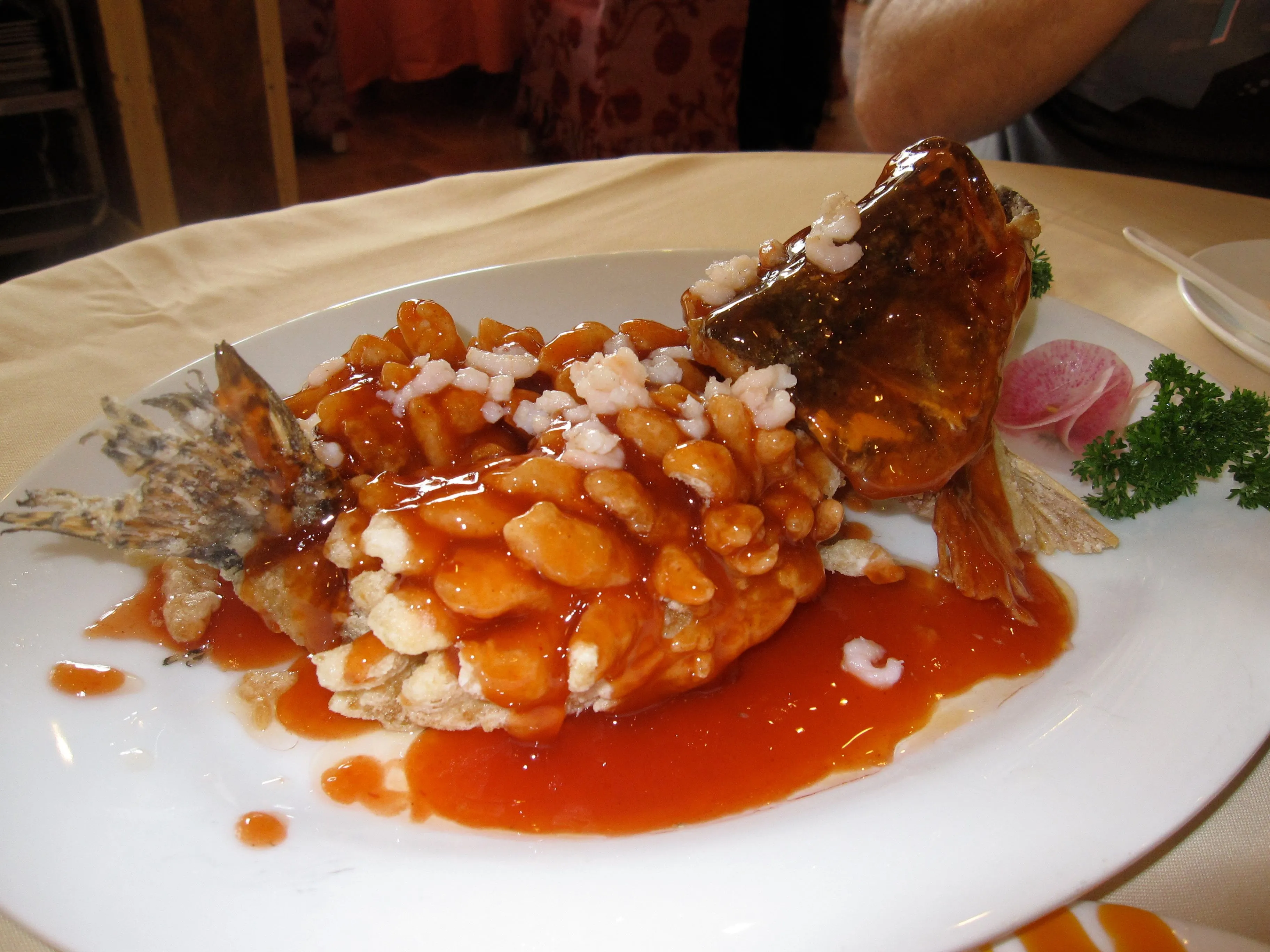
Suzhou cuisine (Su bang cai) is a major branch of Huaiyang cuisine — sweet-fresh, delicate, obsessively seasonal. It is provincial-level intangible cultural heritage (Jiangsu provincial batch, 2016; Suzhou municipal batch, 2009) — not national-level, despite what some English guides say.
Suzhou noodles are the everyday meal and are themselves municipal-level intangible heritage: thin noodles in a clear broth with a topping, eaten early. Two names worth knowing: Fengzhen large-pork noodles (from Tongdexing) and Aozhao noodles (from Aozhaoguan, a Jiangsu-level workshop). The city has on the order of 24,000 noodle shops.
China Time-honored Brands, recognised by the Ministry of Commerce, are the reliable addresses:
| Brand | Founded | Batch |
|---|---|---|
| Songhelou | 1757 | 2006 |
| Deyuelou | Ming dynasty | 2006 |
| Huangtianyuan | — | 2013 (second batch) |
| Caizhizhai | — | 2013 (second batch) |
| Lugaojian | — | 2013 (second batch) |
| Yeshouhe | — | 2013 (second batch) |
| Jinjin | — | 2013 (second batch) |
Guanqian Street, in the old-town centre, was named in 2018 to Jiangsu’s first batch of “old-brand cluster streets”; the dining is concentrated on Taijian Lane just off it, and the wider district covers about 0.64 km². This is the easiest place to eat your way through the old brands in one walk.
Biluochun is Suzhou’s green tea and a national geographical indication product (granted 2002; GI certification mark registered 1998, Jiangsu’s first; agricultural GI 2020). Be precise: Biluochun is grown only in Dongshan and Jinting (West Mountain), in Wuzhong District — tea sold under that name from anywhere else falls outside the protected indication. It is picked from around the vernal equinox to the grain rain solar term. Suzhou’s food culture sits inside the wider picture in our Chinese food guide for foreigners.
A 2-3 Day Itinerary
Day 1: The gardens and the museum
| Time | Activity |
|---|---|
| 08:00 | Humble Administrator’s Garden at opening |
| 10:30 | Suzhou Museum (booked in advance) |
| 12:30 | Lunch: Suzhou noodles |
| 14:00 | Lion Grove |
| 16:00 | Canglang Pavilion or the Garden of Cultivation |
| Evening | Pingjiang Historic District, dinner on Taijian Lane |
Start at the Humble Administrator’s Garden at opening — it is the largest and the busiest. Book it, and Lion Grove, with your passport on the official platform up to 7 days ahead. The Suzhou Museum is a short walk away and needs its own timed booking; note the Monday closure and the 15:40 cut-off. Finish with the smaller gardens in the afternoon, then walk into Pingjiang as the lanterns come on.
Day 2: Tiger Hill, the canal and Shantang
| Time | Activity |
|---|---|
| 08:30 | Tiger Hill |
| 11:00 | Hanshan Temple and the Fengqiao area (Fengqiao free) |
| 13:00 | Lunch |
| 15:00 | Grand Canal boat, or the canal water bus |
| Evening | Shantang Street, hand-rowed boat |
| Late | Wangshi Night Garden, if visiting March — November |
Tiger Hill takes a relaxed morning; Hanshan Temple has an official guide-price cap of ¥20 — verify on site. Then get on the water: the canal water bus is ¥30 per person, the Grand Canal loop cruise ¥138, the Shantang hand-rowed boats ¥80 per seat (minimum three), and a painted pleasure boat ¥50 one way or return. All as of October 2026 — verify before you travel. Between mid-March and mid-November, the Wangshi Night Garden (¥120, 45 per session, WeChat-only) is the best thing in Suzhou after dark.
Day 3 (optional): A water town
Pick one. Tongli is simplest: Metro Line 4 to Tongli station, a ¥100 combo covering eight sites including the World Heritage Retreat and Reflection Garden, and free lanes before 08:00 and after 17:15. Zhouzhuang is the famous one at ¥80, valid three consecutive days after registration. Luzhi or Jinxi are open towns where the lanes cost nothing. Short on time and based in Shanghai? See our Suzhou day trip from Shanghai.
Where to Stay: Old Town vs Jinji Lake
There is no official government list of “recommended hotel districts” in Suzhou, so we will not invent one. What we can do is describe the areas official sources do identify, and what each is like to stay in.
Old town (Guanqian Street / Pingjiang). This is the officially recognised commercial and cultural core of the historic city — Guanqian Street was designated one of Jiangsu’s first old-brand cluster streets in 2018, and Pingjiang is the best-preserved old-town district. Staying here puts the gardens, the museum and the old-brand restaurants within walking distance. The right base for a first visit of two or three nights.
Jinji Lake / Suzhou Industrial Park. The modern district: wide streets, lakefront hotels, the Gate to the East and the Friday — Saturday music fountain. Metro-connected to the old town, and better suited to travellers who want contemporary hotels and business facilities.
Around the railway stations. Suzhou railway station sits next to the old town on Metro Lines 2 and 4; Suzhou North and Suzhou South are further out on their own lines. Staying near a station buys transfer convenience and little else. If you would rather base in Shanghai, our Shanghai travel guide covers that option.
Getting Around: From Shanghai and Within the City
From Shanghai by rail
Three rail corridors connect Shanghai and Suzhou, and all three are in operation:
- Shanghai — Nanjing Intercity Railway, opened 1 July 2010, serving Suzhou station, Suzhou Industrial Park station and Suzhou New District station.
- Beijing — Shanghai High-Speed Railway, opened 30 June 2011, serving Suzhou North station.
- Shanghai — Suzhou — Huzhou High-Speed Railway, opened 26 December 2024, serving Suzhou South and Shengze.
The only officially published journey time is Shanghai Hongqiao to Suzhou South in 26 minutes (350 km/h design speed). For the others expect roughly half an hour, and check 12306 for times, fares and seats — fares and frequencies are dynamic and no static official timetable exists.
Which station? Three serve the tourist city:
| Station | Area | Lines | Best for |
|---|---|---|---|
| Suzhou | Old town | Metro 2 and 4 | Closest to the gardens and old town |
| Suzhou North | Xiangcheng | Beijing — Shanghai HSR, Metro 2 | High-speed arrivals from Beijing and beyond |
| Suzhou Industrial Park | SIP | Shanghai — Nanjing intercity | Closest to Jinji Lake |
From Shanghai Pudong Airport
A direct coach runs from Shanghai Pudong (PVG) to Suzhou: ¥99, about 2.5 hours, 12 departures a day, arriving at Suzhou Industrial Park station and the north square of Suzhou railway station (Shanghai Airport Authority timetable, updated 16 September 2026). No equivalent official coach is listed from Shanghai Hongqiao.
Flying in
Suzhou has no civil airport. The nearest is Wuxi Sunan Shuofang (WUX), also a 240-hour visa-free transit port. Suzhou runs two in-city air terminals — the Suzhou city terminal and the Suzhou New District city terminal — for check-in and transfer.
Metro
Suzhou’s metro has 9 lines, 346.349 km and 275 stations as of January 2026. Fares are ¥2 for the first 6 km, then distance-tiered. Tourist passes: ¥18 for one day, ¥40 for three days. First trains run around 05:40, last trains around 22:15 — 23:45 depending on the line — check the Su Exing app for your station.
Payment for foreign visitors: every station has POS machines accepting six international card brands — Visa, Mastercard, American Express, JCB, Diners and Discover. Machines also take cash in ¥1, ¥5 and ¥10 notes plus ¥1 coins. Alipay and WeChat Pay can be linked to international cards; the Su Exing app accepts UnionPay only. Your passport is an identity document, not a payment method.
Buses, taxis, bikes and boats
- Bus: ¥2 per ride within 18 km in Suzhou city, excluding Wujiang; a local IC card gives 40% off.
- Taxi: flag-down ¥10 for 3 km, then ¥1.80 per km (engines up to 2.0 L) or ¥2.00 per km (above 2.0 L). A 50% empty-run surcharge applies beyond 5 km and a 20% night surcharge runs 23:00 — 05:00.
- Ride-hailing apps work as elsewhere in China, with designated pick-up points.
- Shared bikes (Meituan and Hello) use electronic geofences with fixed bays; parking outside one triggers a ¥10 re-positioning fee.
- Water: canal water bus ¥30 per person, Grand Canal loop ¥138, Shantang hand-rowed boat ¥80 per seat (minimum three), painted pleasure boat ¥50.
- Pedicabs are not officially regulated — agree the price first.
For the one-day version, including which station to pick, see Suzhou day trip from Shanghai; if you are weighing destinations for a day out of Shanghai, our Hangzhou day trip from Shanghai covers the other obvious candidate.
Practical Information: Payments, 240h Visa-Free, Toilets, 12345
Paying as a foreign visitor
Per the People’s Bank of China Suzhou branch, international-card acceptance in Suzhou is close to complete: 10,429 key merchants have POS terminals taking international cards (100% coverage), 4,252 ATMs accept international cards (about 97%), and there are 1,160 foreign-exchange branch outlets. The metro takes international bank cards, Alipay and WeChat Pay can be bound to international cards, and all four-star-and-above hotels offer foreign exchange. Set up Alipay or WeChat Pay before you arrive and carry a little cash for small vendors.
240-hour visa-free transit
Jiangsu province, including Suzhou, is within the 240-hour visa-free transit stay area (24 provinces, no city limit); you may enter via Shanghai Pudong/Hongqiao, Nanjing Lukou or Wuxi Shuofang and travel to Suzhou — cross-provincial travel among the 24 listed regions is permitted. Current NIA policy: 57 countries, 65 ports, 10 days, updated 2026-08-20. In plain terms: you can fly into Shanghai, Nanjing or Wuxi under the transit exemption and spend your 10 days in Suzhou; Suzhou itself is not an entry port, which is why you arrive through a neighbour. Confirm your nationality is on the current list before booking, since the NIA updates it. Full mechanics, including the onward-ticket requirement, are in our 240-hour visa-free transit guide and the visa-free countries list.
Toilets
Suzhou had 3,047 public toilets citywide as of November 2023, of which 584 were equipped with a “third toilet” (family-accessible cubicle) per the 2022 baseline. All are mapped on the Suzhou Weichengguan mini-program and on Amap, and 722 businesses had joined the city’s “toilet alliance” scheme opening their facilities to the public as of November 2023. For the wider etiquette and what to carry, see our public toilets in China guide.
Getting help
The 12345 hotline operates a tourist desk with 24-hour English service (in place since November 2023) for complaints and assistance. Suzhou’s official travel platform is Jun Dao Suzhou, run by the Suzhou Culture and Tourism Bureau as a WeChat account, mini-program and app — it handles garden ticketing, museum reservations, hotels and attraction tickets, and is the single most useful thing to install before you arrive.
Sources & Verification
This guide was last verified on 2026-10-06. Key Chinese-language primary sources:
- Suzhou Gardens and Greening Administration: garden price catalogue, peak/off-peak season, concessions, the ¥120 annual pass and the passport real-name booking wording.
- Official Suzhou Gardens Tourism ticketing platform: opening hours, the seven sites keeping real-name booking, Wangshi Night Garden pricing and session caps.
- Suzhou Culture, Radio, Television and Tourism Bureau and the Suzhou municipal government: the 2024 booking change, Jun Dao Suzhou and festival dates.
- Suzhou Museum: free entry, hours, the 7-day booking window and 15:40 cut-off, passport acceptance and the Zhenzhu Sheli Baozhuang reliquary.
- Suzhou Meteorological Bureau: the 15.7 degrees C annual mean, monthly extremes, 1,094 mm precipitation and the 16 June — 9 July plum-rain window.
- National Immigration Administration: the 240-hour policy at 57 countries, 65 ports, 24 provinces and 10 days, updated 2026-08-20.
- People’s Bank of China Suzhou branch and the Suzhou Urban Management Bureau: foreign-card coverage and public-toilet counts.
- Suzhou Rail Transit, Jiangsu provincial culture and tourism department and the Shanghai Airport Authority: metro network and fares, garden carrying capacities and the PVG — Suzhou coach timetable.
See our full verification methodology.
Related Articles
- Suzhou Day Trip from Shanghai — the one-day version: which station, which garden, and how to fit it in
- 240-Hour Visa-Free Transit in China — the 57-country, 65-port, 10-day rules and how to use them for Suzhou
- Public Toilets in China — what to expect and what to carry
- Chinese Food Guide for Foreigners — Su cuisine, noodles and ordering without the language
- Shanghai Travel Guide — the base most Suzhou visitors start from