China with Kids — The Complete Family Travel Guide (2026)
Here’s the good news up front: China is one of the most kid-friendly travel destinations in the world. It is exceptionally safe, children are adored everywhere you go, kid discounts are built into almost every ticket, and the baby infrastructure has improved enormously in recent years. The challenge for foreign families is not safety; it is logistics: long distances, the language barrier, and a stack of small cultural details that Chinese parents take for granted. This guide covers all of it, fact-checked against official sources.
How we verified this: SinoWander reads Chinese-language sources that English guides cannot, including official China Railway 12306 ticketing rules, Beijing subway regulations, Trip.com (Ctrip), and Dianping. We cross-check them before writing. We have not personally visited every location. Each guide is date-stamped when last verified: 2026-08-06. See our methodology.
New here? This article focuses on traveling with kids. For the broader trip-planning picture, pair it with our 7 Days in China Itinerary and China Travel Safety Tips.
Why China is great for families
- Extremely safe. Violent crime is rare and crimes against children are extremely uncommon. Walking around at night with kids is worry-free; streets are busy and well-lit.
- Children are adored. Chinese culture treats children as a blessing. Expect strangers to smile at your kids, offer them snacks, give up their seats, and help you carry a stroller up stairs. Foreign children (especially blond or curly-haired) get a lot of warm attention.
- Kid discounts everywhere. High-speed trains, attractions, and transit all have child free or half-price policies (rules below).
- Baby facilities have improved. Major malls, airports, and new subway stations now have mother-and-baby rooms / accessible toilets. Trip.com and Dianping let you filter hotels for “family-friendly.”
- Supplies are easy to buy. Diapers, formula, baby food, and wipes are available everywhere in cities (details below).
The one expectation to reset: China is huge; don’t cram. With kids, plan 2–3 days per city, one main sight per day, and protect afternoon downtime. Don’t copy an adult’s “military-style” packed itinerary.
Getting around: child ticket rules (verified)
High-speed trains: by age (official 12306, 2026)
China’s railways switched from height to age-based child tickets. The current rule:
| Child age | Ticket |
|---|---|
| Under 6 | Free: no seat (one free child per paying adult; a second child needs a child ticket) |
| 6 to under 14 | Child discount ticket: about 50% of full fare, own seat |
| 14 and up | Full-price ticket |
- Bring the passport. Age is checked at ticket check and boarding; foreign children use a passport (without it, you may be denied boarding).
- Buy via the 12306 app (add the child to an adult’s account using their passport) or at the station counter.
Flights: by age
- 14 days old to under 2: infant ticket: 10% of the adult full fare, no seat (held on lap). Minimum flying age is 14 days (most airlines; premature infants may need 3 months + a medical certificate).
- 2 to under 12: child ticket: a discount on the adult full fare (roughly 50–75%), with a seat.
- For international flights, contact the airline to confirm bassinets and baby meals. Documents: birth certificate / passport matching the guardian’s visa.
Subway & bus
- Most cities let children under 1.2 m or 1.3 m ride free (e.g. Beijing subway: 1.3 m and under free, 2021 rule, includes second/third children), accompanied by a paying adult. The threshold varies by city; check locally.
- An adult scans in; the child follows through the wide accessible gate (with a stroller).
At attractions: by height (mostly)
Unlike trains, most scenic spots still price children by height, and policies differ site by site:
| Height | Most scenic areas |
|---|---|
| Under 1.2 m (some 1.3 m) | Free |
| 1.2 m – 1.5 m (some 1.4 m) | Half price (child ticket) |
| Over 1.5 m | Full price |
- Theme parks go by age: Shanghai Disneyland is free under 3 (or under 1.0 m), child ticket ages 3–11, adult 12+; 2026 tickets run ¥475–799 across six tiers (regular to peak days), two-day pass ¥1,680. Universal Beijing is similar.
- Bring the passport: children are often ID-checked and measured at the gate.
- Check each sight’s policy before you go (official site or Trip.com listing); don’t assume.
Stroller, supplies, and baby facilities
Stroller vs carrier: bring both
- A lightweight umbrella stroller (foldable, gate-checkable) works in new subway lines, malls, airports, and theme parks, which have elevators.
- Also bring a soft carrier. Old subway stations (e.g. Beijing’s Xizhimen, Shanghai’s Xujiahui), historic sites (the Great Wall, hutongs, old-town stone streets), and crowded sights are miserable with a stroller; a carrier frees your hands.
- Don’t bring a bulky full-size pram: it won’t go up old-station stairs and won’t fit in taxi trunks.
Diapers, formula, baby food: easy in cities
- Diapers: supermarkets, Watsons, mother-and-baby stores (Haiziwang / Aiyingshi), and JD.com / Meituan same-day delivery. Common brands: Pampers, Merries, Dawang, Huggies; full size range.
- Formula: registered imported brands (Aptamil, Cow & Gate, Feihe) are sold in stores and online. Cross-border online purchases are capped (¥5,000 per order, ¥26,000 per year) and limited to registered formulas; so if your baby is loyal to a specific overseas version that may not be on Chinese shelves, bring a few cans.
- Baby food / snacks: supermarkets stock fruit purées, rice cereal (Heinz, Gerber China), and yogurt. Older babies can eat soft Chinese dishes too (see food section).
- Medicine: bring your child’s usual prescription meds with documentation, plus pediatric fever reducer (ibuprofen/acetaminophen), diarrhea treatment, band-aids, and mosquito bite cream.
Mother-and-baby rooms
- Large malls, airports, high-speed rail stations, and new subway stations generally have mother-and-baby rooms / accessible toilets (for nursing and changing).
- Older public toilets and scenic-area toilets may not; carry a portable changing pad.
- For nursing in public, a nursing cover helps; mall mother-and-baby rooms are most convenient.
Toilets: the squat-toilet reality
- Squat toilets are still common in older areas, scenic spots, and small restaurants; awkward for seniors and toddlers.
- Workaround: prefer sit toilets at malls, hotels, McDonald’s, KFC, and Starbucks; use the hotel before heading out; carry tissues and hand sanitizer (some public toilets don’t provide paper or soap).
- Upgrades are ongoing (sit toilets + accessible cubicles are increasing), but don’t count on them everywhere.
Food: what kids can eat (a whole mild world)
Chinese food is not all spicy: there’s a huge range of mild, soft, kid-friendly options:
- Staples & noodles: white rice, congee, wonton soup, steamed buns (baozi), dumplings, plain noodles, egg fried rice.
- Dishes: tomato-and-egg stir-fry (sweet-sour, not spicy; a foreign-kid favorite), steamed egg, sweet-and-sour pork, kung pao chicken (order it mild), steamed fish, shredded potato.
- Breakfast: soy milk, youtiao, tea eggs, xiaolongbao, millet congee.
- Avoiding spice: say “bù yào là” (no spice, not even a little). Sichuan/Hunan restaurants run spicy; with kids, pick Cantonese, Jiangnan, or northern home-style places.
- Universal fallback: McDonald’s, KFC, Pizza Hut, Burger King are everywhere; a lifesaver when a tired kid refuses Chinese food.
- Milk/yogurt: supermarkets stock UHT milk cartons and yogurt everywhere; for under-1s, prefer formula over fresh milk.
Best destinations with kids
| Destination | Why families love it | Good for |
|---|---|---|
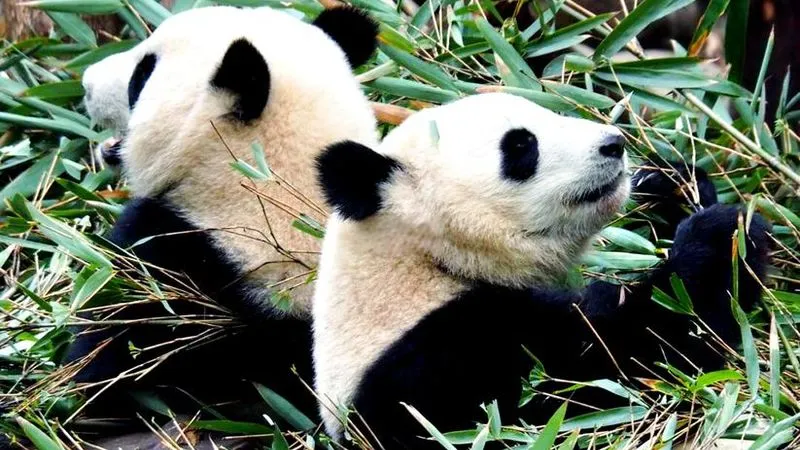
| Chengdu | Giant Panda Breeding Base: see pandas, a global one-of-a-kind, kids’ favorite; Kuanzhai Alley, Dujiangyan | All ages, top pick |
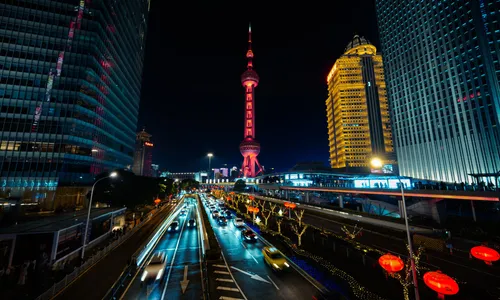
| Shanghai | Shanghai Disneyland; the Bund, Science & Technology Museum, Natural History Museum | Ages 3+ |
| Beijing | Mutianyu Great Wall (cable car up/down, fewer crowds than Badaling; easier with kids); Beijing Zoo (has pandas); the Forbidden City is vast and tiring for little legs | Ages 5+ |
| Guilin / Yangshuo | Li River cruise (sit and watch the karst scenery; kids don’t walk); Yulong River bamboo raft, cycling | All ages |
| Sanya / Hainan | Beach resort, dense family hotels, warm winter escape, sand and swimming | All ages, top family resort pick |
| Harbin (winter) | Ice and Snow World, Xuexiang, Yabuli skiing (Dec–Feb only; kids see ice-lantern wonderlands) | Ages 5+, winter |
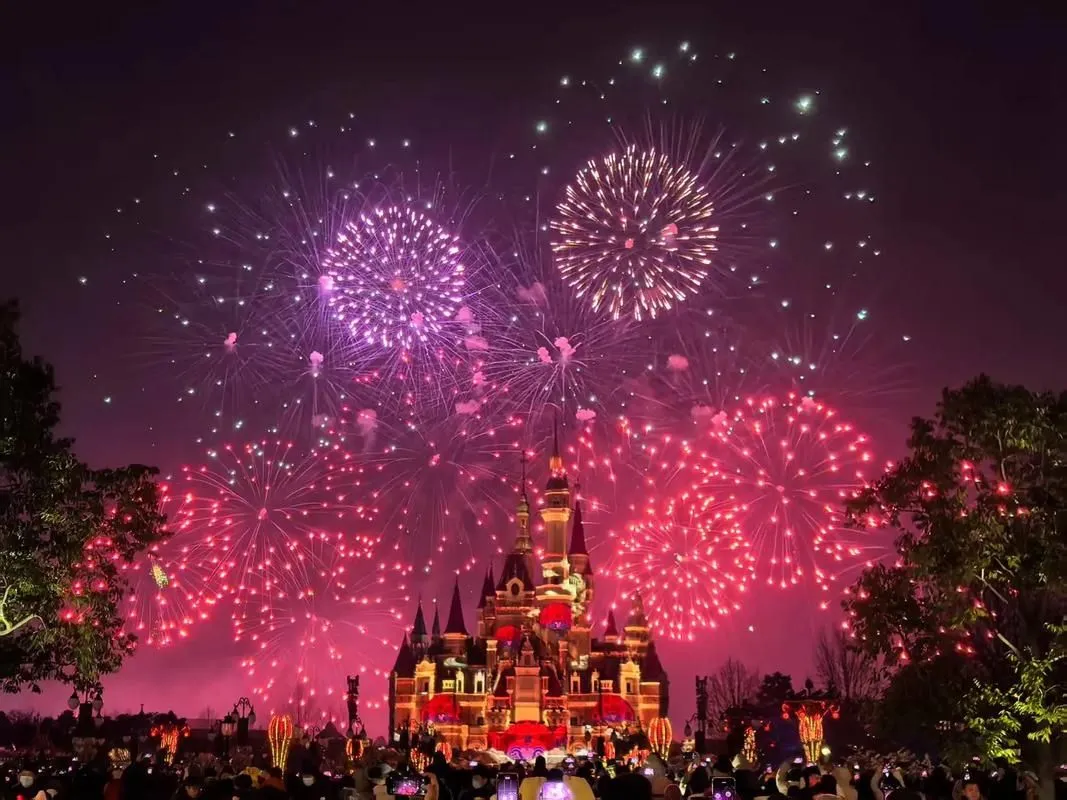 Shanghai Disneyland — the marquee attraction for families with kids 3+.
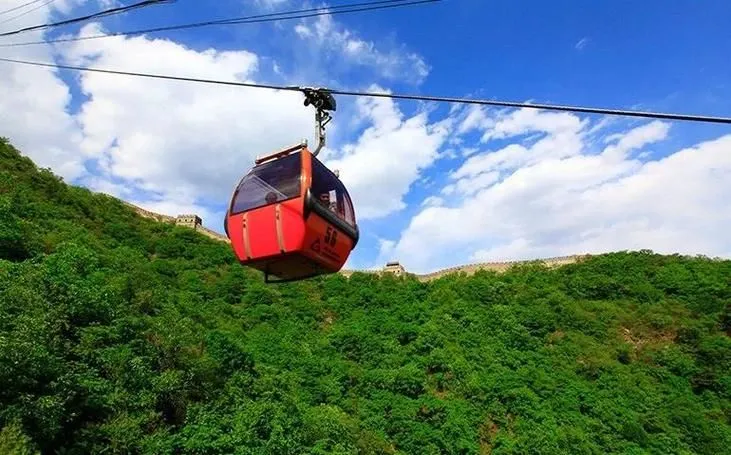 Mutianyu Great Wall — the cable car makes it doable with kids, and it’s less crowded than Badaling.
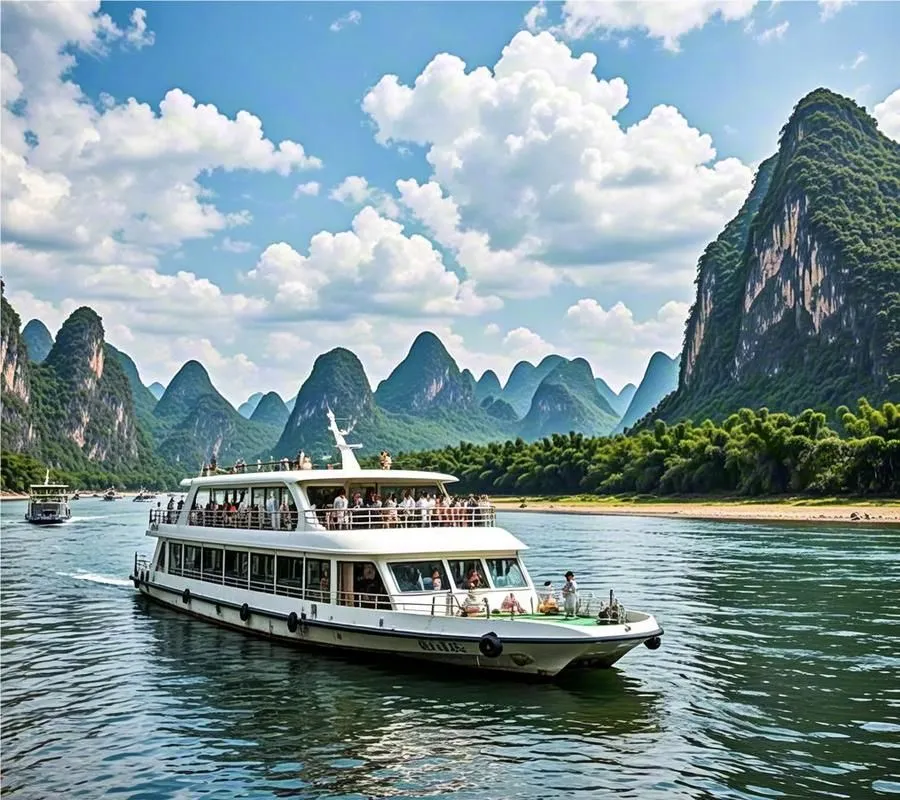 A Li River cruise — kids sit on the boat and watch the karst scenery roll by. No walking required.
- Pacing: at most two cities per trip, 2–3 nights each; reserve midday rest / hotel-pool time.
- Filter hotels on Trip.com / Dianping by “family / family room / pool / kids’ club.”
Cultural note: your child will get attention
- Chinese people genuinely love kids, and a foreign child (especially light-haired) will draw smiles, teasing, photo requests, and offered snacks.
- It’s mostly goodwill: in Chinese culture, children bring luck. But someone may photograph without asking; if you’re uncomfortable, a polite wave and “不好意思” (excuse me) usually stops it.
- Expect people to give up seats and call your kid “好可爱” (so cute). Enjoy the warmth, and decide your boundaries in advance.
- In crowds (peak sights, rush-hour subway), hold hands or use an anti-lost harness / carrier; the getting-lost risk is low, but crowds can separate you.
Pacing & pitfalls (family edition)
- Don’t overpack the itinerary. China is huge; an adult’s four-sights-a-day plan will melt down a family. One city 2–3 days, one main sight per day.
- Avoid peak holidays. Chinese New Year, National Day (early October), and summer vacation are super-peak: wall-to-wall crowds and higher prices. Best with kids: April–May, early September–October, November.
- Trains over flights (mid-range routes): high-speed rail is spacious, smooth, walkable, has no liquid restrictions, and runs on time; easier than flying with a baby.
- Book “family-friendly” hotels: pool / kids’ club / family room / near a subway stop.
- Book popular tickets early: top sights (Forbidden City, Disneyland, Terracotta Army) need official-channel reservation 5–7 days ahead, and child tickets must be registered too.
- Payment: set up Alipay with a foreign card: scanning QR codes covers street food, taxis, and tickets.
- Translation app: bring one with camera translation (Baidu Translate / Google Translate); essential for menus and signs.
- Insurance: buy travel insurance covering pediatric medical and emergency; international hospitals (e.g. United Family) are available in tier-1 cities.
Family packing list (lean version)
- Documents: passports for the whole family (needed for child tickets and attraction entry) + visas + insurance card + vaccine record (optional).
- Clothing: layers (big temperature swings), sun hat, comfortable walking shoes, light jacket (A/C and mornings/evenings).
- Baby/toddler: lightweight umbrella stroller + soft carrier, diapers (enough for the first 2 days, then buy locally), wipes, portable changing pad, nursing cover.
- Food: formula (bring a few cans if brand-loyal), insulated bottle, child utensils, a few familiar snacks.
- Medicine: fever reducer, anti-diarrhea, band-aids, mosquito bite cream, motion sickness meds, regular prescriptions.
- Tools: translation app, Alipay/WeChat, Trip.com/Dianping, power bank.
Fact-checked 2026-06-24 against official sources: China Railway 12306 (child ticket rules), Shanghai Disney Resort (pricing/age tiers), China Eastern Airlines (infant/child policy), and Beijing subway regulations. Child policies evolve; always confirm current thresholds in the Alipay/Trip.com app or at the official counter before you travel.
Sources & Verification
This guide was last verified on 2026-08-06. Key Chinese-language sources:
- China Railway 12306 (中国铁路 12306, 12306.cn): the official rail ticketing platform, used to confirm the age-based child ticket rules (under 6 free, 6 to under 14 child discount, 14 and up full fare) and the passport-at-boarding requirement.
- Shanghai Disney Resort (上海迪士尼度假区, shanghaidisneyresort.com): confirms the 2026 ticket tiers (¥475 to ¥799), the free-under-3 policy, and the child (3 to 11) versus adult (12+) age bands.
- Beijing subway regulations: confirm the 1.3 m and under ride-free threshold (2021 rule, including second and third children in a family).
- Trip.com / Ctrip (携程) and Dianping (大众点评): booking and review platforms used to check per-attraction child policies and filter hotels for family-friendly rooms and facilities.