Best Places to Visit in China in Autumn (2026): The 100-Day Colour Calendar, Peak Weeks, and the Visa Catch
English guides say autumn in China runs September to November and leave it there. That sentence is the single most expensive piece of advice in China travel planning, because the country spans about 50 degrees of latitude plus the Tibetan Plateau’s vertical drop: autumn here does not arrive, it moves. When the larch in Inner Mongolia has already turned gold in late August, the Yangtze delta is still in summer. When the ginkgo in Yunnan finally yellows in early December, Xinjiang’s mountain roads have been closed for two months. Book “October” and you will be a month early in one place and a month late in another.
This guide gives you the actual relay, the peak week for each of the ten places worth the trip, and — the part no English source covers properly — which of those places your visa actually lets you enter.
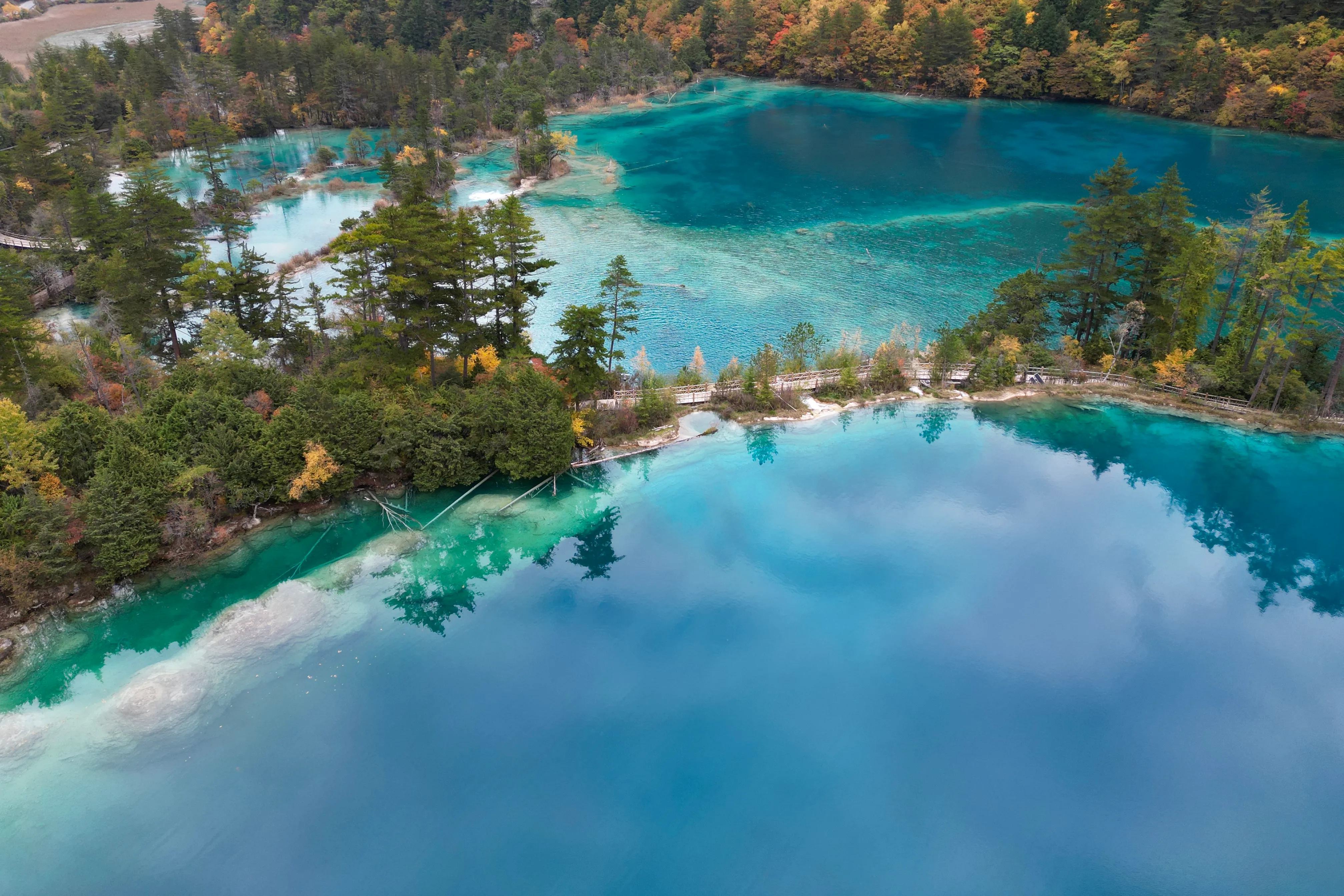 China’s autumn is a moving target, not a season: larch and birch gold in Xinjiang from mid-September, Jiuzhaigou’s peak in the last week of October, ginkgo in Yunnan into early December.
Quick answer: Autumn colour runs late August to early December, north to south. Kanas and the Mongolian grasslands peak from mid-September; Ejina’s poplars have a 15–20 day window around October 5–15; Jiuzhaigou’s real colour peak is October 25 – November 5, not the October holiday; Tengchong’s ginkgo and Wuyuan’s maples run mid-November to early December. The October 1–7 National Day week is the worst week of the year to travel, and it falls right on several peaks. Critically, the 240-hour visa-free transit policy covers 24 provinces — and Xinjiang, Inner Mongolia and Tibet are not among them, while Sichuan’s zone stops short of Jiuzhaigou. See our 240-hour transit guide and visa-free country list before you book anything.
How we verified this: SinoWander reads the Chinese sources English guides cannot. This page draws on the National Immigration Administration’s own announcements (including Announcement No. 4 of 2026, effective August 20), the State Council holiday circular, the Jiuzhaigou administration’s notices, the Altay meteorological bureau’s autumn window, the Kanas scenic area’s official pricing, Ctrip Research Institute’s 2026 Mid-Autumn/National Day forecast, and Umetrip’s booking data. Every price, date and policy figure below was re-checked against source material on 20 September 2026. Where sources conflict, we say so and show you which one we believe. Last verified: 2026-09-20. See our methodology.
Autumn in China Is Not Three Months. It Is a 100-Day Relay
The mechanism is simple and it is worth understanding, because once you see it you can reason about places we have not listed. Colour moves from north to south and from high altitude to low altitude. Frost drives it: anthocyanin production spikes after the first freeze, which is why the rule of thumb in Chinese domestic coverage is that colour peaks about a week after the first frost. Northern and high places freeze first.
| When | Where | What turns | Confidence |
|---|---|---|---|
| Late Aug – late Sep | Arxan and Hulunbuir (Inner Mongolia); Altay, Xinjiang (Kanas/Hemu, from Sep 15) | Larch and birch gold, grassland fading | High — Altay meteorological bureau publishes an official Sep 15–Oct 5 window |
| Late Sep – mid Oct | Ejina, Inner Mongolia (peak Oct 5–15) | Desert poplar gold, 15–20 days a year | Medium-high |
| Mid Oct – early Nov | Jiuzhaigou (peak Oct 25 – Nov 5), Yading, Guangwu Mountain, Beijing’s Fragrant Hills, Huangshan | Mixed broadleaf colour, cloud seas | Medium-high |
| Mid Nov – early Dec | Tengchong, Yunnan (Nov 15 – Dec 10); Wuyuan, Jiangxi | Ginkgo, “sun-drying” villages, misty maples | Medium-high |
The Jiuzhaigou problem, solved honestly. Search Chinese sources for Jiuzhaigou’s best week and you get four different answers: Sep 25–Nov 5 with a peak of Oct 10–25; Oct 15–Nov 5; Oct 25–Nov 5; and simply “late October into early November.” They are all defensible because there is no fixed calendar date — the park’s own administration publishes a weekly “red leaf index” (percentage of colour change) through its official account: roughly 10–35% in early October, 35–60% in late October, 60–95% from late October into early November. The practical instruction is therefore not a date but a behaviour: check the live index rather than trusting a calendar, which is exactly what our Jiuzhaigou guide says.
Three Completely Different Autumns
English coverage flattens everything into “autumn colors.” Three separate phenomena, with different timings, different places and different trip shapes:
| Type | Cause | Where | Window |
|---|---|---|---|
| Broadleaf colour | Anthocyanin in maple, smoke tree, Chinese tallow | Jiuzhaigou, Guangwu Mountain, Fragrant Hills, Huangshan, Wuyuan | Mid Oct – early Dec |
| Desert poplar | Populus euphratica, driven by extreme day-night temperature swing | Ejina, Tarim/Luntai (Xinjiang), Jinta (Gansu) | Late Sep – early Nov, very short |
| Larch and birch gold | Conifer needle drop, birch, grassland senescence | Kanas, Hemu, Arxan, Hulunbuir | Early Sep – mid Oct |
One more rule that helps: Huangshan’s cloud sea needs a rain-then-clear window. Clear weather alone gives you rock and pine; the famous sea of clouds follows a front.
The Visa Catch: Where the 240-Hour Transit Policy Stops
This is the section English guides skip, and it is the one that actually breaks trips. The 240-hour (10-day) visa-free transit policy is genuinely generous — but it is generous within a defined map, and several of China’s most famous autumn places sit off that map. Overstaying outside your permitted zone is illegal residence and can affect future visa applications.
Where the policy stands as of September 2026:
- December 17, 2024: stay extended to 240 hours nationwide; eligible provinces went 19 → 24; ports 39 → 60. Fujian, Hubei and Shaanxi widened to whole-province; Guangxi widened to 12 cities (Nanning, Liuzhou, Guilin, Wuzhou, Beihai, Fangchenggang, Qinzhou, Guigang, Yulin, Hezhou, Hechi, Laibin).
- August 20, 2026 (Announcement No. 4 of 2026): Kyrgyzstan and Vietnam were added, taking the policy to 57 countries and 65 ports.
Read that last line carefully: the 2026 update added countries, not provinces. The province list has held since December 2024. If you have read somewhere that “China relaxed the transit rules in 2026, so you can go anywhere now” — that is wrong, and this is the most common visa error we see in autumn planning.
The traps, in order of how often they catch people:
- Whole provinces missing. Xinjiang, Inner Mongolia and Tibet are not in the 24. That removes Kanas, Hemu, Ejina’s poplars and anything Tibetan in one stroke.
- Provinces included, prefectures not. This one is quieter and nastier. Sichuan’s zone is 11 cities: Chengdu, Zigong, Luzhou, Deyang, Suining, Neijiang, Leshan, Yibin, Ya’an, Meishan and Ziyang. Jiuzhaigou (Aba Prefecture), Yading (Ganzi) and Guangwu Mountain (Bazhong) are all outside it. Yunnan’s zone is 9 prefectures — Kunming, Yuxi, Chuxiong, Honghe, Wenshan, Pu’er, Xishuangbanna, Dali, Lijiang — and Tengchong (Baoshan) is not among them. Jiangxi’s zone is Nanchang and Jingdezhen only, so Wuyuan (Shangrao) and Lushan (Jiujiang) are out. Shanxi means Taiyuan and Datong; Heilongjiang means Harbin.
| Destination | Location | Reachable on 240h? | What you need instead |
|---|---|---|---|
| Fragrant Hills / Mutianyu Great Wall | Beijing | Yes — whole province | 240-hour transit |
| Huangshan | Anhui | Yes — whole province | 240-hour transit |
| Longji rice terraces | Guilin, Guangxi | Yes — Guilin is one of the 12 cities | 240-hour transit |
| Jiuzhaigou | Aba, Sichuan | No | 30-day visa-free entry or tourist visa |
| Yading | Ganzi, Sichuan | No | Tourist visa |
| Guangwu Mountain | Bazhong, Sichuan | No | Tourist visa |
| Kanas / Hemu / Baihaba | Xinjiang | No | 30-day visa-free entry or tourist visa |
| Ejina | Inner Mongolia | No | 30-day visa-free entry or tourist visa |
| Tengchong | Baoshan, Yunnan | No | 30-day visa-free entry or tourist visa |
| Wuyuan | Shangrao, Jiangxi | No | 30-day visa-free entry or tourist visa |
What does work: the 30-day unilateral visa-free entry, currently open to 50 countries, carries no regional restriction at all — it is valid nationwide, Xinjiang and Inner Mongolia included. Check the expiry, though: for 48 of those 50 countries the waiver currently runs only to 31 December 2026 (Russia’s runs to 31 December 2027, and Brunei’s has no end date), so anyone planning ahead for autumn 2027 needs to re-check. For most readers this is still the clean answer: if your passport is on that list, the visa question disappears and this whole section becomes background knowledge. If you are a US passport holder, you need an L tourist visa regardless, which also has no regional restriction. Check your passport against the visa-free country list first; then read the 240-hour transit guide only if you genuinely need the transit route.
Two related policies worth knowing. Hainan has its own 30-day visa-free entry, now covering 61 countries, but it is confined to Hainan Province — useful if you are routing through the south, irrelevant to every place on this page. And the National Immigration Administration runs a 12367 hotline, 24/7 and bilingual, for exactly these questions.
The National Day Problem: The Best Week Is the Worst Week
The 2026 State Council holiday circular (released November 4, 2025) sets:
- Mid-Autumn: Friday September 25 – Sunday September 27, three days, no shift days
- National Day: Thursday October 1 – Wednesday October 7, seven days, with Sunday September 20 and Saturday October 10 as make-up workdays
The two holidays sit three days apart, which is why the “take 3 annual-leave days and get 13 off” (Sep 25 – Oct 7) pattern dominates Chinese travel planning this year. 2026 carries 33 holiday/shift days in total, five more than 2025.
One detail foreigners miss: the toll-free highway week applies to National Day only — October 1 00:00 to October 7 24:00, vehicles with seven seats or fewer, and the clock that matters is when you leave the motorway, not when you join it. Mid-Autumn is not a toll-free holiday. Free periods cover Spring Festival, Qingming, Labour Day and National Day only.
How bad is the week itself, in data:
- 82% of National Day trips are cross-province (Mid-Autumn skews to short local trips)
- Autumn nature sites in the top-10 most-booked scenic areas: Zhangjiajie, Huangshan, Kanas, Mutianyu Great Wall, Hemu
- Hotel bookings in popular county towns across Xinjiang, Qinghai-Gansu and western Sichuan are up about 40% year on year
- The hottest county towns include Jiuzhaigou and Burqin (the Kanas gateway)
- Long-haul flights over 1,200 km are up about 34% year on year (Tongcheng)
- By September 14, more than 8.58 million domestic air tickets had been booked for Sep 25 – Oct 7, up about 10% (Umetrip)
- The smart money leaves early: over 35% of National Day package travellers now depart before the holiday, and over 10% depart before Mid-Autumn (Tuniu)
What to actually do. Treat October 1–7 as closed. The colour is good, but you will spend the week in queues, and the three places whose peak collides with the holiday — Kanas, Jiuzhaigou, Ejina — are the three worst places to be in it. The best window is October 8 – October 25: the crowds have gone, prices have come down, and Jiuzhaigou’s colour is still climbing toward its actual peak. The second-best is the week before Mid-Autumn — early colour, thin crowds, shoulder prices. Domestic reporting quotes hotel rises of 60–120% over the holiday and a drop of roughly 30% after October 8; we could not trace either figure to an official statistics release, so treat them as indicative rather than precise, and plan on “significantly more expensive.”
Ten Places, and the Week Each One Peaks
Details live in the individual guides. What follows is the comparison layer: the week, the cost, and the one thing that decides whether the trip works.
1. Jiuzhaigou, Sichuan — peak Oct 25 – Nov 5
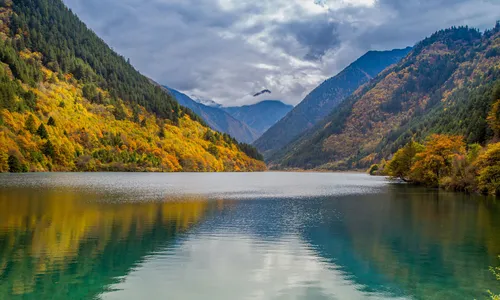
¥190 entry + ¥90 shuttle (bundled, unavoidable) = ¥280 in peak season (Apr 1 – Nov 15); ¥80 + ¥80 off-season. Daily cap 41,000, and no ticket windows on site — online real-name booking only. October runs 6–15°C (days 12–19°C, nights 0–8°C), altitude 2,000–3,100 m. The old “fly or take an 8-hour bus” advice is dead: the Chuan-Qing railway now puts Huanglong-Jiuzhai station about 2 hours from Chengdu, from around ¥135 second class, followed by a transfer bus. Outside the 240-hour zone. → Full Jiuzhaigou guide
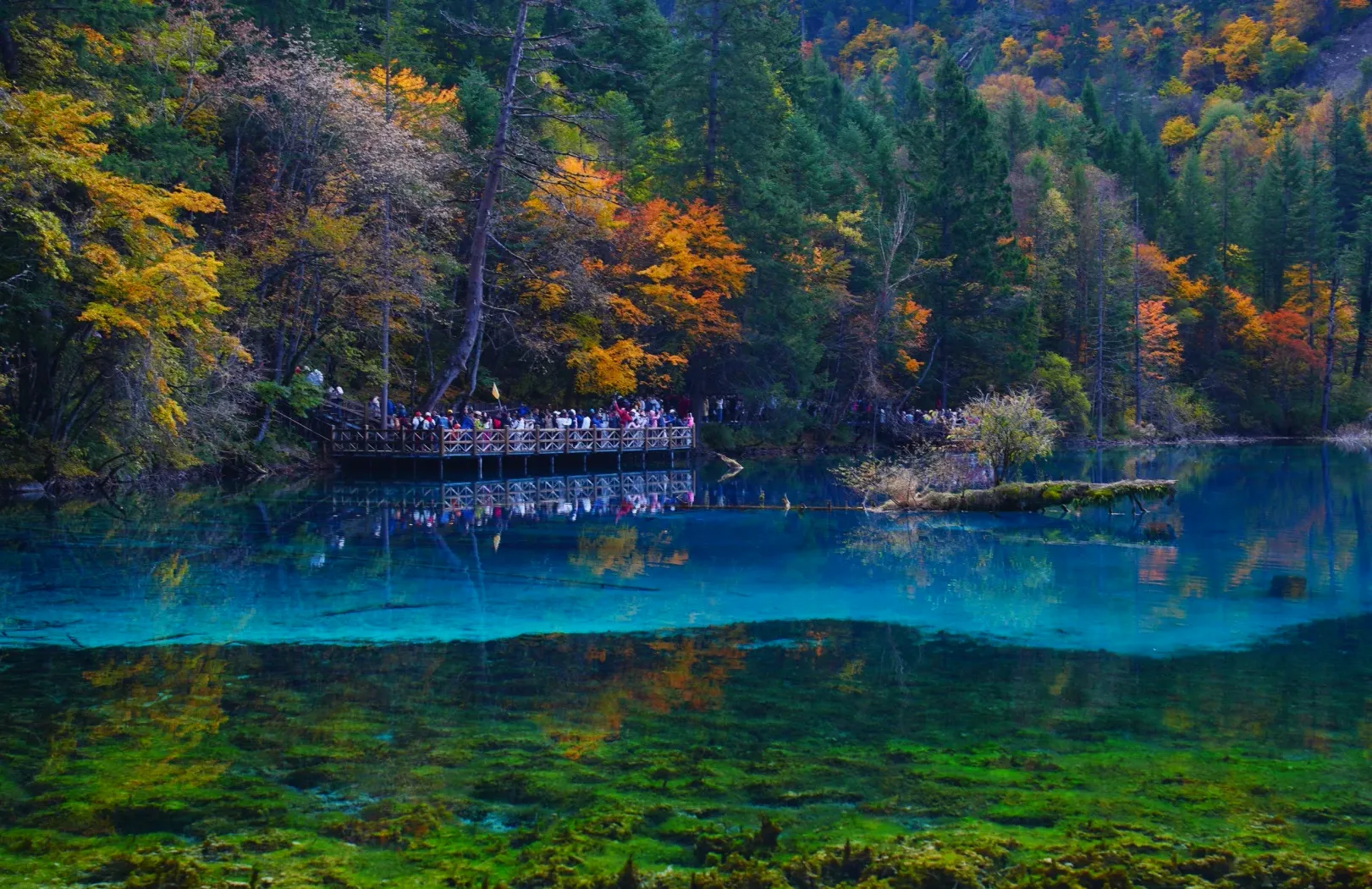 Jiuzhaigou’s real peak is October 25 – November 5 — a week or more after the National Day crowds have gone, and worth timing to the park’s weekly colour index rather than a calendar date.
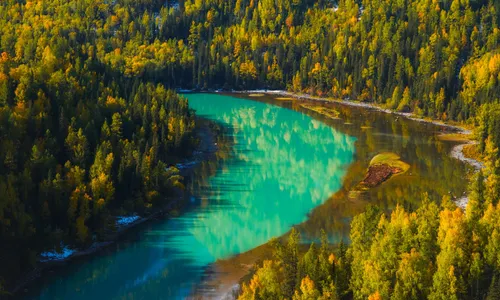
2. Kanas, Hemu and Baihaba, Xinjiang — window Sep 15 – Oct 5
The Altay meteorological bureau publishes an official autumn window of September 15 – October 5, and the shift to off-season pricing starts October 16. There is no hard closure date, but the Ahe highway imposes winter restrictions from October 16 (snow tyres, 4WD, limited hours) and severe weather closes it temporarily. 2026 official pricing: ¥230 single-entry, ¥270 double-entry, Hemu ¥75, Baihaba ¥75, whole-area pass ¥375; from October 16 the whole-area pass drops to ¥100 for three days. Kanas Burqin Airport (KJI) is a summer-autumn airport — roughly mid-June to mid-October — so late-season visitors fly to Altay (AAT) instead. Village cabins run ¥1,500–2,000 a night in peak; book one to two months ahead. Outside the 240-hour zone. → Full Kanas guide
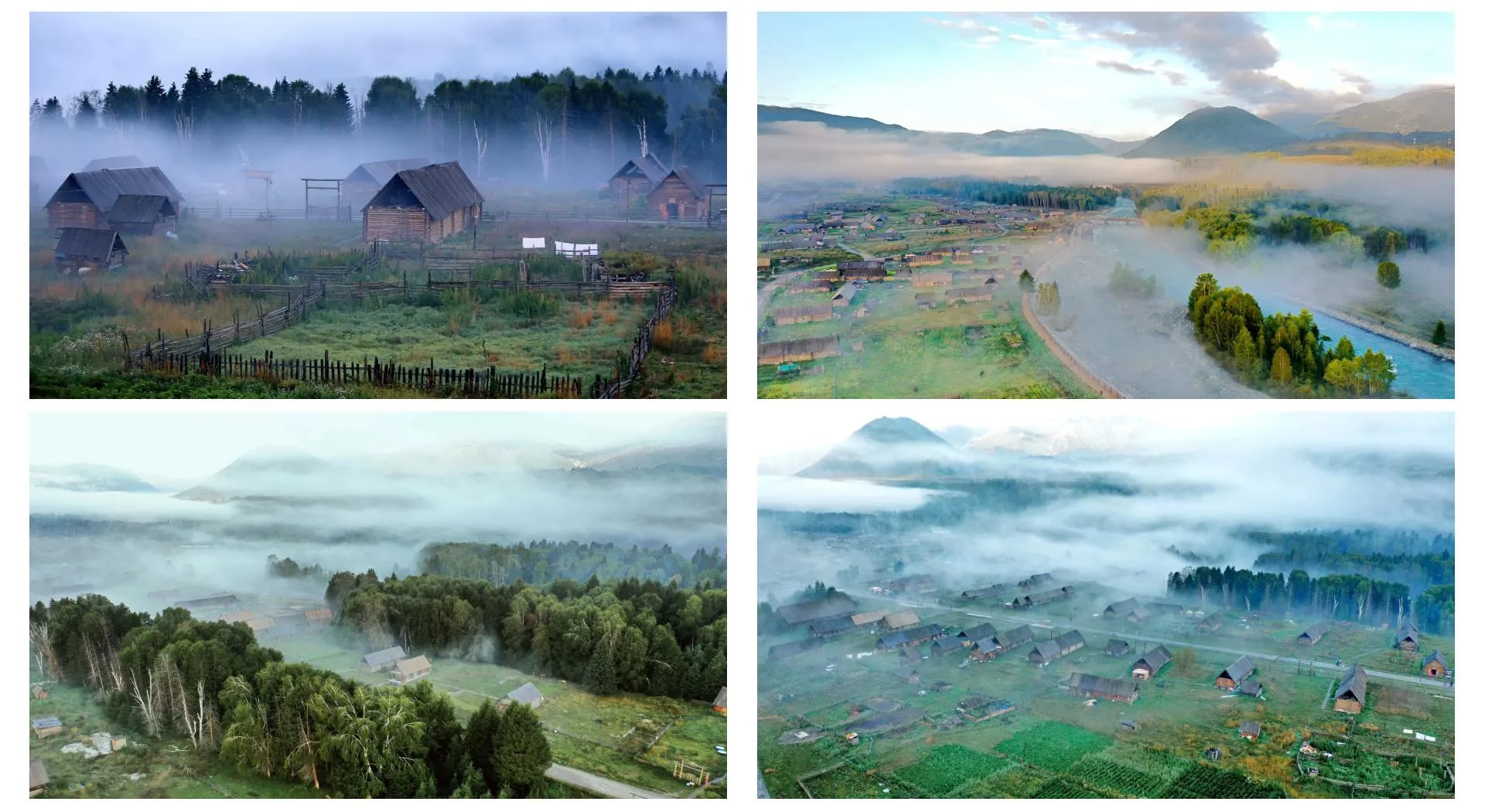 Hemu village, Kanas: birch gold and morning mist inside the September 15 – October 5 window that the Altay meteorological bureau publishes — the earliest peak on this list.
3. Ejina poplar forest, Inner Mongolia — peak Oct 5 – Oct 15
Roughly 15–20 days of prime gold a year, inside a viewing season the Alxa meteorological bureau puts at around three weeks from late September into late October; the main season runs Oct 1–20 and leaves drop after October 20. Main area (bridges 1–8) is ¥240 including the shuttle bus in peak season, ¥120 off-season, valid 48 hours; a combined ticket covering Black City, the Strange Trees and Ruoshui Jinshawan runs about ¥210. The classic frames are Bridge 2’s reflection forest and Bridge 4’s Hero filming location; Bridge 8 meets the Badain Jaran desert. Fly to Jiayuguan/Jiuquan (360–400 km, high-speed rail available) or Yinchuan (about 700 km on the G7). Dalaihubu town runs ¥800–1,500 a night in season. Foreign travellers: the forest itself is not legally closed, but the area contains the Dongfeng space city (a military facility) and sits near the Mongolian border, and independent foreign travellers are frequently turned back — go with an agency that can handle foreigner paperwork. Outside the 240-hour zone.
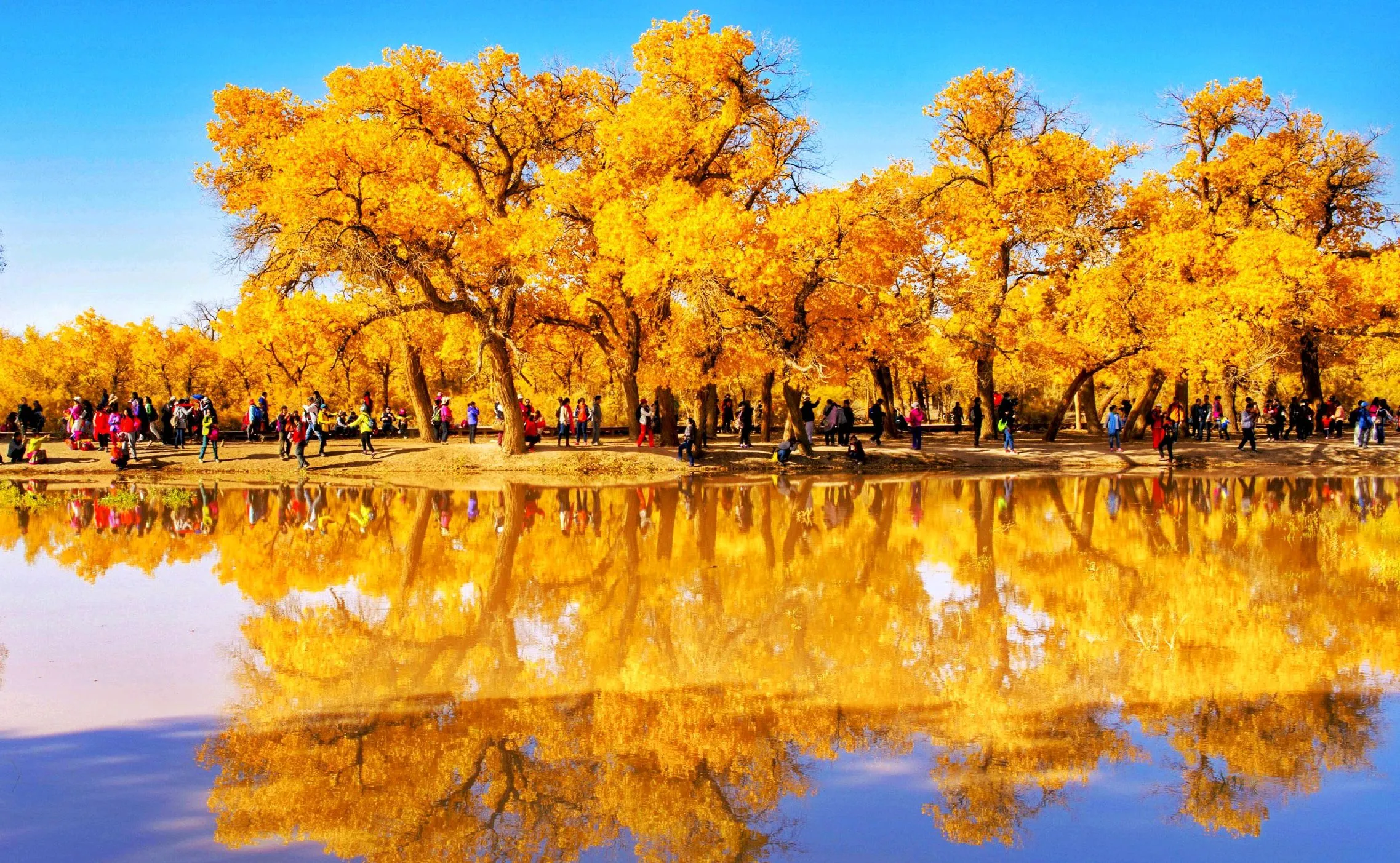 Ejina’s poplars turn for roughly 15–20 days a year, centred on October 5–15 — the shortest and most unforgiving window on this list.
4. Yading, Sichuan — late Sep to end of Oct
Free entry from August 1 to October 31, 2026 (normally ¥146 in peak season); shuttle ¥120, electric buggy ¥80 return, horse riding ¥300–500 one way. Altitude is the story: Milk Lake and Five Colour Lake both sit around 4,500–4,700 m, long route 6–8 hours return, and around 70% of hikers feel at least mild altitude sickness. Foreigner restriction: not forbidden, but you need an agency to file a special report and to buy tickets at a staffed window with your passport — online booking does not support foreign passports. Outside the 240-hour zone (Ganzi).
5. Guangwu Mountain, Sichuan — late Oct to early Nov
Marketed domestically as “China’s number one red-leaf mountain.” Peak runs late October into early November; during the National Day week it has not turned yet, which matters if you were planning to combine them. Three separately ticketed zones: Taoyuan ¥75–80 + ¥40 shuttle; Micang Mountain ¥85–90 + ¥60 shuttle (the colour core); Shibayuetan ¥50–55 + ¥20 transfer. High-speed rail to Hanzhong (about 2 hours from Chengdu East) then a 1.5–2.5 hour direct coach. Outside the 240-hour zone (Bazhong).
6. Beijing: Fragrant Hills and the Great Wall — late Oct to early Nov
The most useful thing about Beijing is not the date, it is the mechanism: Xiangshan Park’s phenology team publishes a weekly colour-change percentage (e.g. 34.7%) through the park’s account and the Beijing landscaping bureau’s year-round flower-and-leaf guide. That is the single most reliable planning input in this entire article. Peak is late October into early November; entry ¥10 in peak season, real-name booking through the park’s own mini-program (also available via “Changyou Gongyuan”). For the Wall, Mutianyu (73 km from the city, 1.5–2 hours, ¥45) is the section we recommend for foreign visitors, with colour from mid-October into mid-November; Jinshanling is wilder but awkward at 130 km by public transport. Fully covered by the 240-hour zone. → Beijing guide · Great Wall hiking guide
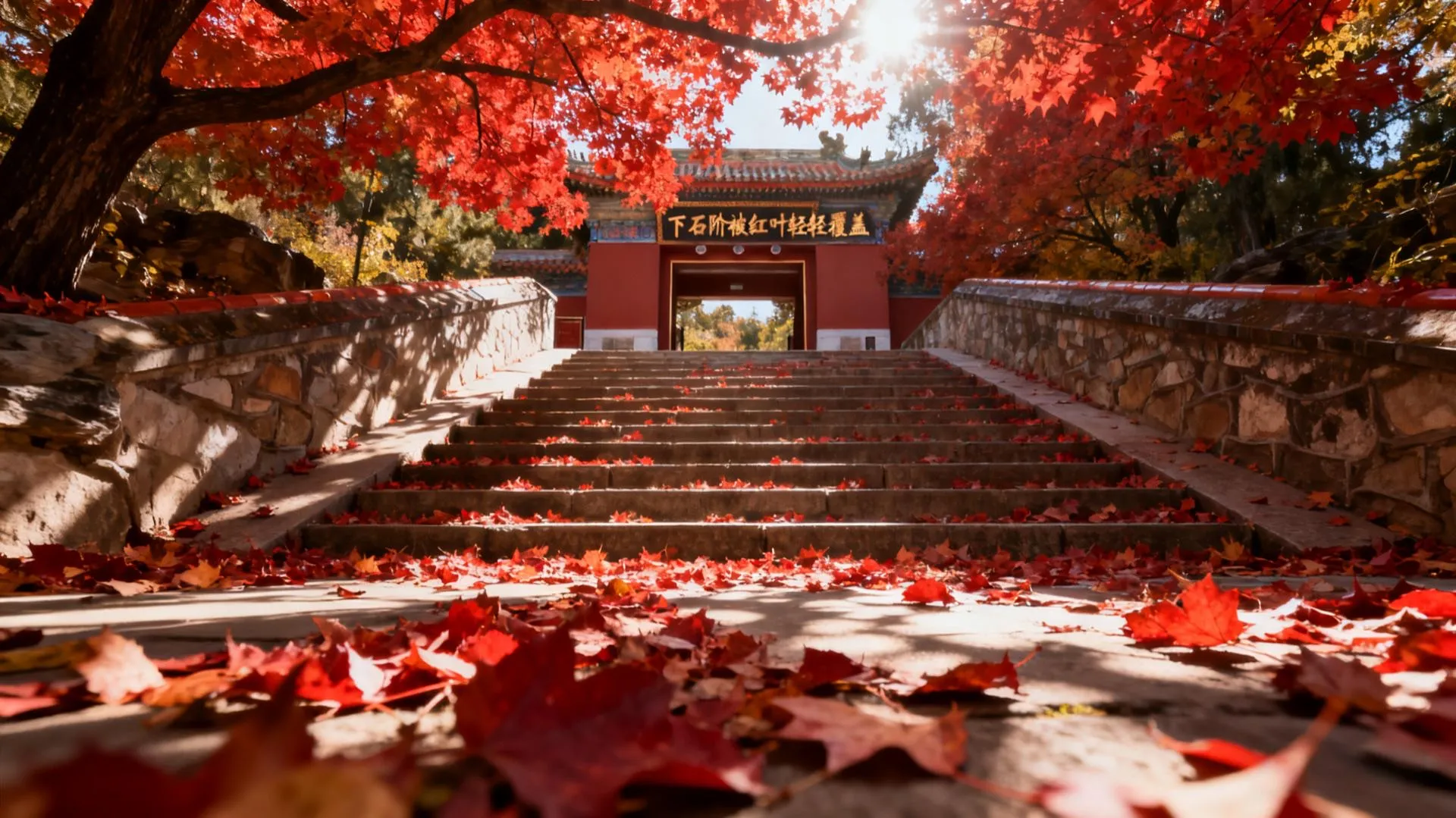 Fragrant Hills in late October. Beijing’s park service publishes a weekly colour-change percentage, which makes this the one destination on the list you can time precisely rather than estimate.
7. Huangshan, Anhui — mid Oct to early Nov
¥190 entry, plus cable cars (Yungu ¥80 / Yuping ¥90 / Taiping ¥80, one way) and the ¥38 return shuttle. On-mountain hotels run ¥400–1,500 and need booking well in advance — the rooms are few and the dates fill. Autumn also brings the cloud sea, with odds better than 50% on the right days. Fully covered by the 240-hour zone. → Full Huangshan guide
8. Longji rice terraces, Guangxi — gold late Sep into November
The one place on this list with a hard physical deadline: harvesting. Ping’an and the Zhuang villages start cutting around late October; Jinkeng Dazhai around early November. The gold window therefore runs from late September onward, and it is deepest in Jinkeng in the second half of October — arrive after the harvest and you get stubble and flooded terraces, a completely different and much less photographed landscape. Entry ¥80; about 2.5 hours by bus from Guilin; Jinfoding cable car ¥55 one way / ¥100 return. Covered (Guilin is one of Guangxi’s 12 cities). → Guilin and Yangshuo guide
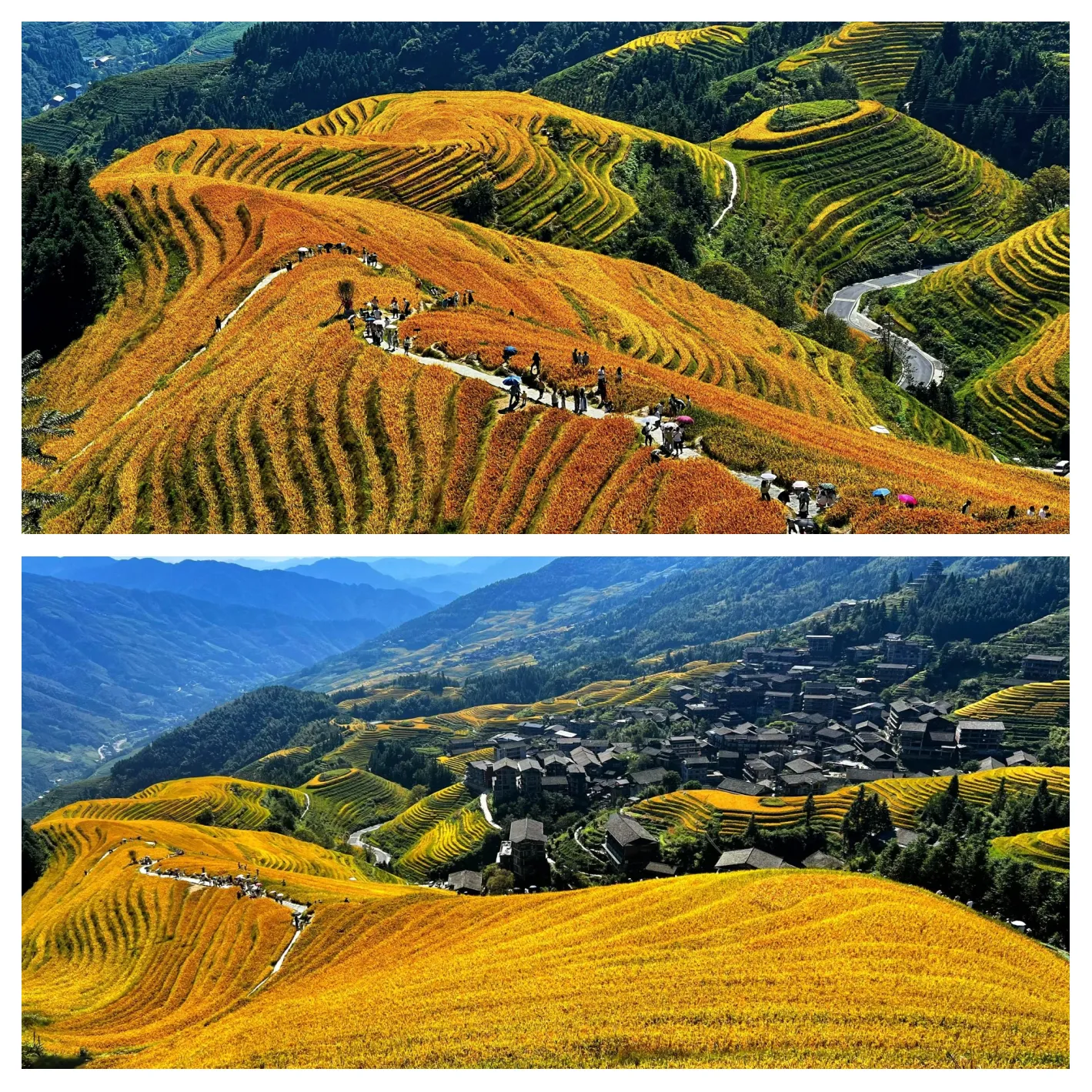 Longji’s gold is a harvest deadline rather than a season: Ping’an is usually cut by late October and Jinkeng Dazhai from early November, after which the terraces are stubble and water.
9. Tengchong ginkgo village, Yunnan — Nov 15 – Dec 10
Peak runs mid-November to early December; in October and early November the trees are only about half turned — Ctrip’s live “yellowing report” showed roughly 50% on 13 November 2025 — a common disappointment. Entry ¥30 (peak season August–February). Reach it via Tengchong airport, or Baoshan high-speed rail then road, or a long-distance bus from Dali; from Tengchong’s west gate a minibus to Gudong costs about ¥10, then a park shuttle. Outside the 240-hour zone (Baoshan).
10. Wuyuan, Jiangxi — mid Oct to early Dec
Two separate events. Huangling’s “sun-drying” harvest display runs September to November, best mid-to-late October into mid-November, at ¥145 including the cable car. Shicheng’s maples in morning mist run mid-November into early December. Outside the 240-hour zone (Shangrao).
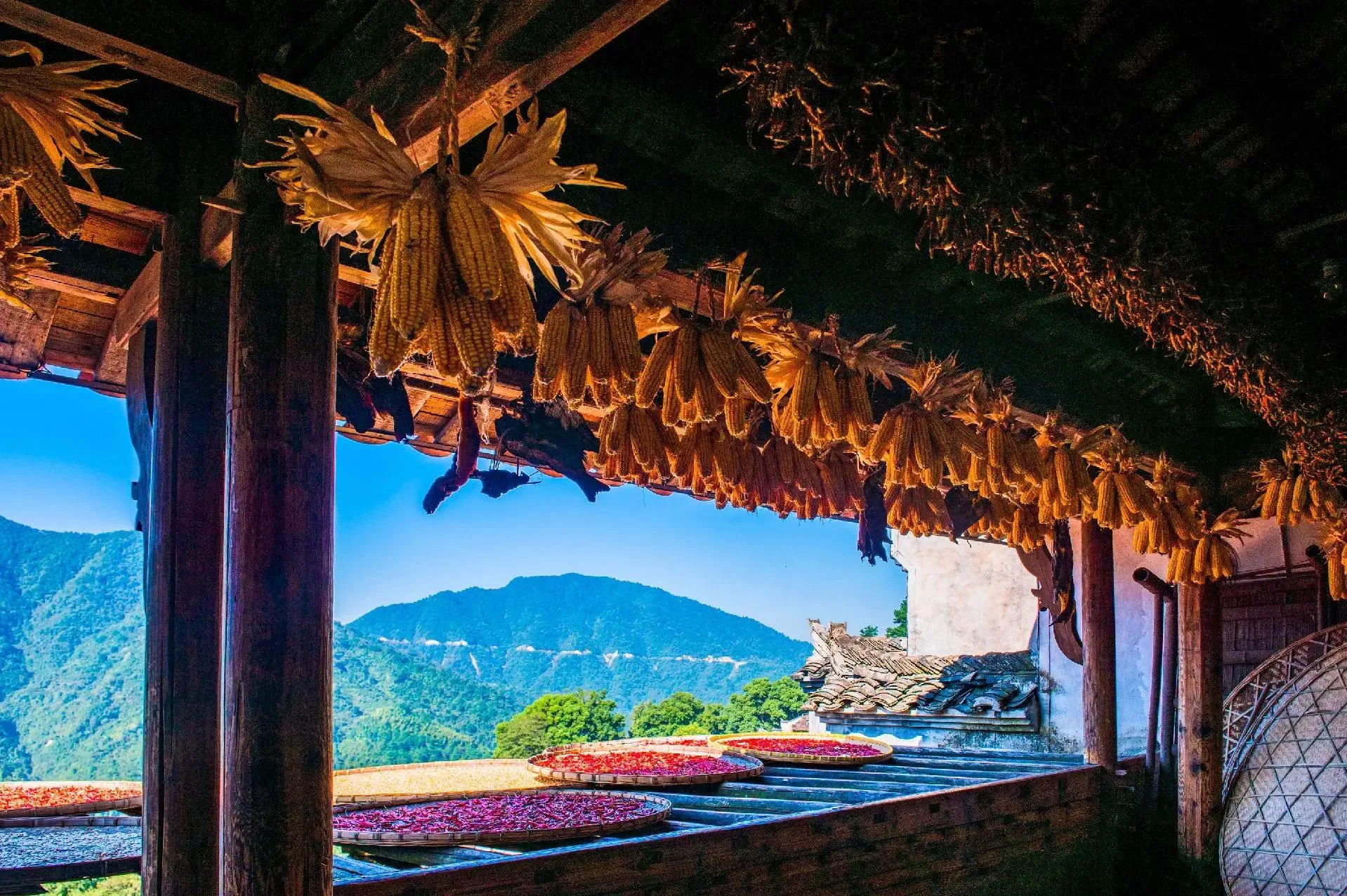 Huangling’s “sun-drying” display runs into November; Shicheng’s maples in morning mist follow from mid-November — two separate autumns in one county.
Four Rules That Hit Foreign Passports Only
| Place | The restriction | What to do |
|---|---|---|
| Yading | Online booking does not accept foreign passports; needs an agency filing plus a staffed-window purchase | Arrange a local agency that handles foreigner paperwork, before you travel |
| Baihaba (Kanas area) | As of September 2026, Chinese sources state the village is not open to ordinary foreign visitors. Access has tightened and loosened repeatedly through 2026 | Assume no. On-site issuance inside the scenic area has reportedly stopped from 2026, so there is no walk-up option either. If you still want to try, call the scenic-area hotline (400-111-0906) or the 12367 immigration line first |
| Ejina | Contains a military space facility; near the Mongolian border; independent foreign travellers often refused | Book through an agency able to handle foreigner formalities |
| Jiuzhaigou | Outside the 240-hour transit zone | Use the 30-day visa-free entry or a tourist visa |
On Baihaba specifically, we want to be precise rather than reassuring. Since April 15, 2026, Xinjiang has issued border-zone permits electronically rather than on paper, under National Immigration Administration Announcement No. 2 of 2026 (published April 2, effective April 15; paper permits already issued stay valid until they expire). The online channel is open only to mainland Chinese residents aged 16 and over, using ID-card verification. Hong Kong, Macau and Taiwan residents, overseas Chinese and foreigners must all apply in person with a passport and valid visa. Current Chinese reporting states that Baihaba is not open to ordinary foreign visitors, and adds that from 2026 on-site issuance inside the scenic area has stopped entirely — which removes the police post at the Kanas tourist service centre that earlier guides (including ours) described as the easy walk-up option. Reports from the ground have been inconsistent through 2026 — some travellers reported obtaining permits on the spot at a Kanas border checkpoint in August, while operators reported full closure mid-year — but that first-hand account predates the change described above, and we no longer treat it as reliable planning guidance. Given that conflict, the honest instruction is the one above: plan around it, and if it matters to your itinerary, telephone before you commit a day to it. Note that similar border-permit rules apply elsewhere in Xinjiang (for example Tashkurgan), so check per-destination rather than assuming.
Weather: What 15°C Means at 3,000 Metres
Autumn temperature ranges in northern China routinely exceed 10°C between day and night, and the range grows with altitude. Jiuzhaigou in October averages 6–15°C with nights down to 0–8°C. Kanas can reach freezing overnight. In Yading, October nights approach 0°C and black ice is possible on western Sichuan roads — carry chains and do not drive after dark. On Changbai Mountain the gap between base and summit can reach 20°C. Dress in layers; on the plateau, UV remains strong enough that SPF 50+ is worth packing even in autumn. Our packing list covers the layering system, and the self-driving guide covers winter-road rules if you are renting.
Booking: How Far Ahead Is Far Enough
- Accommodation: one to two months for Jiuzhaigou, Kanas and Ejina in season; a week or more, and longer over the holiday, for on-mountain Huangshan hotels
- Tickets: Jiuzhaigou’s 41,000 daily cap is real and there is no on-site sale — book online in advance with real-name details
- The free-entry bonus: Yading waives its main ticket through October 31, 2026, covering the entire holiday period
- Saving money: connecting via Chengdu, Xi’an or Chongqing is generally cheaper than direct long-haul into the west
- Drone users: several of these places restrict flight, and the rules are enforced — check the drone guide before packing one
What the English Guides Get Wrong
| They say | Actually |
|---|---|
| ”Autumn in China is September–November” | It is a late-August to early-December relay of about 100 days |
| ”240-hour transit will get you to Jiuzhaigou or Kanas” | It will not. Aba is outside Sichuan’s 11-city zone; Xinjiang and Inner Mongolia are not among the 24 provinces |
| ”China relaxed the transit rules in 2026” | The 2026 update added countries (57) and ports (65) — the province list is unchanged at 24 |
| ”Jiuzhaigou means flying to JZH or an 8-hour bus” | The Chuan-Qing railway reaches Huanglong-Jiuzhai station in about 2 hours from Chengdu, from about ¥135 |
| ”Late October is fine for Kanas” | The official window is Sep 15 – Oct 5; Ahe highway restricts from Oct 16; KJI airport effectively stops flying around mid-October |
| ”Book Yading online” | Foreign passports are not supported online — agency filing plus a staffed window |
| ”Baihaba just needs a permit” | Currently not open to ordinary foreign visitors; online permits are closed to foreign passports anyway, and on-site issuance inside the scenic area has reportedly stopped from 2026 |
| ”National Day is the best time for autumn colour” | It is among the best for colour and definitively the worst for crowds; Jiuzhaigou’s peak is actually after the holiday |
| ”October works for Ejina’s poplars” | The prime gold lasts 15–20 days, roughly Oct 5–15, within a season of about three weeks |
| ”Longji is golden through November” | Only in Jinkeng Dazhai, and only until its harvest starts in early November; Ping’an is usually cut by late October |
If You Only Remember Three Things
- Pick your week by latitude, not by month. September belongs to the north, November to the south, and Jiuzhaigou to the last week of October.
- Avoid October 1–7. The best autumn window in China is October 8–25.
- Check the visa map before the colour calendar. Half of this list is outside the 240-hour transit zone, but the 30-day visa-free entry has no regional restriction — for most passports, that is the answer.
Related reading: best time to visit China for the month-by-month view, worst time to visit for the season-by-region matrix, National Day Golden Week and Mid-Autumn Festival for the holiday mechanics, and China’s high-speed rail for booking the trains that reach most of these places.