Jiuzhaigou Travel Guide (2026): Passport Tickets, the Autumn Color Calendar, and the Huanglong Pairing
English guides describe Jiuzhaigou as a fairyland of multicolored lakes and stop there. The details that decide whether your trip works stay in Chinese: that this park runs the most foreigner-friendly ticketing system of any major attraction in China, that the 240-hour transit visa everyone keeps recommending for it does not actually permit you to go there, that “October” is too vague a target because the park’s own color index moves from 10 percent to 95 percent within four weeks, and that on peak days all 41,000 tickets can be gone nine days ahead. This guide covers the whole chain, verified against the park’s own announcements as of August 2026.
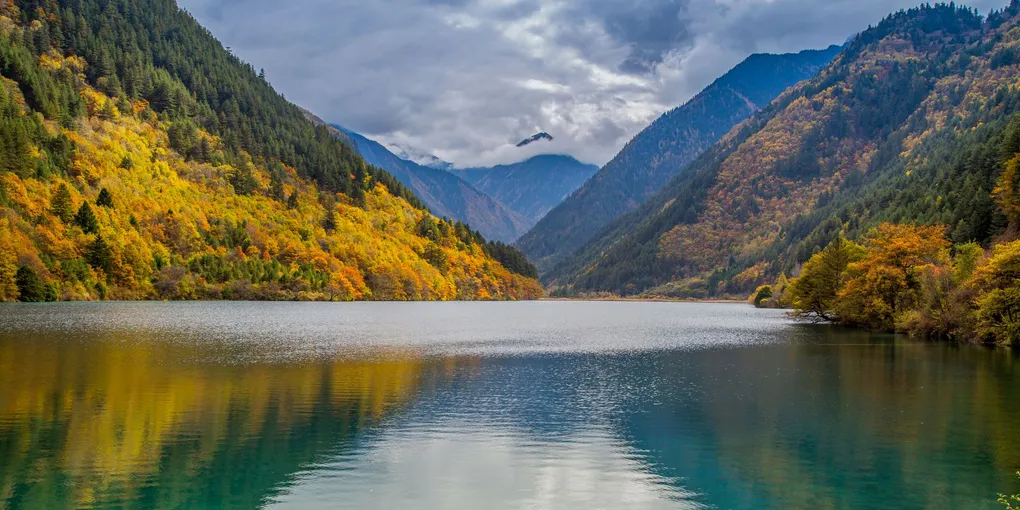
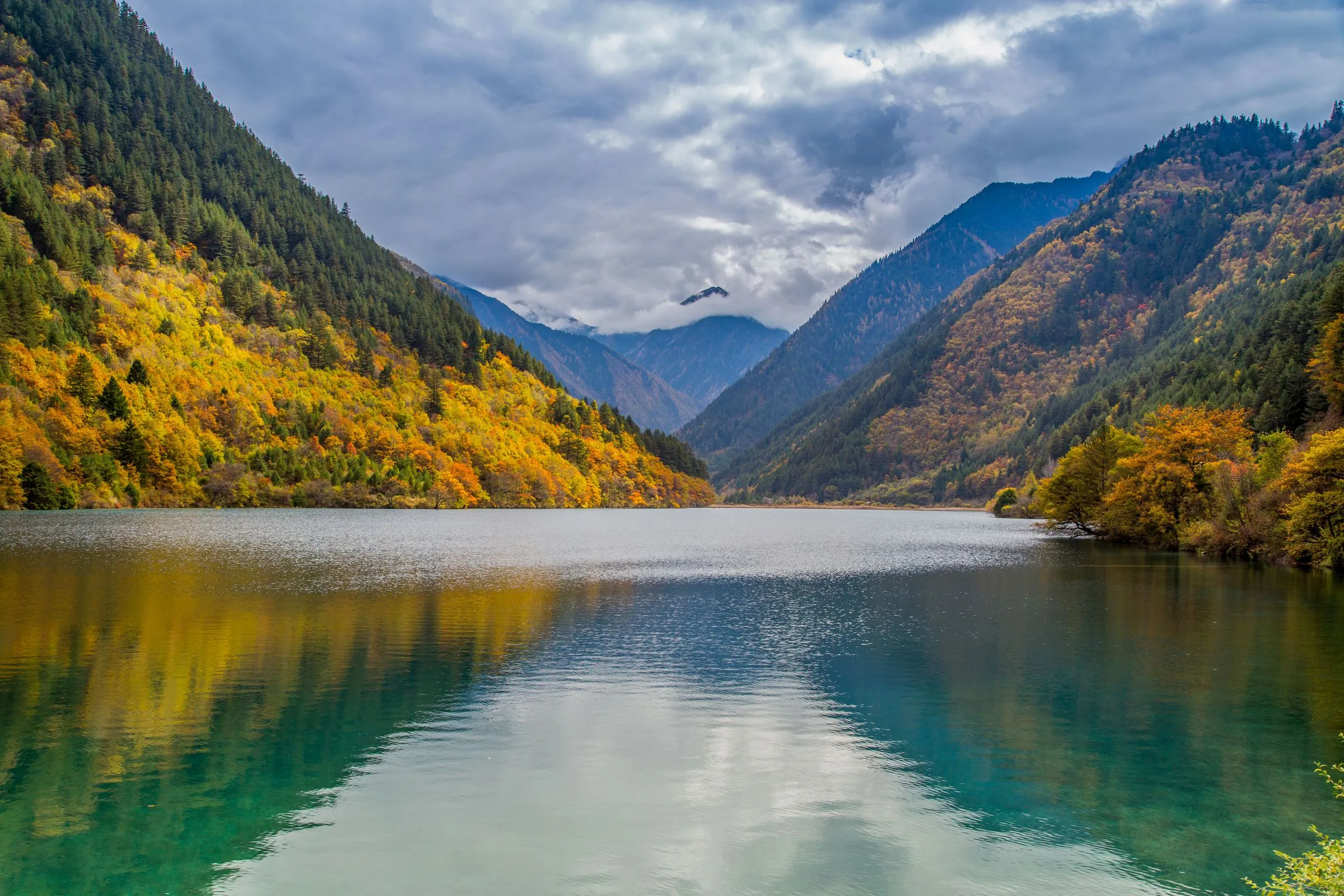 Autumn color mirrored in one of Jiuzhaigou’s spring-fed lakes.
Quick answer: Jiuzhaigou (九寨沟) sits in Aba Prefecture, northern Sichuan, about 1h39m by bullet train from Chengdu plus a 2-hour transfer bus. Foreign visitors can book with a passport directly through Trip.com’s international site (a dedicated “Non-Chinese mainland visitors” ticket, around $42 including the shuttle) or the park’s WeChat account, then enter through passport-check lanes. Do not plan this trip on the 240-hour transit visa: Jiuzhaigou’s airport is not a qualifying port, and Aba Prefecture sits outside the transit policy’s Sichuan stay zone, so use the 30-day visa-free entry (50 countries) or a tourist visa instead. Peak season costs ¥190 + ¥90 shuttle; the color peak runs late October into early November, not the October 1 holiday week. Pair it with Huanglong (¥170), 26 km from the closest station. See our visa-free country list and Huangshan autumn guide for the season’s other flagship park.
How we verified this: SinoWander reads the original Chinese documents that English guides cannot: the Jiuzhaigou administration’s own notices (ticketing rules, the July 2026 mudslide reopening, the daily visitor counts that hit the 41,000 cap), the National Immigration Administration’s port and zone lists, the park’s published autumn color index, and Huanglong’s pricing filings. Claims were cross-checked against foreign travelers’ 2025-2026 trip reports. Each guide is date-stamped when last verified: 2026-08-25. See our methodology.
The Visa Problem: Why the 240-Hour Transit Route Fails Here
Two separate facts break the “transit-visa day trip to Jiuzhaigou” plan that circulates in English forums and, notably, in AI-generated search summaries.
First, Jiuzhai Huanglong Airport (JZH) is not a 240-hour transit port. The National Immigration Administration’s December 2024 expansion added 21 ports; in Sichuan, only Chengdu Tianfu joined the existing Chengdu Shuangliu. JZH holds only a temporary customs aviation status for charter flights. A current search snippet confidently listing JZH as a 240-hour port is wrong, and that error is worth remembering the next time an AI summary hands you a visa plan.
Second, and more important: even entering at Chengdu, the 240-hour policy’s Sichuan stay zone does not reach Jiuzhaigou. The published zone lists for Sichuan cover the Chengdu-centered cities; Aba Prefecture, where both Jiuzhaigou and Huanglong sit, is not in them. The transit route is not a loophole here. It is a violation that can end with a fine and an early exit.
What does work: the 30-day unilateral visa-free entry, open to 50 countries (the US, UK, most of the EU, Australia, Canada, and the Gulf states added through 2025), with no onward-ticket requirement and nationwide validity. Fly into Chengdu on either airport, take the train or a flight north, and the visa question is settled for the whole trip. Our China entry guide covers both routes in detail.
Getting There: The Station Named After Somewhere Else
The Chuan-Qing railway reaches this corner of Sichuan in stages, and the station names are a trap. Huanglong-Jiuzhai Station (黄龙九寨站, opened August 2024) sounds like it is at Jiuzhaigou’s gate. It is not. The station sits at Chuanzhusi in Songpan County, about 90 km and 2 hours by road from the Jiuzhaigou gate, but only 26 km from Huanglong. The name carries both parks because it serves both, asymmetrically.
That asymmetry sets the smart route. Coming from Chengdu (fastest trains 1h39m from Chengdu East, up to 30 daily), get off at Huanglong-Jiuzhai, see Huanglong the same afternoon, overnight in Songpan or Chuanzhusi, then take the transfer bus to Jiuzhaigou the next morning. Doing it in reverse means backtracking. Transfer buses from the station to the Jiuzhaigou gate run on the park’s shuttle system; book through your hotel or the “Jiuzhai Yuexing” mini-program, and expect the last departures in late afternoon. Our China high-speed rail guide covers passport booking on 12306, which works the same on this line.
Flying? JZH (45 minutes from Chengdu, then 1.5 hours by road) serves a thin schedule and, as a high-plateau airport, occasionally shuts for weather. The train-plus-bus chain is the reliable spine.
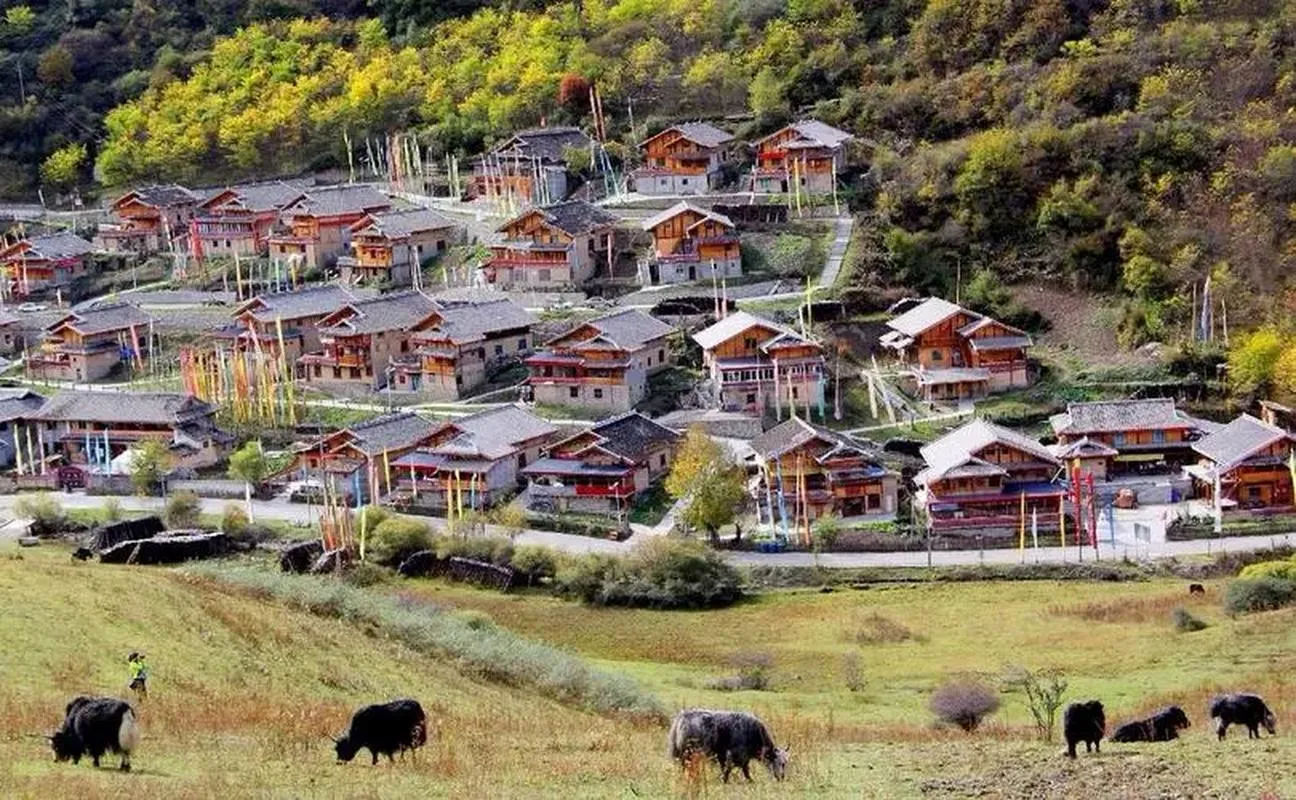 Tibetan villages and grazing yak country: the last stretch of the ride north from Chengdu.
Tickets: The Passport Express Lane
Here is the pleasant surprise. While most Chinese parks make foreign visitors work around ID-card systems (see our Huangshan guide for the WeChat friction, or the Forbidden City’s separate English portal), Jiuzhaigou built a passport express lane in 2025 and it still runs:
- Book with your passport from abroad. The park’s “passport through-channel” lets foreign visitors reserve tickets overseas through OTAs or the park’s official WeChat account (where passport holders use the “other ID” option). Trip.com’s international site sells a dedicated “Non-Chinese mainland visitors” ticket-and-shuttle bundle, around $41.65 at the time of writing, which matches the official ¥190 entry plus ¥90 shuttle and requires no ticket collection. One caveat: the park’s English website (en.jiuzhai.com) looks official but has no booking function at all; it has not been updated since 2015.
- Enter with your passport. In May 2025 the administration announced all 32 gate lanes accepted passport-number entry; the current 2026 setup, per the Aba Prefecture government, is passport-dedicated verification lanes with staffed rerouting. Reddit trip reports through autumn 2025 confirm it works, with the honest footnote that in peak foliage season the gate queue itself can run an hour.
- Pay like at home. International credit cards work at the park, Alipay’s international version supports tap-to-pay, and Southeast Asian e-wallets scan directly.
The 2026 numbers:
| Item | Peak (Apr 1 - Nov 15) | Off-peak (Nov 16 - Mar 31) |
|---|---|---|
| Entry ticket | ¥190 | ¥80 |
| Shuttle (mandatory) | ¥90 | ¥80 |
| Daily cap | 41,000 | 23,000 |
Off-season brings a ¥20-fee re-entry procedure for a second day, and a honest note: from mid-November the park also runs its ecological rest rotation, closing some trails and viewpoints.
The sellout game
In August 2026 the park hit its 41,000 cap three days running (August 12-14, announced each time as “tickets fully booked”). The 2025 National Day record is the planning baseline: the popular October 2-6 dates sold out six to nine days ahead, and even October 1 filled by the morning of September 30. When a date sells out, the official mini-program opens a waitlist: you join inside a 40 km radius of the park, between 7 a.m. and noon, and any returned ticket is assigned in order, valid only for entry before 2 p.m. that day. The practical advice is blunt: for the foliage window, book the moment your dates firm up, roughly two weeks out, and treat the waitlist as a backup rather than a plan.
The Autumn Color Calendar, Week by Week
“Visit in October” is the standard English advice, and it is half right in a way that misses the point. The park’s own color index, published through its official account:
| Window | Color index | What it means |
|---|---|---|
| Early October | 10-35% | First yellowing, mostly at high altitude |
| Late October | 35-60% | Proper color, officially “viewing season” |
| Late Oct - early Nov | 60-95% | Peak: reds and golds over the full valley |
The October 1 holiday week, the most-booked window by foreign visitors, falls in the first-yellowing stage: visible color, smaller area, shallower tones, per the park’s own guides. Color descends with altitude, so the high forests near the Primeval Forest stop and the upper Zechawa valley turn first, the gate-level Shuzheng valley last.
Two windows follow from the index. The obvious one is late October to early November at peak color. The sharper one is November 10-15: the tail of peak color, the last days before off-season pricing (¥80+¥80 from November 16), thinner crowds, and the shuttle seats easier to get. Water volume is past its monsoon maximum by then, but the lakes that made the park famous are spring-fed and stay full; see the next section.
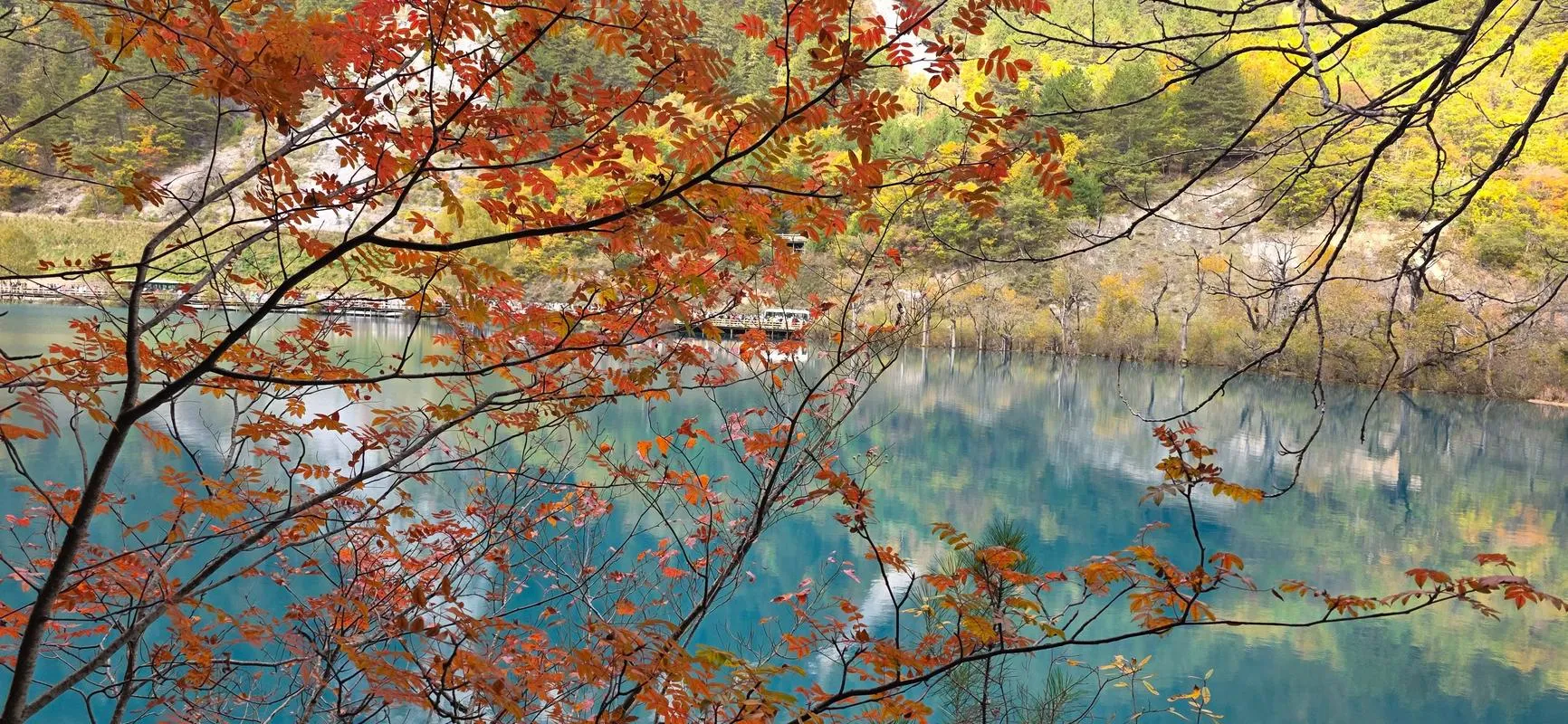 The color peak, late October into early November: reds and golds over the full valley.
One Day in the Valley: The Y-Shaped Route
The park is a Y: the Rize valley (right branch) holds the densest run of highlights, the Zechawa valley (left branch) holds the two biggest lakes, and the Shuzheng valley (the trunk) carries you out. The park’s own one-day schedule, which works because the shuttle hops on and off along any stop:
Start at 7 a.m., ride to the head of Rize (Primeval Forest area, about an hour up the valley), then work downstream: Fangcaohai on foot, Swan Lake, then shuttle hops through Bamboo Arrow Lake, Panda Lake, Five Flower Lake (the postcard; the Tiger Rock viewpoint above it is the park’s own best-photo spot), Pearl Shoal and its waterfall, Mirror Lake, and down to Nuorilang Center for lunch (11:30-13:30, with the Nuorilang waterfall beside it). Afternoon: shuttle up Zechawa to Long Lake, walk down 15 minutes to Five-Color Pond, then descend the Shuzheng valley past Rhinoceros Lake, the Shuzheng waterfalls and village terraces, Sleeping Dragon Lake, Reed Lake, and out by 5:35 p.m.
One honest line from the park’s own guide: the two Seasonal Lakes in Zechawa are skipped by the shuttle and too far to walk, because in dry periods they are, in fact, empty. Two days? Reverse the split: day one for altitude adjustment on Zechawa plus the Shuzheng chain, day two fresh-legged for Rize.
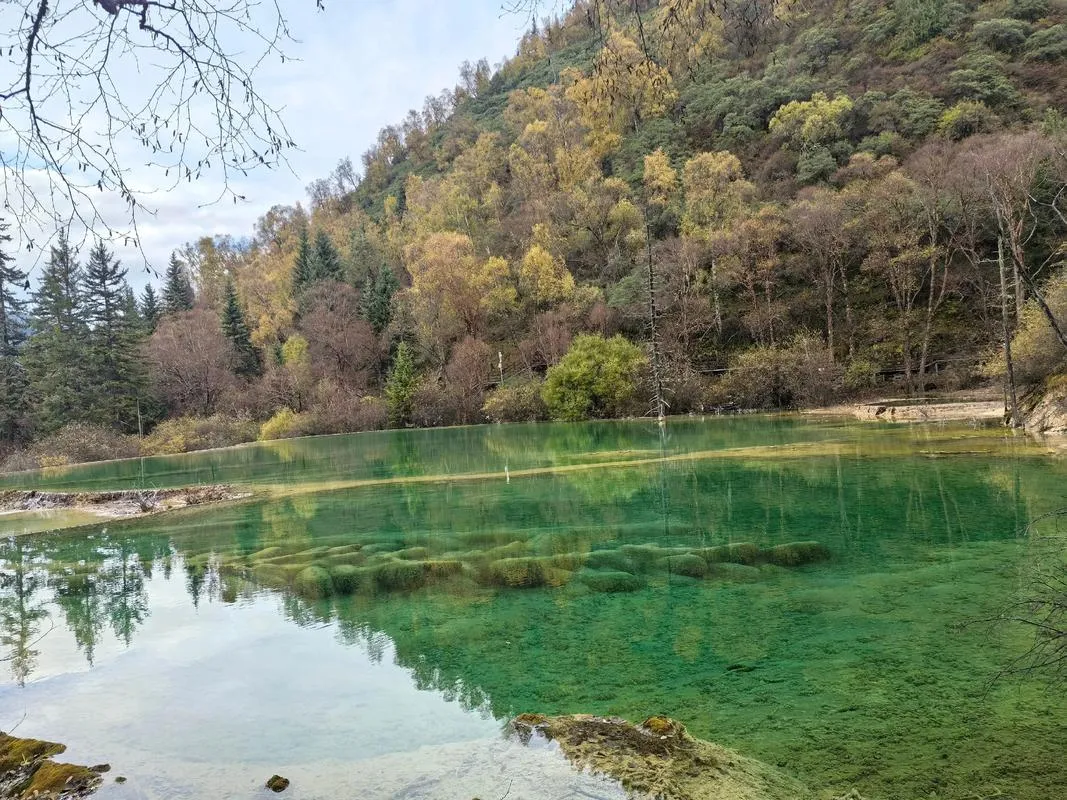 Five Flower Lake, the park’s postcard: spring-fed, 6°C year-round, clearest from the Tiger Rock viewpoint above.
Water Truths: What the Season Actually Changes
The English cliché is “autumn water is the clearest.” The physical reality is more interesting. The famous lakes are spring-fed at a steady 6°C, which is why Five Flower Lake never freezes even in January and why its clarity holds year-round. What the monsoon (July-August) adds is volume: that is the peak-water window, with the tradeoff of rain, clouds and the mudslide watches that close western Sichuan valleys most summers (the July 26, 2026 debris flow shut this park for four days; it fully reopened July 30 and was back at capacity by mid-August). What autumn subtracts in volume it repays in reflections: still air, color above the waterline, and the mirror shots the park is famous for. Winter keeps the lakes full and glowing and drops the price to ¥80, with some trail closures for the rest rotation.
Our worst-time-to-visit guide places the October crush in national context; the month-by-month guide covers Jiuzhaigou’s July-September water season.
Where to Sleep: Zhangzha, Not Inside the Park
Sleeping inside the valley is banned outright. The administration’s rule is explicit (“tour in the valley, stay outside it”), backed by the Aba scenic-area regulations, and actively enforced: in August 2026 the park’s own news page reported a homestay operator inside the valley detained and shut down. You may still find “inside the park” listings on booking sites; they operate outside the rules and risk being cleared mid-stay with no refund.
The real town is Zhangzha (漳扎镇), the strip outside the gate. Three practical tiers: guesthouses within a few hundred meters of the entrance (pay for the 7 a.m. head start), the mid-town hotels a short shuttle away, and the resort end (a Hilton among them) a dozen kilometers out with views and a drive. Prices swing hard around the foliage window; our hotel booking guide covers the rules that require properties to accept foreign guests.
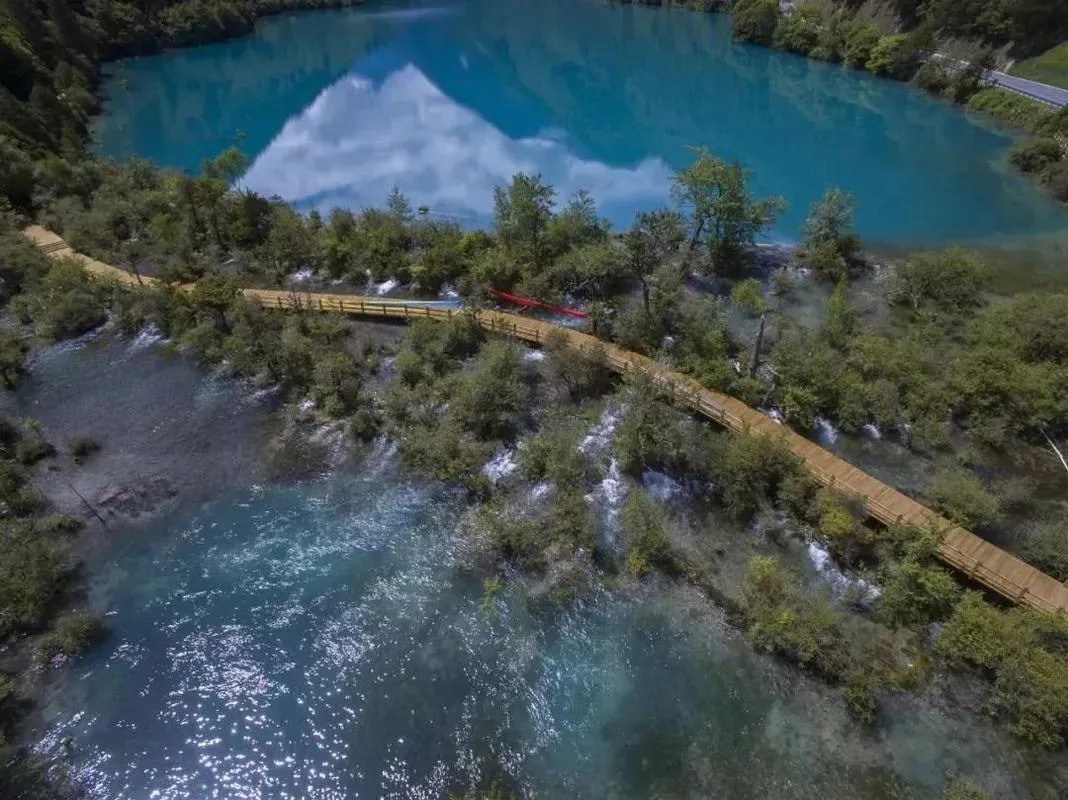 The boardwalk at opening hour: guests at the gate-end guesthouses in Zhangzha are first onto it.
Adding Huanglong: The Other Colored Pools
Huanglong, an hour away and 26 km from the train station, is the natural second day: a calcite terrace of hundreds of rimstone pools climbing to the Five-Color Pond at 3,576 m, the highest and largest open-air travertine cluster in the world. The pairing has a financial wrinkle worth knowing: Jiuzhaigou drops to off-season pricing on November 16, but Huanglong waits until December 16. Mid-November visitors catch Jiuzhaigou’s off-price with Huanglong still in peak season, or see Huanglong first if the budget is tight.
Huanglong 2026 prices: entry ¥170 (June 1 - Dec 15) or ¥60 (off-season), cable car up ¥80 / down ¥40, and the shuttle has run ¥20 round trip / ¥15 one way since it opened in 2021, capped at 12,000 riders a day. The cableway stops after December 15 for winter.
The altitude is the real difference between the parks. Jiuzhaigou’s walking routes sit at 2,000-3,100 m; Huanglong’s upper terraces reach 3,500 m plus, and the climb from the cable car’s upper station to Five-Color Pond is where unacclimatized visitors feel it. Free oxygen stations line the boardwalk (the park’s own signage), and the standard advice holds: come from Jiuzhaigou (two nights of moderate altitude behind you), not straight from Chengdu, walk slowly, and skip the cable car down if you felt the way up. Fun fact for the itinerary pitch: Jiuzhaigou and Croatia’s Plitvice are official sister parks, which is exactly the comparison your hiking friends will make anyway.
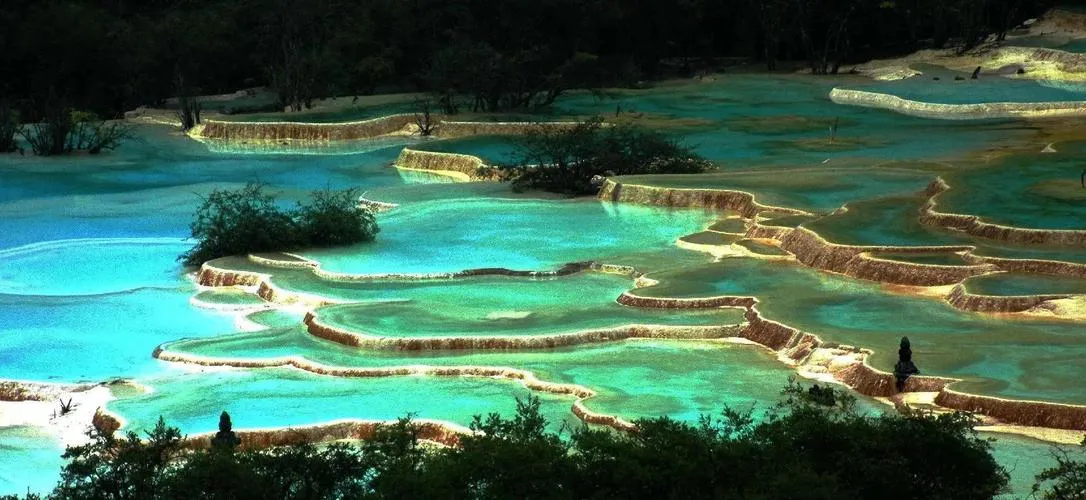 Huanglong’s calcite terraces climbing toward the Five-Color Pond at 3,576 m.
Quick Reference
| What | Detail |
|---|---|
| Entry + shuttle (peak) | ¥190 + ¥90, Apr 1 - Nov 15 |
| Foreign booking | Trip.com “Non-Chinese mainland visitors” bundle or park WeChat account, passport at dedicated lanes |
| Daily cap | 41,000 peak / 23,000 off-season; 2025 October dates sold out 6-9 days ahead |
| Waitlist | Official mini-program, 7 a.m. - noon, within 40 km, entry before 2 p.m. |
| Color peak | Late October - early November (index 60-95%) |
| Best train | Chengdu East to Huanglong-Jiuzhai, from 1h39m, then 2h bus to the gate |
| Visa | 30-day visa-free entry; the 240-hour transit policy does not cover Aba Prefecture |
| Sleep | Zhangzha town; inside-valley lodging is banned and prosecuted |
| Huanglong | ¥170 + cable ¥80 up / ¥40 down; Five-Color Pond at 3,576 m, free oxygen stations |
| Sister park | Plitvice (Croatia), official cooperation |
Two rules make this trip: book the moment your dates are real, and aim the dates at the color index rather than the calendar. Everything else, from the passport lane to the transfer bus, the park has already built for you.
Sources & Verification
This guide was last verified on 2026-08-25. Key Chinese-language sources:
- Jiuzhaigou administration official website (九寨沟景区官网): the ticketing page (¥190 entry plus ¥90 shuttle in peak season, ¥80 plus ¥80 off-season), the real-name booking notice of October 4, 2024, the July 26, 2026 debris-flow closure and July 30 full-reopening notice, the daily visitor counts that hit the 41,000 cap on August 12-14, and the notices banning lodging inside the valley.
- China Daily republishing China News Service (中国日报网转中新网): the May 30, 2025 interview with the administration’s deputy director confirming the passport through-channel for overseas booking and all 32 gate lanes accepting passport-number entry.
- National Immigration Administration (国家移民管理局): the December 17, 2024 announcement adding 21 ports (in Sichuan, only Chengdu Tianfu; Jiuzhai Huanglong airport absent) and the published Sichuan stay-zone list of Chengdu-centered cities, which does not include Aba Prefecture.
- Jimu News via Tourism China (极目新闻/旅游中国): the park’s three-tier autumn color index (10-35% in early October climbing to 60-95% by early November) and the 2025 National Day sellout record, with October 2-6 dates gone six to nine days ahead.
- China News Service and Sichuan Observation (中新网/川观新闻): the August 30, 2024 opening of Huanglong-Jiuzhai station, about 90 km and 2 hours by road from the Jiuzhaigou gate but 26 km from Huanglong.
- Huanglong official website and Baidu Baike (黄龙官网/百度百科): Huanglong’s pricing (¥170 entry June 1 to December 15, ¥60 off-season, cable car ¥80 up and ¥40 down, shuttle ¥20 round trip capped at 12,000 riders a day) and the Five-Color Pond at 3,576 m.
- Chengdu Local Treasure (成都本地宝): the peak and off-season boundary dates (April 1 and November 16), the ¥20 off-season re-entry procedure, and seasonal temperature averages.