Wuhan Travel Guide for Foreigners: 240-Hour Visa-Free, Yellow Crane Tower & the 2026 Xi'an Bullet Train
Wuhan Travel Guide: China’s 9-Province Hub (240-Hour Visa-Free, 2026)
Most China routes skip Wuhan. That is a mistake. Wuhan sits at the geographic center of the country, known as the “Thoroughfare of Nine Provinces” (九省通衢). Since 2025 its airport has been on China’s 240-hour visa-free list. You can fly in for up to ten days with no visa. In June 2026 a new high-speed line opened that puts Xi’an and the Terracotta Warriors under three hours away by train.
This guide covers the city most English guidebooks under-serve: three old river towns fused into one, a free museum holding a 2,500-year-old sword that has never rusted, a city lake six times the size of West Lake, and the breakfast culture China argues about more than any other.
How we verified this: SinoWander reads Chinese-language sources that English guides cannot, including official scenic-area notices from Yellow Crane Tower and the Hubei Provincial Museum, the National Immigration Administration, Ctrip, and Baidu Baike. We cross-check them before writing. We have not personally visited every location. Each guide is date-stamped when last verified: 2026-08-06. See our methodology.
The 240-hour visa-free hook
Wuhan Tianhe International Airport (WUH) is port number 36 on China’s 240-hour transit visa-free list, and the stay area is all of Hubei province (not just the city). Land in Wuhan with an onward ticket to a third country and you get ten days, visa-free, to roam Wuhan, the Three Gorges at Yichang, Wudang Mountain, and Shennongjia.
There is one condition. This is a transit exemption, so you need a confirmed onward ticket to a third country or region, you must be from one of the 57 eligible countries, and you cannot work, study, or report as news. Tourist and business visits are fine. For the full country list and rules, see our 240-hour visa-free transit guide.
Why Wuhan, and why now
Two things make Wuhan unusually useful in 2026.
First, it is a rail hub with few equals. The Beijing–Guangzhou and Shanghai–Wuhan–Chengdu main lines cross here. Wuhan Railway Station has been called “China’s No. 1 high-speed station.” Rough times: about 4 hours to Beijing, 4 to Shanghai, 4 to Guangzhou, 6 to Chengdu. Stack that on top of visa-free entry and Wuhan becomes a base you can radiate from.
Second, the Xi’an line opened on June 30, 2026. The new Xi’an–Shiyan high-speed railway (257 km, 350 km/h) closes the last gap in the Wuhan–Xi’an corridor. The fastest Wuhan–Xi’an train now does the trip in about 2 hours 41 minutes, down from a 4–5 hour detour via Zhengzhou. The practical upshot for a visa-free traveler: you can do Wuhan and the Terracotta Army in one trip. Pair this guide with our Xi’an Muslim Quarter food guide for the second half.
For moving around China by train generally, our high-speed rail guide covers tickets, stations, and ID rules.
One city, three towns
Wuhan is not one city so much as three, and understanding this unlocks the map. The Yangtze and the Han River meet here and split the urban area into three districts that face each other across the water (两江分三镇):
- Wuchang (south of the Yangtze, east of the Han) — the culture and education district. Yellow Crane Tower, Hubei Provincial Museum, East Lake, Wuhan University.
- Hankou (north of the Han) — the old merchant port. Jianghan Road, the foreign-concession architecture, the night markets.
- Hanyang (west of the Han) — the industrial birthplace, with Guishan (Tortoise Hill).
The three have different histories and different moods. You cross between them by bridge, metro, or the cheap cross-river ferry.
What to see
| Sight | Price | Notes |
|---|---|---|
| Yellow Crane Tower (5A) | ¥70 | Day + night sessions; English guiding available |
| Hubei Provincial Museum (5A) | Free | Reserve ahead; 5,000 visitors/day cap; closed Mondays |
| East Lake (5A) | Free | 88 km²; cherry garden is a separate seasonal ticket |
| Yangtze River Bridge | Free | Walk across; open to pedestrians |
| Jianghan Road | Free | 1.6 km pedestrian street, “museum of 20th-century architecture” |
Yellow Crane Tower (黄鹤楼) — ¥70
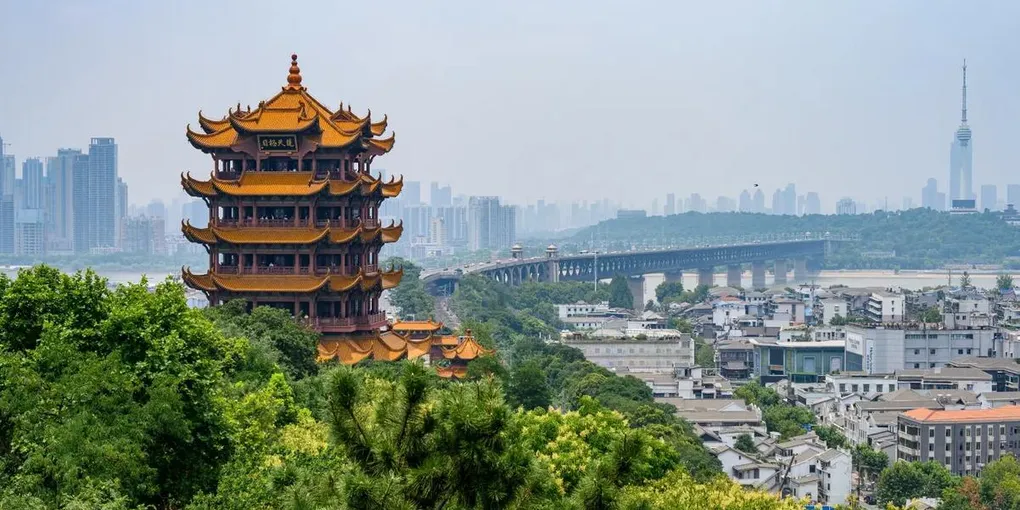
The tower has stood on Snake Hill above the Yangtze since 223 AD, rebuilt many times; the current building dates from 1985. It is one of the “Three Great Towers South of the River,” made permanent by Cui Hao’s eighth-century poem, the one so good that Li Bai, the era’s greatest poet, supposedly read it and put down his brush.
A full-price ticket is ¥70 (students, seniors, and children get discounts or free entry). Foreign visitors buy tickets with a passport at the entrance; there is no special restriction like the separate-booking hurdles you hit at Beijing’s Forbidden City or Nanjing’s Presidential Palace. Since the tower reopened on January 29, 2025 it runs a night session (19:30–22:00) alongside the day session (08:30–17:30). English-language guiding costs ¥500 for up to five people. Climb to the top for the classic view: the Yangtze, the bridge, and all three towns laid out.
Hubei Provincial Museum — free, and worth a half-day
This is the sight most foreign visitors miss, and it is the best free thing in the city. The museum is one of eight national-level museums co-built by the central and provincial governments, a 5A site, and it holds two objects that change what you think Chinese craftsmanship could do:
- The Sword of Goujian (越王勾践剑). A bronze sword from the late Spring and Autumn period, around 2,500 years old, dug up in 1965. It is 55.7 cm long, inlaid with blue glass and turquoise, and shows almost no corrosion (the famous part). The blade bears bird-script characters reading “The King of Yue, Goujian, made this sword for his personal use.” It is on China’s list of artifacts banned from leaving the country.
- The Marquis Yi of Zeng Chime Bells (曾侯乙编钟). A complete set of 65 bronze bells from the early Warring States period, unearthed in 1978. The set spans five and a half octaves with all twelve semitones, which means the Chinese had a fully developed tone system a thousand years before Europe documented one. In April 2025 the bells were inscribed on the UNESCO Memory of the World Register.
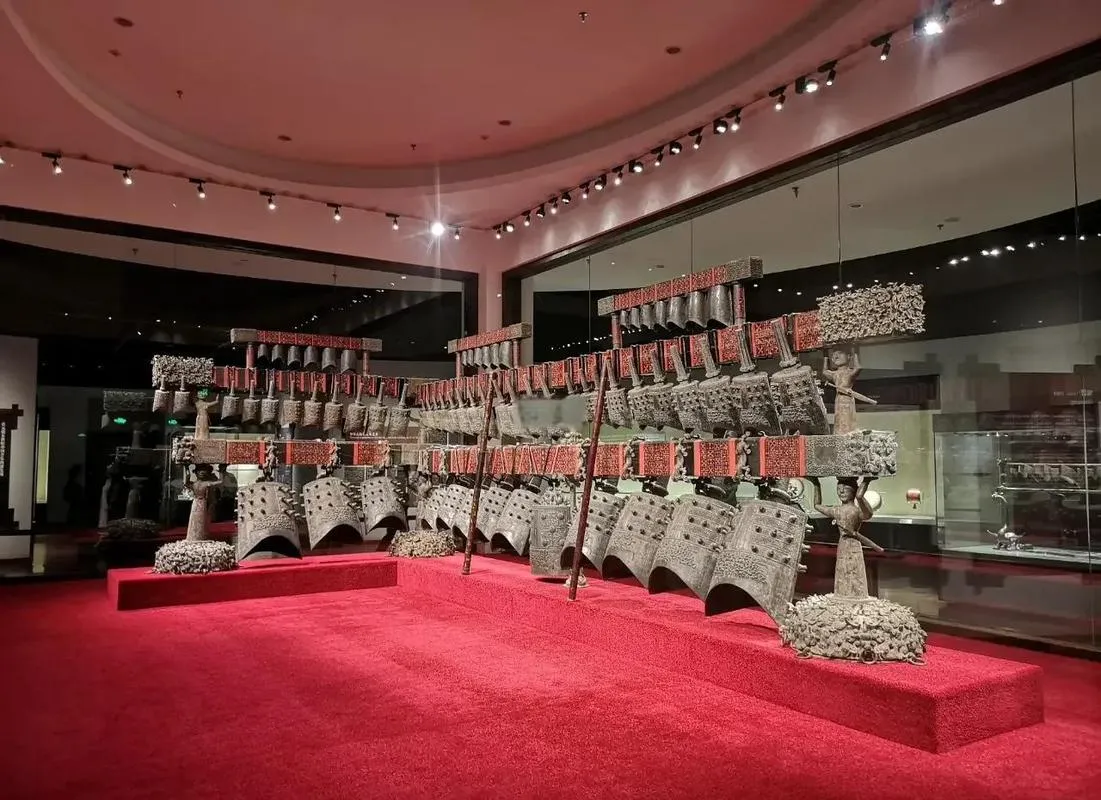
Entry is free but you must reserve online. The museum caps visits at 5,000 a day (3,500 morning, 1,500 afternoon), letting in 500 every half hour. Hours are 09:00–17:00 (last entry 16:00), closed Mondays except public holidays. Since September 2025 it opens a night session on the 17th of each month (17:00–20:30).
East Lake (东湖) — free, and enormous
Wuhan’s East Lake scenic area is a 5A site and one of the first batches of national key scenic spots (listed 1982). It covers 88 km², with 33 km² of water (roughly six times the area of Hangzhou’s West Lake), and entry is free. The lake has four sub-areas: Tingtao, Moshan, Luoyan, and Chuidi.
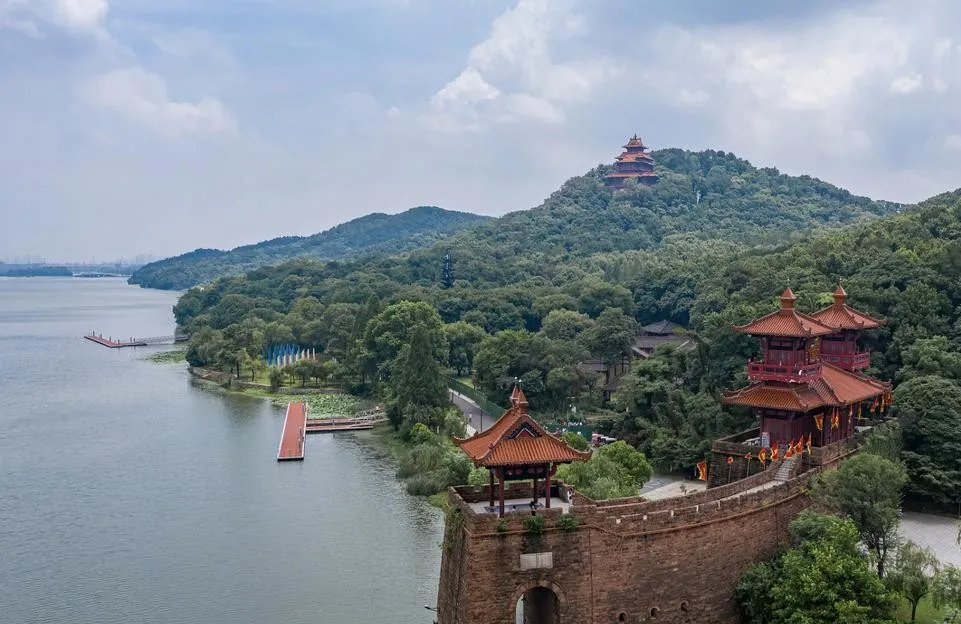
The Moshan Cherry Garden is the seasonal draw. It is one of the three great cherry-blossom sites in the world (alongside Hirosaki in Japan and the Tidal Basin in Washington), with over 10,000 trees and 100-plus varieties across 520 mu. Peak bloom runs mid-March to late March; the first batch of trees was a gift from former Japanese Prime Minister Kakuei Tanaka to Deng Yingchao, redirected to Wuhan in the 1970s. The cherry garden charges a separate ticket during blossom season (about ¥60); the rest of the lake is free year-round.
Local Tip: Most English cherry-blossom guides push Wuhan University’s campus (crowded, reservation-only in peak week). East Lake is bigger, easier to get into, and just as photogenic. Go early.
Yangtze River Bridge — free to walk
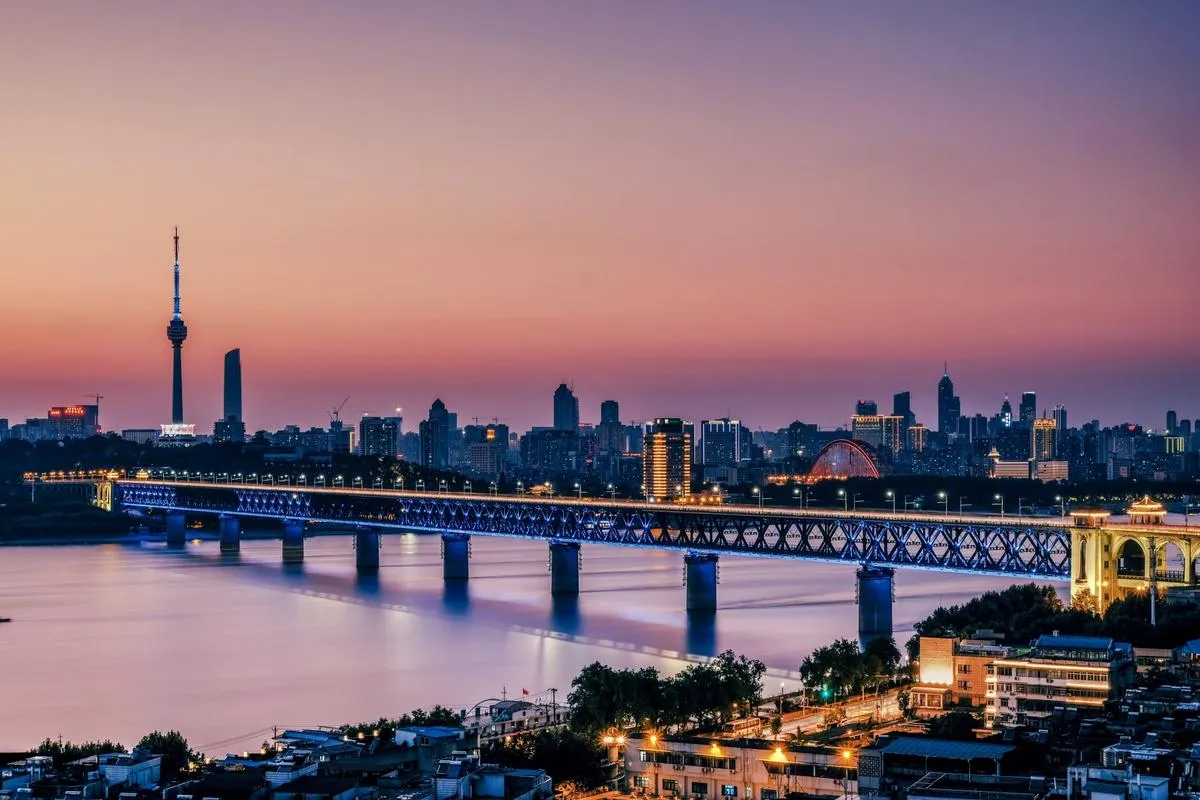
The Wuhan Yangtze River Bridge opened on October 15, 1957, the first road-and-rail bridge across the Yangtze: 1,670 meters long, road on top, rail below. It connects Snake Hill in Wuchang to Tortoise Hill in Hanyang, and it is free to cross. Walking it at dusk, with the river below and the lights coming on, is the cheapest great view in the city.
Hankou: Jianghan Road and the old concessions
If Wuchang is the cultural district, Hankou is where you walk off a big meal. Jianghan Road is a 1.6 km pedestrian street and a national “demonstration pedestrian street,” lined with 13 surviving early-modern buildings in European, Roman, and Byzantine styles. Locals call it a “museum of 20th-century architecture.” Daily foot traffic runs into the hundreds of thousands.
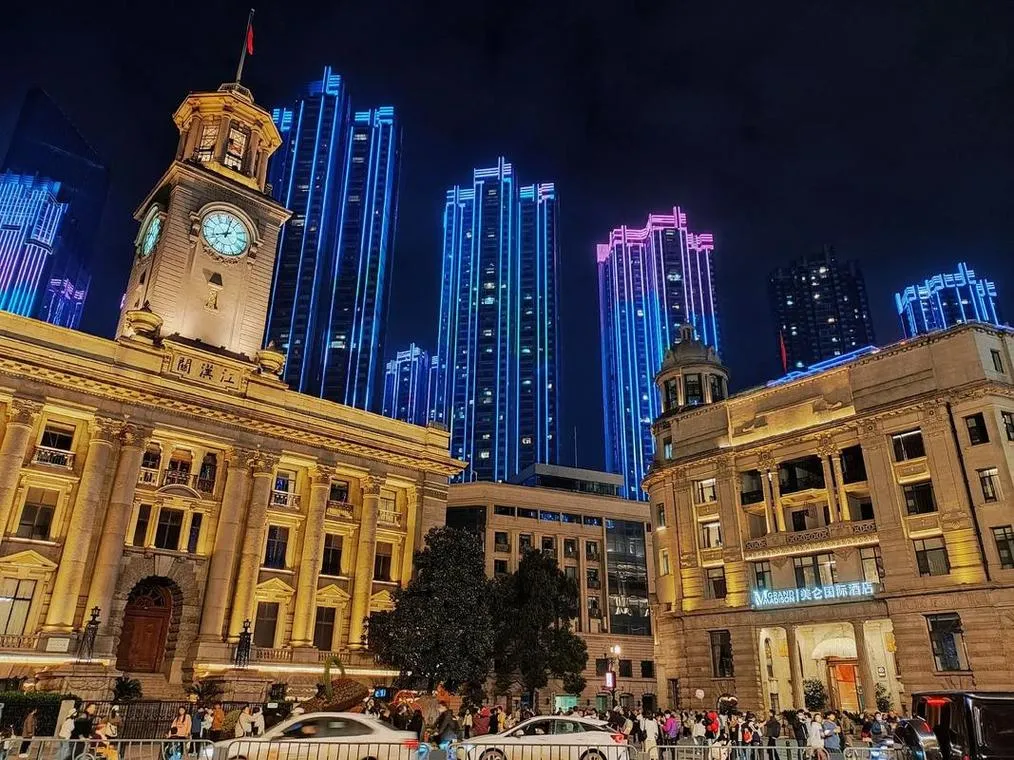
Two blocks away, Lihuangpi Road is a 604-meter “street museum” of 17 concession-era buildings. The British, French, Russian, German, and Japanese concessions all sat here, and the street is the preserved remnant of the period when Hankou was nicknamed the “Oriental Chicago.” The red-brick Bagong House (1910), a Russian-merchant apartment on Poyang Street, is the most-photographed single building and a relic of the China–Russia tea-trade route.
Eat: hot dry noodles and the guozao cult
Wuhan’s signature is hot dry noodles (热干面, rè gān miàn): alkaline noodles tossed in sesame paste with chopped radish, scallion, and chili oil. It is one of China’s “five great noodle dishes” (alongside Shanxi knife-cut noodles, Sichuan dan dan, Henan stewed noodles, and the two-Guangxi yi-fu noodles) and the centerpiece of Wuhan’s breakfast cult.
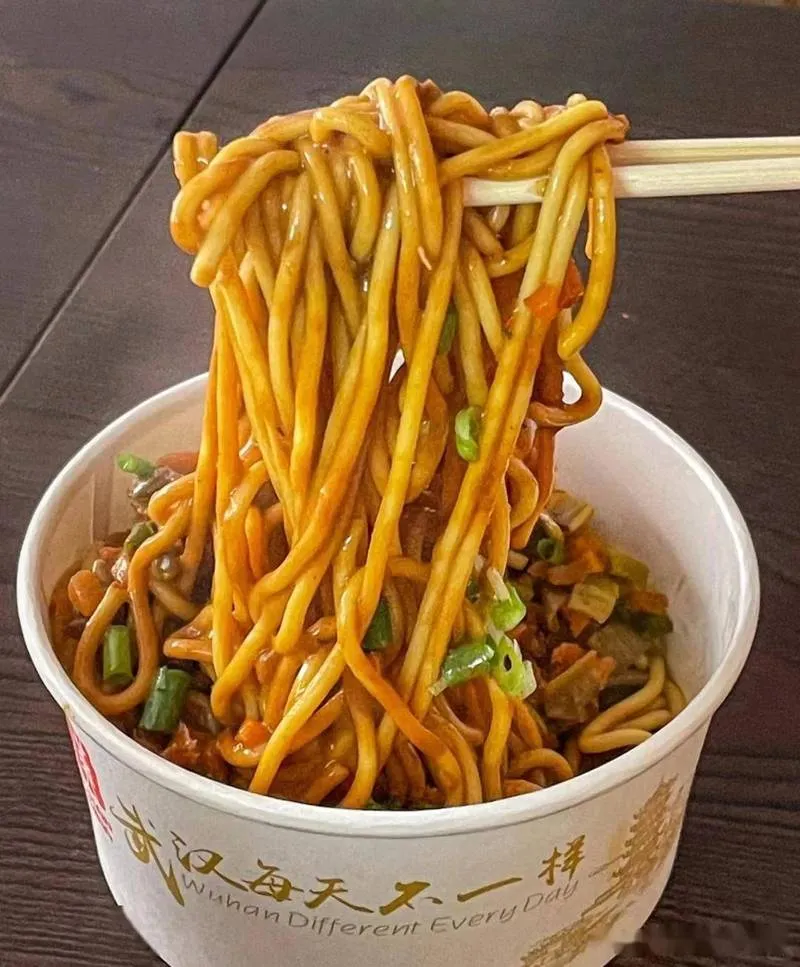
Wuhan people call breakfast 过早 (guò zǎo), and the city treats it as a competitive sport. You eat standing up, walking, squatting on the curb. The dish itself dates to the early 1930s, when a Hankou vendor named Li Bao started tossing cooked noodles in oil to keep them from sticking. The famous brand is Cailinji (蔡林记) — founded in 1928 (some sources say 1945) by Cai Mingwei at Hankou’s Manchun intersection, named for the two trees out front (“two trees make a forest”). Cailinji sells over 5,000 bowls a day and was named to China’s “time-honored brand” innovation list in 2024. A bowl from a street stall runs about ¥5–8.
Two 2026 footnotes: on January 23, 2026, hot dry noodles were written into ISO 21621, the international standard for traditional restaurants (English name: “Wuhan hot-dry noodles”). And on January 16, 2026, Cailinji opened its first European store, in Paris.
Avoid the trap: Hubuxiang (户部巷) is the “first snack street of Hankou flavor” and the place every tourist goes: over 10 million visitors in 2024, 100,000–150,000 a day on holidays, with prices to match. Locals eat breakfast on three other streets instead:
- Shanhaiguan Road (Hankou, Jiang’an district, ~400 m) — the “ceiling of guozao,” the most authentic early-morning street food, though it is getting discovered.
- Dacheng Road (Wuchang, at the foot of Yellow Crane Hill by the river) — a breakfast-and-late-night street; hot dry noodles, mianwo savory rice fritters, beef noodle soup.
- Liangdao Street (Wuchang, ~1.4 km, named for the Qing-era grain bureau) — old-school carb overload, famous for youbing baoshaomai (flatbread stuffed with shumai), about ¥20 a person.
Beyond noodles: try Wuchang fish (the dish Mao name-checked in a 1956 poem), doupi (sticky-rice-and-meat in an egg-skin crust), duck necks (Wuhan’s spicy braised export, sold under brands like Zhou Hei Ya nationwide), and lotus-root pork-rib soup.
Getting in and getting around
Airport to city. Metro Line 2 runs straight from Tianhe Airport into town and threads through Hankou and Wuchang; one line gets you to Hankou Station, Jianghan Road, and the university district.
Three train stations — read your ticket. Wuhan has three major stations and they are not interchangeable: Wuhan Station (the high-speed hub, “China’s No. 1 high-speed station,” near East Lake in Wuchang), Wuchang Station (the largest conventional-rail station in central China), and Hankou Station (China’s largest European-style station building, central in Hankou). Buy a high-speed ticket and show up at the wrong one and you will lose 40 minutes crossing the river. The new Xi’an service (about 2h41) runs through here.
Metro and ferry. Several metro lines cross the three towns. For the view, take the cross-river ferry (Wuchang Zhonghua Road to Hankou Wuhan Guan), a cheap, slow crossing that shows off both riverbanks at night.
See our China subway guide for metro basics, and for payments, set up Alipay and WeChat Pay before you arrive.
When to go — and when not to
Best: spring (March–May) and autumn (September–November). Mid-March is cherry-blossom season (East Lake Cherry Garden and Wuhan University); February–March is plum-blossom season at East Lake, China’s largest plum garden.
Avoid high summer if you can. Wuhan is one of China’s legendary “furnace” cities. July and August run 35°C and above with heavy humidity that makes it feel closer to 40°C-plus, and the plum-rain season (mid-June to early July) is muggy and wet. Winter is damp-cold, hovering around 0°C, and feels colder than the number suggests without north-style heating.
If you must come in summer, do your sightseeing early and late, drink more water than you think you need, and treat the free, air-conditioned Hubei Provincial Museum as a midday refuge.
Practical checklist
🏨 Book your stay: Search Wuhan hotels on Trip.com (passport-friendly, foreign-card payment). Stay near Jianghan Road or the East Lake area.
- Visa: 240-hour visa-free if you have an onward ticket to a third country. See the full guide.
- Pay: Alipay and WeChat Pay everywhere; carry a little cash for small breakfast stalls.
- Book ahead: Hubei Provincial Museum (required), Yellow Crane Tower in peak periods, Wuhan University in cherry-blossom week.
- Get around: Metro Line 2 from the airport; mind which of the three train stations your ticket names.
- Connect: A travel eSIM and a VPN sorted before arrival. See our China entry guide.
Wuhan rewards the traveler who treats it as more than a transfer. Ten visa-free days, a 2,500-year-old sword, a lake the size of a small city, and a breakfast bowl that just became an international standard, all reachable from one central airport, with Xi’an’s terracotta army three hours down a brand-new track.
For a complementary central-China stop, read our Nanjing travel guide, another 240-hour visa-free city, three hours east by high-speed rail.
Sources & Verification
This guide was last verified on 2026-08-06. Key Chinese-language sources:
- 国家移民管理局 / National Immigration Administration (nia.gov.cn): the official 240-hour transit visa-free port list, confirming Wuhan Tianhe Airport as port 36 with the stay area covering all of Hubei province and 57 eligible countries.
- 黄鹤楼公园 / Yellow Crane Tower scenic area (official): the ¥70 ticket price, the day (08:30–17:30) and night (19:30–22:00) session hours, and the passport-at-entrance entry rule for foreign visitors.
- 湖北省博物馆 / Hubei Provincial Museum (official): the free-entry online reservation rule, the 5,000-visitor daily cap (3,500 morning, 1,500 afternoon), Monday closures, and the April 2025 UNESCO Memory of the World inscription of the Marquis Yi of Zeng chime bells.
- 携程 / Ctrip (ctrip.com): high-speed rail times including the new Wuhan–Xi’an 2h41 service, the three-station layout (Wuhan, Wuchang, Hankou), and scenic-area practical details.
Historical dates and statistics (the 1957 bridge opening, Cailinji’s 1928 founding, East Lake’s 88 km² area, the “Thoroughfare of Nine Provinces” label) were cross-checked against Baidu Baike and corroborated across at least two sources where possible.