Best Places to Visit in China in Spring (2027): The Bloom Calendar, the May Day Crowds, and the Tibet Permit Catch
English guides say spring in China means “cherry blossoms in March” and leave it there. That advice costs travellers real money every year, because China spans fifty degrees of latitude plus a 4,000-metre plateau: spring here does not begin, it travels. When the tea gardens of Fujian are already flowering in late January, Beijing is still frozen. When the wild apricot groves of Xinjiang finally bloom in late April, Jiangnan’s rapeseed fields have been yellow for a month. Book “March” and you will be too early in Beijing, too late for Luoyang’s peonies, and, if you are aiming at Nyingchi’s peach blossom valleys, possibly travelling without the one permit that actually gates entry.
This guide gives you the moving calendar, the peak week for each of the places worth planning a trip around, the list of what goes wrong in Chinese spring (sandstorms, cold snaps, and the single most crowded holiday week after National Day), and the part English sources consistently get wrong, which spring destinations your visa actually lets you enter.
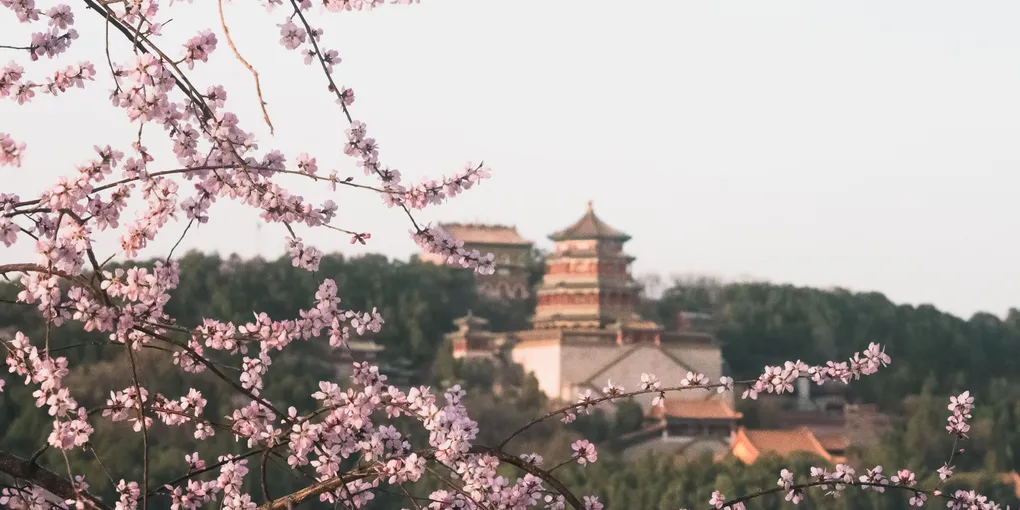
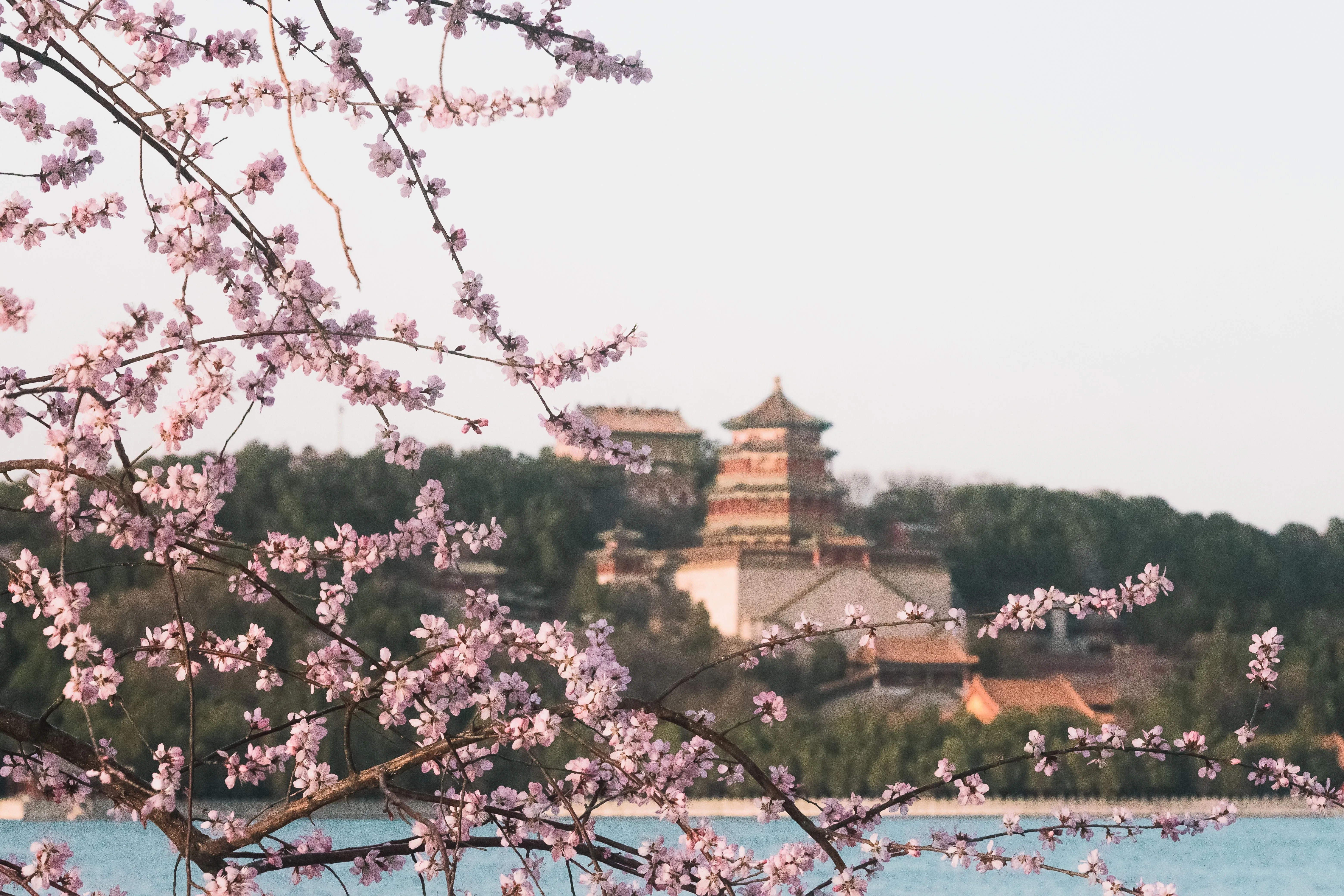 Beijing’s spring arrives around early April, weeks after the south. Here spring blossom frames the Summer Palace across Kunming Lake, the classic frame locals queue for on the first warm weekend.
Quick answer: China’s spring bloom runs late January to early May, south to north. Fujian’s tea-country cherries open first (late January), Jiangnan’s cherries and rapeseed peak mid-March to early April, Beijing’s blossom window is late March into April, Luoyang’s peonies run April 1–30, Xinjiang’s wild apricot valley blooms around mid-April for roughly a week, and Nyingchi’s peach blossoms fill Himalayan valleys mid-March to mid-April. The Qingming weekend (April 3–5 in 2027) is the first big domestic crowd wave; the May Day holiday is the second-worst travel week of the year after National Day. Critically: Tibet is not covered by any visa-free policy — including the 240-hour transit and the 30-day unilateral waiver — and requires a separate Tibet Travel Permit booked through a licensed agency. See our 240-hour transit guide, visa-free country list and Tibet permit guide before booking anything.
How we verified this: SinoWander reads the Chinese sources English guides cannot. This page draws on China Meteorological Administration climate material, the State Council’s holiday rules as explained on gov.cn, the Ministry of Culture and Tourism’s May Day statistics, Guizhou provincial and Pingba district government releases on the Gui’an cherry garden, Henan provincial government releases on the Luoyang Peony Culture Festival, Wuxi Yuantouzhu’s own festival announcements, and Nyingchi tourism bureau statements. Holiday dates for 2027 follow the statutory rules; the State Council’s 2027 circular itself is not yet published (it normally appears in November–December of the prior year) and we flag exactly what is confirmed versus expected. Last verified: 2026-10-10. See our methodology.
Spring in China Is Not a Month. It Is a Three-Month Relay
The mechanism first, because once you understand it you can plan places this guide does not even list. Temperature, not the calendar, decides when spring starts, and it moves from south to north and from low altitude to high altitude. The China Meteorological Administration’s own climate summaries put it like this: southern China (Fujian, southern Yunnan) has no real winter at all; the Jiangnan region (Zhejiang, Jiangxi, southern Hunan) enters spring in early March; North China including Beijing follows around early April; southern Heilongjiang waits until around May. In the west, southern Xinjiang thaws in March, northern Xinjiang in April, and the Tibetan Plateau last of all, in April–May.
| When spring arrives | Where | What that means for a trip |
|---|---|---|
| No real winter | Fujian coast, southern Yunnan | Flowers can open in late January; Zhangping Yongfu’s tea-garden cherries run late January to mid-March |
| Early March | Jiangnan: Shanghai, Hangzhou, Suzhou, Nanjing, Wuxi, Wuyuan | The classic “misty rain in the third month”; cherries and rapeseed mid-March to mid-April |
| Mid-to-late March | Sichuan Basin, Chongqing, Guilin, southern Xinjiang | Rapeseed and city blossoms early; comfortable hiking weather from March |
| Early April | Beijing, Tianjin, Xi’an, Shandong | Cherry season compressed into roughly three weeks; sandstorm risk highest |
| April–May | Tibetan Plateau (Nyingchi is the exception: its valleys bloom mid-March) | High passes still snowy; Nyingchi’s sheltered valleys bloom early |
| Around May | Southern Heilongjiang, far north | Skip for flowers; wait for the summer grasslands, see our Hulunbuir guide |
One consequence travellers miss: the same week means completely different things in different places. In late March, Wuxi is at its cherry peak while Beijing may still be running its heating. In late April, Luoyang’s peonies are finishing late varieties while Xinjiang’s apricot valley is only opening. Plan the destination first, then the week, never the reverse.
Four Things That Go Wrong in Chinese Spring
Roundup articles sell spring as gentle. Chinese meteorologists spend each March warning about four specific problems, and each one has a planning answer.
1. The late-spring cold snap (倒春寒). This is formalised enough that China has a national standard for it, GB/T 34816—2017, the meteorological indicators for late-spring cold: an early warm spell followed by a distinct cold period well below the seasonal norm. It can hit any month from March to May, north or south, and it is the reason “book the cherry festival’s opening date” is bad advice. Build one buffer day into any blossom-focused itinerary, and check the 7-day forecast rather than the historical average.
2. Northern sandstorms, March–April. Spring is sandstorm season in northern China. At an April 2025 press conference, the China Meteorological Administration reported five to six dust events in the month of April alone for northern China, with 2.5–3 dust days on multi-year average for the period around Qingming. If you are travelling in Beijing, Xi’an or Gansu in March–April, keep one flexible indoor day (museums, our Xi’an food itinerary) and pack a mask.
3. Southern drizzle. Jiangnan and South China in spring mean low-temperature overcast rain that can last days, the “misty rain of Jiangnan” that painters love and photographers tolerate. Guangdong adds the pre-flood-season downpours from April–May. Waterproof shoes beat umbrellas here; the rain is horizontal more often than vertical.
4. Enormous day-night swings. Beijing’s historical record for a single day’s maximum-minus-minimum is 26.8°C (May 3, 1966). “Onion dressing,” layers you can shed by noon and rebuild by dusk, is the standard Chinese answer, and our China packing list covers it in detail. In the Nyingchi valleys, the swing is the same story at altitude: warm afternoons near 15–20°C, nights at or below freezing.
None of these should talk you out of spring. They should talk you out of rigid spring plans.
The 2027 Holiday Problem: Two Crowd Waves, One Unconfirmed Calendar
China’s statutory holiday rules (as explained in the government’s own policy reading on gov.cn, updated November 2024) give all citizens 13 paid public holidays a year. For spring travel, three matter:
- Qingming Festival, 2027: falls on Monday, April 5. Under the holiday rules, a one-day statutory holiday that lands on a Monday connects to the preceding weekend, giving a natural three-day weekend, April 3–5, with no makeup workdays. This is high-confidence arithmetic under the standing rules, but the State Council’s 2027 arrangement notice (normally issued in late 2026) is the final word; we will update when it publishes.
- Labour Day, 2027: statutory holidays are May 1–2 (two days). In recent practice the State Council has extended this into a five-day holiday by swapping adjacent weekends, exactly what happened in 2025 and 2026. For 2027 the swap dates are not yet published. Do not book flights on the assumption of May 1–5; wait for the notice, expected November–December 2026.
- Tomb-sweeping and flower season collide. Qingming is when Chinese families visit graves and, increasingly, take the first long trip of the year. It sits directly inside the Jiangnan blossom peak, which is why early April is both the best and the most crowded week to be in Wuxi, Wuyuan or Wuhan.
How big is the May Day wave? Use the most recent full-year figure: in 2026, the Ministry of Culture and Tourism counted 325 million domestic trips over the five-day May Day holiday, up 3.6% year on year, with domestic spending of 185.49 billion yuan, up 2.9%. That is a national population larger than the United States moving in five days. The tactics that work are the ones from our National Day Golden Week guide, applied twice: travel before the holiday starts or after it ends, book high-speed rail the moment tickets open (see our train ticket guide and high-speed rail guide), and treat any blossom site within two hours of a megacity as a bank holiday queue.
One more detail most guides skip: toll-free highways apply on Qingming and Labour Day, so expect the roads to be as busy as the rails if you are renting.
The Bloom Map: Five Flowers, Five Windows
Cherry blossoms: a six-week relay, not one week
The single most useful fact about Chinese cherries is that the season is a relay across 2,000 kilometres, so there is always somewhere at peak, and the place you have heard of is rarely the best value.
| Window | Place | Notes |
|---|---|---|
| Late Jan – mid Mar | Zhangping Yongfu, Fujian | Tea terraces + cherries, the earliest bloom in China; still a domestic-secret vibe |
| Early Mar – mid Apr | Yuantouzhu, Wuxi | The 2026 cherry festival ran March 1 – April 15; 30,000+ trees, 30+ late varieties, the lake- peninsula frames are the most famous in China |
| Mid Mar – mid Apr | East Lake, Wuhan | Night lighting; Wuhan University’s campus cherries are free but require advance reservation |
| Mid-to-late Mar | Jiming Temple, Nanjing; Xuanwu Lake | The pagoda-and-blossom street is Nanjing’s signature spring frame |
| ~Mar 20 – Apr 1 (peak) | Pingba Gui’an Cherry Garden, Guizhou | See below — the value play |
| Late Mar – early Apr | Yuyuantan, Beijing | 2,000+ trees; Beijing’s whole city peaks in this window |
| Late Mar – early Apr | Qinglong Temple, Xi’an | Cherry blossoms against Tang-dynasty architecture |
Pingba is the recommendation most guides miss. The Gui’an (Pingba) cherry garden in Guizhou covers more than 24,000 mu (about 1,600 hectares) with nearly 700,000 cherry trees, and the provincial and district governments describe it as the largest cherry blossom base in the world. Early cherries open first, then the pink-white mid varieties that cover the largest area, then late cherries, about three weeks in total, with the full-peak around March 20 to April 1. Entry is free, with no reservation required (per the Guizhou provincial government and Pingba district government releases). The catch is transport: it sits between Guiyang and Anshun, so pair it with our Kunming–Dali route thinking or a Guiyang food stop, and expect enormous domestic crowds on the Qingming weekend itself, so go March 20–28 and you get the peak without the holiday.
Rapeseed flowers: Wuyuan’s yellow, and the truth about the photo
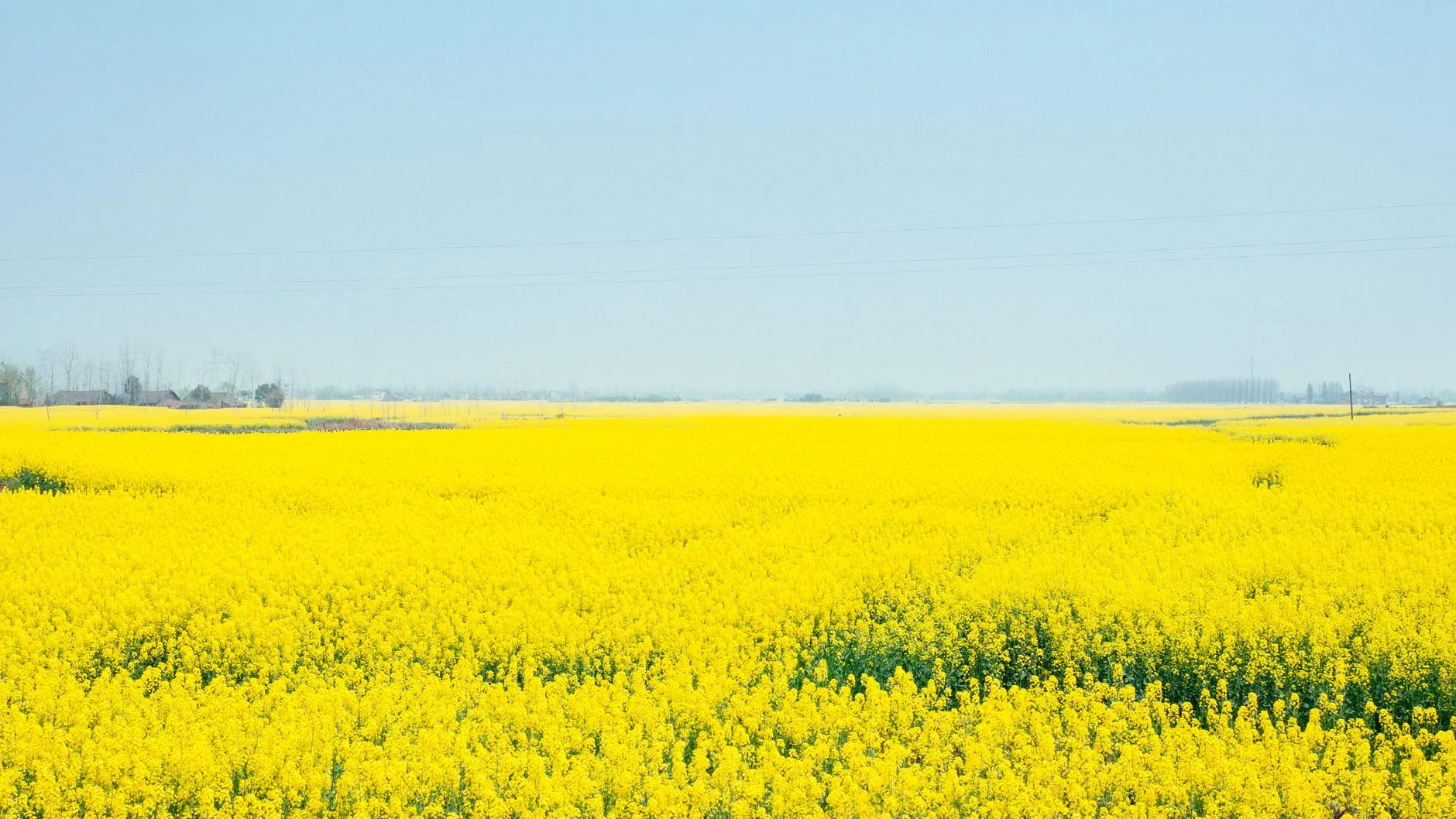 Rapeseed flowers at full bloom, in a good year the yellow runs from late February to mid-April somewhere in China, peaking mid-March to early April in Jiangxi.
Rapeseed (canola) is China’s real mass flower: not a park planting but an agricultural crop that turns whole counties yellow. The headline destination is Wuyuan, Jiangxi, where the season runs late February to mid-April, the full bloom falling roughly early March to early April. The famous terraced fields at Jiangling and Huangling run mid-March to early April, with Huangling’s second-stage plantings extending into mid-April; the most-quoted single best window is around March 20–28. On the demand side, 2026 saw the railways add eleven extra “flower-viewing special trains” to Shangrao/Wuyuan and local shuttle buses running every 10–15 minutes, evidence of both how good it is and how busy it gets.
The photograph above is an accurate one: vast rapeseed fields like this exist across Hubei, Jiangsu and Anhui too, and Wuyuan’s premium is the terraces and white-walled Huizhou villages, not the flower itself. If your dates miss Jiangxi’s peak, our tea culture and night markets guide pairs well with a Wuyuan spring-tea detour: pre-Qingming Longjing and Maojian picking season is April, and tea villages are the best-kept spring secret in Jiangnan.
Peonies: Luoyang’s April, three waves deep
Luoyang’s peony season is a month-long citywide festival, not a weekend: the annual Luoyang Peony Culture Festival runs April 1–30, and the 2026 edition (the 43rd) ran exactly those dates per the Henan provincial government, the festival being a fixed yearly fixture. The blooms arrive in three waves, early varieties March 28 – April 6, the full-peak mid varieties April 7–15, and late varieties April 16 into early May, across a city with 1,445 registered cultivars. The practical read: aim for April 7–15, when the peak varieties and the festival both run, but know that this is also the busiest fortnight; the late window (after April 16) trades the top cultivars for thinner crowds.
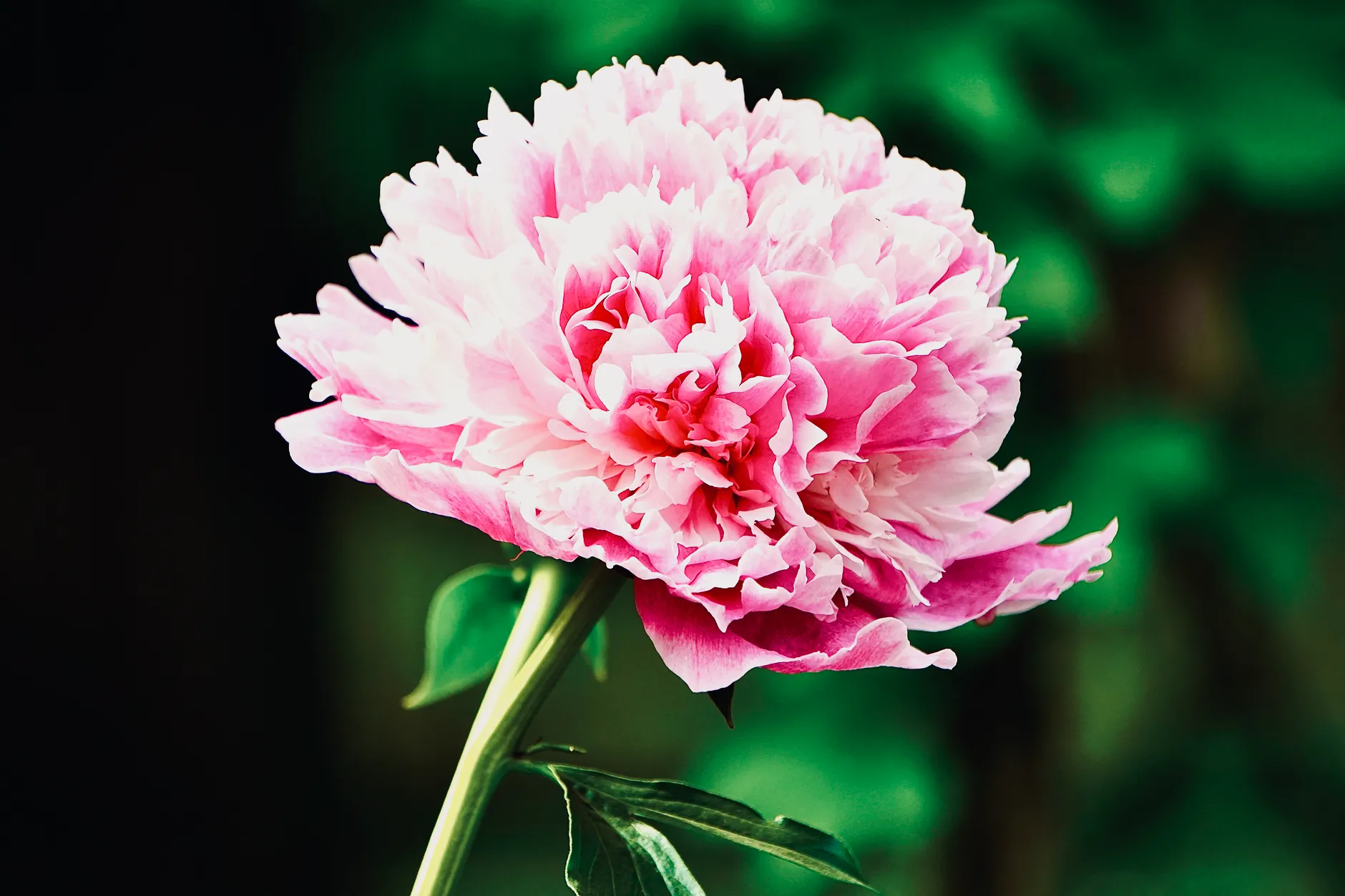 The tree peony, the flower that made Luoyang the “peony capital,” blooms in three waves through April, peaking around April 7–15.
Peony-adjacent spring eating is worth planning around too: our Chinese food cities guide covers the Henan table, and the water-banquet tradition that comes with it.
Wild apricot: Xinjiang’s one-week wonder
The Tuergen Apricot Valley in Xinyuan County, Ili (Yili), Xinjiang, roughly 30,000 mu of wild apricot forest and the largest of its kind, blooms mid-April to early May, with full peak around April 15 in a typical year (it can open as early as late March). Two hard warnings: the bloom lasts only about seven days, so this is a destination you pick dates for first and flights for second; and the site’s modest entry fee (around 20 yuan) is collected on site by local herders rather than through an official ticketing system, so treat it as informal. Xinjiang sits outside the 240-hour visa-free transit zone, so check our transit guide and visa-free list, or plan on the 30-day unilateral waiver (nationwide, Xinjiang included) or a tourist visa. April in Ili pairs naturally with our Kanas planning notes for later in the year.
Peach blossom: Nyingchi, and the permit that gates it
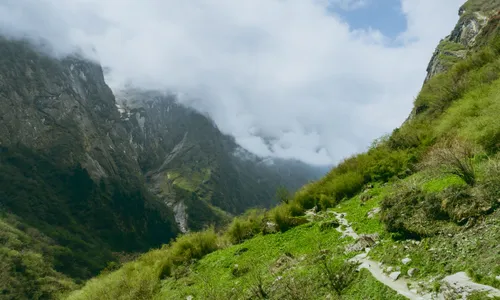
Tibet’s spring comes earliest in its lowest valleys. Nyingchi (Linzhi), at around 3,000 metres and low for Tibet, with heavy forest cover and comparatively high oxygen, runs the country’s most spectacular peach blossom season: wild peach trees in bloom mid-March to mid-April across the Nyang River valley, with Bomi and Bayi peaking mid-to-late March and Mainling (Sosong Village, facing Namcha Barwa) and Gongbujiangda extending to mid-April. The Nyingchi Peach Blossom Festival is an annual fixture (the 2026 edition opened April 3). Daytime temperatures run roughly 15–20°C with nights below freezing, the same onion-layer logic as everywhere else, plus sun protection at altitude.
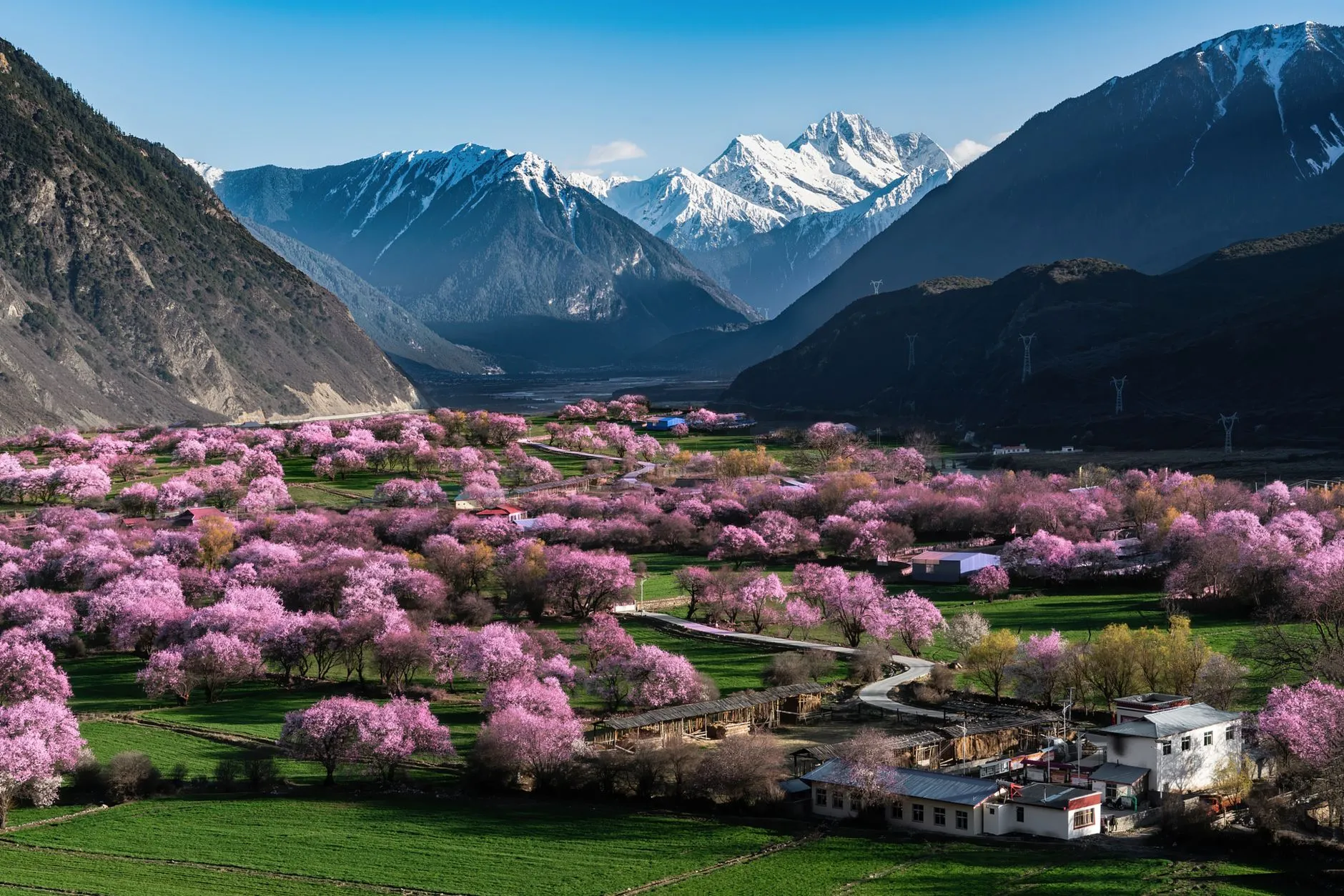 Tibet’s spring comes earliest in the sheltered valleys around Nyingchi, where wild peach trees bloom against snow peaks from mid-March.
Now the part that actually decides whether this trip happens. Tibet is open to foreign tourists only under permit, and no visa-free policy covers it:
- Foreign and Taiwan passport holders must obtain a Tibet Travel Permit through a licensed Tibetan travel agency, and travel on an organised, guided itinerary. Independent travel, self-driving and unguided hiking in Tibet are not permitted.
- A visa-free entry does not mean Tibet access. Even if you enter China on the 240-hour transit or the 30-day unilateral waiver, you still need the Tibet Travel Permit; the two systems are entirely separate.
- The permit takes roughly 7–14 working days to arrange; start 15–45 days before travel. Border areas such as Motuo require an additional frontier pass.
- Hong Kong and Macau residents travel on their Home Return Permit and may visit Lhasa independently, a genuine exception to everything above.
We keep a full, updated walkthrough in the Tibet Travel Permit guide and a Lhasa-focused companion in the Lhasa travel guide; the Shigatse route continues in our Shigatse guide. If the permit timeline does not fit your dates, Yunnan in the same weeks delivers a high-plateau spring without the paperwork; see below.
Where to Go in Spring, by Theme
The bloom calendar above is the specialist layer. This is the itinerary layer: nine spring plays that work, each linked to a full guide.
The Jiangnan triangle — the default answer, and it earns it
March–April in Suzhou, Hangzhou, Wuxi and Nanjing is the China of poetry, with misty canals, garden blossoms, and tea harvest. Hangzhou’s West Lake in the third lunar month is the reference image; the gardens of Suzhou pair spring blooms with azalea season running into May; and both are easy weekends from Shanghai (Suzhou day trip, Hangzhou day trip). Timing notes: Yangzhou’s Slender West Lake is at its best in the last week of March and first of April; Humble Administrator’s Garden’s azalea show opens around May 1; West Lake’s spring peach blossom runs through April.
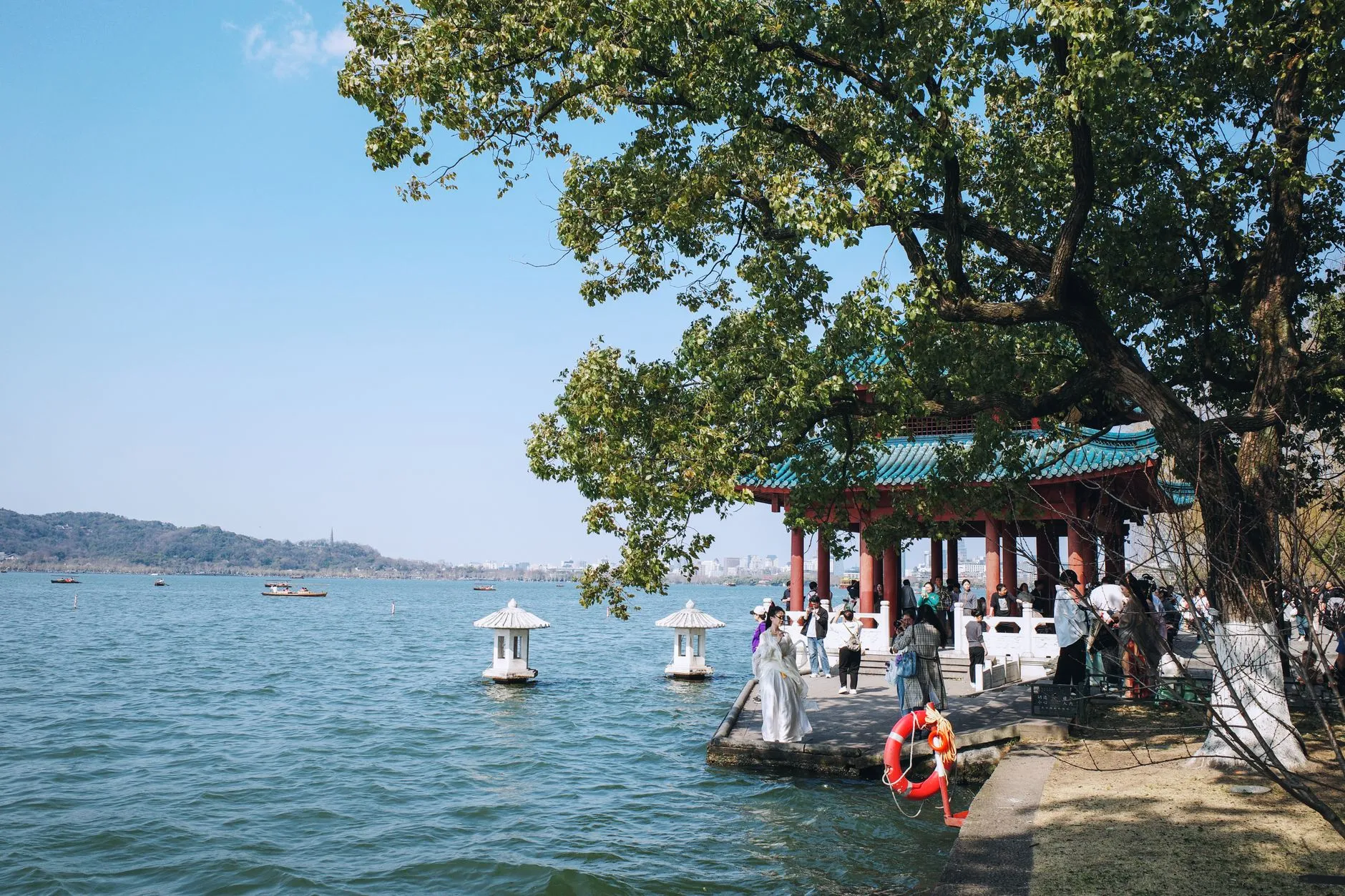 West Lake, Hangzhou in spring, green rather than flowery by late April, with long days that reward the lake walk our Hangzhou guide maps out.
A footnote worth keeping: late April Jiangnan is green rather than flowery; the photo above is what the lake actually looks like after the cherry wave passes. If blossoms are the mission, hold to the mid-March–mid-April window.
Yunnan — the all-rounder with no bad spring week
Dali, Lijiang and Shangri-La sit in Yunnan’s near-permanent spring: March to June is arguably the province’s best stretch, mild, dry, and before the summer rain. Kunming and Dali deliver the old-town-and-lake combination; Lijiang and Yulong Snow Mountain add the high-alpine layer. Dali’s own spring has a bonus season: its winter-flowering cherries open as early as December–January, and its streets carry blossom well into spring.
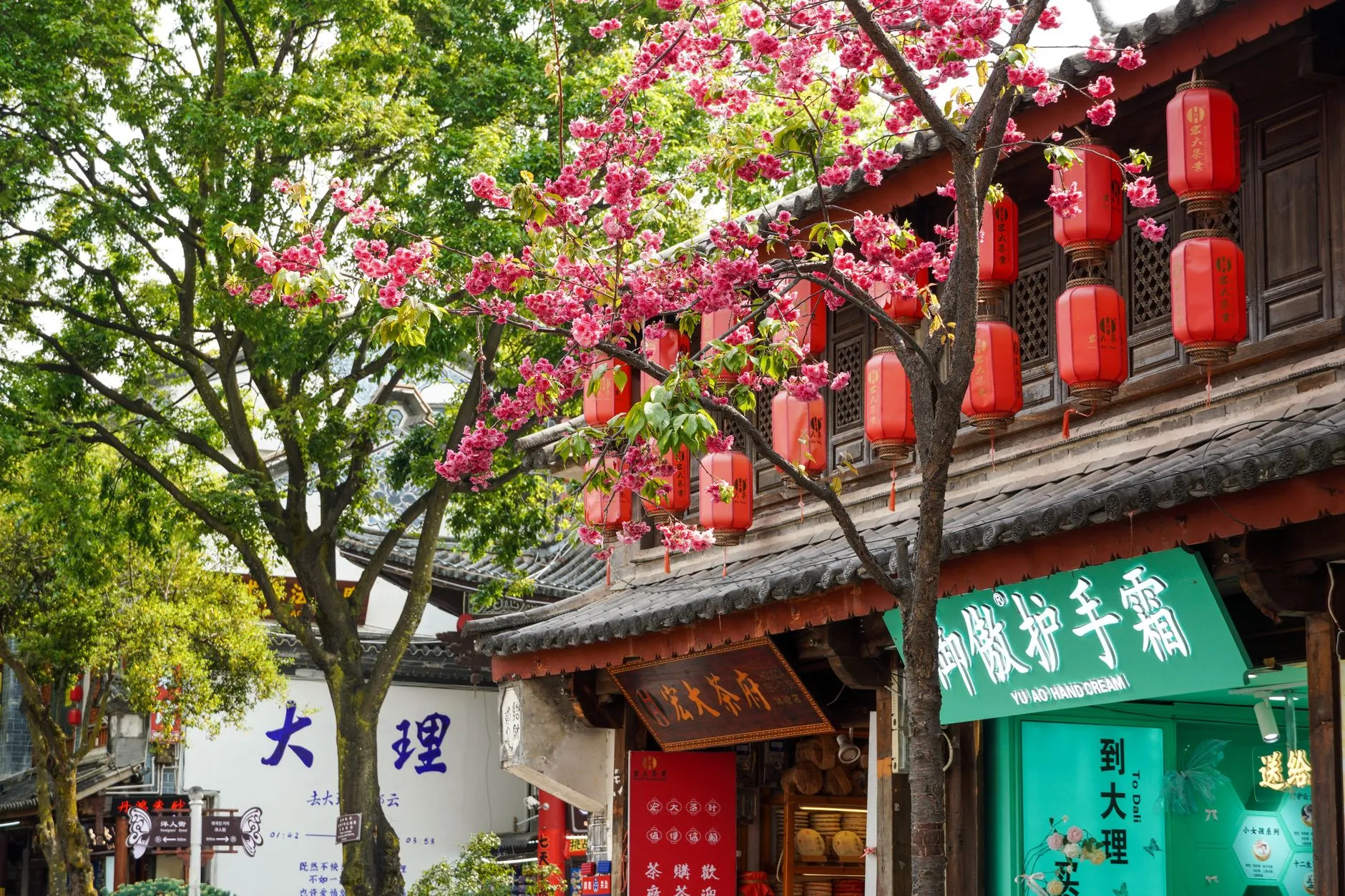 Dali’s old town in blossom season; Yunnan’s spring is long, mild and dry, the reason our Kunming–Dali guide calls March–June the province’s best window.
Guilin — the mist makes the picture
March–April’s light haze is a feature, not a bug, in Guilin: the karst towers read like an ink painting precisely because of the soft air. Shoulder-season crowds are thinner than autumn’s. Full planning in the Guilin–Yangshuo guide.
Huangshan and Huizhou villages — hike before the heat
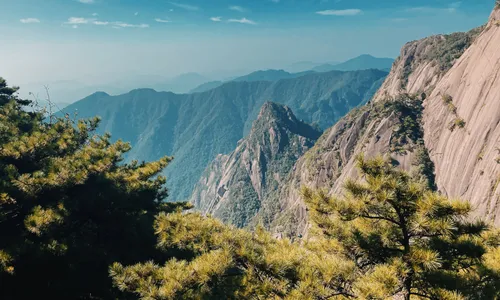
March–April suits the granite steps and the camellia-and-azalea lower slopes before summer heat and summer crowds; after rain, the cloud sea. Pair with Hongcun’s spring reflections. Full route in the Huangshan guide; for how it compares with the country’s other long routes, our best hiking trails in China ranks them by difficulty and season.
Zhangjiajie — clouds without the August queues
Spring fog threading the sandstone pillars is the classic photograph; April–May trails are green and the summer crush has not arrived. See the Zhangjiajie guide.
Chengdu and Chongqing — the food-and-panda spring
Both cities are comfortable from March, and the pandas at the breeding base are notably more active in cool weather than in summer’s heat; our Chengdu panda base guide explains the timing. Then eat your way through Chengdu and Chongqing; spring vegetables (清明前的时令菜) are a seasonal draw.
Jiuzhaigou — spring thaw, shoulder prices
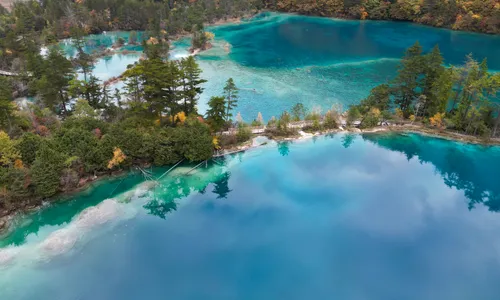
The park reopens its full colour slowly through spring: meltwater refills the lakes, crowds are thin, and hotels price like autumn off-peak. Waterfalls peak with the melt. Route and tickets in the Jiuzhaigou guide; note again that Jiuzhaigou sits outside the 240-hour transit zone (Aba Prefecture); the visa-free list or a visa covers it.
The coast reopens — Xiamen and Qingdao
From late April through May, Xiamen hits walking weather before the summer humidity, and Qingdao starts its long mild run; both pair badly with blossom chases but perfectly with a food-and-seafront spring.
Mount Emei and Leshan — the quiet shoulder
Spring sits between winter ice and summer monsoon: the Giant Buddha in soft light, the mountain’s lower trails open, the summit still dramatic with snow. Our Emei–Leshan guide has the transport math.
Where Not to Go in Spring (Yet)
This section answers the question readers of the winter guide keep asking: Kanas and Hulunbuir are not spring destinations. Early spring in both is thaw, mud and late snow; the grassland does not green until June and the road network to Kanas properly reopens with summer. Park them for the season they are famous for, Kanas and Hulunbuir, and let spring have the south.
Practical Checklist for a China Spring Trip
- Book the week, not the festival. The bloom is a moving target (see the arrival timeline above); hold one buffer day per blossom city.
- Trains beat planes for the flower circuit. Wuxi, Nanjing, Wuhan, Wuyuan and Luoyang all sit on the high-speed network, and the high-speed rail guide and ticket-buying walkthrough cover booking windows. For Xinjiang or Tibet, use the domestic flights guide.
- Book blossom-season stays one to two months ahead, especially village guesthouses in Wuyuan and valley lodges near Nyingchi. Foreigner-friendly booking mechanics are in our hotel booking guide.
- Dress in layers; pack for three seasons in one day. Cold snaps (GB/T 34816), 26°C daily swings and altitude nights are all documented above; the packing list has the checklist.
- Sandstorm days: go indoors, not home. One flexible museum/food day per northern city.
- May Day: book or avoid, never drift. Decide now whether you are travelling in the holiday (book everything immediately) or around it (shift by 3–4 days). Golden-week tactics in the National Day guide transfer directly.
- Payments and connectivity before you fly. Set up Alipay and WeChat Pay (overview in how to pay in China); SIM/eSIM choices in our connectivity guide.
- Families: blossom parks + pandas is the kindest spring itinerary with kids; logistics in the China with kids guide.
- Tibet bound? Start the Tibet Travel Permit process 15–45 days out. No permit, no Nyingchi, whatever your visa status.
Frequently Asked Questions
When is cherry blossom season in China? As a relay, late January (Fujian tea gardens) to mid-April (Beijing, Xi’an). The most-visited stretch, Wuxi, Wuhan, Nanjing, runs mid-March to mid-April; Beijing peaks late March to early April.
Where are the best cherry blossoms in China? Wuxi’s Yuantouzhu for scale and lake views, Wuhan’s East Lake for night lighting, Nanjing’s Jiming Temple for the pagoda frame, and Pingba’s Gui’an cherry garden in Guizhou for value: near 700,000 trees on 1,600 hectares, described by Guizhou’s government as the world’s largest cherry base, free to enter, peak around March 20 – April 1.
When do peonies bloom in Luoyang? April 1–30 festival-wide, in three waves: early March 28 – April 6, peak April 7–15, late April 16 – early May. The peak fortnight has everything; after April 16 is quieter.
Can I see peach blossoms in Tibet without a tour? If you hold a foreign or Taiwan passport, no, Tibet requires a Tibet Travel Permit from a licensed agency plus a guided itinerary, independent travel is not permitted, and no visa-free policy changes that. Hong Kong and Macau residents with the Home Return Permit can travel to Lhasa independently. Details in the permit guide.
Is May Day a good time to see flowers? It is the worst normal week to see anything: in 2026 the holiday generated 325 million domestic trips (Ministry of Culture and Tourism). The flowers are still good; the queues are the problem. Travel before May 1 or after May 5, and check the 2027 holiday notice (due late 2026) before booking.
What about the 240-hour visa-free transit for spring trips? It covers Jiangnan, Beijing, Xi’an, Guilin, Chengdu–Chongqing and the Yunnan heartland, but not Xinjiang, Tibet, or Jiuzhaigou’s prefecture. Full mechanics in the 240-hour transit guide; your passport’s status in the visa-free country list.
The Bottom Line
Spring is China’s longest season and its most deceptive: the flowers move 2,000 kilometres and three months, the two biggest crowd waves of the first half-year land inside them, and the single most spectacular destination, Nyingchi’s peach valleys, hides behind a permit that no visa-free policy covers. Pick the flower, then the week, then the paperwork, in that order.
When the relay ends, the next one starts: the scramble for the cool belt in our summer guide, the autumn colour relay in our autumn guide and the ice season in our winter guide. For the month-by-month backdrop behind every date on this page, the best time to visit China guide remains the master calendar.