Best Places to Visit in China in Summer (2027): The Cool Belt, the Typhoon Window, and the School-Holiday Crush
English guides treat summer in China as a warning: “it’s hot and crowded, go in spring or autumn instead.” That advice is lazy, and it costs you the single most geographically varied season China has. The country spans fifty degrees of latitude and a 4,000-metre plateau, so while Shanghai is running at 35°C with near-tropical humidity in late July, the grasslands of Inner Mongolia are sitting at a comfortable 22°C, the Tibetan plateau towns are cool enough to need a fleece at night, and the lake country of Qinghai is in full bloom. Summer is several seasons running at once, and that split is what makes it plan-able.
What summer actually does is concentrate risk. July to September is typhoon season on the coast. Late July to mid-August is both the main rainy season in the north and the absolute peak of domestic family travel, because Chinese schools are out from early July to the end of August. Torrential mountain rain, cancelled ferries, sold-out trains and doubled hotel rates are all real, but they are also all regional and predictable. This guide covers the six summer climates, the cool belt where heat is not the problem, what goes wrong, and which of these places your visa actually lets you enter (the part English sources consistently get wrong).
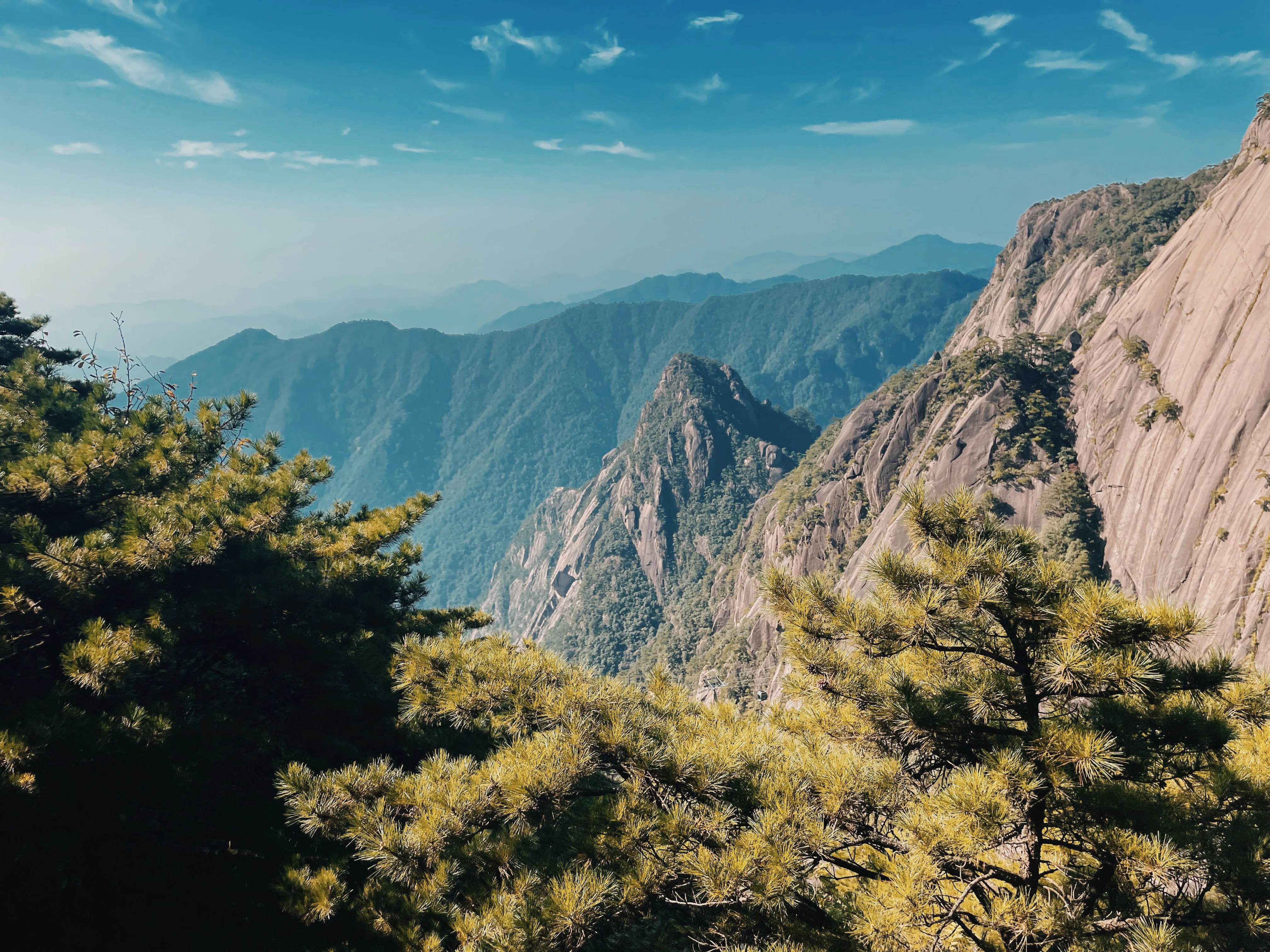 Huangshan in summer: granite peaks and pines under moving cloud, the classic cool-mountain escape.
Quick answer: China’s summer runs June to August, with September as a shoulder. The comfortable passes: the Yunnan–Guizhou plateau (Kunming around 22°C, Dali 16–26°C, Liupanshui around 19°C), the northeast (Changbai Mountain and Hulunbuir around 22°C), the high plateau (Xining around 17°C, Qinghai Lake around 17°C in July–August, Gannan 15–25°C), and the classic summer mountains (Chengde, Lushan, Moganshan, Emeishan, Changbaishan). The risk zone: South China and the Yangtze valley run hot and humid with 35°C+ common in North China in July–August, and typhoon season peaks in August along the Guangdong–Fujian–Zhejiang–Hainan coast. Chinese school holidays run roughly early July to the end of August — the busiest and most expensive window. Critically: Tibet is not covered by any visa-free policy — including the 240-hour transit and the 30-day unilateral waiver — and needs a separate Tibet Travel Permit. See our 240-hour transit guide, visa-free country list and Tibet permit guide before booking.
How we verified this: SinoWander reads the Chinese sources English guides cannot. This page draws on China Meteorological Administration typhoon science, China Weather Network’s rain-band analysis and subtropical-high explainers, the 2023 national “arrival of summer” progression map republished by China Economic Net, the State Council’s revised holiday rules as published on gov.cn, the National Immigration Administration’s transit and visa-free announcements, WeChat Pay’s official foreign-card documentation, and provincial tourism and scenic-area sources for ticket and reservation rules. Temperature figures for the cool-belt destinations are approximate averages drawn from Chinese media and tourism reporting rather than official meteorological statistics, and we label them as such rather than dressing them up as climate data. The State Council’s 2027 holiday circular is not yet published (it normally appears in November–December of the prior year); where a 2027 date is arithmetic from the statutory rules rather than official confirmation, we say so explicitly. Last verified: 2026-10-14. See our methodology.
Summer in China Is Six Climates, Not One
The mechanism first, because once you see it you can evaluate places this guide does not list. Summer in China is driven by two things: latitude and the East Asian monsoon rain band, which marches north through the season. That combination produces six distinct summer experiences.
| Region | What summer actually feels like | Planning implication |
|---|---|---|
| South China (Guangdong, Guangxi, Hainan) | “Sauna days” — high humidity, nights near 30°C, frequent downpours | Go early morning and evening; the coast here is also peak typhoon country |
| Jiangnan / middle-lower Yangtze (Shanghai, Hangzhou, Suzhou, Nanjing) | Plum rains mid-June to early July, then clear, scorching, dry “fu” heat after the rain band leaves | July is unpleasant; June is wet, August is hot but workable at altitude nearby |
| North China / Huang-Huai (Beijing, Xi’an, Shandong) | Dry, blazing sun; 35°C+ is common in July–August | Sightsee before 10am; the heat is dry, so shade works |
| Northeast (Heilongjiang, Jilin, Changbai) | Short, cool summer | The best-value escape from July heat |
| Northwest (Gansu, Xinjiang, Inner Mongolia west) | Dry heat plus very large day-night temperature swings | Layer aggressively; desert nights are not hot |
| Plateau (Tibet, western Sichuan, Gannan) | Cool days, cold nights, extreme UV | Sunscreen is not optional; see our packing list |
When does summer officially start? There is a national standard for it: GB/T 42074-2022, Climate season division, which defines the arrival of summer as five consecutive days with a sliding average temperature at or above 22°C. Using that standard, the progression runs south to north and low to high:
| When summer arrives | Where |
|---|---|
| March–mid April | South China — Haikou often reaches summer in March |
| Late April – mid May | Jiangnan |
| Late May – early June | North China and the Huang-Huai plain (Beijing’s long-term average is around May 20) |
| Late June | Northeast and far northwest — latest of all |
| Never | Kunming, Lhasa and Xining are classified as having no true summer |
That last row is the whole argument of this article. Three of China’s most pleasant summer destinations are places where summer, technically, does not happen.
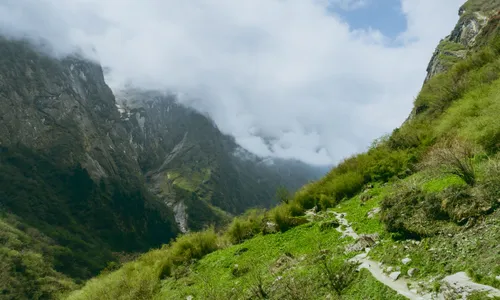
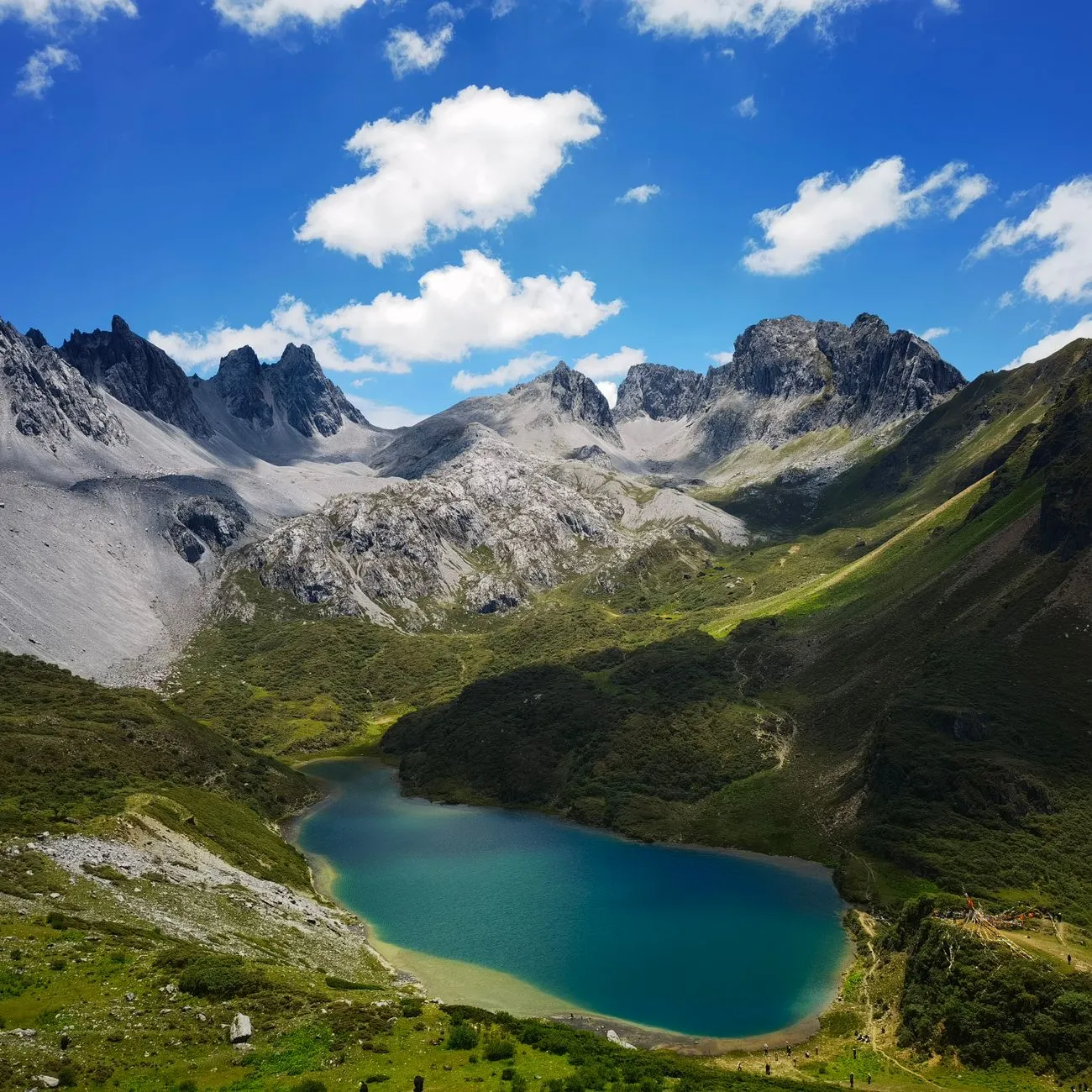 The high plateau stays cool in July: a turquoise mountain lake ringed by rugged peaks in Yunnan.
Four Things That Go Wrong in Chinese Summer
Roundup articles treat summer as a heat problem. Chinese meteorologists treat it as four separate problems, and each has a different planning answer.
1. Heat and the post-monsoon burn
Once the rain band clears the Yangtze in early July, the south and east get cloudless, high-sun, high-humidity weeks. In North China the heat is dry and 35°C+ is routine through July and August. This is survivable with scheduling discipline — the pattern Chinese summer tourists actually use: indoor or shaded activity between roughly 10am and 4pm, outdoor sightseeing early morning and evening. Heatstroke (中暑) is taken seriously here and the emergency number for an ambulance is 120. Hydration means water plus salts, not just water, in humid heat where sweating does not cool you.
The classic Beijing–Xi’an–Shanghai city circuit in late July is hot, crowded and not at its best. If that is the trip you are planning, move it to June or September, or read our best time to visit China master calendar before committing.
2. Typhoons (July to September, peaking in August)
This is the one seasonal risk that cancels things. Landfalling typhoons cluster overwhelmingly in July–September: roughly 78% of the year’s total, with August the single worst month — between 1949 and 2025, 194 typhoons made landfall in August, more than any other month. The long-term average is around 5.4 landfalls per year, and the most frequently hit provinces are Guangdong, Hainan, Fujian, Zhejiang and Shanghai.
What that means in practice:
- Flights and ferries cancel. Coastal island routes — Zhoushan, Dongji Island, Weizhou Island near Beihai, Xiamen’s Gulangyu ferries — stop running well before the wind arrives. Always build a buffer.
- Never put your international departure on the tail of a typhoon window. If you are flying out of Guangzhou, Shanghai, Xiamen or Haikou in August, do not schedule the outbound international leg for the same day as a domestic connection that could be cancelled.
- Track it properly. From about a week out, check the National Meteorological Center at nmc.cn and China Weather Network (weather.com.cn) rather than a generic weather app; the Chinese agencies publish track cones and warning levels days ahead.
- Follow the warnings. When a blue/yellow/orange/red rainstorm or typhoon warning is in force, outdoor and mountain activities stop. Take the cue. Background reading: our China travel safety guide.
3. Rain, flood season and the “七下八上” window
April to September accounts for roughly 70% of China’s annual rainfall. Summer specifically brings three named regimes that travellers should know by name:
- South China’s pre-flood season (April–June) including the “dragon-boat rains” (龙舟水).
- The plum rains of the middle-lower Yangtze (mid-June to early July) — days of grey rain in Jiangnan, which is precisely why Shanghai in mid-June can be a disappointment.
- “七下八上” — late July to early August, the main rainy season for North China and the Northeast, with thunderstorms and mountain flash flooding. This is the peak window for dangerous conditions in the Beijing mountains, Hebei and the northern loess areas.
Warning colours are blue (lowest), yellow, orange and red. Reduce mountain travel significantly during orange and red warnings; flash floods in dry northern gullies are fast and lethal.
4. Extreme weather during the current El Niño phase
China is currently in an El Niño influence period, and the summer pattern reflects it: extreme weather is becoming more frequent and more intense. In practical terms that means hotter and more persistent heatwaves (with North China’s 35°C+ days getting more common), a greater incidence of short-duration intense rainfall and mountain flash flooding — most acute in the “七下八上” window — and typhoon tracks and intensities that are harder to forecast far in advance.
This is not a reason to cancel. It is a reason to plan differently:
- Check nmc.cn daily from seven days before departure and every morning while travelling.
- Hold one to two flexible days in any itinerary that depends on mountain roads, coastal ferries or plateau passes.
- Buy travel insurance that covers weather-related delays and cancellations, not only medical. Our travel insurance comparison and insurance guide for foreigners explain what to look for.
- Do not park your international departure on the final day of a mountain or coastal leg.
The Cool Belt: Where Summer Actually Feels Good
Here is the case for summer in China. Four zones are comfortable while the rest of the country bakes, and they are also, not coincidentally, where domestic tourism heads in July.
A note on these numbers: the temperature figures below are approximate summer averages from Chinese media and tourism reporting, not official meteorological statistics, because Chinese official climate normals are not published in a form that maps neatly onto “the average traveller’s July.” We use them because they are the figures Chinese travellers actually plan by, and we flag them rather than implying false precision.
| Cool zone | Places | Approximate summer temperatures |
|---|---|---|
| Yunnan–Guizhou plateau | Liupanshui (“Cool Capital”), Kunming, Dali, wider Guizhou | Liupanshui ~19°C, Kunming ~22°C, Dali 16–26°C; Guizhou is mild province-wide |
| Northeast | Changbai Mountain, Hulunbuir | Both ~22°C in high summer |
| High plateau | Xining (“Summer Capital”), Qinghai Lake, Gannan, Lhasa | Xining ~17°C, Qinghai Lake ~17°C (Jul–Aug), Gannan 15–25°C, Lhasa 12–25°C |
| Classic summer mountains | Chengde, Lushan, Moganshan, Emeishan, Changbaishan | Mountain-town temperatures far below the plains below them |
The trade-off inside each zone: the northeast and the plateau are far from the 240-hour transit zone’s core, so check your transit eligibility before building a route that assumes you can reach them.
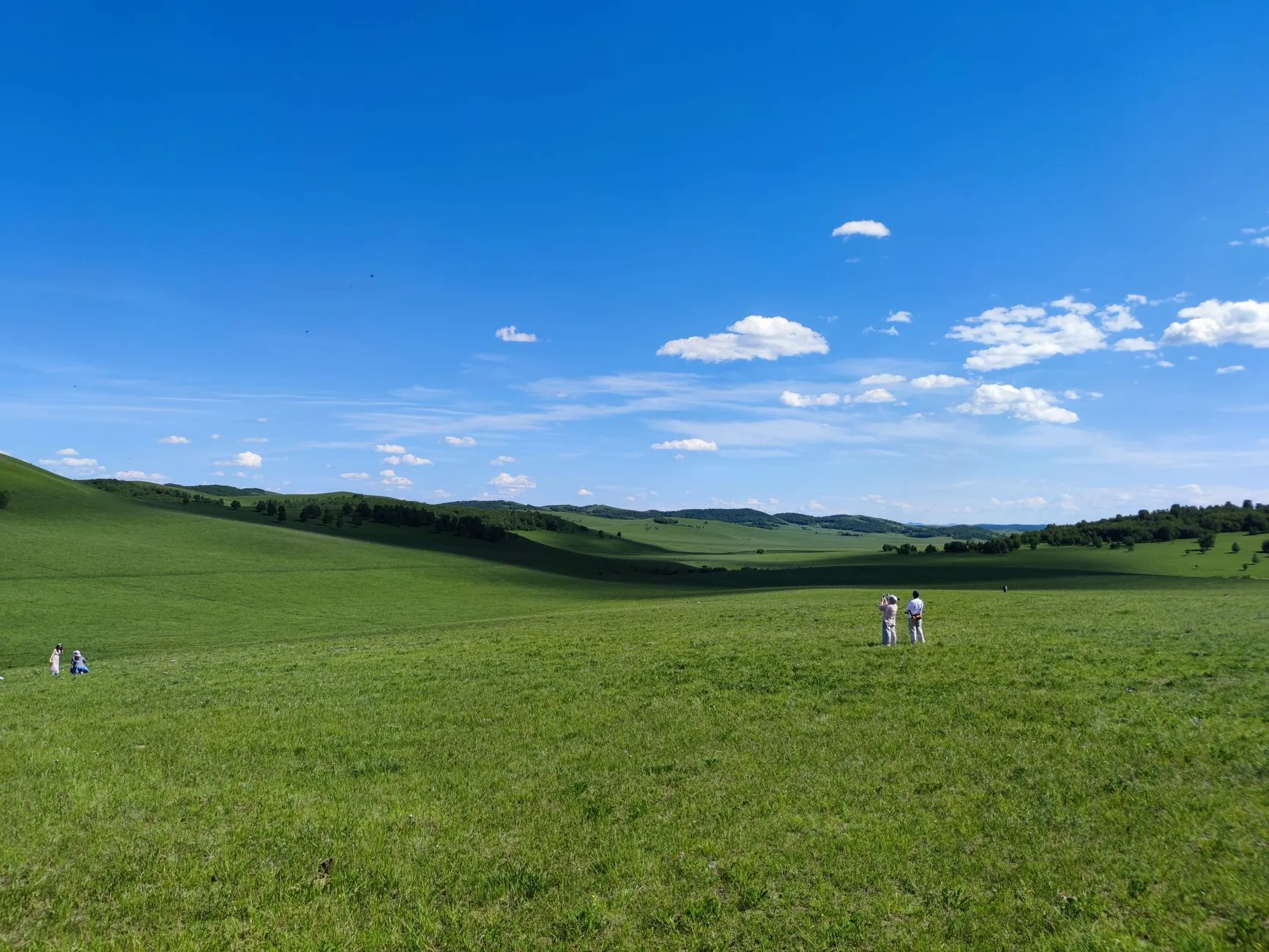 Peak green: northern grassland rolling to the horizon in high summer.
The 2027 Summer Calendar: Holidays, Festivals and the School Crush
China’s statutory holiday rules — revised November 2024, effective 1 January 2025 under State Council Decree No. 795 — give all citizens 13 paid public holidays a year. For summer, that matters less than it does in spring or autumn, but two things do move markets: the Dragon Boat Festival and the school holidays.
⚠️ Important caveat: the State Council’s 2027 holiday arrangement notice has not been published as of mid-October 2026. It normally appears in November or December of the preceding year. The 2027 dates below where indicated are arithmetic under the standing rules, not official confirmation. Recheck before booking non-refundable travel.
Dragon Boat Festival 2027 (Wednesday, 9 June)
The fifth day of the fifth lunar month falls on Wednesday, 9 June 2027. Under the holiday rules, Dragon Boat is a one-day statutory holiday, and a one-day holiday falling on a Wednesday generally does not connect to a weekend — meaning the realistic expectation is a single day off on 9 June rather than a three-day break. Do not assume a long weekend. Treat it as “one very busy day at dragon-boat venues” instead.
Dragon boat racing, zongzi (sticky rice dumplings) and the hanging of mugwort are all open to foreign visitors to watch — no permit or permission is needed. Go early, book accommodation ahead if you are in a racing town, and expect transport pressure on that single day.
Children’s Day, 1 June (not a general holiday)
1 June is a holiday for children under 14 only; adults work normally. But because many families add annual leave or weekend days around it, early June is a real family travel window, and it sits conveniently next to Dragon Boat in 2027. If you have children, see our China with kids guide.
The school holidays — the actual peak
This is the number that should shape your dates. Chinese primary and secondary schools typically break for roughly two months, from early July to the end of August. That makes mid-July through mid-August the single busiest and most expensive domestic travel window outside the National Day and Spring Festival holidays — bigger than Dragon Boat by an order of magnitude.
Tactics that work:
- Choose June. The northwest, plateau and northeast are already comfortable in June, and you miss the family wave entirely. This is the best value-quality compromise in Chinese summer.
- Or choose late August. Rates and crowds ease as schools reopen; typhoon risk does not disappear but other pressures do.
- Avoid roughly 20 July – 15 August unless altitude or grassland is your destination and you can book well ahead.
Festivals worth routing around
| Festival | 2027 date | Where | Notes for foreigners |
|---|---|---|---|
| Torch Festival (Yi, Naxi, Jino; 24th day of 6th lunar month) | Tuesday, 27 July (Bai: 28 July) | Liangshan (Sichuan), Chuxiong (Yunnan) | Called “the Eastern Carnival” — torches, bullfighting, horse racing, bonfires over roughly 3 days. Open to foreign visitors with no Tibet-style permit requirement. Book lodging and transport one to two months ahead; exact local holiday dates depend on prefecture governments. |
| Naadam (Mongolian) | Usually July–August; 2026 reference: Xilingol 18–20 July, Darhan Muminggan 25 July – 24 August | Inner Mongolia | Horse racing, wrestling, archery. Open to foreigners; bring warm layers because grassland nights are cold regardless of the season. Exact 2027 dates follow the Inner Mongolia tourism department and league/city announcements. |
| Qingdao International Beer Festival | 2027 TBC; 2026 reference ran 17 July – 15 August, 30 days | Qingdao | The most foreigner-friendly festival on this list — multi-venue, free entry, multilingual guidance, multi-currency payment and departure tax refund were all part of the 2026 edition. Details in our Qingdao guide. |
| Tour of Qinghai Lake international road cycling race | 2027 TBC; 2026 reference 10–18 July, Xining to Qinghai Lake | Qinghai | Roads on the loop are affected on race stages — plan around the route. |
Note what is not on this list: the Mid-Autumn Festival 2027 falls on 15 September, which is after the Start of Autumn and belongs to the autumn season, not summer. See our autumn guide for that one. The Water Splashing Festival is in April and belongs to spring.
Where to Go: The Summer Roundup by Theme
Cool mountains and imperial summer retreats
- Chengde Mountain Resort — the largest surviving classical imperial garden in the world and China’s traditional summer palace. Tickets ¥130, half-price ¥65 (including museum, valid two days, still current in 2026), real-name reservation via the official WeChat account, summer averages around 25°C. No dedicated page yet — pair it with the best time to visit guide.
- Lushan — the town of Guling sits at around 1,164 m, giving 19–25°C in July–August with the Sandie Spring waterfall at full flow. Ticket about ¥160, valid seven days.
- Moganshan — the classic Shanghai–Hangzhou heat escape, 20–27°C June–August, with water activities and boutique guesthouses. Tickets: ¥80 shoulder / ¥100 peak / ¥50 low season, about ¥85 online, valid three days.
- Emeishan — around 22°C at mid-mountain and about 15°C at the Golden Summit in July–August; ¥160 entry. Full route and transport in our Emeishan–Leshan guide.
- Changbaishan — June to August is the best window for Heaven Lake (the crater lake that cloud-cover hides the rest of the year), averages around 22°C, with the alpine flower gardens running mid-July to early August. Bring a windproof jacket for the summit.
- Huangshan and Jiuzhaigou — summer brings cloud seas and high water volume respectively. See our Huangshan guide and Jiuzhaigou guide. Note that Jiuzhaigou sits in Aba Prefecture, outside the 240-hour transit zone — check your visa route.
🔴 Thinking about Tibet for summer? Nyingchi averages around 3,000 m and is the gentlest summer altitude option in Tibet — but it is still Tibet. Foreign and Taiwan passport holders must obtain a Tibet Travel Permit through a qualified agency and travel on a guided itinerary. Visa-free entry does not permit travel to Tibet. Start 20–30 days ahead, and note that border counties need additional border permits. Hong Kong and Macau residents holding Home Return Permits may travel independently within Lhasa city. Full mechanics in our Tibet permit guide.
Grasslands — peak green June to August
- Hulunbuir — green peak mid-June to mid-August, with Naadam through July–August. June is markedly better value: roughly 60% of July’s visitor volume, meaning real price differences. See our Hulunbuir guide.
- Yili grasslands (Nalaati, Kalajun) — June to August at peak green with wildflowers across the hillsides. Extreme UV and huge day-night swings. The Duku Highway typically opens mid-to-late June until October — confirm road status before routing a self-drive. Huocheng lavender: mid-June to early July.
- Xilingol and the Gannan–Ruoergai grasslands — June to August flower season, roughly 10–25°C, again with very large daily swings. If you are driving, our self-drive and rental guide covers what foreigners need.
Islands and coast — work around typhoon season
- Sanya — typhoon season runs June to October with a July–September peak; shoulder your trip into early July, late August or early September. Families should favour late August. Full detail in our Sanya and Hainan guide.
- Xiamen — affected by typhoon peripheries July to September; Gulangyu needs booking 3–7 days ahead. See our Xiamen guide.
- Qingdao — seaside plus the beer festival in July, with correspondingly enormous crowds. See our Qingdao guide.
- Beihai/Weizhou Island, Zhoushan/Dongji Island, Dalian — Weizhou and Beihai are best late August to early September, with the typhoon peak mid-July to mid-August. Zhoushan is viable May–October but ferries frequently stop in July–September. Dalian is at its most comfortable in July–August at 22–28°C and is the best of this group for reliable ferry and flight access.
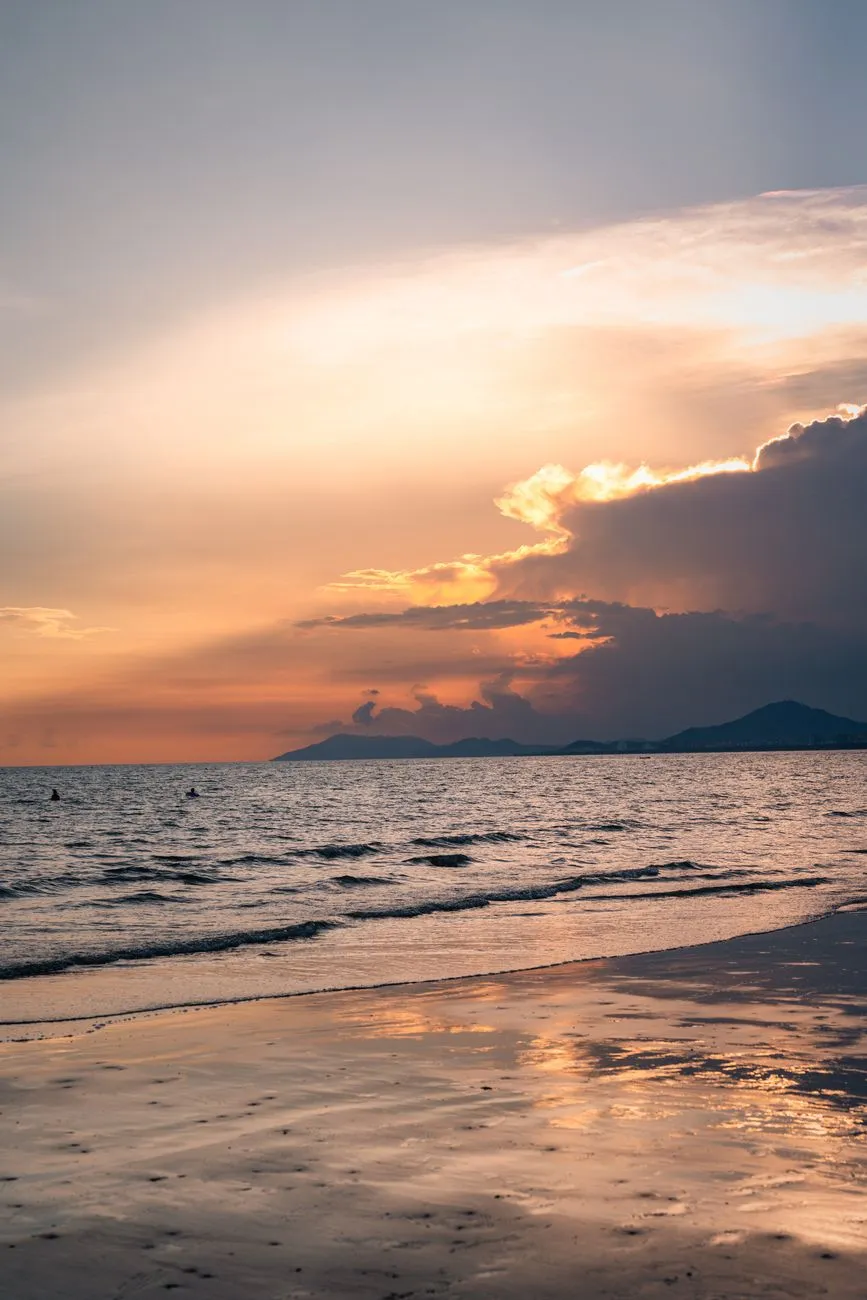 Sanya’s summer coast at sunset, outside the July–September typhoon peak.
The northwest — the case for June
Common characteristics: extreme UV indices (commonly 9–11) and large day-night swings, so a sun-protection kit plus a light down jacket is standard advice.
- Qinghai Lake — best 10 July to 20 August, combining rapeseed flower bloom with roughly 17°C summer temperatures. Er’langjian scenic area has capped daily visitors at 12,000 from 2026 with real-name, time-slotted reservations 3–7 days ahead via the “智游青海湖” mini-program or official WeChat account; no tickets are sold on site. Tickets: ¥90 peak season (about ¥72 online), ¥50 low season, vehicle-plus-boat package around ¥190 — confirm against official channels.
- Chaka Salt Lake, Dunhuang, Zhangye Danxia, Gannan — Dunhuang runs dry and hot at 35–40°C in July–August with nights around 20°C, and Mogao Caves A-tickets (¥238) need booking roughly 30 days ahead. Zhangye’s colours are most saturated June–September. Gannan’s flower season is June–August. The Silk Road corridor generally is covered in our Hexi Corridor guide.
Yunnan–Guizhou — the “eternal spring” summer
Kunming and Dali are famously mild year-round, with comfortable, relatively dry summers — see our Kunming–Dali route guide. Lijiang stays cool and the Jade Dragon Snow Mountain cable cars run — see our Lijiang guide. Guizhou (Libo Xiaoqikong, Huangguoshu Waterfall) averages 22–25°C from June to September, and its waterfalls are at maximum volume July to September — arguably the single best “it is summer and I want to be outside” combination in the country.
Water and river scenery
Guilin and Yangshuo peak in summer: the Li River carries full water and the bamboo rafting is at its best — see our Guilin–Yangshuo guide. Zhangjiajie does summer cloud-and-mist forest well, see our Zhangjiajie guide. Both pair naturally with a June itinerary that avoids the July family wave.
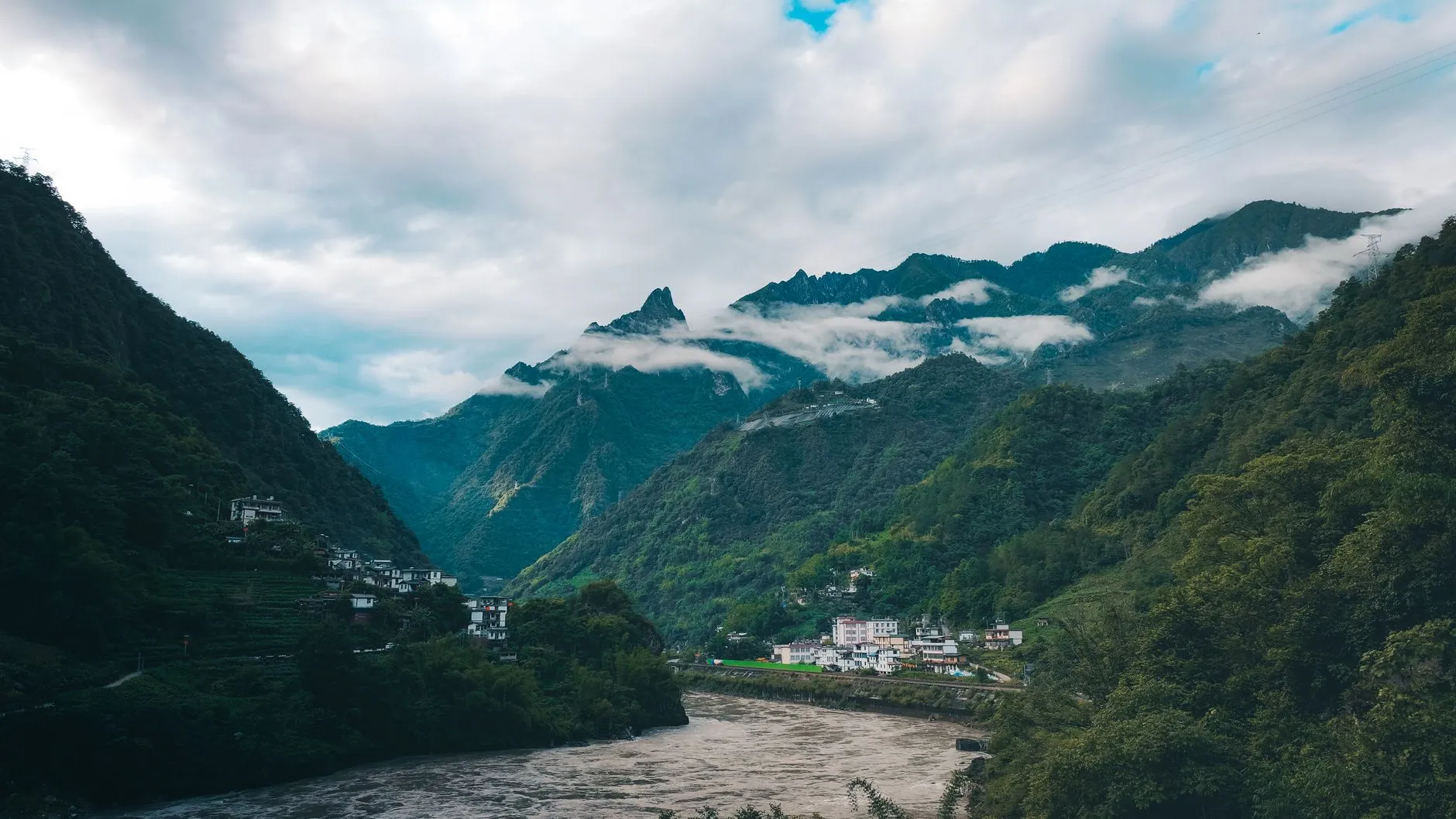 River country at full summer flow: the Nujiang valley cutting between steep green mountains.
The roundup table
| Theme | Destination | Summer hook |
|---|---|---|
| Cool mountains | Chengde Mountain Resort | World’s largest surviving imperial garden |
| Cool mountains | Lushan | 19–25°C at 1,164 m — natural air-conditioning |
| Cool mountains | Moganshan | 20–27°C, water and guesthouses |
| Cool mountains | Emeishan | 22°C mid-mountain, 15°C summit — guide |
| Cool mountains | Changbaishan | Heaven Lake’s clearest window |
| Cool mountains | Huangshan | Cloud seas, slippery trails — guide |
| Cool mountains | Jiuzhaigou | High water, thinner than autumn — guide |
| Cool mountains | Nyingchi 🔴 | ~3,000 m — permit required, guide |
| Grassland | Hulunbuir | Mid-June–mid-August green peak — guide |
| Grassland | Yili | Peak green, strong UV |
| Grassland | Xilingol | Peak pasture, Naadam |
| Grassland | Gannan/Ruoergai | 10–25°C, flower seas |
| Coast | Sanya | Avoid the Jul–Sep peak — guide |
| Coast | Xiamen | Gulangyu booking 3–7 days — guide |
| Coast | Qingdao | Beer festival July — guide |
| Coast | Beihai/Weizhou | Best late Aug–early Sep |
| Coast | Zhoushan/Dongji | Ferries stop in typhoon season |
| Coast | Dalian | 22–28°C July–August |
| Northwest | Qinghai Lake | Rapeseed + 17°C, capped entry |
| Northwest | Chaka Salt Lake | Mirror season June–September |
| Northwest | Dunhuang | 35–40°C days, 20°C nights — book Mogao 30 days out |
| Northwest | Zhangye Danxia | Most saturated June–September |
| Northwest | Gannan | Grassland flowers June–August |
| Yunnan–Guizhou | Kunming/Dali | Mild year-round — guide |
| Yunnan–Guizhou | Lijiang | Jade Dragon Snow Mountain — guide |
| Yunnan–Guizhou | Guizhou | 22–25°C, waterfalls at full flow Jul–Sep |
| Water | Guilin/Yangshuo | Li River rafting at peak — guide |
| Water | Zhangjiajie | Cloud-forest summer — guide |
Where Not to Go (or When Not to Go)
The value of a summer guide is partly in telling you what to delay:
- Jiangnan cities in mid-June — that is the plum rain. Save Shanghai, Hangzhou and Suzhou for another season, or read the worst time to visit China analysis before booking.
- North China mountain trails in late July–early August — “七下八上” flash-flood season.
- Any coastal island trip built entirely on ferries in August — typhoon cancellations are not an edge case, they are the expected outcome at some point in the month.
- The Beijing–Xi’an–Shanghai circuit at the height of July — combine heat, rain and the school rush and you get the worst cost-to-enjoyment ratio in Chinese travel.
- Kanas in early summer — it needs longer to come round; see the Kanas guide for timing, or park it for autumn.
Practical Checklist for a Chinese Summer Trip
Entry paperwork first
The unilateral visa-free policy currently covers 50 countries for stays of up to 30 days: Russia through 31 December 2027, and the remaining countries through 31 December 2026 — reconfirm whether it is extended or expanded for 2027, because that decision is imminent. The 240-hour transit-without-visa scheme covers 57 countries, 65 ports and 24 provincial-level regions, requires an onward ticket to a third country, and covers the summer-popular provinces of Yunnan, Shaanxi, Sichuan and Guangxi. Check your passport’s status in the visa-free list and the mechanics in the 240-hour transit guide before booking. 🔴 Again: visa-free does not mean Tibet-accessible.
Money and connectivity
Set up Alipay and WeChat Pay before you fly — full overview in how to pay in China. WeChat Pay accepts international cards (Visa, Mastercard, Amex, JCB and others) bound with a passport, with limits of ¥6,500 per transaction, ¥50,000 per month and ¥65,000 per year, and transactions under ¥200 waive the 3% fee. Alipay has supported passport-bound international cards and Tour Pass since 2024. Install and bind both as mutual backups, and carry ¥200–500 in cash for the rare machine or shop that fails you. For SIM versus eSIM — including why many travellers prefer an overseas-routed eSIM — see our connectivity guide.
Summer health kit
Heat: avoid 10am–4pm outdoors, replace water and salts, and call 120 for heatstroke. Mosquitoes: southern China’s dengue season peaks in summer — light-coloured long sleeves and a compliant repellent. Sun: rated SPF50+ plus hat and sunglasses; plateau and northwest UV indices commonly reach 9–11. Add basic food hygiene discipline, bring your own regular medications, and carry travel insurance covering medical and accident — see our insurance guide.
⚠️ Extreme-weather discipline (El Niño period)
Because China is in an El Niño influence period with rising extreme-weather frequency and intensity: check nmc.cn every morning on the ground, keep 1–2 flexible days in mountain, coastal and plateau itineraries, prefer freely refundable or changeable tickets, and obey red/orange-warning closures without negotiation.
Transport and booking
- Trains beat planes under 800 km; planes win beyond about 1,500 km. See the high-speed rail guide and the domestic flights guide.
- Book summer rail and air early — roughly 4–6 weeks for flights is sensible given the school peak. Ticketing mechanics for foreigners are in our train ticket guide.
- Build typhoon and rain delay buffer. In July–August in east and south China, high-speed rail punctuality typically exceeds 95% while flights sit around 65–85%. Favour rail, prefer midday flights for lower cascade risk, and keep 1–2 slack days.
- Reserve headline attractions 7–15 days ahead — the Forbidden City, Jiuzhaigou, Mogao Caves and the Shanghai Disney resort all use real-name reservation.
- Families: the summer school break is the absolute peak; book popular sights 7–14 days ahead, sightsee before 7am or after 2pm, prefer rail for children under six, and note that sunscreen spray, insect repellent and self-heating food cannot be carried on trains or planes. More in the China with kids guide. Lodging mechanics for foreign guests are in our hotel booking guide.
- Pack for summer plus altitude — see the packing list: light breathable clothing plus a light layer for the plateau, sun kit, folding umbrella, repellent, a Type A/I plug adaptor (220V 50Hz), a power bank under 20,000 mAh, and photocopies of your passport.
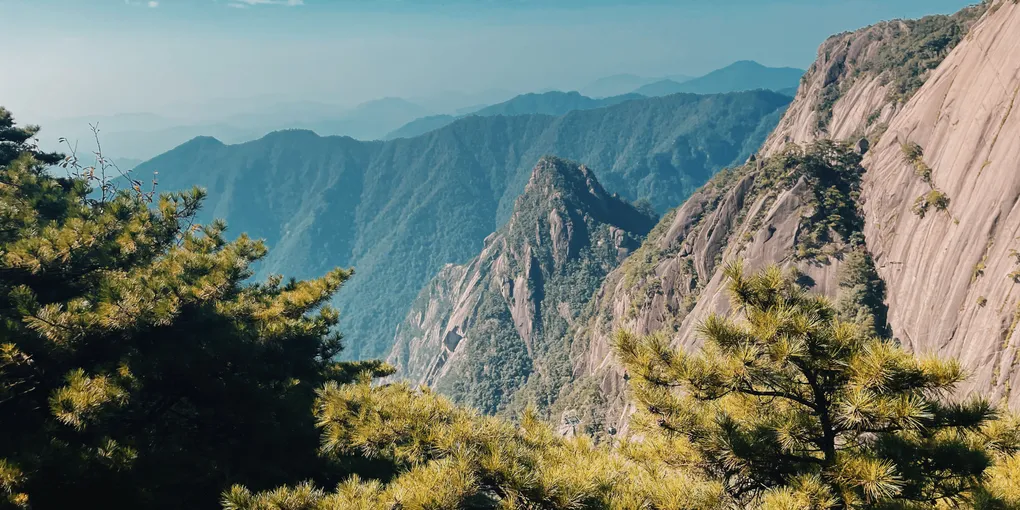
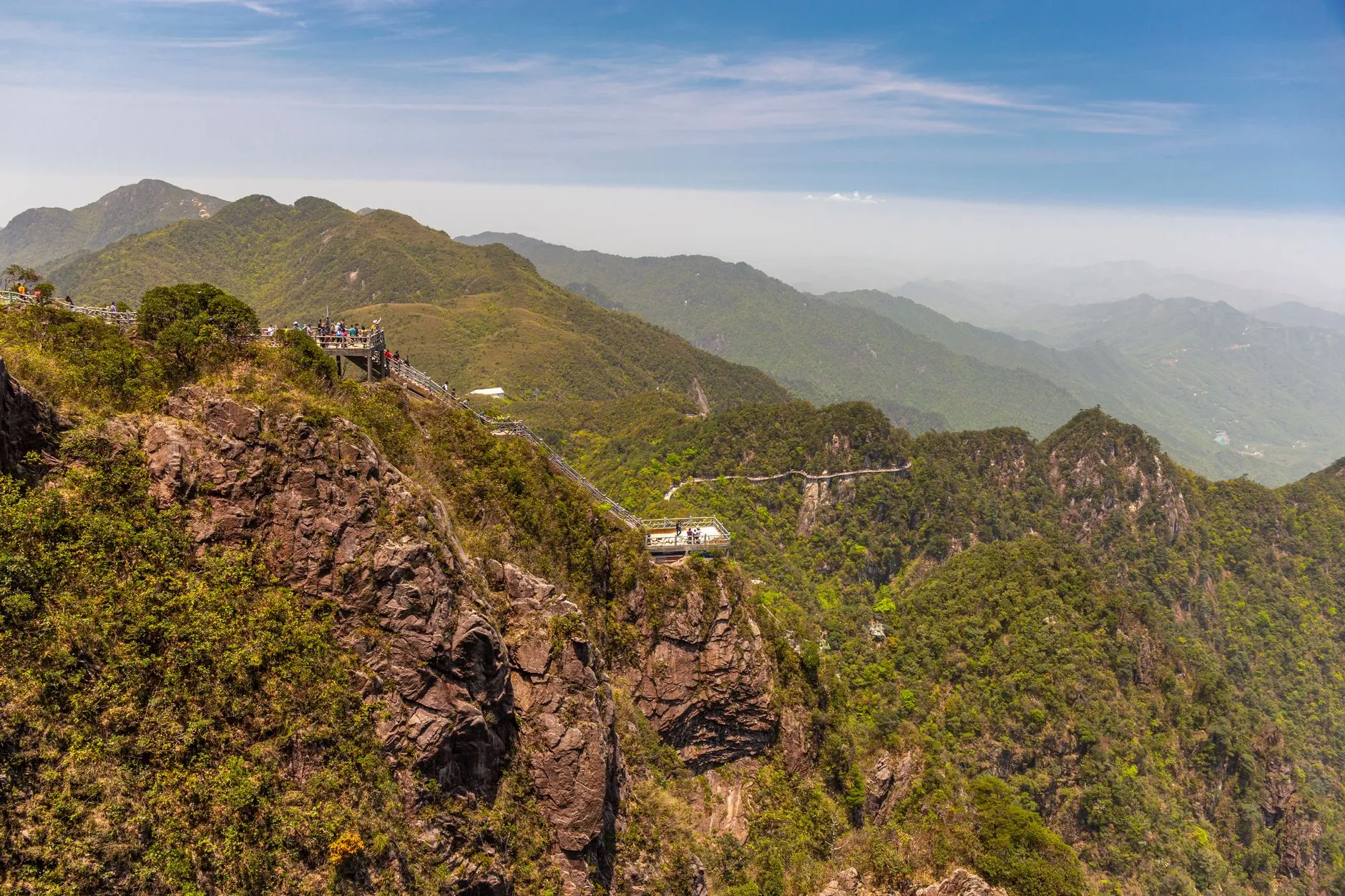 Summer sightseeing means early starts and shade: a mountain-top lookout over forested ridges.
Frequently Asked Questions
When is summer in China? June to August, with September as a shoulder. Summer arrives earliest in South China (often March–April) and latest in the northeast and far northwest (late June) by the national standard GB/T 42074-2022, which defines it as five consecutive days averaging 22°C or more. Kunming, Lhasa and Xining officially have no summer at all.
Where is it actually cool in China in summer? The Yunnan–Guizhou plateau (Kunming ~22°C, Liupanshui ~19°C, Dali 16–26°C), the northeast (Changbaishan and Hulunbuir ~22°C), the high plateau (Xining and Qinghai Lake ~17°C, Gannan 15–25°C, Lhasa 12–25°C), and the classic summer mountains (Chengde, Lushan, Moganshan, Emeishan, Changbaishan). Those figures are approximate media/tourism averages, not official climate normals.
Is August a bad month to visit China? It has three problems running simultaneously: peak typhoon season, the late-July-to-early-August northern rainy season, and the height of the school holidays. It is workable — especially at altitude, on the grasslands and in Yunnan–Guizhou — but it rewards book-ahead discipline and flexible planning.
What is the typhoon season in China? July to September, holding about 78% of annual landfalls, with August the worst single month (194 landfalls recorded from 1949 to 2025). The most affected provinces are Guangdong, Hainan, Fujian, Zhejiang and Shanghai. Track storms on nmc.cn and never put an international departure immediately after a coastal ferry or a domestic connection.
Do I need a permit for anywhere in this guide? Yes, for Tibet. Nyingchi and any Tibetan destination require a Tibet Travel Permit obtained through a licensed agency plus a guided itinerary, regardless of visa-free status; Hong Kong and Macau residents with Home Return Permits are the exception within Lhasa city. Everywhere else in this guide — Inner Mongolia, Qinghai, Yunnan, Sichuan’s Yi prefectures, Qingdao, Hainan — requires no special permit. Details in the Tibet permit guide.
When is Dragon Boat Festival 2027, and does it close things? Wednesday, 9 June 2027. It is a one-day statutory holiday, and because it falls midweek it is unlikely to generate a long weekend — expect a single busy day rather than a travel shutdown. The State Council’s 2027 circular confirming arrangements is not yet published.
Can I use the 240-hour transit exemption for a summer trip? Often yes — the scheme covers 57 countries, 65 ports and 24 provincial-level regions, including Yunnan, Shaanxi, Sichuan and Guangxi, and you must hold onward travel to a third country. It does not cover Tibet, and note that Jiuzhaigou’s Aba Prefecture is outside the permitted area, so that particular route needs a standard visa. See the transit guide.
What is the single best summer itinerary if I only have one trip? Early to mid-June through Yunnan–Guizhou, or into Qinghai and Gansu. You get plateau cool, clear skies, peak water at Guizhou’s waterfalls, the first rapeseed around Qinghai Lake, comfortable crowd levels and — critically — you are travelling before the school wave entirely.
The Bottom Line
Summer is the season when China stops behaving like a single country: parts of it are unpleasant, and parts of it are the best they get all year. The trick is to avoid lowland July while taking the plateau, the grassland, the cool mountains and Yunnan–Guizhou at exactly the moment everyone else is queueing in Shanghai’s humidity.
Pick your zone first, then your week, then your paperwork. June beats July and altitude beats the plains, and nothing on this page involving Tibet works without a permit that no visa-free policy replaces.
When the season turns, the relay continues; see our autumn guide for the colour season and our winter guide for ice and off-season prices. This is the third of four seasons alongside spring, and the month-by-month backdrop behind every date here lives in our best time to visit China master calendar.