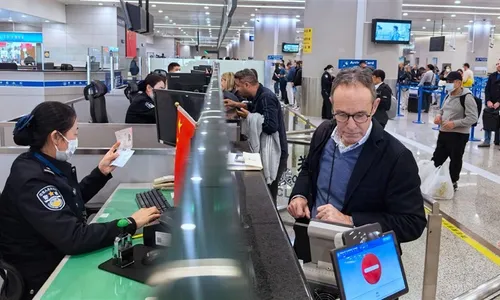
Tibet Travel Permit Guide (2026): Who Needs It, What It Costs, and What Just Changed
The Tibet Travel Permit (入藏函, TTP) is the single most misunderstood document in China travel. English forums recycle three claims about it that are all wrong or outdated in 2026: that Tibet “closes every March” (it did not close in March 2026), that you can board some trains with a photocopy of the permit (a rule change in March 2026 ended that everywhere), and that the permit costs $200 from an agent (the permit itself is free, printed with the words “this document is free of charge”; what you pay for is the tour it comes bundled with). This guide covers the whole system as it stands in September 2026, verified against the Tibet tourism bureau’s channel, licensed Lhasa agencies, and the National Immigration Administration’s own announcements.
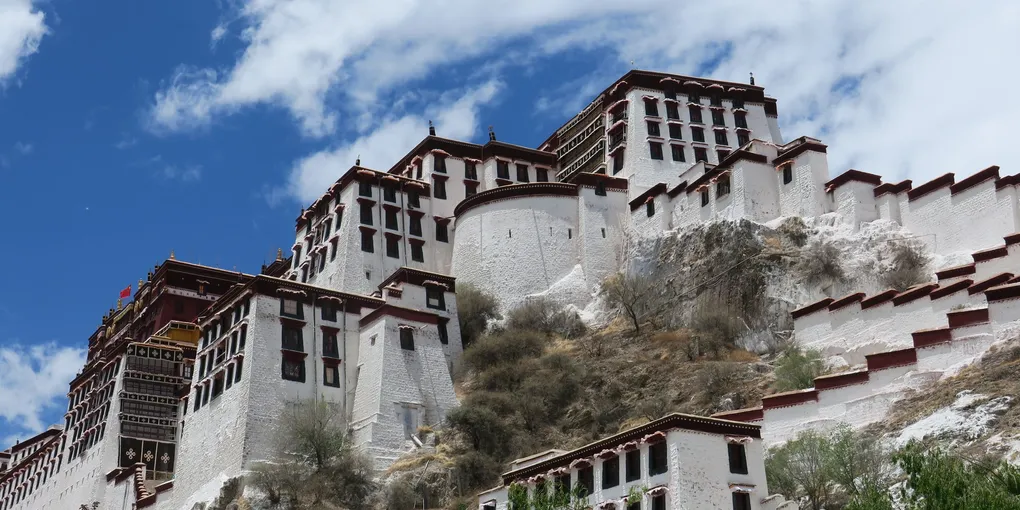
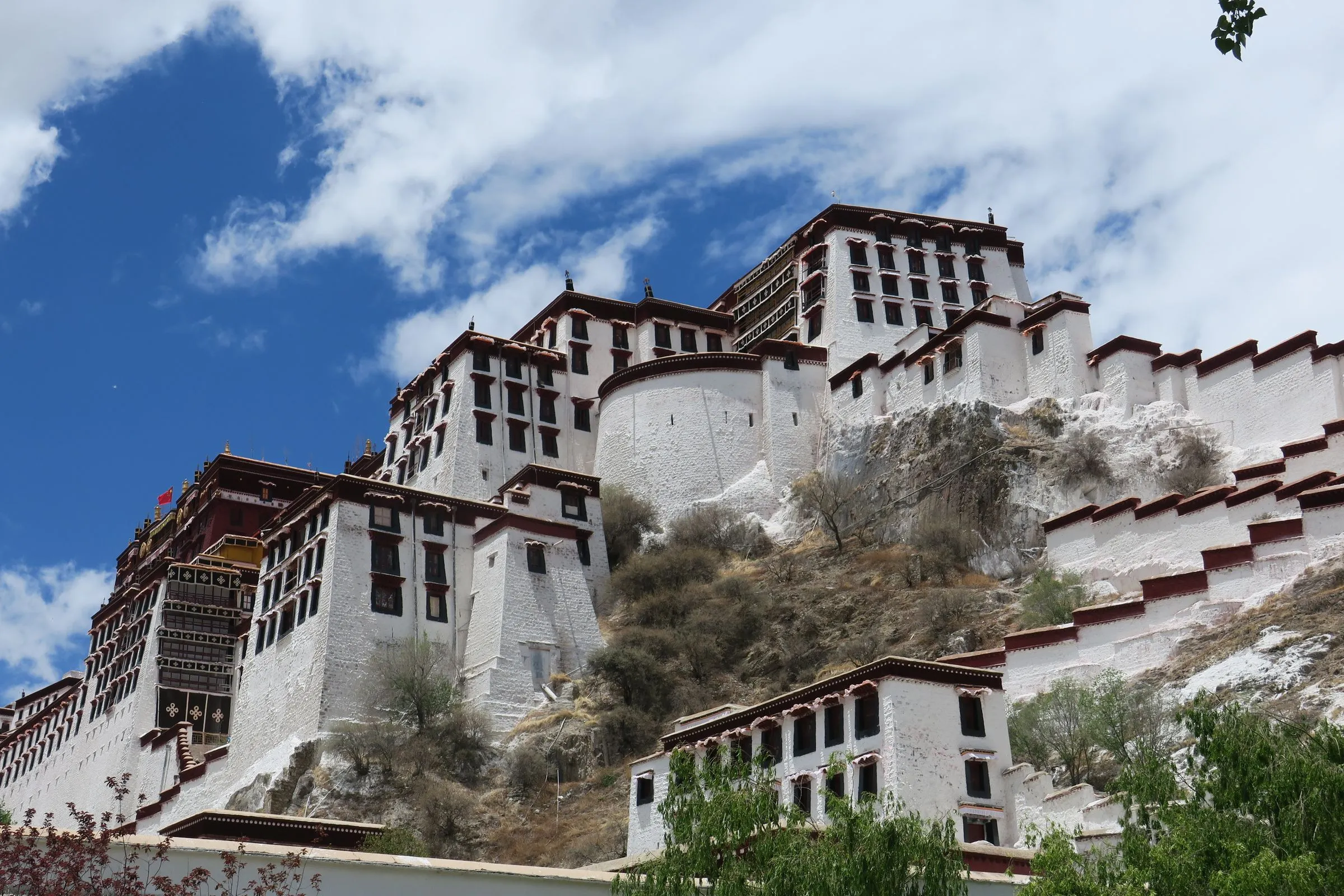 The Potala Palace across its reflecting lake: the image every Tibet itinerary starts from.
Quick answer: Foreign passport holders need a Tibet Travel Permit to enter the Tibet Autonomous Region; it is issued free, cannot be bought separately, and comes only through booking a tour with a licensed Tibet agency, submitted 30-45 days before departure. Since March 13, 2026, both flights and trains into Tibet check the original permit. Hong Kong and Macau residents with a Home Return Permit travel freely; Taiwan passport holders need a permit through the tour-agency channel; overseas Chinese with a Chinese passport do not need a TTP at all. Tibet is not part of the 240-hour transit scheme; the 30-day visa-free entry works, but the whole Tibet itinerary must fit inside those 30 days. See our China visa-free guide and 240-hour transit guide.
How we verified this: SinoWander reads the original Chinese documents that English guides cannot: the Taiwan Affairs Office’s published permit rules, Beijing’s Taiwan affairs desk Q&A, licensed Lhasa agencies’ 2026 permit pages (dated, not recycled 2018 copy), the National Immigration Administration’s August 2026 port announcements, and the Tibet culture-tourism department’s own A-level scenic-area register. Claims were cross-checked against traveler reports from 2025-2026. Each guide is date-stamped when last verified: 2026-09-01. See our methodology.
Who Needs the Permit, and Who Does Not
The permit requirement follows documents, not ethnicity, and the lines surprise people. The official formulation from the Taiwan Affairs Office is precise: the TTP applies to “non-Chinese citizens, non-Chinese passport holders, non-Chinese ID holders.” In practice:
| Traveler | Tibet Travel Permit |
|---|---|
| Foreign passport holders | Required |
| Taiwan passport holders (Taibaozheng) | Required, applied through a licensed Tibet agency, approved by the Tibet tourism authority; no independent travel, no self-driving |
| Hong Kong / Macau residents with Home Return Permit | Not required; travel freely like mainland residents |
| Overseas Chinese holding a Chinese passport | Not required (Chinese citizen); but see the border-pass catch below |
| Overseas Chinese with only a foreign passport | Required (counted as foreign nationals) |
Two catches worth knowing. First, the overseas-Chinese line runs by passport: a Chinese passport means no TTP, but if your household registration has been cancelled, you cannot obtain the border pass needed for Everest, Ngari and other frontier zones, which locks those areas out regardless of the TTP. Second, “no TTP” for Hong Kong and Macau residents does not mean “no paperwork”: the border areas below require a border pass for everyone, mainland residents included.
Taiwan travelers should ignore the claim, repeated on some agency sites, that the permit routes through a separate “Tibet Taiwan Affairs Office channel.” The official answer from Beijing’s Taiwan affairs desk names the mechanism plainly: a qualified travel agency applies, the Tibet tourism authority approves. There is no separate channel to pay an agent to unlock.
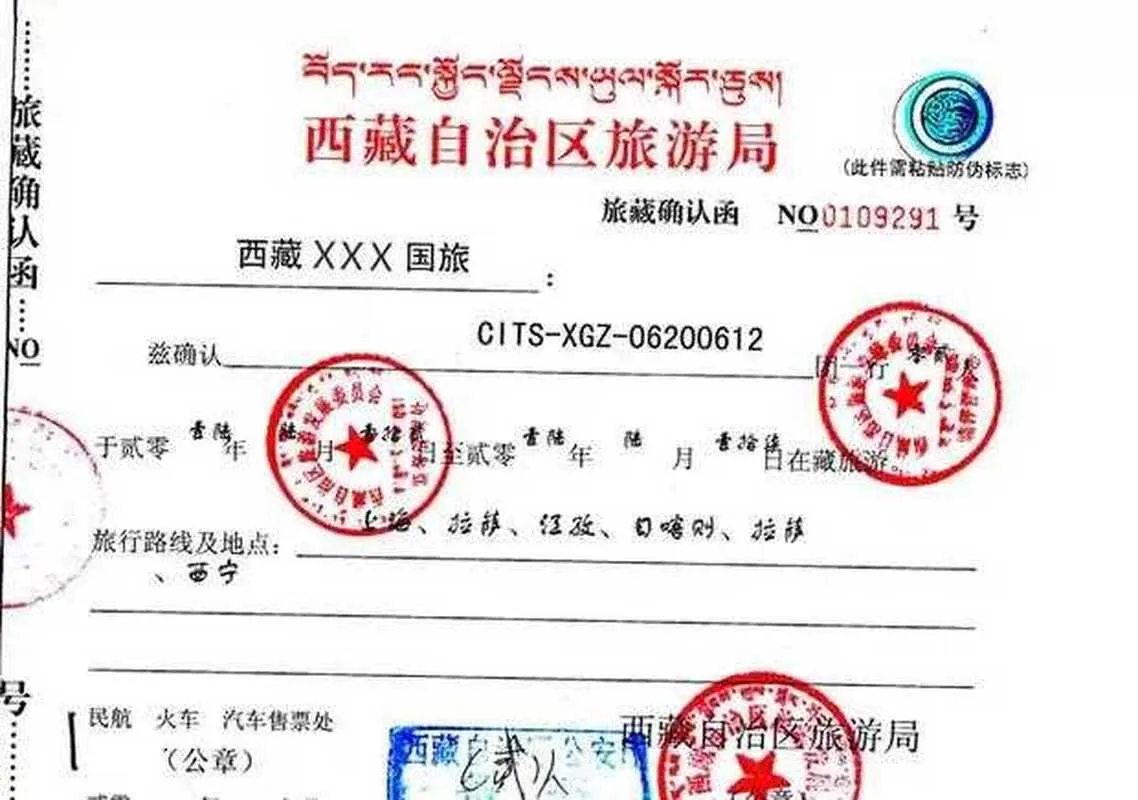 A real Tibet Travel Permit sample: fixed itinerary dates, the issuing authority’s letterhead, and “free of charge” printed on the document.
How the Permit Actually Works
The TTP is free, unbundled from nothing, and slow. Three facts hold it together:
It cannot be bought separately. The Tibet tourism bureau does not accept individual applications, and licensed agencies state it outright: no tour booking, no permit. The permit itself carries no fee; the document is literally printed with “free of charge” at the bottom. What agencies charge is a service fee of roughly $50-100 (¥300-500) folded into the tour price, and urgent applications can cost more. Anyone quoting a standalone “$200 permit fee” is selling you the bundle at a markup.
Timelines run longer than old guides say. The optimistic “7-15 working days” appears on some 2018-era pages. The 2025-2026 operating range from licensed agencies is 10-22 days for Lhasa-centered trips, 15-20 working days for Everest itineraries, up to 30-45 days in peak season or for restricted areas, with the Year of the Horse 2026 pushing some approvals further. Submit materials 30-45 days before departure; for a Kailash kora in the Horse Year, agencies advise four to six months.
Since March 13, 2026, everything checks the original. This is the change most English guides have not caught. For years the rule was porous: some cities accepted a color photocopy for train boarding, and agency pages disagreed about which. Three licensed agencies and one policy tracker now publish the same dated notice: from March 13, 2026, foreign tourists entering Tibet by plane or train must present the original permit at check-in and boarding, in every city. The old “photocopy works from Xining” advice is dead; pages still repeating it are recycling pre-2026 copy. Treat your agency’s instructions on document logistics as the operating rule of the day.
One practical note on how the document travels: the permit lists your fixed itinerary dates and locations, your agency couriers the original to your hotel in mainland China, and your guide holds it during the trip. You are not carrying it around Tibet; you are showing it to get there.
The March Myth, Year by Year
“Tibet closes in March” is the most repeated claim in English Tibet content, and it deserves a table rather than a slogan. The sensitive-period closure was real for years, but it has been shrinking, and in 2026 it did not happen at all:
| Year | Closure pattern |
|---|---|
| 2013-2018 | Roughly late February through end of March, every year |
| 2024 | Closed March 1-18; permits resumed processing ~March 6, travel reopened March 19 |
| 2025 | Closure from ~March 1; processing resumed ~March 9, travel reopened ~March 20 |
| 2026 | No March shutdown. Licensed agencies confirmed permits were approved and issued through March; a dated March 13 notice tightened document checks while explicitly confirming March travel |
The nuance cuts both ways. The historical window was wider than “March” (it started in late February), so a late-February trip in a normal year carries the same risk. And agencies themselves add a caveat to 2026’s openness: the policy has time limits and follows the political calendar, so a 2027 trip should confirm March status with the agency before booking. Our when-to-visit guide covers the seasonal logic; politically sensitive anniversaries cluster between late February and mid-March.
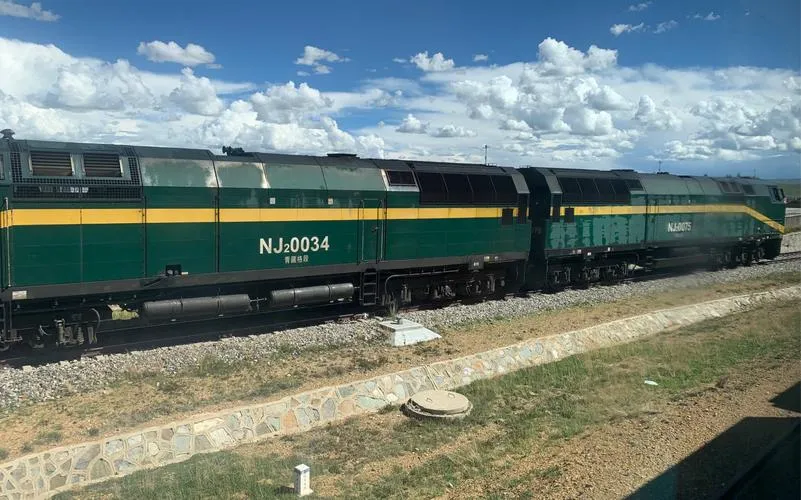 The Qinghai-Tibet railway crossing the Lhasa River with the Potala on the skyline.
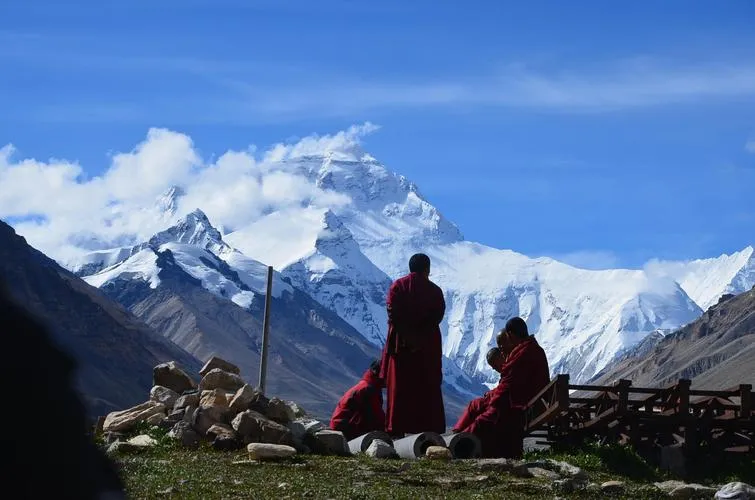 The north face of Everest from the Tibetan side: the border-pass zone most travelers are aiming for.
Border Passes and the Frontier Zone
The TTP gets you into Tibet; a second document, the border pass (边境通行证), gets you into its frontier counties. Twenty-one of them require it, including the counties covering Everest Base Camp, the Gyirong and Zhangmu ports, Ngari and the Kailash region, and Metok. Lhasa and Namtso do not.
Two 2026 changes matter. From April 15, 2026, the border pass went electronic nationwide for mainland ID holders, faster and free. But the online channel excludes foreign nationals, Taiwan, Hong Kong and Macau residents, and overseas Chinese: they apply offline through county-level public security bureaus or, in practice, the tour agency handles it inside the Tibet package. The offline process is quick (same-day in the standard case, valid three months) but it is a separate step your agency must actually perform.
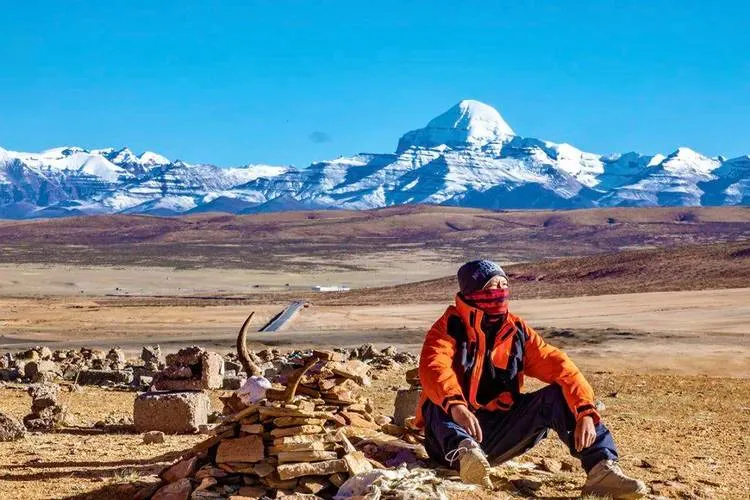 The kora around Mount Kailash: the Horse Year doubles the pilgrim traffic on this circuit.
Entering from Nepal: Two Stories, One Warning
The Kathmandu-to-Lhasa route has its own visa mechanics, and 2026 has made it messier than usual. Read this section as layered, because the sources genuinely disagree.
The group visa question is in flux. The traditional rule, still published by major agencies as of mid-2026: entering Tibet from Nepal requires a China group visa issued only in Kathmandu, for groups of at least five, and that group visa replaces and invalidates any China visa you already hold, including a 10-year one. Since late 2025, however, two established operators have reported the opposite: the special group visa is no longer required, and travelers with an individual Chinese visa can use it. There is no embassy announcement settling the matter either way. If you hold a valid Chinese visa and are weighing the Nepal route, confirm with the embassy in Kathmandu or your agency before surrendering anything. Visa-free nationals (50 countries) are consistently reported as exempt from the group-visa requirement, though they still need the TTP arranged from the China side.
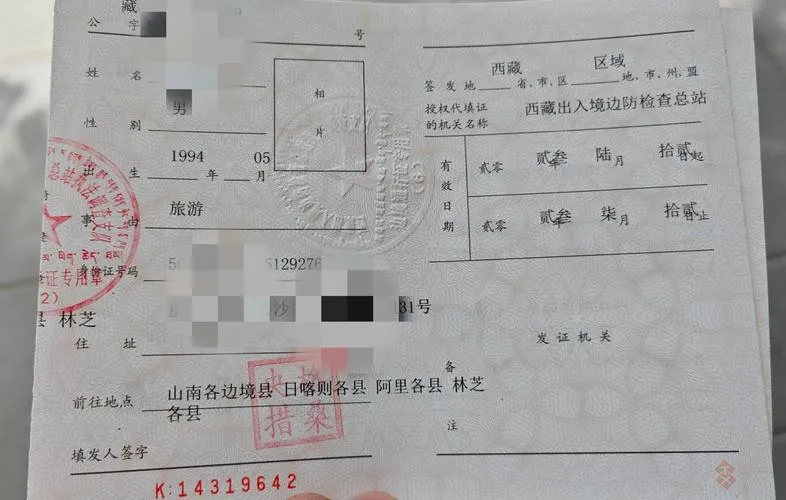 A Tibet border pass specimen: the second document, handled inside your tour package.
The overland port is closed. On August 26, 2026, a massive landslide on the Nepali side destroyed the road and communications at the Gyirong port, Tibet’s main overland crossing. The National Immigration Administration announced that from August 28 it suspended issuance of electronic border passes for the entire Shigatse prefecture (which includes Gyirong, Zhangmu and Everest’s county), and holders of existing passes were told not to travel there; no reopening date had been announced as of September 1. The official rescue count on August 30 listed 261 missing foreign nationals from 23 countries. The safer alternative in the region is the Purang port in Ngari, which received its first third-country tour group in May 2026. Practically: fly Kathmandu-Lhasa (about 90 minutes, several weekly) or enter Tibet from mainland China instead.
The 30-Day Visa-Free Math
Here is the timing puzzle that catches visa-free visitors. Tibet is not part of the 240-hour transit scheme (it is not among the 24 provinces), so the realistic entry instrument for the 50 visa-free countries is the 30-day unilateral visa-free entry. The clock starts the day after entry and covers 30 calendar days, and your entire Tibet itinerary, arrival to departure, must fit inside it. Our independent-travel guide flags Tibet as the exception to independent travel; this is the arithmetic version of that exception.
The workable pattern: apply for the TTP from home 30-45 days out (agencies need only a passport scan for visa-free nationals), lock the fixed itinerary dates printed on the permit, courier the original to your first mainland hotel, enter China visa-free, and keep Tibet plus everything else inside the 30 days. A trip longer than 30 days is the one case where an L tourist visa, arranged in advance, beats the visa-free entry. For the rail option into Lhasa, see our high-speed rail guide for the wider network and the train-ticket guide for foreigner booking.
What It All Costs
The permit is free; the package is not. Foreigner tours run at roughly twice the price of equivalent domestic-group itineraries (our comparison across 2026 departures measured about 2.06x), because the package bundles the guide, vehicle, driver, permit processing and border passes that regulations require. Sample 2026 ranges from licensed agencies: a 4-5 day Lhasa-centered foreigner tour in the low-to-mid hundreds of US dollars, Everest itineraries roughly $600-900, and Kailash expeditions substantially more, with Horse-Year 2026 demand pushing guide costs to double and the 800-bed base town of Darchen to capacity. Budget the tour, not the permit, and treat any quote that itemizes a large “permit fee” as a pricing trick.
Quick Reference
| Question | Answer (as of Sep 2026) |
|---|---|
| Do I need a TTP? | Foreign and Taiwan passports: yes. HK/Macau Home Return Permit: no. Chinese passport holders: no |
| Cost of the permit | ¥0 officially; $50-100 agency service fee inside the tour price |
| Lead time | Submit 30-45 days ahead; 10-22 days typical, longer for restricted areas |
| Document at check-in | Original only, every city, since March 13, 2026 |
| March 2027 | 2026 had no closure; confirm with your agency for 2027 |
| Border pass | Required for Everest, Ngari, ports; offline only for foreigners |
| Gyirong overland port | Closed after Aug 26 landslide; Shigatse border passes suspended; no reopening date |
| Nepal entry | Group-visa rules in flux; visa-free nationals exempt; confirm before booking |
| Visa-free 30 days | Must cover the entire Tibet itinerary; L visa if longer |
Plan it like a booking puzzle rather than a backpacking decision: pick dates early, file the permit early, carry the original, and the plateau delivers exactly what the photos promise. One more thing: most standard travel insurance policies exclude trekking above 3,000m, and Lhasa sits at 3,650m; our travel insurance guide lists which plans cover Tibet and which do not.
Sources & Verification
This guide was last verified on 2026-09-01. Key Chinese-language sources:
- National Immigration Administration (国家移民管理局): the August 28, 2026 suspension of electronic border-pass issuance for all of Shigatse prefecture after the Gyirong landslide, the official FAQ that the 30-day visa-free stay runs 30 calendar days from the day after entry, the electronic border-pass rollout whose online channel excludes foreign nationals, and Tibet’s absence from the 24-province transit scheme.
- Taiwan Affairs Office of the State Council (国务院台湾事务办公室): the verbatim rule that overseas Chinese without a Chinese passport still need the TTP (Chinese passport holders do not), and that Taiwan travelers’ permits are filed by a qualified travel agency and approved by the Tibet tourism authority, with no separate channel to pay for.
- Tibet Culture and Tourism Department (西藏自治区文化和旅游厅): the official A-level scenic-area register (October 23, 2025 edition) used to test and reject the “A-level whitelist” claim, since Zhailu Monastery has carried 3A status since 2019.
- Licensed Lhasa travel agencies (西藏青年国际旅行社/西藏国旅/西藏中旅等): the dated March 13, 2026 notice that flights and trains into Tibet now check the original permit in every city, permit timelines (10-22 days for Lhasa trips, 15-20 working days for Everest, up to 30-45 days in peak season), the free permit bundled with tours rather than sold separately, and confirmation that March 2026 permits were approved as usual.
- Baidu Baike entry on the Tibet Travel Permit (百度百科·入藏函): the identity rules (foreign passports and Taiwan travelers need the permit; Hong Kong and Macau residents with a Home Return Permit travel freely), the organized-group requirement, and the exclusion of diplomats and journalists from the agency channel.
- Official rescue briefing of August 30, 2026 (官方救援发布会): the count of 261 missing foreign nationals from 23 countries after the Gyirong landslide.