Guangzhou Travel Guide (2026): 240-Hour Visa-Free, the Silk-Thread Jade Suit, and the Real Canton
Guangzhou is the China a lot of travelers skip on the way to Beijing or Shanghai, and that is a mistake. This is the trading port that shaped modern China, the home of the dim sum the world eats, and a city where 57 countries’ citizens can now fly in visa-free for 10 days. The old “Canton” lives in the Li Bai poems and the tea houses; the new one lives in a 604-meter tower and a high-speed rail link that puts Hong Kong 47 minutes away.
Quick Answer: Most travelers no longer need a visa to reach Guangzhou. Citizens of 57 countries (US, UK, Canada, Australia, New Zealand, most of Europe, plus Japan, South Korea, Singapore, UAE, and others) can fly into Baiyun Airport (CAN) and stay up to 240 hours (10 days) visa-free under the transit exemption, roaming across Guangdong Province and exiting from any open port. The old 72/144-hour scheme was extended to 10 days in December 2024. Two things to plan around: the Canton Fair (Apr 15–May 5 and Oct 15–Nov 4) packs the city and raises hotel prices sharply, and summer (Apr–Oct) is hot and humid. Best windows are March, November, and early December. See the 240-hour transit guide and the full visa-free countries list for the details.
How we verified this: SinoWander reads Chinese-language sources that English guides cannot, including official immigration agency notices, museum and scenic-area sources, Canton Fair organizer data, and local Chinese-language reporting. We cross-check them before writing. We have not personally visited every location. Each guide is date-stamped when last verified: 2026-08-06. See our methodology.
Why Guangzhou, and why now
Guangzhou was the only door China left open to the world for 85 years. From 1757 to 1842, the Qianlong Emperor confined all Western trade to a strip of riverside warehouses called the Thirteen Hongs, and every tea chest, bolt of silk, and pound of porcelain that left China for Europe passed through here. That history is why so much of what the West calls “Chinese” (the food, the porcelain, the trade networks) is Cantonese first.
The visa news is the practical reason to come now. Since December 17, 2024, the old 72- and 144-hour transit waivers were merged and lengthened to 240 hours (10 days). Baiyun Airport is one of the designated ports, and the privilege is unusually broad for Guangdong: you can stay anywhere in the province and exit from any open port, not just the one you entered. Citizens of 57 countries qualify, including every major English-speaking source market. (Indonesia became the 55th in June 2025.) See our China entry requirements guide for how this fits the broader visa picture.
The sights, with the claims corrected
Chen Clan Ancestral Hall (陈家祠)
Built between 1888 and 1894 by the Chen clans of 72 Guangdong counties as a joint ancestral hall and lodging house for Chen sons coming to the city to sit the imperial exams, this is the single best place in China to read Lingnan (southern) craftsmanship in one sitting. Wood carvings, brick carvings, stone carvings, porcelain tilework, and iron castings cover almost every surface. Admission is ¥10 (under 18 free; bring your passport). Take Metro Line 1 or 8 to Chen Clan Academy station, Exit D, about 200 meters to the gate.
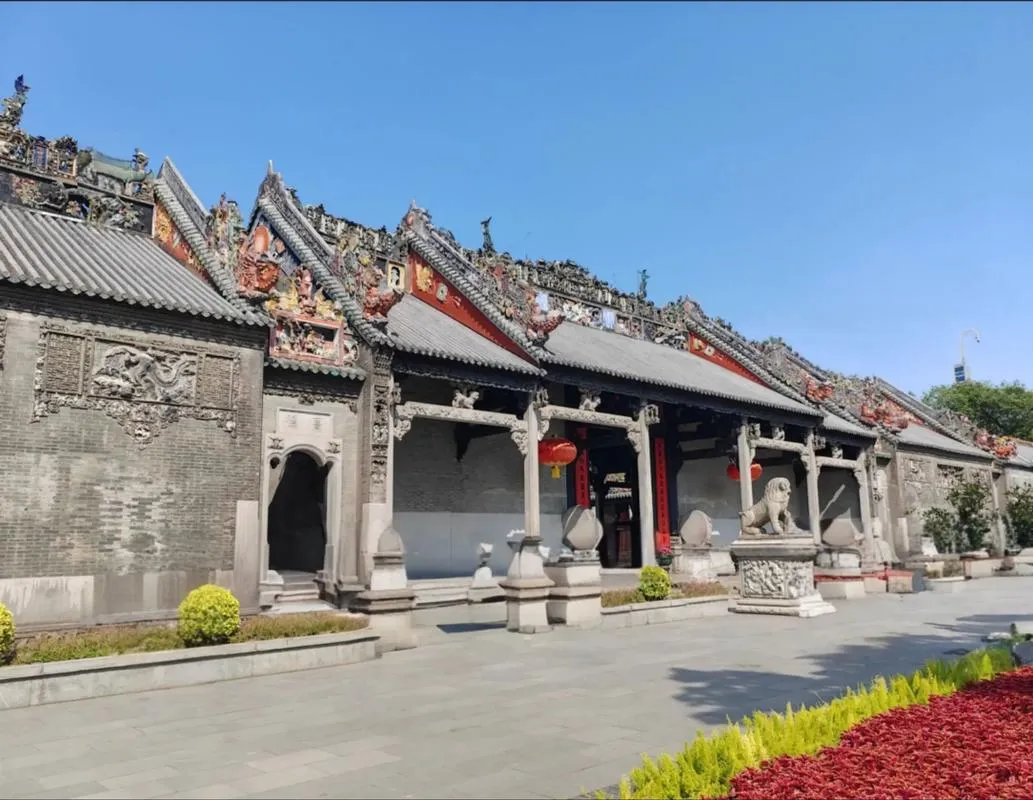 The Chen Clan Ancestral Hall, with Lingnan craftsmanship concentrated on a single building.
Shamian Island (沙面)
A tiny island on the Pearl River that became the British and French concession after the Second Opium War in 1859, roughly three-fifths British and two-fifths French, held until 1943. The colonial buildings survive, shaded by banyan trees, and the island is now one of the most photographed streetscapes in the country. It is free, flat, and walkable in an hour. Come at dusk when the light hits the verandas.
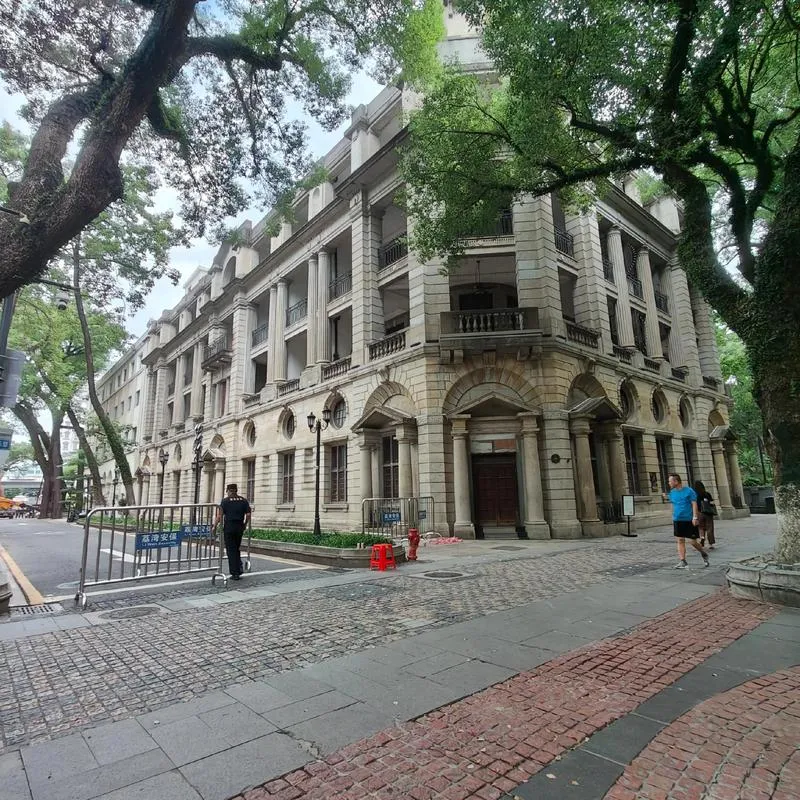 Shamian Island, the old British and French concession on the Pearl River.
Sacred Heart Cathedral (石室圣心大教堂): the claim to check
This is where the guidebooks get the story wrong. You will read that Guangzhou’s granite cathedral is “one of the four all-stone Gothic churches in the world.” It is not. The grouping is incoherent, because Notre-Dame, the usual comparator, is limestone, not granite. Wikipedia describes this building only as “one of the few cathedrals in the world to be entirely built of granite.” The version worth remembering is that the Sacred Heart Cathedral is one of the few all-granite Gothic cathedrals in the world, and the only one of its kind in Southeast Asia. Construction began in 1863 and was completed in 1888. Locals call it the Stone House (石室, Shíshì). Find it at 56 Yide Road. Free entry; closed to tourists during Mass.
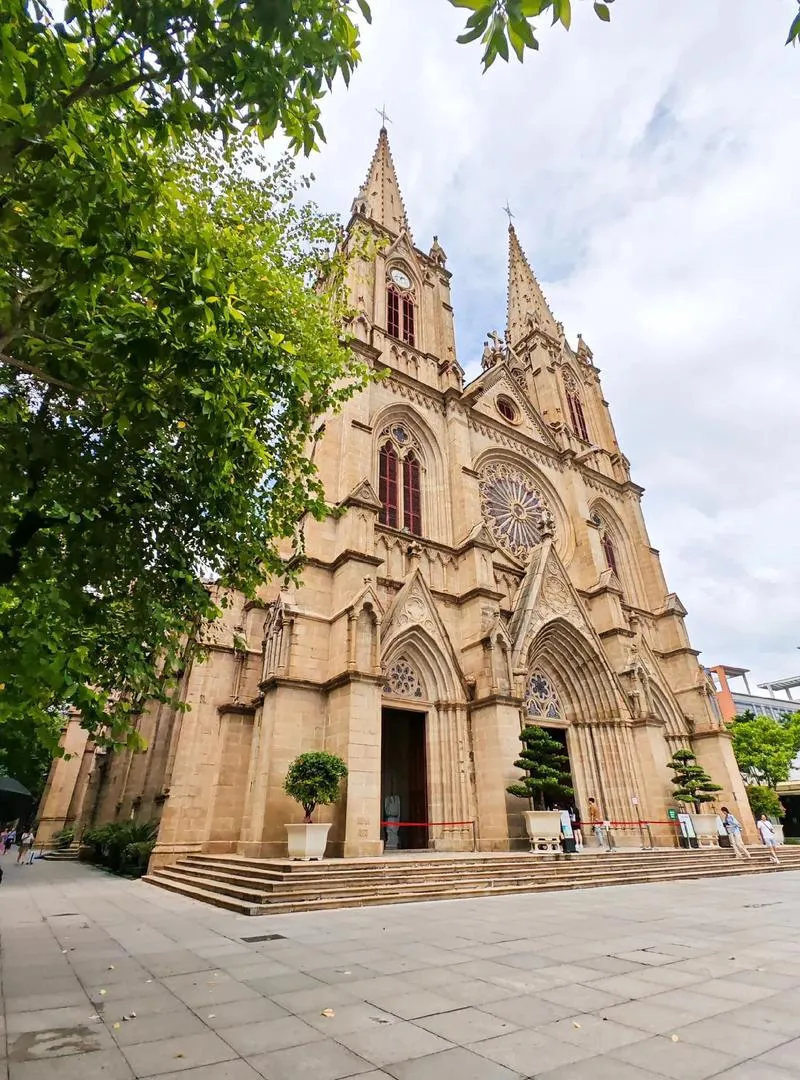 Sacred Heart Cathedral is all granite, not “one of four.”
Canton Tower (广州塔): China’s tallest tower, not its tallest building
The tower everyone calls “Xiao Man Yao” (little slim waist) stands 604 meters to the pinnacle (the 600 m figure you see is the rounded architectural top). It is the tallest tower in China and the second-tallest tower in the world, behind only the Tokyo Skytree (634 m). It held the world title only from August 2009 to March 2011, until the Skytree passed it. One distinction that matters: it is not China’s tallest structure. The Shanghai Tower (632 m), a skyscraper, is. So “China’s tallest tower” is correct; “China’s tallest building” is not. Tickets run ¥150–230+ depending on how high you go (observation decks at 433 m and 488 m, a Ferris wheel at 450 m). Take Metro Line 3 to Canton Tower station, Exit B, or the APM line.
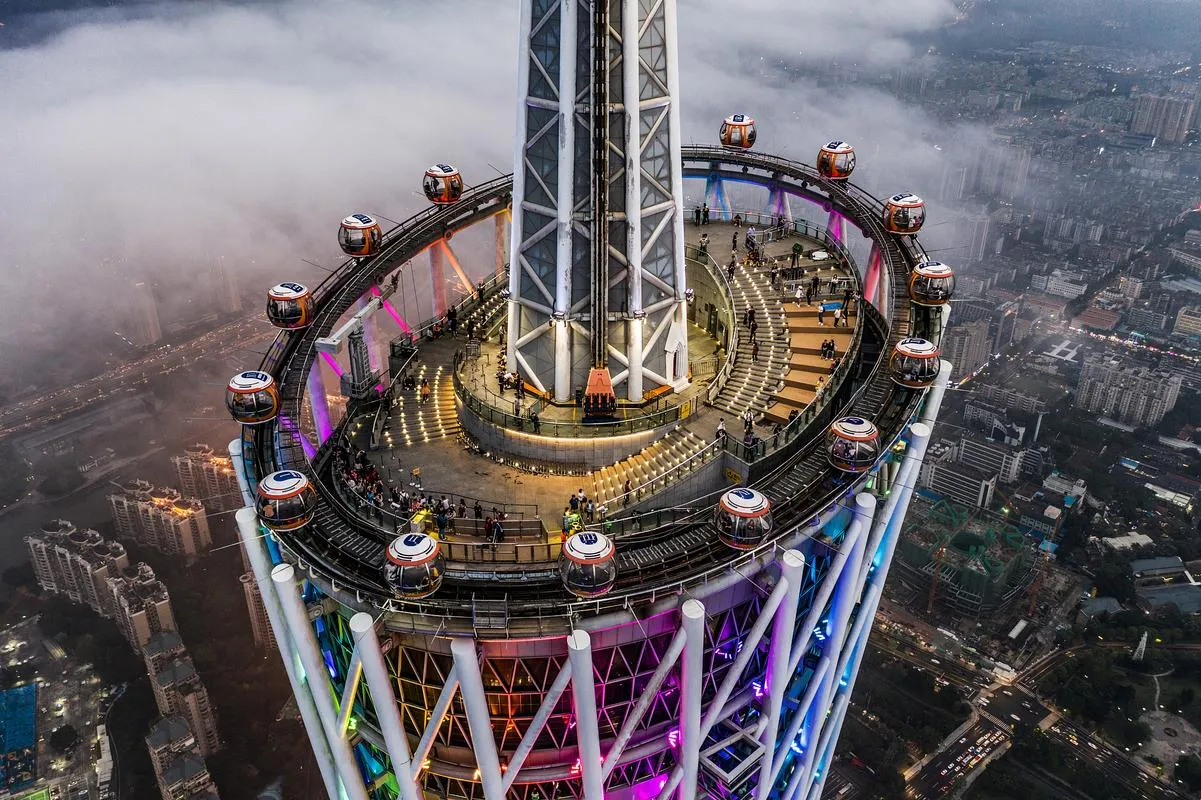 Canton Tower is China’s tallest tower (604 m) and the world’s second-tallest after Tokyo Skytree.
The Nanyue King’s Tomb (南越王墓): the world’s only silk-thread jade suit
In 1983, workers leveling a hill in the city center broke into a 2,100-year-old tomb, the grave of Zhao Mo, the second king of Nanyue, a Western Han kingdom that ruled the far south from Guangzhou. It is one of the great archaeological finds in modern China, and it sits in-situ: the museum is built over the actual tomb chambers.
The star object is the jade burial suit, and here too the common telling is wrong. Many Chinese sources call it a “gold-thread jade suit” (金缕玉衣). It is not. The Nanyue suit is the only jade suit in the world threaded with silk cord, not gold, silver, or bronze wire as in the Central Plains tombs. Some 2,291 jade plates are laced together with silk thread into a 1.73-meter human shape. That single object is worth the trip. Admission is ¥10 (half-price ¥5); note the basic ticket does not always include the lower tomb chamber, so check at the counter.
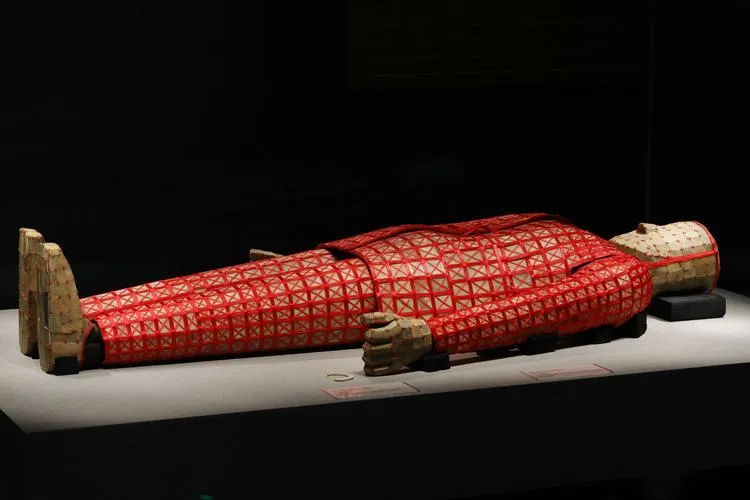 The Nanyue jade suit, the only one in the world laced with silk thread, not gold. About 2,100 years old.
Yongqingfang (永庆坊) and old Xiguan
The restored Xiguan quarter on Enning Road: arcaded shop-houses (qilou), the Bruce Lee ancestral home, Cantonese opera houses, and the old canal-side life of Liwan. It is the closest the city gets to a “living old town,” part renovated and part still lived-in. Come for the architecture and the late-night congee.
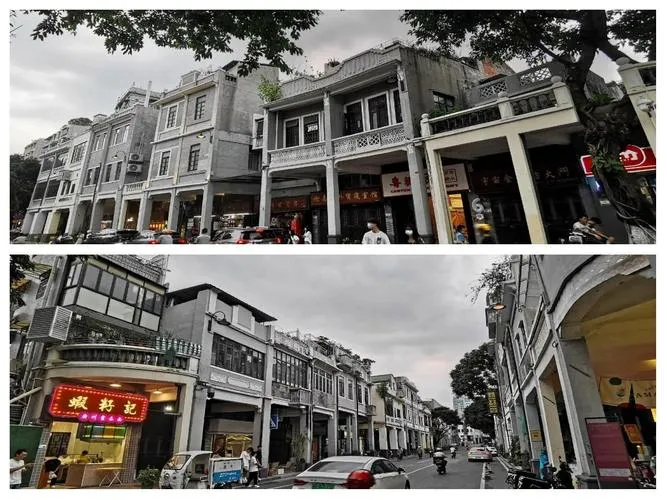 Yongqingfang, the restored Xiguan quarter of arcaded shop-houses.
Morning tea, done the way locals do it
“Drink tea, eat dim sum” is the closest thing Guangzhou has to a civic religion. The local angle:
- The old brands locals actually use are Tao Tao Ju (陶陶居), Guangzhou Restaurant (广州酒家), and Lianxiang (莲香楼). Budget ¥60–80 per person for a proper sitting.
- Dian Dou De (点都德) is the popular modern chain. It is good and consistent, but it is a chain, not a “century-old brand.”
- The trap to avoid: any place near Beijing Road, Shangxiajiu, or Shamian that has staff at the door waving you in and a sign claiming “century-old brand” (百年老字号). Real old brands do not need to solicit at the door. Walk past them.
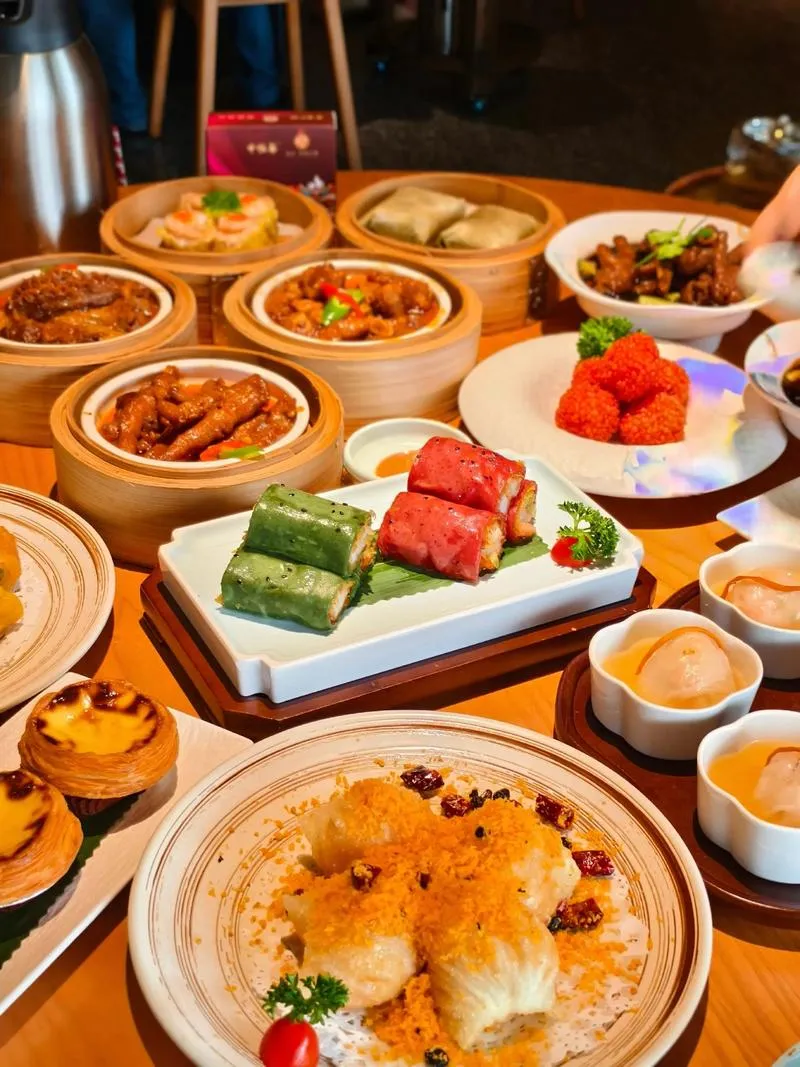 A proper morning tea, with dim sum and tea, the Cantonese civic ritual.
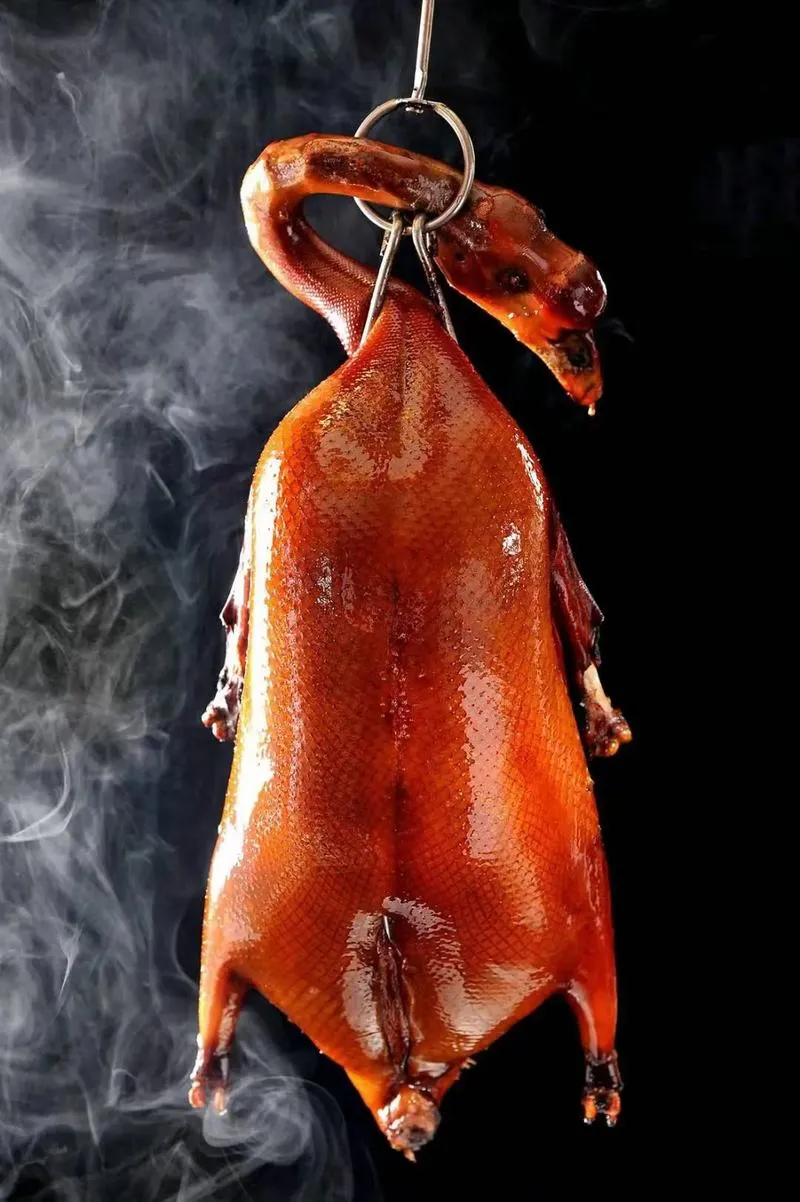 Cantonese roast goose. Order it where the locals do, not where the touts do.
For the food angle across the whole city, see our Guangzhou food guide. It covers the full Cantonese table, from roast goose to congee.
The Canton Fair trap
The China Import and Export Fair, the Canton Fair, runs twice a year at the Pazhou complex and is the single biggest thing that happens to Guangzhou’s hotel market. The spring 2026 session (the 139th) ran April 15 to May 5 in three phases; the autumn 2026 session runs October 15 to November 4. A record 314,000 overseas buyers from 220 countries came in spring 2026.
What that means for a tourist: hotel prices surge in those windows, especially around Pazhou and Tianhe. Three-star rooms start near US$65 a night, four-star near US$100, and the good locations sell out. If your trip is not about the fair, avoid mid-April to early May and mid-October to early November, or book months ahead. The city is otherwise excellent value.
Practical: metro, climate, language, Hong Kong
- Metro. Guangzhou opened its Metro Line 1 in 1997 (the fourth mainland city to get rail), and by late 2025 the network had grown to 779.9 km, 19 lines, 397 stations. It is dense, cheap, English-signed, and reaches every sight above. Pay with the Alipay transit QR. See our Alipay setup guide and metro guide.
- Climate. Subtropical monsoon. April through October is hot and humid. April fair-time days run about 22–30°C. The best windows are March, November, and early December: cooler, drier, and outside the fair crush.
- Language. Locals speak Cantonese first, Mandarin second. English is sparse outside hotels and the fair district. A translation app (plus Alipay, DiDi, and a VPN from our apps checklist) does the rest. Do not expect the Mandarin-only North; this is a different language region.
- Hong Kong day trip. Feasible. Direct high-speed trains run Guangzhou to Hong Kong in as little as 47 minutes (about 62 a day), clearing both mainlander and Hong Kong immigration in one stop at West Kowloon station (a co-location checkpoint). Go early, come back late. The 240-hour visa-free policy is marketed for exactly this kind of cross-border day trip.
The takeaway
Come for the visa, stay for the layers. Four things decide the trip: ① fly into Baiyun on the 240-hour waiver and skip the visa; ② visit in March, November, or early December, outside the Canton Fair; ③ correct the guidebook stories, because the cathedral is all-granite, the jade suit is silk-threaded, the tower is China’s tallest but not its tallest building; ④ eat morning tea at a real old brand, not a door-soliciting one. Do those and Guangzhou pays back the detour.
Guide compiled July 2026 from the National Immigration Administration, Wikipedia, the Canton Fair organizers, the Nanyue King Museum, and local sources. Verify visa policy and prices before you fly, because the 57-country list and port scope can change.
Sources & Verification
This guide was last verified on 2026-08-06. Key Chinese-language sources:
- National Immigration Administration (国家移民管理局, nia.gov.cn): provides the 240-hour transit visa-free policy, the 57-country list, and the December 17, 2024 extension that merged the old 72/144-hour waivers.
- Nanyue King Museum (南越王博物馆): provides the in-situ tomb of Zhao Mo, the second king of Nanyue, and the silk-thread jade burial suit (2,291 jade plates, 1.73 m, about 2,100 years old).
- China Import and Export Fair / Canton Fair (中国进出口商品交易会): provides the spring and autumn 2026 session dates and the record 314,000 overseas buyers from 220 countries.
- Wikipedia (English edition): used to cross-check the Sacred Heart Cathedral claim, because Notre-Dame is limestone, not granite, and to confirm the Canton Tower height rankings (604 m, China’s tallest tower, second-tallest in the world behind Tokyo Skytree).
See our full verification methodology.
Related Articles
- China Entry Requirements (2026) — Visa, customs, the full arrival process
- 240-Hour Visa-Free Transit Guide — How the 10-day transit waiver works
- China Visa-Free Countries List (2026) — All 57 countries + 240h ports
- Guangzhou Food Guide — The full Cantonese table
- How to Set Up Alipay in China — Pay for the metro and everything else