Shopping in China for Foreigners 2026: Where to Shop, What to Buy, Bargaining, Tax Refunds & Duty-Free
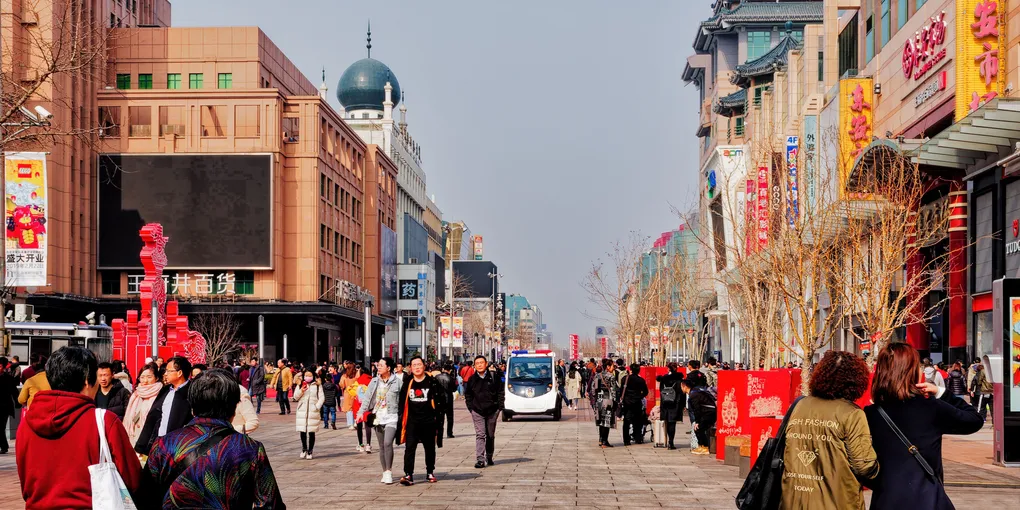
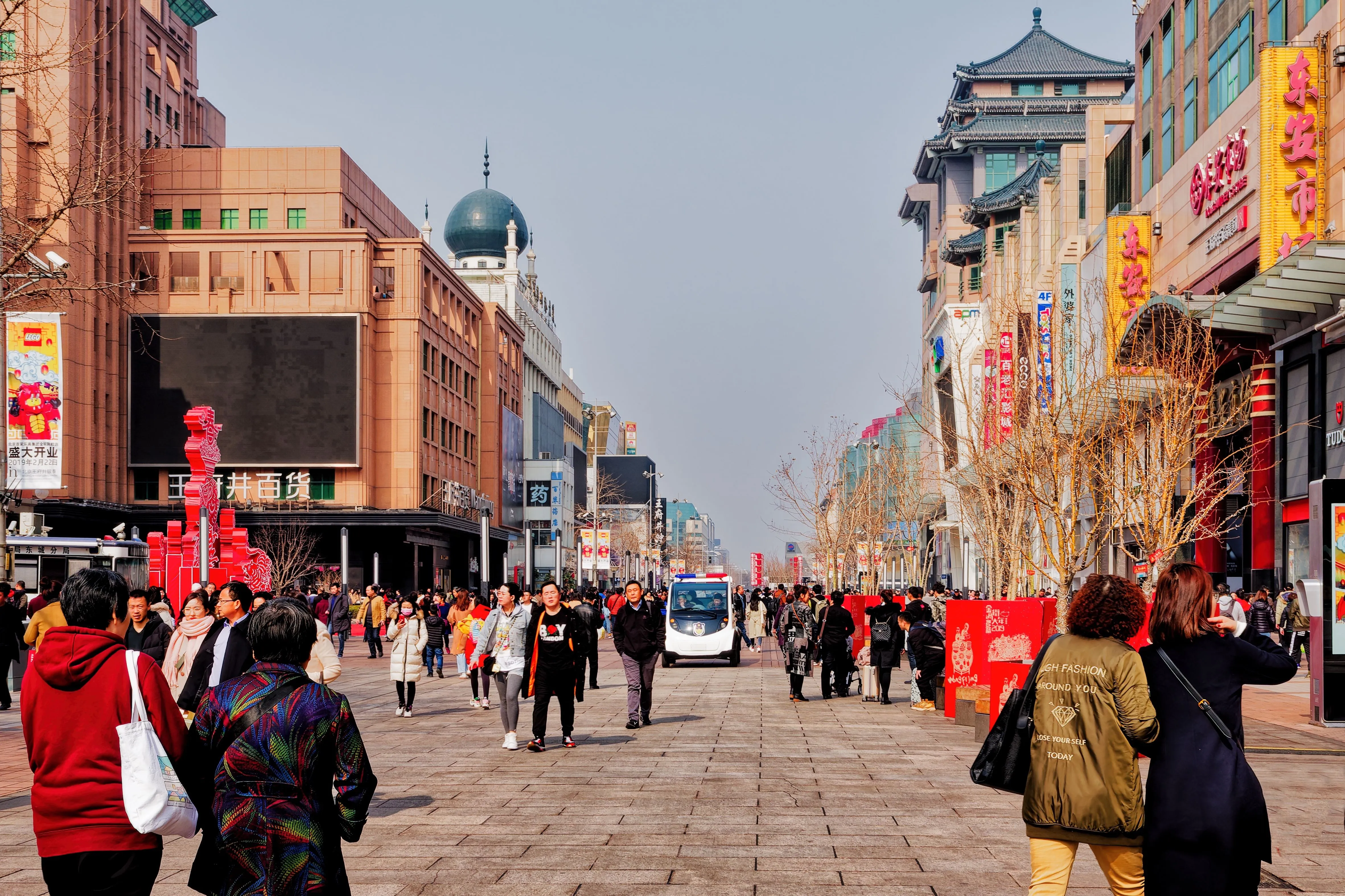 Wangfujing on a winter afternoon: 892 metres of pedestrian street, the old Wangfujing department store on the left, and an electric patrol cart threading the crowd. Fixed prices here — the receipt is what buys you a refund.
You have seen the Chinese shopping advice in English forums. It goes something like this: haggle hard everywhere, demand a refund if it is broken, and claim your tax refund at the airport. Take that advice to a big mall in Beijing and it will backfire. In a Chinese department store the price on the tag is the price, full stop, and the clerk will not negotiate with you. The clerk is also under no legal obligation to take your purchase back. And the tax refund you heard about has not been cancelled, but it has changed three times since 2025.
China’s shopping rules are not complicated, but the English-language advice has not caught up with them. This guide separates what is true from what is repeated from decade-old blog posts. You will learn which markets welcome bargaining and which do not, what is worth buying and what quietly costs you 50% in customs duty, how the current tax refund actually pays out, and the one piece of good news from November 2025 that almost no English source mentions: Hainan’s duty-free island shopping is now open to foreigners.
Quick answer: China has four shopping settings, and each has its own rules. Big department stores and international brands are fixed-price, no bargaining. Wholesale markets (Yiwu), flea markets (Panjiayuan), and street stalls expect you to negotiate. Online purchases have a legal 7-day no-reason return right; physical stores do not, so ask before you buy. When you leave China you can claim a tax refund on purchases of ¥200 or more (same store, same day), and you actually get about 9% back after fees. If you buy jade, jewelry, or liquor, plan for a 50% customs duty when you bring it home. Start with our customs guide and tax refund guide.
How we verified this: SinoWander reads the original Chinese-language sources that English guides cannot reach: the Baidu Baike entries for China’s departure tax refund, Hainan’s duty-free policy, the postal/parcel tax (行邮税), bargaining, the 7-day no-reason return rule, the Consumer Protection Law, and each major shopping district. Every figure below was cross-checked against at least two independent sources and date-stamped. Last verified: 21 October 2026. See our methodology.
Where to Shop: Three Different Worlds
Do not think of “shopping in China” as one activity. It is three different worlds, and the rulebook changes the moment you cross from one to another.
World one is the big store. Department stores, shopping malls, and international brand shops. The price is fixed, the quality is reliable, refunds are possible (with the receipt), and many take foreign cards. This is where you buy electronics, silk, tea, and anything you want guaranteed.
World two is the wholesale and flea market. Yiwu’s international commodity city, Panjiayuan’s flea market in Beijing, and the garment wholesale streets of Guangzhou. Prices are negotiable, quantities matter, and you are expected to haggle. The bargains are real, but so are the quality risks.
World three is the boutique and heritage street. Tianzifang in Shanghai, Nanluoguxiang in Beijing, the old-town lanes of every city. Small shops, crafts, snacks, and souvenirs. Prices are softer and quality varies more than the big stores. This is the world where “is that your best price?” actually gets you somewhere.
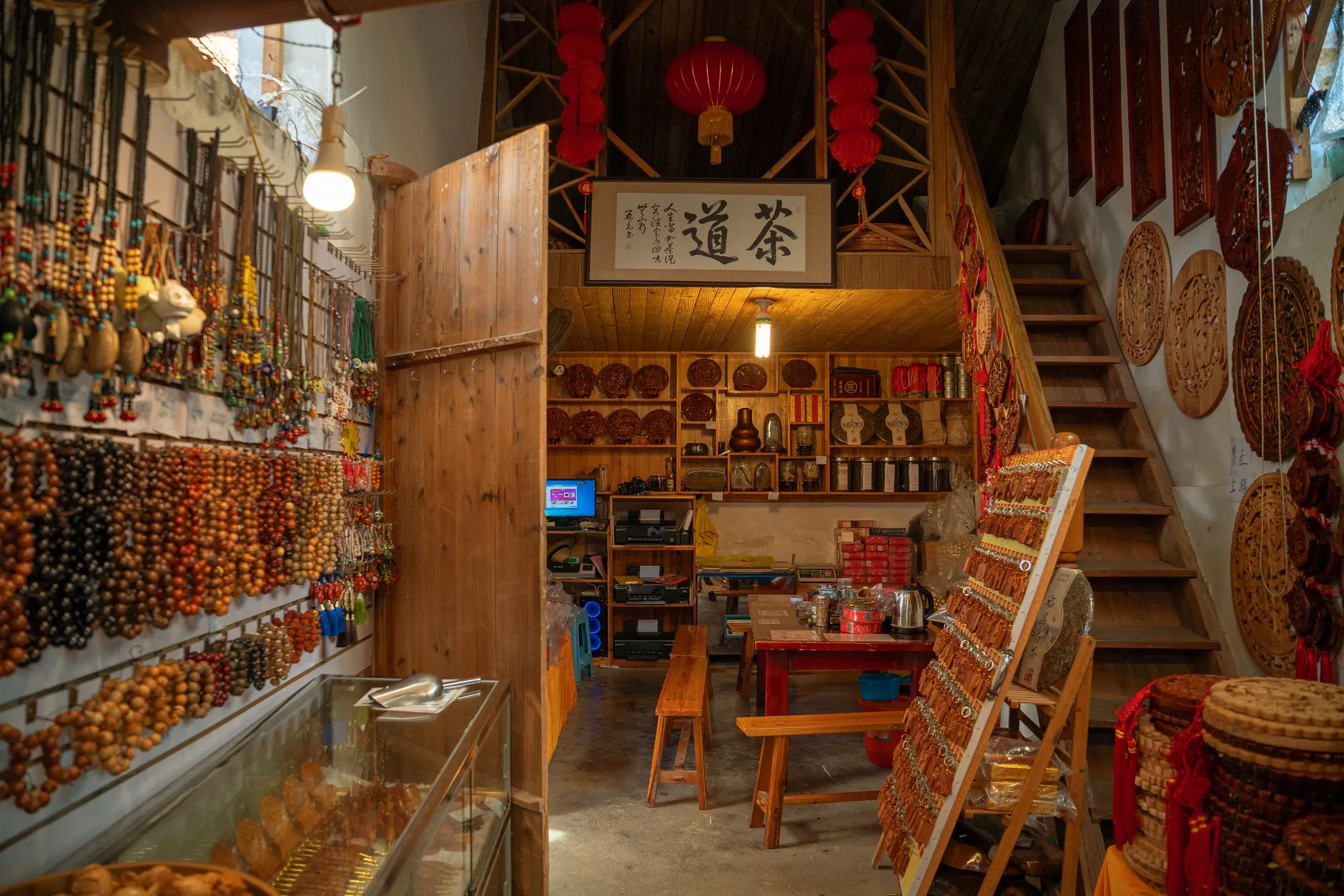 Inside a lane-side craft shop: bead bracelets strung floor to ceiling on one wall, a 茶道 calligraphy scroll over the shelves, woven baskets stacked by the stairs. This is “world three” — prices have room and quality is yours to judge.
The Big Shopping Streets Worth Your Time
Beijing — Wangfujing Street (王府井大街). A 892-meter pedestrian street in Dongcheng district, rebuilt in 1999 and named one of China’s “golden streets.” In 2025 it was added to the national list of tourist-friendly leisure districts. You will find the big department stores and a lot of tourists. Nearby, the older Dashilan street is more Chinese and less crowded. See our Beijing guide for the full picture.
Shanghai — Nanjing Road (南京路步行街). A 1,528-meter pedestrian street running from the city center to the Bund, built in 1999 and extended east in 2020. It is China’s best-known shopping strip, with a “golden belt” running its length. For something more unusual, Tianzifang (田子坊) is a 7.2-hectare cluster of stone-gate (shikumen) lanes in Taikang Road, converted since 1998 into a creative quarter of artist studios, ceramics, fashion, and design shops. It is free to enter and feels nothing like a mall. Our Shanghai guide covers both.
Chengdu — Chunxi Road (春熙路). A century-old “golden street” in the Jinjiang district, the commercial and fashion heart of Sichuan’s capital, next to the Taikoo Li complex with its famous giant panda climbing the IFS tower. Good for a relaxed afternoon of window shopping and street food.
Beijing — Nanluoguxiang (南锣鼓巷). A 787-meter lane from the Yuan dynasty, one of Beijing’s oldest surviving hutong neighborhoods. The “centipede street” is lined with craft shops, snack stalls, and small boutiques. Treat it as heritage wandering rather than serious shopping; prices in the touristy core run high.
Beijing — Panjiayuan (潘家园旧货市场). China’s largest flea and antique market, 48,500 square meters in Chaoyang district with more than 4,000 vendors and nearly 10,000 people working there. The ground-floor stalls open on Wednesdays, Fridays, and Saturdays; weekends draw 60,000 to 70,000 visitors, and 2024 saw 7.6 million visits in total. Treat everything as a reproduction and bargain accordingly. If you are buying jade or antiques, the market houses a Beijing University gemstone appraisal center where you can get a piece checked for authenticity on the spot.
Zhejiang — Yiwu International Commodity City (义乌国际商贸城). The largest small-commodity wholesale market on earth, in Yiwu city near Hangzhou. Five zones, about 75,000 businesses, and more than 2.1 million product types. In 2024 it averaged 224,300 visitors a day, welcomed foreign buyers from 230+ countries, and recorded ¥279.8 billion in sampled annual turnover. Tourists are welcome to walk around, and foreign visitors can buy samples or small lots directly. It is a tourist attraction and a wholesale hub at once. The global trade center opened there in October 2025.
Guangzhou — Shisanhang Road (十三行路). In Liwan district, this street is named for the Qing-era monopoly merchants who ran China’s official foreign trade from 1685. Today it is one of China’s densest garment wholesale districts, packed with large clothing markets. Buyers and tourists alike come for cheap, current-season clothing.
What to Buy: The Souvenirs That Are Actually Worth It
China rewards a short, well-chosen list of purchases. These five categories are the ones with real local depth, and the ones that survive the trip home.
Tea. Dragon Well (Longjing) green tea from Hangzhou and Pu-erh fermented tea from Yunnan are China’s two most famous names. Loose-leaf tea is light, legal to carry, and a local purchase with genuine depth. Buy from a proper tea shop, not a street stall, and keep the receipt for the tax refund.
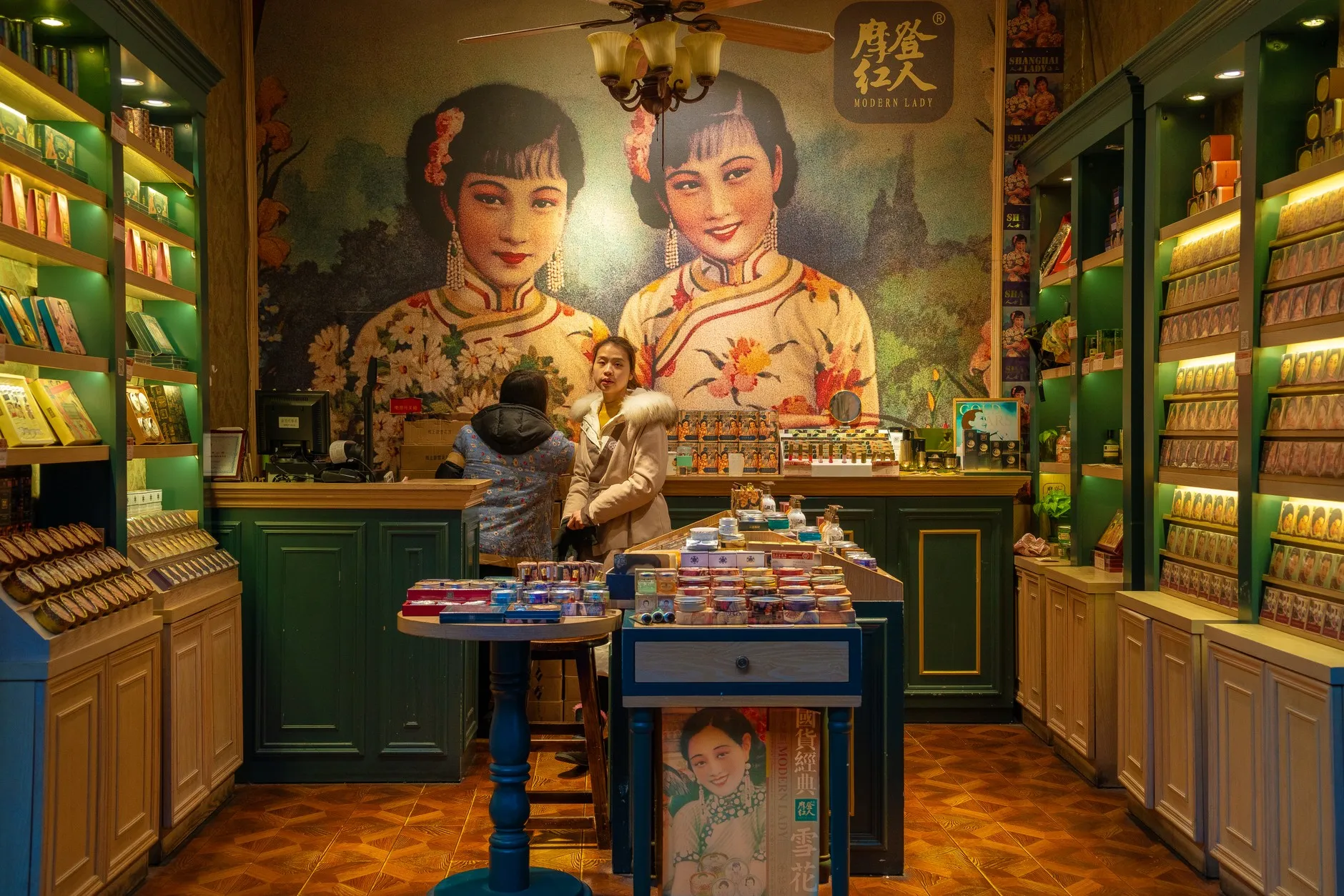 Not a tea counter: 1930s-style Shanghai advertising art behind the till of a gift shop, boxed sets and tins on every shelf. Heritage-lane packaging sells the era rather than the contents, so read the label before you pay for the poster.
Silk. Hangzhou and Suzhou are China’s silk capitals. A real silk scarf, tie, or jacket is a classic and safe gift. The quality gap between a ¥50 street-stall scarf and a ¥300 department-store one is real, so pay for the receipt if you want to be sure.
Porcelain. Jingdezhen in Jiangxi is China’s thousand-year “porcelain capital,” one of the country’s four great ancient towns, and its porcelain is a protected geographical-indication product. A hand-painted teacup or vase makes a beautiful, light souvenir.
Jade and pearl. Chinese jade culture is deep, and Zhuji in Zhejiang is a major freshwater-pearl center. Buy jade from a reputable store with a certificate, not from a “friend’s shop” a tour guide recommends. This is the single biggest high-price, low-quality trap in China. Before you spend heavily, understand that jewelry and jade fall in the 50% customs duty bracket when you bring them home (more below).
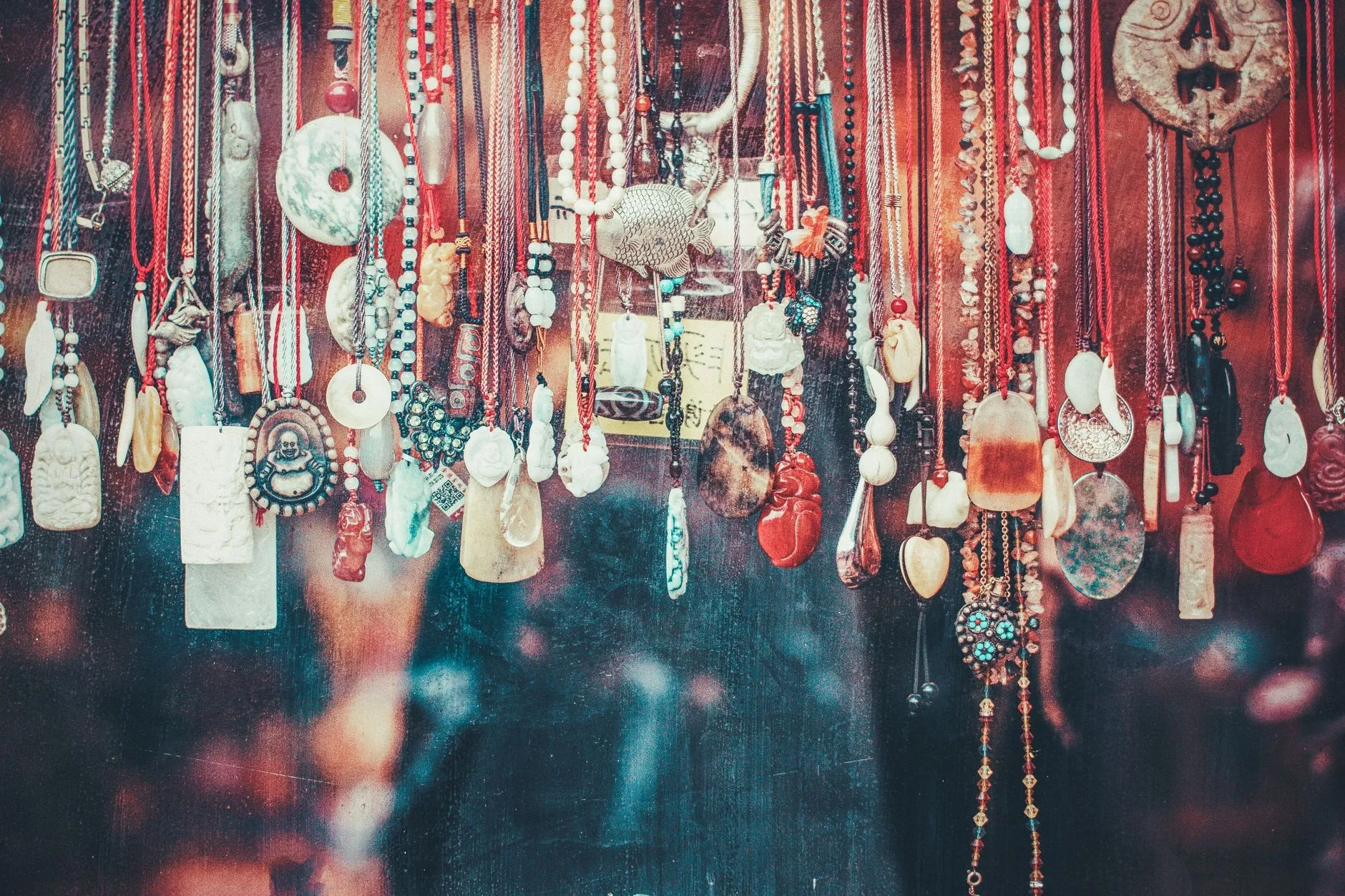 Pendants on red cord at a market stall: carved discs, Guanyin and Buddha faces, bead strands and dyed stone, all under warm display light that flatters everything. This is where a ¥100 piece is priced at ¥5,000 — bargain hard, or buy with a certificate.
Liquor — if you know what you are buying. Maotai, the sauce-aroma baijiu from Guizhou, is China’s most famous spirit and one of the world’s three great distilled liquors alongside Scotch whisky and Cognac. Buy real Maotai only from authorized stores, and be aware it is also in the 50% duty bracket. One important recent change: under the new national baijiu standard (GB/T 17204, effective June 2022), a “flavored” liquor that does not meet the definition can no longer be labeled “baijiu.” Cheap bottles claiming to be famous brands are usually a flavored imitation.
A useful rule of thumb: the government actively encourages tax-free-eligible souvenirs in the categories of time-honored brands, intangible cultural heritage, geographical-indication products, cultural creative goods, and Chinese national brands. Those are the same categories with quality guarantees behind them.
Bargaining: Where It Works, Where It Backfires
This is where English advice is most often wrong. Bargaining is not universal in China. It is expected in a specific slice of the market and pointless in the rest.
Where you do not bargain. Big department stores, shopping malls, and international brand shops are fixed-price by design. China’s department stores set uniform prices because it keeps management costs down and pricing transparent. Asking a clerk at a mall to lower the price on an international-brand bag will get you a polite “the price is fixed” and a lot of wasted time.
Where you should bargain. Wholesale markets (Yiwu), flea and antique markets (Panjiayuan’s ground-floor stalls), street vendors, small non-chain shops, and some taxis and three-wheelers. The seller expects negotiation and prices are set with room to move.
A few practical notes. There is no magic “half the asking price” formula, so do not trust the ones English blogs print. Start with a clearly low number and watch the seller’s reaction, then meet in the middle if you both want the deal. In busy or seasonal-clearance periods sellers are readier to drop the price. And at antique markets, remember the piece is almost certainly a reproduction: bargain for it as a craft item, not as an investment-grade antique. That mindset alone protects you from the biggest flea-market mistake.
Paying for Your Shopping
By 2026, mobile payment is the default in China. If you have a foreign card linked to WeChat Pay or Alipay, that is how you pay everywhere, from the mall to the street stall. It is fast, accepted almost everywhere, and works with a foreign credit or debit card. For step-by-step setup, see our WeChat Pay guide and Alipay guide. Our full guide to paying in China compares cash, ATMs, and cards.
Cash still works, but change is often a problem at small stalls, and you need small notes. A more useful piece of news for shoppers: foreign-card acceptance at tax-refund stores keeps expanding. In Jiangsu province alone, 340 tax-refund stores now accept foreign cards (a nearly sevenfold increase from 2024), including major malls in Nanjing and Suzhou. If you plan to spend a lot in one place, big stores and refund-eligible shops are the most card-friendly.
The Tax Refund: The Quick Version
China’s departure tax refund is generous and much newer than English guides assume. It has been upgraded twice in the last 18 months, and the “it was cancelled” rumor is false. Here is the short version; the full walkthrough is in our tax refund guide.
The numbers you need:
- Threshold: ¥200 or more spent in the same store on the same day (lowered from ¥500 in April 2025).
- What you get: the headline rate is 11% on most goods (13%-VAT items) and 8% on 9%-VAT items, minus a 2% agency fee, leaving you about 9% in your pocket.
- Cash cap: up to ¥20,000 cash per refund; above that it is a bank transfer.
- Window: shop within 90 days of departure, and the departure must be within 183 days of your last entry into China.
- What does not qualify: food, beverages, fruit, cigarettes, alcohol, cars, and motorcycles. Duty-free purchases do not qualify either.
Two recent upgrades matter. Since July 2026 (“Refund 2.0”), the instant-refund window is a uniform 28 days, and smaller purchases face only random spot-checks at customs. Since 1 September 2026, instant refunds are processed cross-city across the whole country, so a purchase in Shanghai can be refunded when you fly out of Beijing. The system is now nationwide.
Hainan Duty-Free: Now Open to Foreigners
Since 1 November 2025, Hainan’s duty-free shopping is open to foreign travelers departing from the island, one of the most under-reported changes in Chinese shopping. Before that, Hainan’s duty-free quota applied only to “leave the island but not leave the country” travelers (domestic visitors).
Here is what it means. Hainan’s duty-free system lets you buy imported goods with customs duty, import VAT, and consumption tax removed, up to a quota of ¥100,000 per person per year, with no limit on the number of purchases and no single-item cap (the old 8,000-yuan single-item limit was removed in July 2020). You must be 18 or older. You can shop at Hainan’s duty-free stores and collect your goods at the airport, port, or train station as you leave the island. Pickup options now include mail delivery, collect-on-return, guaranteed-with-deposit, and buy-and-carry (since 2023).
A few useful details. Duty-free and tax-refund are two separate systems that do not share quotas: duty-free removes taxes up front on imported goods within a quota, while tax-refund gives you money back later on Chinese goods. A single item can only use one of the two, so choose. Hainan’s island-wide closed operation (“seal-off”) began in December 2025, and duty-free continues under it. For the practical Hainan travel picture, see our Sanya and Hainan guide.
Shopping Online: What Actually Works for Foreigners
Chinese e-commerce is enormous, but the main consumer sites are built for mainland users. The principal site for foreign buyers is Taobao Global (the international version, world.taobao.com), operated by a Singapore-based entity and aimed at overseas shoppers, with overseas-buyer help and cross-border shipping. That is the mainstream route for buying from China online.
The rest of the picture needs a reality check. The mainland Taobao, JD.com, and Pinduoduo sites require a mainland phone number, real-name ID, and mainland payment, so the standard sites are not practical for a short visit. Whether a given foreign card works on a specific platform changes often; check the platform’s official guidance before you rely on it. For most travelers, the simplest online purchases happen through Taobao Global, or through your hotel or a local friend.
One important rule governs anything you buy online and bring home, which brings us to the customs question.
What You Will Pay to Bring It Home: The Postal Tax
This is the fact almost no English guide prints. When you bring purchased goods into your own country, Chinese customs applies the postal/parcel tax (行邮税), which combines customs duty, import VAT, and consumption tax into a single rate. Since 9 April 2019 the rates are three tiers:
| Tier | Rate | What it covers |
|---|---|---|
| 13% | 13% | Books, food, gold and silver, toys, medicines, furniture |
| 20% | 20% | Sporting goods, textiles and clothing |
| 50% | 50% | Cigarettes, alcohol, precious jewelry, and jade/gemstones |
In practice, jade, pearl, jewelry, and liquor fall in the 50% bracket. A ¥5,000 jade bracelet can cost you ¥2,500 in duty when you fly home with it. Tax applies only to goods above the amount customs specifies, and duties below a small threshold (about ¥50) are waived, so small souvenir purchases usually pass untouched. But if you are buying a high-value jade piece or a bottle of real Maotai, build the duty into the decision, and read our customs guide for how to declare items and ship specialties home. If you are eligible for a visa-free entry, check our visa-free countries guide so you know the rules before you land.
Returns and Avoiding the Scams
The return rule is different online and in stores, and the difference surprises people. The legal 7-day no-reason return right in China applies to online purchases (consumer law since 2014), and even then with exceptions: custom-made goods, perishable food, and digital products are excluded. Physical stores are a different matter. In-store no-reason returns are a voluntary commitment by the shop, encouraged since 2018 but not a legal requirement. A department store will usually take back a defective item with a receipt (that is the three-guarantee quality rule), but it is under no obligation to accept a change of mind. So the advice is: in a physical store, ask about the return policy before you pay, and keep the receipt.
Where the scams hide. China is safe to shop in, but three traps account for most of the harm. The first is jade and “friend’s shop” jewelry sold to tour groups, where a ¥100 piece is priced at ¥5,000 and a commission flows back to the guide. Buy jade from a reputable store with a certificate, or use an on-site appraisal center. The second is fake-brand bags, watches, and electronics on the street or in markets, which are frequently poor-quality and legally risky to carry across borders. The third is herbal medicines sold by weight with inflated claims. Our China travel scams guide walks through all of them in detail, including the 12315 consumer hotline and the 12345 tourism hotline for complaints.
A closing tip on receipts. Tax-refund-eligible and department-store purchases come with a proper VAT invoice or electronic invoice, which you need for the refund and for any return. Small shops may only give a handwritten receipt, which is fine for a souvenir but worthless for a refund claim. If a purchase is big enough to matter, make sure you leave the shop with the right paper.
The Takeaways
- Shop by world: big stores are fixed-price and reliable; wholesale and flea markets reward bargaining; boutique streets are for wandering and small finds.
- Buy the list: tea, silk, Jingdezhen porcelain, certified jade, and real Maotai are the categories with real local depth.
- Bargain only where it is expected: wholesale markets, Panjiayuan, street stalls, small shops. Never at a department store or international brand.
- Refund your tax: ¥200 same-store same-day threshold, about 9% back, ¥20,000 cash cap, 90-day window, now refundable cross-city from September 2026.
- Use the new Hainan duty-free if you fly out of the island: ¥100,000/year quota, now open to foreigners since November 2025, separate from the tax refund.
- Budget for the postal tax: 13/20/50% tiers, and jade, jewelry, and liquor hit the 50% bracket.
- Returns differ: online has a legal 7-day no-reason right; physical stores return at their own discretion, so ask and keep receipts.
For the deeper dive on the refund process, read our tax refund guide. To plan the money side before you go, our guide to paying in China is the one to start with.