Qingdao Travel Guide (2026): Beer City, Beaches & 240-Hour Visa-Free Entry
Qingdao Travel Guide (2026): Beer City, Beaches & 240-Hour Visa-Free Entry
Qingdao is the Chinese city that sells draft beer in plastic bags, built its old town out of German brick, and holds at 25 °C in August while the rest of the eastern seaboard swelters. On July 17, 2026 it cracked open a 30-day international beer festival, and its 240-hour visa-free door is open to citizens of 57 countries.
The city sits on the south side of the Shandong peninsula, facing the Yellow Sea. You can do it as a standalone long weekend, or as the seaside bookend to a Shandong loop (Qingdao, Jinan, Mount Tai, Qufu) that now fits comfortably inside the 10 visa-free days.
Quick answer: Qingdao holds at 25 °C in August while Beijing and Shanghai swelter, and Jiaodong Airport (TAO) is a 240-hour visa-free transit port for 57 countries. The 36th international beer festival runs July 17 to August 15, 2026, with the main beach venue free to enter. Base yourself in the German-built old town, drink the bagged draft beer on Dengzhou Road, and give Laoshan a full day. The high-speed link from Jinan takes as little as 1h22. See our visa-free countries list and worst-time-to-visit guide.
How we verified this: SinoWander reads Chinese-language sources that English guides cannot, including National Immigration Administration visa notices, the official Laoshan scenic-area site (qdlaoshan.cn), the Qingdao Culture & Tourism Bureau, and Sina Travel. We cross-check them before writing. We have not personally visited every location. Each guide is date-stamped when last verified: 2026-08-06. See our methodology.
The visa: 240 hours, two ways
Qingdao Jiaodong International Airport (TAO) became a 240-hour transit visa-free port on December 17, 2024, when the National Immigration Administration extended the old 72- and 144-hour allowances to a flat 10 days. Citizens of 57 countries, including the US, UK, Canada, Australia, Russia, Brazil and most of the EU, can enter without a visa provided they have an onward ticket to a third country. See our 240-hour transit visa guide for the exact rules and the full visa-free country list.
Then on November 5, 2025, Qingdao added a second door: the 24-hour direct transit channel, which lets eligible travelers pass through without even clearing immigration. Few foreign guides mention either of these. The practical upshot is that Shandong, with five 240-hour ports, has become one of the easiest provinces in China to enter and roam. Land in Qingdao, ride the high-speed train 90 minutes to Jinan, climb Mount Tai, visit Confucius’s hometown in Qufu, and come back to the coast, all inside the 10-day window.
When to go
Qingdao’s climate is the reason it exists as a resort. The sea regulates the temperature, so summers stay mild: August, the hottest month, averages 25.3 °C against 35 °C plus in Beijing or Shanghai. Winters dip to around freezing with cold winds, but rarely the deep chill of the northeast.
- July to August is peak beer festival season and the coolest city beach weather in eastern China. The trade-offs are real: it is also sea-fog season (51 fog days a year on average, mostly in June and July), so that postcard “blue sea and blue sky” can turn grey for days at a time, and flights sometimes delay. Hotel prices spike during the festival.
- September to October is the most reliable window. The fog clears, the air turns crisp, and the sea is still warm enough to swim.
- May is blossom season, when the Badaguan villa district flowers and Zhongshan Park’s cherry blossoms peak in mid-April.
- Winter (December to February) is cold and damp but almost empty. Indoor sights like the beer museum and the naval museum are unaffected.
If you are weighing Qingdao against the rest of China, our worst-time-to-visit guide ranks the cool-belt regions worth targeting each season.
The old town: red tiles and German brick
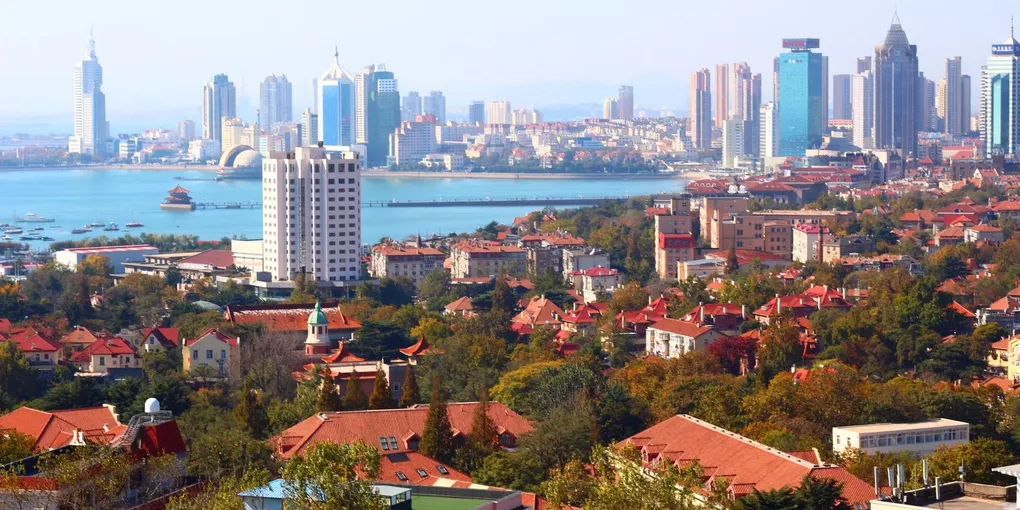
Qingdao’s signature look comes from 17 years of German colonial rule, from 1897 to 1914, when the Germans built a port, a railway, and a European-style city district on the bay. The result is the densest collection of Western architecture anywhere in mainland China. Kang Youwei captured it in his famous line about the city: “red tiles, green trees, blue sea, blue sky.”
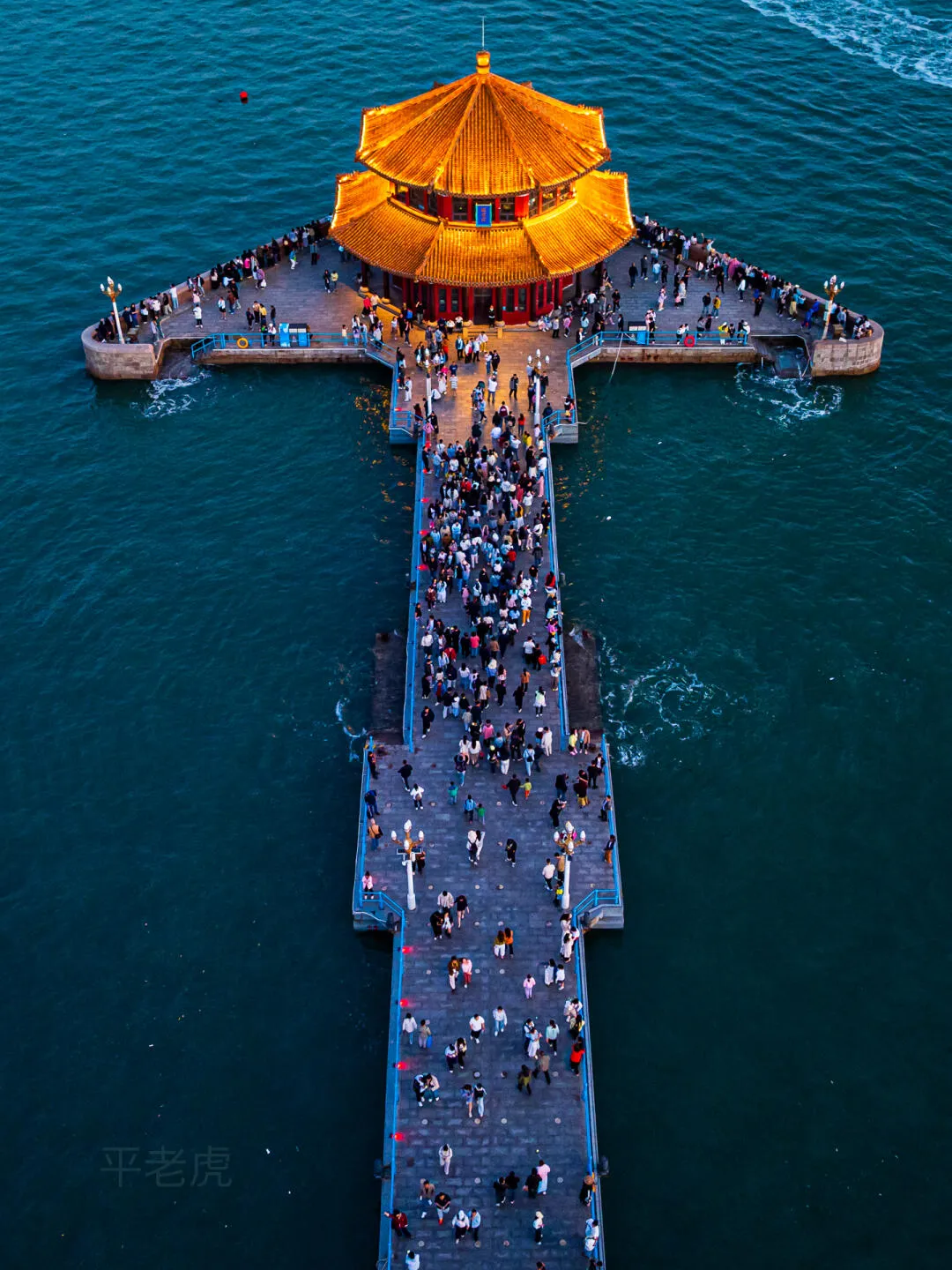
Most of the old town is walkable in a day. Zhanqiao Pier, a stub of ironwork stretching into the bay from 1892, is the city’s emblem; in winter the railings are thick with gulls and there is no entry fee. A few blocks inland, the Badaguan district packs more than 200 villas in 20-odd national styles, German, Russian, British, Danish, into a leafy grid of streets. The two most photographed are Huashi Lou (the “Flower Stone House”, a strange blend of Greek, Roman and Gothic that Chiang Kai-shek once used) and the green, Danish-style Princess House. Badaguan is free to wander, though individual villas charge a few yuan.
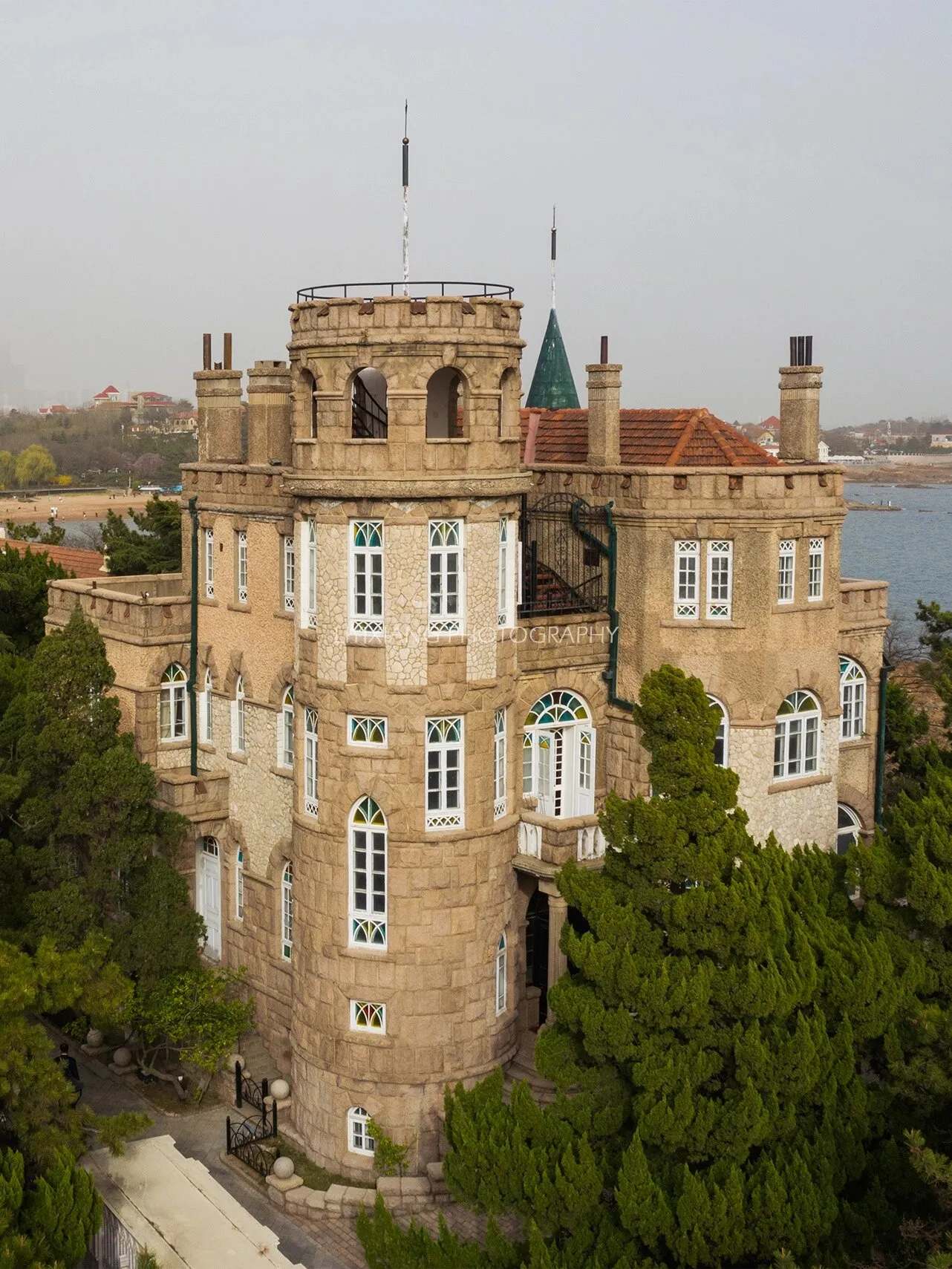
For the classic postcard view of the red rooftops, climb Xiaoyushan Park or Signal Hill Park, the latter with a slow-rotating observation deck. Both cost only a handful of yuan. South of there, May Fourth Square holds the red spiral sculpture “Wind of May”, another of the city’s signature shots, and behind the old town rises the 1934 St. Michael’s Cathedral, a twin-spired Gothic landmark and one of China’s most prominent Catholic churches.
A quieter thread runs through the old lanes: the writer colony of the 1920s and 1930s. Lao She wrote Rickshaw Boy (《骆驼祥子》) at his house on Huangxian Road, now the Camel Xiangzi Museum. Kang Youwei, Shen Congwen, Wen Yiduo and Xiao Hong all lived within a few blocks of each other around Yushan and Fushan roads. If you have read any modern Chinese literature, this neighborhood is a small pilgrimage.
Beer, in a bag
Tsingtao Brewery was founded in August 1903 by German and British merchants as the Germania Brauerei Aktiengesellschaft Tsingtau, using spring water piped down from Laoshan. It is the oldest and best-known beer brand in China, and the reason the city throws a 30-day party every summer.
The Tsingtao Beer Museum sits inside that original 1903 factory building at 56 Dengzhou Road. The basic ticket is 60 yuan and includes two tasting pours, one of the unpasteurized draft that the city actually drinks. A four-hall combo ticket runs 120 yuan. Budget two hours.
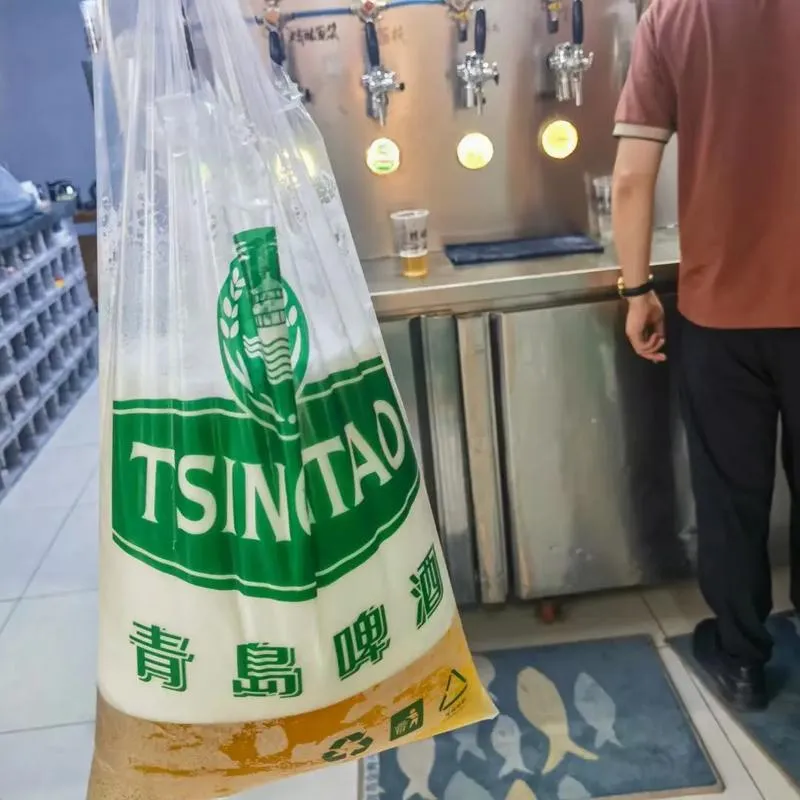
The local custom you should try at least once is bagged draft beer. Walk-up stalls and the stalls along Dengzhou Road Beer Street fill a plastic bag with fresh unpasteurized draft, you pay by weight, and you drink it on the street with a straw or poured into a cup. It tastes completely different from the exported bottles, and carrying a bag of beer through a lane at dusk is a small piece of everyday local life.
The Qingdao International Beer Festival, now in its 36th year, runs July 17 to August 15, 2026, across three venues: the Golden Sand Beach beer city on the west coast (the main stage, which opens at 8 pm on July 17), the Century Plaza beer city in Laoshan, and the old-town venue. Entry to the beer city grounds is free; you pay for what you drink and eat at the tents and stalls.
The mountain: Laoshan
Laoshan is the other half of the Qingdao pair, a Daoist massif that rises straight out of the Yellow Sea to 1,132.7 meters. It is the highest peak anywhere on China’s 18,000-km coastline, and Chinese travelers know it from Pu Songling’s ghost tale “The Laoshan Daoist.” The core temple, Taiqing Palace, was founded in the Western Han dynasty and is over 2,100 years old.
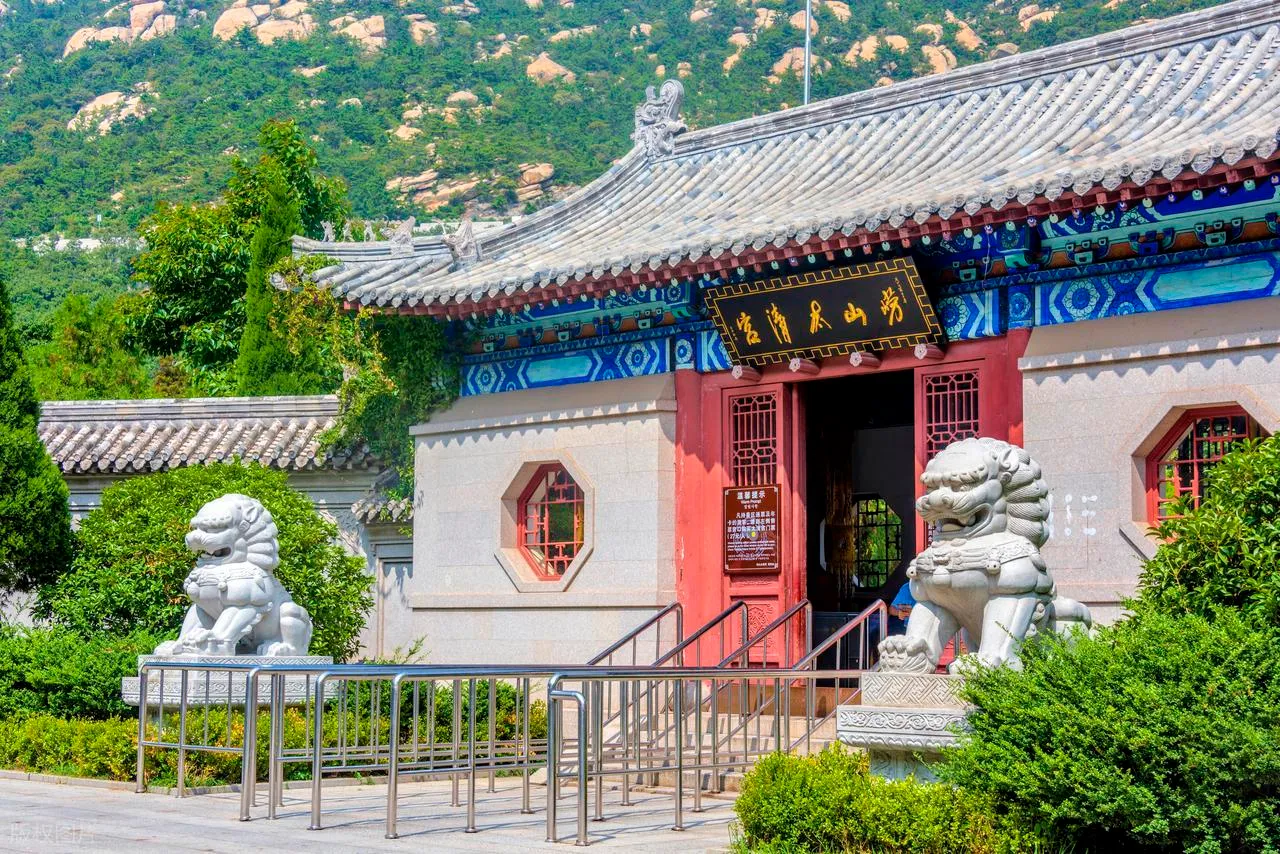
Laoshan’s one complication is ticketing, which trips up plenty of foreign visitors. The scenic area is split into separately priced zones, and you buy by route:
- South route (Liuqing, Taiqing, Qipanshi, Yangkou) is the classic circuit. It costs 90 yuan in peak season and 60 yuan off-peak, and covers four sub-areas, so it is the best value.
- Taiqing zone alone is 90 yuan plus a mandatory 40-yuan sightseeing bus (130 yuan total), plus 27 yuan for the Taiqing Palace itself.
- Giant Peak (Jufeng, the 1,132-meter summit) and North Nine Waters (a stream-and-pool valley route, best after summer rain) are sold separately.
Private cars are banned on the scenic road. If you drive to the south route, you must park at the Dahedong Customer Service Center and transfer to the official shuttle. Buy tickets ahead at the official Laoshan site (qdlaoshan.cn) to dodge the longest queues.
Beaches and the sea
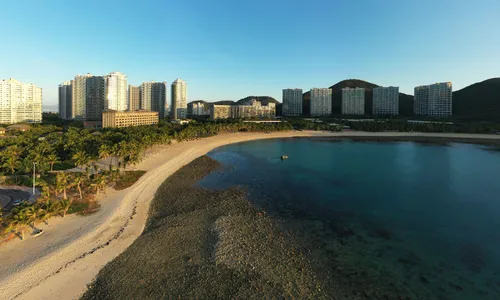
Qingdao has 905 km of coastline, and the city beaches are built into the urban grid. The numbered First, Second, Third and Sixth bathing beaches string along the old-town shore; the Sixth sits right next to Zhanqiao Pier. Shi Lao Ren beach, east of the center, has the best sand in the city proper.
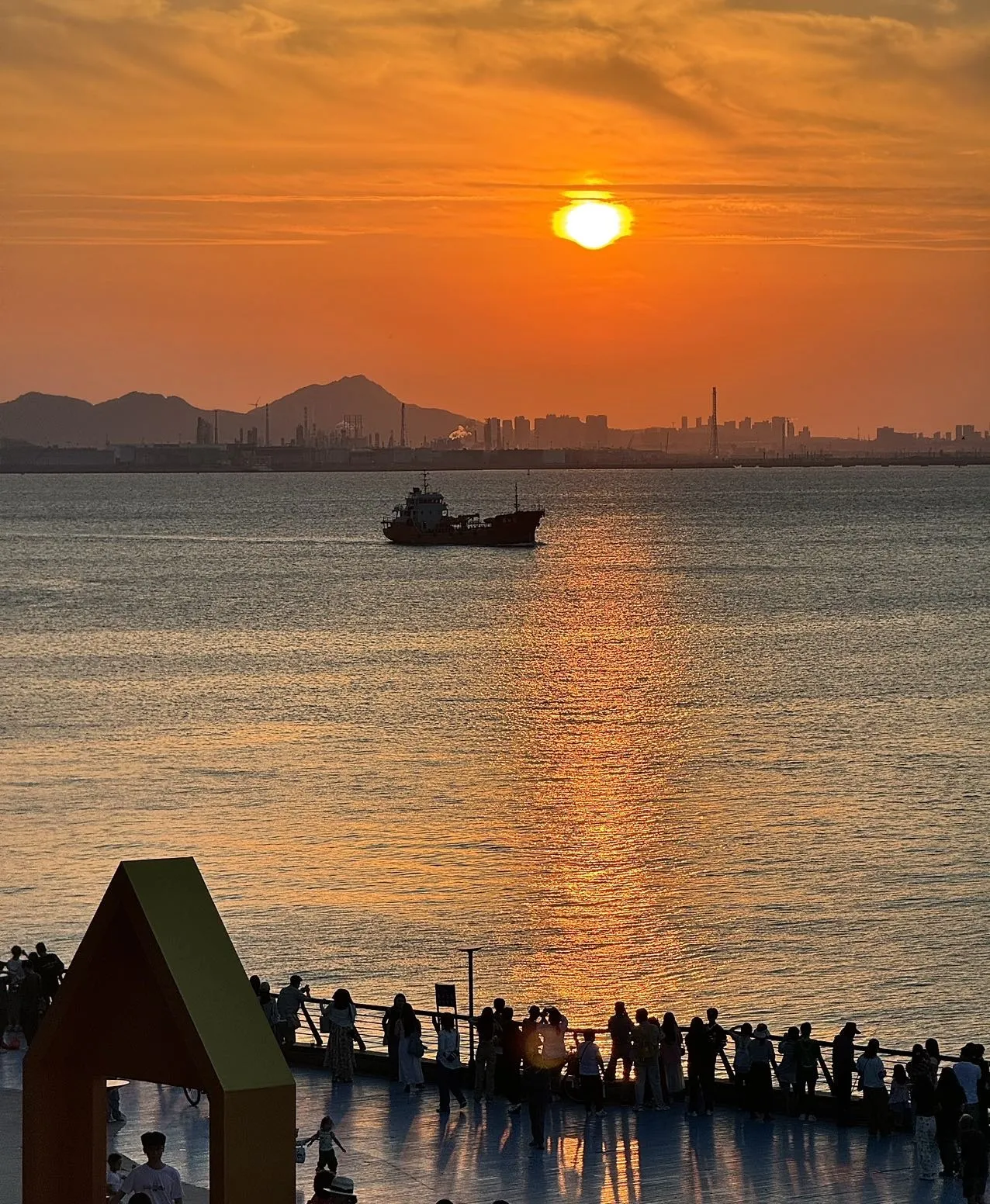
Across the bay, reachable by the Jiaozhou Bay undersea tunnel, the West Coast New Area holds Golden Sand Beach, marketed as “Asia’s Number One Beach” for its fine grain, and the main beer-festival venue. Two marine parks split the family crowd: the older Qingdao Underwater World in Huiquan Bay, and the newer Qingdao Polar Ocean World on the eastern shore, which has belugas and penguins. Pick one.
For something colder and quieter, Lingshan Island, the largest island in Qingdao, is a half-day ferry ride out and barely visited.
Getting in and around
By air. Qingdao Jiaodong International Airport (TAO) opened on August 12, 2021, replacing the old Liuting airport. It sits about 40 km northwest of the city center. Metro Line 8 connects the terminal to town in roughly an hour; a taxi runs 100 to 150 yuan; airport buses fill the gap. TAO handled 21.4 million passengers in 2023, with 20 international and regional routes, so connections from elsewhere in Asia are decent.
By high-speed rail. Qingdao has four main stations (Qingdao, Qingdao North, Hongdao, Qingdao West). The Jiao-Ji express line runs “Jinan-Qingdao express” trains every 15 minutes, with the fastest one-seat run at 1 hour 22 minutes between Qingdao North and Jinan East. Most trains take 1.5 to 2.5 hours. From Jinan you can connect onward to Tai’an for Mount Tai, and to Qufu, all on the same rail spine. See our China high-speed rail guide for ticketing.
By metro. Seven lines, 318 km, 150 stations, covering the main city, the west coast, and the airport (Line 8). Pay by scanning a QR code in Alipay or WeChat at the gate, the same system you will use for everything else in China. Our Alipay setup guide walks through it.
By sea. Qingdao Port runs international passenger ferries to Incheon and Gunsan in South Korea and to Shimonoseki in Japan, a niche option if you are stringing together an East Asia trip.
Honest tips
- During the beer festival (Jul 17 to Aug 15), expect doubled hotel rates, packed venues, and traffic jams around the west-coast site. If you came for the festival, that is the point. If you did not, the old town is calmer.
- Summer sea fog is an under-discussed downside. June and July can sit in grey for several days running, and the blue-sky shots on the tourist board’s site are not guaranteed. September is the safer bet for clear weather.
- Laoshan tickets: decide your route before you reach the gate. South route is the default; North Nine Waters only impresses after rain; Giant Peak is a real hike. Peak-versus-off-peak pricing differs by 30 yuan.
- The airport is far. Build in an hour each way between TAO and the city, and do not schedule a tight connection on departure day.
- Badaguan is free and best in May (blossoms) or October to November (ginkgo and maple). The paid villas cost only a few yuan each.
A two-and-a-half-day plan
Day 1, old town on foot. Zhanqiao Pier, St. Michael’s Cathedral, the writer lanes around Yushan Road, then up Signal Hill or Xiaoyushan for the rooftop view. Down through Badaguan in the afternoon, end at May Fourth Square for the sunset over the bay.
Day 2, beer and seaside. Tsingtao Beer Museum on Dengzhou Road first thing, a bag of draft beer on the street, then the First or Second bathing beach. Walk to the Olympic Sailing Center in the evening, and find a seafood stall for clams, mackerel dumplings and grilled squid with more beer.
Day 3, Laoshan. The south route, Taiqing Palace and Yangkou, as a full-day trip. If it has just rained, swap to North Nine Waters instead.
If you have a fourth day, cross the tunnel to Golden Sand Beach and the west-coast beer-festival venue.
Sources & Verification
This guide was last verified on 2026-08-06. Key Chinese-language sources:
- National Immigration Administration (国家移民管理局, nia.gov.cn): 240-hour transit visa-free policy and the 57-country eligibility list, per the December 17, 2024 notice extending the old 72- and 144-hour allowances to a flat 10 days.
- Official Laoshan Scenic Site (崂山风景区, qdlaoshan.cn): Laoshan ticketing by route, per-zone pricing, and the rule that private cars must park at the Dahedong Customer Service Center and transfer to the official shuttle.
- Qingdao Culture & Tourism Bureau (青岛市文化和旅游局): City tourism data including the mild climate profile and Qingdao’s status as a 240-hour visa-free port.
- Qingdao Municipal Government Press Office (青岛市政府新闻办): 2026 International Beer Festival dates (July 17 to August 15) and venue details.
- Sina Travel (新浪旅游, travel.sina.com.cn): Corroborating Laoshan ticketing details (March 2026).
- China Railway (中国铁路): Jinan-Qingdao express timetable for the fastest one-seat run of 1 hour 22 minutes between Qingdao North and Jinan East.
See our full verification methodology.
Related Articles
- 240-Hour Visa-Free Transit Guide - How the 10-day transit allowance works
- China Visa-Free Countries (2026) - The full 57-country list
- China Entry Requirements (2026) - Visas, arrival process, what to expect
- China High-Speed Rail Guide - Booking the Jiao-Ji line and beyond
- The Worst Time to Visit China in 2026 - Why summer in Qingdao beats the eastern seaboard
Data: visa policy from China’s National Immigration Administration (December 17, 2024 notice) and Qingdao Culture & Tourism Bureau; beer festival dates from the Qingdao municipal government press office (June 2026); Laoshan ticketing from the official Laoshan scenic site and Sina Travel (March 2026); rail times from China Railway’s Jinan-Qingdao express timetable (June 2024). Prices and schedules change; verify before you book.