New Year's Eve in China 2027: Countdowns, Temple Bells and the Fireworks Ban
Midnight on December 31 at Shanghai’s Bund looks nothing like the scene most English-language guides describe. The waterfront fills up, the skyline stays lit, the crowd counts down among itself, and then the year simply changes. No light show on the towers, no fireworks over the Huangpu River, no official stage. Shanghai has run its New Year’s Eve this way for over a decade, and nothing in the official posture suggests 2027 will differ.
That is the expectation gap this guide closes. The organized alternatives are excellent, and the crowds are far below Golden Week levels. The catch is that several of the best nights, a temple bell ceremony running since 1979, theme-park fireworks, an illuminated Great Wall, open on short booking windows in late December.
Quick Answer: There is no official midnight countdown at Shanghai’s Bund or Guangzhou’s Canton Tower, and no street fireworks in any major Chinese city. The reliable New Year’s Eve experiences are ticketed: a theme-park fireworks night (Shanghai Disney, Shenzhen Window of the World), Suzhou’s Hanshan Temple bell ceremony (¥100 tickets released just three days ahead, December 28-30), or a commercial countdown party. Book hotels by early December; December 31 is the peak night. New Year’s Day 2027 falls on a Friday, pointing to a natural three-day weekend (January 1-3) with no makeup workday, pending the official notice due in November.
How we verified this guide: Every date, price and policy below comes from a named Chinese source: government notices, state-media reports, official venue announcements and city activity calendars, cross-checked across at least three source types. Anything not yet confirmed for 2027 (the holiday notice, the 48th Hanshan edition, the 28th Ice and Snow World opening, the Shenzhen light-show resumption) is flagged as expected, with the month to recheck noted. The full source list is at the end.
A small holiday that keeps the country running
New Year’s Day in China is the Gregorian calendar holiday, a completely separate festival from the lunar Spring Festival five weeks later. Most families save their big rituals for the lunar side. December 31 belongs to cities: concerts, theme parks, temple bells, late dinners, and the young-traveler economy the Chinese press calls “ritual sense” consumption.
The scale is modest by Chinese standards. The 2026 New Year holiday, three days, saw 142 million domestic trips and 84.79 billion yuan in spending, according to the Ministry of Culture and Tourism. The 2026 Spring Festival saw 596 million trips across nine days. Per day, New Year runs at roughly 70 percent of Spring Festival intensity, and in absolute terms it is the calmest of the major holidays, quieter than Golden Week or the Mid-Autumn break. Stores stay open, trains run full schedules, and the nationwide shutdown wave of late January has not begun. If you are choosing between the two New Years, see our Chinese New Year 2027 guide: Spring Festival offers the deeper cultural immersion, at the cost of thinner services and thicker crowds.
The 2027 calendar is favorable. New Year’s Day falls on a Friday, which on current form produces a natural January 1-3 weekend with no makeup workday. (The 2026 edition, with January 1 on a Thursday, required a Sunday workday on January 4.) The State Council confirms official dates in a notice published each November, so treat the three-day weekend as expected rather than guaranteed until then.
Note the structure of early 2027: New Year weekend, then about five weeks, then lunar New Year on February 6. Visitors on longer trips can split a China visit across both, a short city crossover first, then a second entry for Spring Festival depth.
The countdown that does not exist
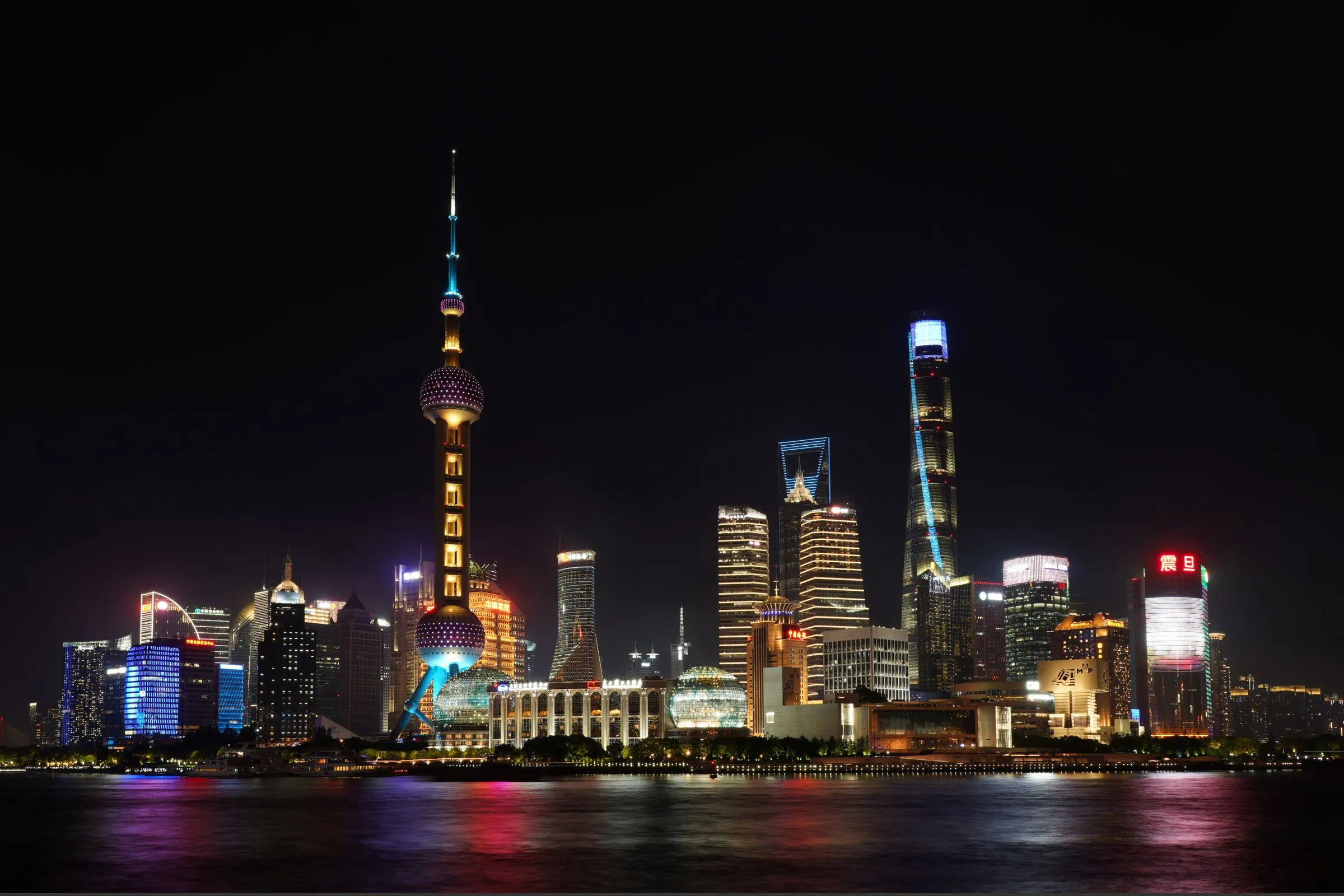
For the 2026 crossover, Shanghai’s city appearance authority stated the rule plainly: the Bund, North Bund and Little Lujiazui do not stage cross-district light shows and do not use landscape lighting for a midnight countdown. Shanghai Metro closes East Nanjing Road station (Lines 2 and 10) and Yuyuan Garden station (Line 14) from 8 pm on December 31, and the roads around the waterfront close to vehicles from 8 pm to 1 am. The crowd still comes. The Bund on New Year’s Eve is packed shoulder to shoulder with people photographing the skyline of Pudong. What it is not is a programmed event.
The history explains the present. The Bund’s era of official light-show countdowns ended with the 2014 season, and after the crowd crush on December 31, 2014, the city settled on its current model: no official events, heavy crowd engineering, transit closures at the edges. A guide promising a “Bund New Year countdown light show” is describing something that stopped about a decade ago.
Guangzhou runs the same posture with an annual reminder. For the 2026 crossover the city named Beijing Road, Dongshankou, Canton Tower, Yongqingfang, Huacheng Square and both banks of the Pearl River as having no organized countdown of any kind, with security and traffic controls in effect and hydrogen balloons, sky lanterns and unpermitted drones prohibited. The Canton Tower keeps its tower lights on through midnight, which is a photo backdrop rather than a show with a program.
What you can book instead:
- Shanghai BFC countdown night. The Bund Finance Center, inside the greater Bund area, runs a commercial crossover party with a light show, performances and an organized midnight countdown.
- Shanghai Tower first light. The observation deck sells a 6:52 am January 1 slot to watch the year’s first sunrise from China’s tallest building.
- Pearl River countdown cruise. Guangzhou operators run New Year sailings from the Dashatou and Tianzi piers: a boat, the skyline, a legal midnight toast.
- City activity calendars. Shanghai and Guangzhou each publish hundreds of official New Year events in mid-December. None of them is a square countdown.
Beijing’s official countdown, which you cannot attend
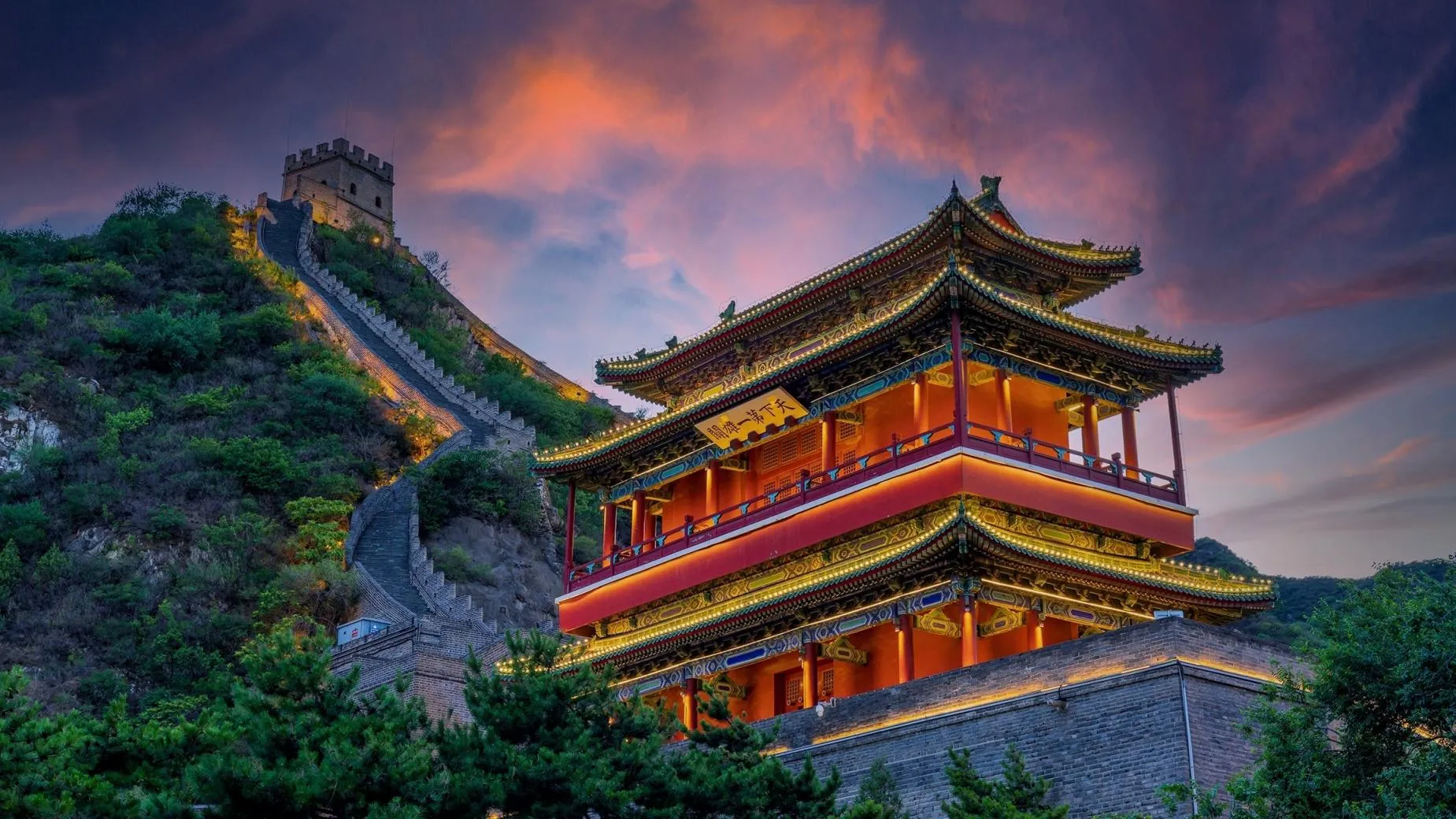
Beijing runs the country’s flagship official countdown, fourteen editions since 2011, with the headline venue rotating among the Forbidden City, the Temple of Heaven, the Great Wall and Shougang Park. For the 2026 crossover it split into two stages for the first time: the Great Bell Temple and Juyongguan Great Wall, under the theme of bells and drums ringing together, with seven satellite countdown sites across commercial districts and public screens citywide.
At midnight the Yongle Bell, cast in the early 1400s, sounds 108 strokes from the Great Bell Temple. The temple’s explanation counts them as 12 months, 24 solar terms and 72 pentads: a calendar ringing itself closed. At Juyongguan, drum arrays answer the bell while an augmented-reality show walks the wall through constellations and galloping horses. Seven European mayors delivered video greetings, and the night doubled as the premiere of the city’s inbound-tourism film, “Beijing Gets Me.”
The part almost no English-language guide mentions: the two headline venues are invitation-only. The official announcement said that due to limited venue capacity, the Great Bell Temple and Juyongguan admit invited representatives from various professions and are not open to the public, directing residents to the neighborhood countdown sites. For a visitor in Beijing on December 31, the real menu is:
- Badaling Great Wall night session, roughly 6:30 pm to midnight, from ¥99: the wall lit, performances on the towers, and a first-light-of-the-year sunrise option the next morning. It pairs well with a Great Wall hiking plan.
- Museums after dark. Twenty-six museums ran late New Year’s Eve hours in 2026, including the Capital Museum and the Beijing Planetarium.
- Cinemas and concerts. Nearly a hundred cinemas screened midnight sessions with an on-screen countdown, and the city’s New Year concert series ran 69 performances, including the 30th Beijing New Year Concert.
- The seven satellite sites with big screens: Wukesong Hi-Up, Shougang Park, Solana, Tongzhou Wanli, Daxing Huiju, Gubei Water Town and Wanping Fortress.
One distinction worth keeping straight: Beijing’s 108 strokes count the calendar. Suzhou’s, in the next section, count away 108 afflictions. Same number, different philosophies, both at midnight.
Where the fireworks actually are
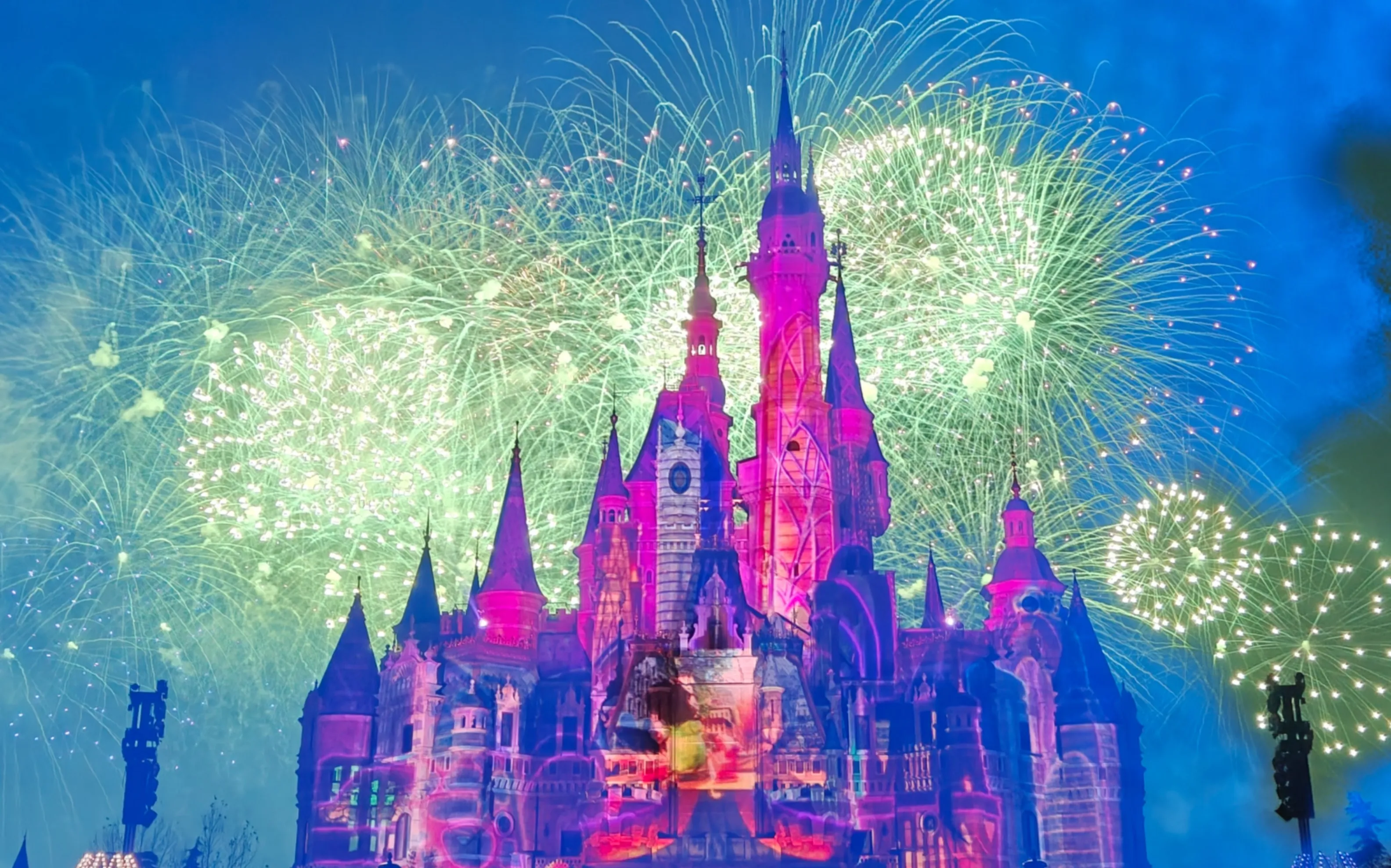
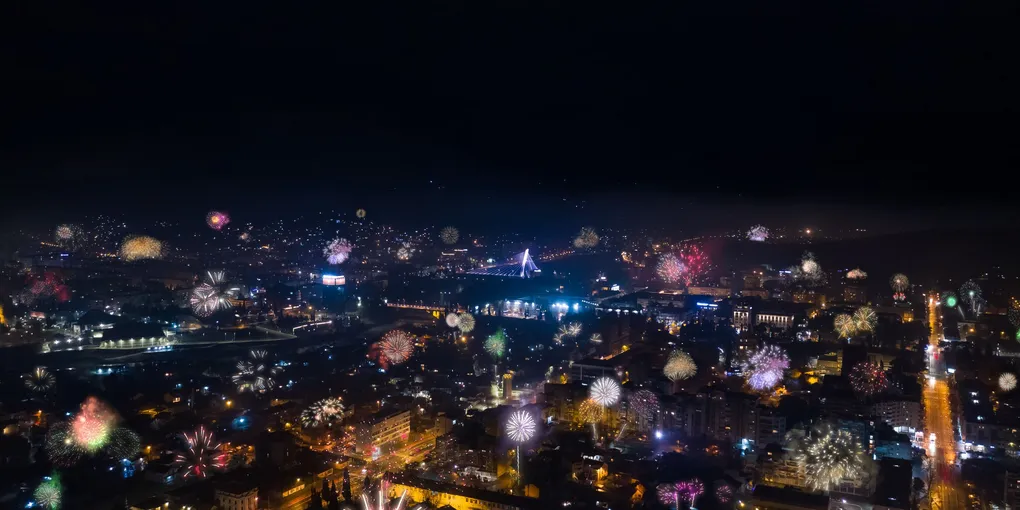
Street fireworks in Chinese metropolises are functionally finished (more on the ban below), which pushes the midnight spectacle into ticketed venues. The booking data points hardest at theme parks:
- Shanghai Disney: extended hours and a special-edition castle fireworks show for the crossover. New Year ticket bookings for 2026 were up 5.2 times year on year, the strongest jump of any attraction in the country. Our Disneyland guide covers the regular castle show and ticket tiers.
- Beijing Universal Resort: New Year heat roughly tripled year on year.
- Beijing Happy Valley: a fireworks night running until midnight, with a crowd countdown and wish balloons.
- Shenzhen Window of the World: the park’s Eiffel Tower replica as backdrop, zero-hour tech fireworks plus a drone show, night tickets around ¥120.
- Zhuhai Chimelong: named in Tongcheng’s 2026 New Year report as a magnet for visitors waiting for midnight fireworks.
The other visual language of the modern Chinese crossover is the drone and building-light show, the fireworks substitute cities can stage inside a ban. Shenzhen’s Civic Center show ran three sessions a night (7, 8 and 9 pm) across 43 buildings from December 31 through January 3, free with a reservation through the Futian night-view mini-program, or watchable without one from the top of Lianhuashan park. One caveat for 2027: the show paused on April 30, 2026 for system upgrades, with resumption expected around October 1. Confirm it is running before planning the night around it, and see our Shenzhen guide for the city’s wider light-show map.
Cities also stage approved fireworks of their own. Shanghai’s Baoshan riverside ran a themed display for the 2026 New Year, and concert promoters embed midnight fireworks in crossover shows, as one Guangzhou stadium concert did. The reliable rule: if fireworks go off at midnight in a big Chinese city, someone sold a ticket for it or someone approved a permit for it.
The Hanshan Temple bell, and the ticket gauntlet
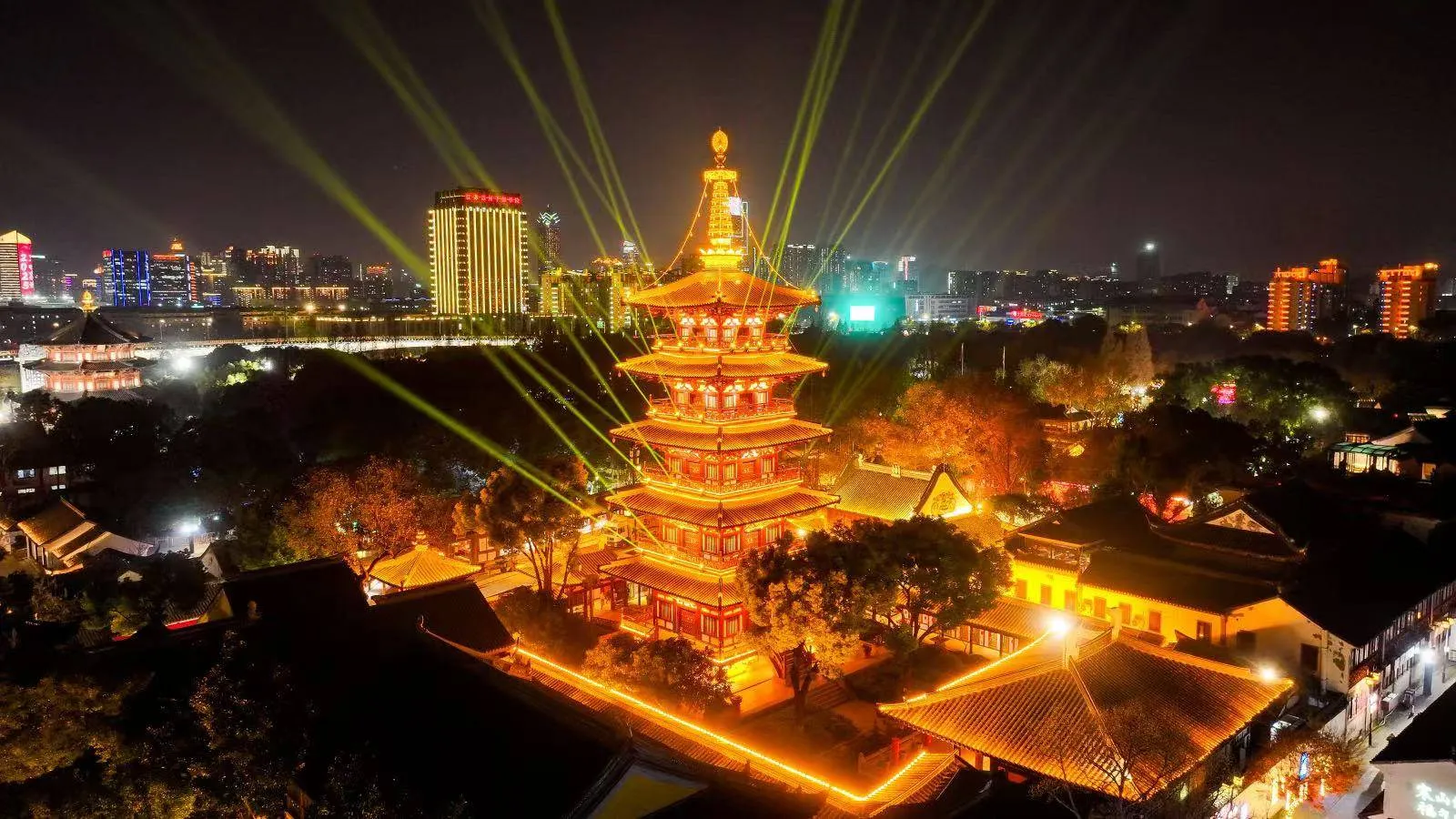
The most atmospheric crossover in China for a foreign visitor may be a Tang-dynasty temple outside Suzhou. Hanshan Temple’s New Year bell ceremony has run every December 31 since 1979: the 47th edition rang in 2026, so the 48th falls on December 31, 2026, expected. Since 2008 the strokes have come from a 108-ton Tang-style bronze bell. The abbot strikes the first stroke at 11:42 pm, the 108th lands exactly at midnight, one stroke every eight seconds, and the old year counts out to a bronze echo. The ceremony exists because of a poem every Chinese schoolchild knows, Zhang Ji’s “Mooring by Maple Bridge at Night,” which ends with a traveler hearing this temple’s midnight bell from his boat. Japanese travelers have been the ceremony’s traditional foreign audience for decades.
Getting in is the hard part. The rules from the 47th edition should carry over:
- The inner-field ticket costs ¥100, real-name, online only. There is no walk-up box office; the official announcement explicitly lists a passport as valid ID for real-name purchase.
- Sales open just three days ahead: December 28, 29 and 30 at 10 am daily, closing December 30 at 3 pm, through the “Jun dao Suzhou” culture platform (mini-program).
- A separate free reservation covers the outer garden-fair area; the Maple Bridge scenic street stays open to walk-up visitors.
- The run of show is fixed: 11:33 pm opening, 11:37 the mayor’s New Year address, 11:42 the first stroke, midnight the 108th, done by 12:06 am.
- Suzhou Metro runs every line overnight, with dedicated post-midnight dispersal buses.
- The 47th edition ran under extra capacity controls because of bridge construction on the approach; the 48th announcement will confirm whether they continue.
The trap to know: on December 31 the temple’s daytime hours shrink to 7 am to 2 pm, with last entry at 1 pm. Arrive mid-afternoon to photograph the grounds before the ceremony and you will find closed gates. Hanshan sits 30 minutes from Shanghai by high-speed rail, an easy Suzhou day trip to build a crossover around.
A Hangzhou correction while we are among temples: Lingyin Temple has no New Year’s Eve ceremony. Its big night is Spring Festival eve, 10 pm to 2 am, with a ¥200 combined ticket that includes Feilai Peak. The New Year’s bell in Hangzhou belongs to Jingci Temple, the “Nanping Evening Bell” of the West Lake’s ten classic scenes, reservation required, with each December’s announcement carrying the details.
The fireworks ban in one minute
City governments may ban or restrict fireworks under the national Fireworks Safety Regulations. The arc since 1993: citywide bans spread (282 cities had written them at the historical peak), a partial walk-back followed, the strictest wave landed around 2018, and since a December 2023 review by the legislative affairs committee of the National People’s Congress found blanket bans inconsistent with higher law, a managed thaw has spread. The thaw is narrow. Beijing bans lighting inside the Fifth Ring Road year-round, Shanghai inside the Outer Ring, Shenzhen citywide, Hangzhou in its four core districts. Individual violators face fines of ¥100 to 500.
The relaxation windows that do exist are tied almost entirely to Spring Festival; Chengdu’s model opens lighting on the eve and the first, second and fifteenth days. New Year’s Eve is essentially never included. A street full of amateur fireworks on December 31 is something Chinese cities now engineer away. The practical translation: plan for light shows, drones and bells, and if fireworks matter to you, buy the ticket that includes them. Our Spring Festival guide covers the February windows.
The Harbin window
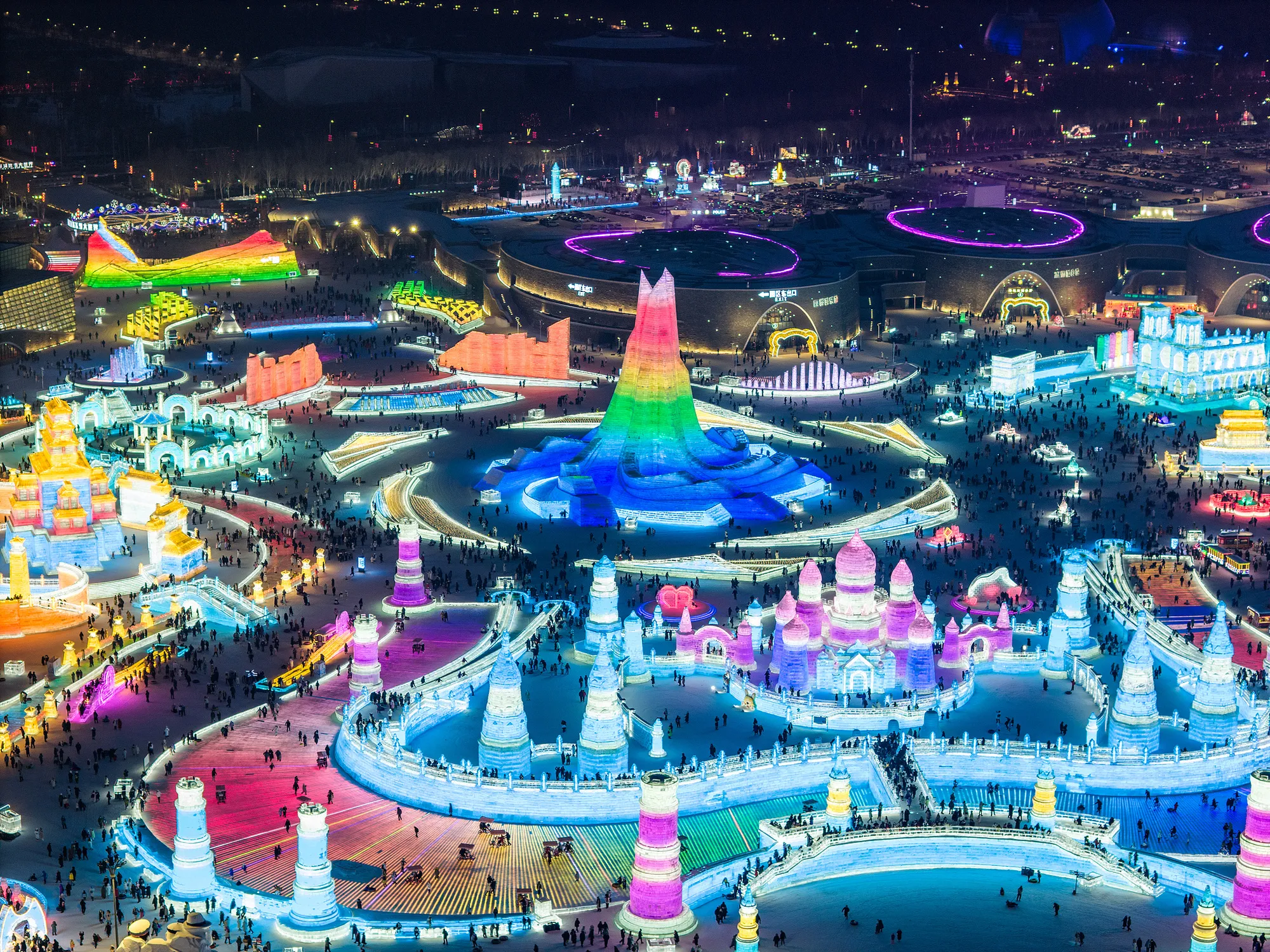
Harbin’s Ice and Snow World operates late December through early March. The 27th edition opened December 17, 2025, with a ¥298 opening-week price stepping up to the standard ¥328. The 28th edition is expected in mid-to-late December 2026 on the recent pattern, and the opening date is typically announced only days ahead. New Year’s Eve lands about two weeks into the season: fully built, past the opening rush, and still weeks from the Spring Festival peak, a sweet spot the Ice and Snow World guide and the Harbin city guide cover in detail.
Two practical notes. Harbin Taiping airport is Heilongjiang’s only port in the 240-hour transit-visa-free scheme, so the whole northeast loop can be done without a visa for the 57 eligible nationalities. And the park closed for two days in February 2026 for extreme weather, a reminder that a Harbin itinerary in late December wants a flexible day.
Booking timeline, and the inbound surprise
The domestic rhythm runs on a tight clock:
- Early December: search interest jumps; Tongcheng logged a 280 percent rise in New Year search heat as December began.
- Mid-December: concert-city hotels tighten. Hotels around Guangzhou’s crossover stadium show sold out about two weeks ahead, with nearby rates up thirteenfold on the concert alone.
- Late December: the short ticket windows open: Hanshan December 28-30, Shenzhen light-show reservations, midnight cruise seats.
- December 31: the peak night for room rates, with January 1 check-ins easing.
For calibration, the 2026 booking data: hot-city hotel orders up more than three times year on year (Qunar), over half of stays crossing provinces (Ctrip), homestay orders up 169 percent with overall prices stable (Muniao). No official body publishes percentage surges for New Year hotel rates, so treat December 31 simply as the peak night and book by early December, following the timing logic in our hotel booking guide.
The surprise of the 2026 New Year was inbound travel. Entry tickets sold through Ctrip rose 110 percent year on year, and inbound experience products were up more than thirty-fold. Hainan, running its first mini-holiday since the island’s December 18, 2025 customs closure, saw Sanya inbound orders up 170 percent, with Haikou and Sanya the country’s two fastest-growing cities for inbound flights. A warm-island crossover, beach at 22°C in January plus duty-free shopping, became a popular import; our Sanya guide covers the island angle.
One more thing the state does for you: Beijing, Harbin, Jinan, Shanghai, Chengdu and Fuzhou officially extend public transport hours on December 31, and Suzhou runs its metro all night. A midnight far from your hotel is a solved problem in the major cities.
Three ways to spend the weekend
- The city crossover. Shanghai, Beijing or Shenzhen as a single deep weekend. Pick one organized night (Disney, the BFC party, Badaling, a museum late-night), walk the no-countdown waterfronts for free atmosphere, and let the extended metro carry you home.
- The ice window. Harbin for three days: Ice and Snow World, Central Avenue, optionally Yabuli or Snow Town. The coldest and most photogenic option, timed to the season’s calm before Spring Festival.
- The warm island. Sanya or Wanning: January mean of 22.3°C, duty-free shopping after the customs closure, priced between autumn and the Spring Festival peak.
The verdict
New Year’s Eve in China is a city festival wearing a national holiday’s clothes. The square countdowns and street fireworks are gone, by design, and what replaced them suits visitors better than what came before: ticketed spectacles that run on schedule, a bell ceremony with twelve centuries of poetry behind it, late-running metros, and crowds you can move through. Book the two or three things that need booking by mid-December, treat the official-notice calendar (holiday dates in November, city programs in mid-December) as your refresh signal, and use the five-week runway to Spring Festival to plan the sequel.
Sources & verification
Every claim in this guide traces to a named Chinese-language source. Categories:
- Government and official: State Council Office holiday notice (November 4, 2025, gov.cn); Ministry of Culture and Tourism New Year data release (January 4, 2026); Shanghai Greenery and City Appearance Bureau New Year notice (December 30, 2025); Shanghai Municipal Government traffic advisory (December 29, 2025); Shanghai Metro station-closure notice; Guangzhou authorities’ crossover reminder (December 26, 2025); Suzhou Culture, Radio, Television and Tourism Bureau event page (47th bell ceremony); Harbin Ice and Snow World official announcements (27th edition opening).
- State media: People’s Daily (Beijing countdown report, Shanghai activity list); Xinhua (Beijing New Year program); Economic Information Daily (inbound travel data, Hainan closure); China Aviation News (Tongcheng 2026 New Year report in full).
- Regional and city media: Beijing Daily and The Beijing News (Beijing programs); Southern Metropolis Daily (Guangzhou no-countdown reminder); Dazhong.com and South+ (Shenzhen crossover guide); Tidenews (thirty-year fireworks policy history).
- Reference and practical: Baidu Baike entries on the Hanshan ceremony, the fireworks bans and Ice and Snow World; Suzhou and Hangzhou Bendibao pages (ticket windows, temple hours).
- Platform data, as reported by the above media: Ctrip, Qunar, Tongcheng, Tuniu, Mafengwo, Tujia, Fliggy, Muniao, Umetrip.
- Independently computed: January 1, 2027 falls on a Friday (calendar check); the 48th Hanshan edition and 28th Ice and Snow World edition follow from the edition timelines.
- Expected items and when to recheck: the 2027 holiday notice (November 2026), the 48th Hanshan announcement (December 2026), the 28th Ice and Snow World opening (announced days ahead in December 2026), the Shenzhen Futian light-show resumption (around October 1, 2026).
Last full review: September 2026. This guide will be updated when the November notice lands and as city programs are announced in December.