Nanjing Travel Guide (2026): Three Capitals, Visa-Free, 45 Minutes from Shanghai
Nanjing was China’s capital three separate times. The Six Dynasties built their southern capital here between the 3rd and 6th centuries. Hongwu, the founding emperor of the Ming, ruled from here for the first 52 years of the dynasty before his son moved the court to Beijing in 1420. The Republic of China governed from Nanjing from 1927 to 1949. Most foreign travelers pass through on the way to Shanghai and never stop. They miss one of the longest Ming city walls still standing, a Buddhist relic enshrined inside a spent quarry, a bookstore built into an underground air-raid shelter, and a district of 1930s villas the Republic left behind. Nanjing Lukou airport is a 240-hour visa-free port, and the high-speed train from Shanghai takes about 45 minutes.
How we verified this: SinoWander reads Chinese-language sources that English guides cannot, including official scenic-area WeChat booking notices, the Presidential Palace ticket policy page, 12306 rail schedules, and Ctrip. We cross-check them before writing. We have not personally visited every location. Each guide is date-stamped when last verified: 2026-08-06. See our methodology.
Visa-free entry at Nanjing Lukou (NKG)
Nanjing Lukou International Airport is port number 13 on China’s 240-hour transit-visa-free list. Citizens of 57 countries, most of Europe plus the United States, Canada, Australia, Japan, Korea and a handful of others, can enter without applying for a visa, stay up to 10 days, and travel freely across all of Jiangsu province. The one condition is an onward ticket to a third country, because this is a transit waiver rather than a standalone visa.
If your passport is one of the 50 countries on China’s unilateral visa-free list (France, Germany, Malaysia, Australia and so on), you skip even that condition and get 30 days. The full country list and how each route compares is in our 240-hour transit guide and visa-free countries list.
A city built in layers
Three regimes built their capital on this same ground, one on top of the next. The Six Dynasties period gave Nanjing its “ancient capital” label. Hongwu, the Ming founder, chose it as his first capital in 1368, and his tomb, Ming Xiaoling, is still here. The Republic of China ran the country from Nanjing between 1927 and 1949, and the presidential palace and the tree-lined villas from those years survive.
The city also carries 1937. The Memorial Hall of the Victims in the Nanjing Massacre is free, but you must book ahead, and passport holders reserve on site at the visitor service center. It closes Mondays. The posted rules are enforced: stay quiet, dress plainly, leave anything out of step with the place outside. It is one of three internationally recognized WWII massacre memorials and draws more than six million visitors a year. Give it two hours and treat it as a main reason you came, not a stop on a list.
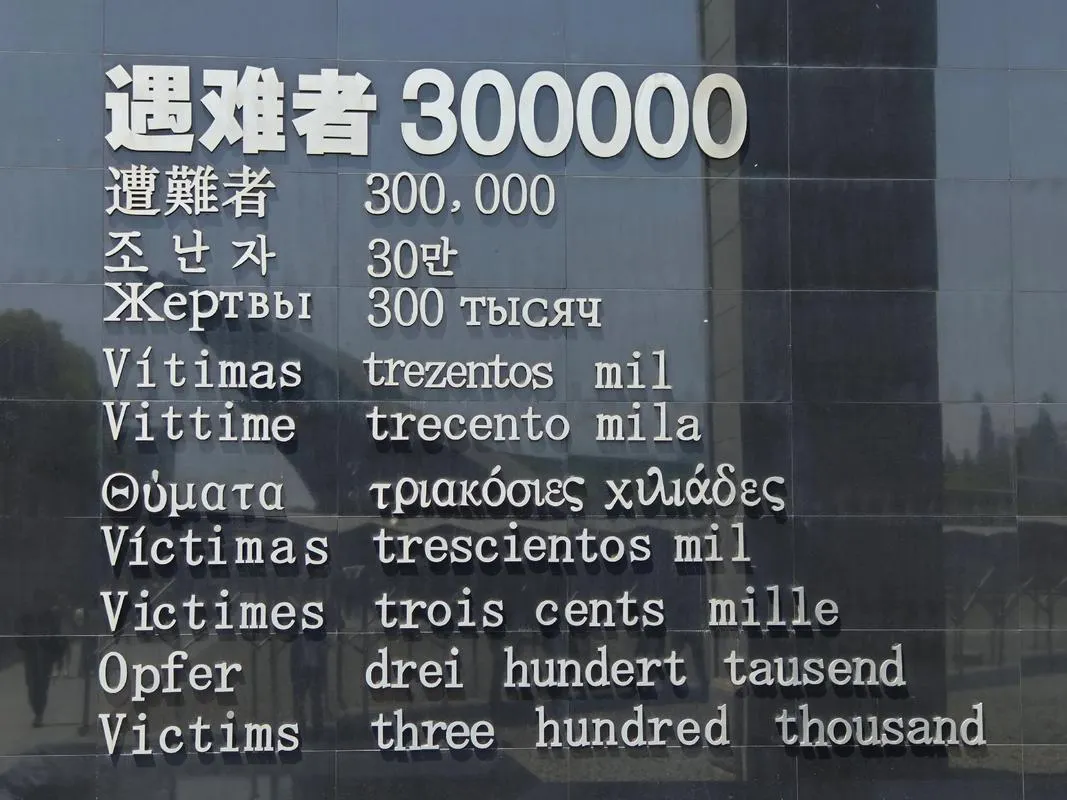 The memorial’s engraved death toll. Entry is free but you must book ahead, and the dress-and-conduct rules are enforced.
The Zhongshan cluster: one ridge, four sights
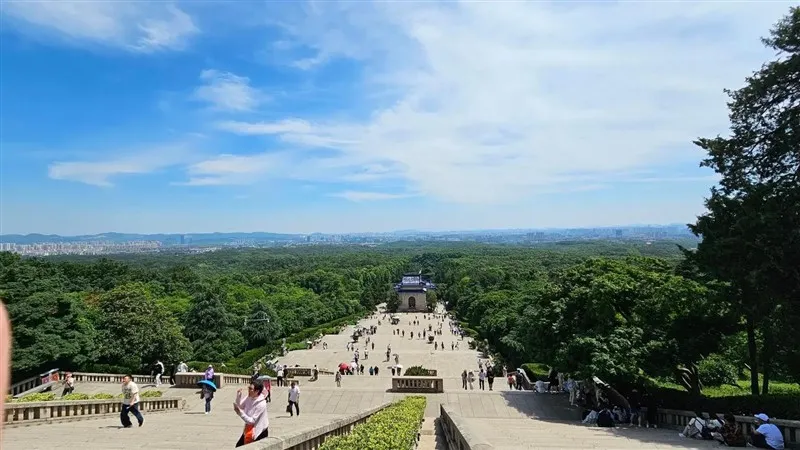
The wooded ridge east of the old wall holds Nanjing’s main sights, and three of them share a combined ticket. Sun Yat-sen Mausoleum is free but requires a timed reservation, booked one to seven days ahead on the “Nanjing Zhongshan Scenic Area” WeChat account, and it closes Mondays. Ming Xiaoling, the UNESCO-listed tomb of the Ming founder, costs ¥70 and includes Plum Blossom Mountain. In late February and early March, 40,000 plum trees bloom, the largest plum grove in China.
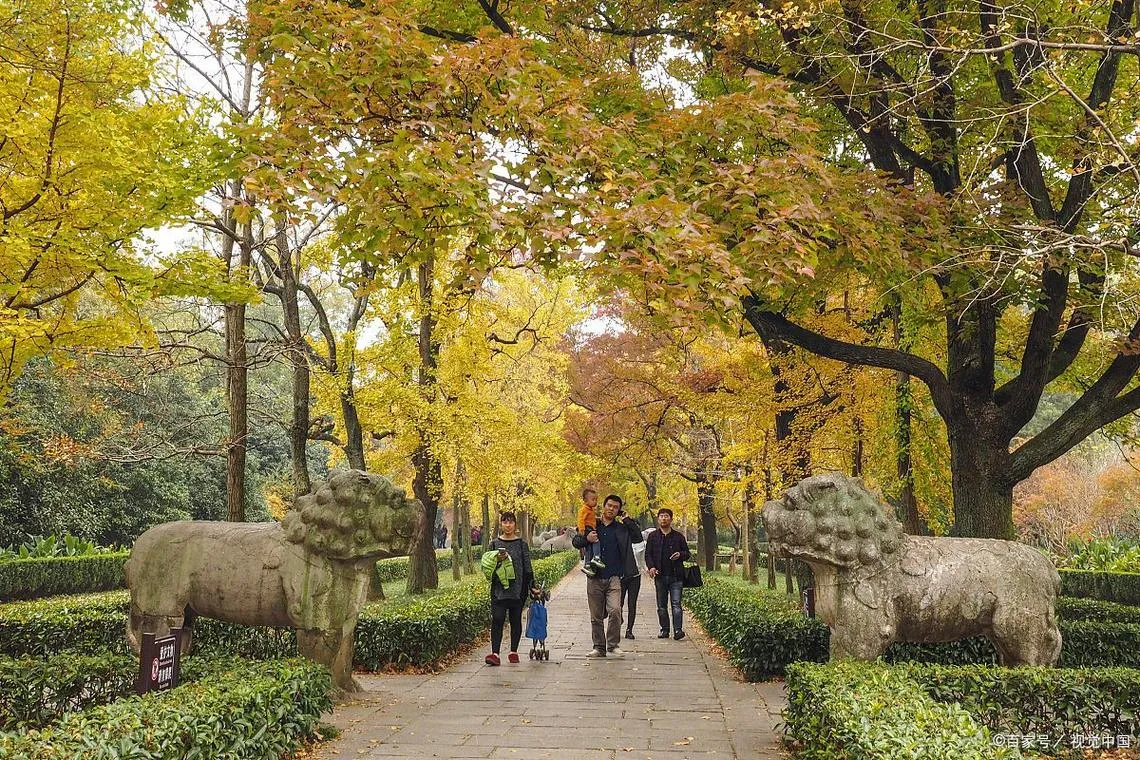 The spirit path at Ming Xiaoling, the Ming founder’s UNESCO-listed tomb — Plum Blossom Mountain sits on the same grounds.
A four-site pass at ¥100 covers Ming Xiaoling, Linggu Temple (¥35 separately), the Music Stage (¥10), and Meiling Palace (¥30). Buying each on its own adds up to ¥145, so the pass saves ¥45 if you want at least three of the four.
The Presidential Palace sits just west of the old wall. Admission is ¥35, closed Mondays. Foreign visitors on a passport cannot book through the WeChat mini-program, because the system only takes Chinese ID cards. Go to the ticket window at the entrance and buy a paper ticket. The palace posts this on its site, and it has been policy since 2023.
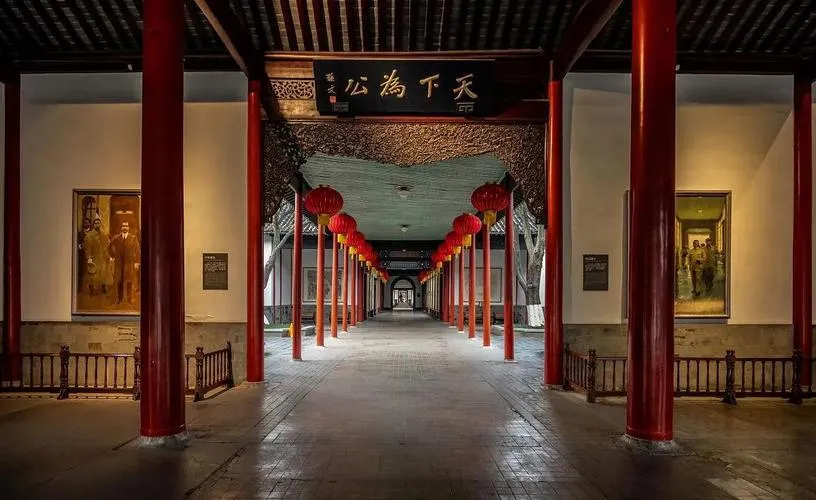 Inside the Presidential Palace. Passport holders can’t book online — buy a paper ticket at the entrance window.
Niushoushan and the skull relic of the Buddha
Twenty minutes south of center, Niushoushan is built around a single object: a fragment identified as the parietal bone of the historical Buddha, enshrined in 2015 and the only one known to exist. The hall that holds it, Usnisa Palace, was carved out of a disused mine pit. It covers 136,000 square meters across nine levels, three above ground and six below. The architecture alone is worth the ¥160 ticket (¥80 for students). Book through the “Digital Niushou” mini-program.
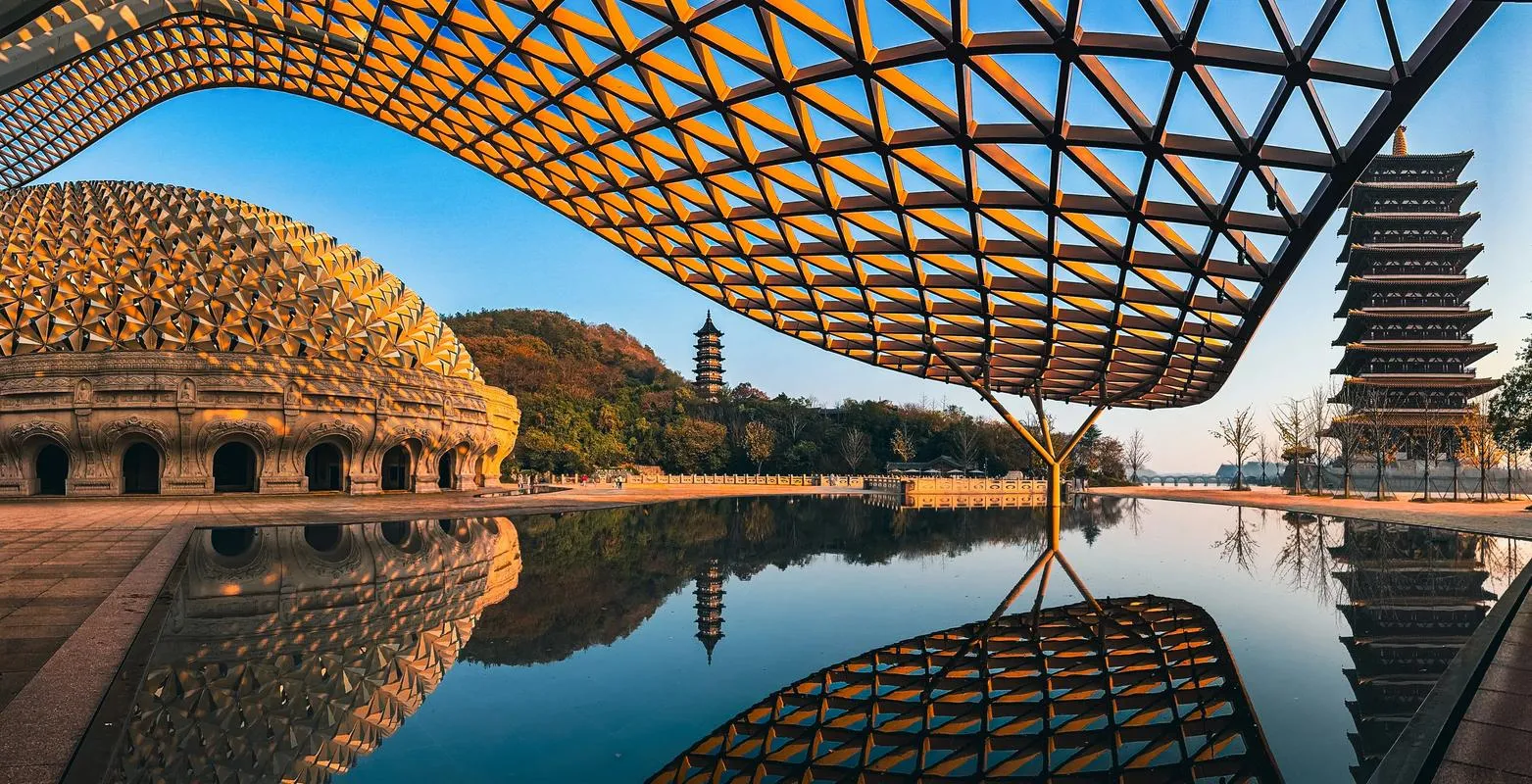 The reclining Buddha inside Usnisa Palace, carved into a disused quarry at Niushoushan.
What to eat
Nanjing’s saying is that duck dishes rank first under heaven, and the city means it. Salted duck, also called osmanthus duck because the best is cured around the autumn osmanthus bloom, is the signature. Order a plate in a restaurant for about ¥20 to ¥40 for a quarter bird, or buy a whole one vacuum-packed for ¥40 to ¥50. Duck-blood vermicelli soup is the everyday street bowl at ¥15 to ¥18, duck blood and offal in a clear broth with glass noodles.
Over in the Muslim quarter at Qijiawan, Li Ji’s beef potstickers run about ¥12 per liang, five crescent-shaped pieces pan-fried crisp, the recipe listed as Jiangsu intangible heritage. The “Eight Qinhuai Delicacies” is the formal name for the old snack set around the Confucius Temple area. A normal dinner at a mid-range Nanjing restaurant runs about ¥80 to ¥120 per person.
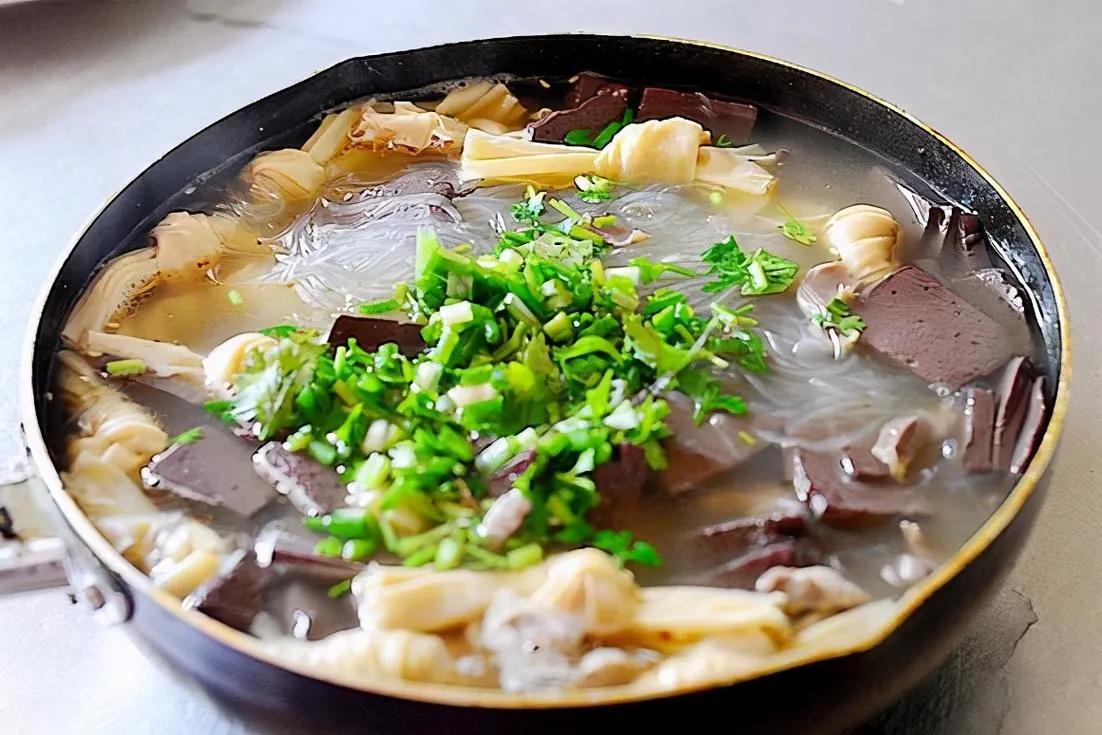 Duck-blood vermicelli soup, about ¥15 to ¥18 a bowl.
Three walks most English guides skip
The Ming city wall. Just over 25 kilometers of the original 35-kilometer wall still stands, one of the longest brick-and-stone city walls surviving anywhere. Xi’an’s is the most complete; at 25 kilometers, Nanjing’s is longer. You can walk the ramparts. Zhonghua Gate, the largest surviving bastion with three concentric courtyards, costs ¥50. The Taicheng section overlooking Xuanwu Lake costs ¥30. The City Wall Museum is free with reservation and became a national first-class museum in 2024.
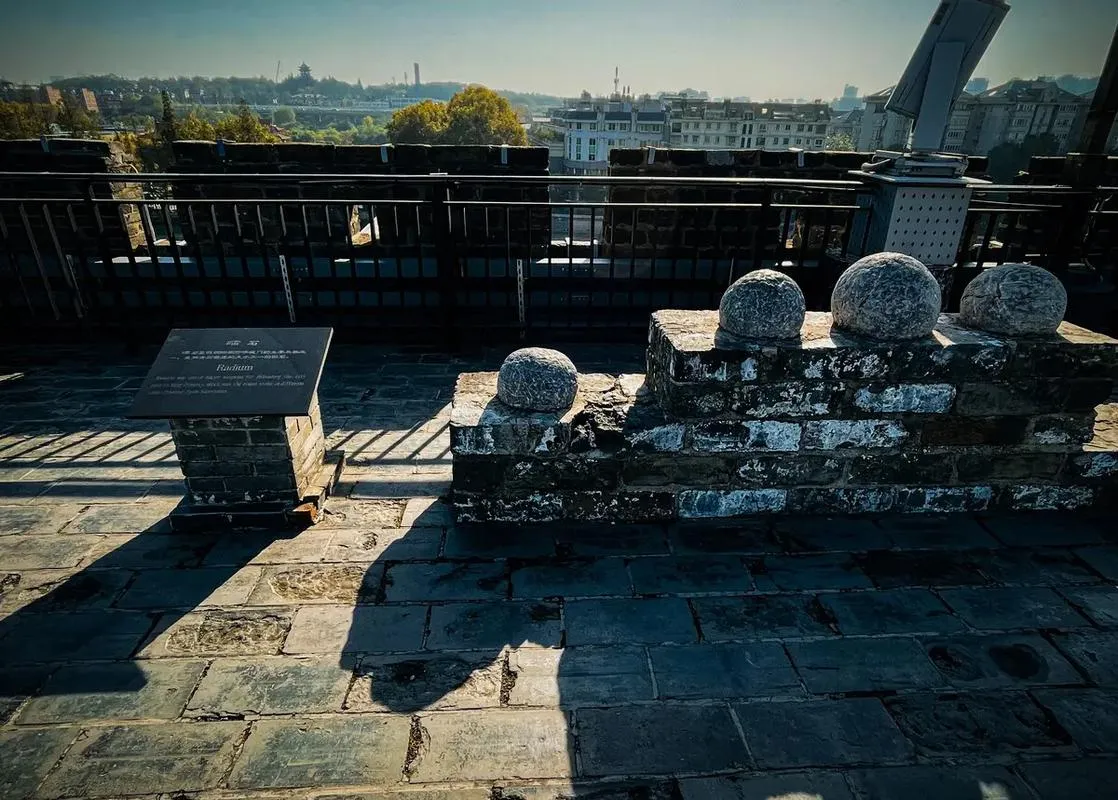 Zhonghua Gate’s ramparts. At 25 km, Nanjing’s Ming wall is one of the longest still standing.
A bookstore in an air-raid shelter. Librarie Avant-Garde, founded in 1996, runs its flagship out of a converted civil-defense tunnel under Wutaishan Stadium. It was once an underground war-preparedness bunker, nearly 4,000 square meters, and the architect Chen Weixin set the bookshelves into the existing arched lining to form nine vaulted bays. Entry is free, and it stays open until midnight. CNN named it China’s most beautiful bookshop; the BBC and National Geographic each put it on a world top-ten list. In 2025 the store banned Polaroids and commercial photo shoots to push back at the influencer crowd. Go to read.
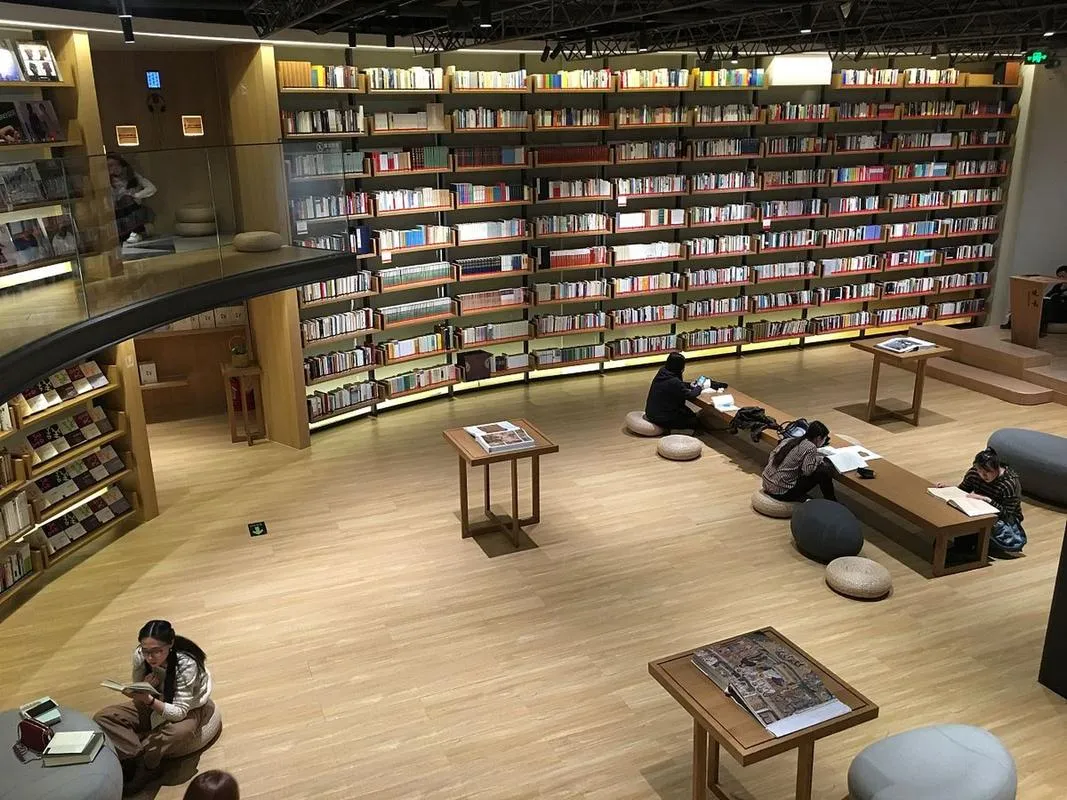 Librarie Avant-Garde, a bookstore built into a former civil-defense tunnel under Wutaishan Stadium.
A 1930s villa district. The Yihe Road district, laid out in the 1929 Capital Plan, is the largest surviving cluster of Republic-era villas in China, 264 protected buildings in Spanish, French Mansard, English Tudor and Japanese styles on lots held to 20 percent density. The public streets are free to wander. The restored Twelfth Block takes a reservation and won a UNESCO Asia-Pacific heritage award. Former residents include Yan Xishan at No. 8, Gu Zhutong at No. 34, and the Marshall Residence, which later housed the International Committee of the Nanjing Safety Zone. The Yihe branch of Librarie Avant-Garde sits inside the block.
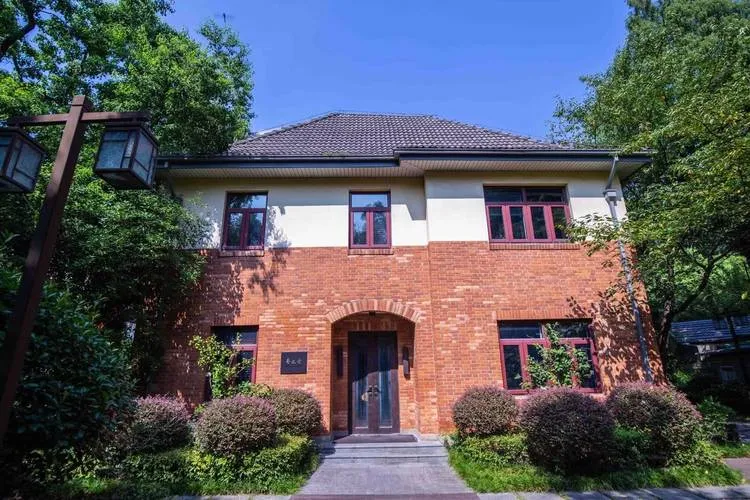 A 1930s villa on Yihe Road, part of China’s largest surviving Republic-era villa district.
When to come
Spring (March to May) and autumn (September to November) are the best windows. Plum blossoms peak in late February at Plum Blossom Mountain. Cherry blossoms follow in March and April at Jiming Temple and Xuanwu Lake. The maples at Qixia Mountain turn red through November and December. Skip July and August if you can. Nanjing is one of China’s “four furnaces,” with sticky heat over 35°C and the plum-rain downpours in June and early July.
The Jiangnan triangle
Nanjing is the third corner of the lower Yangtze triangle, and the high-speed rail makes all three easy to combine. Nanjing to Shanghai is about 45 minutes. Nanjing to Hangzhou is one hour on the Nanjing-Hangzhou line, ¥141 in second class. Suzhou sits between Shanghai and Nanjing on the same corridor. With ten days, run Shanghai to Suzhou to Nanjing to Hangzhou on one through-ticket. Our Suzhou day trip and Hangzhou day trip guides cover the other two corners.
Getting in and around
🏨 Book your stay: Search Nanjing hotels on Trip.com (passport-friendly, foreign-card payment). Stay near Xinjiekou or the Zhongshan scenic area for walkable access.
From the airport. Metro Line S1 runs from Lukou Airport to Nanjing South Station in 35 to 40 minutes for ¥6 to ¥7. Change there for Lines 1, 3, or S3 into the center. Nanjing was the first Chinese city to put every one of its districts on the metro.
By high-speed rail. Nanjing South is one of Asia’s largest stations. Direct service runs to Beijing in 3 hours 24 minutes on the G66 at 350 km/h, to Shanghai in about 45 minutes, and to Hangzhou in about an hour. Book on Trip.com or 12306. More than 60 trains a day run Nanjing to Hangzhou.
Payments and practical. Set up Alipay or WeChat Pay before you land, and install the apps you will need. For booking a hotel as a foreigner, see our guide to hotels in China. For the common tourist traps, the scams guide.
Sources & Verification
This guide was last verified on 2026-08-06. Key Chinese-language sources:
- 钟山风景名胜区 (Zhongshan Scenic Area, official WeChat account): Timed-entry reservations for Sun Yat-sen Mausoleum, free, bookable one to seven days ahead, closed Mondays; also the source for the four-site pass pricing at Ming Xiaoling, Linggu Temple, the Music Stage, and Meiling Palace.
- “Digital Niushou” (牛首山) WeChat mini-program: Official booking channel for Niushoushan and Usnisa Palace, source for the ¥160 adult / ¥80 student ticket.
- 总统府 (Presidential Palace, official site): The ticket policy stating passport holders cannot book through the WeChat mini-program (Chinese ID cards only) and must buy a paper ticket at the entrance window, in effect since 2023.
- 12306 (China Railway, 12306.cn) and Ctrip / Trip.com: High-speed rail schedules and fares cited here, including the G66 Nanjing to Beijing in 3 hours 24 minutes, Nanjing to Shanghai in about 45 minutes, and the ¥141 second-class Nanjing to Hangzhou fare.