Huangshan Travel Guide (2026): Tickets, Sea of Clouds, Cable Cars, and Summit Sleeps
Most English guides to Huangshan recycle three facts: granite peaks, ancient pines, a sea of clouds. The details foreign visitors need at booking time stay locked in Chinese: that the official booking platform now takes foreign passports the same way it takes Chinese ID cards, that one entry ticket covers three days, that the summit started renting tents for ¥130 a night in July 2026, and that the sea of clouds is mostly a winter event while English-language advice sends you in autumn. This guide covers all of it, with prices and dates checked against the official announcements as of August 2026.
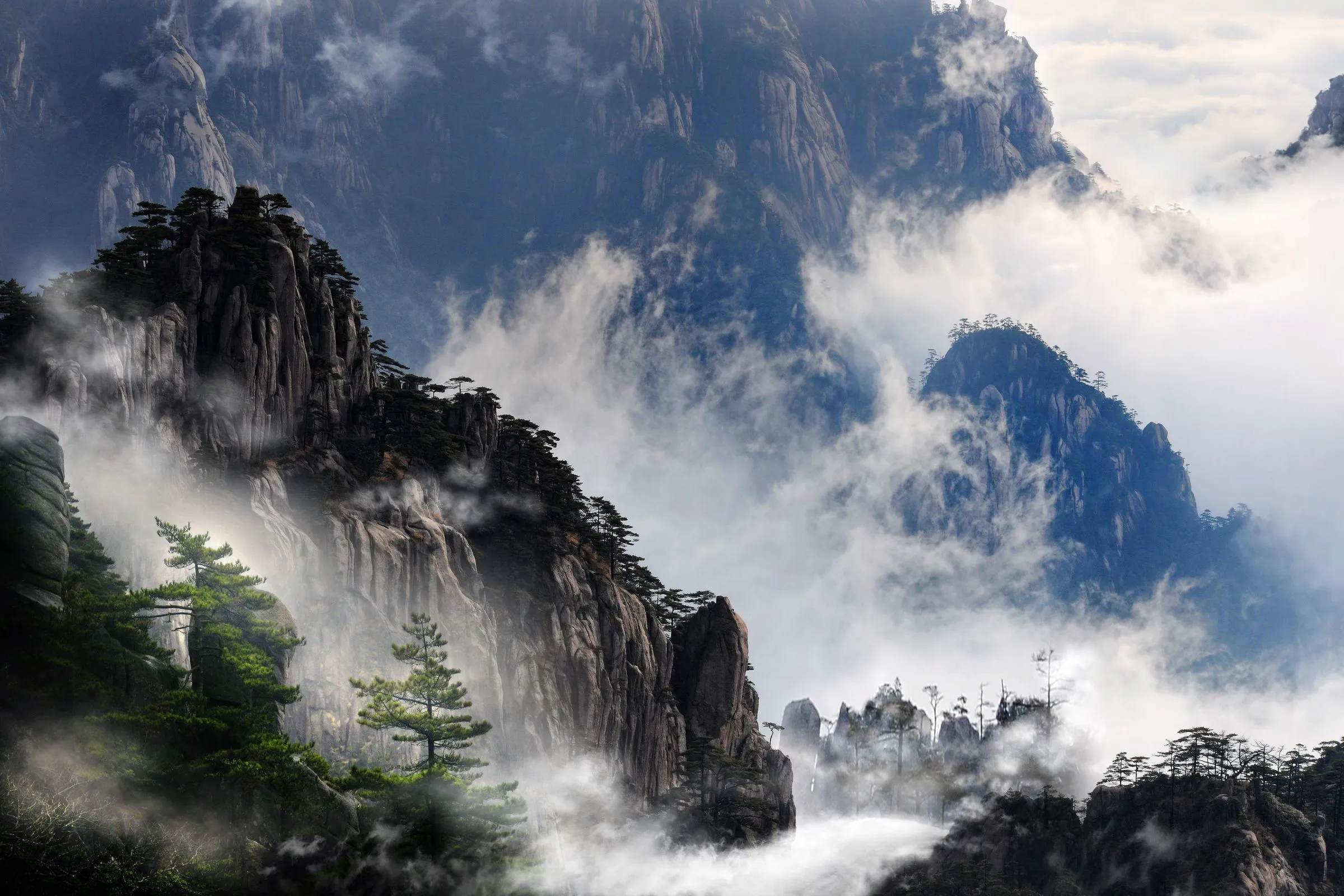 Granite summits wrapped in fog, with Huangshan pines clinging to the rock: the view that sits 2.5 hours from Shanghai by train.
Quick answer: Huangshan (the Yellow Mountain) sits in Anhui province, 2.5 hours from Shanghai by bullet train. Foreign visitors can book tickets online through the official WeChat mini-program or its partner OTAs, with the same access as Chinese ID holders; expect friction (the mini-program wants a mainland phone number), so Trip.com is usually the smoother route, and there is a staffed window fallback at the gates. Entry costs ¥190 in the regular season, and one ticket is valid for three days of re-entry. Huangshan Tunxi airport (TXN) is one of the 65 ports accepting 240-hour visa-free transit, so “Shanghai in, Huangshan, Hong Kong out” is a legal routing. The sea of clouds is most frequent from November through May. See our 240-hour visa-free guide and China bullet train guide.
How we verified this: SinoWander reads the original Chinese documents that English guides cannot: the Anhui Development and Reform Commission’s pricing approval for the new East Sea Cableway, the scenic area management committee’s 2026 announcements on typhoon closures and peak-rest rotations, the National Immigration Administration’s port lists, and weather statistics published jointly by China Weather Network and the Huangshan meteorological station. Claims were cross-checked against foreign travelers’ first-hand reports from 2025 and 2026. Each guide is date-stamped when last verified: 2026-08-24. See our methodology.
Getting There: Two Stations with Almost the Same Name
Since the Chihuang high-speed line opened in April 2024, Huangshan has two bullet-train stations, and picking the wrong one costs you an hour.
Huangshanxi (黄山西站, Huangshan West) is the one you want. It sits 16 km from the North Gate, about 22 minutes by road. Huangshanbei (黄山北站, Huangshan North) is the older hub, roughly 50 km and an hour from the South Gate transfer center. Almost no English guide has caught up with Huangshan West; when you book trains, check the station code carefully.
| From | To Huangshanbei | Second class |
|---|---|---|
| Shanghai Hongqiao | 2h29m to 3h30m | ¥213-253 |
| Hangzhou East | 1h13m to 1h50m | ¥104-120 |
| Beijing South | from 5h17m (G87) | around ¥758 list price |
Since January 2025 there is also a direct bullet train between Huangshan North and Hong Kong West Kowloon, which pairs neatly with the visa rules below. Train tickets for foreigners work through 12306 with a passport; our bullet train guide walks through registration. Driving yourself? The South Gate route leaves the expressway at Tangkou, the North Gate at Gantang, and the gate you drive to must match the entry direction on your ticket booking; see our China self-driving guide for the temporary license process.
Flying in changes the math. Huangshan Tunxi International Airport (TXN) is a listed port for the 240-hour visa-free transit that now covers 57 countries and 65 ports; our visa-free country guide shows who qualifies. If you hold a confirmed onward ticket to a third country or region, you can enter China at TXN and spend up to ten days across Anhui and the other permitted provinces. TXN’s international schedule is thin but real: Hong Kong three times a week (still operating in 2026), Seoul Incheon twice weekly, a Bangkok route opened in March 2026, and seasonal charters to Hanoi and Kuala Lumpur. A practical chain is enter at Shanghai or Hangzhou, train to Huangshan, then exit to Hong Kong by direct flight or direct train. The National Immigration Administration runs a 24-hour hotline at +86-12367 in Cantonese, English, Japanese, Korean and Russian; our language survival guide lists other official help lines.
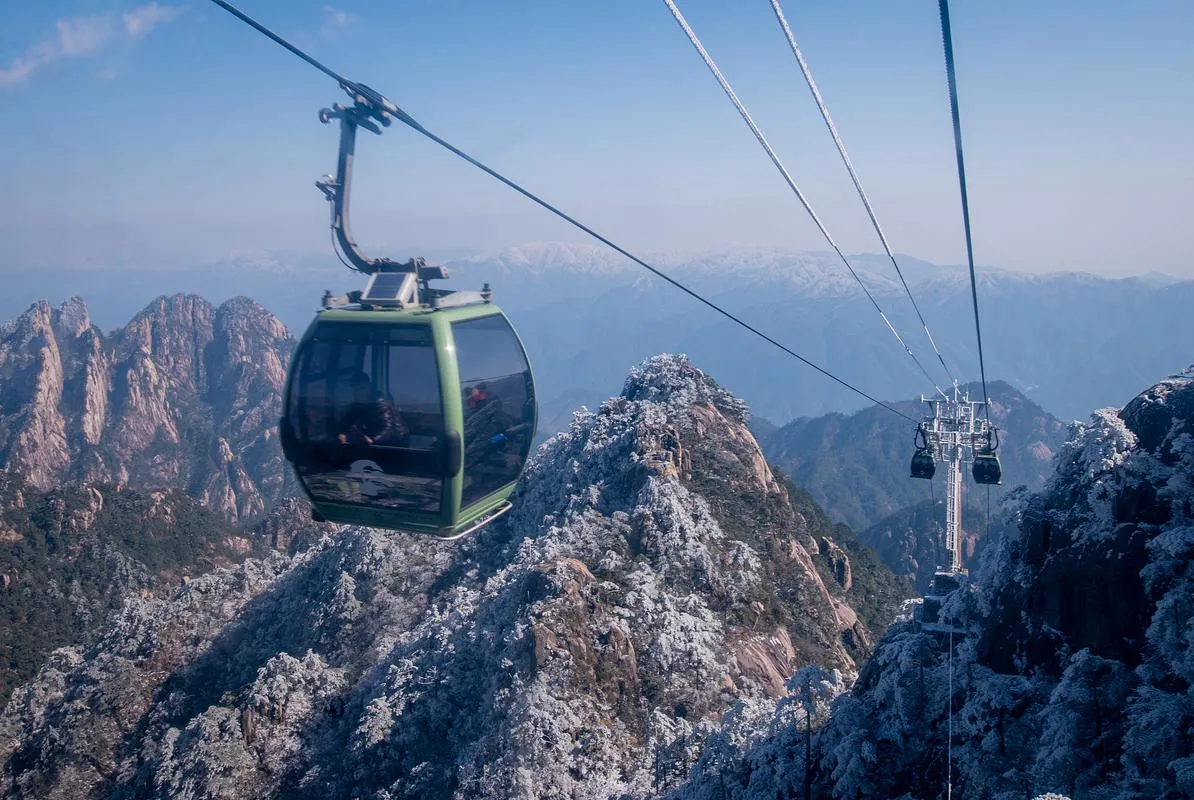 A cable car crosses the deep valleys between granite peaks.
Tickets: How Foreign Visitors Book in 2026
The 2026 rule, stated in the scenic area’s own booking notices, is straightforward: foreign and Hong Kong, Macau and Taiwan visitors book through the official “Huangshan Tourism Official Platform” WeChat mini-program or its authorized OTA partners, with the same booking access as Chinese ID holders. On the day of entry you do not swipe an ID card like locals; you show your passport plus your booking confirmation at the staffed check-in lane for manual verification.
Two practical notes:
- The mini-program and payment wallets want a mainland Chinese phone number for account setup, and the booking form defaults to a Chinese ID field. This friction is exactly why most foreign visitors end up on Trip.com’s international site, which resells the entry ticket as an official partner listing (around US$28) and lets you book same-day.
- If you cannot pre-book at all, the scenic area keeps staffed comprehensive service windows at the South Gate (transfer center and Xiaoyaoxi), North Gate (Songgu) and West Gate (Xiaojaoling) for visitors who cannot reserve online. These windows have limited same-day quotas, so the official advice is to book online if you possibly can.
One trap to ignore: some older pages on the official FAQ still tell foreign visitors to report to a service window with health-code language. That text dates from the 2020-2022 entry controls and no longer reflects current practice.
Prices (2026 policy year)
| Item | Regular season (Jan 21 to Dec 19) | Winter (Dec 20 to Jan 20) |
|---|---|---|
| Entry ticket | ¥190 | ¥150 |
| Half-price ticket | ¥95 | ¥75 |
| Yungu / Taiping cable car, one way | ¥80 | ¥65 |
| Yuping cable car, one way | ¥90 | ¥75 |
| West Sea Grand Canyon funicular | ¥100 | seasonal closure, no service |
| East Sea cable car (new, June 2026) | ¥125 | ¥100 |
| Transfer bus (Tangkou to trailheads) | ¥19 | ¥19 |
Book 1 to 7 days ahead; holiday periods can sell out at the 40,000-visitor daily cap. One piece of good news for foreign readers who missed 2025: that year the city ran half-price entry for all foreign passport holders at fourteen scenic areas including Huangshan. It has not been renewed in 2026 (the full-year discount table for 2026 contains no foreign-visitor clause), so budget for the full ¥190 and check the official platform or 0559-2590999 closer to your trip.
The three-day ticket almost nobody mentions
The official policy states that your ticket is valid for the entry day plus two more days, activated by your first gate check-in. Re-enter by selecting the multi-entry ticket type in the mini-program and choosing your gate direction. This turns an expensive trip into an affordable one: sleep in Tangkou at the foot of the mountain, hike day one, rest, and go up again on day three for sunrise, all on one ¥190 ticket. Most English guides still describe Huangshan as a single-entry day trip.
For comparison with the rest of China’s booking landscape, the Forbidden City gives foreigners a dedicated English web portal (our guide here); Huangshan’s official channel is a WeChat mini-program, which is why the OTA route matters more here.
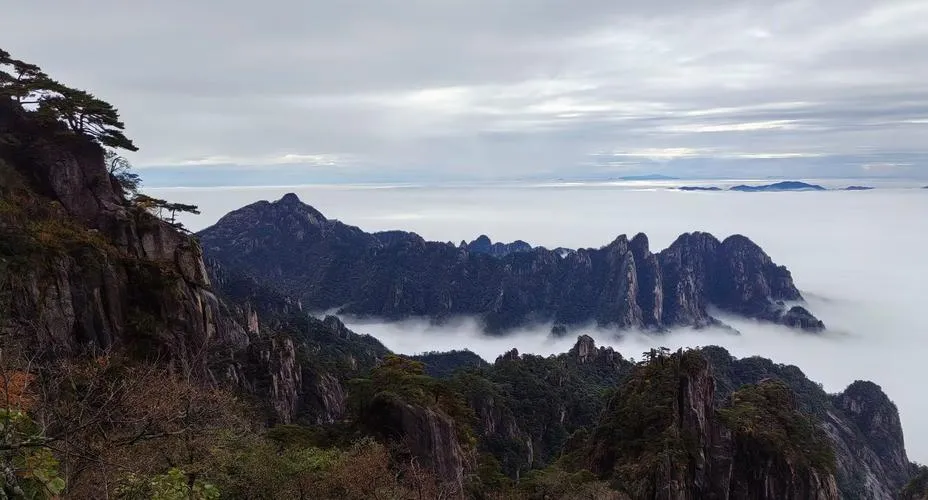 The sea of clouds filling the valleys: a cold-season phenomenon, despite what autumn-focused guides claim.
The Sea of Clouds Is a Winter Thing
English-language advice keeps repeating that September and October bring the best cloud seas. The Huangshan meteorological station’s own statistics say otherwise: the sea of clouds appears on about 60 days a year (the record is 95, the minimum 24), and winter has the most cloud-sea days while summer has the fewest. The prime window runs from November through May, especially after rain or snow clears. Within a single day, sightings peak around 8 a.m. and fade by mid-afternoon. Summer clouds sit too high to form a “sea” at all; you get towering convection instead.
Where to stand depends on how high the cloud top sits that day. When the cloud ceiling is between 1,600 and 1,800 meters, the official viewing logic is:
| Cloud view | Best vantage point |
|---|---|
| Heavenly Sea (Tianhai) | Bright Light Summit (Guangmingding) |
| Rear Sea | Cooling Terrace (Qingliangtai) |
| West Sea | Dispelling Clouds Pavilion (Paiyunting) |
| East Sea | White Goose Ridge (Baieling) |
| Front Sea | Jade Screen Tower (Yupinglou) |
Two bonus statistics from the same source: the mountain averages about 256 to 259 fog days a year, and the rainbow-ringed “Buddha’s light” halo appears around 42 times a year, most often within two hours after sunrise and before sunset. Plan for cold: the summit averages 7.9°C annually, tops out near 27°C in summer, and has hit -22°C in winter, with 33 days of snow cover a year. Our worst-time-to-visit guide covers how Huangshan fits the broader seasonal picture, including the National Day crush.
Two Days on the Mountain: Up the Back, Down the Front
The mountain’s geology sets the route. The front side (Yuping, approached from Ciguangge) weathered into rounded, imposing bulk; the back side (Yungu) fractured into steep, delicate spires. Chinese hikers summarize it as “the front is majestic, the back is lovely,” and the classic two-day circuit takes the Yungu cable car up the back, walks Beihei and the West Sea area, crosses Bright Light Summit, then descends past the Guest-Greeting Pine to the front. Strong hikers reverse it to give their knees the cable car on the descent.
The three main cable cars have different personalities. Yungu (back side) climbs 775 vertical meters in one 2,642-meter run. Taiping (North Gate) is one of Asia’s large funicular-style cars, 3,709 meters long with a 1,014-meter rise in about eight minutes. Yuping (front side) is the access for the famous pine. In June 2026 the mountain opened its fourth gate and fourth cable car: the East Gate and East Sea Cableway (¥125 one way, a 6,638-meter line approved by the provincial pricing authority for three years). The East Gate has no hiking trail; the cable car is the only link between that gate and its upper station, so if you enter there you either ride back down or continue on foot through the core scenic area and exit by another gate.
The West Sea Grand Canyon and its two closure seasons
The 15-kilometer West Sea Grand Canyon is the mountain’s signature long hike, with a 100-yuan funicular (the “little train,” an 892-meter inclined track with a 497-meter rise) climbing out of the gorge floor. Two things close it:
- Winter maintenance, roughly early December to mid-March (in the 2025-26 season, December 1 to March 14). Exact dates are announced each year; ignore fixed-date tables copied around the internet.
- Weather events. In August 2026 a typhoon closed the whole mountain from August 9 to 11; the park reopened on August 12 but kept the canyon, Celestial Capital Peak, the West Gate area and one North Gate trail section temporarily shut. As this guide was last checked (August 24), no reopening announcement had been posted. Before you commit to a route, check the current status in the official mini-program or with the 0559-2590999 service line.
A footnote for tired legs: since the 2025 May holiday, the park has rented exoskeleton walking assistants at spots along the trail.
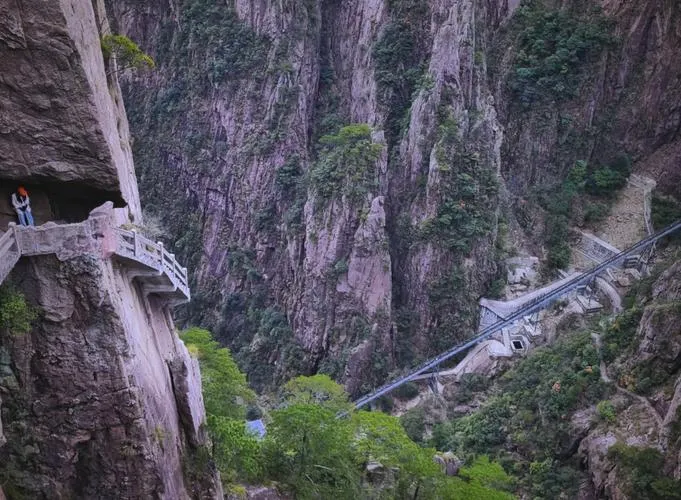 Cliff-hugging walkways thread between the pinnacles of the West Sea Grand Canyon.
Sleeping on the Summit: ¥130 Tents to ¥5,880 Rooms
Summit hotels cluster in three zones, and the price differences map to sunrise convenience:
| Zone | Hotels | Standard room (Aug 2026 snapshot) |
|---|---|---|
| Beihei (back side, near sunrise points) | Beihai Hotel, Shilin Hotel | ¥1,180-1,580 |
| Tianhai (central, 3 minutes to Bright Light Summit) | Baiyun Hotel, Guangmingding Shanzhuang | ¥1,280-1,680 |
| Yuping (front side, next to the famous pine) | Yupinglou Hotel | ¥2,280-2,880, up to ¥5,880 on holidays |
Dorm beds run ¥300-400. The budget option changed in 2026: on July 31 the scenic area launched official tent rentals at ¥130 per tent per night (sleeps two, plus ¥50 for a third), spread across six pickup points at the summit hotels. Check-in from 6 p.m., out by 5:30 a.m., and the service currently runs only through October 6, with a deposit and one-day-ahead reservation handled through the official platform. Bringing your own tent has been banned for years, so this is the only legal way to sleep under the summit stars. One-tenth the price of a standard room buys you the 5 a.m. sea of clouds without the 4 a.m. cable-car queue; the tradeoff is a night at whatever temperature the summit decides (see the climate numbers above).
The alternative structure pairs a Tangkou guesthouse with the three-day ticket: our hotel booking guide explains the rules that require properties to accept foreign guests.
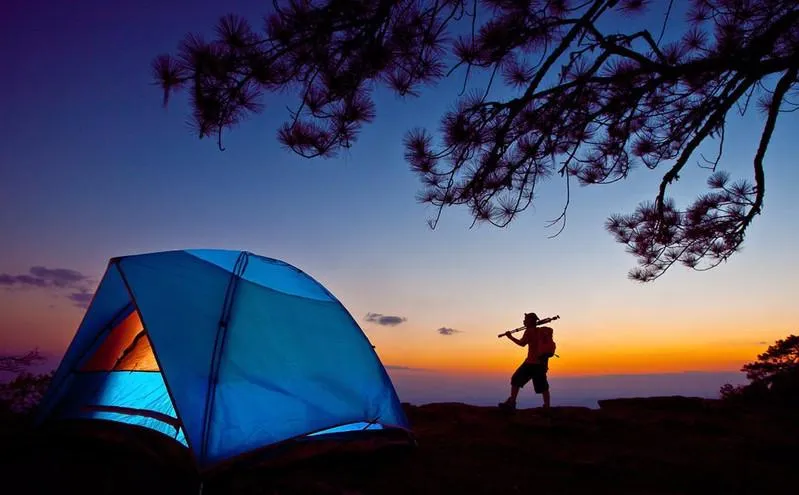 Summit tents at dawn: official rentals launched in July 2026 at ¥130 a night, available through October 6.
The Pine That Greets You, and the Peaks That Take Turns Resting
The Guest-Greeting Pine (Yingkesong) at 1,680 meters is about 10 meters tall and, by the official estimate, roughly 1,000 years old. The internet insists it is fake: a plastic model, a dead tree on hidden props. The official record says otherwise, twice over: the scenic area issued a formal denial in 2020, and in August 2025 the central government’s rumor-refutation platform published its own takedown of the “plastic pine” claims. What visitors photograph as evidence of fakery, the steel support arms, are the protection: the tree has had a dedicated full-time keeper since 1981 (currently the 19th, Hu Xiaochun, who inspects it daily and logs its condition), has undergone four full examinations, and its custom elastic support arms hold three national patents. The frame is the conservation, not the cover-up.
The mountain applies the same patience to its peaks. Since 1987, Huangshan has rotated its high-altitude summits through multi-year closures so vegetation can recover, generally three to five years per rotation. Lotus Peak, the highest summit, entered its fourth rotation on December 1, 2023 and remains closed (by the shortest rotation it could return around December 2026; no announcement exists yet). Celestial Capital Peak finished its own five-and-a-half-year rest in May 2024 and normally opens April 1 to November 30, 7 a.m. to 4 p.m., though typhoon damage has it temporarily shut as of this writing. Bright Light Summit, the observation hub, never closes. The lesson for trip planning: name the specific peaks you want to stand on, then check the official platform the week you fly.
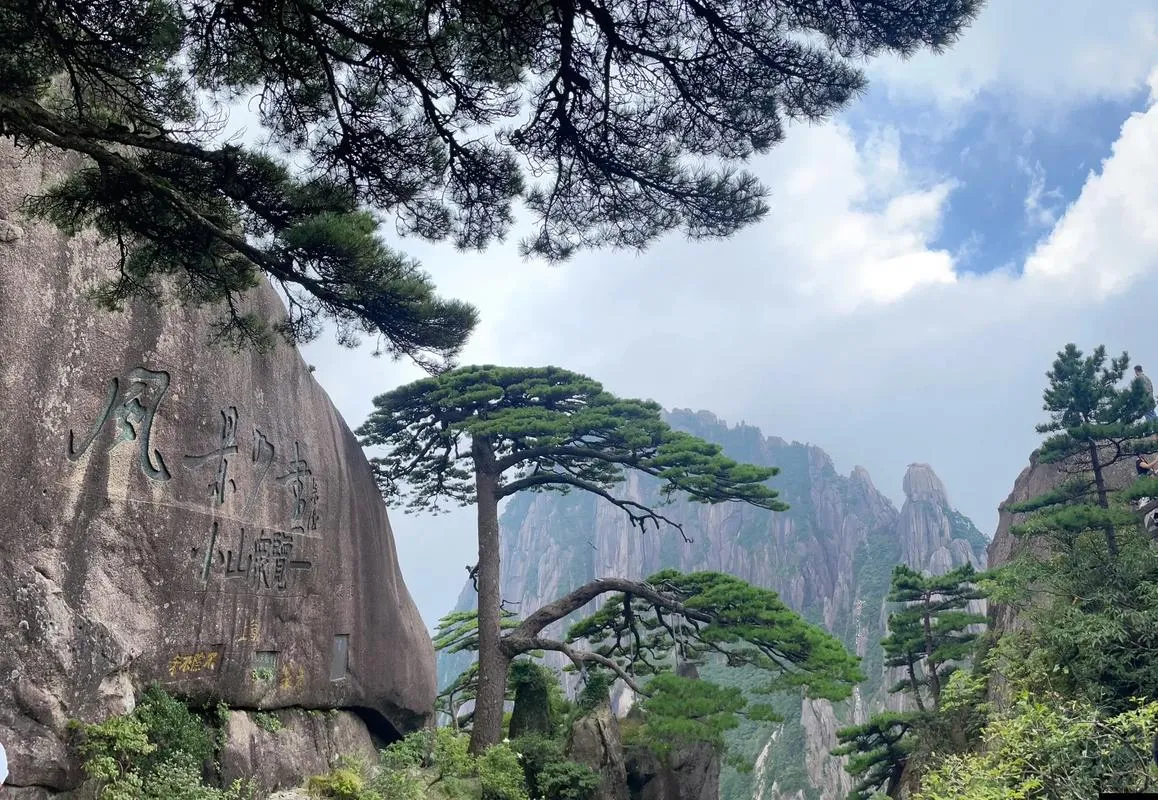 The Guest-Greeting Pine, roughly 1,000 years old and under full-time watch since 1981.
Quick Reference
| What | Detail |
|---|---|
| Entry ticket | ¥190 regular / ¥150 winter, valid 3 days from first check-in |
| Foreign booking | Official mini-program or partner OTA, passport check at staffed lane |
| Window fallback | South / North / West Gate service windows, limited same-day quota |
| Scenic area line | 0559-2590999 (also 400-8899808) |
| Best cloud-sea window | November to May, mornings around 8 a.m. |
| Classic route | Yungu cable car up, walk Beihei to Bright Light Summit, Yuping down |
| Summit tent | ¥130/tent/night, six pickup points, through Oct 6, 2026 |
| Nearest station | Huangshanxi (West), 22 minutes from the North Gate |
| Visa-free entry | TXN airport is a 240-hour transit port (57 countries) |
| Currently closed | West Sea Grand Canyon and Celestial Capital Peak (typhoon, as of Aug 24); Lotus Peak (rotation until ~Dec 2026) |
Huangshan rewards the same two things every difficult mountain does: early starts and verified information. Book through whichever channel your phone tolerates, give the summit at least one night, aim for the cold months, and check the closure list before you lace up.
Sources & Verification
This guide was last verified on 2026-08-24. Key Chinese-language sources:
- Huangshan Scenic Area official platform (黄山旅游官方平台): the booking notices stating foreign visitors book online with the same access as Chinese ID holders plus passport checks at staffed lanes, the FAQ confirming one ticket is valid for the entry day plus two more days, and the summit tent rentals launched July 31, 2026 at ¥130 per tent per night through October 6.
- Huangshan Municipal Government via Anhui Daily (黄山市人民政府发布/安徽日报): the 2026 annual price policy verbatim: ¥190 regular and ¥150 winter entry, cable cars at ¥80 to ¥100 by line, and the winter window of December 20 to January 20.
- Anhui Development and Reform Commission (安徽省发展和改革委员会): the pricing approval for the new East Sea Cableway (¥125 regular / ¥100 winter), which opened with the fourth gate in June 2026.
- National Immigration Administration (国家移民管理局): the December 17, 2024 port announcement and the August 20, 2026 policy page listing Huangshan Tunxi airport among the 65 ports of the 240-hour transit scheme, now covering 57 countries.
- China Weather Network with the Huangshan meteorological station (中国天气网/黄山气象管理处): the sea-of-clouds statistics, about 60 days a year with winter the most and summer the fewest, the November-May prime window, and roughly 256 to 259 annual fog days.
- China Internet Joint Rumor-Refutation Platform (中国互联网联合辟谣平台): the August 2025 takedown of the “plastic Guest-Greeting Pine” claims, alongside the tree’s full-time keeper since 1981 and its three patented support arms.
- China News Service and CCTV Radio (中新网/央广网): the April 2024 opening of Huangshanxi station (16 km and 22 minutes from the North Gate), the June 2026 fourth-gate opening, the August 9-11, 2026 typhoon closure that kept the West Sea Grand Canyon and Celestial Capital Peak shut as of August 24, and the Lotus Peak rotation in place since December 1, 2023.