Domestic Flights in China (2026-27): A Foreigner's Guide to Names, Baggage, Delays and the Power Bank Rule
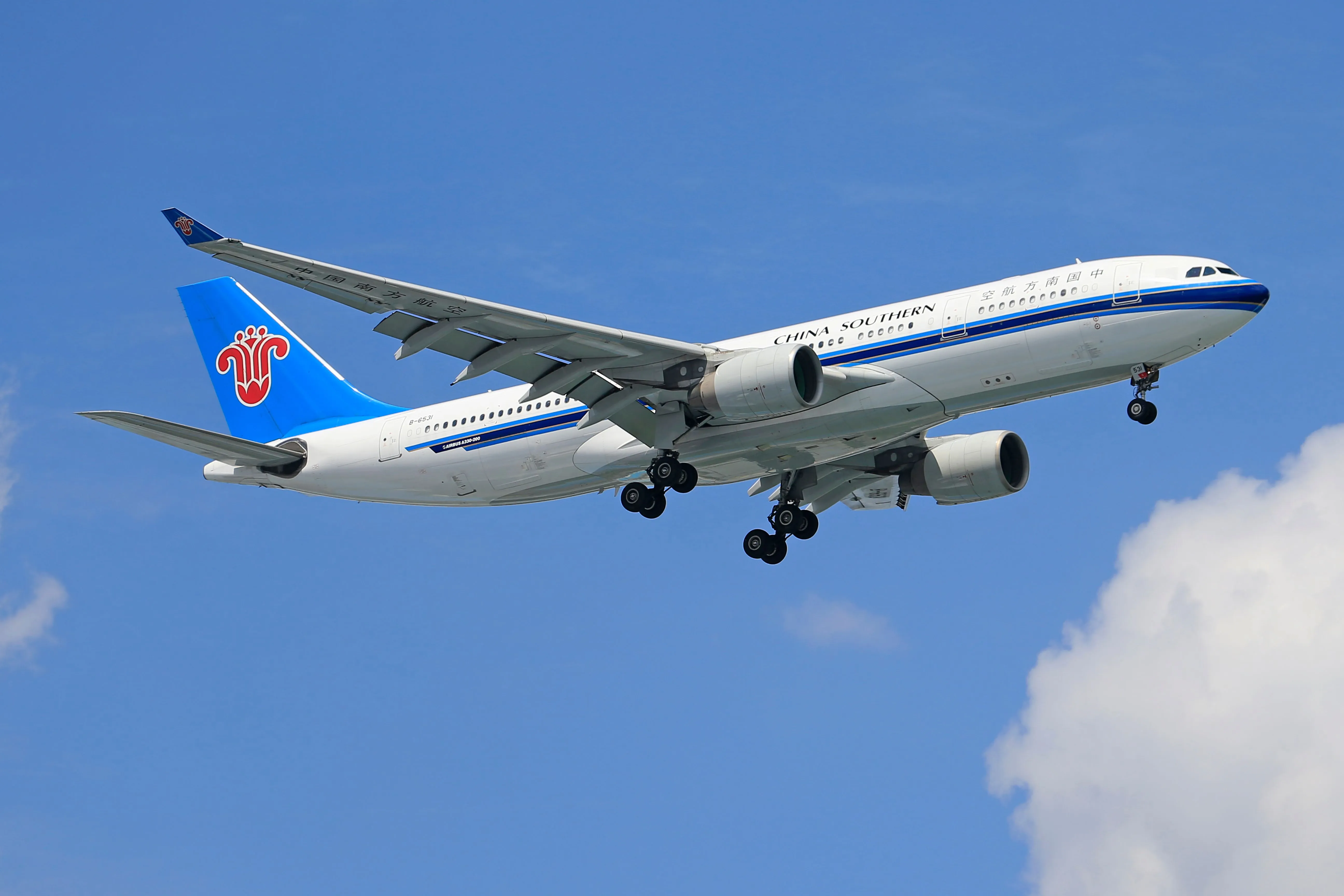
China’s railways get all the attention. But a country this size runs one of the largest domestic aviation markets on earth, and for some legs flying is not a luxury — Beijing to Kashgar is five hours by air and around thirty by train. Every guide to China’s high-speed rail will tell you the trains are excellent. Almost none explain what happens when you fly instead, and the differences matter when your passport is foreign.
The rules are not difficult. They are just poorly translated, scattered across ten airline websites, and in four places genuinely unlike what a European or North American traveller expects. This guide covers those four. Every figure comes from an airline, airport or regulator page in Chinese, dated where the source is volatile.
Quick answer: Yes — foreigners can book and fly domestic routes in China with a passport, which is a legally valid ID for domestic air travel. Four things catch people out. One: the name field follows
SURNAME/FIRSTNAME, separated by a forward slash with no spaces, and the ID at check-in must be the one you booked with or the airline shall refuse carriage. Two: there is no national check-in cut-off — it varies by airport, terminal, airline and whether you hold a bag (Beijing Capital T2 is 30–40 minutes; Shanghai Hongqiao can be 15). Three: since 28 June 2025 power banks without a clear 3C mark are banned from domestic flights, including the domestic leg of an international trip. Four: China has no EU261-style statutory compensation for delays — what you get depends on whose fault it was and on each airline’s own published promise.
How we verified this: SinoWander reads Chinese-language sources English guides cannot reach — CAAC notices and decrees, the full text of each airline’s Conditions of Carriage, official airport pages, and National Immigration Administration policy tables. We cross-check every figure before writing and date-stamp when it was last verified. We have not flown every route described. Last verified: 24 September 2026. See our methodology.
Which ID Gets You on the Plane
Your passport is a valid travel document for domestic Chinese flights. This is not a workaround: the CAAC’s security rules list passports among the documents establishing that you are who your ticket says you are, and a 2024 government programme instructed airlines and ticketing platforms to make passport booking work smoothly online and offline. Entry requirements generally are covered in China Entry Requirements for Foreigners.
If you live in China, the document worth knowing is the Foreigner’s Permanent Residence ID, known as the Five-Star Card. It carries practical advantages over a passport: Spring Airlines explicitly accepts it for online check-in while routing every other foreign document to the counter, and major airports support it for document-scanning logins.
Children: bring the child’s passport. It is the one document that satisfies the booking system, the check-in agent and security simultaneously.
The binding rule is absolute: the ID you present at check-in must be the one you bought the ticket with. Article 31(4) of the Ministry of Transport’s passenger service regulation states that where they differ, the carrier shall refuse carriage — “shall”, not “may”. Renewed your passport and the number changed? Fix it before you reach the airport.
The Name Field — Where Most Foreigners Go Wrong
Chinese booking systems expect the transliteration convention: surname first, given name second, separated by a forward slash, no spaces.
CORRECT:   SMITH/JOHN
WRONG:     JOHN SMITH
WRONG:     Smith John
Include the slash, with no spaces either side. Fold middle names into the given-name side rather than adding words, because the systems count characters: Chinese platforms generally cap the field at roughly 24–26 characters, and Shenzhen Airlines states 28, both counting the slash and any spaces. Long names need abbreviating, keeping the surname intact — that is what gets matched.
If you get it wrong, the remedy is narrow and differs by airline:
- China Southern allows corrections on tickets numbered 784 (not group tickets): for Latin-letter names, up to 3 letters, plus reversing a reversed order or adding a missing middle name.
- China Eastern allows one correction, stated as in principle not more than six letters.
Both cover your own misspelling. Neither lets you substitute another person. Tickets in China are named and non-transferable under every airline’s Conditions of Carriage — Xiamen Airlines states that a transferred ticket is void and non-refundable. Since 1 July 2026, when the revised Civil Aviation Law took effect, those conditions form part of the contract of carriage and must be filed with CAAC.
⚠️ Airlines’ own pages contradict each other. China Eastern’s mis-booked-ticket page sets out the correction procedure while its online-booking FAQ still carries an older line saying name changes are impossible after ticketing. Don’t test this at the airport: call the hotline the moment you spot an error (China Southern 95539, China Eastern 95530, Air China 95583) and get the correction confirmed.
Where to Buy
| Channel | Why | Watch for |
|---|---|---|
| Airline’s own site / app | Direct contract, easiest corrections, clearest fare rules, fastest schedule-change notice | Chinese interfaces are standard; English versions vary |
| Trip.com (Ctrip’s international site) | English interface, accepts foreign cards and phone numbers | Sometimes above airline-direct; check fare rules per result |
| Ctrip / Fliggy / Qunar (domestic) | Widest inventory, often lowest headline price | Chinese-language; heavy upselling |
| Airport counter | Fallback when cards fail online | Walk-up fares cost more |
Booking direct matters more here than at home, precisely because of the name field: the airline can only fix it if the airline holds the booking. Paying is the usual stumbling block — sort that first with How to Set Up Alipay in China and How to Pay in China.
What’s Actually Inside the Ticket Price
Civil Aviation Development Fund: ¥50 per passenger, waived for children under 12. A statutory levy, not an airline fee.
Fuel surcharge: ¥40 on sectors up to 800 km, ¥70 above — verified 24 September 2026, applying to tickets issued from 5 August 2026. Children pay half (¥20 / ¥30); infants are exempt.
⚠️ Recalculated roughly monthly against fuel prices, so check your airline’s page before booking. It follows the original issue date, meaning a later change can trigger re-collection at a newer rate.
Everything else is set by the airline. No bag is included unless your bundle says so, which on low-cost carriers often means none at all.
Refunds, Changes and the Fine Print
Chinese law sets no uniform refund or change fee schedule. No statutory percentages exist. The percentages come from each airline’s Conditions of Carriage and the fare rules on your specific ticket.
What the law requires has teeth, and got stronger on 1 July 2026. Article 153 of the revised Civil Aviation Law says an airline’s conditions must follow the principle of fairness, cover ticketing, refunds and changes, be published, be clearly disclosed at the point of sale, and be filed with CAAC. The conditions form part of your contract. This is the first time Chinese aviation law has carried a dedicated passenger-rights chapter.
Voluntary changes and refunds follow those conditions. Involuntary ones carry real protection, with one important distinction:
| Situation | Entitlement |
|---|---|
| Refund, any cause | The airline may not charge a refund fee |
| Rebooking, airline’s own fault (maintenance, crew, scheduling) | Change fee must be waived |
| Rebooking, weather / ATC / security / other passengers | Under the airline’s fare rules — a fee is possible |
| Refund processing | 7 working days from a valid request |
Note the asymmetry: refunding is protected whatever the cause, but only the airline’s own problems guarantee a free rebooking.
Discount tickets are where foreigners lose the most money. No law says a cheap ticket must be refundable. What protects you is the disclosure rule — the refund terms must be prominent before you pay and must be fair. A 2018 CAAC circular discouraged stamping “no refund, no change” across all discounted fares, but that is guidance, not a guarantee. Read the fare rules before paying. The same instinct protects you elsewhere: see China Travel Scams & Tourist Traps.
Connections: The Self-Transfer Trap
Two separately bought tickets are two contracts. Miss the second and you are a no-show — its value is gone. Look for a single 13-digit ticket number (999 for China Eastern, 784 for China Southern): one number means one contract.
Even on a genuine through ticket, “connection” does not guarantee your bags go through. Check at the first desk and read the tag: an intermediate airport that isn’t printed means you will meet your bag at the carousel.
Minimum connection times are published per airport and are not generous at the mega-hubs — Hangzhou Xiaoshan quotes 60 minutes for same-terminal domestic transfers. Treat 2 hours as the floor for DIY connections and 3 at Beijing Capital, Beijing Daxing, Shanghai Pudong and Guangzhou.
Check-in: Deadlines, Online Check-in, and Passports
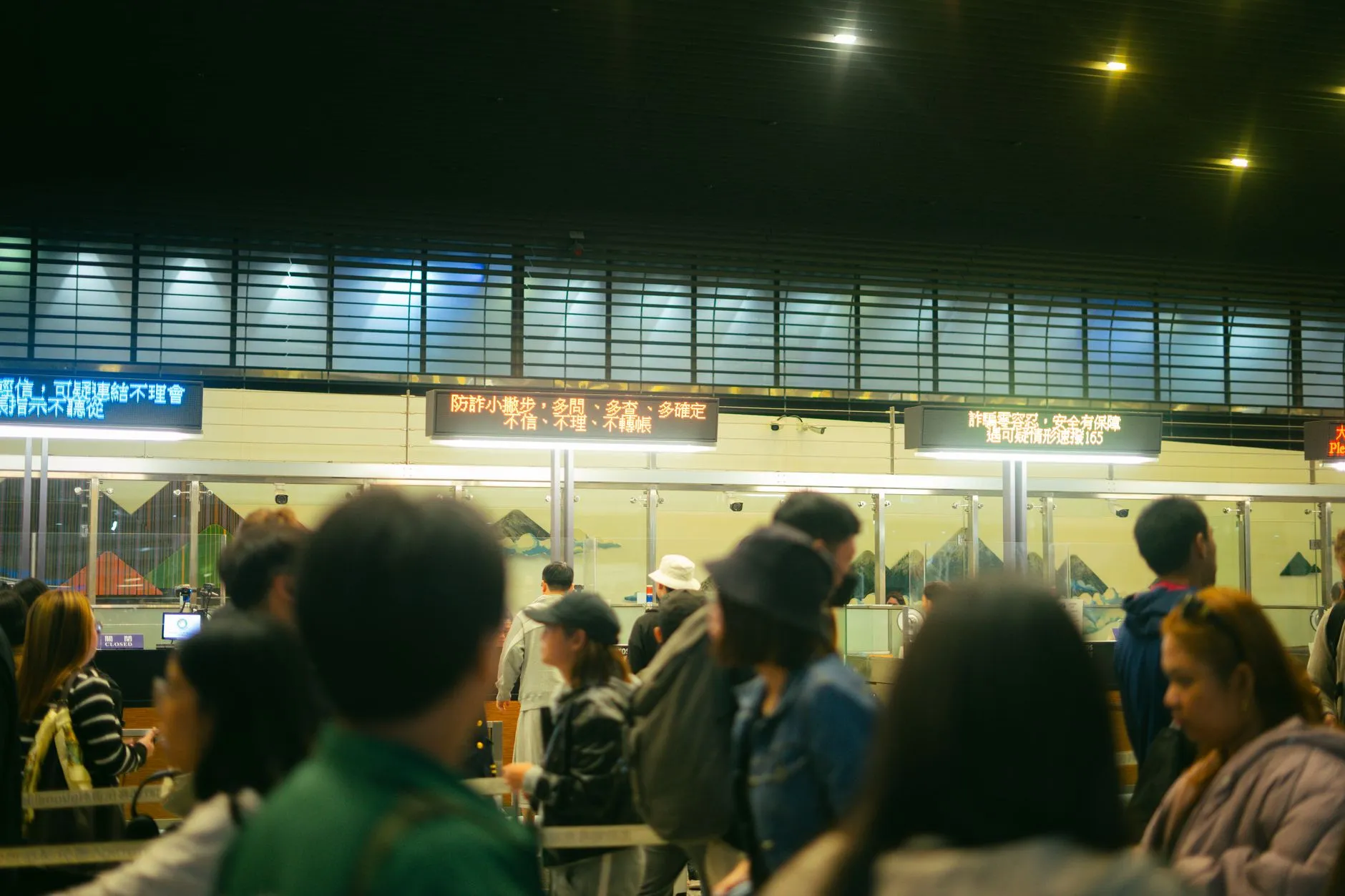
There is no national check-in cut-off time in China. Each airport sets it with each airline, varying by terminal, carrier and whether you hold a bag. This is the point English guides get wrong by quoting one number:
| Airport | Domestic check-in closes |
|---|---|
| Beijing Capital | 30–40 min at Terminal 2 (Air China 35, China Eastern 30, Hainan and Sichuan 40); 40–45 min at Terminal 3 (Air China 40) |
| Shanghai Pudong | 40 min for China Eastern, Shanghai Airlines, China Southern, China United and Air China; 45 min for others |
| Shanghai Hongqiao | China Eastern / Shanghai Airlines / China United: 15 min without bags, 30 min with; Spring Airlines 25 min; others 30 / 35 min |
| Shenzhen Bao’an | 38 min generally (30 on China Southern; 35 on Shenzhen Airlines, Air China, Shandong and Kunming) |
Air China’s English page quotes 45 minutes for some Beijing departures, contradicting the airport — follow the airline’s announcement when they disagree. Practically: arrive 90 minutes early at the major hubs, 60 elsewhere, longer with bags or a name problem.
Online check-in opening times also differ: Air China and China Eastern open 48 hours before departure (closing 1 hour and 45 minutes respectively). China Southern is different — it opens at 14:00 the day before and closes 1 hour before, with the start time varying by departure city. Don’t assume the pattern transfers between carriers.
Must foreigners use a staffed counter? It depends entirely on the airline:
- Spring Airlines states that online check-in supports only the Chinese ID card and the new Foreign Permanent Residence ID: “Passengers holding a passport or other documents, please go to the airport check-in counter.”
- Air China states on its official English site that self-service kiosks retrieve bookings by “Scanning your ID card” or “Scanning your passport”.
- China Eastern and China Southern publish no document-type restriction; their exclusions concern route, departure city, passenger type and fare brand instead.
So: carry the physical passport, arrive early, treat the staffed counter as the default. Kiosks reading passports do exist at major hubs, but availability is per-airport and per-machine, and some produce only a stub requiring a document check. For getting to terminals in the first place, see How to Use China’s Subway and How to Use DiDi in China.
Security: Liquids, Alcohol, Fire and Self-Heating Meals
The Chinese rule is stricter than most assume, and starts one step before the familiar 100 mL line.
On domestic flights, liquids are prohibited in carry-on — with narrow exceptions for cosmetics, toothpaste and shaving cream for use in transit. Airside water goes in your checked bag or gets drunk before boarding. Permitted cosmetics: one each, containers no larger than 100 mL, presented separately and subject to opening for inspection.
The line that catches people, quoted from CAAC’s page: “refers to the size of the container holding the cosmetic not exceeding 100 ml, not the amount of substance inside the container.” A half-empty 150 mL bottle is a 150 mL bottle.
Alcohol cannot be carried on. Checked, with retail packaging intact and each container 5 L or less: up to 24% ABV — no quantity limit; 24–70% ABV — 5 L per passenger; above 70% — prohibited entirely, cabin and hold.
Banned outright in hand luggage and checked bags: all fire sources (lighters, matches, magnesium fire starters) and self-heating food — the instant hotpot sold across China carries a chemical heater that aviation bans absolutely. There is no pocket allowance for a lighter as there is in parts of Europe.
The Power Bank Rule — Read This Before You Board
Since 28 June 2025 (announced 26 June), power banks without a clear 3C mark, with an unclear mark, or belonging to a recalled model or batch are prohibited on domestic flights. 3C is China Compulsory Certification, the small “CCC” logo familiar from electronics made for the Chinese market.
Four things make this bite harder than it looks:
- It applies to the domestic leg of an international itinerary. London–Shanghai–Beijing? The Shanghai–Beijing sector counts as domestic. It does not apply to purely international or regional flights, and units bought abroad aren’t screened for the mark there — but bring one onto a domestic sector and it is.
- Security decides. Faded or rubbed-off markings get confiscated at the checkpoint. No appeal desk, no storage locker.
- It sits on top of the energy rules, still in force: up to 100 Wh freely; 100–160 Wh with airline approval, maximum 2 per person; above 160 Wh prohibited. And power banks may never be checked — cabin only. Using one to charge a device in flight is also prohibited.
- The new standard does not invalidate old ones. GB 47372-2026 was published 3 April 2026 with a twelve-month transition, effective 1 April 2027 — but regulators state that units already purchased with valid CCC certification are unaffected and can still be carried.
Practical rule: check the mark is legible to the naked eye before you travel, not at the tray. Leave worn units at home.
💡 Note there is no document number above. CAAC published this as a website news release; no public notice number was issued, confirmed across four channels. Anyone quoting a “Notice No. X” is inventing it.
Baggage Allowance: Ten Airlines Compared
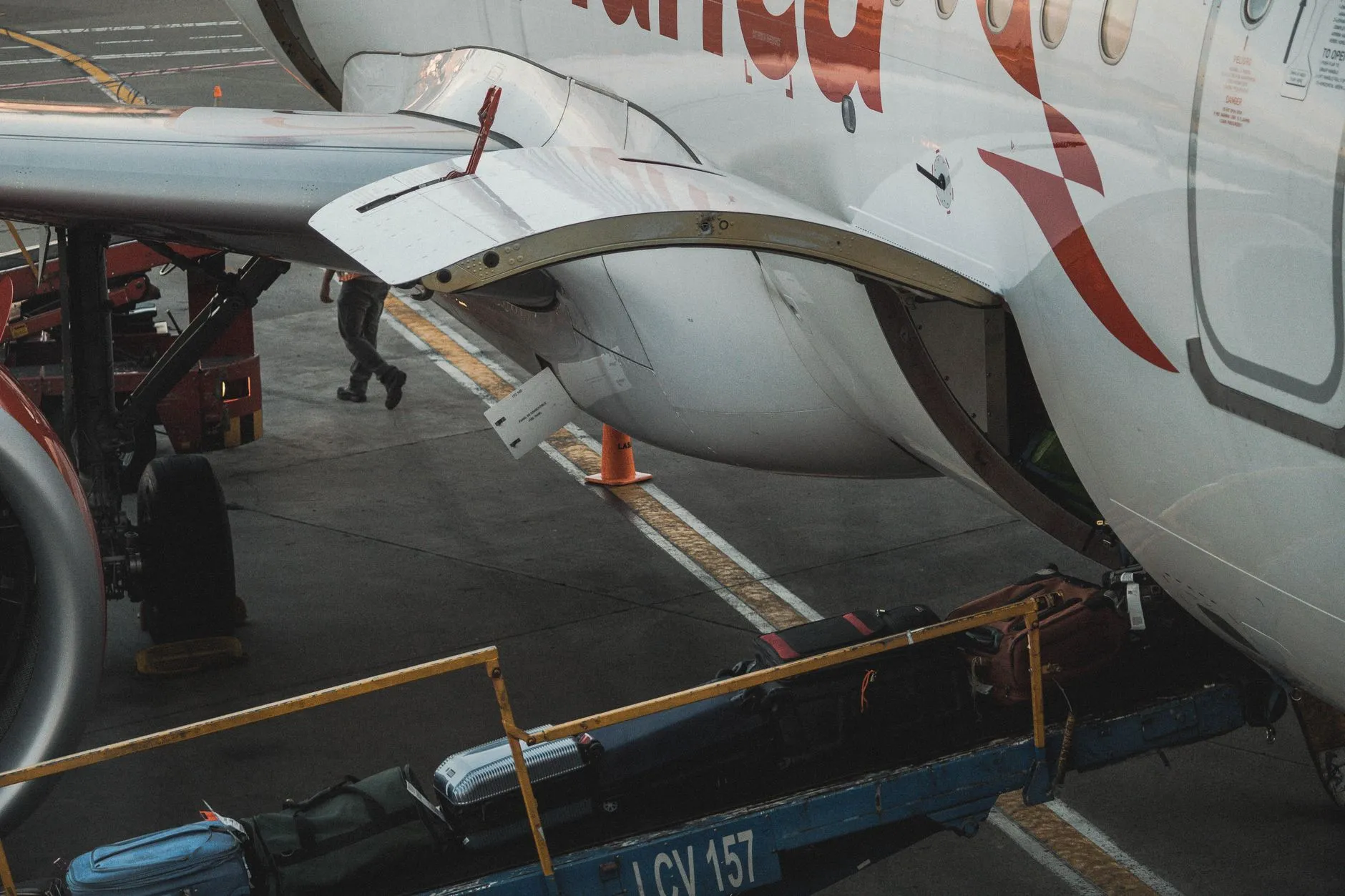
Chinese domestic routes use a weight system, not the piece system used on many international routes — a total in kilos rather than a bag count. All ten below were checked against current official pages; where an airline’s own pages disagreed, the newest dated version won.
| Airline | Free checked (First / Business / Economy) | Infant | Carry-on | Overweight |
|---|---|---|---|---|
| Air China | 40 / 30 / 20 kg | 10 kg + folding stroller | First & Business 2×8 kg; Premium Economy & Economy 1×5 kg; 55×40×20 cm | 1.5% of full Economy fare per kg |
| China Eastern | 40 / 30 / 20 kg | None + 1 stroller | First 2 pcs; Business & Economy 1 pc; each ≤10 kg | 1.5% per kg |
| China Southern | 40 / 30 / 20 kg | None + folding stroller | 1 pc, 5 kg, dimensions summing ≤115 cm | 0.6% per kg |
| Hainan Airlines | — / 30 / 20 kg | None + folding stroller | Business 2×7 kg; Economy 7 kg total | 1.5% per kg |
| Xiamen Airlines | 40 / 30 / 20 kg | None + stroller or car seat | 1 pc, 5 kg, 20×40×55 cm | Not published — ask at booking |
| Shenzhen Airlines | 40 / 30 / 20 kg | 10 kg + stroller | Business 2×8 kg; Economy 1×5 kg | 1.5% per kg |
| Sichuan Airlines | 40 / 30 / 20 kg | None | Business 2 pcs; Economy 1 pc, 8 kg, 20×40×55 cm | 1.5% per kg |
| Juneyao Air | — / 30 / 20 kg | 0 kg + stroller | Business 2×8 kg; Economy 1×5 kg | ¥12 / 15 / 20 per kg by distance |
| Spring Airlines | 0 kg on Saver or Choice without a bag bundle; 20 kg with a bundle or on Premium | None | 7 kg, 20×30×40 cm (Premium 10 kg, 20×40×55 cm) | Distance × 5 kg tier bands via their calculator |
| 9 Air | No free allowance as a rule (Standard Economy 10 kg and Premium Economy 40 kg are product-included) | — | 1 pc 7 kg; 20×30×40 cm (Premium Economy 20×40×55 cm) | ¥12 / 15 / 18 per kg at the counter |
Two lines deserve emphasis, because they are what actually catches foreigners:
- Spring Airlines and 9 Air may include zero free checked baggage. The fare is cheaper precisely because the bag is not in it. Add a bundle at booking; the airport costs substantially more.
- The low-cost carry-on box is 20×30×40 cm — roughly a 14-inch laptop bag, far below the 55×40×20 cm most international carriers allow. Standard cabin rollers do not fit.
Overweight is calculated two different ways. Most carriers charge a percentage of the full economy fare per excess kilo: 1.5% on Air China, China Eastern, Hainan, Shenzhen and Sichuan, but only 0.6% on China Southern. Critically it is the full fare, not your discounted one — a ¥400 sale ticket can generate a bill referencing a ¥2,000 fare. Low-cost and some others instead charge flat rates per kilo by distance: Juneyao ¥12/15/20, 9 Air ¥12/15/18; Spring uses distance × 5 kg tier bands via its calculator.
Single-piece limits apply regardless of your total: 32 kg on Shenzhen Airlines, 50 kg on 9 Air. A 45 kg bag can be refused even inside your allowance. Packing strategy is its own subject — see China Packing List.
One honest caveat: airline websites move. Everything above was read from current official pages in September 2026, but the figure printed in your fare rules at purchase governs.
Sports Gear, Instruments and Pets
Sports equipment usually travels within the free allowance on full-service carriers, but rules differ by item and nearly always need advance notice — request at booking and arrive 120 minutes early. Air China counts golf clubs, ski equipment and bicycles inside the allowance while treating surfboards, kayaks and sleds as chargeable extras.
Instruments have no standardised rule. Small ones travel as carry-on subject to the dimension and weight limits above — low-cost carriers’ 20×30×40 cm excludes most guitar cases. Larger instruments need a purchased seat or the hold.
Pets involve substantial paperwork and diverge sharply between airlines. Full-service carriers generally accept animals as checked baggage subject to a county-level-or-above quarantine certificate, valid for only a short window. Spring Airlines does not accept animals as checked baggage, though it now offers an in-cabin pet service. Xiamen Airlines’ conditions state small animals may not travel as checked baggage, contradicting secondhand claims that pet shipping is available. Call the airline. Never plan around a pet on general assumptions.
When Your Bag Goes Missing
Write — do not wait. Objections to damaged or lost checked baggage must be made in writing within 7 days of receipt at the latest; for delayed baggage, 21 days. The limitation period is 2 years. File the Property Irregularity Report before leaving the terminal, keep the reference, then follow up in writing.
Changed 1 July 2026: the old domestic caps widely quoted elsewhere — ¥100 per kilo for checked luggage — came from a regulation that has been repealed, abolished alongside the revised Civil Aviation Law’s entry into force. Domestic carriage now uses the same liability limits as international carriage, set under the 1999 Montreal Convention to which China is a party, with amounts published by CAAC.
💡 We deliberately quote no figure here. The old number circulates widely in English guides and is now out of date, and the current position points to a published schedule rather than a sum written into the statute. Check the airline’s conditions at booking. The practical lesson is unchanged: never check valuables, electronics, medication or documents, and consider baggage cover — see Travel Insurance for China.
Delays and Cancellations: There Is No EU261 Here
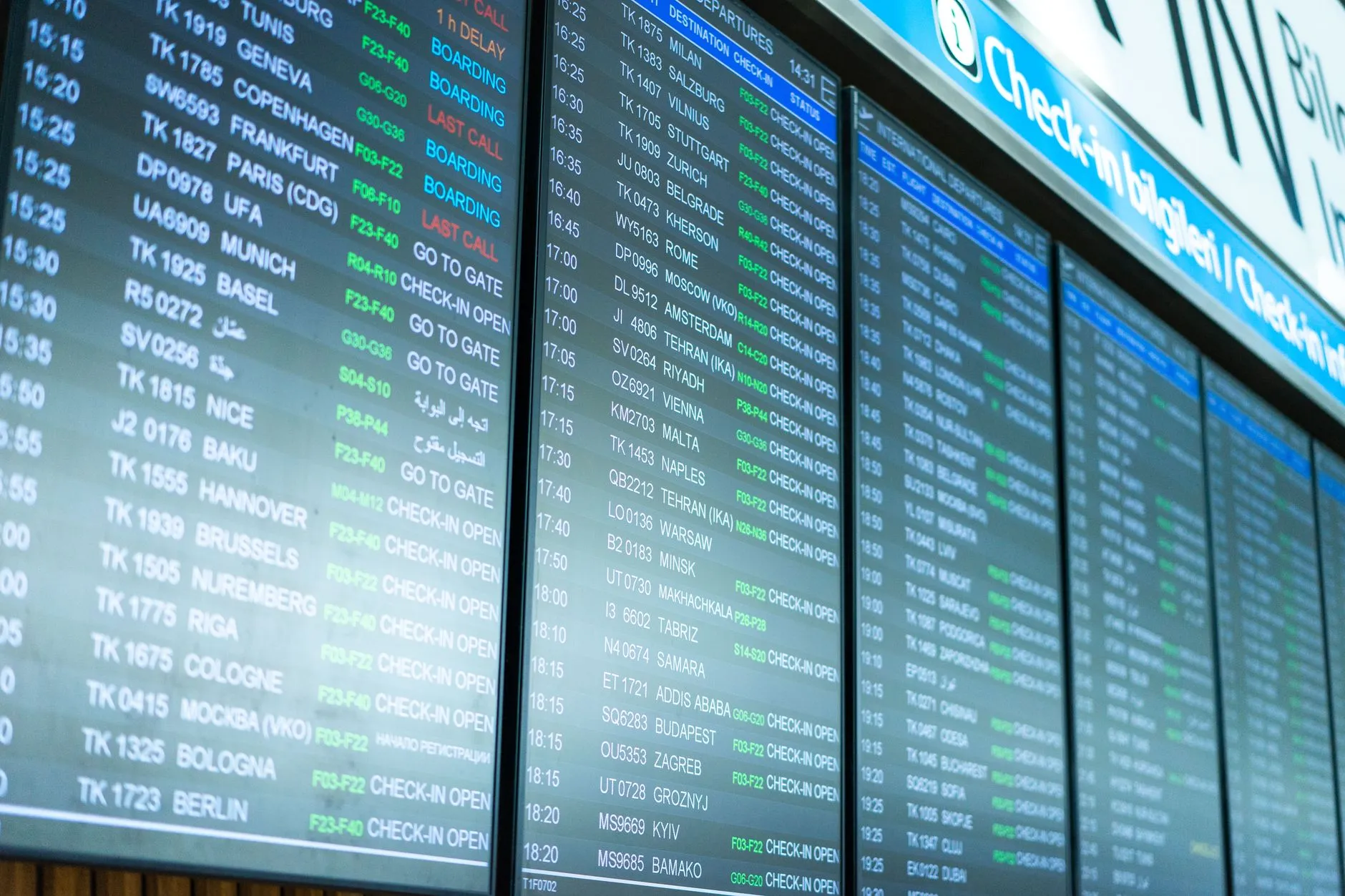
Adjust your expectations before boarding. China has no statutory delay compensation. We reviewed all 75 articles of the flight regularity regulation: its enforcement chapter contains only administrative penalties against airlines, and one article merely encourages delay insurance. Nothing entitles you to payment because your flight ran four hours late.
What the law does grant is care, triggered by whose fault it was, not how long you waited:
| Cause | What the airline must provide |
|---|---|
| Airline’s own reasons — maintenance, crew, aircraft scheduling | Meals and/or accommodation, free of charge |
| Non-airline reasons — weather, ATC, security, passengers | Assistance with arrangements, at your own cost |
| Delay or diversion at an intermediate stop | Meals and accommodation regardless of cause |
Row two is the hard one: four hours of weather delay earns you nothing you are legally owed. Row three is the pleasant surprise — intermediate stops are covered even in bad weather. Seasonal weather patterns matter enormously here, which is why our month-by-month timing guide and worst-time matrix are worth reading before booking summer and winter routes.
There is one place hours do matter, and it is on the aircraft. Once doors close: after 2 hours the airline must provide water and food; after 3 hours with no definite departure time it must arrange disembarkation; and it must update you every 30 minutes throughout. So “there is no hour threshold” is only half true — true at the departure gate, false once you are sealed in the cabin.
Voluntary airline promises partly fill the gap. Several majors publish schedules — commonly ¥200 for 4 to 8 hours and ¥400 beyond 8 hours, only where the airline itself was at fault. Others decline to pay anything. And one catch is aimed squarely at foreign names: China Southern’s terms state that non-pinyin names cannot apply for delay compensation online, forcing you through a service channel instead.
The refund routes above still apply: abandon the trip and no refund fee may be charged, whatever the cause; rebook and the fee is waived when the airline was at fault. If you end up overnighting unexpectedly, How Foreigners Book Hotels in China covers same-night booking.
How to Complain — and Get the Cause in Writing
Complaints run through CAAC’s official consumer hotline, 12326, and the platform at www.12326.cn. The number does not appear in the passenger service regulation itself — it comes from a separate CAAC normative document, which is why some guides call it unofficial. It is the regulator’s own line, and it is also where delay causes are determined officially, exactly the evidence needed before arguing about compensation.
File within 6 months, with real name and ID. The published timeline: 7 working days for review, 10 working days for the airline to respond, 10 working days to request mediation, 20 working days to complete it. Written complaints beat phone calls; boarding passes, delay notices and receipts beat everything.
Before that stage, get the delay or cancellation reason in writing at the desk — whether it counts as “airline cause” or “weather” determines whether you are owed meals, a hotel, or nothing.
If You’re on a 240-Hour Visa-Free Transit: Read This First
Most readers are on a normal visa. If you entered China under the 240-hour visa-free transit policy, domestic flights hide a trap that almost no English source describes.
The policy covers 57 nationalities, 65 ports of entry and 24 provincial-level regions. What matters sits one level deeper: the permitted stay area is not the whole province. The NIA publishes a table listing each province against the specific area you may remain in, and the entry for Heilongjiang Province — whose port is Harbin Taiping International Airport — reads “Harbin City”, not the province.
Hence this scenario, entirely plausible in winter: you fly into Harbin under the 240-hour transit and book a domestic flight onward. If the destination is outside Harbin’s administrative boundaries — Mudanjiang for Snow Town, or Mohe in the far north — you have left your permitted area. Whether you travelled by train, car or aeroplane is irrelevant: the violation is being outside the permitted area, not the mode of transport.
State it precisely, because precision is the whole point:
- ✅ Crossing provincial boundaries within the 24 regions is explicitly allowed — the NIA table’s own footnote says so. Harbin–Shanghai is fine.
- ⚠️ No rule about aircraft exists. Nothing official says “transit passengers may take domestic flights”, and nothing says they may not. The conclusion follows from combining two real rules: cross-region travel is allowed, leaving your permitted area is not.
- ✅ The third-country requirement stands: arrive from one country, depart to a different one (A → China → B, where A ≠ B). Your domestic leg does not affect that; the criterion is your international routing.
- ✅ The lawful route if you must go further: apply in advance to the exit-entry administration of the public security bureau for a stay permit. That remedy exists precisely for this case.
No airline checks this. Nothing at check-in reconciles your visa status with your routing. It surfaces only at exit, when immigration reviews your record — see Harbin in Winter and the Harbin Ice and Snow World guide for the destinations most likely to trigger it.
If any of this touches your itinerary, call NIA’s multilingual hotline 12367 before booking, or read our dedicated 240-Hour Visa-Free Transit guide and Visa-Free Entry in 2026 for the full country list.
At the Airport as a Foreigner
Wi-Fi. The major hubs have solved login. Shanghai Pudong and Hongqiao both accept document recognition — passport, ID card, Hong Kong/Macau/Taiwan permits and the Foreign Permanent Residence ID. Beijing Daxing lets you photograph your passport’s data page at the authentication screen. Assume you need connectivity regardless: see China SIM Card vs. eSIM and How to Get Internet in China.
Language. Terminal signage and departure screens are bilingual, and terminal announcements generally run Chinese then English, though the standard governing that dates to 1995. There is no published rule requiring bilingual announcements on board aircraft — Chinese-then-English cabin announcements come from airline manuals, not law. At regional airports, gate changes may be announced only in Chinese. Watch the screens and keep your flight number visible. Our Language Barrier guide covers the apps that work at counters; What Apps to Download covers set-up.
Flight status. Use Umetrip (航旅纵横), built by a TravelSky subsidiary — TravelSky runs China’s reservation systems, so the data is closer to source than third-party trackers. Expect a primarily Chinese interface with limited English. Airline sites and WeChat mini-programmes also work, and SMS alerts go to the number on the booking.
Payment. Airport dining and retail increasingly take foreign cards; Shanghai’s airports state over 400 outlets across both accept foreign cards. The People’s Bank confirms overseas phone numbers can register Alipay or WeChat Pay and bind overseas cards, with limits raised to US$5,000 per transaction and US$50,000 per year. Details in How to Pay in China.
If You Only Remember Five Things
- Book with the passport you will carry. Same document at purchase and check-in, or by law the airline must refuse you.
- Type your name
SURNAME/FIRSTNAME— slash, no spaces. Check it character by character before paying. - Check your power bank for a legible 3C mark before any domestic sector. It gets checked and there is no appeal at the checkpoint.
- Assume low-cost fares include no checked bag and a 20×30×40 cm carry-on. Budget accordingly.
- Expect no compensation for delays — only meals or a hotel, and only when the airline was at fault. Get the reason in writing at the desk.
Ground alternatives when flying is overkill, or when weather intervenes: buying China train tickets, high-speed rail and overnight sleeper trains. For total trip cost, the backpacking budget guide breaks down what flights actually contribute.