China Airport to City Center Transfer Guide (2026-27): Every Option from 10 Major Airports, Verified
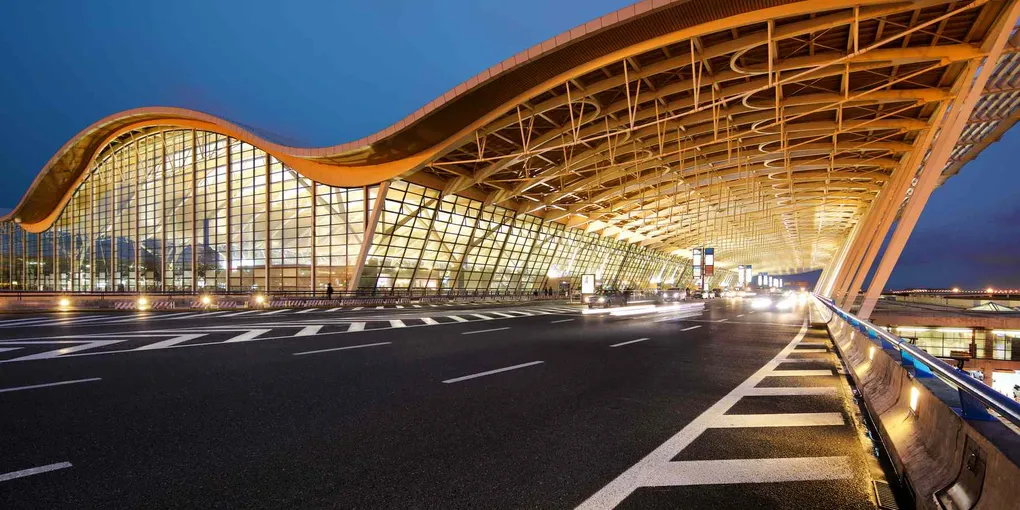
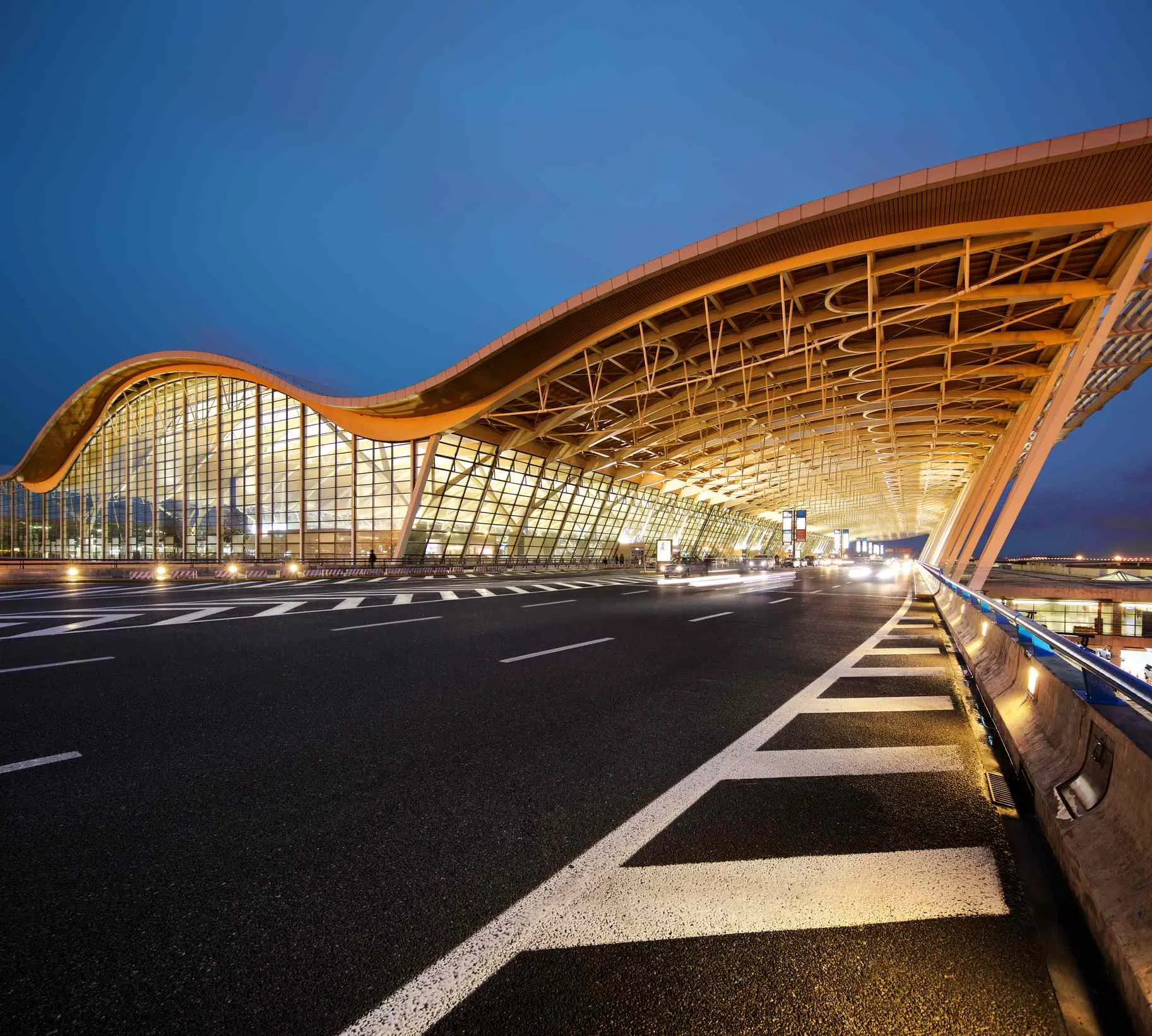 Pudong’s wave-form roof over the departures roadway at dusk. The airport sits about 40 km east of the centre: 8 minutes to Longyang Road by maglev, or 55 to 60 minutes to People’s Square on metro line 2.
You landed. Your phone is dead, the signs are in characters you cannot read, and someone in the arrivals hall is waving at you. China’s airports are modern and efficient, but the last kilometre from the terminal to your hotel is where foreigners lose money, time, or both. This guide covers every way out of ten major airports, with fares, timetables and taxi costs checked against official sources.
Most English guides give you one airport and a vague “take a taxi.” That is not enough. Beijing has two airports 60 km apart. Shanghai’s Pudong has a maglev train that hits 300 km/h, but only runs until 9:42 PM. Kunming’s metro line 6 looks like it runs all day until you realise the last train is 11 PM. Shenzhen’s metro to the airport costs 10 yuan, while a taxi to the same place runs 130 yuan. The differences add up.
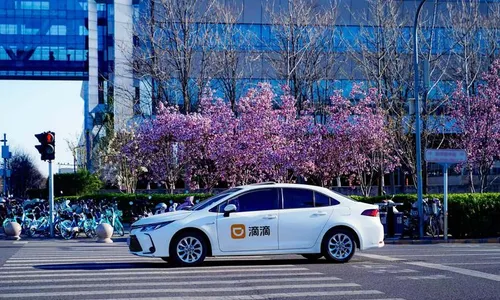
Quick answer: Every major Chinese airport has at least three ways to reach the city: metro, airport bus, and taxi or ride-hailing. Metro is cheapest (2 to 10 yuan) and often fastest, but check the last train, some lines stop before 11 PM. Airport buses run on fixed routes for 15 to 30 yuan, and several cities operate 24-hour lines. Taxis cost 60 to 250 yuan depending on distance, always use the meter, and you pay tolls on top. Ride-hailing (DiDi) works through Alipay or WeChat with a foreign Visa or Mastercard, but you must walk to a designated pickup zone in the parking garage, not the terminal exit.
How we verified this: SinoWander reads Chinese-language sources English guides cannot reach: official airport websites (bcia.com.cn, shairport.com), metro authority pages and APIs (bjsubway.com, service.shmetro.com), local transit databases (bendibao.com), and the National Immigration Administration. Every fare, timetable and taxi estimate was cross-checked against at least two sources. Last verified: 20 October 2026. See our methodology.
The Big Picture: 10 Airports at a Glance
| Airport | Code | Metro fare | Metro time | Bus fare | Taxi to center | Distance |
|---|---|---|---|---|---|---|
| Beijing Capital | PEK | 25 yuan | 25-30 min | 15-35 yuan | 150-250 yuan | ~28 km |
| Beijing Daxing | PKX | 35 yuan | 19 min | 60 yuan | 180-200 yuan | ~46 km |
| Shanghai Pudong | PVG | ~7 yuan | 55-60 min | 2-28 yuan | 180 yuan (day) | ~40 km |
| Shanghai Hongqiao | SHA | ~5 yuan | 30-40 min | — | 80 yuan (day) | ~13 km |
| Guangzhou Baiyun | CAN | ~7 yuan | 30 min | 22 yuan | 120-130 yuan | ~28 km |
| Shenzhen Bao’an | SZX | 10 yuan | 30 min | 20-25 yuan | 90-140 yuan | ~32 km |
| Chengdu Tianfu | TFU | 10 yuan | 50 min | 15-25 yuan | 130-140 yuan | ~50 km |
| Chengdu Shuangliu | CTU | 4 yuan | 48 min | 2 yuan | 60-70 yuan | ~16 km |
| Xi’an Xianyang | XIY | 2-9 yuan | 40-54 min | 25 yuan | 100-150 yuan | ~35 km |
| Chongqing Jiangbei | CKG | 2-5 yuan | 40-50 min | 15 yuan | 60-70 yuan | ~21 km |
| Hangzhou Xiaoshan | HGH | 7-10 yuan | 30-60 min | 20 yuan | 120 yuan | ~27 km |
| Kunming Changshui | KMG | 5 yuan | 33 min | 25 yuan | 80-90 yuan | ~25 km |
Now let us walk through each airport, then cover the universal topics that apply no matter where you land.
Beijing: Capital Airport (PEK)
Beijing Capital is the older of the city’s two airports, closer to the city center, and the one most international flights still use.
Airport Express (metro line): A dedicated rail line connects T2 and T3 to the city. The fare is a flat 25 yuan per person. The line runs from Beixinqiao through Dongzhimen and Sanyuanqiao to the terminals, five stops total. Trains depart every 10 minutes. First train from the city is 6:00 AM from Dongzhimen; last train from T2 is 11:10 PM. The ride to Dongzhimen takes about 25 to 30 minutes, where you can transfer to lines 2 and 13. Buy tickets at the station with a transit card, QR code, or cash.
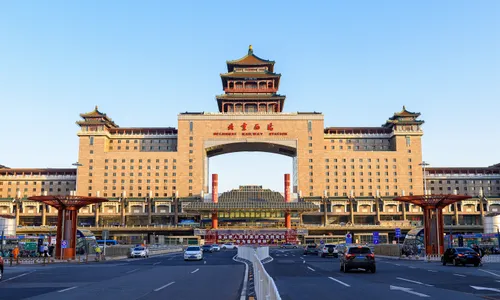
Airport bus: Beijing Capital operates the most extensive bus network of any Chinese airport. The Beijing West Railway Station line runs 24 hours for 25 to 30 yuan. Other lines serve Beijing South Station, Fengtai Station, Gongzhufen, Chaoyang Station and Tongzhou for 15 to 35 yuan. A night line to Gongzhufen departs at 3:00, 4:00 and 4:30 AM. There is also an inter-airport service to Daxing for 65 yuan, stopping at Universal Studios (45 yuan). Buy tickets at the bus stop outside the terminal.
Taxi: Beijing taxis start at 13 yuan for the first 3 km, then 2.3 yuan per kilometre. A surcharge of 50 percent applies beyond 15 km, and a 20 percent night surcharge runs from 11 PM to 5 AM. Expect 150 to 250 yuan to Tiananmen or the Forbidden City, taking 70 to 90 minutes depending on traffic. Tolls (about 10 to 15 yuan) are extra. Taxis queue at T2 (doors 5-9, ground level) and T3 (B1). Always insist on the meter.
Ride-hailing: DiDi pickup is at T2 (parking building 1, southeast side) and T3 (parking building B2, zone H). You cannot get picked up at the terminal exit. See the DiDi guide for setup instructions.
Beijing: Daxing Airport (PKX)
Daxing is Beijing’s new mega-airport, designed by Zaha Hadid, and located 46 km south of the city. Most international flights still use Capital, but a growing number of domestic and some international routes operate from here.
Daxing Airport Express: This is not a regular metro line. It is a 160 km/h express railway, the first of its kind in China. Three stops only: Caoqiao, Daxing Xincheng, and Daxing Airport. The full ride takes 19 minutes. Fares are 35 yuan for a standard seat and 50 yuan for business class. Trains run every 8 to 10 minutes. First train from Caoqiao is 5:30 AM; last train from Daxing Airport is 11:00 PM. At Caoqiao, transfer to metro lines 10 and 19. There is no express or local distinction; all trains make the same three stops.
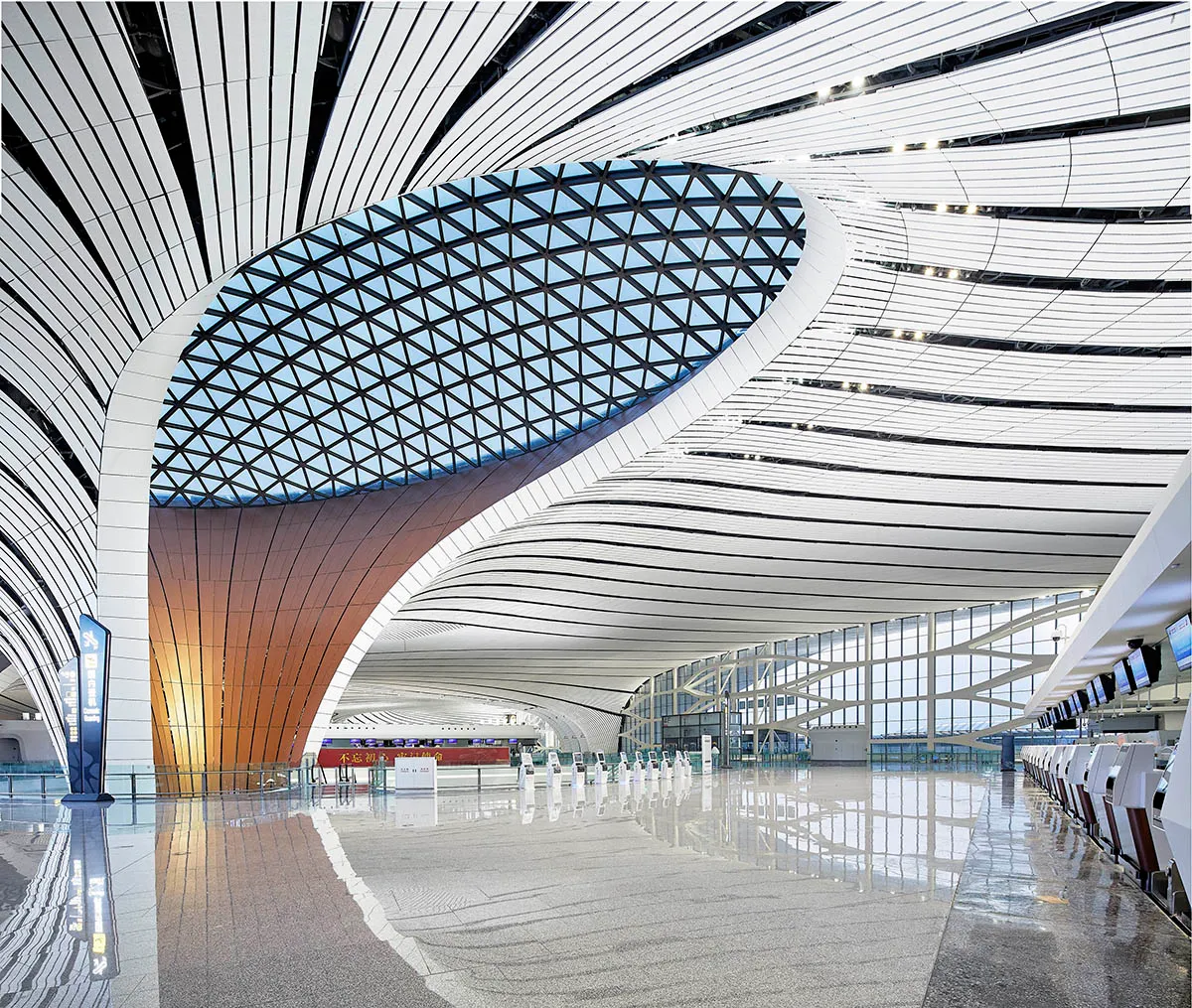 Under Daxing’s single roof: white ribs, an oculus skylight and a check-in island in one sightline. The terminal is 46 km from central Beijing, which is why the 19-minute express to Caoqiao usually beats the taxi queue.
Airport bus: A customised bus service runs to the city for 60 yuan, departing every 20 minutes (minimum 5 passengers). Inter-city buses connect to Langfang (25 yuan), Tianjin (75 yuan), Baoding (70 yuan), and Zhangjiakou (120 yuan).
Taxi: Daxing is far from the city. Expect 180 to 200 yuan to central Beijing, taking about 60 minutes. DiDi estimates run 110 to 130 yuan. The distance makes the airport express train the clear winner for most travellers.
Shanghai: Pudong Airport (PVG) and the Maglev
Shanghai Pudong is China’s busiest international airport, located 40 km east of the city center. It has one thing no other airport in the world offers: a commercial maglev train.
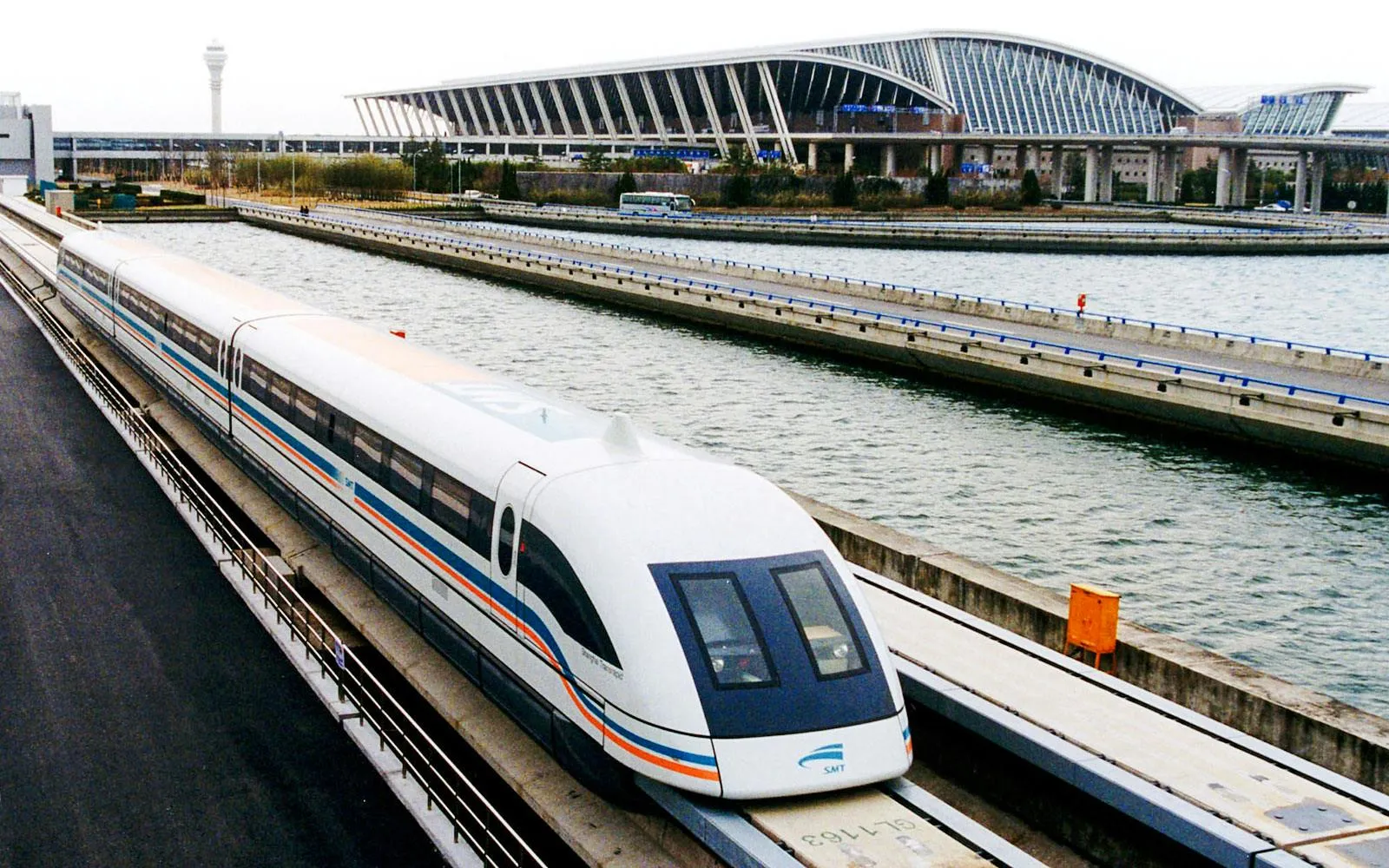 The maglev on its guideway at Pudong, terminal and control tower behind: 30 km in 8 minutes at a 300 km/h peak — and a 9:42 PM last train, which decides the plan for late arrivals.
Maglev (maglev train): The Shanghai Maglev was the world’s first commercial magnetic levitation line, and it is still the fastest way from any airport to any city center in China. The train runs from Pudong Airport to Longyang Road in 8 minutes, hitting a top speed of 300 km/h. The fare is 50 yuan one-way, 80 yuan round-trip, or 40 yuan if you show your same-day boarding pass or use a transport card (20 percent discount). At Longyang Road, transfer to metro lines 2, 7, 16 or 18. The maglev runs from 6:45 AM (Longyang Road) and 7:02 AM (Pudong) until 9:40 PM and 9:42 PM respectively. If your flight lands after 9 PM, you will need another option.
Metro line 2: The cheapest option at about 7 yuan to People’s Square. The ride takes 55 to 60 minutes. First train from Pudong is 6:00 AM; last train is 11:31 PM. Line 2 runs straight through the city center, stopping at Lujiazui, Nanjing East Road and People’s Square before continuing to Hongqiao.
Airport bus: Line 4 runs from Pudong to Shanghai Railway Station for 2 to 28 yuan, taking about 80 minutes. It departs from 7:00 AM to 11:00 PM (T1) from the ground transportation area. A night shuttle (Shouhang Yexiao) runs from T1 (11:00 PM to 5:30 AM) and T2 (11:03 PM to 5:33 AM) to Hongqiao hub. Note: Lines 1 and 9 were discontinued on 15 November 2025; use the metro or the new airport link line instead.
Airport link line (metro): A new regional rail connects Hongqiao and Pudong directly. The full ride takes 40 minutes and costs 26 yuan. Trains run every 15 minutes. First train from Hongqiao T2 is 5:45 AM; last train from Pudong is 10:15 PM. This is the best option if you are connecting between the two airports.
Taxi: Shanghai taxis start at 14 yuan (standard) or 16 yuan (larger vehicles) for the first 3 km, then 2.7 yuan per km. A 30 percent night surcharge applies from 11 PM to 5 AM, and a 50 percent surcharge beyond 15 km. During Spring Festival, add 10 yuan; during Labour Day and National Day, add 5 yuan. There is also a floating rate: plus 5 percent during weekday peaks, minus 5 percent during off-peak. Expect 180 yuan (daytime) or 230 yuan (nighttime) to People’s Square, taking about 55 minutes. Taxis queue at T1 (door 12) and T2 (door 25), both 24 hours. Accessible taxis start at 19 yuan.
Shanghai: Hongqiao Airport (SHA)
Hongqiao is Shanghai’s domestic airport, much closer to the city center at only 13 km. It shares a massive transport hub with Hongqiao Railway Station, making transfers seamless.
Metro: Lines 2 and 10 both serve Hongqiao T2. The ride to People’s Square takes 30 to 40 minutes and costs about 5 yuan. Line 2 connects to Pudong Airport (change at Guanglan Road for the eastern extension). Line 10 runs to the northern and western suburbs. Friday and Saturday service extends past midnight on some segments.
Taxi: Hongqiao is close enough that a taxi is reasonable. Expect about 80 yuan (daytime) or 100 yuan (nighttime) to People’s Square, taking 40 minutes. Taxis queue at T1 (door 1) and T2 (door 4). Ride-hailing pickup is at P9 and P10 parking garages, which were renovated in September 2026 with colour-coded waiting zones by license plate number.
Hongqiao hub: The airport and railway station share a single transport complex. Six exits from the train station lead directly to metro lines 2, 10 and 17, the airport link line, taxis, buses, and ride-hailing. If you are arriving by high-speed rail and flying out of Hongqiao, the walk between them is about 200 metres. See the China high-speed rail guide for train booking.
Guangzhou: Baiyun Airport (CAN)
Guangzhou’s Baiyun Airport is 28 km north of the city center and serves as the main hub for southern China.
Metro line 3 (northern extension): Connects Airport North (T2) to Tiyu Xilu in 30 minutes, 15 stops. The fare is about 7 yuan. First train from Airport North is 6:00 AM; last train is 11:15 PM. At Tiyu Xilu, transfer to the main line 3 or the APM. Airport South station serves T1. The line connects to line 9 at Gaozeng, line 2 and 14 at Jiahe Wanggang, and lines 1 and 11 at Guangzhou East Station.
Airport bus: The Konggang Express Line 1 runs to Guangzhou Railway Station for 22 yuan, departing from 12:10 AM to 11:45 PM (nearly 24 hours). Line 2 runs to Garden Hotel and Tianhe City for 30 yuan from 11:20 PM to 2:00 AM. Line 5 serves Dongfang Hotel and Haizhu Square for 18 to 24 yuan from 7:00 AM until the last flight. A free T3 shuttle bus connects to Gaozeng metro station from 6:15 AM to 11:15 PM.
Taxi: Expect 120 to 130 yuan to Tianhe, taking 60 to 70 minutes. See the Guangzhou travel guide for more on getting around the city.
Shenzhen: Bao’an Airport (SZX)
Shenzhen’s airport is 32 km west of the city center, across the Pearl River estuary from Hong Kong.
Metro line 11: An express line connecting the airport to the city. The fare to Futian is 10 yuan (standard) or 21 yuan (business class). The ride takes about 30 minutes at speeds up to 120 km/h. First train from the airport is 5:36 AM; last train is 12:02 AM. Line 11 connects to line 2 at Houhai and line 3 at Futian, among others.
Airport bus: Line NA1 runs to the city center for 25 yuan from 10:30 PM until the last flight, departing every 30 minutes. Line A6 costs 20 yuan from 8:00 AM to 2:00 AM. Line A3 (20 yuan) passes through Shenzhen Bay Port. Line A2 (25 yuan) serves Shenzhen North bus terminal.
Taxi: Shenzhen taxis start at 10 yuan for 2 km, then 2.6 yuan per km, with a 30 percent surcharge beyond 25 km. To Futian, expect 90 to 110 yuan in 40 to 60 minutes. To Luohu and the Shenzhen Railway Station, about 130 to 140 yuan. To Shenzhen North Station, about 100 to 110 yuan. See the Shenzhen travel guide for more.
Chengdu: Tianfu (TFU) and Shuangliu (CTU)
Chengdu operates two airports. Tianfu, opened in 2021, handles most flights and is 50 km from the city. Shuangliu, the older airport, is much closer at 16 km and handles a reduced schedule.
Tianfu metro line 18: Connects the airport to South Railway Station, 9 stops, about 70 km. The fare is 10 yuan. The ride takes about 50 minutes on the local service. Since June 2023, the old express/local split was replaced with a direct and local system: the direct service skips 4 stations (Jincheng Square East, Century City, Xibo City, Xinglong) and takes about 39 minutes; the local service makes all stops. First train from the airport is 6:00 AM; last train is 11:34 PM. On holidays, service extends to 12:30 AM. Trains depart from the GTC (Ground Transportation Center) on level 1.
Tianfu airport bus: Runs 24 hours. Daytime fare is 15 yuan (6:00 AM to 11:30 PM); nighttime fare is 25 yuan (11:30 PM to 6:00 AM). Six dedicated lines connect to East Railway Station, Shuangliu Airport (25 yuan), and other points. The 24-hour hotline is 028-62676868.
Tianfu taxi: The 50 km distance means a fare of about 130 to 140 yuan to Chunxi Road, taking 60 to 80 minutes. Nighttime runs 160 to 180 yuan. Taxis queue at T1 and T2, level 1. Ride-hailing pickup is in parking buildings 1 and 2, level 1.
Shuangliu metro line 10: Connects the airport to Taipingyuan, 16 stops, 38 km. The fare is 4 yuan. The ride takes about 48 minutes. First train from the airport (T2) is 6:14 AM; last train is 11:25 PM. At Taipingyuan, transfer to lines 3 and 7.
Shuangliu airport bus: A night service runs to Chunxi Road for 2 yuan from 9:00 PM to 4:30 AM, departing every 40 to 60 minutes. Shuangliu’s proximity to the city makes taxi the most popular option: about 60 to 70 yuan to Chunxi Road in 40 minutes. See the Chengdu travel guide for more.
Xi’an: Xianyang Airport (XIY)
Xi’an’s airport is 35 km northwest of the city, in Xianyang. It is the main hub for northwest China.
Metro line 14: Connects Heshao to Airport West (T1, T2, T3), 18 stops. The ride takes 40 to 54 minutes. Fares run from 2 to 9 yuan. First train from Heshao is 6:00 AM; last train is 10:30 PM. First train from Airport West is 6:00 AM; last train is 10:20 PM. Transfer to line 3 at Shuangzhai, lines 2 and 4 at Xi’an North Station (high-speed rail), and line 10 at Xi’an Gongda Wude Road.
Airport bus: Runs to the city for 25 yuan from 4:00 AM to 1:00 AM, departing every 30 to 40 minutes. Buses depart from the Xishaomen Konggang Business Hotel, passing through Gaoxin Zhicheng Libo Hotel, Chengxi Bus Station, and Xishaomen Minhang Building. Night routes are available.
Taxi: Expect 100 to 150 yuan to the Bell Tower, taking 50 to 60 minutes. See the Xi’an travel guide for more.
Chongqing: Jiangbei Airport (CKG)
Chongqing’s airport is 21 km north of the city center, serving southwest China.
Metro line 10: Connects Wangjiazhuang to Lanhua Road, 23 stops, serving both T2 and T3. The fare from the airport is 2 to 5 yuan. First train from T3 is 6:35 AM; last train is 11:49 PM. First train from T2 is 6:30 AM; last train is 11:53 PM. Transfer to line 3 at T2 station, the loop line and line 3 at Chongqing North South Square, and line 6 at Hongtudi. Direct fast trains also operate: first train toward Wangjiazhuang is 7:50 AM, last train about 8:20 PM. Line 3 also passes through the airport as a backup.
Airport bus: Express bus K01 runs from Jiefangbei to the airport for 15 yuan. Buses depart from Jiefangbei every 30 minutes from 5:30 AM to 9:00 PM, and from the airport from 8:30 AM until 30 minutes after the last flight. The route passes Daliyuan, Shangqingsi, Jiazhou Huayuan, T2A, T2B and T3.
Taxi: Expect 60 to 70 yuan to Jiefangbei, taking 30 to 40 minutes. See the Chongqing travel guide for more.
Hangzhou: Xiaoshan Airport (HGH)
Hangzhou’s airport is 27 km east of the city center, serving the Yangtze River Delta.
Metro: Three lines reach the airport. Line 1 runs from 6:00 AM to 10:30 PM, passing through Wulin Square and Hangzhou Railway Station. Line 7 runs from 6:00 AM to 11:44 PM, maximum fare 8 yuan. Line 19 is the express line: it connects the airport to both major railway stations, has luggage racks, and costs 10 yuan for the full 60-minute ride. Line 19 runs from 6:20 AM to 12:09 AM (airport direction), 17 stops.
Airport bus: The Wulinmen express runs for 20 yuan, with the first bus at 4:30 AM, departing every 30 minutes. Buses depart from outside door 8 at T3 arrivals, passing through Pinghai Road and Chengzhan Railway Station. Multiple intercity lines connect to surrounding cities for 45 to 128 yuan.
Taxi: Expect about 120 yuan to Wulin Square, taking 40 to 50 minutes. See the Hangzhou travel guide for more.
Kunming: Changshui Airport (KMG)
Kunming’s airport is 25 km east of the city center, the main hub for Yunnan and southwest China.
Metro line 6: Connects Tangzixiang to the Airport Center, 8 stops. The full ride takes about 33 minutes and costs 5 yuan. First train from Tangzixiang is 6:20 AM; last train is 10:55 PM. First train from the Airport Center is 6:20 AM; last train is 11:00 PM. Transfer to line 3 at East Bus Station. The line was extended from its original 4 stations to 8, and operating hours now run from 6:20 AM to 11 PM instead of the early limited schedule.
Airport bus: Line 2 runs to Kunming Station city terminal for 25 yuan from 8:00 AM to 2:00 AM, taking 50 minutes. A Kunming South Station service costs 25 yuan from 9:00 AM to 5:00 PM. A door-to-door service requires booking one day in advance, starting at 19.9 yuan.
Taxi: Expect 80 to 90 yuan to the city center, taking 40 to 50 minutes. See the Kunming and Dali guide for more.
Ride-Hailing: How to Use DiDi as a Foreigner
DiDi is China’s dominant ride-hailing app, and it works at every major airport. The key thing foreigners get wrong is trying to use a standalone international DiDi app, which may not work reliably in mainland China. The proven path is through Alipay or WeChat.
Setup (do this before you land):
- Install Alipay and link a foreign Visa, Mastercard, JCB, Discover or Diners Club card. Transactions under 200 yuan are fee-free; above 200 yuan, a 3 percent fee applies.
- Open Alipay, find “DiDi Travel” on the home page.
- Allow location access, enter your destination, select a car type, and confirm. Payment is automatic.
WeChat alternative: Open WeChat, go to Me > Service > Ride Hailing. You can switch the interface to English in Settings > Language > English. See the WeChat Pay guide for card linking.
At the airport: You cannot get picked up at the terminal exit. Every airport has a designated ride-hailing pickup zone in a parking garage. At Beijing Capital, it is T2 parking building 1 (southeast side) or T3 parking building B2 (zone H). At Shanghai Pudong, it is P2 parking garage B2 (70 pickup bays) for T2, or P1 parking garage bus level (15 bays) for T1. Follow the signs for “ride-hailing” or look for the parking garage.
Why not grab a taxi at the curb? You can, and for most travellers that is fine. But DiDi gives you a fare estimate, a license plate number, and a record of the trip, which eliminates the most common scams. See the full DiDi guide for more.
Taxis: Meter Rules and What You Will Pay
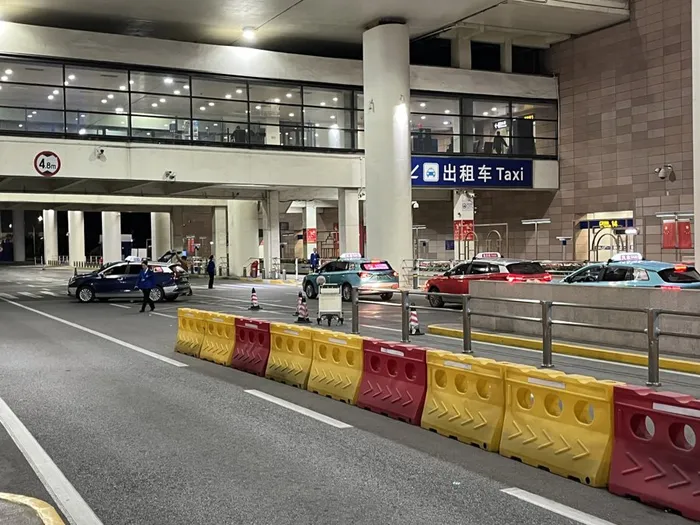 An airport taxi rank: the blue 出租车 / Taxi sign, a 4-metre height bar over the lane, crash barriers funnelling cars to the curb. Queue here rather than following a tout, and check the meter starts on the flag fall.
Every licensed taxi in China uses a meter. The rules are simple but vary by city:
| City | Starting fare | Per km | Night surcharge | Long-distance surcharge |
|---|---|---|---|---|
| Beijing | 13 yuan / 3 km | 2.3 yuan | +20% (11 PM-5 AM) | +50% beyond 15 km |
| Shanghai | 14 yuan / 3 km | 2.7 yuan | +30% (11 PM-5 AM) | +50% beyond 15 km |
| Shenzhen | 10 yuan / 2 km | 2.6 yuan | — | +30% beyond 25 km |
| Chengdu | 8 yuan / 2 km | 1.9-2.85 yuan | +30% (11 PM-6 AM) | — |
| Guangzhou | 10 yuan / 2.5 km | 2.6 yuan | +20% (12-5 AM) | +50% beyond 35 km |
Tolls are extra. Airport routes often involve a highway toll of 10 to 15 yuan, which the passenger pays on top of the metered fare.
Holiday surcharges: Shanghai adds 10 yuan during Spring Festival and 5 yuan during Labour Day and National Day. Other cities may have similar floating rates.
Accessible taxis: Shanghai offers wheelchair-accessible taxis starting at 19 yuan. Beijing Capital Airport provides accessible services with 24-hour advance booking. The service hotline for Shanghai is 021-96990; for Beijing Capital, 010-96158.
Airport Buses: The 24-Hour Secret
Airport buses are the most overlooked option. They are cheaper than taxis, more comfortable than crowded metro cars with luggage, and several cities run them 24 hours a day.
24-hour bus lines:
- Beijing Capital: Beijing West Station line (25-30 yuan)
- Guangzhou Baiyun: Konggang Express Line 1 (22 yuan, 12:10 AM to 11:45 PM)
- Chengdu Tianfu: All 6 lines (15 yuan day, 25 yuan night)
Early morning buses:
- Xi’an: 4:00 AM first departure (25 yuan)
- Hangzhou: 4:30 AM first departure (20 yuan)
Night buses:
- Shanghai Pudong: Night shuttle to Hongqiao (T1 11:00 PM to 5:30 AM)
- Shenzhen: NA1 line from 10:30 PM to last flight (25 yuan)
- Chengdu Shuangliu: Night service to Chunxi Road (2 yuan, 9:00 PM to 4:30 AM)
If your flight lands after the last metro train, the airport bus is almost always your best option. Look for signs reading “airport bus” or “shuttle bus” in the ground transportation area.
SIM Cards, eSIM and Airport WiFi
SIM cards: Beijing Capital sells SIM cards and portable WiFi at two counters in each terminal. Global Roaming (T2, international arrivals near carousel 3, 7:00 AM to 7:00 PM; T3C, level 2 near carousel 38, 24 hours) and Roaming Superman (T2, level 2 near door 4, 24 hours; T3, level 4 D island, 24 hours). China’s three carriers are China Mobile (10086), China Unicom (10010) and China Telecom (10000), all with English customer service. Expect to prepay about 50 to 100 yuan. You must register with your passport; China’s real-name policy applies to all SIM cards. See the SIM card guide for more.
eSIM: The easiest option is to buy an eSIM before you travel. Services like Holafly sell data-only eSIMs that work on arrival and can access Google and WhatsApp without a VPN. Airport eSIM availability is limited; buy ahead.
Shanghai Pass: Both Pudong and Hongqiao airports sell the Shanghai Pass transit card, which can be loaded with up to 1,000 yuan and used on buses, metro, taxis and ferries throughout Shanghai.
Airport WiFi: Beijing Capital’s free WiFi network is “AIRPORT-FREE-WIFI-NEW”. You can authenticate by SMS (supports all countries), passport, ticket machine, or WeChat mini-program. Once authenticated, you stay connected for 3 months without re-authenticating. Other major airports offer similar free WiFi; look for the network name posted at information screens. See the internet guide for more on staying connected.
Avoiding Unofficial Taxis
Every Chinese airport has a problem with unofficial drivers who approach foreigners in the arrivals hall. They speak a few words of English, offer a “cheap” ride, and charge several times the metered fare. Here is how to avoid them:
- Only use the official taxi queue. Every airport has a designated taxi rank with a dispatcher. Follow the signs. At Beijing Capital, taxis queue at T2 (doors 5-9) and T3 (B1). At Shanghai Pudong, T1 (door 12) and T2 (door 25).
- Insist on the meter. Licensed taxis must use the meter. If a driver offers a flat fare, walk away.
- Ignore anyone who approaches you. People who approach you in the arrivals hall speaking English are not doing you a favour. Walk to the official taxi rank or use DiDi.
- Use DiDi. Ride-hailing eliminates the negotiation entirely. The fare is calculated by the app, and you have a record of the trip.
- Watch your change. Some drivers are reluctant to break a 100 yuan note and may give counterfeit change. Use mobile payment (Alipay or WeChat) whenever possible. See the China payment guide for setup.
- Avoid motorcycles, three-wheelers and pedicabs. They are illegal in many city centers, unsafe for luggage, and a common source of price disputes.
See the China travel safety guide and the tourist traps guide for more on staying safe.
Luggage Rules (If You Are Connecting to a Domestic Flight)
If you are transferring from an international to a domestic flight, the luggage rules change. Carry-on is limited to 5 kg and 20 x 40 x 55 cm. Free checked baggage is 40 kg for first class, 30 kg for business class, and 20 kg for economy. Liquids over 100 ml are prohibited in carry-on (cosmetics under 100 ml per item are exempt). Since 28 June 2025, power banks without a clear 3C certification mark, or belonging to recalled models, are banned from domestic flights. See the domestic flights guide for the full rules.
The 240-Hour Transit Visa
If you are transiting through China on your way to a third country, you may be eligible for the 240-hour (10-day) visa-free transit. The policy covers 57 countries across 24 provinces and 65 ports of entry, including Beijing Capital, Beijing Daxing, Shanghai Pudong, Shanghai Hongqiao, Guangzhou Baiyun, Shenzhen Bao’an, Chengdu Tianfu and Xi’an Xianyang. You can engage in tourism, business, visiting relatives, but not work, study or journalism. See the 240-hour transit guide for the full country list and application process.
Quick Reference: Which Option for Which Airport
| If you… | Choose… | Why |
|---|---|---|
| Want the fastest ride | Shanghai maglev (Pudong) | 8 minutes, 300 km/h |
| Land after 11 PM | Airport bus (24-hour lines) | Metro is closed, bus still runs |
| Have lots of luggage | Taxi or DiDi | Metro stairs are a pain with bags |
| Want the cheapest option | Metro (2-10 yuan) | Every airport has a metro line |
| Are going to a specific hotel | DiDi via Alipay | Door-to-door, no language barrier |
| Want to avoid scams | DiDi or official taxi queue | No negotiation, meter enforced |
| Are connecting between airports | Shanghai airport link line | 40 minutes, 26 yuan, Hongqiao to Pudong |
| Arrive at Daxing | Daxing Airport Express | 19 minutes, 35 yuan, faster than taxi |
Related Articles
- Domestic Flights in China: A Foreigner’s Guide
- How to Buy China Train Tickets
- China High-Speed Rail Guide
- China Metro and Subway Guide for Foreigners
- How to Use DiDi in China
- China SIM Card vs eSIM
- How to Get Internet in China
- How to Set Up Alipay in China
- How to Use WeChat Pay in China
- How to Pay in China
- 240-Hour Visa-Free Transit
- China Entry Requirements 2026
- China Travel Safety Tips
- China Travel Scams and Tourist Traps
- Beijing Travel Guide
- Shanghai Travel Guide
- Guangzhou Travel Guide
- Chengdu Travel Guide
- Shenzhen Travel Guide
- Xi’an Travel Guide
- Chongqing Travel Guide
- Hangzhou Travel Guide
- Kunming and Dali Travel Guide
- How Foreigners Book Hotels in China
- China Packing List